Should You Hire a Lawyer for a Minor Motorcycle Accident
It’s easy to feel overwhelmed and uncertain after a motorcycle accident, even if you think it’s "minor." You might be wondering if it's even worth reaching out to an attorney when the damage doesn't seem catastrophic, or your injuries aren't immediately life-threatening. This guide will help you understand what constitutes a minor accident, the hidden complexities that often arise, and why professional legal guidance can be invaluable, even for what seems like a small bump in the road.
Defining a "Minor" Motorcycle Accident and Its Real Impact
When we talk about a "minor" motorcycle accident, it's easy to picture a fender bender, a scraped fairing, or a twisted ankle. However, the term "minor" can be incredibly misleading in the context of a motorcycle crash, as the true impact often extends far beyond the initial visible damage or discomfort. What might seem insignificant at first can quickly escalate into a substantial problem, both physically and financially.
What Qualifies as Minor? Property Damage vs. Minor Injuries
Typically, a "minor" motorcycle accident is characterized by limited property damage to your bike and what appear to be non-severe injuries to the rider. Perhaps your motorcycle sustained some cosmetic damage, a broken mirror, or a bent lever. On the personal injury side, you might have experienced some road rash, bruising, or muscle soreness that you assume will resolve with a little rest and over-the-counter pain relievers. You might even feel a bit sheepish, thinking it’s "not serious enough" to bother anyone about, especially a lawyer.
However, it's crucial to understand that even small incidents can have underlying complexities. For instance, what looks like minor damage to your bike could hide structural issues that an untrained eye would miss. A seemingly superficial scratch on your helmet might indicate an impact severe enough to compromise its integrity, requiring immediate replacement. Similarly, a minor twist of the wrist could be a hairline fracture, or a persistent headache could be the early sign of a concussion, something far from minor. These initial assessments often underestimate the real cost and long-term implications, which is why it's so important to get a professional opinion on both your motorcycle and your physical well-being.
The Deceptive Nature of "Minor" Injuries and Delayed Symptoms
One of the most dangerous misconceptions about "minor" motorcycle accidents is the idea that if you don't feel significant pain immediately, you're fine. Adrenaline is a powerful thing, and in the immediate aftermath of a crash, it can mask pain and prevent you from realizing the true extent of your injuries. Many riders have walked away from a collision feeling shaken but otherwise okay, only for debilitating pain to set in hours, days, or even weeks later.
Take, for example, whiplash in your neck or back. It might start as a stiff neck the morning after, easily dismissed as sleeping funny. But without proper medical attention, it can evolve into chronic pain, limited mobility, and ongoing issues that require extensive physical therapy, chiropractic care, or even injections. Similarly, what you thought was just a mild headache could be a traumatic brain injury that demands specialized neurological evaluation. Even seemingly simple injuries like road rash can become seriously infected if not treated properly, leading to scarring and further medical complications. This is why it’s always vital to seek medical attention after any accident, no matter how minor it seems, and to understand the potential for Delayed Symptoms After a Motorcycle Crash. Documenting your injuries thoroughly from the outset is a critical step in protecting your health and any potential claim you might have.
When Handling a Minor Accident Claim Yourself Seems Possible (and Why It's Risky)
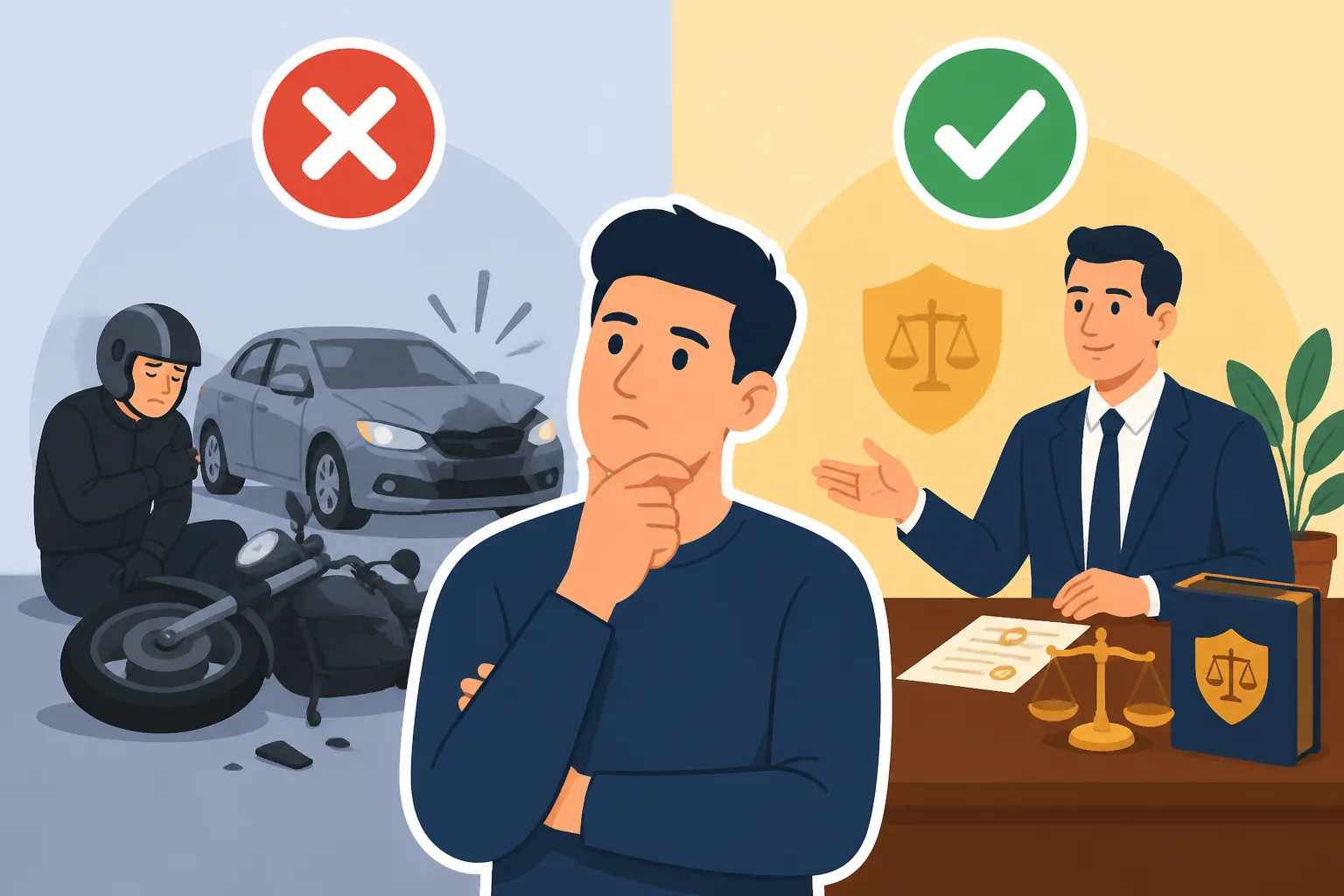
It's tempting to try and handle a "minor" motorcycle accident claim on your own. You might think, "It's just a few scratches, I can deal with the insurance company directly and save some money on legal fees." In an ideal world, where everyone is fair and transparent, this might work. However, the reality of dealing with insurance companies, even for seemingly small claims, is often far from ideal.
Situations Where DIY Might Seem Appealing
You might consider going it alone if the other driver's fault is absolutely crystal clear – say, they rear-ended you while you were stopped at a red light, and there are multiple witnesses. Or perhaps the only damage is to your motorcycle, and your personal injuries are genuinely negligible (though, as we discussed, this is rare). Maybe your property damage is low enough that it falls below your deductible, or you're only looking to recoup a few hundred dollars. In these specific, low-stakes scenarios, where you're comfortable with paperwork and negotiation, it might cross your mind to represent yourself.
However, even in these seemingly straightforward cases, insurance companies are not in the business of simply paying out. They are for-profit entities, and their primary goal is to minimize payouts. They have adjusters trained to evaluate claims and negotiate settlements, often with sophisticated strategies designed to pay you as little as possible. What you perceive as a minor, easy claim could quickly become a headache when you realize the insurance company is using tactics to devalue your losses or shift blame, making your initial DIY approach much more complicated than anticipated.
The Hidden Challenges of Self-Representation
Going solo, even for a "minor" accident, comes with significant hidden challenges. Firstly, you're immediately at a disadvantage against an insurance adjuster who handles claims all day, every day. They know the loopholes, the arguments, and the strategies to reduce settlements. They might try to downplay your injuries, suggest your bike's damage was pre-existing, or even subtly try to get you to admit partial fault. You might find yourself struggling to articulate the full extent of your damages or to counter their arguments effectively. This often leads to a lowball settlement offer that doesn't truly cover all your expenses. You can learn more about How Insurers Lowball Motorcycle Riders to understand their common tactics.
Secondly, you might unknowingly undervalue your own claim. You might just factor in the cost of repairs and a few days off work, forgetting about pain and suffering, the inconvenience of being without your bike, or the potential for future medical expenses. Without a comprehensive understanding of personal injury law and how damages are calculated, you could leave a lot of money on the table. Moreover, in many motorcycle accidents, there's an inherent "rider bias" where insurers try to assign blame to the motorcyclist, regardless of the actual circumstances. Successfully challenging this bias requires expertise and a thorough understanding of the law, which is difficult for an individual to do on their own. This is especially true when determining Who Is at Fault in a Motorcycle Accident.
Thirdly, the sheer amount of paperwork, phone calls, and negotiations can be incredibly time-consuming and stressful, especially when you're also trying to recover from injuries. Trying to manage your medical appointments, bike repairs, and communicate with the insurance company can quickly become a full-time job. This is valuable time and energy that you could be dedicating to your recovery and getting back to your normal life.
| Feature | Handling Yourself (DIY) | Hiring an Attorney |
|---|---|---|
| Initial Cost | None (unless you hire experts yourself) | Usually none upfront (contingency fee) |
| Time Investment | High: You manage all communication, paperwork, and negotiation | Low: Attorney handles most tasks, freeing up your time |
| Negotiation Skill | Limited, against professional adjusters | Expert, familiar with insurance tactics and settlement values |
| Knowledge of Law | Limited, relies on self-research | Comprehensive, specialized in personal injury law |
| Damage Valuation | Often undervalues non-obvious costs (pain, future care) | Maximize all recoverable damages, including future and non-economic |
| Fault Disputes | Challenging to counter "rider bias" or complex scenarios | Experienced in proving fault and countering defense arguments |
| Stress Level | High, juggling recovery, paperwork, and insurance pressure | Low, you focus on recovery while the attorney handles the case |
| Settlement Potential | Lower, prone to lowball offers | Higher, often significantly more than DIY efforts |
The Undeniable Advantages of Legal Representation, Even for Small Cases
While the thought of involving a lawyer in a "minor" accident might seem like overkill, the advantages often far outweigh any perceived downsides. A skilled motorcycle accident attorney can be your greatest asset, ensuring you're fairly compensated and can focus on your recovery without the added stress of legal battles.
Expert Negotiation Against Insurance Company Tactics
Let's face it: insurance companies aren't your friends after an accident. Their adjusters are highly trained professionals whose job is to minimize the company's financial outlay, not to ensure you receive maximum compensation. Even in seemingly clear-cut minor cases, they employ various tactics to delay, deny, or lowball your claim. They might push for a quick settlement before you even fully understand the extent of your injuries or damages. They might question your injuries, suggest your pre-existing conditions are to blame, or even try to shift some fault onto you, the motorcyclist.
A personal injury attorney specializing in motorcycle accidents knows these tactics inside and out. They act as a buffer between you and the insurance company, handling all communications and negotiations. This prevents you from inadvertently saying something that could harm your claim and ensures that all information shared is strategic and protective of your interests. They can effectively counter lowball offers and prove the true value of your damages. For instance, if you're dealing with a specific insurance company like Geico or Progressive, a lawyer will know their common strategies and how to approach them. Remember that How Insurance Companies Assign Blame to Riders is often a major hurdle for motorcyclists.
Maximizing Your Claim's True Value
Perhaps the most compelling reason to hire an attorney, even for a minor accident, is their ability to accurately assess and maximize the true value of your claim. As a rider, you might only think about immediate costs like bike repairs and a few days of lost wages. However, a comprehensive claim includes far more than that. An attorney will meticulously account for all "economic damages," such as current and future medical bills, lost income, property damage, and the cost of any necessary modifications to your home or vehicle due to your injuries. They'll also pursue "non-economic damages," which are harder to quantify but no less real, like pain and suffering, emotional distress, loss of enjoyment of life, and permanent scarring or disfigurement. Understanding the full spectrum of Types of Damages in a Motorcycle Accident Claim is something only an experienced lawyer can do effectively.
For instance, if your "minor" road rash turns into a persistent scar or requires skin grafting, that becomes a significant component of your claim that you might have overlooked. An attorney ensures that all potential damages, both obvious and subtle, short-term and long-term, are included in the demand. They'll work with medical experts and economists if necessary to project future medical costs or lost earning capacity, ensuring you receive a settlement that truly covers all your losses, not just the immediate ones. They know how to effectively How to Document Injuries for a Claim to support higher compensation.
Handling Disputed Fault and "Rider Bias"
Unfortunately, motorcyclists often face an unfair bias from other drivers, law enforcement, and even insurance companies. It's common for drivers to claim they "didn't see the motorcycle," or for fault to be unfairly assigned or disputed, even when the evidence points clearly to the other party. This "rider bias" can significantly complicate a claim, turning a seemingly minor incident into a prolonged battle over who was responsible.
An attorney specializes in establishing How Fault Is Determined in Motorcycle Accidents and can rigorously investigate the accident, gather crucial evidence like police reports, witness statements, traffic camera footage, and accident reconstruction reports. They can bring in experts to demonstrate the other driver's negligence and counter any attempts to blame you for the crash. For example, if the other driver was making a dangerous left turn, your attorney can build a strong case proving their liability. This assertive advocacy is critical to protecting your rights and ensuring you don't shoulder unfair responsibility for an accident that wasn't your fault.
Streamlining the Process and Reducing Stress
Beyond the financial and legal benefits, having an attorney handle your claim offers immense peace of mind. Recovering from an accident, even a minor one, is taxing. The last thing you need is the added stress of negotiating with insurance adjusters, collecting medical records, dealing with repair shops, and managing complex legal procedures. Your lawyer will take on these burdens, allowing you to focus entirely on your physical and emotional recovery.
They manage all communications, prepare and file all necessary documents, track deadlines (like the statute of limitations, which can vary by state), and guide you through every step of the process. This saves you countless hours of frustration and effort. If you're looking for help connecting with qualified legal professionals, services like LegalMatch can be a great starting point to find attorneys in your area who specialize in motorcycle accident claims and can handle these complexities for you. Using a service like LegalMatch can streamline your search for someone who understands the nuances of motorcycle law.
Finding the Right Legal Partner for Your Motorcycle Accident Claim
Deciding to hire an attorney is one thing; finding the right attorney is another. It's crucial to choose someone who not only understands personal injury law but also has specific experience with motorcycle accidents. Not all personal injury lawyers are created equal, and the nuances of motorcycle law can make a big difference in your outcome.
What to Look for in a Motorcycle Accident Lawyer
When seeking legal representation for your motorcycle accident, even if it seems minor, focus on attorneys with a proven track record in motorcycle injury cases. Here's what to consider:
- Specialization in Motorcycle Accidents: Look for a lawyer who specifically highlights their experience with motorcycle accident claims. These cases often involve unique legal challenges and biases that a general personal injury lawyer might not be as adept at handling. They'll understand issues like lane-splitting laws (where applicable), the impact of helmet laws, and how to effectively counter rider bias. This specialization is key to maximizing your claim.
- Trial Experience: While most cases settle out of court, having an attorney with strong trial experience signals to insurance companies that you're serious. If negotiations falter, you want a lawyer who isn't afraid to take your case to court and has the skills to win.
- Reputation and Reviews: Check online reviews and testimonials. Sites like Google, Avvo, and LegalMatch can provide insights into a lawyer's client satisfaction, communication style, and success rates. A good attorney will have positive feedback regarding their professionalism, empathy, and effectiveness.
- Communication Style: You'll be working closely with your attorney, so it's vital that they communicate clearly, are responsive to your questions, and explain legal jargon in an understandable way. During your initial consultation, pay attention to how they interact with you.
- Local Knowledge: An attorney familiar with local courts, judges, and even common insurance adjusters in your area (e.g., California or Texas) can be a significant advantage. They understand local laws and precedents that might impact your case.
Don't hesitate to use resources like LegalMatch to connect with qualified attorneys in your area. LegalMatch allows you to describe your situation and receive responses from lawyers who are interested in taking your case, helping you find a specialist quickly and efficiently.
Understanding Attorney Fees and Initial Consultations for Smaller Claims
Many people shy away from hiring an attorney for a "minor" accident due to concerns about legal fees. However, most personal injury attorneys, especially those handling motorcycle accidents, work on a contingency fee basis. This means you don't pay any upfront legal fees. Instead, your attorney's payment is a percentage of the final settlement or award they secure for you. If they don't win your case, you typically don't owe them attorney fees. This arrangement makes quality legal representation accessible to everyone, regardless of their financial situation after an accident.
It’s crucial to understand How Contingency Fees Work fully. The percentage can vary, typically ranging from 25% to 40% depending on the complexity of the case and whether it goes to trial. Additionally, inquire about "case costs" or "litigation expenses," which are separate from attorney fees. These are costs like filing fees, expert witness fees, and medical record retrieval fees. Most attorneys advance these costs and then deduct them from the settlement amount before calculating their contingency fee.
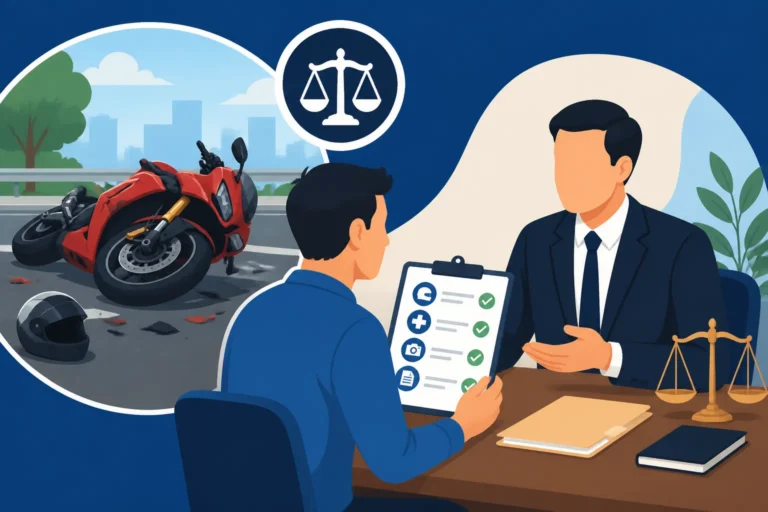
Almost all reputable personal injury law firms offer a free initial consultation. This is your opportunity to discuss the specifics of your "minor" accident, ask questions, and get a professional assessment of your case without any financial obligation. During this meeting, the attorney will evaluate the details of your crash, potential injuries, and damages. They will provide an honest opinion on whether legal representation is beneficial and what your next steps should be. This initial conversation is critical, and it's a good time to bring any documentation you have, such as police reports, photos of the scene, and medical records from What to Do After a Motorcycle Accident. Don't be afraid to interview a few different attorneys to find the one that feels like the best fit for you and your situation.
Disclaimer
Please remember that this article provides general information and insights into motorcycle accident claims and is not legal advice. Every accident and claim is unique, and the information presented here may not apply to your specific situation. Laws regarding motorcycle accidents, fault, and settlements vary significantly by state and jurisdiction. It is always recommended to consult with a qualified motorcycle accident attorney in your area to discuss the specifics of your case and receive personalized legal guidance.