Motorcycle Accident Fault Laws in California
When you're out on your bike enjoying the California sunshine, the last thing on your mind is getting into an accident. But the reality is, motorcycle crashes happen, and when they do, figuring out who's at fault can feel like an impossible puzzle. This guide is here to shed light on the specific fault laws in California that impact motorcycle accident claims, helping you understand your rights and the unique challenges you might face after a crash.
Understanding California's Pure Comparative Negligence System
California operates under a "pure comparative negligence" system, which is a fancy legal term with significant real-world implications for anyone involved in a motorcycle accident. It's not like some other states where even a little bit of fault on your part can completely bar you from recovering damages. Here in California, the law takes a much more nuanced approach, and understanding it is crucial.
How Pure Comparative Negligence Works for Riders
Under pure comparative negligence, you can still recover compensation for your injuries and damages even if you were partially at fault for the motorcycle accident. The key is that your recovery will be reduced by your percentage of fault. For example, if a jury decides your total damages are $100,000, but you were found 20% at fault for the crash, you would only be able to recover $80,000. It seems straightforward on the surface, but the determination of that percentage is where things get really complex and often contentious.
This system is designed to allow every party to recover for the damages they suffered, proportional to the other party's responsibility. It acknowledges that accidents are rarely black and white, with one party being 100% to blame and the other completely innocent. For motorcyclists, who often face inherent biases from juries and insurance adjusters, this system provides a critical pathway to justice even when there's some element of shared responsibility. It means that the mere suggestion that you, as the rider, could have done something differently doesn't automatically sink your claim. It just means the value of your claim might be adjusted. This is a vital difference compared to what happens if you were in a state with different rules like a contributory negligence system, where even 1% fault can prevent you from recovering anything at all.
The Impact of Shared Fault on Your Compensation
The percentage of fault assigned directly impacts the bottom line of your settlement or jury award. If you're deemed 50% at fault, your potential compensation is cut in half. If you're found 90% at fault, you'll only receive 10% of the total damages. This is why disputing fault and presenting strong evidence is absolutely critical in California. Insurance companies, true to form, will almost always try to pin as much blame as possible on the motorcyclist. They might argue you were speeding, that you didn't have your headlight on, or even that you were lane splitting unsafely (even though lane splitting is legal in California, as we'll discuss).
Consider a scenario where you've suffered significant injuries, racked up $50,000 in medical bills, lost $10,000 in wages, and experienced $40,000 in pain and suffering, totaling $100,000 in damages. If the other driver's insurance company successfully argues you were 30% responsible for the crash—maybe you were going slightly over the speed limit or didn't react quickly enough—your total recoverable amount drops to $70,000. This $30,000 difference can be monumental, especially when you're facing ongoing medical needs or an inability to work. This makes understanding How Comparative Negligence Reduces Your Payout incredibly important, and why fighting for a lower fault percentage is paramount. It’s not just about proving the other driver's negligence; it’s about diligently mitigating any potential blame laid at your feet.
Key Factors in Determining Fault for California Motorcycle Accidents
Determining fault in a motorcycle accident in California isn't a simple task. It involves a thorough investigation into all the circumstances surrounding the crash, from traffic laws to witness statements and physical evidence. This is where the rubber meets the road, so to speak, in establishing liability and protecting your right to compensation.
Evidence Collection and Its Role in Proving Fault
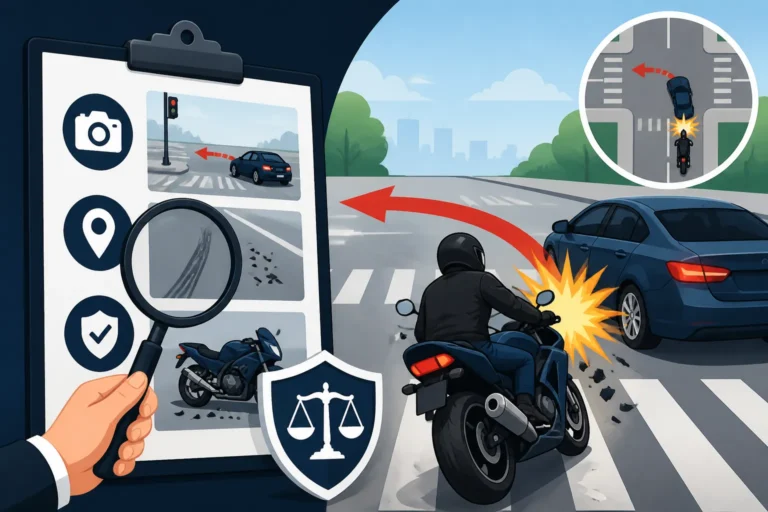
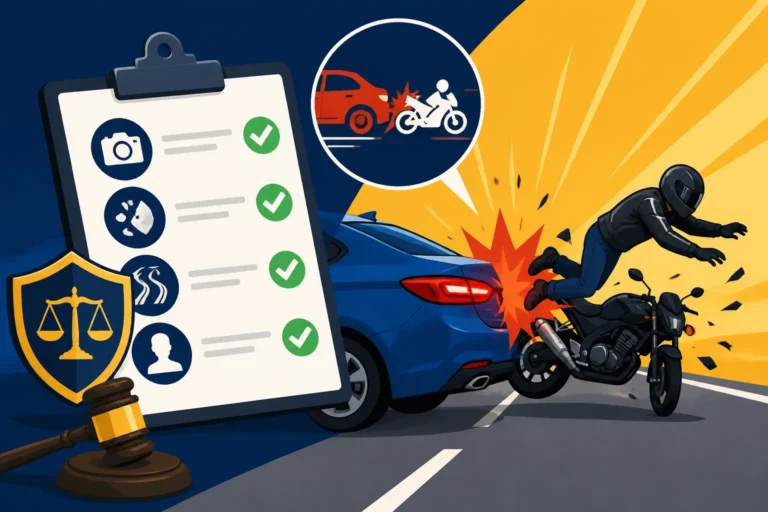
The cornerstone of any successful motorcycle accident claim in California is robust evidence. Without it, you're essentially relying on your word against the other driver's, and in the eyes of insurance companies and potentially a jury, that's often not enough. Gathering compelling evidence immediately after an accident is crucial for Proving Fault in a Motorcycle Accident. This includes taking extensive photos and videos of the accident scene from multiple angles, capturing vehicle damage, road conditions, traffic signs, and any visible injuries. If you can, getting photos of the other driver's license plate and insurance information is vital.
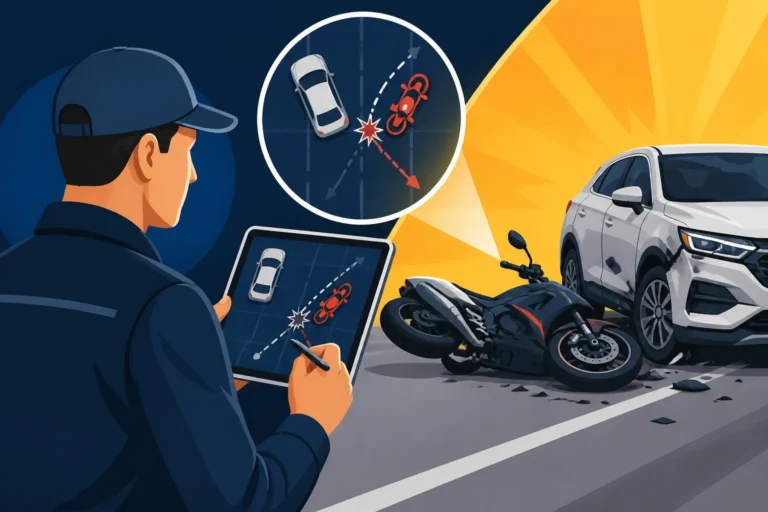
Beyond photos, witness statements can be incredibly powerful. Other drivers, pedestrians, or even nearby business owners might have seen what happened. Their unbiased accounts can corroborate your version of events and counter any false narratives the other driver or their insurance company might attempt to create. The police report, while not always the final word on fault, provides an official account and often includes initial assessments and diagrams that can be strong evidence. However, it's essential to remember that police reports are often based on preliminary information, and sometimes they contain inaccuracies or biases against motorcyclists. Sometimes, a police officer might assign blame to a rider without fully understanding the nuances of motorcycle operation or traffic dynamics, which is why understanding How Police Reports Establish Fault, and how they can sometimes be unfair, is key. Expert testimony from accident reconstructionists can also be invaluable, especially in complex cases, to scientifically piece together the sequence of events leading to the crash.
Specific Traffic Laws Affecting Rider Liability in California
California has some unique traffic laws that specifically pertain to motorcyclists, and these can heavily influence fault determinations. One of the most significant, and often misunderstood, is lane splitting.
-
Lane Splitting: California is the only state where lane splitting is explicitly legal. This means that a motorcyclist can ride between lanes of stopped or slowly moving traffic on freeways. While legal, how you lane split matters. If you were lane splitting at an excessive speed or in an unsafe manner, it could still be used by an insurance company to assign you a percentage of fault in an accident. For example, if you were splitting lanes at 50 mph while traffic was moving at 5 mph, an adjuster might argue your speed was unsafe given the conditions, even if the driver who hit you was clearly negligent. Conversely, if done safely, Lane Splitting and Motorcycle Accident Liability, should not automatically result in fault being assigned to the rider.
-
"I Didn't See the Motorcycle" Defense: This is perhaps the most common (and frustrating) defense offered by drivers who cause motorcycle accidents. While it’s often true that drivers genuinely didn't see a motorcycle, legally, "I didn't see them" is not a valid excuse for negligence. Drivers have a duty to operate their vehicles safely and be aware of their surroundings, including looking for motorcycles. Many accidents, such as Left-Turn Motorcycle Accidents Explained, occur because a driver fails to adequately check for oncoming traffic, including motorcycles. This defense often highlights the driver's inattention, not the rider's fault.
-
Headlight Use: California Vehicle Code section 25650 requires motorcycles to have a headlight on at all times, day or night. While a driver cannot use your unlit headlight as an excuse for running you over, an insurance company could attempt to argue that if your headlight wasn't on, it contributed to the "unseen" factor and therefore your own partial fault. It’s a subtle but important detail that riders need to be aware of.
Understanding these specific laws and how they might be interpreted (or misinterpreted) by others is crucial when navigating a claim in California. You'll often find insurance adjusters looking for any reason to shift blame, and these nuanced laws are prime targets for their arguments. This is often how How Insurance Companies Assign Blame to Riders, can unfortunately play out.
| Fault Percentage Assigned to Rider | Impact on $100,000 Settlement | Net Payout Example |
|---|---|---|
| 0% (Other driver fully at fault) | No reduction | $100,000 |
| 10% (Minor rider fault) | 10% reduction | $90,000 |
| 25% (Moderate rider fault) | 25% reduction | $75,000 |
| 50% (Equal shared fault) | 50% reduction | $50,000 |
| 75% (Major rider fault) | 75% reduction | $25,000 |
| 99% (Almost entirely rider fault) | 99% reduction | $1,000 |
This table illustrates how California's pure comparative negligence system could affect a hypothetical $100,000 settlement. Your actual outcome will depend on the unique facts of your case and the total proven damages.
Protecting Your Claim Under California's Fault Laws
After a motorcycle accident, the steps you take in the immediate aftermath can significantly impact your ability to recover compensation under California’s fault laws. It's a stressful time, but remaining calm and strategic is incredibly important.
Immediate Steps After a California Motorcycle Accident
The moments immediately following a crash are critical. First and foremost, ensure your safety and the safety of others. If possible, move to a safe location away from traffic. Beyond that, there are several key actions that can help protect your claim:
- Seek Medical Attention: Even if you feel fine, adrenaline can mask serious injuries. Get checked out by paramedics at the scene or go to an emergency room immediately. Delays in seeking medical care can be used by insurance companies to argue that your injuries weren't serious or weren't caused by the accident. Documenting your injuries is paramount. This initial medical record is vital for any subsequent claim.
- Contact Law Enforcement: Call 911. A police report creates an official record of the accident, even if police don't always assign fault definitively. It will include details like the date, time, location, involved parties, and sometimes witness information.
- Gather Evidence at the Scene: If your physical condition allows, start collecting evidence. Take photos and videos of everything: your motorcycle, the other vehicle(s), road conditions, skid marks, traffic signals, surrounding businesses, and any visible injuries. Exchange contact and insurance information with all involved parties. Get names and phone numbers of any witnesses. Remember, a picture truly is worth a thousand words when it comes to illustrating what happened. For a comprehensive guide, check out What to Do After a Motorcycle Accident.
- Do NOT Admit Fault: This is perhaps the most crucial piece of advice. Never apologize or admit fault, even casually, at the scene of an accident. Anything you say can and will be used against you by insurance companies. Stick to the facts when speaking with police, but do not speculate or take responsibility for the crash. Why You Should Never Admit Fault at the Scene, is a rule to live by for any accident.
Following these steps diligently lays a strong foundation for your claim and helps counter any attempts by the at-fault driver's insurance company to shift blame onto you.
The Importance of Legal Counsel in Navigating Fault Disputes
Given the complexities of California's pure comparative negligence laws and the aggressive tactics often employed by insurance companies, having experienced legal representation on your side is not just helpful—it's often essential. Many motorcyclists try to handle their claims alone, only to find themselves overwhelmed and receiving lowball offers.
An attorney specializing in motorcycle accidents understands the unique biases against riders and knows how to counter them. They can:
- Conduct Independent Investigations: They won't just rely on the police report. They'll gather additional evidence, interview witnesses, and potentially bring in accident reconstruction experts to build the strongest possible case for you. This is crucial for disputes involving Shared Fault in Motorcycle Accidents.
- Navigate Legal Nuances: They understand California's specific traffic laws, including lane splitting regulations, and can argue effectively against claims of rider fault.
- Deal with Insurance Companies: They will handle all communications and negotiations with insurance adjusters, protecting you from common tactics designed to minimize your payout or trick you into admitting fault. They know how to challenge Rider Bias in Fault Determination.
- Accurately Value Your Claim: Beyond visible damages, an attorney can help you account for all your losses, including future medical expenses, lost earning capacity, pain and suffering, and other non-economic damages that are often overlooked by individuals.
- Represent You in Court: If a fair settlement cannot be reached, they are prepared to take your case to trial, advocating for your rights before a jury.
Trying to take on a well-funded insurance company by yourself, especially when you're recovering from injuries, is a daunting task. An attorney levels the playing field, ensuring that your rights are protected and that you receive the maximum compensation you deserve under California's fault laws. They are your strongest advocate in proving the other driver was clearly at fault, or at least minimizing your own percentage of blame.
Disclaimer
Please remember that this article provides general information and insights into California's motorcycle accident fault laws and does not constitute legal advice. Every accident is unique, and the information presented here may not apply to your specific situation. It is always recommended to consult with a qualified legal professional to discuss the details of your case and receive personalized advice.