Motorcycle Accident Fault Laws in Georgia
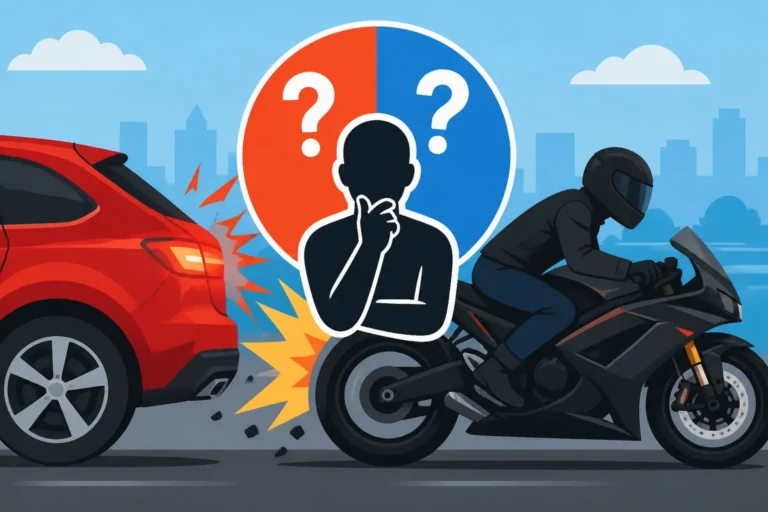
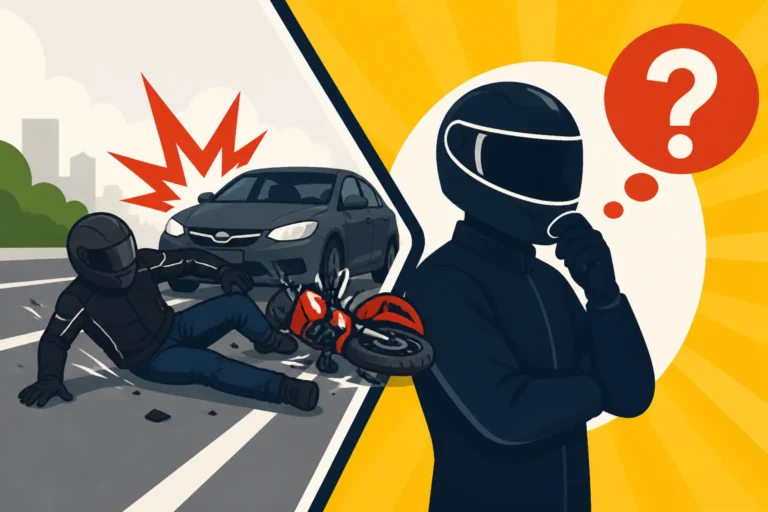
When you've been in a motorcycle accident in Georgia, one of the biggest headaches – beyond the physical pain and property damage – is figuring out who's actually at fault. It feels like a massive weight on your shoulders, especially when you're trying to heal and get your life back on track. This comprehensive guide is here to demystify Georgia's motorcycle accident fault laws, helping you understand how blame is assigned and what that means for your potential claim.
Understanding Georgia's Modified Comparative Negligence Rule
Getting into a motorcycle accident is stressful enough, but navigating the legal aftermath, especially when it comes to fault, can feel like trying to ride a bike blindfolded. In Georgia, we operate under a specific set of rules when it comes to determining fault and how that impacts your ability to recover damages: the modified comparative negligence rule. This isn't some obscure legal jargon; it's a fundamental principle that will directly influence your motorcycle accident claim. It essentially means that even if you share some of the blame for the crash, you might still be able to get compensation, but there's a critical catch.
The 50 Percent Bar Rule Explained
This is where Georgia's system really kicks in. Unlike some states that have "pure" comparative negligence (where you can recover even if you're 99% at fault, just with a drastically reduced payout), Georgia employs a modified version, often called the "50 percent bar rule." What this means is simple, yet incredibly important: if you are found to be 50% or more at fault for the motorcycle accident, you are legally barred from recovering any damages from the other party. Zero. Zilch. Nada.
Imagine you're cruising down Peachtree Street in Atlanta, and another driver pulls out in front of you without looking. Clearly, they're mostly at fault. But let's say an investigation reveals you were going just a few miles over the speed limit. A jury might assign 80% fault to the other driver and 20% to you. In this scenario, since your fault is less than 50%, you can still recover. However, your total damages would be reduced by that 20% share of fault. So, if your damages totaled $100,000, you'd only receive $80,000. Now, if that same jury decided you were 50% or 51% at fault because, perhaps, you weren't wearing a helmet and were deemed to be contributing to your own injuries, or you were riding aggressively, your entire claim would be thrown out under Georgia law. This rule means every percentage point matters immensely. It's why insurers fight so hard to assign a higher percentage of fault to riders, because crossing that 50% threshold completely absolves them of liability. Understanding this aspect of How the 50% Fault Rule Works is crucial for any rider in Georgia.
How Shared Fault Impacts Your Settlement
When shared fault comes into play, it directly impacts the final settlement amount you might receive. Insurance adjusters and, if it goes to trial, juries will meticulously review all the evidence to assign a percentage of fault to each party involved. This isn't just a casual estimate; it's often a highly contentious part of the claims process. For instance, if you were involved in a collision with a car that made an illegal turn on a busy street in Savannah, and you sustained significant injuries, the car driver might be assigned 90% of the blame. If your total damages (medical bills, lost wages, pain and suffering, property damage) are $150,000, you would then be eligible to receive $135,000 (90% of the total).
However, the reverse is also true. Let's say you were lane splitting on I-75 in Atlanta, which is not legally permitted in Georgia, and a car unexpectedly merged into your lane, causing a crash. While the car driver might still bear some responsibility for an unsafe lane change, your act of lane splitting could lead to a significant portion of the fault being assigned to you. If a judge or jury determines you were 60% at fault, then under Georgia's modified comparative negligence rule, you would recover nothing. This complex interplay means that even minor actions or circumstances can dramatically alter the outcome of your claim, making it vital to understand When Both Riders and Drivers Share Fault.
Key Factors in Determining Fault for Georgia Motorcycle Accidents
Determining who is truly at fault in a motorcycle accident in Georgia is rarely straightforward. It involves a deep dive into various pieces of evidence and a careful analysis of the circumstances leading up to the crash. It’s not just about what happened, but why it happened, and who had the legal duty to prevent it. This process can feel daunting, especially when you're recovering from injuries, but knowing what factors are considered can help you understand the landscape.
The Role of Traffic Laws and Violations
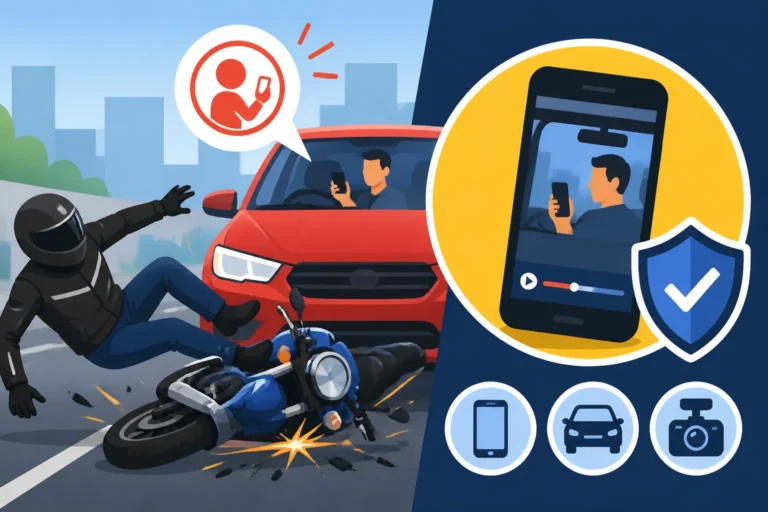
Traffic laws are the bedrock of fault determination. Every driver, including motorcyclists, has a legal duty to obey the rules of the road. When someone violates a traffic law, and that violation directly contributes to an accident, it's a strong indicator of fault. For example, if a driver failed to yield the right-of-way at an intersection in Athens and crashed into you, their failure to yield is a direct violation and a primary cause. Similarly, if a car driver was texting and driving – a form of Motorcycle Accidents Caused by Distracted Driving – and swerved into your lane, their distraction would be a significant factor in assigning blame.
Conversely, if you, as the motorcyclist, were speeding through a residential area in Macon or performing an illegal maneuver, any resulting crash could lead to you bearing some, or even significant, fault. For instance, while often safer for riders, lane splitting is not legal in Georgia. If you were injured while lane splitting, even if another driver made an error, your violation of the law could be used against you. The police report will often document any observed traffic violations, which serves as initial evidence, though it's not always the final word. Understanding How Traffic Violations Affect Fault is critical, as even a minor infraction on your part can be used by the opposing party's insurance company to reduce or deny your claim.
Collecting and Presenting Evidence of Fault
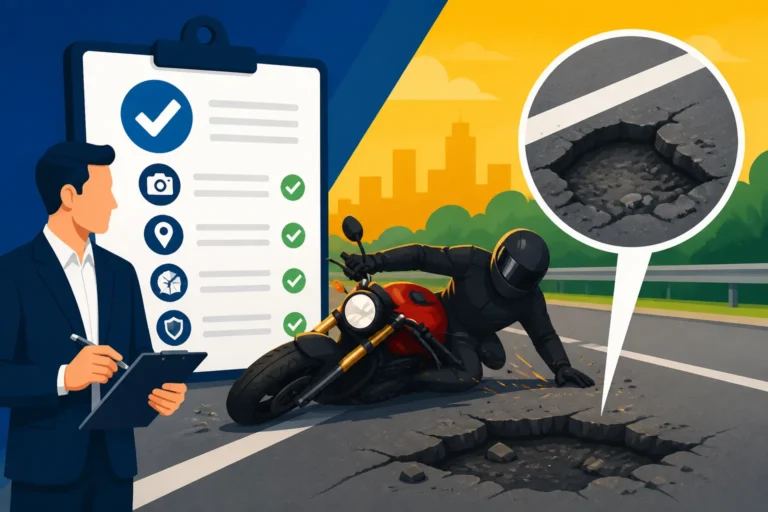
Proving fault isn't about finger-pointing; it's about building a solid case with verifiable evidence. After a motorcycle accident, what you do in those crucial first hours and days can make or break your claim. The evidence tells the story of the crash, and the more compelling and complete your narrative, the better your chances of holding the negligent party accountable.
- Police Reports: The accident report filed by the Georgia State Patrol or local police (like the Atlanta Police Department or Fulton County Sheriff's Office) is often the first piece of official evidence. It details the officers' observations, witness statements, and any citations issued. While not always conclusive, it's a vital starting point. However, remember, police reports can sometimes contain errors or incomplete information, and it's important to know How a Police Report Can Hurt Your Claim if it inaccurately assigns blame.
- Witness Statements: Eyewitnesses can provide invaluable, objective accounts of what happened. Their unbiased perspective can corroborate your version of events or contradict the other driver's claims. Getting contact information for any witnesses at the scene is paramount.
- Photographs and Videos: Pictures are worth a thousand words, especially in accident reconstruction. Photos of vehicle damage, road conditions (like debris or potholes), traffic signs, skid marks, and your injuries are powerful evidence. Dashcam footage from either vehicle or nearby businesses can provide irrefutable proof.
- Medical Records: Your medical records thoroughly document your injuries, treatments, and prognosis. They connect your physical damages directly to the accident, establishing the severity and cost of your recovery.
- Accident Reconstruction: For complex or severe accidents, an accident reconstruction expert may be hired. These professionals use scientific principles and specialized software to recreate the accident sequence, pinpointing factors like speed, direction of travel, and points of impact. This can be particularly useful in cases where liability is heavily disputed. Getting an expert opinion can be pivotal in Proving Fault in a Motorcycle Accident.
Collecting this evidence requires diligence and often an understanding of what to look for, which is why many riders seek professional help after a crash.
| Factor | Description | Impact on Fault Determination |
|---|---|---|
| Traffic Law Violations | Running a red light, speeding, illegal turns, unsafe lane changes, distracted driving, impaired driving. | Strong indicator of negligence. If the violation caused or contributed to the accident, the violator will likely bear a significant portion of fault. Even minor violations by the motorcyclist can reduce their potential recovery. |
| Witness Statements | Accounts from impartial third parties who observed the accident. | Can corroborate or contradict parties' versions of events. Highly valuable, especially if police report is inconclusive or disputed. |
| Physical Evidence | Skid marks, debris, vehicle damage, road conditions, traffic signs, traffic camera footage, dashcam footage, photographs of the scene/injuries. | Provides tangible proof of impact, speed, direction, and environmental factors. Can be used by accident reconstructionists to recreate the crash and establish causality. |
| Police Reports | Official documentation of the accident, including officer observations, citations, and initial assessment of fault. | Serves as an initial, important record. While not always the final word, it influences insurance company's early assessment. Inaccurate reports can be challenged. |
| Medical Records | Documentation of injuries, treatments, and prognosis resulting from the accident. | Establishes the link between the accident and the damages suffered. Helps quantify the extent of injuries and the associated costs, which are part of the total damages in a claim. |
| Expert Testimony | Accident reconstructionists, medical experts, economists. | Provides specialized analysis and opinions. Can clarify complex aspects of the crash mechanics, injury causation, or financial impact, especially in serious injury cases or when fault is heavily contested. |
Common Challenges in Motorcycle Accident Fault Claims in Georgia
Even when the other driver's fault seems crystal clear, pursuing a motorcycle accident claim in Georgia can be riddled with challenges. Unfortunately, motorcyclists often face an uphill battle due to pervasive stereotypes and the tactics employed by insurance companies. It’s not just about proving what happened; it's about overcoming preconceived notions and navigating a system that isn't always fair.
Overcoming Rider Bias and Stereotypes
This is a frustrating reality for many riders: the unfair perception that motorcyclists are inherently reckless. You might be the safest rider on the road, wearing all your gear, obeying every law, but in the eyes of some, the mere fact that you were on a motorcycle means you were somehow "asking for it." This bias can manifest in various ways, from initial police assessments to how a jury perceives you. Insurance companies are well aware of these biases and unfortunately, they often try to exploit them. They might try to argue that you were speeding, weaving through traffic, or engaging in dangerous maneuvers, even without concrete evidence. This makes it crucial to understand How Insurers Use Rider Stereotypes Against You.
Imagine you're involved in a collision with a car near Lake Lanier. The car driver claims they "didn't see you," a common refrain that often unfairly shifts blame onto the motorcyclist for not being visible enough, rather than acknowledging the driver's inattention. This tactic, known as the 'I Didn't See the Motorcycle' Defense Explained, can be incredibly difficult to counter without strong evidence. It’s not enough to simply state you weren’t at fault; you often need to proactively demonstrate it, which involves meticulous evidence collection and sometimes expert testimony to prove the other driver's negligence.
The Insurance Company's Role in Assigning Blame
Insurance companies are not on your side. Their primary goal is to pay out as little as possible, and that often means shifting as much blame as they can onto you, the injured motorcyclist. They have teams of adjusters, investigators, and lawyers whose job it is to find any reason—no matter how small—to reduce your settlement or deny your claim entirely. They will scrutinize every detail, from your riding history to whether you were wearing a DOT-compliant helmet.
They might send you a "lowball" settlement offer early on, hoping you'll accept it before you fully understand the extent of your injuries or the true value of your claim. They'll also look for any inconsistencies in your statements, or "gaps" in your medical treatment, to argue that your injuries aren't as severe as you claim or aren't directly related to the accident. This aggressive approach makes it challenging for unrepresented individuals to navigate the claims process effectively. For a deeper understanding of these tactics, it helps to know How Insurance Companies Assign Blame to Riders. They're masters at this game, and without someone advocating for your rights, you could easily be shortchanged.
Navigating the Claims Process in Georgia
The aftermath of a motorcycle accident in Georgia can be a confusing maze, especially when you're trying to heal and deal with your injuries. Beyond understanding the fault laws, you need a clear roadmap for how to actually pursue your claim and ensure you get the compensation you deserve. It’s not just about knowing your rights; it’s about knowing the steps to take to protect them.
Initial Steps After a Motorcycle Accident
What you do immediately following an accident can significantly impact the strength of your claim later on. First and foremost, your safety and health are paramount. Seek medical attention right away, even if you feel fine. Some serious injuries, like concussions or internal bleeding, may not manifest symptoms immediately. Delaying treatment can not only jeopardize your health but also give insurance companies an opening to argue that your injuries weren't directly caused by the accident.
After ensuring your safety and getting medical care, thoroughly document everything at the scene. This includes taking extensive photographs of your motorcycle, the other vehicle, the road conditions, skid marks, traffic signals, and any visible injuries. Exchange information with the other driver, but avoid discussing fault or apologizing, as these statements can be used against you. Get contact information for any witnesses. Filing a detailed police report is also a critical step, as it creates an official record of the incident. This initial documentation is the foundation upon which your entire claim will be built, so understanding What to Do After a Motorcycle Accident is crucial.
Protecting Your Rights and Maximizing Your Recovery
In Georgia, protecting your rights starts with a proactive approach and a clear understanding of the legal landscape. One of the most important things you can do is to continue all recommended medical treatment. Keep meticulous records of all your medical appointments, diagnoses, treatments, medications, and any out-of-pocket expenses. Also, keep a detailed journal of your pain, limitations, and how the injuries impact your daily life. This personal account can be powerful evidence for non-economic damages like pain and suffering.
Be wary of speaking directly with the other driver's insurance company without legal counsel. They may try to get you to provide a recorded statement, which can later be used to undermine your claim. Stick to the facts, provide necessary contact information, but defer detailed discussions about fault or injuries until you've consulted with an attorney. For cases involving serious injuries, complex fault disputes, or significant damages, having an experienced legal professional by your side can be invaluable. They can help you navigate the nuances of Georgia's comparative negligence laws, gather the necessary evidence, negotiate with insurance companies, and ensure all deadlines are met. This will significantly improve your chances of maximizing your motorcycle accident settlement.
Ultimately, the goal is to build a comprehensive case that clearly demonstrates the other party's fault and the full extent of your damages, ensuring that Georgia's fault laws work for you, not against you.
Disclaimer
Please remember that this information is for educational purposes only and does not constitute legal advice. Motorcycle accident laws, especially those concerning fault and negligence, can be complex and vary based on specific circumstances. It is always recommended to consult with a qualified legal professional regarding your individual situation in Georgia.