What to Do If the Driver Fled the Scene
The jarring impact of a motorcycle accident is horrific enough, but when the other driver flees the scene, it adds a layer of shock, fear, and profound frustration. You're left injured, your bike damaged, and without any information on the person responsible. This guide aims to walk you through the critical steps you need to take immediately after a hit-and-run and what to do in the days and weeks that follow to protect your health, your rights, and your potential claim.
Immediate Actions at the Scene
When a driver hits you and then speeds off, the first instinct might be to chase them down or to feel completely overwhelmed. Neither of these reactions will serve you best. Your safety and securing the scene are paramount, even when the other party has vanished.
Prioritizing Your Safety and Well-being
First and foremost, assess your physical condition. Motorcycle accidents often result in significant injuries, some of which might not be immediately apparent due to adrenaline. If you're able to move, try to get yourself and your motorcycle out of the flow of traffic to a safer location on the shoulder or sidewalk. This prevents further accidents and protects you from ongoing danger. Even if you feel okay, symptoms like dizziness, nausea, or localized pain can appear hours later.
It's absolutely critical to resist the urge to pursue the fleeing vehicle. While anger and a desire for justice are understandable, chasing an unknown driver can escalate the situation, put you in further danger, and potentially lead to another accident. Your primary focus should be on your immediate safety and then on documenting everything you can from the original scene.
Remember, a hit-and-run is a serious criminal offense. The driver who fled committed a crime, and your actions immediately following the incident can significantly impact both the police investigation and any future insurance or legal claims you might pursue. Even if you're shaken, try to stay as calm as possible to think clearly about the next steps.
Contacting Law Enforcement and Emergency Services
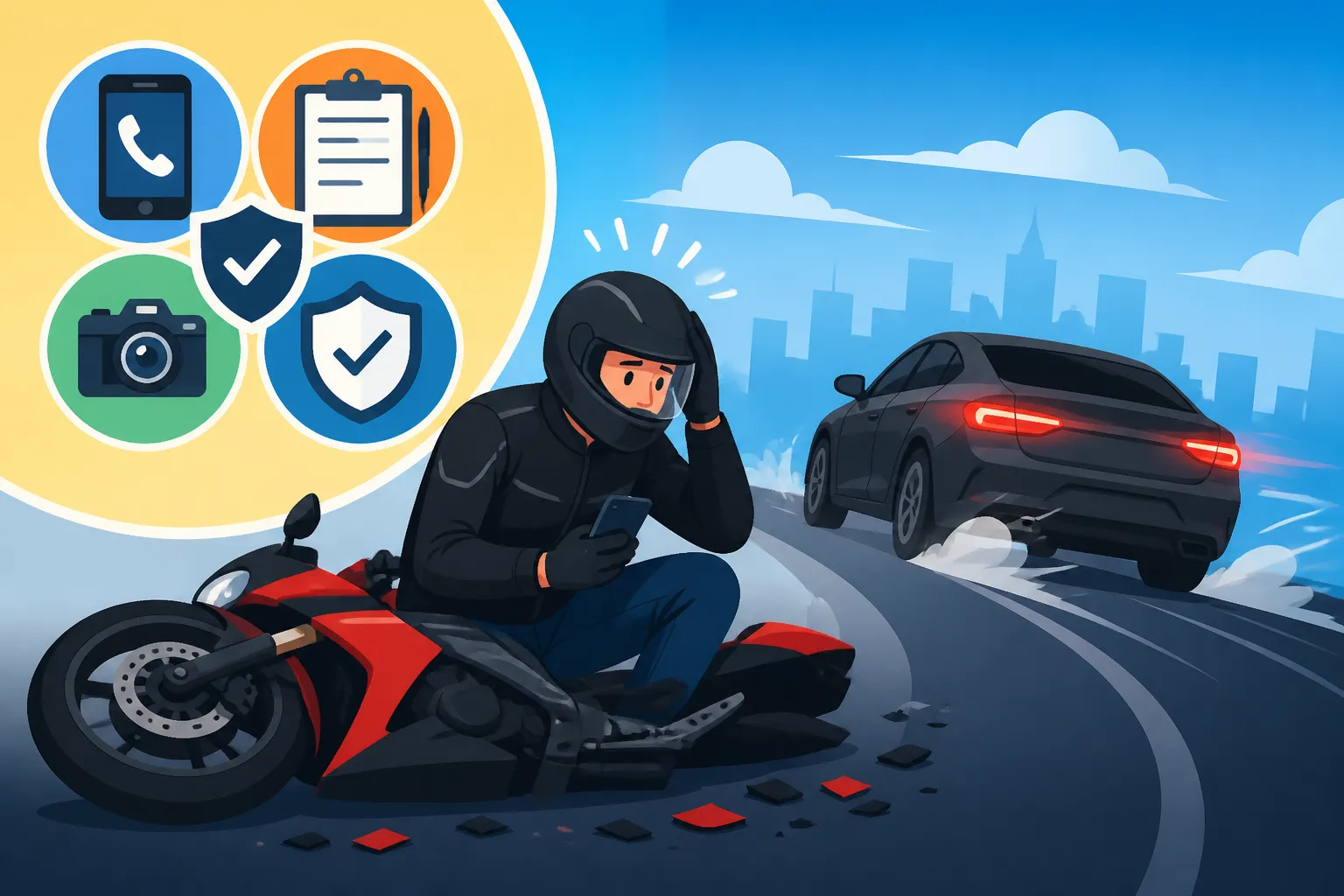
As soon as you are safely out of harm's way, your next call should be to 911. Report the hit-and-run immediately. Don't delay, as every minute counts in tracking down a fleeing driver. Provide the dispatcher with your exact location, a description of yourself and your motorcycle, and critically, any details you remember about the other vehicle. Even seemingly small details, like the make, model, color, or even just a partial license plate number, can be incredibly helpful. Mention any distinguishing features such as bumper stickers, dents, or specific types of wheels.
Beyond reporting the crime, make sure to request emergency medical services if you have any injuries, no matter how minor they seem. Medical professionals can assess your condition, provide immediate care, and create official documentation of your injuries, which is vital for any future claims. The police will respond to investigate the accident, create an official police report, and begin the search for the hit-and-run driver. This report is often the cornerstone of any subsequent insurance claim or legal action. Without it, proving the incident occurred and that another party was at fault becomes much more challenging.
Even if the driver is long gone, the police report will officially document the incident, your injuries, and the damage to your motorcycle. This is crucial for your insurance company. Remember, when you're interacting with law enforcement, stick to the facts and describe what happened without speculating or admitting fault. If you're unsure about what to say to police after a motorcycle accident, simply state the objective facts.
Gathering Initial Evidence
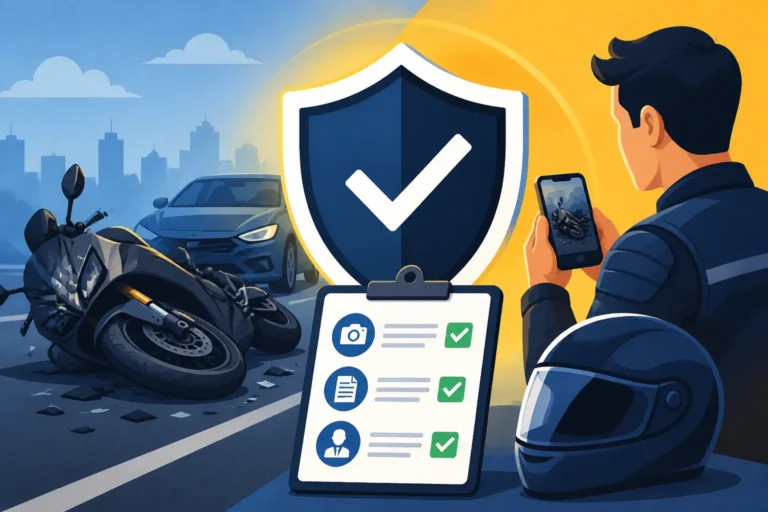
While you wait for law enforcement and emergency services to arrive, if your condition allows, start gathering as much evidence as you possibly can. This might feel overwhelming when you're hurt and scared, but the more information you can collect at the scene, the better your chances of identifying the responsible party and building a strong case. Take out your phone and begin snapping pictures and videos.
Take photos from various angles, capturing the overall scene, your motorcycle's damage, your injuries, and any debris left on the road. Look for paint chips, shattered glass, or pieces of the other vehicle that might have broken off. These small fragments can provide crucial clues about the other vehicle's color, make, and even model. Make sure to photograph any skid marks on the pavement, the road conditions, and any relevant traffic signs or signals. These visual records are invaluable for proving fault in a motorcycle accident.
Speak to any potential witnesses who may have seen the accident occur or observed the other vehicle fleeing. Ask for their names, contact information, and a brief description of what they saw. Even if they only saw the vehicle speed away, their testimony can be incredibly useful. People are often more willing to help immediately after an incident, so seize the opportunity. For more detailed guidance on what visual evidence to collect, check out our guide on Photos to Take to Prove Motorcycle Fault.
The Investigative Process
Once the initial chaos subsides, the real work of tracking down the driver begins. This involves a collaborative effort between you, law enforcement, and potentially others who can assist in piecing together what happened.
Working with Law Enforcement on the Investigation
After filing the initial police report, the investigating officers will try to locate the driver. While police departments prioritize hit-and-run cases, especially those involving significant injury, their resources can sometimes be stretched thin. It’s important to understand that your active participation can significantly aid their efforts. Follow up with the police department a few days after the accident to get a copy of your accident report and to ask about the status of the investigation.
Be prepared to provide additional details that might come to mind later. Did you notice a particular type of wheel, an unusual exhaust sound, or a sticker on the back window? Sometimes, a mental image becomes clearer once the adrenaline fades. The police will use the information you provide, along with any other evidence, to search for the vehicle. They might issue alerts to other law enforcement agencies or check local body shops for vehicles matching the description of the hit-and-run car, looking for fresh damage.
While it can feel disheartening if the investigation doesn't yield immediate results, remember that persistence pays off. Maintaining communication with the assigned officer can keep your case on their radar. Understanding How Police Reports Establish Fault can give you insight into the evidence they prioritize.
Utilizing Available Technology and Resources
In our modern world, technology offers powerful tools for tracking down hit-and-run drivers. One of the most effective resources is surveillance footage. Many businesses, traffic intersections, and even private residences now have security cameras. If your accident occurred near a commercial area or a busy intersection in a city like Seattle or Austin, there's a good chance that nearby cameras captured footage of the incident or the fleeing vehicle.
You or your legal representative should proactively seek out this footage. Contact businesses directly, ask residents if they have doorbell cameras (like Ring or Arlo), and inquire with local government agencies about traffic cameras. The footage from these cameras can be invaluable, often providing clear images of the vehicle, its license plate, or even the driver. However, many systems overwrite footage quickly, so time is of the essence. Don't delay in making these inquiries.
Another resource gaining traction is dashcam footage. More vehicles, including many commercial trucks and even some private cars, are equipped with dashcams. If there were other vehicles around at the time of the accident, their drivers might have captured valuable evidence. If you witnessed other vehicles, try to get their contact information or note their license plates for the police to follow up on.
Canvassing for Witnesses and Surveillance Footage
Beyond the immediate aftermath, a bit of old-fashioned detective work can be incredibly fruitful. Go back to the scene of the accident at the same time of day it occurred. The people who frequent that area – commuters, local business owners, residents – might be the same people who were there when your accident happened. They might have seen something, even if they didn't stop at the time.
Talk to store clerks, ask people waiting at bus stops, or even put up a small "witness wanted" sign with a brief description of the incident and your contact information (or that of your attorney). Someone might recall a detail they didn't think was important initially, or they might remember seeing the other vehicle speeding away. Witnesses can play a crucial role, as their independent accounts can corroborate your story and provide additional identifying information about the other driver or vehicle.
Inquire about local businesses or homes that might have security cameras pointed towards the street. Many modern doorbell cameras and security systems can capture clear video of traffic. Politely explain your situation and ask if they would be willing to review their footage from the approximate time of the accident. Even if their camera didn't capture the actual impact, it might show the hit-and-run vehicle passing by, giving you a direction of travel, a clearer description, or even a partial license plate. For more on this, consider reading about How Witnesses Affect Motorcycle Fault.
Navigating Your Insurance Claim
One of the biggest concerns after a hit-and-run is how you'll cover your medical bills, bike repairs, and other damages if the at-fault driver is never found. This is where your own insurance policy becomes your critical safety net.
Understanding Uninsured Motorist Coverage
This is arguably the most important aspect of your insurance policy if you're involved in a hit-and-run. Uninsured/Underinsured Motorist (UM/UIM) coverage is designed to protect you when the at-fault driver either has no insurance or flees the scene and cannot be identified. In many states, like New York or Illinois, UM coverage is mandatory or at least highly recommended, as it can be a lifesaver for motorcyclists.
There are typically two components to UM/UIM:
- Uninsured Motorist Bodily Injury (UMBI): This covers your medical expenses, lost wages, and pain and suffering if you are injured by an uninsured or hit-and-run driver.
- Uninsured Motorist Property Damage (UMPD): This covers the damage to your motorcycle if an uninsured or hit-and-run driver is at fault.
If you have this coverage, your own insurance company will step in to cover your damages up to your policy limits, essentially acting as the other driver's insurance. This is why having robust UM/UIM coverage is so vital for motorcyclists. Without it, you might be left with massive medical bills and repair costs out of your own pocket. If you're unsure about your coverage, now is the time to review your policy or speak to your insurance agent. Understanding How UM/UIM Coverage Increases Payouts can make a huge difference in your recovery.
Filing a Claim with Your Own Insurance
After a hit-and-run, even if the other driver isn't identified, you'll need to file a claim with your own insurance company. You should do this as soon as possible after reporting the incident to the police. Provide them with the police report number and all the details you’ve gathered, including witness statements, photos, and any surveillance footage. Your insurer will likely want to conduct their own investigation into the hit-and-run incident to verify that you meet the criteria for UM/UIM coverage.
Be prepared for your insurance company to ask detailed questions about the accident, the other vehicle, and your efforts to identify the driver. Cooperate fully, but again, stick to the facts. Don't speculate or admit any fault. If you have collision coverage, that can also cover the damage to your motorcycle, though it will likely involve paying your deductible. Your medical expenses might first go through your health insurance, but UMBI coverage can step in to cover deductibles, co-pays, and other costs not covered, including your lost wages and pain and suffering.
It's a common misconception that filing a claim with your own insurance for a hit-and-run will automatically increase your premiums. While every situation is unique, if you are clearly not at fault, many states and insurance policies protect you from premium increases when utilizing UM/UIM coverage for a hit-and-run. Consult your policy or agent for specifics. The aim is to ensure you don't face undue financial burden because of someone else's reckless behavior.
Here's a quick overview of how different coverages might apply:
| Coverage Type | What it Covers in a Hit-and-Run | Key Requirement |
|---|---|---|
| Uninsured Motorist Bodily Injury (UMBI) | Your medical bills, lost wages, and pain and suffering. | Other driver unknown/uninsured |
| Uninsured Motorist Property Damage (UMPD) | Damage to your motorcycle. | Other driver unknown/uninsured |
| Collision Coverage | Damage to your motorcycle (requires deductible, but covers regardless of fault). | Typically requires deductible |
| Medical Payments (MedPay) / Personal Injury Protection (PIP) | Immediate medical bills, regardless of fault (some states). | Varies by state and policy |
Dealing with Property Damage and Medical Bills
The immediate aftermath of a motorcycle accident often brings a cascade of concerns, particularly regarding property damage and mounting medical bills. If you have comprehensive or collision coverage on your motorcycle policy, you can typically initiate a claim for your bike's repairs or total loss through that. Remember, using your collision coverage will usually require you to pay your deductible first, but it gets your bike fixed. If the hit-and-run driver is eventually identified, your insurance company may pursue them to recover their costs, including your deductible.
For your medical bills, your health insurance will likely be the primary payer. However, as discussed, your UMBI coverage can act as secondary coverage, picking up where your health insurance leaves off, covering co-pays, deductibles, and other out-of-pocket expenses. It’s crucial to keep meticulous records of all medical appointments, treatments, prescriptions, and any related costs. This documentation is essential for demonstrating the full extent of your damages.
Beyond immediate costs, think about potential long-term impacts. Motorcycle accident injuries can be severe, sometimes requiring ongoing physical therapy, rehabilitation, or even future surgeries. Keep track of any lost wages if your injuries prevent you from working. Documenting all these financial and personal impacts is key to building a comprehensive claim, whether through your own UM/UIM coverage or if the at-fault driver is eventually located.
Legal Considerations and Seeking Professional Help
Even without an identified at-fault driver, a hit-and-run motorcycle accident is a complex legal situation. Understanding your rights and having expert guidance can make all the difference.
The Importance of Legal Counsel in Hit-and-Run Cases
Given the complexities of a hit-and-run, especially when the at-fault driver is unknown, consulting with a qualified motorcycle accident lawyer is highly advisable. They understand the nuances of these cases and can guide you through the process, protecting your rights and maximizing your chances of recovery. A lawyer can help you navigate the police investigation, ensuring all relevant evidence is sought and documented. They can also take on the task of canvassing for witnesses or surveillance footage, contacting businesses, and reviewing their findings, which can be an enormous burden when you're recovering from injuries.
Furthermore, an attorney will be invaluable when dealing with your own insurance company. While your insurer is there to help, they are also a business. A lawyer can review your policy, ensure you understand your UM/UIM coverage, and advocate on your behalf to secure a fair settlement for your damages, including medical costs, lost wages, and pain and suffering. They understand how insurance companies assign blame to riders and how to counter potential biases or lowball offers.
If the driver is eventually found, your attorney can immediately pivot to pursuing a claim directly against them, ensuring you recover maximum compensation for your injuries and damages. This includes not only economic damages like medical bills and lost income but also non-economic damages like pain and suffering. If you're wondering, "Do you need a motorcycle accident lawyer?", in a hit-and-run scenario, the answer is almost always yes.
Understanding the Statute of Limitations
Even if the at-fault driver remains unidentified, there are strict deadlines for filing claims related to your accident. This is known as the statute of limitations. For personal injury claims, this period typically ranges from one to three years, depending on your state. For example, in California, the statute of limitations for personal injury claims is generally two years from the date of the accident. For a hit-and-run, this clock starts ticking from the date of the incident, not from when or if the driver is identified.
It’s crucial to understand these deadlines because if you miss them, you could lose your right to seek compensation entirely, even if the driver is later found or if you have strong UM/UIM coverage. A lawyer can help you keep track of these critical dates and ensure all necessary paperwork is filed on time. They can also explain if any exceptions or "tolling" provisions apply to your specific case, which might temporarily pause the statute of limitations.
This timeline applies not just to potential lawsuits against the at-fault driver (if found), but often also to filing a claim under your own uninsured motorist policy. Your insurance policy itself will likely have specific notification requirements and deadlines that are even shorter than the state's statute of limitations. Missing these internal insurance deadlines could also jeopardize your ability to recover. This is another compelling reason to seek legal advice promptly.
What Happens If the Driver Is Never Found
It's a harsh reality that despite everyone's best efforts, some hit-and-run drivers are never identified. This can be incredibly frustrating and leave you feeling helpless. However, even if the driver is never found, it does not mean you are without recourse. This is precisely why having strong Uninsured Motorist (UM) coverage on your own policy is so vital.
If the driver remains at large, your UM bodily injury coverage will typically cover your medical expenses, lost wages, and pain and suffering, up to your policy limits. Your UM property damage coverage (or collision coverage) will handle the repairs or replacement of your motorcycle. This coverage acts as a safety net, ensuring that you don't bear the full financial burden of someone else's irresponsible actions.
While you won't be able to directly sue the fleeing driver for additional damages or hold them criminally accountable, your attorney can still work with your insurance company to ensure you receive a fair settlement under your UM policy. They can help quantify your damages, negotiate with your insurer, and ensure your claim is handled equitably. Even in the absence of the other driver, you still have rights, and experienced legal counsel can help you maximize your motorcycle accident settlement.
Disclaimer
Please note that this article provides general information and does not constitute legal advice. Every motorcycle accident claim is unique, and the laws governing such claims vary by jurisdiction. It is crucial to consult with a qualified legal professional to discuss the specifics of your situation and to understand your rights and options.