Which States Have No Helmet Law at All
Riding the open road with the wind in your hair is a dream for many motorcyclists, but the reality of helmet laws can sometimes feel like a confusing maze. You might be wondering, which states actually allow you to ride without a helmet, and what are the unspoken rules or potential repercussions if you choose to do so? This guide will cut through the confusion, outlining the specific states where adult riders can legally opt out of wearing a helmet, and more importantly, what that decision could mean for your safety and any potential accident claims.
Understanding Motorcycle Helmet Laws in the US
Navigating the various motorcycle helmet laws across the United States can be tricky. It's not a one-size-fits-all situation, and what's perfectly legal in one state might land you a hefty fine or worse in another. These laws are typically categorized into "universal," "partial," and "no law" (for adults), each with its own set of rules and implications.
States with Universal Helmet Laws
First, let's briefly touch on the opposite end of the spectrum. Universal helmet laws require all motorcycle riders, regardless of age, to wear a helmet while operating or riding a motorcycle. These states are pretty straightforward: if you're on a bike, your head needs protection. As of my last check, states like California, Georgia, and New York fall into this category. The intent behind these laws is clear: to reduce head injuries and fatalities, which are disproportionately high in motorcycle accidents. For a deeper dive into these regulations, you can check out our comprehensive guide on Motorcycle Helmet Laws by State. It often feels restrictive to riders who value freedom, but the safety data tends to speak for itself when it comes to preventing catastrophic injuries.
States with Partial Helmet Laws
Then we have states with partial helmet laws. These are the most common and often the source of much confusion. Generally, these laws mandate helmet use for specific groups of riders, most commonly those under a certain age, usually 18 or 21. For instance, in a state with a partial law, riders under 21 might be required to wear a helmet, while those 21 and older have the option to ride without one. These laws often come with additional stipulations, such as requiring proof of adequate medical insurance if you choose not to wear a helmet. Florida is a prime example of a state with a partial helmet law, requiring helmets for riders under 21, but allowing those 21 and over to ride without one if they have at least $10,000 in medical insurance. This compromise attempts to balance personal freedom with public safety concerns, though it still leaves many older riders questioning their choices after a crash.
The States with No Motorcycle Helmet Law for Adults
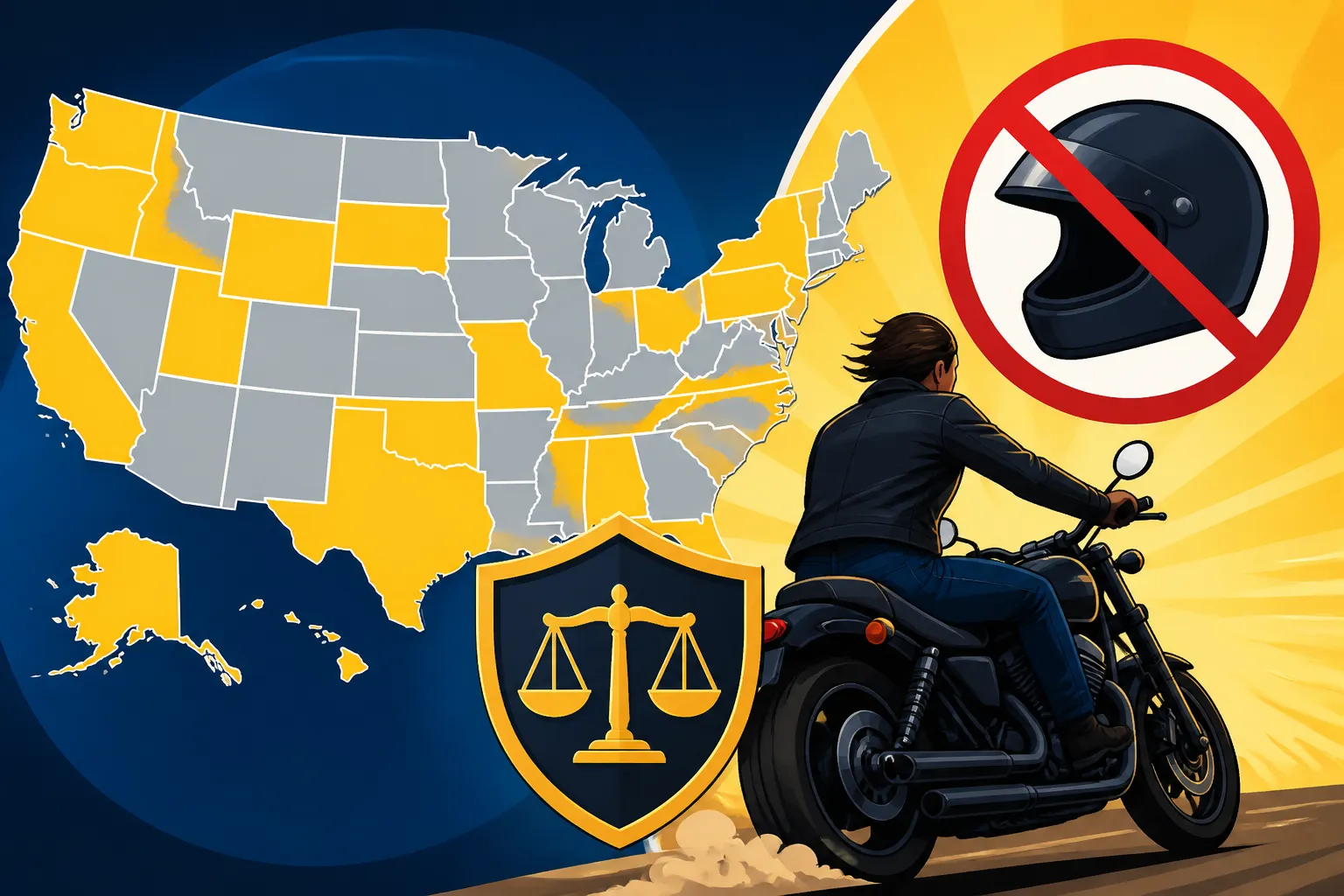
Now, for the core of our discussion. There are indeed a handful of states where adult motorcyclists are not legally required to wear a helmet at all. These are often the states that champion individual liberty and personal choice above mandated safety regulations, at least for experienced adult riders. It's important to understand that "no law" doesn't necessarily mean "no rules." These states often have caveats, like age minimums or insurance requirements, which we'll explore in more detail.
As of recent data, the states that generally do not have a universal helmet law, meaning adults 21 and over can ride without one (though specific local ordinances or insurance requirements might apply), include:
- Illinois: Riders 18 and older are not required to wear a helmet.
- Iowa: There are no helmet requirements for motorcyclists of any age.
- New Hampshire: Riders 18 and older are not required to wear a helmet.
- Colorado: Riders 18 and older are not required to wear a helmet.
- Wyoming: Riders 18 and older are not required to wear a helmet.
- Arizona: Riders 18 and older are not required to wear a helmet, provided they have liability insurance.
- Florida: Riders 21 and older can ride without a helmet if they have at least $10,000 in medical insurance coverage.
- Kentucky: Riders 21 and older can ride without a helmet if they have proof of medical insurance coverage.
- Texas: Riders 21 and older can ride without a helmet if they complete an approved motorcycle safety course or carry sufficient medical insurance.
- South Carolina: Riders 21 and older can ride without a helmet, provided they have at least $10,000 in medical insurance coverage.
- Alabama: Riders 21 and older can ride without a helmet if they carry proof of medical insurance.
- Delaware: Riders 19 and older can ride without a helmet if they have proof of insurance.
- Idaho: Riders 18 and older are not required to wear a helmet.
- Indiana: Riders 18 and older can ride without a helmet.
- Kansas: Riders 18 and older can ride without a helmet.
- Michigan: Riders 21 and older can ride without a helmet if they have an approved motorcycle safety course certificate or carry sufficient medical insurance.
- Minnesota: Riders 18 and older can ride without a helmet.
- Missouri: Riders 18 and older can ride without a helmet.
- Montana: Riders 18 and older can ride without a helmet.
- Nebraska: Riders 18 and older can ride without a helmet.
- Nevada: Riders 18 and older can ride without a helmet.
- North Dakota: Riders 18 and older can ride without a helmet.
- Ohio: Riders 18 and older can ride without a helmet.
- Oklahoma: Riders 18 and older can ride without a helmet.
- Pennsylvania: Riders 21 and older can ride without a helmet if they have two years of riding experience or complete an approved safety course.
- South Dakota: Riders of any age are not required to wear a helmet.
- Utah: Riders 21 and older can ride without a helmet.
- Vermont: Riders 18 and older can ride without a helmet.
- Virginia: Riders 21 and older can ride without a helmet if they have sufficient medical insurance.
- Washington: Riders 21 and older can ride without a helmet if they have sufficient medical insurance.
- Wisconsin: Riders 18 and older can ride without a helmet.
This list isn't exhaustive and laws can change, so it's always critical to double-check the current regulations for any state you plan to ride in, especially if you're traveling across state lines. The nuances, like those requiring specific insurance, are often overlooked until it's too late.
What "No Helmet Law" Really Means for Riders
It's easy to hear "no helmet law" and think it's a free pass to ride however you please. However, that couldn't be further from the truth. Even in states where helmets aren't legally mandated for adults, there are often other requirements and, perhaps more significantly, substantial consequences should an accident occur. The freedom to choose comes with a heightened sense of personal responsibility, both for your safety and your legal standing.
Age Restrictions and Insurance Requirements
As mentioned, many of these "no helmet law" states still impose age restrictions. Typically, riders must be 18 or 21 years or older to legally ride without a helmet. This is a common thread that runs through many partial helmet laws, acknowledging that younger, less experienced riders may benefit more from mandated protection. For instance, in states like Florida or Texas, while you might be 21 and over, you're only exempt from helmet use if you can prove you carry adequate medical insurance. This isn't just a suggestion; it's a legal requirement designed to ensure that if you are involved in a crash without a helmet, your potential medical bills won't fall entirely on public services or other drivers. It's a way for the state to mitigate the financial risk associated with increased injury severity.
Failing to meet these age or insurance criteria, even in a "no helmet law" state, can still result in a citation and potentially impact any personal injury claim you might need to make after an accident. Imagine being a 20-year-old riding helmet-free in a state with a 21-and-over rule; not only are you risking severe injury, but you're also breaking the law, which could be used against you if you seek compensation later. Always verify the specific rules of the road, especially when it comes to something as fundamental as safety gear.
The 'Helmet Defense' and Its Impact on Claims
This is perhaps the most crucial consideration for any rider choosing to go without a helmet, regardless of legality. Even in states where helmets are not legally required, insurance companies and opposing legal teams can still use your choice not to wear one against you in a personal injury claim. This is often referred to as the "helmet defense." The argument is simple: had you been wearing a helmet, your injuries—particularly head injuries—would have been less severe or avoided altogether.
For example, if you sustain a traumatic brain injury (TBI) in an accident in a "no helmet law" state, the at-fault driver's insurance company will almost certainly argue that your damages should be reduced because you contributed to the severity of your own injuries by not wearing a helmet. This could significantly reduce the amount of compensation you receive for medical bills, lost wages, and pain and suffering. Even if the other driver was clearly at fault, your decision not to wear a helmet can open the door to arguments about Comparative Negligence in Motorcycle Accidents. This is why many experienced riders, even in "no law" states, still opt for a high-quality helmet. The legal impact of the "helmet defense" can be devastating to your settlement, far outweighing the momentary feeling of freedom. Understanding How Not Wearing a Helmet Affects Your Settlement is crucial before making a choice.
The Broader Implications of Helmet Choices
Beyond the strictly legal arguments, choosing whether or not to wear a helmet has profound personal implications. Your decision affects not only your immediate safety but also the long-term trajectory of your life should an accident occur. It's a choice that weighs heavily on every rider, and it's essential to consider all angles before you hit the road.
Safety Considerations Beyond the Law
Let's be blunt: helmets save lives and prevent devastating injuries. This isn't just conjecture; it's backed by decades of research and real-world accident data. Even in states with no helmet laws, the Centers for Disease Control and Prevention (CDC) consistently recommends helmet use for all riders because they reduce the risk of head injury by 69% and the risk of death by 37%. When you choose to ride without a helmet, you are knowingly increasing your vulnerability to severe trauma, including traumatic brain injuries, facial fractures, and other critical head injuries that can lead to permanent disability or death.
Modern helmets are designed with advanced materials and engineering to absorb impact forces and protect the most vital part of your body. Brands like Shoei, Arai, and HJC produce helmets that meet rigorous safety standards, such as DOT (Department of Transportation) certification in the U.S., ECE in Europe, and Snell in North America. These certifications are a testament to their protective capabilities. While you might enjoy the wind in your hair, a high-quality full-face helmet offers protection for your entire head and face, not just the top. Consider visiting a specialty shop like Cycle Gear to try on different styles and find one that fits comfortably and securely. They can guide you through the options, from full-face to modular, open-face, and even half-helmets, all designed to offer varying degrees of protection. For more on the importance of gear, you might want to read up on Motorcycle Safety Gear and Legal Protection.
Protecting Your Rights and Your Head
Ultimately, the choice to wear a helmet is a personal one in many states. However, it's a choice that can have monumental repercussions, both for your physical well-being and your ability to recover compensation after an accident. If you're injured in a motorcycle accident and weren't wearing a helmet, insurance adjusters will almost immediately try to use that fact to minimize your claim. They'll often try to shift some of the blame for your injuries back to you, even if the other driver was clearly negligent. This tactic is specifically what The Helmet Defense Explained addresses.
To protect yourself, both on the road and in a potential legal battle, consider wearing a DOT-compliant helmet, even if it's not legally required in your state. This simple act can significantly reduce your risk of serious injury and strengthen your position if you ever need to file an insurance claim or lawsuit. Documenting everything after a crash, including any gear you were wearing, is critical. Even if you were wearing a helmet, preserving it as evidence could prove vital in countering arguments about head injuries. Understanding How Helmet Laws Affect Your Accident Claim is more than just about avoiding a ticket; it's about safeguarding your future.
Here's a quick reference table summarizing key aspects of helmet laws in states with no universal requirement for adults:
| State | Adult Age Requirement (typically 21+) | Additional Requirements (e.g., Insurance) | "Helmet Defense" Risk | General Enforcement |
|---|---|---|---|---|
| Florida | 21+ | $10,000 Medical Insurance | High | Moderate |
| Texas | 21+ | Safety Course OR Medical Insurance | High | Moderate |
| Iowa | None | None | High | Low |
| Illinois | 18+ | None | High | Low |
| New Hampshire | 18+ | None | High | Low |
| Pennsylvania | 21+ | 2 Years Experience OR Safety Course | High | Moderate |
| Arizona | 18+ | Liability Insurance | High | Moderate |
| Kentucky | 21+ | Medical Insurance | High | Moderate |
| South Carolina | 21+ | $10,000 Medical Insurance | High | Moderate |
| Colorado | 18+ | None | High | Low |
Remember, this table provides a general overview, and specific laws can change or have intricate details. Always consult current state DMV resources or legal counsel for the most accurate and up-to-date information for your specific travel plans. Regardless of the law, making an informed choice about your safety gear is one of the most powerful things you can do as a rider.
Disclaimer
Please note that the information provided in this article is intended for general informational purposes only and does not constitute legal advice. Motorcycle helmet laws are complex, vary by state, and are subject to change. For precise, up-to-date legal guidance regarding motorcycle helmet laws or a specific accident claim, it is essential to consult with a qualified attorney in your jurisdiction.