Does Not Wearing a Helmet Affect a Claim in Kentucky
Riding a motorcycle in Kentucky is an experience unlike any other, with scenic routes and the freedom of the open road. But when an accident happens, the aftermath can be incredibly stressful, especially if you weren't wearing a helmet and are now worried about how that might affect your personal injury claim. This guide aims to clear up the confusion surrounding Kentucky's unique helmet laws and how not wearing one can, or cannot, impact your ability to recover compensation after a crash.
Kentucky's Helmet Laws: Navigating the Bluegrass State's Specific Rules
Kentucky's motorcycle helmet laws are a little different from some other states, and understanding them is the first step in understanding their potential impact on your accident claim. It's not a straightforward "all or nothing" situation, and that can lead to a lot of confusion and anxiety for riders.
Who Must Wear a Helmet in Kentucky
Unlike states with universal helmet laws that require all riders to wear helmets, Kentucky operates under a partial helmet law. This means that the requirement to wear a helmet depends on specific factors, primarily your age and your license status.
First off, if you're a rider under the age of 21, Kentucky law is clear: you must wear a helmet when operating or riding as a passenger on a motorcycle. There's no wiggle room here; this is a hard and fast rule designed to protect younger, potentially less experienced riders. Similarly, if you're riding with only a motorcycle instruction permit, regardless of your age, you are also legally required to wear a helmet. This makes sense when you think about it – a permit holder is still learning the ropes and needs that extra layer of protection. This distinct approach highlights how different states handle motorcycle safety, a topic often explored in articles like Motorcycle Helmet Laws by State and Universal vs Partial Helmet Laws Explained. For those seasoned riders over 21 with a full motorcycle endorsement, however, Kentucky grants you the discretion to choose whether or not to wear a helmet. This is where many riders appreciate the freedom, but it also introduces complexities in the event of an accident.
Penalties for Non-Compliance
If you fall into one of the categories where a helmet is legally required in Kentucky – that is, you're under 21 or riding with just a permit – and you choose not to wear one, you could face legal consequences. This typically means a traffic citation, which might involve a fine and potentially points on your driving record. It's considered a traffic violation, much like speeding or running a stop sign. While a ticket is certainly a headache, the real concern for many riders is how this non-compliance might be used against them if they're involved in a crash. It's one thing to get a minor citation, but it's an entirely different beast when an insurance company tries to use your lack of a helmet to reduce your injury compensation.
The important distinction here is that while not wearing a helmet when required is a legal infraction, it doesn't automatically mean you caused the accident. The other driver is still responsible for their negligence. However, the absence of a helmet can become a focal point in arguments about the extent of your injuries, not necessarily the cause of the collision itself. This nuanced legal landscape is why it's so important to understand the specifics of Kentucky's laws.
The "Helmet Defense" and Its Impact on Your Claim
Even if Kentucky law didn't require you to wear a helmet, you might find yourself facing what's known as the "helmet defense" when dealing with insurance companies after an accident. This is a common tactic, and it's something every rider needs to be aware of because it directly targets your potential settlement.
Understanding the Helmet Defense Strategy
The "helmet defense" is an argument often employed by the at-fault driver's insurance company. Their core contention is that while their insured driver might have caused the accident, your injuries—particularly head injuries—would have been less severe, or perhaps even entirely avoided, had you been wearing a helmet. This isn't about whether you were legally required to wear one; it's about claiming you failed to mitigate your own damages. It's a way for them to try and shift some of the blame for the severity of your injuries onto you, even if they concede their driver was solely responsible for the collision itself. This defense mechanism is a significant factor that can complicate your claim and is thoroughly explained in articles like The Helmet Defense Explained and How Helmet Laws Affect Your Accident Claim.
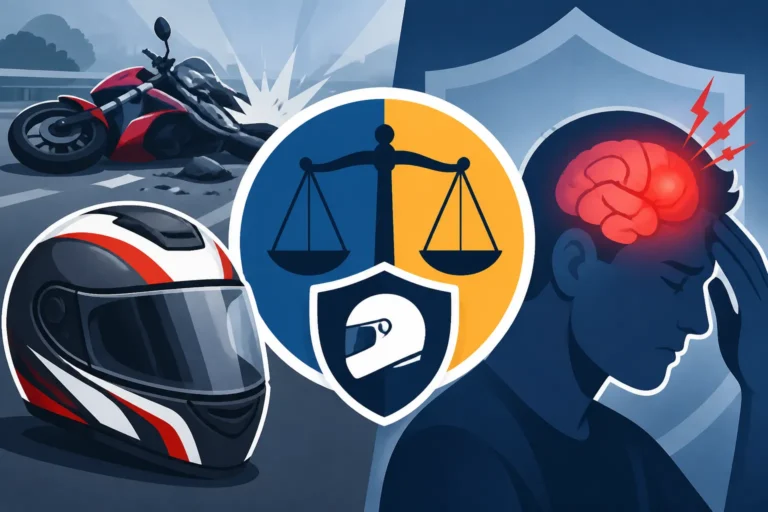
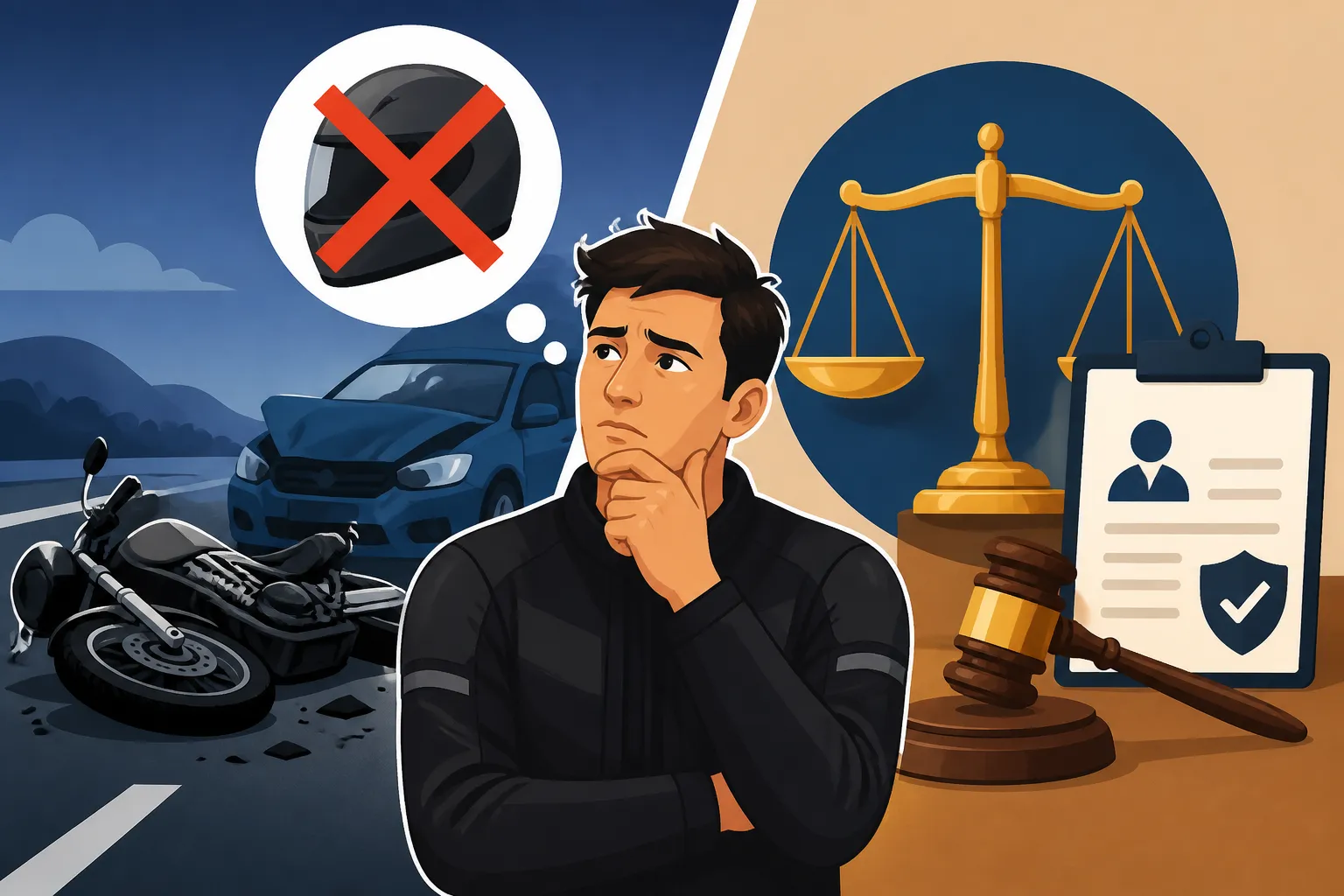
Imagine this scenario: you're riding your motorcycle on a sunny day in Louisville, helmet-free, as is your legal right given you're over 21 with a full license. Suddenly, a distracted driver swerves into your lane, causing a collision. You suffer a traumatic brain injury. The insurance company for the at-fault driver will likely argue that, regardless of their client's negligence, your TBI would have been less severe, or perhaps a minor concussion instead, if you had worn a DOT-compliant helmet. This argument can be incredibly frustrating, as it feels like they're blaming you for consequences that stem from their insured's mistake.
How it Affects Causation and Damages
When the helmet defense is successfully argued, it doesn't necessarily mean you lose your entire claim. Instead, it can lead to a reduction in the damages you're awarded. Kentucky operates under a "pure comparative negligence" system, which is critical here. This means that if you are found to be partially at fault for your injuries, your total compensation will be reduced by your assigned percentage of fault. For example, if your total damages are $100,000, but the jury or insurance adjuster determines that your failure to wear a helmet contributed 20% to the severity of your head injuries, your compensation might be reduced by $20,000, leaving you with $80,000. This concept is explored further in How Comparative Negligence Reduces Your Payout and Pure vs Modified Comparative Negligence.
This reduction primarily impacts your non-economic damages, such as pain and suffering, emotional distress, and loss of enjoyment of life, as well as significant medical costs related to head injuries. The argument is that you could have lessened these damages by taking reasonable precautions. It's a tough pill to swallow because while you didn't cause the crash, they're implying you contributed to your own suffering. The extent to which How Not Wearing a Helmet Affects Your Settlement can be significant, especially with severe head injuries.
The Defense's Burden of Proof
It's crucial to remember that the burden of proving the helmet defense falls squarely on the shoulders of the at-fault party's insurance company. They can't just assert that your injuries would have been less severe; they have to prove it. This usually involves retaining medical experts, accident reconstructionists, and biomechanical engineers who will analyze the crash data, your medical records, and the nature of your injuries. These experts will then testify or provide reports arguing that a helmet would have made a measurable difference.
Your legal team, in turn, would work to counter these arguments. They might bring in their own experts to demonstrate that, given the specific forces and impact points of the accident, a helmet would not have significantly mitigated your particular injuries. Or, they might argue that other injuries (like road rash or broken bones, which a helmet wouldn't prevent) still warrant full compensation, as discussed in Types of Damages in a Motorcycle Accident Claim. This battle of the experts is a common and complex part of these types of claims, and it underscores why meticulous documentation of your injuries and the accident scene is so vital.
Navigating Your Claim When Riding Without a Helmet
Being involved in a motorcycle accident is disorienting enough, but when you weren't wearing a helmet, even if legally permissible, the path to a fair claim can feel like an uphill battle. It's absolutely crucial to know what steps to take and how to strategically approach the situation.
Immediate Steps After an Accident
Your actions immediately following a motorcycle accident are incredibly important, regardless of whether you were wearing a helmet. First and foremost, ensure your safety and that of others. If you can move safely, get yourself and your bike out of the flow of traffic. Next, call 911 immediately. Even if you feel okay, it's vital to have law enforcement respond to document the scene and create an official police report. This report is often a cornerstone of your claim, detailing initial observations, witness statements, and who the responding officer believes was at fault. You can find more comprehensive steps in What to Do After a Motorcycle Accident.
Seeking medical attention is not just good for your health; it's critical for your claim. Adrenaline can mask pain, and some serious injuries, particularly head injuries, might not manifest symptoms for hours or even days. A medical professional can diagnose these issues and establish an official record of your injuries directly linked to the accident. This documentation, as detailed in How to Document Injuries for a Claim, becomes invaluable evidence to counter any claims that your injuries were pre-existing or unrelated. Gather all possible evidence: take photos of the scene, vehicle damage, road conditions, and any visible injuries. Exchange information with the other driver and collect contact details from any witnesses.
Countering the Helmet Defense Effectively
Successfully countering the helmet defense requires a multi-pronged approach and a deep understanding of accident dynamics and medical causation. One effective strategy is to demonstrate that even with a helmet, your specific injuries would have been unavoidable or no less severe due to the nature of the impact. For instance, if you suffered a spinal cord injury from the force of impact, a helmet wouldn't have offered protection for that specific injury. Your legal team might also highlight that many of your injuries, such as broken bones in your limbs or extensive road rash, are entirely unrelated to helmet use and should be fully compensated.
Another approach focuses on emphasizing the egregious negligence of the at-fault driver. If the other driver was drunk, excessively speeding, or engaged in distracted driving, their actions were the sole cause of the accident. While your helmet use might be debated in relation to injury severity, it has no bearing on the fact that the other driver caused the collision. This helps to separate the issues of causation and damages, preventing the insurer from muddling the waters. Battling an unfair fault assignment is a common struggle for riders, as discussed in How to Fight an Unfair Fault Assignment.
The Role of Other Protective Gear
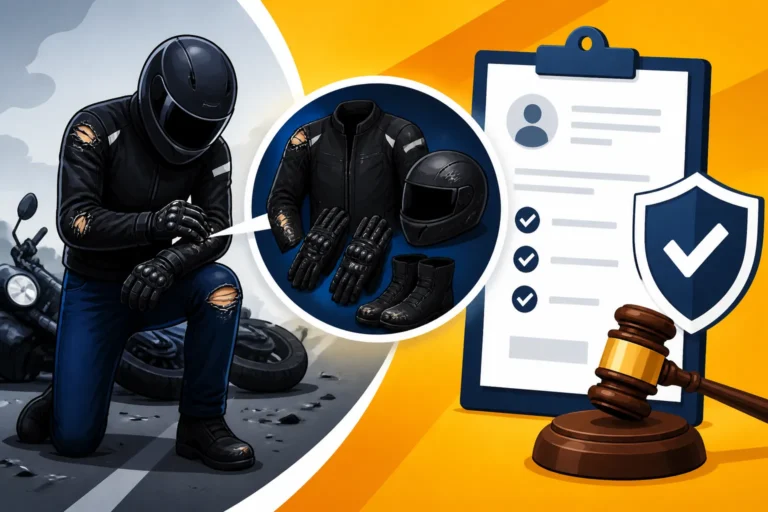
While the spotlight often falls on helmets, it's important to remember that comprehensive riding gear offers significant protection and can play a positive role in your claim. Wearing a sturdy motorcycle jacket, abrasion-resistant pants, gloves, and proper riding boots, even when not wearing a helmet, demonstrates a general commitment to safety. These items can significantly reduce the severity of injuries like road rash, fractures, and lacerations, which the helmet defense typically doesn't target directly.
If you were wearing other protective gear, make sure to document it thoroughly. Take photos of your damaged jacket, pants, and boots. This physical evidence proves you took precautions and can help support your claim by showing a responsible riding attitude, even if you opted out of a helmet (where legally allowed). Many riders take their gear choices seriously, often investing in high-quality items from retailers like Cycle Gear to ensure maximum protection. Having invested in gear from places like Cycle Gear shows a proactive approach to safety. While a helmet protects your head, gear like reinforced jackets and pants from Cycle Gear can prevent catastrophic full-body road rash and fractures. Information on the broader topic of protective wear is crucial, as highlighted in Motorcycle Gear Laws and Requirements.
The Crucial Value of Legal Counsel in Kentucky
Dealing with the aftermath of a motorcycle accident is stressful enough without having to navigate complex legal arguments about helmet use. This is precisely why having experienced legal counsel by your side is not just helpful, but often essential, especially in states like Kentucky with unique helmet laws and comparative negligence rules.
Why an Attorney is Indispensable
Even if you were legally riding without a helmet in Kentucky, and even if the other driver was clearly at fault for the accident, the insurance company will use your lack of a helmet against you. They are in the business of minimizing payouts, and the helmet defense is one of their most powerful tools in motorcycle accident cases. Trying to fight these arguments on your own can be overwhelming. An experienced motorcycle accident attorney understands Kentucky's specific laws, knows the tactics insurance companies employ, and can effectively counter the helmet defense. They can gather the necessary expert testimony, present compelling arguments, and negotiate on your behalf to ensure you receive fair compensation for all your injuries, not just those unrelated to your head. This expertise makes a huge difference, as explored in Do You Need a Motorcycle Accident Lawyer.
They handle the intricate details, from filing paperwork and dealing with adjusters to managing medical liens and preparing for potential litigation. This allows you to focus on what truly matters: your recovery.
Understanding Kentucky's Comparative Negligence Rules
Kentucky adheres to a pure comparative negligence system. This is a vital piece of information for any motorcycle accident claim in the state, especially when the helmet defense is brought up. Under pure comparative negligence, you can still recover damages even if you are found to be partially at fault for an accident or the severity of your injuries. However, your total compensation will be reduced by your percentage of fault. So, if a jury determines you were 20% responsible for the extent of your head injuries due to not wearing a helmet, your total award would be reduced by 20%.
This differs significantly from modified comparative negligence rules in other states, where you might be barred from recovery if your fault exceeds a certain threshold (e.g., 50% or 51%). In Kentucky, even if you were 99% at fault for your injury severity, you could theoretically still recover 1% of your damages. This system makes it even more imperative to have a skilled attorney who can minimize any assigned fault percentage, ensuring you receive the maximum possible compensation. Your lawyer will be instrumental in presenting evidence that supports the other driver's fault and mitigates any claims of your own contribution to injury severity. This aspect of the law is why the guidance in articles like How to Choose a Motorcycle Accident Attorney becomes so practical.
The Scope of an Attorney's Work
When you hire a motorcycle accident attorney in Kentucky, they don't just show up in court. Their work begins almost immediately after your initial consultation. They will launch a thorough investigation into your accident, gathering police reports, witness statements, medical records, and any available dashcam or surveillance footage. They will communicate with insurance companies on your behalf, handling all negotiations and protecting you from tactics designed to undermine your claim. An attorney will accurately assess the full scope of your damages, including current and future medical expenses, lost wages, pain and suffering, and property damage. This comprehensive valuation is crucial for building a strong case.
Should negotiations fail to yield a fair settlement, your attorney will be prepared to file a lawsuit and take your case to trial. They will manage all aspects of litigation, from discovery and depositions to presenting your case in court. This level of comprehensive support can be the difference between a lowball settlement and receiving the full compensation you deserve. Knowing when to engage legal help is important, as covered in When to Hire a Motorcycle Accident Lawyer. Essentially, they become your advocate, allowing you to focus on your recovery while they handle the complexities of the legal system and the relentless tactics of insurance providers.
| Scenario | Legal Helmet Requirement (KY) | Impact on Accident Claim | Attorney's Role |
|---|---|---|---|
| Rider < 21, No Helmet | Required | Traffic violation & potential for "helmet defense" to reduce injury damages (e.g., TBI, facial) | Argues negligence of other driver, mitigates fault for injury severity, counters defense experts |
| Rider with Permit, No Helmet | Required | Traffic violation & potential for "helmet defense" to reduce injury damages (e.g., TBI, facial) | As above, emphasizing permit status doesn't cause crash |
| Rider >= 21, No Helmet | Not Required | No traffic violation, but still faces "helmet defense" to reduce injury damages (e.g., TBI, facial) | Counters "helmet defense" by proving no causation, emphasizing other damages, leveraging KY's pure comparative negligence |
| Any Rider, Helmet Worn | Required or Not | Strongest position against "helmet defense", less likely for injury damages to be reduced | Focuses on proving other driver's fault and maximizing all damages |
Disclaimer
Please remember that this article provides general information and is not intended as legal advice. Motorcycle accident laws, including those regarding helmets and negligence, can be complex and vary by jurisdiction. For advice specific to your situation, it is always best to consult with a qualified legal professional in Kentucky.