What to Do After a Motorcycle Accident
Motorcycle accident steps include calling 911 for medical help, reporting the crash to police, and gathering evidence with photos.
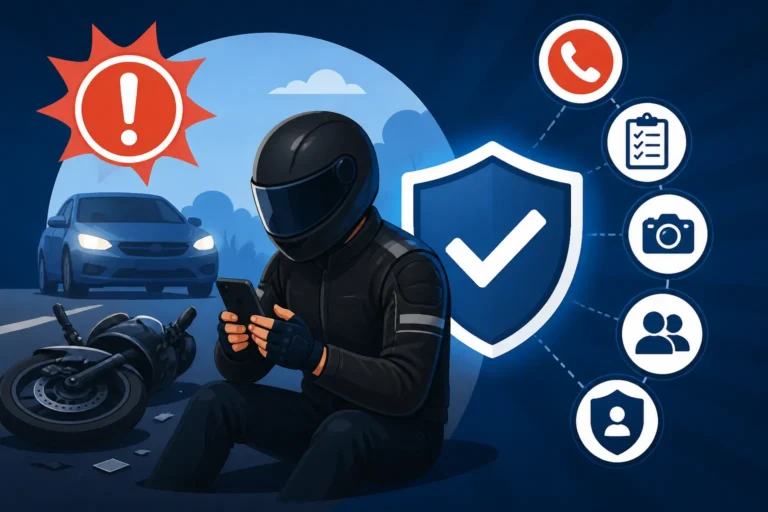
Motorcycle accident steps include calling 911 for medical help, reporting the crash to police, and gathering evidence with photos.
Motorcycle accident liability determines who pays for damages through legal negligence, duty, breach, causation, and damages.

Motorcycle accident fault determination involves insurance industry bias and profit motives that reduce claim payouts for riders.
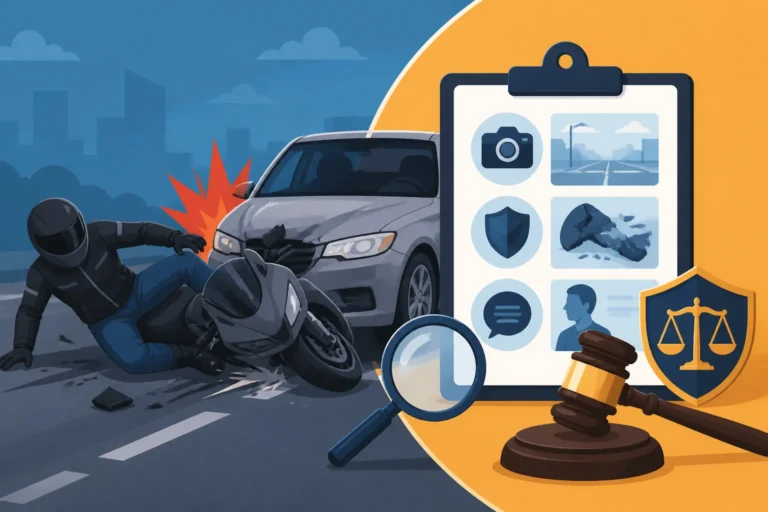
Proving fault in a motorcycle accident requires gathering evidence to overcome unfair rider bias and invalid driver defenses.
Lane splitting and filtering laws, distinct riding techniques, and state legal implications determine motorcycle accident liability.
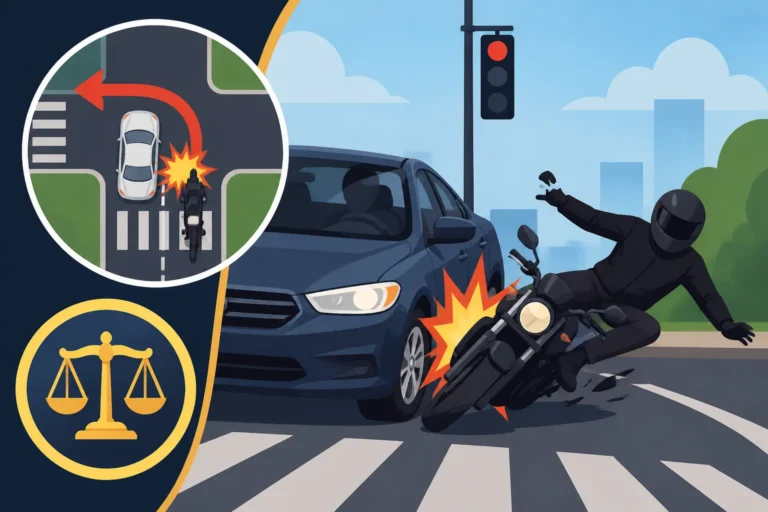
Left-turn motorcycle accidents happen when oncoming cars cross traffic, explaining fault determination and rider protection steps.
Comparative negligence rules distribute shared fault between drivers and reduce compensation for injured motorcycle riders.
Fault determination in motorcycle accidents involves police investigations, physical evidence, and overcoming societal biases against riders.
Motorcycle accident fault determination principles explain legal negligence rules and how insurance companies assess rider claims.
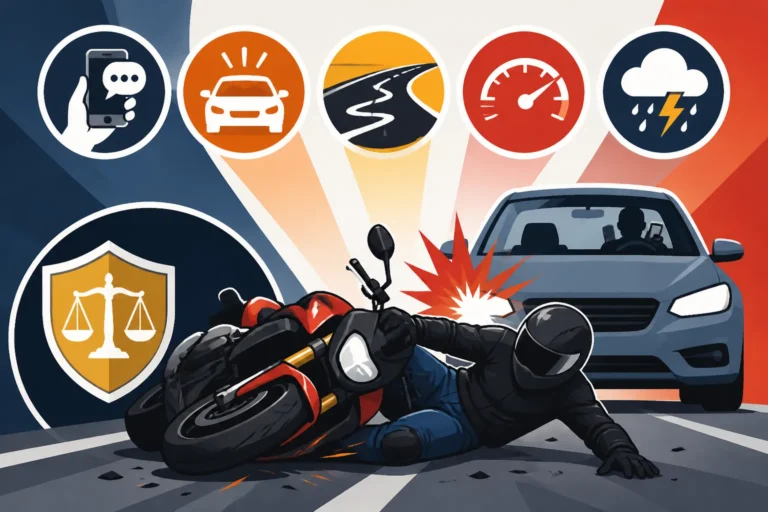
Driver negligence, left-turn collisions, distracted driving, and unsafe lane changes cause common motorcycle accidents.