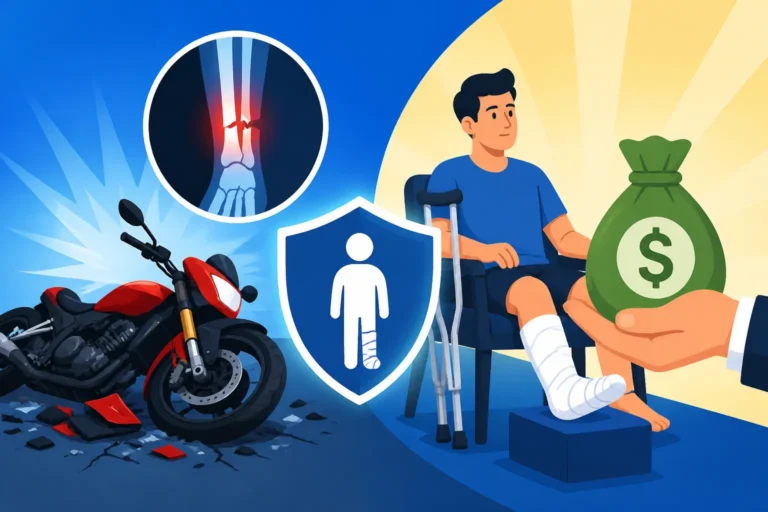
How Comparative Negligence Affects Settlements in Illinois
Riding a motorcycle in Illinois can be an exhilarating experience, offering unmatched freedom on the open road. However, when an accident happens, the aftermath can be incredibly complex and frustrating, especially when it comes to determining fault and understanding how it affects your financial recovery. Many riders face the crushing burden of injuries and property damage, only to have insurance companies try to pin some, or even most, of the blame on them. This guide will meticulously break down Illinois’ comparative negligence laws and reveal how shared fault directly impacts your motorcycle accident settlement, empowering you with the knowledge to protect your claim.
Understanding Illinois' Modified Comparative Negligence Law
Illinois operates under a system known as "modified comparative negligence." This isn't just a legal term; it's a fundamental principle that dictates whether you can recover compensation after a motorcycle accident and, if so, how much. Unlike some states where even 1% fault can bar your claim (contributory negligence) or where you can recover something no matter your fault percentage (pure comparative negligence), Illinois strikes a middle ground. It's crucial for every rider in the Prairie State to grasp this concept, as it can make or break their ability to get a fair settlement.
When you're involved in a collision in Illinois, the big question isn't just who was at fault, but to what extent each party contributed. Imagine you're cruising down Route 66, and a driver suddenly pulls out in front of you from a side street near Springfield. Clearly, they violated your right-of-way. However, if an investigation later reveals you were also exceeding the speed limit by a small margin, the blame might not be entirely on the other driver. This is where comparative negligence comes into play, creating a landscape where fault isn't always black and white.
The 51% Bar Rule in Practice
The cornerstone of Illinois' modified comparative negligence system is the "51% bar rule." What this means, in plain English, is that you can recover damages as long as your percentage of fault for the accident is not greater than the combined fault of all other parties involved. Put simply, if you are found to be 51% or more at fault for the crash, you are legally barred from recovering any compensation from the other driver or their insurance company. This is a hard line in the sand, and it's why proving fault is so incredibly vital in Illinois motorcycle accident claims.
Let's consider a practical example: You’re riding your Harley-Davidson through the bustling streets of downtown Chicago, and a distracted driver, perhaps looking at their phone, makes an illegal U-turn and clips your front wheel. You suffer significant injuries, and your medical bills and lost wages amount to $100,000. If the investigation determines the other driver was 80% at fault and you were 20% at fault (maybe for riding slightly too close or having a headlight out, though not the primary cause), you would still be able to recover. Your $100,000 in damages would be reduced by your 20% share of fault, leaving you with an $80,000 settlement. However, if the insurance company or a jury manages to prove you were 51% at fault – perhaps you were speeding excessively or didn't react defensively enough – you would walk away with nothing, despite your severe injuries. This stark difference underscores the critical importance of a thorough understanding of "How Fault Is Determined in Motorcycle Accidents".
This rule can feel incredibly unfair, especially for riders who often suffer more severe injuries in collisions. It forces every rider to not only prove the other party’s negligence but also vigorously defend themselves against any accusations of their own fault. Insurance adjusters are keenly aware of this 51% threshold and will often try to push your fault percentage just past that line to avoid paying out any compensation at all. They know that if they can shift just a little more blame onto you, they can save their company a substantial amount of money.
How Your Percentage of Fault Is Determined
Determining each party's percentage of fault isn't an exact science; it's often a contentious process that involves a detailed examination of all available evidence. This is rarely a simple "he said, she said" situation, especially when insurance companies are involved. They have teams of adjusters and lawyers whose primary goal is to minimize their payouts, and assigning blame to the motorcycle rider is a common tactic. Therefore, understanding the factors that contribute to fault determination is paramount for protecting your claim.
Police reports are usually the first piece of evidence that insurance companies and legal teams look at. The investigating officer’s assessment of the scene, witness statements they collect, and any traffic citations issued can heavily influence initial fault assignments. However, these reports aren't always definitive. Officers sometimes make mistakes or don't fully understand the dynamics of a motorcycle crash. For example, if a witness only saw the aftermath and not the actual impact, their statement might be incomplete, or worse, inaccurate. This is why it’s vital to gather your own evidence at the scene and not solely rely on the police report, particularly if you feel it doesn't accurately reflect what happened. For more on this, check out "How Police Reports Establish Fault".
Beyond the police report, insurers and attorneys will delve into a multitude of other factors. This includes reviewing vehicle damage, analyzing skid marks or debris patterns on the road, examining surveillance footage from nearby businesses or traffic cameras, and securing witness statements. In complex cases, accident reconstruction experts might be brought in. These specialists can recreate the crash dynamics using physics, engineering, and digital tools, providing a more objective assessment of speed, angles of impact, and points of collision. They can often provide a clearer picture than a simple police diagram, which can be invaluable in challenging an unfair fault assignment by an insurance company. It's important to remember that every piece of information, no matter how small, can contribute to the overall picture of how fault is determined.
The Direct Impact of Shared Fault on Your Settlement Amount
Once a percentage of fault is assigned to you, whether through negotiation with the insurance company or by a jury in court, it has a direct and often significant impact on the amount of compensation you can actually receive. This isn't just about moral blame; it's about cold, hard numbers that determine how much money you'll have to cover your medical bills, lost wages, and pain and suffering.
It’s a harsh reality that even if another driver was largely to blame for your life-altering injuries, your settlement can be substantially reduced if you bear any portion of the fault. This reduction is applied directly to your total calculated damages, which include both your economic losses (like medical bills and lost income) and non-economic losses (such as pain, suffering, and emotional distress). Understanding this calculation is key to knowing what a fair settlement looks like and recognizing when an insurance company is trying to shortchange you. This principle is at the heart of "How Comparative Negligence Reduces Your Payout".
Calculating Your Reduced Payout
The mathematical calculation for reducing your settlement due to comparative negligence is straightforward: your total damages are simply reduced by your assigned percentage of fault. This reduction applies across the board to all categories of damages, whether they are easily quantifiable like hospital bills or more subjective like emotional distress.
Let's illustrate with an example in the context of an Illinois motorcycle accident:
Imagine you were involved in a collision with a semi-truck on I-57 near Effingham. You suffered a broken leg, extensive road rash, and significant damage to your motorcycle. Your total compensable damages are assessed at $150,000.
-
Scenario 1: You are found 10% at fault.
- Your total damages: $150,000
- Your fault reduction: 10% of $150,000 = $15,000
- Your net settlement: $150,000 – $15,000 = $135,000
-
Scenario 2: You are found 30% at fault.
- Your total damages: $150,000
- Your fault reduction: 30% of $150,000 = $45,000
- Your net settlement: $150,000 – $45,000 = $105,000
-
Scenario 3: You are found 49% at fault.
- Your total damages: $150,000
- Your fault reduction: 49% of $150,000 = $73,500
- Your net settlement: $150,000 – $73,500 = $76,500
As you can clearly see from these examples, even a small percentage of fault can lead to a substantial reduction in your eventual payout. This table further clarifies the potential impact:
| Total Damages Assessed | Rider's Assigned Fault (%) | Amount Reduced from Settlement | Net Settlement Amount |
|---|---|---|---|
| $100,000 | 0% | $0 | $100,000 |
| $100,000 | 10% | $10,000 | $90,000 |
| $100,000 | 25% | $25,000 | $75,000 |
| $100,000 | 40% | $40,000 | $60,000 |
| $100,000 | 49% | $49,000 | $51,000 |
| $100,000 | 51% (or more) | $100,000 | $0 |
This table underscores the critical nature of minimizing your assigned fault. Every percentage point matters, as it directly translates into thousands of dollars lost from your compensation. The insurance company will absolutely use this against you, even if your fault seems minimal. It's a calculated strategy to reduce their liability.
When Your Claim Gets Barred Entirely
The most devastating consequence of Illinois' modified comparative negligence law is the "51% bar rule." If, after all the evidence is weighed and fault is assigned, you are found to be 51% or more responsible for the motorcycle accident, you lose the right to recover any damages. This isn't a reduction; it's a complete denial of your claim, regardless of how severe your injuries are or how high your medical bills have climbed.
Consider a scenario: you’re riding your sportbike on a scenic road outside Peoria, and another driver runs a stop sign, colliding with you. However, during the investigation, it comes to light that you were also engaged in aggressive riding, perhaps weaving in and out of traffic or speeding significantly beyond the limit. If a jury or insurance adjuster determines that your aggressive riding contributed 51% or more to the cause of the accident, you could be left with nothing. Even if the other driver clearly broke a traffic law, your higher percentage of fault would legally prevent you from collecting compensation for your extensive injuries, property damage, and lost income. This is the brutal reality of the 51% threshold in Illinois.
This "all or nothing" aspect for fault percentages over 50% is why insurance companies fight so hard to push the blame onto riders. They often leverage common stereotypes about motorcyclists being reckless or irresponsible to build a narrative of your fault, even when the primary cause of the accident lies with their insured driver. It's a tactic designed to protect their bottom line, and they are very good at it. This makes it absolutely essential to understand "When a Rider Is Partially at Fault" and how to defend against such allegations. Protecting your rights in this situation often requires the expertise of someone who understands these legal nuances and how to challenge unfair blame.
Strategies to Protect Your Claim Against Comparative Negligence Claims
Navigating a motorcycle accident claim in Illinois, especially with the complexities of comparative negligence, can feel like an uphill battle. Insurance companies are skilled at finding ways to assign blame to riders, even subtly, to reduce their payouts. However, you are not powerless. There are proactive steps you can take both immediately after an accident and throughout the claims process to gather evidence, build a strong case, and protect your settlement from being unfairly diminished or entirely barred. These strategies are all about building a robust factual record that speaks for itself, countering any attempts to inflate your share of fault.
One of the most powerful defenses against comparative negligence claims is a comprehensive and well-documented account of the accident scene and your injuries. Without solid evidence, it becomes much easier for the opposing side to create a narrative that places undue blame on you. Remember, in the eyes of the law and insurance companies, what you can prove matters far more than what you know happened. Therefore, turning every stone and meticulously documenting everything becomes your shield against their tactics.
Gathering Critical Evidence at the Scene
The moments immediately following a motorcycle accident are chaotic and traumatic, but they are also crucial for gathering evidence that can protect your claim. While your health and safety are always paramount, if you are able and it is safe to do so, collecting specific details at the scene can make a world of difference later on. This is where the foundation of your defense against comparative negligence claims is built.
First and foremost, take photos and videos of everything. Use your smartphone to document the accident scene from multiple angles. Capture the positions of all vehicles involved before they are moved. Get close-up shots of vehicle damage on both your motorcycle and the other vehicle(s). Show debris on the road, skid marks, traffic signals, road signs, and any relevant road hazards like potholes or gravel. Photograph your injuries, your damaged gear, and any visible road conditions that might have contributed to the crash. Don't forget to capture the weather conditions and lighting. The more visual evidence you have, the harder it is for an insurance company to dispute the facts. For a detailed checklist, refer to "Photos to Take to Prove Motorcycle Fault".
Next, identify and collect contact information from witnesses. Eyewitness testimony can be incredibly powerful in corroborating your account of the accident and countering claims of your fault. Don't just rely on the police to get this information; sometimes, they might miss someone or not get enough detail. Ask for names, phone numbers, and email addresses. If they saw something specific, ask them to briefly describe it. Their independent perspective can be invaluable, especially if the other driver tries to paint a different picture of what happened. Also, remember to record your version of events as soon as possible, perhaps through a voice memo or by writing it down, while it's fresh in your memory. This helps ensure accuracy and prevents details from fading.
Finally, while cooperating with law enforcement is essential, be careful about what you say to anyone at the scene. Never admit fault or apologize, even instinctively, as these statements can be twisted and used against you later to increase your assigned percentage of fault. Stick to the facts. Provide your driver's license, registration, and insurance information, but avoid speculating or making definitive statements about who was to blame. Let the investigation determine fault. This advice applies to initial conversations with the other driver and even the police officer. You can describe what happened without assigning blame to yourself or others. Remember, for more comprehensive guidance, you can always check out "What to Do After a Motorcycle Accident".
The Role of an Experienced Motorcycle Accident Attorney
Perhaps the most crucial strategy for protecting your claim against comparative negligence in Illinois is retaining an experienced motorcycle accident attorney. This isn't merely about having legal representation; it's about having a dedicated advocate who understands the nuances of motorcycle law, the biases often faced by riders, and the tactics employed by insurance companies.
A skilled attorney will immediately begin to investigate your accident, often going far beyond what the police or insurance adjusters might do. They will revisit the scene, interview witnesses, meticulously review police reports, and gather medical records. Critically, they can leverage their network to bring in expert witnesses, such as accident reconstructionists, who can use scientific methods to determine exactly how the crash occurred and pinpoint fault, often countering biased or incomplete police assessments. These experts can provide credible testimony that demonstrates the other driver's clear negligence and minimizes any alleged fault on your part, directly impacting the comparative negligence calculation. This professional expertise is often what you need to "Fight an Unfair Fault Assignment".
Furthermore, your attorney will serve as your shield against aggressive insurance adjusters. Insurance companies are notorious for trying to assign blame to riders, often relying on stereotypes or misinterpretations of the law, such as claims about lane splitting even if it wasn't a factor. An attorney understands these tactics and can effectively push back, ensuring that adjusters focus on objective evidence rather than conjecture or bias. They will handle all communications, protecting you from inadvertently saying something that could harm your case. This includes negotiating with the insurance company, presenting a compelling case that highlights the other driver's fault, and advocating for a fair settlement that accurately reflects your damages after any necessary comparative negligence adjustments. They know how to present "Motorcycle Accident Evidence for Proving Fault" in a way that maximizes your recovery.
Should negotiations fail to yield a fair settlement, your attorney will be prepared to take your case to court. They will represent your interests, present your evidence, and challenge any arguments that attempt to shift undue blame onto you. Having a legal professional who is deeply familiar with Illinois' specific laws and court procedures is invaluable, especially when faced with the strict 51% bar rule. They understand how to articulate your case to a jury, ensuring that they understand the realities of motorcycle riding and the true cause of the accident, thus protecting your right to compensation. This guidance is essential for a comprehensive understanding of your rights, as detailed in "Motorcycle Accident Liability: A Complete Guide".
Common Scenarios Where Comparative Negligence Arises for Riders in Illinois
Motorcycle riders, unfortunately, often face an uphill battle when it comes to fault determination. There's a persistent, often unconscious, bias against motorcyclists that can lead to unfairly assigning a higher percentage of fault to them, even when other drivers are clearly negligent. This makes understanding common scenarios where comparative negligence arises particularly important for Illinois riders. Being aware of these situations can help you anticipate arguments from insurance companies and proactively build a defense.
Insurance companies are experts at finding even minor infractions or perceived misjudgments by riders to reduce their liability. They might scrutinize your speed, your position in the lane, your gear choices, or even your visibility. It's not always about outright illegal actions; sometimes it's about casting doubt on your actions or suggesting that you could have somehow avoided the accident, even if the primary fault lies elsewhere. This is precisely how "How Insurance Companies Assign Blame to Riders" is achieved.
"I Didn't See the Motorcycle" Defense
One of the most frustrating and ubiquitous defenses offered by drivers after colliding with a motorcycle is "I didn't see the motorcycle." While this might sometimes be genuinely true, it doesn't absolve the driver of their responsibility. In Illinois, drivers have a duty to maintain a proper lookout for all vehicles on the road, including motorcycles. This defense, however, is frequently used by insurance companies to suggest that the motorcyclist was somehow "invisible" or less noticeable, thereby implying a degree of fault on the rider's part for failing to be seen.
When a driver claims they didn't see you, the insurance company might try to argue that you were not sufficiently visible, perhaps due to your clothing color, lack of reflective gear, or even the time of day. They might suggest that if you had taken more precautions to make yourself seen, the accident could have been avoided. While wearing bright colors and reflective gear is always a smart safety practice, the legal onus is typically on the driver to operate their vehicle safely and be aware of their surroundings. An experienced motorcycle accident attorney can effectively counter this defense by emphasizing the driver's duty of care and demonstrating that even if the rider was "hard to see," the driver's inattention or negligence was the primary cause of the collision. They can bring in evidence such as the accident location, lighting conditions, and other factors to show that a reasonable driver should have seen the motorcycle.
For instance, if a driver turns left directly into your path at an intersection in downtown Springfield, claiming they "didn't see you," your attorney can present evidence that your headlight was on, you were in a visible lane position, and a reasonable driver exercising due care would have seen you. The "I didn't see you" defense often translates to "I wasn't looking carefully enough," and that failure to look is negligence. The key is to shift the focus back to the driver's failure to uphold their duty rather than letting them imply the rider was somehow at fault for being "unseen."
Allegations of Speeding or Reckless Driving
Another common comparative negligence tactic used against motorcycle riders involves allegations of speeding or reckless driving. Due to prevailing stereotypes, insurance companies and even juries might be quicker to assume a motorcyclist was speeding or riding recklessly, even without concrete evidence. If such allegations stick, they can significantly increase the rider's assigned percentage of fault, potentially leading to a drastically reduced settlement or even a complete bar to recovery.
Even if you were not the primary cause of the accident, if the other side can demonstrate that you were exceeding the speed limit, even slightly, they will argue that your speed contributed to the severity of the accident or your inability to avoid it. For example, if a car makes an unsafe lane change on I-80 near Joliet and causes a collision, but it's later discovered you were going 70 mph in a 65 mph zone, the insurance company will seize on that 5 mph difference. They will argue that if you had been going the speed limit, you might have had more time to react or the impact would have been less severe. They often attempt to use these minor infractions to disproportionately assign a higher percentage of fault to the motorcyclist.
To combat these accusations, it's crucial to gather evidence that proves your speed and actions were reasonable for the conditions. This might include witness statements, traffic camera footage, or accident reconstruction analysis that precisely determines your speed at the time of impact. Your attorney can challenge the relevance of minor speeding allegations, arguing that even if you were slightly over the limit, it was the other driver's direct negligence (e.g., the unsafe lane change) that was the proximate cause of the crash. They can also explain to a jury that a minimal speed deviation does not automatically equate to reckless driving, especially when compared to the negligent actions of the other party. The goal is to ensure that your actions are evaluated fairly, without the undue influence of rider bias.
Disclaimer
Please note that this article provides general information and is not intended as legal advice. Every motorcycle accident claim is unique, and the specific facts and applicable laws in Illinois will determine the outcome of your case. It is highly recommended to consult with an experienced motorcycle accident attorney in Illinois to discuss your individual situation and receive personalized legal guidance.