When Road Rash Requires Skin Grafts
Riding a motorcycle offers unparalleled freedom, but it also carries unique risks. One of the most common, and often underestimated, injuries after a spill is road rash. While many imagine it as a simple scrape, a severe case of road rash can be incredibly painful, lead to serious complications, and, in the most unfortunate scenarios, demand advanced medical intervention like skin grafts. This guide will walk you through what constitutes severe road rash, the critical indicators that might necessitate a skin graft, and what to expect during such a challenging recovery.
Understanding the Severity of Road Rash
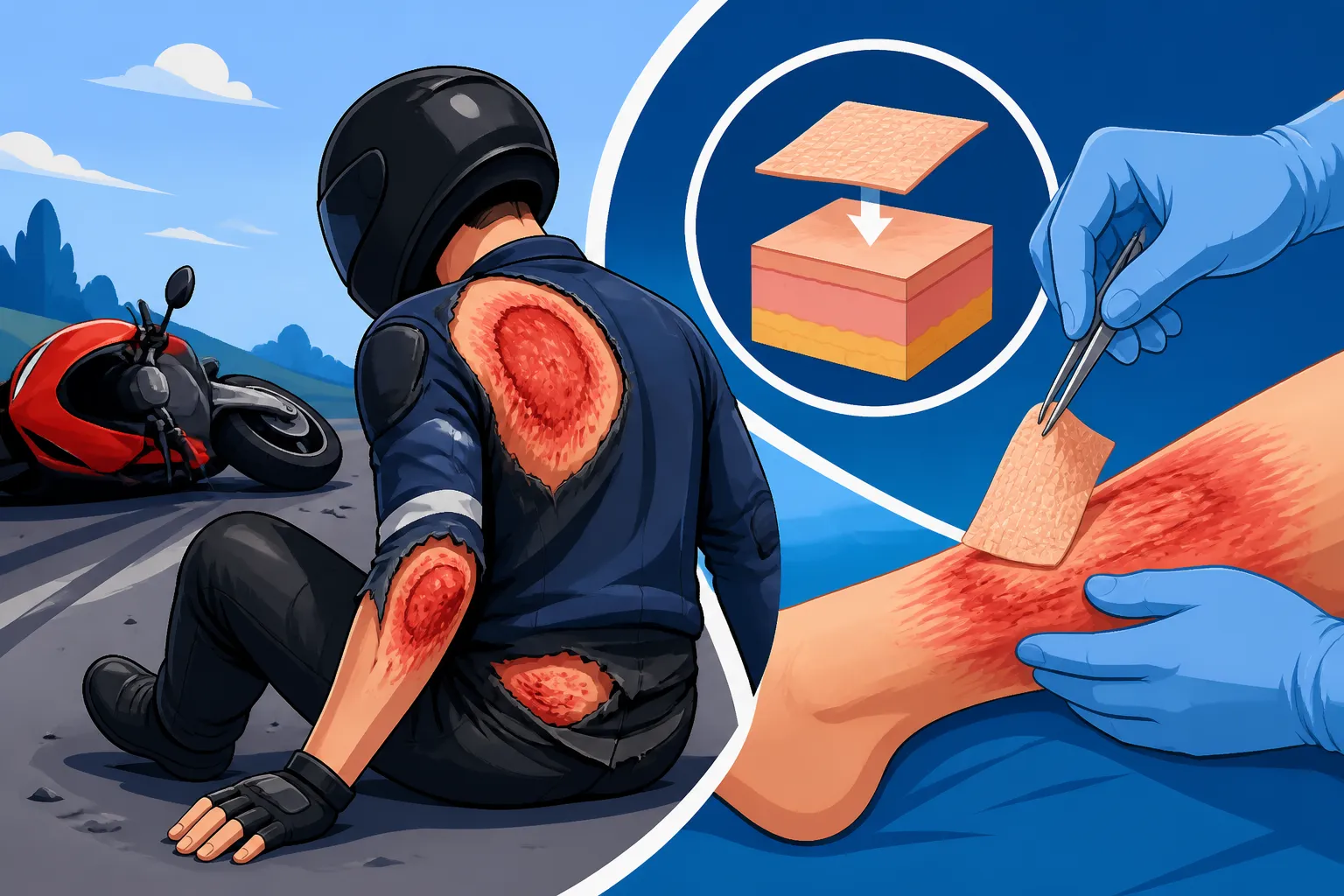
When your skin meets the asphalt at speed, the friction creates what's known as road rash. It's not just a surface wound; it's a type of abrasion that can range from mild to life-threatening, essentially a friction burn that can strip away layers of skin. Many riders, and even some medical professionals unfamiliar with the unique dynamics of motorcycle accidents, initially underestimate the depth and potential for long-term damage these injuries can cause. The pain can be excruciating, and the risk of infection is ever-present, especially when pavement debris is embedded in the wound.
What Constitutes Severe Road Rash?
Severe road rash goes far beyond superficial scrapes. It's a deeply invasive injury that can expose the underlying tissues of your body. Imagine hitting the road and feeling the grit and grime embed itself not just into the top layer of your skin, but tearing through multiple layers, exposing what lies beneath. This isn't just uncomfortable; it's a serious medical emergency. The severity is typically categorized into different degrees, much like thermal burns, and understanding these classifications is crucial for recognizing when your injury has crossed the threshold from treatable abrasion to a complex wound requiring specialized care.
When we talk about severity, we're looking at how many layers of skin have been damaged and what structures beneath the skin are exposed. A minor case might just take off the epidermis, leaving you with some redness and minor discomfort. But a severe case can go much deeper, hitting the dermis, the fatty tissue, muscle, or even bone. The larger the area of deep tissue loss, the more severe the injury is considered. It's not just about the pain in the moment, but the profound risk of infection, massive fluid loss, and significant scarring that can impair movement and function for the rest of your life.
Grades of Road Rash
Just like burns, road rash is classified into different grades, each indicating a specific depth of tissue damage. Knowing these distinctions can help you and your medical team understand the prognosis and necessary treatment. This is where a clear understanding of Road Rash Degrees Explained becomes vital, as it guides the entire recovery process.
- First-Degree Road Rash: This is the most superficial type, affecting only the outermost layer of skin, the epidermis. You might experience redness, tenderness, and minor pain, similar to a bad scrape or sunburn. It usually heals on its own within a week or two, often without scarring. Think of a minor tumble where your jeans took most of the impact, but a small patch of skin still grazed the pavement.
- Second-Degree Road Rash: This involves damage to both the epidermis and a portion of the dermis, the layer beneath. This is where things get more serious. You'll likely see blistering, redness, and significant pain. The wound might weep clear fluid. Healing can take several weeks, and there's a higher chance of scarring or discoloration, particularly if the deeper part of the dermis is affected. This is often what people visualize when they hear "road rash," but even this can vary greatly in severity.
- Third-Degree Road Rash: This is a full-thickness injury, destroying both the epidermis and the entire dermis. The wound might appear pale, waxy, or leathery, and sensation might be diminished because nerve endings have been destroyed. This is a critical injury. Healing is complex, often involving significant scarring, and without proper treatment, infection is a major concern. These wounds typically cannot heal on their own and will often require surgical intervention, such as skin grafts.
- Fourth-Degree Road Rash: The most severe form, extending beyond the skin layers into the underlying fat, muscle, tendons, or even bone. This type of injury is immediately life-threatening due to the risk of infection, shock, and massive tissue loss. Sensation will be completely lost in the affected area. This is an absolute medical emergency and almost always necessitates immediate surgical debridement (removal of damaged tissue) and potentially skin grafts, reconstructive surgery, or even amputation, depending on the extent of the damage.
Here's a quick summary of the grades and typical treatment approaches:
| Road Rash Grade | Skin Layers Affected | Appearance | Pain Level | Healing Time | Typical Treatment | Skin Graft Often Needed? |
|---|---|---|---|---|---|---|
| 1st Degree | Epidermis (outermost) | Redness, minor swelling | Mild to Moderate | Few days to 1 week | Cleaning, bandages | No |
| 2nd Degree | Epidermis & part of Dermis | Redness, blistering, weeping | Moderate to Severe | 2-4 weeks | Cleaning, specialized dressings | Sometimes (deep 2nd-degree) |
| 3rd Degree | Epidermis & entire Dermis | Waxy, leathery, white/grey | Reduced due to nerve damage | Weeks to months | Debridement, specialized dressings, grafts | Yes, frequently |
| 4th Degree | Skin, fat, muscle, bone | Charred, black, no sensation | Minimal to None | Months, complex | Emergency surgery, debridement, grafts, reconstruction | Almost always |
The Role of Skin Grafts in Road Rash Recovery
The thought of a skin graft can be daunting, but for severe road rash, it's often the only way to effectively heal the wound, prevent catastrophic infection, and restore some semblance of normal function and appearance. When the body's natural healing mechanisms are overwhelmed by extensive tissue loss, surgical intervention becomes not just an option, but a necessity. Ignoring a deep road rash that requires grafting can lead to lifelong complications that far outweigh the challenges of the surgery itself.
The Dangers of Deep Tissue Exposure
When road rash penetrates beyond the dermis, exposing subcutaneous fat, muscle, or bone, your body is left incredibly vulnerable. This isn't just about a gaping wound; it's about a wide-open invitation for serious health crises.
Firstly, infection is a paramount concern. The skin acts as your body's primary barrier against pathogens. Without it, bacteria, viruses, and fungi can easily enter your bloodstream, leading to cellulitis, sepsis, or osteomyelitis (bone infection), which can be life-threatening. Pavement grime, dirt, and other debris from the accident scene often get embedded deep within these wounds, acting as breeding grounds for infection even after initial cleaning. This is why thorough debridement, where all foreign matter and dead tissue are removed, is often the first critical step, sometimes even before a graft can be considered.
Secondly, fluid loss is a significant danger. Extensive open wounds allow large amounts of bodily fluids to evaporate, leading to dehydration and electrolyte imbalances, which can put immense strain on your organs, especially the kidneys. This is similar to the dangers faced by severe burn victims, where managing fluid balance is a constant, critical challenge.
Thirdly, scarring and functional impairment become almost inevitable without proper closure. Deep wounds that are left to heal by secondary intention (from the bottom up) often result in thick, hypertrophic, or keloid scars. These scars can be intensely itchy, painful, and restrict movement, especially if they occur over joints like the elbow, knee, or shoulder. A skin graft aims to provide a new, flexible skin covering that can help minimize these long-term issues, allowing for better mobility and a more acceptable cosmetic outcome. The goal is not just to close the wound, but to restore a functional skin barrier that can adapt to movement.
Identifying Severe Injury Characteristics
How do doctors decide when a skin graft is truly necessary? It's often a combination of factors, but certain characteristics of the injury itself are strong indicators. If you've suffered a significant motorcycle accident, paying attention to these signs, even if you're not a medical professional, can help you advocate for the best possible care.
- Exposed Tissues: If you can see yellowish fat, red muscle, white tendons, or even bone through the wound, a skin graft is almost certainly required. These tissues cannot heal adequately on their own and desperately need a new protective layer. This is a clear sign of a third or fourth-degree injury.
- Large Surface Area: Even if the depth isn't extreme, a very large area of second-degree or deeper road rash (e.g., covering more than 5-10% of your body surface area) often warrants a graft. The body struggles to close massive wounds, and the risk of infection and fluid loss increases with size. For instance, a full-thickness injury covering a significant portion of your leg after a slide on the highway is a prime candidate for grafting.
- Full-Thickness Skin Loss: This is a crucial indicator. If the entire dermis is gone, the wound won't contain the necessary skin cells (hair follicles, sweat glands, etc.) to regenerate naturally. Without these structures, a graft is the only way to replace the missing skin.
- Location of the Injury: Injuries over joints (knees, elbows, shoulders) or areas of high movement (hands, neck) are more likely to need grafts. Healing by secondary intention in these areas can lead to contractures, where the scar tissue tightens and severely limits range of motion. A graft provides a more pliable covering.
- Non-Healing Wounds: Sometimes, a deep second-degree or third-degree wound that initially appears manageable simply fails to heal despite optimal wound care over several weeks. Chronic non-healing wounds are prone to persistent infection and should be assessed for grafting.
- Severe Contamination: While debridement is key, if the wound is so deeply contaminated with asphalt, gravel, or other debris that complete removal without grafting is impossible, a graft may be needed after debridement to ensure a clean, sealed surface.
Recognizing these injury characteristics means understanding that simple bandaging won't cut it. These are the moments when specialized burn or trauma units become essential, and surgeons consider the best approach to closing and repairing the extensive damage.
The Skin Graft Procedure Explained
When a skin graft is deemed necessary for severe road rash, it's a significant surgical undertaking. The procedure involves transplanting healthy skin from one area of your body (the donor site) to the damaged area (the recipient site). This isn't a quick fix but a carefully planned process aimed at restoring the skin's protective barrier and function. Understanding the steps can help prepare you for what's involved.
Types of Skin Grafts
There are primarily two main types of skin grafts used for deep wounds like severe road rash, each with its own advantages and applications:
- Split-Thickness Skin Grafts (STSGs): This is the most common type for large burn or trauma wounds. A surgeon removes the epidermis and only a portion of the dermis from the donor site, typically an area like the thigh, buttocks, or back. Because only a partial layer of skin is taken, the donor site can heal on its own, similar to a deep scrape, usually within 1-2 weeks. The harvested skin is often passed through a machine called a mesher, which creates small slits, allowing the graft to be stretched and cover a larger area. This "meshed" appearance is why some graft sites have a distinctive checkerboard or net-like pattern. STSGs are flexible, cover large areas, and typically "take" well (successfully integrate with the recipient site). However, they can be more fragile, may not perfectly match the surrounding skin in color or texture, and can be prone to contracture over time, meaning they might tighten and restrict movement.
- Full-Thickness Skin Grafts (FTSGs): As the name suggests, this involves removing the entire epidermis and dermis from the donor site. These grafts are thicker and include all the skin's structures. They are usually taken from less conspicuous areas like behind the ear, the groin, or the forearm. Because the full thickness is removed, the donor site cannot heal on its own and must be closed with sutures, essentially becoming a linear scar. FTSGs are used for smaller, deeper wounds where a better cosmetic outcome and reduced contracture are desired, such as on the face or over joints. They provide a more natural appearance, are more durable, and have less tendency to contract. However, they require excellent blood supply at the recipient site to survive, are harder to harvest, and the donor site closure adds to the surgical complexity.
The choice between an STSG and an FTSG depends on several factors: the size and location of the road rash, the depth of the wound, the patient's overall health, and the desired functional and cosmetic outcome. For the extensive, raw wounds often seen in severe motorcycle accidents, STSGs are often the workhorse due to their ability to cover large areas.
Surgical Process and Expectations
The skin graft procedure itself is performed in an operating room under general anesthesia. It’s a meticulous process that can take several hours, depending on the size and number of grafts needed.
- Preparation: The first crucial step is usually thorough wound debridement. This means surgically cleaning the road rash site, removing any remaining debris (gravel, dirt, bits of clothing), and cutting away all dead or damaged tissue. This ensures a clean, healthy base for the new skin to attach to. If the wound is heavily infected, debridement may occur in stages, with antibiotics prescribed before the graft.
- Donor Site Harvesting: Once the recipient site is ready, the surgeon will carefully select and prepare the donor site. Using a specialized instrument called a dermatome, they will precisely harvest the chosen type of skin graft. For STSGs, this can feel like a severe abrasion at the donor site afterward.
- Graft Placement: The harvested skin is then carefully placed over the debrided road rash area. If it’s a meshed STSG, the surgeon will stretch it out to cover the wound. The graft is secured in place with surgical staples, sutures, or sometimes a special medical adhesive.
- Dressing and Immobilization: A sterile dressing is applied over the grafted area to protect it, absorb fluid, and apply gentle pressure to help the graft adhere. Often, the area will be immobilized with splints or casts, especially if it's over a joint, to prevent movement that could dislodge the delicate graft as it tries to "take" and establish a new blood supply.
- Post-Op Care: Immediately after surgery, you'll be monitored closely for pain and signs of complications. The donor site will also be dressed and managed. The first few days are critical for the graft's survival, as it relies on plasma diffusion from the wound bed until new blood vessels grow into it.
The success of a skin graft, or its "take," depends heavily on the health of the wound bed, the skill of the surgeon, and meticulous post-operative care. Any infection or movement during the initial healing phase can jeopardize the graft.
Recovery, Care, and Long-Term Outlook
Undergoing a skin graft for severe road rash is just the beginning of a long and often challenging recovery journey. It's not a magical fix that instantly restores your skin; it's a process that requires immense patience, diligent care, and often, ongoing therapy. While the initial pain of the road rash might subside, you'll be facing new discomforts and a strict regimen to ensure the graft takes successfully and heals properly. Many riders find that the physical recovery is intertwined with a significant emotional toll, making the journey even more complex.
Post-Operative Care and Healing
The period immediately following your skin graft surgery is crucial for the graft's survival. Your medical team will provide detailed instructions, and adherence to these guidelines is paramount.
- Dressing Changes: The grafted area will be covered with a special dressing designed to protect the new skin and promote healing. These dressings often involve multiple layers, and their initial removal can be nerve-wracking. Nurses will typically perform the first few dressing changes, carefully inspecting the graft for signs of "take" (when the graft begins to integrate with the recipient site) or complications. You might be discharged with instructions on how to change dressings at home, or you'll have frequent follow-up appointments. This process can be painful, as the donor site also needs attention, often feeling like a raw wound.
- Immobilization: To prevent the graft from shifting or detaching, the grafted area, especially if it's over a joint, will likely need to be kept still for several days to a week. This might involve splints, casts, or simply strict instructions to limit movement. Any shearing force or excessive motion can prevent the tiny blood vessels from connecting to the graft, leading to graft failure.
- Pain Management: Both the donor site and the recipient site will be painful. The donor site, particularly for split-thickness grafts, can often be more painful than the grafted area itself, as it's a fresh wound. Your medical team will prescribe appropriate pain medication to manage this discomfort, which is essential for your ability to rest and cooperate with care.
- Wound Care and Hygiene: Keeping the graft site clean and dry is vital to prevent infection. You'll receive specific instructions on how to shower or bathe, and what gentle soaps or cleansers to use. It's also important to protect the newly grafted skin from direct sunlight for many months, as it will be extremely sensitive and prone to burning.
- Physical and Occupational Therapy: As the graft begins to heal, therapy becomes incredibly important. Early, gentle movement is often encouraged to prevent contractures, particularly if the graft is over a joint. Therapists will guide you through exercises to restore range of motion, strength, and function. They might also recommend compression garments to help manage scarring and swelling. For more information on dealing with the aftermath, you might find resources on Motorcycle Road Rash: Treatment and Long-Term Impact helpful.
Potential Complications and Challenges
While skin grafts are generally successful, complications can arise, adding further hurdles to an already difficult journey.
- Graft Failure: The most significant risk is that the graft doesn't "take." This can happen if there's an infection, poor blood supply to the recipient site, excessive movement, or fluid accumulation (hematoma or seroma) underneath the graft. If the graft fails, it will look discolored (dark blue or black) and may eventually slough off, leaving the wound open again and requiring further debridement and potentially another graft.
- Infection: Despite meticulous care, infection remains a threat. Signs include increased pain, redness, swelling, pus, and fever. Infections can compromise the graft and severely delay healing.
- Scarring and Contractures: While grafts aim to minimize scarring, some scarring is inevitable. The grafted skin may have a different texture and color than your original skin, and the edges where the graft meets the healthy skin can be visible. In some cases, particularly with split-thickness grafts over joints, contractures can still develop, leading to tightness and reduced mobility over time. Corrective surgeries or ongoing physical therapy may be needed. This long-term aspect is why considerations around How Scarring and Disfigurement Affect Settlements are often a crucial part of an injury claim.
- Sensory Changes: Nerve damage in the original injury or during the graft harvesting can lead to numbness, increased sensitivity, or altered sensation in both the grafted area and the donor site. This can range from a minor annoyance to a significant challenge affecting daily activities.
- Donor Site Issues: While donor sites usually heal well, they can also become itchy, discolored, or develop painful scars. Sometimes, the donor site can also get infected or fail to heal properly, requiring additional care.
Financial and Emotional Impact
Beyond the physical ordeal, severe road rash requiring a skin graft carries substantial financial and emotional burdens. The costs associated with multiple surgeries, hospital stays, specialized dressings, ongoing physical therapy, and potential long-term care can quickly become astronomical. This is why understanding How Medical Expenses Are Calculated in a Motorcycle Claim and even How Future Medical Costs Are Calculated in a Motorcycle Claim is so important when you're navigating the aftermath of such an injury.
Furthermore, the emotional and psychological impact cannot be overstated. Riders often face body image issues due to scarring, and the trauma of the accident combined with the pain and lengthy recovery can lead to anxiety, depression, or even PTSD. The loss of independence, inability to work, and disruption to daily life add immense stress. Having a strong support system and considering mental health counseling are as vital as physical rehabilitation. It's a journey that touches every aspect of your life, demanding resilience and comprehensive support.
Disclaimer
The information provided in this article is intended for general informational purposes only and does not constitute medical or legal advice. Every motorcycle accident and injury is unique, and you should consult with qualified medical professionals for diagnosis and treatment, and experienced legal counsel for advice regarding your specific situation and potential claims.