Who Is at Fault in a Road Hazards Motorcycle Accident
Riding a motorcycle offers unparalleled freedom, but it also means facing unique challenges, especially when it comes to road conditions. We’ve all encountered those unexpected potholes, patches of loose gravel, or crumbling asphalt that can turn a pleasant ride into a terrifying ordeal in a split second. Figuring out who is actually responsible when a hidden road hazard causes you to crash can feel like an impossible maze. This guide is here to untangle that confusion, helping you understand how fault is determined in a motorcycle accident caused by dangerous road conditions and what steps you can take.
Understanding Road Hazards and Their Dangers for Riders
When you're out on two wheels, the road beneath you isn't just a surface; it's a critical part of your riding experience. Unlike cars, which have four points of contact and often heavier suspension, motorcycles are intimately connected to the road. This means that imperfections that a car might barely register can pose a significant threat to a rider. We all have stories of dodging a monster pothole or feeling our tires slip on loose debris, but sometimes, avoidance isn't an option.
Common Types of Road Hazards
Road hazards come in all shapes and sizes, and they're often far more treacherous for a motorcycle than for a larger vehicle. It's not always about outright damage to the road, but also how foreign objects or poor design affect traction and stability.
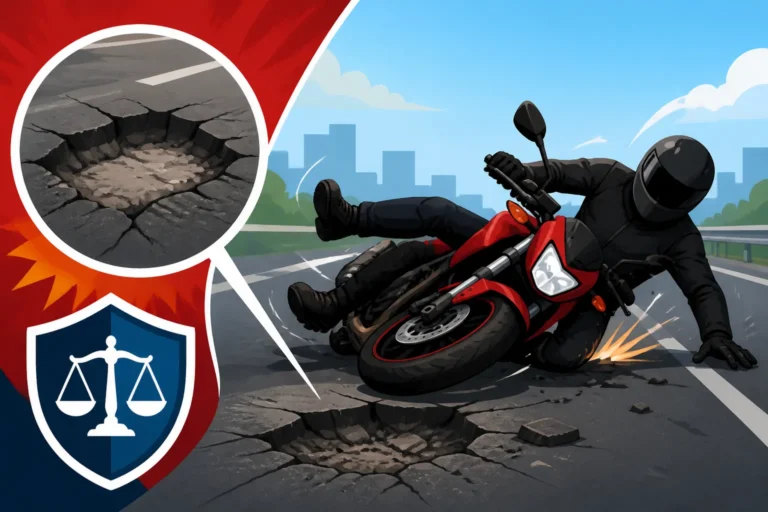
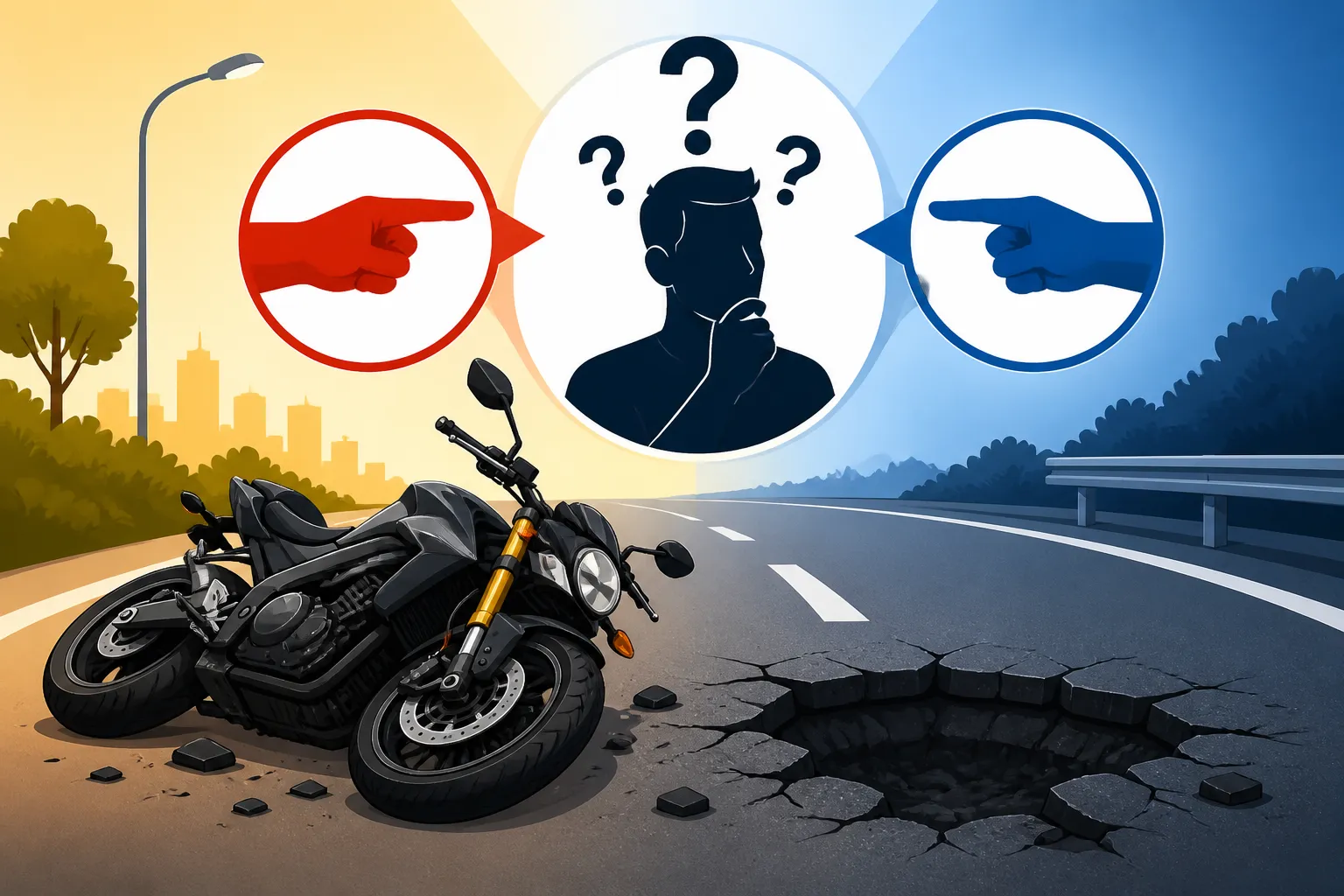
Think about the sudden shock of hitting a pothole you didn't see until it was too late. These aren't just inconvenient; they can bend rims, blow tires, and throw a rider off balance, leading to a loss of control. Similarly, patches of loose gravel or sand can drastically reduce tire grip, especially when leaned into a turn or under braking. It's a classic "oh no" moment that can easily lead to a slide out. Then there's uneven pavement, cracked asphalt, or significant dips and rises that can cause suspension compression or rebound that's too much for a motorcycle to handle smoothly, particularly at speed. Even subtle changes in elevation or a worn-out section of road near a construction zone can be enough.
Beyond the road surface itself, we often contend with debris in the road, anything from fallen tree branches after a storm to construction materials or even unsecured loads that have spilled from trucks. These can be impossible to avoid, especially if you're riding at night or in traffic. And let's not forget about poorly maintained manhole covers or utility plates that are sunken below the road surface, creating sudden drops. Even something as seemingly benign as an oil slick or standing water can become incredibly dangerous, offering almost no traction for a motorcycle tire.
Why Motorcycles Are Especially Vulnerable
It's not just that these hazards exist; it's how they interact with a motorcycle that makes them so dangerous. A car's wider wheelbase and four tires often allow it to absorb a bump or maintain traction over a patch of gravel with minimal drama. For a motorcycle, it's a different story.
First, stability is key on a motorcycle. Any sudden impact or loss of traction can quickly upset the bike's balance, making it incredibly difficult for the rider to maintain control. Hitting a deep pothole, for instance, can jar the handlebars violently, potentially causing a tank slapper or simply throwing the rider right off their machine. Second, our tire contact patch is significantly smaller than a car's, meaning less grip overall and a greater susceptibility to losing traction on loose surfaces like gravel or sand. When that small patch of rubber encounters something slick or unstable, the consequences are immediate and often severe.
Furthermore, visibility plays a huge role. Riders often have less reaction time to spot and react to hazards compared to drivers in taller vehicles. By the time you see that unexpected divot or spill, you might already be right on top of it. And while our agility is an advantage in many situations, sometimes there's simply no safe way to swerve around a hazard, especially in heavy traffic or on a winding road. These factors combine to make road hazards an exceptionally serious concern for motorcyclists, often leading to more severe injuries than the same hazard might cause a car driver. If you've ever had a close call, you know that gut-wrenching feeling of barely escaping a nasty spill. It's a constant reminder of how vulnerable we are.
Determining Fault When Road Hazards Cause a Crash
This is where things get tricky, and often, quite frustrating. When a road hazard causes a motorcycle accident, the immediate instinct might be to blame the road itself. But legally, "the road" doesn't have pockets. Instead, we have to look at the entity responsible for maintaining that section of road. This isn't always straightforward, as jurisdiction can vary widely between cities, counties, and state governments, or even private entities. Understanding who might be on the hook is crucial when you're trying to figure out "who is at fault in a road hazards motorcycle accident."
When Government Entities Are Liable
Often, the government agency responsible for a specific road or highway has a duty to maintain it in a reasonably safe condition. This could be a city street department, a county road commission, or a state Department of Transportation (DOT). For example, if you crash due to a massive pothole on a state highway like I-5 in California, the California Department of Transportation (Caltrans) might be the responsible party. Similarly, if it's a city street in Phoenix, the City of Phoenix Street Transportation Department would likely be the one to look at.
However, proving government liability isn't as simple as just pointing to the hazard. Governments typically have certain protections, often called "sovereign immunity," which make them harder to sue. To overcome this, you generally need to prove a few key things:
- Notice: The government entity must have had actual or constructive notice of the hazard. Actual notice means they knew about it, perhaps because someone reported it, or their maintenance crews saw it. Constructive notice means they should have known about it because it existed for a long enough time that a reasonable inspection would have revealed it. They can't be held responsible for something that appeared just moments before your accident.
- Time to Remedy: Once they had notice, they must have had a reasonable amount of time to fix the hazard or at least warn the public about it. A pothole that opened up last night might not meet this criterion, but one that's been growing for weeks very well could.
- Proximate Cause: The road hazard must have been the direct cause of your accident and injuries. If you were speeding excessively and hit a small, unavoidable divot, it might be argued that your speed, not the divot, was the primary cause.
Each state has specific laws regarding government liability for road hazards, including often much shorter statutes of limitations for filing claims against governmental entities (sometimes as little as 30 to 180 days, rather than the typical 2-3 years for other personal injury claims). This is why getting prompt legal advice is so important. For more on the specifics, check out our guide on Government Liability for Road Hazards.
When Private Property Owners Are at Fault
Not all roads are publicly maintained. Accidents can also happen on private property, such as parking lots, driveways, or roads within private communities. In these situations, the property owner—whether it's a business, a homeowner's association, or an individual—has a duty to maintain their property safely for visitors.
Imagine you're riding through the parking lot of a local grocery store, say, a Kroger in Ohio, and you hit a huge, crumbling section of pavement that sends you flying. In this scenario, the owner of the grocery store or the property management company responsible for the lot might be held liable. Their duty is generally to ensure the premises are reasonably safe and to warn of any known hazards that aren't obvious.
Similar to government liability, you'd typically need to show that the private property owner either created the hazard, knew about it and failed to fix it or warn you, or should have known about it through reasonable inspection. The standards for notice and remedy might be slightly less stringent than for government entities, but the principle remains the same. The owner can't be held liable for something they couldn't possibly have known about.
Shared Fault: When the Rider Also Bears Responsibility
Here’s where it gets even more complicated and, frankly, often feels unfair to riders. Even if a road hazard contributed to your crash, insurance companies or opposing legal teams might try to argue that you, the motorcyclist, were also partly at fault. This concept is known as Comparative Negligence in Motorcycle Accidents.
For example, if you hit a pothole while riding significantly over the speed limit, or if you were distracted and failed to see a clearly visible hazard that a prudent rider could have avoided, you might be assigned a percentage of fault. Some states follow a "pure comparative negligence" rule, like California, where you can recover damages even if you're 99% at fault, but your payout is reduced by your percentage of blame. So, if your damages are $100,000 and you're found 20% at fault, you'd only receive $80,000.
Other states, like Texas and many others, use a "modified comparative negligence" rule, often with a 50% or 51% bar. This means if you are found 50% or more (or 51% or more, depending on the state) at fault, you might not be able to recover any damages at all. This is a critical distinction and one that insurance companies will leverage against riders every chance they get. They often try to exploit the common "rider bias" where people assume motorcyclists are inherently reckless. This makes it incredibly important to gather strong evidence to prove the other party's full liability and minimize any blame placed on you.
Key Evidence to Prove Fault in a Road Hazard Accident
Proving fault in a road hazard motorcycle accident is a detailed undertaking. You can't just say "there was a pothole" and expect compensation. You need tangible, irrefutable evidence. This is often the difference between a successful claim and one that gets denied or significantly devalued.
Documenting the Scene and the Hazard
The moments immediately following an accident are chaotic, but if you're able, thoroughly documenting the scene is perhaps the most crucial step. This might sound obvious, but under stress, it's easy to miss critical details.
- Photos and Videos: Capture the road hazard from multiple angles. Take close-up shots that clearly show its size, depth, and specific characteristics (e.g., jagged edges of a pothole, type of debris). Then, take wider shots that show the hazard's location relative to landmarks, intersections, and road signs. This helps establish where exactly the incident occurred. Don't forget to include photos of any skid marks, the position of your motorcycle, and your injuries. A video can also be invaluable for showing the scope of the area and the immediate surroundings.
- Measurements: If possible and safe, measure the dimensions of the hazard. How deep was the pothole? How wide was the patch of gravel? This provides concrete data rather than estimations.
- Witness Information: Did anyone else see the accident or the road hazard? Get their contact information. Independent witnesses can corroborate your account and provide unbiased testimony, which is incredibly helpful in countering any claims that you were solely at fault.
- Time and Date: Note the exact time and date. This is vital for establishing when the hazard was present and for comparing it against maintenance logs.
- Weather Conditions: Document the weather conditions at the time of the crash, as this can affect visibility and the hazard's impact. Was it raining, which might have obscured the pothole? Or was it a clear day, suggesting the hazard should have been more visible?
Remember, the more detail you can capture right away, the better your chances of proving Motorcycle Accident Evidence for Proving Fault.
Official Reports and Expert Testimony
Beyond your own documentation, official reports and expert analysis lend significant weight to your claim. These resources provide objective data and professional opinions that are hard to dispute.
- Police Reports: Always file a police report, even if it seems like a single-vehicle accident caused by the road. The police report will document the scene, note any contributing factors, and potentially identify the road hazard. While a police report's fault determination isn't always final, it's a strong piece of initial evidence. Be aware that sometimes police reports can hurt your claim if they contain inaccuracies or place undue blame on the rider, so it's important to understand How Police Reports Establish Fault and how to potentially correct them if needed.
- Maintenance Records: A crucial piece of the puzzle is determining whether the responsible entity had prior knowledge of the hazard. This involves obtaining maintenance records for that specific section of road. These records can show when the road was last inspected, if any complaints about the hazard were filed, and if any repairs were scheduled or performed. If a government agency had a complaint about a pothole weeks before your accident but failed to fix it, that's powerful evidence of negligence.
- Accident Reconstruction Experts: In complex cases, an accident reconstruction expert can be invaluable. These professionals can analyze the scene, vehicle damage, and rider injuries to determine exactly how the accident occurred and the role the road hazard played. They can often create simulations or detailed reports that illustrate the sequence of events, helping to counter arguments about rider fault.
- Road Design Engineers: Sometimes, the issue isn't just lack of maintenance but faulty road design or construction. A road design engineer can evaluate the section of road where your accident happened and determine if it meets safety standards, if there are design flaws, or if maintenance procedures were inadequate. For example, if a drainage system was improperly designed, leading to perpetual standing water, that could point to design fault.
What to Do After a Road Hazard Motorcycle Accident
The moments immediately following a motorcycle accident can be disorienting and terrifying. Your priority should always be your safety and well-being. But once those immediate needs are met, there are critical steps you need to take to protect any potential claim you might have. It can be overwhelming, but taking these steps can make a huge difference down the line.
Prioritizing Safety and Medical Attention
First and foremost, your health comes before anything else. Road hazard accidents can cause severe injuries, from broken bones and road rash to head and spinal trauma.
- Move to Safety: If you're able to move and it's safe to do so, get yourself and your motorcycle out of the flow of traffic. Even if you feel fine, the adrenaline might be masking serious injuries.
- Seek Medical Attention Immediately: This cannot be stressed enough. Even if you feel "okay," injuries like whiplash, internal bleeding, or a concussion might not show symptoms right away. Refusing medical care or delaying it can severely impact your health and hurt your claim later on. Insurance companies love to argue that your injuries weren't serious if you didn't seek immediate treatment. Go to the emergency room or urgent care right away. Follow all medical advice and attend every follow-up appointment. Documenting your injuries for a claim starts with thorough medical records.
- Call 911: Always call the police, even if it's a single-vehicle accident caused by a road hazard. A police report creates an official record of the incident and can document the hazard itself. The police can also help manage traffic and get you necessary medical assistance.
Taking care of yourself should be your absolute top priority. You can always worry about the legal stuff once you're stable. For a more comprehensive checklist, refer to our guide on What to Do After a Motorcycle Accident.
Protecting Your Claim
Once you've ensured your safety and received medical attention, your thoughts will likely turn to your damaged motorcycle and your mounting medical bills. This is when protecting your claim becomes vital.
- Gather Information (Safely): As discussed, if you're able, take photos and videos of the scene, the road hazard, your motorcycle's damage, and your injuries. Get contact information from any witnesses. Don't forget to note the precise location.
- Do NOT Admit Fault: It's natural to try and explain what happened, but never, ever admit fault or say anything that could be interpreted as taking blame, even to the police. Stick to the facts: "I hit a large pothole and lost control." Let the investigation determine fault.
- Notify Your Insurance Company: Report the accident to your own insurance company as soon as possible. Give them the basic facts, but again, do not speculate on fault. Your policy might cover some of your damages, even if another party is ultimately responsible.
- Do NOT Talk to the Other Party's Insurance: If you're contacted by an insurance adjuster from a government entity or private property owner, be polite but firm. Do not give a recorded statement, discuss your injuries in detail, or agree to any settlement without first speaking with an attorney. Their job is to minimize their payout, not to help you.
- Keep Detailed Records: Keep a meticulous record of all medical appointments, treatments, medications, and expenses. Document your lost wages, any physical limitations, and how your injuries affect your daily life. This helps in calculating your Economic vs Non-Economic Damages Explained.
- Consult a Motorcycle Accident Attorney: Given the complexities of proving fault against government entities or property owners, and dealing with their insurance adjusters, it is highly recommended that you contact a lawyer specializing in motorcycle accidents. They can navigate the legal challenges, ensure deadlines are met, and fight for the compensation you deserve. For insights on whether you need one, check out Do You Need a Motorcycle Accident Lawyer.
| Liable Party | Common Hazards | Challenges in Proving Fault | Key Evidence |
|---|---|---|---|
| Government Entity | Potholes, broken pavement, debris, faulty signage | Sovereign immunity, strict notice requirements, short claim deadlines | Police reports, maintenance logs, witness statements, accident reconstruction |
| Private Property Owner | Uneven surfaces, poor lighting, loose gravel in parking lots | Proving owner's knowledge/negligence, insurance company tactics | Photos/videos of hazard, incident reports, property inspection records, witness testimony |
| Construction Company | Improperly marked construction zones, debris, unfinished roads | Contracts with government, proving negligence in construction/maintenance | Project plans, safety logs, expert testimony, photos/videos |
Navigating the Legal Landscape of Road Hazard Claims
Successfully pursuing a claim after a motorcycle accident caused by a road hazard is rarely a straightforward process. The legal landscape is filled with complexities, from governmental immunity to aggressive insurance tactics. It's not like simply dealing with another driver's insurance after a rear-end collision; these cases often involve multiple layers of bureaucracy and legal hurdles designed to protect the responsible parties.
Dealing with Government Immunity
One of the biggest obstacles you'll face when the government is the at-fault party is the concept of "sovereign immunity." This legal doctrine, stemming from old English law, essentially protects government entities from lawsuits unless they explicitly consent to be sued or unless specific laws waive that immunity under certain conditions.
For a motorcyclist injured by a county road hazard, for example, this means you can't just sue the county directly like you would an individual driver. You have to navigate specific state statutes that outline when and how a government entity can be held liable. These statutes often include:
- Strict Notice Requirements: As mentioned before, you typically have to provide formal written notice of your intent to sue within a very short timeframe after the accident – sometimes as little as 30 or 60 days, certainly much shorter than the standard personal injury statute of limitations. Missing this deadline, even by a day, can permanently bar your claim, regardless of how severe your injuries are or how clear the government's negligence was.
- Specific Legal Standards: The burden of proof to show government negligence is often higher than against a private citizen. You usually have to prove that the government had actual or constructive knowledge of the dangerous condition and failed to take reasonable steps to remedy it within a reasonable time.
- Limited Damages: In some cases, even if you win, there might be caps on the amount of damages you can recover from a government entity. These caps vary by state and jurisdiction.
These legal intricacies are why these types of cases are significantly more challenging than typical accident claims. It requires a deep understanding of administrative procedures, specific governmental codes, and courtroom experience with these unique challenges.
The Role of a Motorcycle Accident Attorney
Given the complexities, deadlines, and legal defenses involved in road hazard accident claims, having an experienced motorcycle accident attorney on your side is not just helpful, it's often essential. This isn't just about hiring any lawyer; it's about finding one who understands the unique aspects of motorcycle cases and the specific challenges of suing governmental entities or large corporations.
An attorney can:
- Navigate Legal Deadlines: They will ensure all crucial deadlines, especially those for filing notice against government entities, are met. Missing these can be fatal to your case.
- Investigate Thoroughly: Your attorney can conduct a comprehensive investigation, which includes obtaining police reports, maintenance records, witness statements, and hiring accident reconstructionists or road design experts if needed. They know exactly what kind of evidence is needed to prove How Fault Is Determined in Motorcycle Accidents in these specific circumstances.
- Deal with Insurance Companies and Government Agencies: They will handle all communications with insurance adjusters and government representatives. This protects you from making statements that could harm your claim and ensures your rights are protected. They understand the tactics these entities use to deny or devalue claims, and they know how to fight back.
- Value Your Claim Accurately: Motorcycle accidents often result in severe injuries and significant damages. An attorney can accurately calculate all your losses, including medical expenses, lost wages, future earning capacity, pain and suffering, and property damage. They understand what affects your Average Motorcycle Accident Settlement Amounts and how to maximize it.
- Negotiate and Litigate: They will negotiate fiercely on your behalf for a fair settlement. If a fair settlement cannot be reached, they are prepared to take your case to court and argue it before a judge and jury. This willingness to go to trial often makes insurance companies take your claim more seriously.
The bottom line is that while you might feel like you can handle a minor fender bender yourself, a motorcycle accident caused by a road hazard is almost certainly not one of those situations. The stakes are too high, and the legal hurdles are too numerous. Having a dedicated advocate who truly understands the nuances of these claims can make all the difference in securing the justice and compensation you deserve.
Disclaimer
Please remember that this article provides general information and insights into motorcycle accident claims involving road hazards. It is not intended as legal advice. Laws regarding liability, negligence, and personal injury claims vary significantly by state and jurisdiction. After any motorcycle accident, especially one involving severe injuries or complex fault determination, it is crucial to consult with a qualified attorney in your specific area who can provide advice tailored to your unique situation.