Motorcycle Accident Fault Laws in Washington
Getting into a motorcycle accident is a terrifying, life-altering experience, and one of the most frustrating aspects afterward is figuring out who is actually responsible for what happened. The legal labyrinth of fault laws can feel incredibly unfair, especially when you're dealing with injuries and property damage. This guide is here to demystify motorcycle accident fault laws specifically in Washington State, helping you understand how blame is assigned and how it impacts your ability to recover compensation.
Understanding Washington's Fault System for Motorcycle Accidents
When you've been in a motorcycle accident in Washington State, one of the first things that comes up, often before you've even had a chance to fully process what happened, is the question of fault. It's not always a clear-cut "they were 100% wrong, and I was 100% right" situation. Washington operates under what's called a "pure comparative negligence" system, which can be a bit confusing if you're not familiar with it. This system is designed to allocate responsibility fairly, even if multiple parties share some blame for the crash.
Pure Comparative Negligence Explained
In simpler terms, pure comparative negligence means that even if you, as the motorcyclist, were found to be partially at fault for the accident, you can still recover damages from the other party. However, the amount of compensation you receive will be reduced by your percentage of fault. There's no cutoff point where your claim is entirely barred because you were, say, 51% or even 90% at fault. This is a significant distinction compared to other states that follow "modified comparative negligence" rules, where your ability to recover damages might disappear if your fault exceeds a certain threshold (often 50% or 51%).
For example, imagine you're riding your motorcycle through downtown Seattle, and a car suddenly pulls out of a parking spot without signaling, hitting you. While the car driver is clearly negligent, perhaps you were going slightly over the speed limit. A jury or insurance adjuster might determine the car driver was 80% at fault, but you were 20% at fault due to your speed. If your total damages (medical bills, lost wages, pain and suffering) amount to $100,000, under Washington's pure comparative negligence system, you would still be able to recover $80,000 from the car driver's insurance. It’s all about proportion. This concept of Comparative Negligence in Motorcycle Accidents is really crucial to grasp, especially when you're looking at your potential settlement.
How Your Percentage of Fault Affects Your Claim
The percentage of fault assigned to you can dramatically impact the final settlement or award you receive. The higher your assigned fault, the lower your potential recovery. Insurance companies are notoriously aggressive in trying to assign as much blame as possible to motorcyclists, often relying on stereotypes or the inherent vulnerability of riders to suggest they should have avoided the crash. They know that every percentage point they can pin on you reduces their payout.
This is why understanding How Fault Is Determined in Motorcycle Accidents and having robust evidence to prove the other driver's negligence is paramount. It’s not just about proving they were at fault; it’s also about minimizing any blame that could unfairly be placed on you. Gathering evidence like accident scene photos, witness statements, and traffic camera footage is vital to build a strong case and counter any attempts by the insurance company to shift blame.
Common Scenarios and Fault in Washington Motorcycle Accidents
Motorcycle accidents rarely fit into a neat, predictable box. Each crash has its own unique set of circumstances, but certain types of collisions are more common and have established patterns for how fault is typically assigned in Washington State. Knowing these patterns can help you anticipate how your case might be viewed and what challenges you might face. Understanding the Common Causes of Motorcycle Accidents often sheds light on who bears primary responsibility.
Left-Turn Collisions and Driver Liability
One of the most dangerous and unfortunately common types of motorcycle accidents involves a car making a left turn in front of an oncoming motorcycle. Drivers often claim they "didn't see" the motorcycle, a defense that is frequently used but rarely excuses their negligence. In Washington, as in most states, the driver making a left turn generally has a duty to yield the right-of-way to oncoming traffic. This means if a car turns left and strikes your motorcycle, the car driver is usually found to be primarily at fault.
However, even in these situations, insurance companies might try to argue that the motorcyclist was speeding, riding without a headlight on during daylight hours (even if it's legally optional), or was otherwise operating their bike in a way that contributed to the crash. For a deeper dive into these incidents, explore our guide on Left-Turn Motorcycle Accidents Explained. This is where having solid evidence—like dashcam footage, independent witness testimony, or accident reconstruction expert analysis—becomes critical to reinforce that the turning driver's failure to yield was the direct cause.
Lane Splitting and Washington Law
The legality and implications of lane splitting for fault are often a hot topic among riders. It's vital to distinguish between "lane splitting" (riding between lanes of moving traffic) and "lane filtering" (moving between stopped vehicles). As of 2023, Washington state law permits lane filtering under very specific conditions: when traffic is stopped or moving at no more than 10 miles per hour, and the motorcyclist proceeds at a speed not exceeding 10 miles per hour. Lane splitting, however, remains illegal in Washington.
If you were involved in an accident while illegally lane splitting, your actions could certainly be used to assign a percentage of fault to you under Washington's pure comparative negligence rules. Even if the other driver was negligent, your illegal lane splitting could reduce your recovery. If you were legally lane filtering and an accident occurred, the fault determination would heavily rely on the specific circumstances of the crash, similar to any other collision. You can learn more about this complex topic by reading Lane Splitting and Motorcycle Accident Liability.
Distracted Driving and Proving Fault
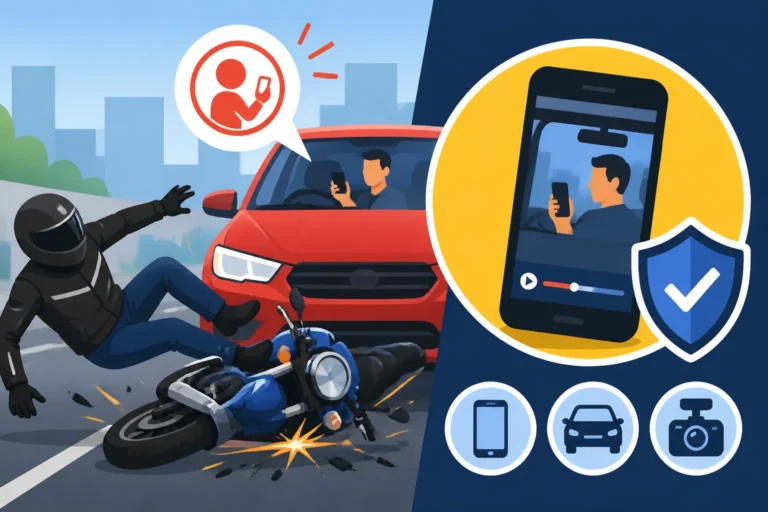
Distracted driving is a pervasive issue on Washington roads, leading to countless accidents, including those involving motorcycles. From texting to eating, anything that takes a driver's eyes or attention off the road can have catastrophic consequences for a motorcyclist. If you were hit by a distracted driver, proving their distraction is key to establishing fault. Washington has strict laws against using handheld electronic devices while driving, and a violation can be strong evidence of negligence.
Proving distracted driving can be challenging, as drivers rarely admit to it. However, evidence such as witness statements, cell phone records (which may require a subpoena), traffic camera footage, or even an admission at the scene (though drivers rarely do this) can be crucial. If the other driver swerved erratically, failed to brake, or exhibited other signs of inattention, those details can support a claim of distracted driving. We have a detailed resource on Motorcycle Accidents Caused by Distracted Driving that can offer more insights.
Evidence and Proving Fault in Washington
After a motorcycle accident, the immediate aftermath can be chaotic and overwhelming. Yet, what you do in those crucial moments and the steps you take to gather information can profoundly impact your ability to prove fault and secure fair compensation in Washington State. The burden of proof generally falls on the injured party to demonstrate that the other driver's negligence caused the accident and your resulting injuries.
The Role of Police Reports and Witness Statements
One of the first pieces of evidence gathered at the scene is usually the police report. In Washington, law enforcement officers investigate the crash and document their findings, which often include details about the vehicles involved, road conditions, statements from drivers and witnesses, and, sometimes, an initial determination of fault or contributing factors. While a police report's fault assessment isn't always the final word, it carries significant weight with insurance companies and, if necessary, in court. However, remember that police reports can sometimes contain inaccuracies or be biased against motorcyclists, so it's essential to review it carefully and understand its limitations. Delving into How Police Reports Establish Fault can provide more clarity.
Eyewitness statements are equally vital. Unlike drivers who might downplay their role, impartial witnesses can provide an objective account of what transpired. Their perspective can corroborate your version of events and directly contradict a negligent driver's denials. Always try to get contact information for any witnesses at the scene.
Documenting the Scene and Your Injuries
In the immediate aftermath of an accident, if you are physically able and it is safe to do so, document everything. Take comprehensive photos and videos of the accident scene from multiple angles. Capture:
- Damage to your motorcycle and the other vehicle(s).
- Skid marks on the road.
- Debris scattered across the roadway.
- Traffic signs, signals, and road conditions.
- The overall layout of the intersection or road where the crash occurred.
These visual records are incredibly powerful in painting a clear picture of how the accident happened. Equally important is documenting your injuries. Seek medical attention immediately, even if you feel "fine." Some serious injuries, like concussions or internal bleeding, may not manifest symptoms until hours or days later. Maintaining thorough medical records from doctors, specialists, and physical therapists creates an undeniable paper trail of your suffering and recovery, which is critical for your claim. This diligent documentation is part of Motorcycle Accident Evidence for Proving Fault.
How Insurers Assign Blame to Riders in Washington
It's an unfortunate reality that motorcyclists often face an uphill battle when dealing with insurance companies. There's a persistent societal bias that views motorcyclists as inherently reckless or risk-takers. Insurance adjusters are trained to exploit this bias, often attempting to assign a disproportionately high percentage of fault to the rider. They might argue you were speeding, riding in a blind spot, or simply "should have seen" the other vehicle, even if the other driver was clearly negligent. They might also delve into your driving history or try to imply that your riding gear was inadequate, even if not legally required.
This phenomenon, sometimes referred to as "rider bias," can significantly complicate your claim and reduce your potential settlement under Washington's pure comparative negligence system. Knowing that this tactic is common can help you prepare. Your best defense is a meticulously documented case that clearly establishes the other driver's negligence and minimizes any perceived fault on your part. Understanding How Insurance Companies Assign Blame to Riders is essential for countering these strategies.
Navigating the Legal Landscape After a Washington Motorcycle Accident
After dealing with the immediate aftermath of a motorcycle accident, the legal aspects can feel like another mountain to climb. Understanding the timelines and what happens when fault is disputed in Washington State is crucial for protecting your rights and ensuring you don't miss any critical deadlines.
The Statute of Limitations in Washington
In Washington State, there's a strict deadline for filing a personal injury lawsuit, including those stemming from motorcycle accidents. This deadline is known as the "statute of limitations." For most personal injury claims in Washington, you generally have three years from the date of the accident to file a lawsuit in court. While three years might seem like a long time, it passes quickly, especially when you're focusing on recovery, medical treatments, and negotiating with insurance companies.
Missing this deadline almost always means forfeiting your right to sue the at-fault party, regardless of how strong your case might be. There are very few exceptions to this rule. It’s important to note that this deadline applies to filing a lawsuit, not necessarily to settling your claim with an insurance company. However, if negotiations break down, you need to be prepared to file a lawsuit before the statute of limitations expires. You can get more specific details on Statute of Limitations for Motorcycle Claims in Washington.
What Happens When Fault Is Disputed
It's common for fault to be disputed after a motorcycle accident in Washington. The other driver might deny responsibility, or their insurance company might offer a lowball settlement by unfairly placing a high percentage of fault on you. When fault is disputed, the process typically escalates beyond simple negotiations.
Here's a breakdown of what might happen:
- Further Investigation: Both sides will gather more evidence. This could involve accident reconstruction experts, reviewing black box data from vehicles, analyzing traffic camera footage, or deposing witnesses.
- Negotiation: Your legal team will present all gathered evidence and legal arguments to the other party's insurance company, aiming to negotiate a fair settlement that reflects the true extent of damages and fault.
- Mediation or Arbitration: If direct negotiations fail, parties might engage in alternative dispute resolution methods like mediation (a neutral third party helps facilitate a settlement) or arbitration (a neutral third party hears arguments and makes a decision, which may be binding or non-binding).
- Lawsuit and Trial: If all else fails, a lawsuit may be filed. The case would then proceed through discovery (where both sides exchange information), depositions, and potentially a trial where a judge or jury determines fault and damages.
Dealing with a disputed fault claim can be incredibly stressful and complex. Having a knowledgeable advocate on your side can make all the difference, ensuring your rights are protected and you receive the compensation you deserve. Knowing When Fault Is Disputed in a Motorcycle Crash will give you a better understanding of the process.
To help visualize common fault scenarios in Washington, here's a table outlining typical outcomes:
| Accident Type | Primary At-Fault Party (Typical) | Potential Rider Contributing Factors (WA) | Impact on Rider's Claim (WA) |
|---|---|---|---|
| Left-Turn Collision | Turning Driver | Speeding, improper lighting | Damages reduced by rider's percentage of fault |
| Rear-End Collision | Rear Driver | None (unless erratic stopping) | Full damages (unless rider contributed significantly) |
| Unsafe Lane Change | Changing Lane Driver | Speeding, failure to use signals | Damages reduced by rider's percentage of fault |
| Dooring Accident | Driver/Passenger Opening Door | Lane position, excessive speed | Damages reduced by rider's percentage of fault |
| Road Hazard Crash | Government Entity/Property Owner | Excessive speed for conditions | Damages reduced by rider's percentage of fault (if any) |
| Lane Filtering | Other Driver | Filtering above 10mph, reckless filtering | Damages reduced by rider's percentage of fault (if any) |
| Lane Splitting | Other Driver | Illegal lane splitting | Significantly reduced damages due to illegal maneuver |
Disclaimer
Please remember that this article provides general information and is not legal advice. Every motorcycle accident case is unique, and the laws surrounding fault can be complex. It is always recommended to consult with a qualified legal professional specializing in motorcycle accident claims in Washington State to discuss the specifics of your situation.