Motorcycle Helmet Law in Indiana
It can feel incredibly confusing trying to keep up with all the different state laws when you’re riding your motorcycle, especially something as critical as helmet requirements. Many riders in the Hoosier State wonder if they really need to wear a helmet all the time or if there are exceptions. This comprehensive guide is here to cut through the noise, explaining Indiana's specific motorcycle helmet laws, how they might impact you after an accident, and what you can do to stay safe and legally compliant.
Understanding Indiana's Motorcycle Helmet Law
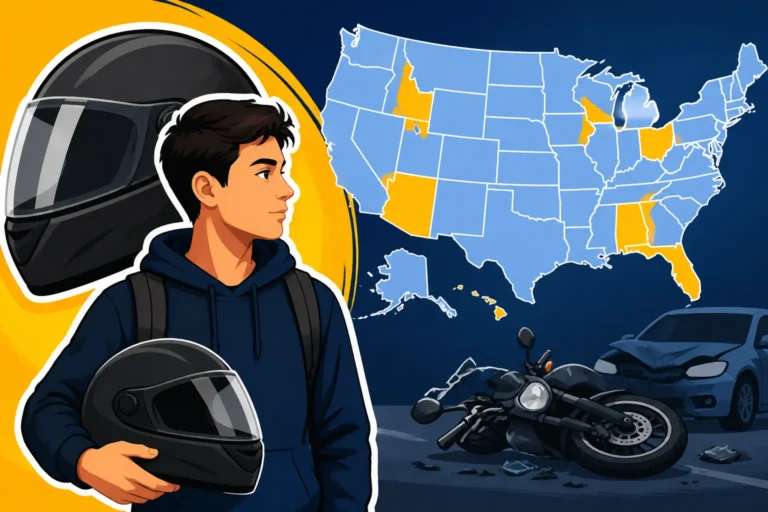
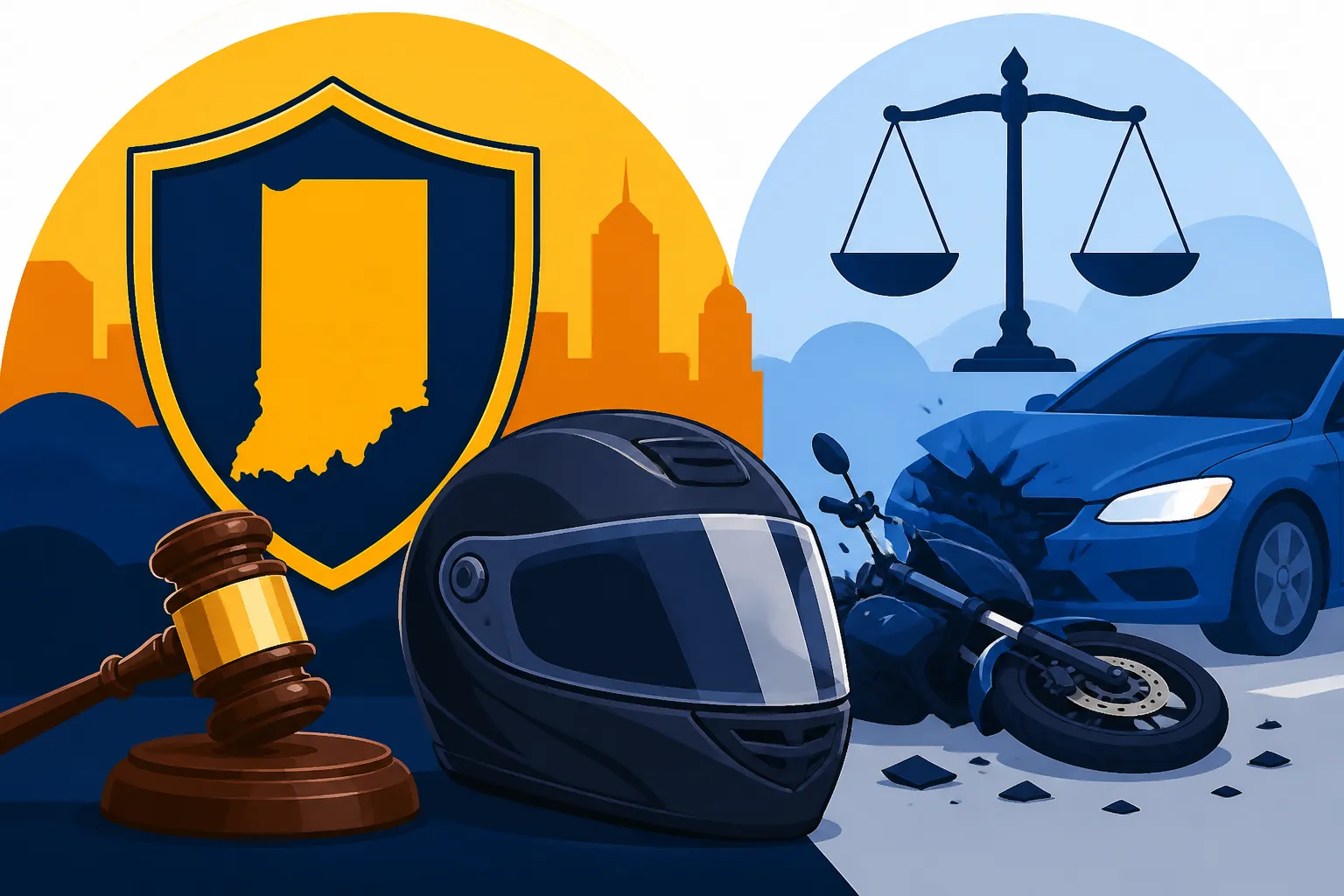
Let's get right to it. Indiana's motorcycle helmet law is what's known as a "partial" or "age-specific" law. Unlike states with universal helmet laws where everyone on a motorcycle must wear a helmet, Indiana has specific requirements based on the rider's age. This can lead to a lot of confusion, as many people assume it's an "all or nothing" situation.
Who Must Wear a Helmet in Indiana
The core of Indiana's helmet law, as found in Indiana Code § 9-19-7-1, is pretty straightforward for certain age groups. If you're under 18 years old, you absolutely must wear a helmet when operating or riding as a passenger on a motorcycle or moped. There's no wiggle room here. This means if you're a young rider, or if you're carrying a younger passenger, you need to ensure everyone has an approved helmet on their head before the wheels start turning.
This law is designed to protect younger, often less experienced riders, who are statistically more vulnerable to severe head injuries in the event of a crash. The state recognizes the heightened risk for this demographic and mandates protection. Failing to comply can result in fines and, more importantly, put young lives at unnecessary risk. For those interested in a broader view, our guide on Motorcycle Helmet Laws by State provides a fantastic overview of how different jurisdictions approach this critical safety issue.
Exceptions to the Helmet Rule for Adults
Now, for those 18 years or older, the rules change significantly. If you're an adult rider in Indiana, you are generally not legally required to wear a helmet. This is the part that often surprises out-of-state riders or new residents who might be used to stricter helmet laws elsewhere. However, there's a huge caveat here: while not legally mandated for adults, eye protection is required for all riders, regardless of age, unless your motorcycle has a windshield.
So, if you're over 18 and cruising down I-65 near Indianapolis without a helmet, you're technically within the confines of the law, as long as you have proper eye protection. But let's be real for a moment: just because something is legal doesn't necessarily mean it's the safest choice. Many seasoned riders, even those in states without universal helmet laws, choose to wear helmets for their own protection. They know that the pavement doesn't care about the law; it cares about impact. This is a personal decision for adult riders, but one that carries significant safety implications.
Penalties for Non-Compliance with Indiana's Helmet Law
Ignoring Indiana's helmet law, especially if you're under 18 or carrying an underage passenger without a helmet, comes with consequences. Generally, a violation is considered a Class C infraction. This means you could be looking at a fine, often around $25-$50, plus court costs. While it might not sound like a massive penalty compared to other traffic violations, it's still money out of your pocket. More importantly, it's a stark reminder of the safety regulations in place.
Furthermore, getting a ticket for a helmet violation can show up on your driving record. While it might not lead to points on your license in the same way a speeding ticket does, it can still be a mark. For younger riders, especially those still learning, it’s a lesson in personal responsibility and adherence to the law that can be easily avoided by simply buckling up a good, DOT Helmet Requirements Explained compliant helmet. Remember, the law is there for a reason, primarily to mitigate the severe injuries that can occur in motorcycle accidents.
The Impact of Helmet Use on Your Accident Claim
This is where things get really serious. While Indiana's helmet law for adults is somewhat lenient, the reality of a motorcycle accident claim can be far less forgiving if you weren't wearing a helmet. Insurance companies and defense attorneys are always looking for ways to reduce payouts, and your helmet (or lack thereof) can become a significant factor, even if you weren't legally required to wear one. Our detailed article on How Helmet Laws Affect Your Accident Claim delves much deeper into this complex issue.
The "Helmet Defense" Explained
The "helmet defense" is a tactic often employed by the opposing side in a motorcycle accident claim. Essentially, it argues that even if the other driver was at fault for the accident, your injuries—particularly head injuries—would have been less severe, or perhaps even avoided entirely, had you been wearing a helmet. This argument is used to suggest that you contributed to the extent of your own injuries, which can then reduce the amount of compensation you receive. It's a tricky area, and it’s a common tactic used by insurance adjusters to minimize their liability.
In states like Indiana that have comparative negligence laws, the "helmet defense" can be particularly impactful. Let's say you're found to be 10% responsible for your head injuries because you weren't wearing a helmet, even though the other driver was 90% at fault for causing the collision. Under comparative negligence, your total damages could be reduced by that 10%. So, if your total medical bills, lost wages, and pain and suffering amounted to $100,000, that 10% reduction means you'd only receive $90,000. It’s a bitter pill to swallow, especially when you’re already dealing with the aftermath of a crash. This concept is thoroughly explored in our post on The Helmet Defense Explained.
How Comparative Negligence Works with Helmet Non-Use
Indiana operates under a modified comparative negligence rule, specifically the 51% bar rule. This means that if you are found to be 51% or more at fault for an accident, you cannot recover any damages from the other party. While not wearing a helmet doesn't make you "at fault" for causing the accident itself, it can make you partially at fault for the severity of your injuries.
Imagine a scenario: You're riding your motorcycle on a beautiful Indiana afternoon, over 18 and legally riding without a helmet. A car turns left in front of you without yielding, causing a collision. You suffer a severe traumatic brain injury. The driver of the car is clearly at fault for the accident. However, their insurance company might argue that your TBI would have been less severe or prevented if you had been wearing a DOT-compliant helmet. A jury might assign you 20% of the fault for the extent of your head injury due to not wearing a helmet, even though the other driver was 100% at fault for the crash itself. If your total damages are $500,000, that 20% reduction means you’d only get $400,000. This is why it’s always better to prioritize safety and wear a helmet, regardless of the law. You can read more about how this works in the article How Comparative Negligence Reduces Your Payout.
Strategies to Counter the Helmet Defense
Even if you weren't wearing a helmet, it doesn't automatically mean your claim is doomed. There are ways to push back against the helmet defense. One common strategy is to argue that the helmet wouldn't have prevented or significantly reduced the specific injuries you sustained. For example, if you suffered leg or arm fractures, a helmet wouldn't have made a difference. Similarly, if your head injury was caused by forces that even a helmet couldn't realistically protect against, that argument can be made. Expert testimony from medical professionals or accident reconstruction specialists can be crucial here.
Another aspect is proving that your helmet, even if worn, might not have performed as expected due to the extreme nature of the collision, or that your injuries were caused by other impacts, not just to the head. Collecting and preserving evidence, such as photos of the accident scene, vehicle damage, and documentation of all your injuries, becomes vital. Our post on How to Prove You Wore a Helmet provides useful tips, which can be adapted to show that even if you didn't, the consequences were not solely due to that choice.
Beyond Helmets: Other Important Gear and Indiana Law
While helmets are often the focus, especially for discussions about safety and legal claims, they're just one piece of the protective puzzle for motorcyclists. Indiana also has laws concerning other protective gear, and regardless of legality, thoughtful riders always consider comprehensive protection.
Eye Protection Requirements
This is a big one, and it applies to all riders in Indiana, regardless of age: If your motorcycle doesn't have a windshield, you are legally required to wear some form of eye protection. This could be a face shield attached to a helmet (which solves both problems at once!), goggles, or safety glasses. This isn't just about avoiding a ticket; it's about crucial safety. Imagine hitting a bee at 60 mph without eye protection, or having road debris kick up into your eyes. It's not just uncomfortable; it can lead to a loss of control and a serious accident.
For those riding without a helmet (because they are over 18), robust eye protection is non-negotiable. Look for eyewear that meets ANSI Z87.1 standards for impact resistance. Many riders find integrated face shields on full-face helmets to be the most convenient and protective option. Even if you choose an open-face helmet, investing in high-quality goggles or a separate face shield is a must. You can check out more specific regulations in our article on Eye Protection Requirements by State.
Other Recommended Protective Apparel
While Indiana law doesn't explicitly mandate things like motorcycle jackets, gloves, or sturdy boots for adult riders, any experienced rider will tell you they are absolutely essential. Think of it as your second skin.
- Jackets: A good quality motorcycle jacket, whether leather or textile, provides abrasion resistance that ordinary clothing simply can't match. It can prevent severe road rash, which can range from painful scrapes to deep, disfiguring injuries requiring skin grafts. Brands like Alpinestars or Dainese offer excellent protection, but even a more budget-friendly option from a place like Cycle Gear can make a huge difference.
- Gloves: Your hands are often the first thing to hit the ground in a fall. Proper motorcycle gloves protect your palms from abrasion, absorb impact, and offer better grip and control.
- Pants: Regular jeans offer minimal protection. Kevlar-reinforced jeans or dedicated motorcycle pants are designed to withstand slides and impacts, protecting your legs and hips.
- Boots: Sturdy, over-the-ankle boots protect your feet and ankles from crushing injuries, fractures, and road rash. They also help maintain grip on the pegs and when putting your feet down.
Choosing to wear full protective gear, even when not legally required, is an investment in your safety and can have a positive impact on your recovery and potential legal claim after an accident. It demonstrates a commitment to safety, which can implicitly counter arguments about rider negligence in some injury claims.
Choosing the Right Helmet and Gear
Deciding which helmet and gear to invest in can feel overwhelming with all the options out there. But remember, this isn't just about looking cool; it's about protecting yourself on the road.
DOT-Compliant Helmets are Key
When choosing a helmet, the absolute minimum standard you should look for is a "DOT" certification sticker. This indicates that the helmet meets the safety standards set by the U.S. Department of Transportation. These standards include impact absorption, penetration resistance, and retention system effectiveness. A DOT-certified helmet has undergone rigorous testing to ensure it provides a certain level of protection in a crash. Many reputable brands like Bell, Shoei, and HJC produce excellent DOT-compliant helmets.
Beyond DOT, you might also see certifications from Snell or ECE. Snell is a private, non-profit organization that performs even more stringent testing, often favored by track riders. ECE (Economic Commission for Europe) is another robust international standard. While not legally required in the U.S., a helmet with Snell or ECE certification generally offers a higher level of protection than just DOT. When browsing at a store like Cycle Gear, always check for these certifications. It's not just about the law; it's about your brain. Our guide on What Is a DOT-Compliant Helmet provides even more insights into these crucial safety ratings.
| Helmet Certification | Standard | Focus | Common For |
|---|---|---|---|
| DOT | FMVSS 218 | Minimum legal safety standards in the U.S. | All street-legal helmets in the U.S. |
| Snell | M2020D/R | Higher impact protection, rigorous testing, often multi-impact | Racing, sport riding, enhanced safety |
| ECE | ECE 22.05/06 | International standard, common in Europe, includes penetration tests | Global market, often combines safety & lighter weight |
Fit and Comfort are Paramount
A helmet can have all the certifications in the world, but if it doesn't fit correctly, it won't protect you effectively. A proper fit means the helmet should be snug all around your head without being uncomfortably tight or causing pressure points. It shouldn't shift or wobble when you shake your head. The chin strap should be securely fastened, allowing only one or two fingers to fit underneath.
When trying on helmets, wear it for several minutes. Walk around the store. This will help you identify any potential pressure points that might become unbearable on a longer ride. Different brands and helmet shapes fit different head shapes, so don't be afraid to try several options. The staff at a motorcycle gear store like Cycle Gear can be incredibly helpful in guiding you to the right fit. Remember, comfort contributes to focus on the road, which is another layer of safety.
Investing in the Right Gear
Choosing your helmet and other riding gear isn't just about meeting minimum legal requirements; it's about preparing for the worst-case scenario. When you consider the devastating consequences of a serious injury, the cost of quality gear pales in comparison.
For instance, a full-face helmet offers the most comprehensive head and face protection. While a modular or open-face helmet might offer convenience, they leave your jaw and face exposed. Think about how much medical treatment for a broken jaw or extensive facial reconstruction would cost, not to mention the pain and emotional distress. Investing in a good quality, full-face helmet that meets DOT, Snell, or ECE standards is one of the smartest decisions any rider can make. Similarly, high-quality riding jackets, gloves, pants, and boots, though not legally mandated for adult riders in Indiana, significantly reduce the risk of severe injuries like road rash, fractures, and nerve damage. Your gear is your first line of defense, and it can literally save your skin – and your life.
Navigating a Claim After an Accident in Indiana
Even if you're the safest rider on the road, accidents can happen. When they do, especially in Indiana where helmet laws are specific to age, navigating the aftermath can be confusing. Knowing what steps to take can protect your rights and ensure you have the best chance at a fair recovery.
Documenting the Scene and Your Injuries
Immediately after an accident, if you are able, documenting the scene is incredibly important. Take as many photos and videos as possible. This includes photos of your motorcycle, the other vehicle involved, the road conditions, traffic signals, skid marks, and any visible injuries you or your passenger sustained. If you were wearing a helmet, take photos of it – especially if it’s damaged, as this can be crucial evidence.
Seeking immediate medical attention is also paramount. Even if you feel fine, adrenaline can mask serious injuries. A doctor’s visit creates an official medical record, which is vital for any subsequent legal claim. Delays in seeking treatment can be used by insurance companies to argue that your injuries weren't severe or weren't caused by the accident. Make sure every injury, no matter how minor it seems, is documented by medical professionals.
Dealing with Insurance Companies
Insurance adjusters are trained negotiators whose primary goal is to settle claims for the lowest possible amount. They might try to use the fact that you weren't wearing a helmet (if you're an adult) against you, even if the law didn't require it. They may attempt to assign you a percentage of fault for your injuries, reducing your potential settlement. It's crucial to be cautious about what you say. Avoid admitting fault or minimizing your injuries.
When an insurance company calls, be polite but firm. You are not obligated to give a recorded statement without legal counsel. Remember, anything you say can and will be used against you. It's always best to consult with an attorney before engaging in detailed discussions or accepting any settlement offers from the insurance company, especially when significant injuries are involved. Their initial offers are almost always lowball offers. For a deeper understanding of how insurance companies approach these situations, you might find our article on How Insurance Companies Assign Blame to Riders insightful.
When to Seek Legal Counsel
While some minor fender-benders can be handled directly with insurance, a motorcycle accident often involves severe injuries and complex legal issues. Given the potential for the "helmet defense" to be used against you, having an experienced attorney on your side is highly advisable. A lawyer specializing in motorcycle accidents will understand Indiana's specific laws, know how to gather critical evidence, and be skilled in negotiating with insurance companies.
They can help prove the other driver's fault, quantify your damages (including medical bills, lost wages, and pain and suffering), and vigorously defend against any attempts to reduce your compensation due to helmet non-use. They can also connect you with accident reconstruction experts or medical professionals to strengthen your case. Don't let the insurance company bully you into a low settlement. An attorney can be your greatest advocate in seeking justice and fair compensation.
Disclaimer
Please remember that this article provides general information and insights into Indiana's motorcycle helmet laws and related accident claims. It is not a substitute for professional legal advice. Laws can change, and every accident case is unique. If you've been involved in a motorcycle accident, it is strongly recommended that you consult with a qualified attorney in Indiana to discuss your specific situation and understand your legal rights and options.