Does Not Wearing a Helmet Affect a Claim in California
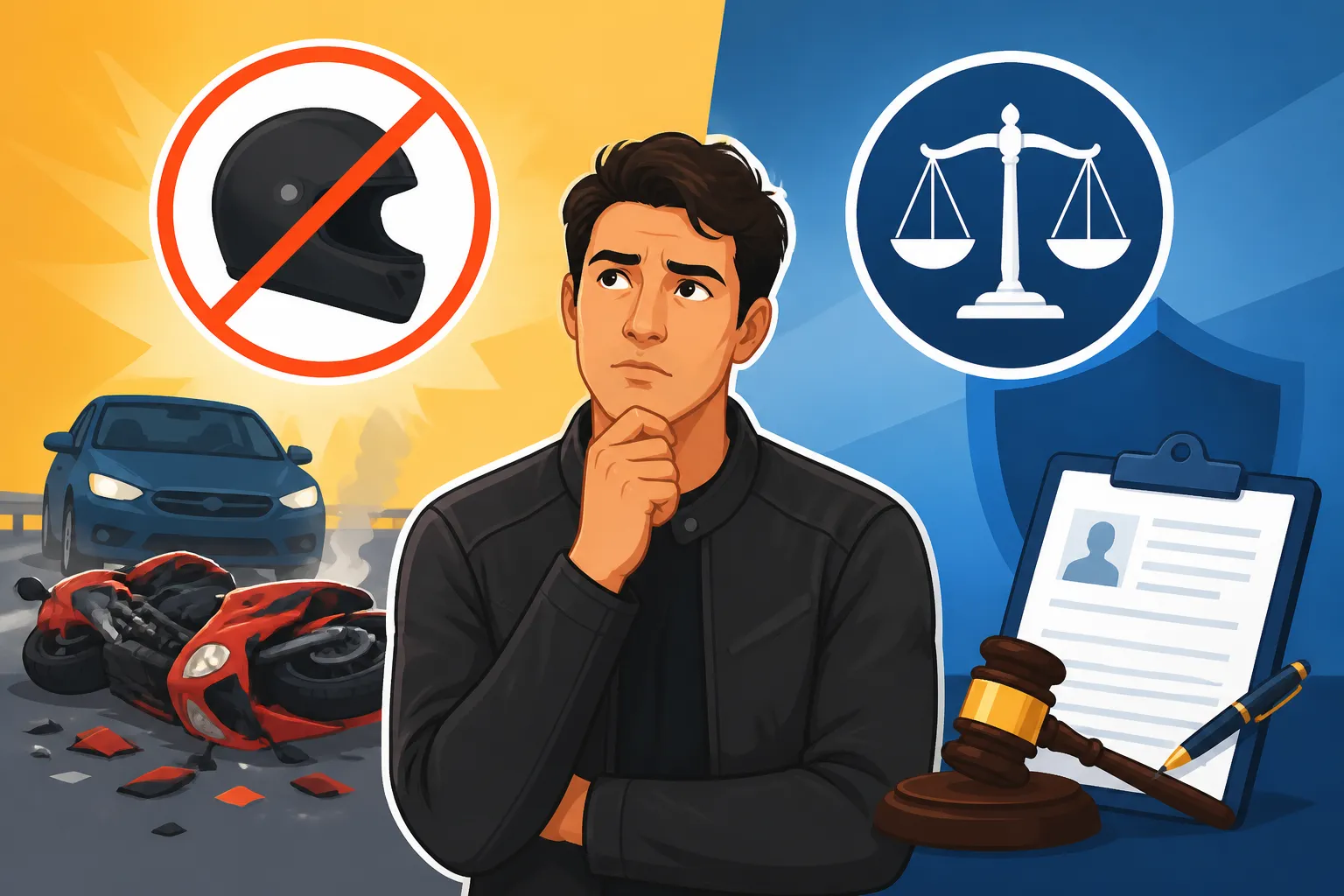
It’s a tough pill to swallow: you’ve been in a motorcycle accident, you’re injured, and now you’re wondering if not wearing a helmet in California is going to completely derail your claim for compensation. Many riders grapple with this anxiety, fearing that a single choice could invalidate their suffering. This guide aims to clear up the confusion surrounding California's helmet laws and how your decision to wear one – or not – might impact your motorcycle accident claim.
California's Universal Helmet Law Explained
Let's cut right to the chase: California has one of the strictest helmet laws in the country. It’s not a suggestion; it’s the law, plain and simple. Understanding this is the first step in comprehending how your helmet choice can factor into a post-accident scenario.
The Letter of the Law in California
California Vehicle Code Section 27803 mandates that any person operating or riding on a motorcycle, motor-driven cycle, or motorized bicycle on a public street, highway, or bikeway must wear a safety helmet. Not just any helmet, mind you, but one that is specifically designed for motorcycle use and that meets the standards established by the United States Department of Transportation (DOT). This isn’t about personal preference when you're out on the open road; it’s a legal requirement that carries weight, especially when an accident occurs. Failing to comply can lead to fines, but more importantly, it can create significant hurdles in recovering damages for your injuries. Many riders think a simple "brain bucket" or a novelty helmet is enough, but if it doesn't have that DOT sticker, it's not considered compliant in the eyes of the law. You can find a wide range of DOT-compliant helmets at reputable retailers like Cycle Gear, ensuring you meet the legal requirements and, more importantly, maximize your safety.
Who This Law Applies To
The California helmet law isn't discriminatory; it applies to everyone. That means riders of all ages, skill levels, and experience, as well as any passengers. There are no exceptions for adult riders based on age, insurance coverage, or any other factor. If you're on two wheels (or even three, in the case of some motorized cycles) on a public road in California, a DOT-compliant helmet is mandatory. This universal application is a critical point that insurance companies and opposing legal teams will scrutinize if you’re involved in a crash without one. They won't care if you were just going down the street for groceries or cruising on the Pacific Coast Highway; the law is the law. This blanket requirement is designed for rider safety, aiming to reduce the severity of head injuries in the event of a crash. When we talk about how helmet laws affect your accident claim, this universal nature means there's little room for argument about whether the law applied to you at the time of the incident.
The "Helmet Defense" and Its Impact on Your Claim
This is where things can get incredibly frustrating and complex for injured riders. Insurance companies are not in the business of freely handing out large settlements. They look for any reason to reduce their payout, and your helmet choice – or lack thereof – can become a potent weapon in their arsenal.
How Insurers Exploit Non-Compliance
When you file a claim after a motorcycle accident, the insurance company for the at-fault driver will immediately launch an investigation. One of the first things they'll look for is whether you were wearing a helmet, and if so, whether it was DOT-compliant. If you weren't, or if your helmet wasn't up to snuff, they'll seize on this information and use what's commonly known as the "helmet defense." This isn't a formal legal defense in the sense of denying liability for the accident itself, but rather an argument to reduce the amount of damages they owe you. They’ll try to argue that even if their insured driver was entirely at fault for causing the collision—say, by making a dangerous Left-Turn Motorcycle Accidents Explained—your injuries, particularly any head or brain injuries, were made worse or would not have happened at all if you had been wearing a proper helmet. This can feel like a direct attack on you, shifting blame and minimizing your suffering. They might even use Rider Bias in Fault Determination against you, playing into stereotypes about reckless riders.
For example, imagine a scenario where a distracted driver makes an unsafe lane change and clips your motorcycle, sending you to the pavement. If you suffer a broken leg and a severe concussion, but weren’t wearing a helmet, the insurance company might readily concede liability for the broken leg (since a helmet wouldn't prevent that) but vehemently dispute the concussion claim. They'll argue that your lack of a helmet directly contributed to the severity of your head injury, thus reducing their responsibility for those specific medical bills, lost wages related to head injury recovery, and pain and suffering damages. This isn't just a minor deduction; it can drastically reduce your potential settlement, especially when dealing with high-value damages like Motorcycle Traumatic Brain Injury Claims and Compensation.
Connecting Helmet Non-Use to Specific Injuries
The core of the helmet defense hinges on a concept called causation. The insurance company must prove a direct link between your failure to wear a helmet and the specific injuries you sustained. This is crucial because not wearing a helmet won't affect claims for injuries that a helmet wouldn't protect against, such as road rash on your arms and legs, a broken collarbone, or a knee injury. However, if you suffered a traumatic brain injury (TBI), skull fracture, or any significant head trauma, the defense will argue that these injuries would have been less severe, or perhaps non-existent, if you had been wearing a proper DOT-compliant helmet.
They will bring in medical experts, accident reconstructionists, and other professionals to testify that the forces involved in your crash, when combined with the lack of head protection, directly led to or exacerbated your head injuries. Conversely, if your injuries are primarily to other parts of your body—say, a compound fracture of the femur—then the helmet defense holds much less sway, as wearing a helmet wouldn't have prevented that specific injury. This is why a detailed understanding of your injuries and the accident's mechanics is so important. When considering Types of Damages in a Motorcycle Accident Claim, the impact of this defense is largely restricted to damages directly attributable to head trauma.
Understanding Comparative Negligence in California
California operates under a legal principle known as "pure comparative negligence." This concept is paramount when considering how not wearing a helmet might impact your motorcycle accident claim. It allows an injured party to recover damages even if they were partially at fault for the accident, but their recovery will be reduced by their percentage of fault.
Pure Comparative Negligence in Action
In many states, if you are found to be more than 50% or 51% at fault, you might be completely barred from recovering any compensation. But not in California. Here, under the pure comparative negligence rule, you can still recover damages even if you are found to be 99% at fault, although your payout would be severely diminished. For instance, if you sustain $100,000 in damages after a crash, but a jury determines you were 20% at fault, your recoverable damages would be reduced to $80,000. If you were 80% at fault, you'd still get $20,000. This is a significant difference from Contributory vs Comparative Negligence Explained found in other states.
The helmet defense directly ties into this. While not wearing a helmet doesn't necessarily mean you caused the accident itself (the other driver might still be fully liable for the collision), it can be argued that you contributed to the severity of your own injuries. This is where the percentage of fault comes into play. If the insurance company successfully argues that your lack of a helmet contributed, say, 30% to the severity of your head injury damages, then any compensation you might receive for those specific head injuries could be reduced by that percentage. It's a subtle but powerful distinction: they're not saying you caused the crash, but that you contributed to the extent of your harm. Understanding How Comparative Negligence Reduces Your Payout is critical for any rider in California involved in a crash.
How Your Percentage of Fault is Determined
Determining the percentage of fault in a motorcycle accident is rarely straightforward. It involves a thorough investigation of all the circumstances surrounding the crash, including witness statements, police reports, accident reconstruction, and sometimes, even traffic camera footage. When a helmet is not worn, investigators and insurance adjusters will analyze the correlation between the lack of head protection and the specific head injuries sustained.
For example, if a car T-bones you at an intersection because the driver ran a red light, they are clearly at fault for causing the collision. However, if you suffered a catastrophic brain injury and weren’t wearing a helmet, the other side will argue that while their driver caused the impact, your choice not to wear a helmet significantly worsened your outcome. A jury might then decide, based on expert testimony, that the other driver was 100% at fault for the accident, but you were 25% at fault for the severity of your head injuries due to non-helmet use. This 25% would then be applied to the portion of your damages related to your head injury, reducing your overall compensation. This complex interplay underscores why seeking immediate medical attention and thoroughly documenting your injuries for a claim is crucial, as is understanding Motorcycle Accident Fault Laws in California.
Countering the Helmet Defense and Protecting Your Claim
Just because the helmet defense can be used doesn't mean it's an automatic win for the insurance company. Riders have options and strategies to push back against these arguments and protect their right to fair compensation.
Proving Helmet Non-Use Didn't Cause Injuries
One of the most effective ways to counter the helmet defense is to demonstrate that your lack of a helmet did not, in fact, cause or worsen your specific injuries. This might sound counter-intuitive, especially concerning head injuries, but it’s a valid legal strategy. For instance, if you suffered a serious injury to your leg, arm, or internal organs that clearly would not have been prevented by a helmet, then the helmet defense is largely irrelevant to those particular damages.
Even for head injuries, there might be arguments to be made. Perhaps the impact was such that even a DOT-compliant helmet would not have prevented the injury or significantly mitigated its severity. This is a challenging argument, requiring expert analysis, but it’s not impossible. It's about establishing that the other driver's negligence was the sole proximate cause of all your injuries, regardless of your helmet status. To do this, you need solid medical documentation, detailed accident reports, and sometimes, the testimony of specialists. You need to gather all Motorcycle Accident Evidence for Proving Fault and how it relates to your injuries. The key here is not to admit fault for your injuries, even partial fault, at the scene of the accident. It’s imperative to understand Why You Should Never Admit Fault at the Scene.
The Role of Expert Testimony
When you’re up against the "helmet defense," expert testimony becomes your best friend. This often involves engaging accident reconstructionists, biomechanical engineers, and medical professionals who can provide scientific and medical opinions about the dynamics of the crash and the nature of your injuries.
An accident reconstructionist can analyze the speed of the vehicles, the angle of impact, and the trajectory of your body to determine the forces involved. They can then offer an opinion on whether a helmet would have made a difference given those specific circumstances. For example, in a very high-speed, direct impact, a helmet might only offer marginal additional protection against certain severe brain injuries compared to not wearing one, though it would certainly protect against road rash and skull fractures.
Medical experts, such as neurologists or orthopedic surgeons, can then provide critical testimony linking your injuries directly to the impact itself, rather than to the absence of a helmet. They can explain the specific mechanisms of injury and whether a helmet would have altered that outcome. Their testimony can be crucial in challenging the insurance company's claims and limiting the percentage of fault assigned to you for your injuries. If you believe you’re being unfairly blamed, knowing How to Fight an Unfair Fault Assignment often involves bringing in these experts. Seeking legal counsel from a firm experienced in motorcycle accident claims can be incredibly beneficial in coordinating these experts and building a strong counter-argument. You want to make sure you have someone on your side who understands The Helmet Defense Explained and how to fight it effectively.
It's also worth noting that while DOT Helmet Requirements Explained are important, even if you were wearing a non-DOT helmet, an expert might argue that its minimal protection was still better than nothing, or that the nature of the impact made even DOT compliance moot for your specific injury. This is a nuanced area where skilled legal representation is invaluable. It’s always best to wear a high-quality, DOT-approved helmet from retailers like Cycle Gear, not just for legal compliance but for your ultimate safety.
Here's a simplified look at how helmet use might influence a theoretical motorcycle accident claim in California:
| Scenario | Helmet Status | Type of Injury | Potential Impact on Claim Value (for that injury) | Explanation |
|---|---|---|---|---|
| Driver at fault, Rider sustained injuries | DOT-Compliant Helmet | Severe Road Rash, Broken Arm | Minimal reduction | Helmet would not have prevented these injuries. Claim for these damages likely unaffected. |
| Driver at fault, Rider sustained injuries | DOT-Compliant Helmet | Mild Concussion, Bruises | Full recovery | Helmet likely mitigated severity of head injury. Claim for head injury damages strong. |
| Driver at fault, Rider sustained injuries | No Helmet | Severe Road Rash, Broken Leg | Minimal reduction | Helmet would not have prevented these injuries. Claim for these damages likely unaffected, though rider might face a fine for non-compliance. |
| Driver at fault, Rider sustained injuries | No Helmet | Traumatic Brain Injury (TBI) | Significant reduction likely | Insurance company will argue TBI severity was due to lack of helmet, attempting to assign rider comparative fault for injury severity, reducing compensation for TBI-related damages. |
| Driver at fault, Rider sustained injuries | Novelty Helmet | Skull Fracture, Major Lacerations | Significant reduction likely | Novelty helmets offer minimal protection and are not DOT-compliant. Insurers will treat this similarly to no helmet, arguing increased injury severity due to inadequate protection. |
| Rider at fault, Rider sustained minor injuries | DOT-Compliant Helmet | Bruises | Reduced by rider's percentage of fault for accident | If rider was partially at fault for the accident, their claim is reduced by that percentage. Helmet use doesn't change accident fault but protects injury claim value. |
| Rider at fault, Rider sustained severe injuries | No Helmet | TBI, Internal Bleeding | Severely reduced or barred | Rider's fault for accident and lack of helmet for TBI creates a double hit. Recovery for TBI would be significantly reduced by both comparative fault for the accident and comparative fault for injury severity. Can You Still Recover If You Were Partly at Fault applies but with heavy reductions. |
It’s clear that while not wearing a helmet doesn't automatically mean your claim is worthless, it introduces a significant challenge, especially for head-related injuries. You're essentially giving the opposing side an argument to reduce their liability, forcing you to fight harder for every dollar. This is why when considering Motorcycle Safety Gear and Legal Protection, a DOT-compliant helmet is truly your first line of defense, both physically and legally.
Disclaimer
Please remember that this information is for educational purposes only and is not legal advice. Every motorcycle accident claim is unique, and the outcome depends heavily on the specific facts, applicable laws, and individual circumstances of your case. It is always recommended to consult with a qualified legal professional specializing in motorcycle accident law in California to discuss your specific situation and understand your rights.