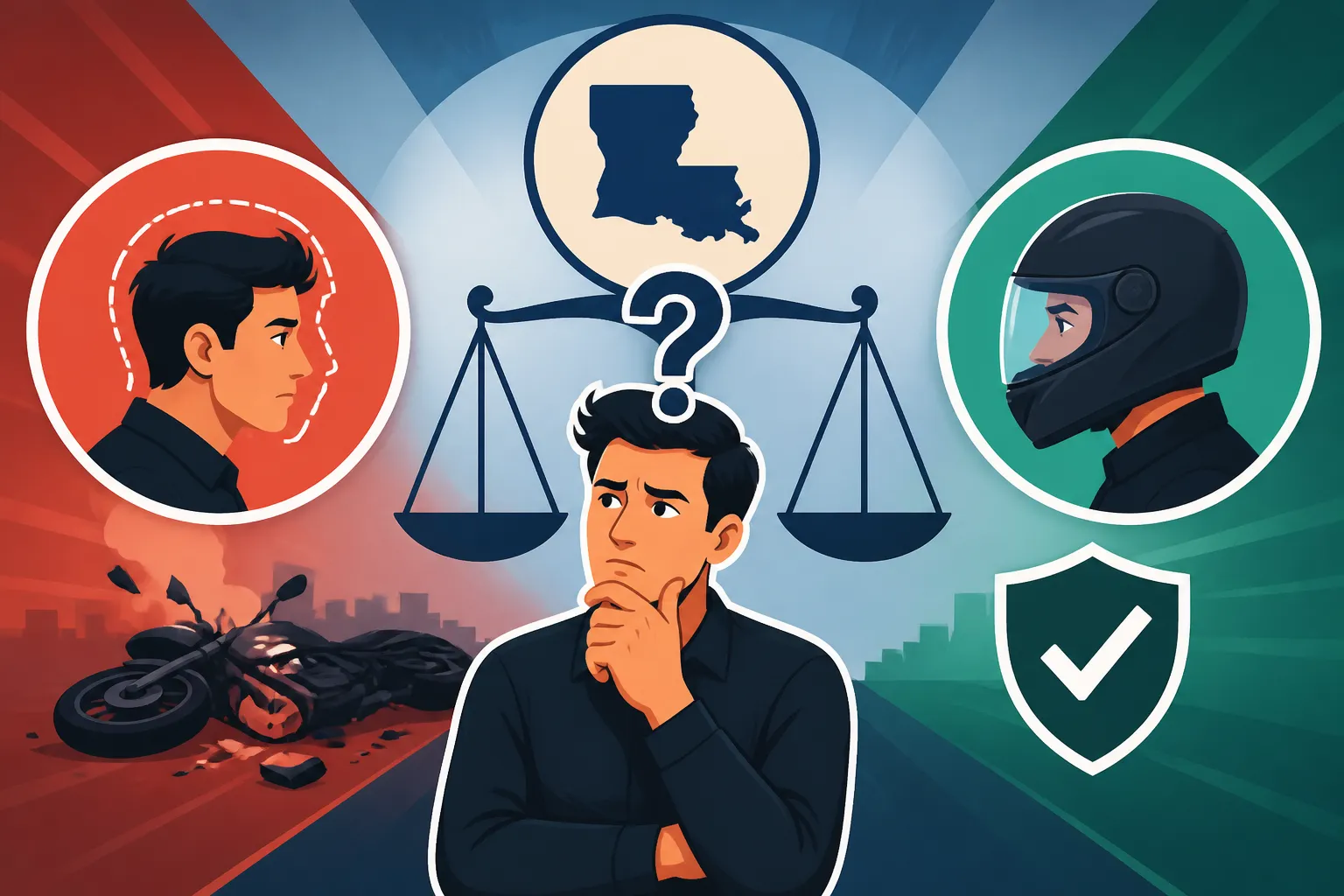
Does Not Wearing a Helmet Affect a Claim in Louisiana
Riding a motorcycle in Louisiana offers incredible freedom, but it also comes with unique risks and legal considerations, especially when an accident happens. One common concern that pops up for riders who've been involved in a crash is how not wearing a helmet might impact their ability to recover damages. It’s a frustrating situation because, depending on your age and insurance coverage, you might not have been legally required to wear one, yet insurance companies and opposing counsel often try to use it against you. This guide will thoroughly break down Louisiana's helmet laws and explain exactly how the decision to ride without a helmet can affect your motorcycle accident claim.
Understanding Louisiana's Motorcycle Helmet Laws
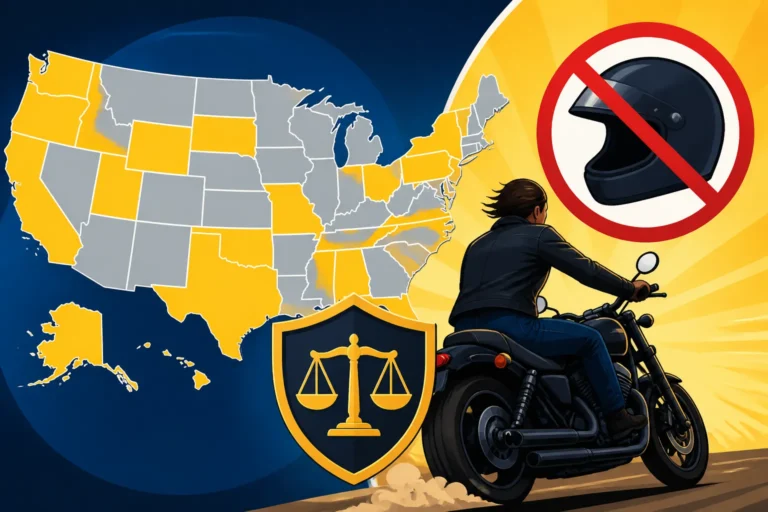
First things first, let's clear up the confusion about helmet laws in the Bayou State. Louisiana doesn't have a "universal" helmet law like California or New York, where every rider and passenger must wear a helmet, regardless of age or experience. Instead, Louisiana operates under a partial helmet law, which means specific conditions determine whether a helmet is legally required.
Who Must Wear a Helmet in Louisiana
The law is pretty clear on this, and it's essential to understand the nuances. In Louisiana, you are generally required to wear a helmet if you fall into one of two categories:
- Riders and Passengers Under 18: If you're a young rider or have a passenger who hasn't reached their 18th birthday yet, a DOT-compliant helmet is mandatory. There's no getting around this one. The state wants to ensure its youngest riders have the highest level of protection.
- Riders and Passengers Without Specific Insurance Coverage: This is where it gets a little more complex. If you are 18 years of age or older and do not have an insurance policy that provides at least $10,000 in medical benefits for injuries sustained in a motorcycle accident, then you must wear a helmet. This requirement is often overlooked or misunderstood, but it's a significant factor. If you ride without a helmet and don't meet this insurance threshold, you're not just risking injury; you're also breaking the law, which can have severe repercussions in a claim.
So, for adult riders with the necessary medical coverage, Louisiana offers a choice. This choice, however, doesn't come without potential consequences, particularly if you're involved in a collision. While you might be legally compliant without a helmet, that doesn't shield you from arguments about injury severity in a personal injury case. For a broader perspective on regulations, you can check out our detailed guide on the various types of Motorcycle Helmet Laws by State.
What "DOT-Compliant" Really Means
When the law mentions a "DOT-compliant" helmet, it's not just some throwaway term. The U.S. Department of Transportation (DOT) sets minimum performance standards for motorcycle helmets to ensure they offer a certain level of protection. A DOT-compliant helmet will have a sticker on the back that confirms it meets these standards. These aren't just decorative decals; they're a mark of safety. Novelty helmets, while they might look cool, typically do not meet DOT standards and offer little to no real protection, making them legally inadequate where helmets are required and leaving you highly vulnerable in a crash. It's not just about avoiding a ticket; it's about protecting your brain.
The "Helmet Defense" and Comparative Negligence in Louisiana
Now, let's get into the nitty-gritty of how not wearing a helmet can actually impact your personal injury claim after a motorcycle accident in Louisiana. Even if you were legally allowed to ride without a helmet, the other driver's insurance company will almost certainly try to use your helmet choice against you. This is known as the "helmet defense."
How Insurance Companies Weaponize Helmet Non-Use
The "helmet defense" is a tactic used by the defense (typically the at-fault driver's insurance company) to argue that even if their driver caused the accident, your injuries, particularly head injuries, would have been less severe or entirely avoided if you had been wearing a helmet. They aren't arguing that you caused the crash itself, but that you contributed to the severity of your own injuries.
Imagine this scenario: You're riding your Harley-Davidson down Jefferson Davis Parkway in New Orleans, an adult with adequate medical insurance, so you're legally riding without a helmet. Another driver, distracted by their phone, makes a sudden lane change and clips your front wheel, sending you to the pavement. You suffer a traumatic brain injury (TBI) and extensive road rash. The other driver was clearly at fault for the accident, perhaps even engaged in Motorcycle Accidents Caused by Distracted Driving. However, their insurance carrier, let's say Geico or Progressive, will immediately point to your lack of a helmet. They'll argue that while their insured caused the collision, your TBI could have been prevented or significantly mitigated by a helmet, thus shifting some of the responsibility for that specific injury onto you. This can drastically reduce the compensation you might receive for medical bills, lost wages, and pain and suffering related to the head injury.
This defense strategy is potent because motorcycle accidents, unfortunately, often result in very severe injuries, especially to the head. Insurers know this and will seize any opportunity to reduce their payout. For a deeper dive into this, you might find our article on How Helmet Laws Affect Your Accident Claim particularly insightful.
Louisiana's Pure Comparative Negligence Rule
Louisiana follows a legal principle called "pure comparative negligence." This is a critical point that differentiates it from many other states. In pure comparative negligence states, you can still recover damages even if you are found to be partially at fault for an accident, no matter how high your percentage of fault. Your total recoverable damages are simply reduced by your percentage of fault.
For example, if the total damages in your accident claim are determined to be $100,000, but a jury decides you were 30% at fault for the severity of your head injury because you weren't wearing a helmet (even if you were 0% at fault for the actual collision), your compensation for those head-related damages would be reduced by 30%. So, instead of receiving the full $100,000, you'd receive $70,000.
This is distinct from "modified comparative negligence" states, where if your fault exceeds a certain threshold (usually 50% or 51%), you are completely barred from recovering any damages. In Louisiana, you can still recover, which is a silver lining, but the reduction due to the helmet defense can still be substantial. Understanding Comparative Negligence in Motorcycle Accidents is crucial for any rider in this state.
It's vital to recognize that the helmet defense doesn't usually try to pin the cause of the crash on you. Instead, it focuses solely on your contribution to the extent of your injuries. This distinction is subtle but incredibly important in a motorcycle accident claim.
Proving and Disputing Injury Causation and Severity
When the helmet defense comes into play, the focus shifts to medical evidence and expert testimony. It’s not enough for an insurance company to simply say, "He wasn't wearing a helmet, so it's his fault for the head injury." They have to prove it, and you have the right to dispute their claims.
The Role of Medical Records and Expert Testimony
After any motorcycle accident, your immediate priority, after getting to safety, should be seeking comprehensive medical attention. This isn't just for your health; it's absolutely crucial for your claim. Detailed medical records from your initial emergency room visit, follow-up appointments, specialist consultations, and physical therapy sessions will be the backbone of your case. These records help to establish the nature and severity of your injuries.
When the helmet defense is raised, medical experts can become pivotal. Neurosurgeons, neurologists, and other specialists can testify about the type of head injury you sustained, its probable cause, and whether a helmet would have realistically prevented or reduced its severity. For instance, a direct impact to the head in a low-speed fall might be significantly mitigated by a helmet, but a violent, high-speed impact where your head strikes multiple surfaces could still result in severe injury, even with a helmet. An expert witness can analyze the specific forces involved in your crash and offer a professional opinion on the helmet's potential impact.
It’s also important to document all other injuries, not just head trauma. Road rash on your arms, legs, or torso, broken bones, or internal injuries are typically not affected by helmet use. High-quality riding gear, like a durable jacket, riding pants, and gloves (the kind you find at a place like Cycle Gear, known for its extensive selection), can certainly reduce the severity of these "non-head" injuries, but the absence of a helmet usually only pertains to head and facial injuries. This distinction helps to isolate the damages that might be reduced versus those that should be fully compensated. You can learn more about documenting all aspects of your injuries in our guide, How to Document Injuries for a Claim.
Countering the Helmet Defense
Disputing the helmet defense requires a strategic approach. Here are a few ways riders and their legal teams can push back:
- Injury Specificity: Argue that the specific head injury sustained would not have been prevented by a helmet due to the extreme forces or nature of the impact. For example, a severe whiplash injury leading to a concussion might still occur even with a helmet if the brain violently moves within the skull.
- Proof of Other Driver's Negligence: While not directly countering the helmet defense, emphasizing the extreme negligence of the at-fault driver can sometimes sway a jury or adjuster. If the other driver was drunk (a common cause, leading to Motorcycle Accidents Caused by Drunk Driving) or grossly reckless, their culpability for causing the entire incident remains paramount.
- Causation vs. Mitigation: Stress that not wearing a helmet did not cause the accident; it is merely being argued as a factor in the mitigation of damages. The core fault for the collision still lies with the other driver.
- Lack of Causal Link: In some cases, there might be no direct causal link between the lack of a helmet and a specific injury. If you suffered a broken arm and a TBI, the helmet defense would only apply to the TBI. Your broken arm claim should remain unaffected.
- Legal Compliance: Reiterate that, under Louisiana law, you were legally compliant by not wearing a helmet (if you met the age and insurance criteria). While this doesn't fully negate the defense's argument about injury severity, it can demonstrate you weren't breaking any laws at the time of the crash.
The objective is to minimize the percentage of fault assigned to you for your injuries. Even a small reduction in assigned fault can make a big difference in your final settlement or award. Our post on How to Fight an Unfair Fault Assignment provides more strategies for dealing with these challenges.
Practical Steps and Legal Guidance for Your Claim
Navigating a motorcycle accident claim in Louisiana, especially when the helmet defense is a factor, can feel like an uphill battle. But you're not alone, and there are definitive steps you can take to protect your rights and maximize your potential recovery.
What to Do Immediately After the Crash
Your actions in the moments and days following an accident are critically important.
- Seek Medical Attention: Even if you feel okay, get checked out by a medical professional. Adrenaline can mask pain, and some serious injuries, like concussions or internal bleeding, may not manifest symptoms immediately. A prompt medical evaluation creates an official record of your injuries, which is vital for any claim.
- Document the Scene: If you can safely do so, take photos and videos of everything: the scene of the accident, vehicle damage, any road hazards, traffic signs, and your injuries. If you weren't wearing a helmet, photos of your riding gear (or lack thereof) will be part of the evidence. For example, if you were wearing a sturdy leather jacket and riding jeans, those photos can demonstrate efforts to protect yourself from road rash, even if your head was unprotected.
- Gather Information: Exchange contact and insurance information with all parties involved. Get contact details for any witnesses.
- Avoid Admitting Fault: Never admit fault at the scene, even if you think you might have been partially to blame. Let the investigation determine fault.
- Report the Accident: File a police report. This creates an official account of the incident.
Remember, the insurance company isn't on your side. Their goal is to pay out as little as possible. Any statements you make can be used against you.
Why Legal Counsel Is Essential
This is where a knowledgeable motorcycle accident attorney in Louisiana becomes your strongest ally. They understand the intricacies of the state's comparative negligence laws and are well-versed in countering the "helmet defense."
An experienced attorney will:
- Investigate Thoroughly: They'll gather all necessary evidence, including police reports, witness statements, traffic camera footage, and medical records. They may also engage accident reconstruction experts to analyze how the crash occurred and the forces involved, which can be crucial in challenging claims about injury severity.
- Handle Communications with Insurers: Your lawyer will deal directly with the insurance companies, protecting you from adjusters who might try to trick you into making statements that hurt your case. They know how to negotiate effectively and recognize lowball offers.
- Prove Damages: They will meticulously calculate all your damages, including economic damages (medical bills, lost wages, property damage) and non-economic damages (pain and suffering, emotional distress, loss of enjoyment of life).
- Counter the Helmet Defense: This is a major area where an attorney's expertise shines. They can develop legal strategies to minimize the impact of not wearing a helmet on your claim. This might involve arguing that the helmet wouldn't have made a difference, or that the other driver's negligence was so egregious that it overshadows any alleged contribution to injury severity.
- Represent You in Court: If a fair settlement cannot be reached, your attorney will be prepared to take your case to trial, presenting a compelling argument on your behalf.
Hiring a lawyer after a motorcycle accident isn't just about getting money; it's about leveling the playing field against powerful insurance companies. When considering the path forward, our guide on Do You Need a Motorcycle Accident Lawyer can offer more clarity. Especially when facing the specific challenges of a partial helmet law state like Louisiana, having someone in your corner who knows the local legal landscape is invaluable. You might even consider upgrading your riding gear, perhaps checking out the latest helmets and protective clothing at a store like Cycle Gear, to ensure future safety on the road.
Comparing Helmet Requirements and Claim Impact
To give you a clearer picture, here's a table summarizing Louisiana's specific helmet law and its potential effect on a personal injury claim:
| Factor | Louisiana Helmet Law Requirement | Impact on Personal Injury Claim if Not Worn |
|---|---|---|
| Riders/Passengers Under 18 | Mandatory | If under 18 and no helmet: Violation of law, high likelihood of significant fault assigned for head injuries (even if other driver is 100% at fault for collision), greatly reducing compensation for those specific injuries. May face fines. |
| Riders/Passengers 18+ with < $10k Med. Ins. | Mandatory | If 18+ with insufficient medical insurance and no helmet: Violation of law, high likelihood of significant fault assigned for head injuries, severely impacting compensation. May face fines. |
| Riders/Passengers 18+ with >= $10k Med. Ins. | Not legally mandatory (rider's choice) | If 18+ with sufficient medical insurance and no helmet: Not a legal violation. However, the "helmet defense" can still be used to argue you contributed to the severity of your head injuries, potentially reducing compensation for those specific damages under pure comparative negligence. |
| Type of Negligence Applied | Pure Comparative Negligence | Regardless of legal helmet compliance, if found partially at fault for injury severity, your compensation will be reduced by your percentage of fault. Recovery is still possible, even if largely at fault for injury severity. |
| Injury Focus | Primarily head and facial injuries | Non-head injuries (e.g., road rash, broken limbs) are generally not impacted by helmet defense, but protective gear (or lack thereof) for these areas could still be a factor. |
As you can see, even when legally compliant, the practical impact on your claim due to the helmet defense can be substantial. It's a difficult reality many riders face.
Final Thoughts on Protecting Your Claim
Riding a motorcycle in Louisiana means enjoying open roads and vibrant communities, but it also means being prepared for the unexpected. While the law grants some adult riders the choice to forego a helmet, it's a choice that carries significant weight in the aftermath of an accident. Insurance companies are skilled at using every detail to their advantage, and the "helmet defense" is a powerful tool in their arsenal.
The most proactive step you can take, beyond always wearing a DOT-compliant helmet (which we strongly advocate for safety reasons, regardless of the law), is to consult with an attorney experienced in Louisiana motorcycle accident law as soon as possible after a crash. They can help you understand your rights, navigate the complexities of comparative negligence, and fight to ensure you receive the compensation you deserve, even when faced with challenging defenses. Remember, your physical recovery is paramount, but so is your financial recovery to help you rebuild your life.
Disclaimer
The information provided in this article is for general informational purposes only and does not constitute legal advice. Motorcycle accident laws are complex and vary by state. It is crucial to consult with a qualified attorney in your jurisdiction for advice regarding your specific situation.