How Fault Is Determined in Motorcycle Accidents
When you've been involved in a motorcycle accident, one of the most pressing and often frustrating questions you're left with is, "Who's truly at fault?" It's a question that can feel like a twisted puzzle, especially for riders who often face an unfair societal bias. This comprehensive guide will meticulously break down the intricate process of how fault is determined in motorcycle accidents, giving you a clearer understanding of the evidence, laws, and factors that come into play, and hopefully, empower you in navigating the aftermath.
The Initial Chaos After a Crash
The moments immediately following a motorcycle accident are often a blur of adrenaline, pain, and confusion. It's an overwhelming experience, and in that chaos, initial assumptions about who caused the crash can be made—sometimes unfairly. For riders, there's an inherent challenge: the common perception that motorcycles are inherently more dangerous or that riders are reckless. This bias can creep into preliminary assessments, even before a thorough investigation begins.
Often, first responders or even witnesses might lean towards blaming the motorcyclist simply because of stereotypes, or because the rider is usually the one with more visible injuries. It’s a harsh reality, but it’s one that riders must be prepared for. This initial chaos and the snap judgments it can lead to are why understanding the objective process of fault determination is so vital for protecting your rights and ensuring a just outcome. It's not just about what happened, but about proving who was responsible.
Why First Impressions of Fault Are Often Wrong
It's natural for people to form quick conclusions, especially in high-stress situations like an accident. However, these immediate impressions are frequently incomplete, or worse, entirely inaccurate. For instance, a driver might quickly claim they "didn't see" a motorcycle, which, while common, doesn't absolve them of responsibility. Many accidents involve complex factors that aren't apparent at first glance, such as distracted driving on the part of the other motorist, a hidden road hazard, or even a sudden vehicle malfunction.
Think about a scenario on a busy city street where a car suddenly swerves into your lane. In the immediate aftermath, the driver might blame you for being in their blind spot, or for "coming out of nowhere." But a deeper look might reveal they were texting, or that their mirrors weren't properly adjusted, or even that they failed to signal a lane change. These nuances are rarely captured in the initial shock and can easily lead to a wrong first impression of fault. It's a critical reason why you should never admit fault at the scene, even if you're unsure.
The Importance of the Accident Scene Investigation
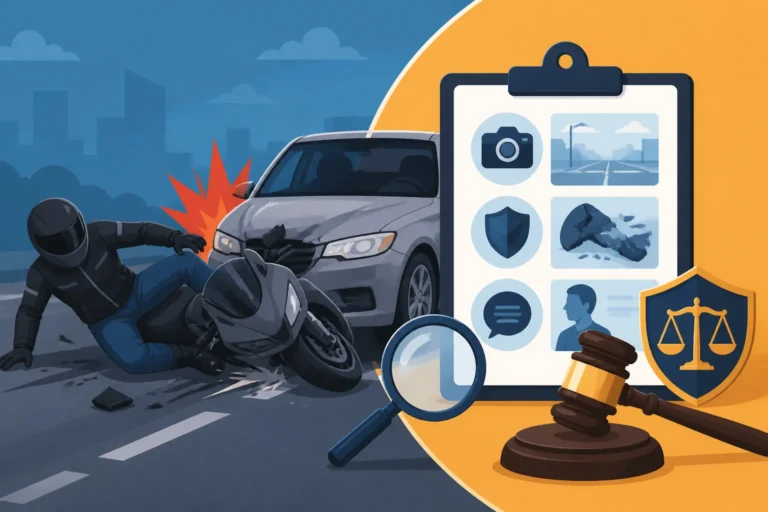
The scene of the accident is a treasure trove of information, and a meticulous investigation there is paramount to accurately determining fault. Every skid mark, piece of debris, vehicle resting position, and road condition tells a part of the story. Police officers arriving at the scene will conduct an initial investigation, gather statements, and document the physical evidence. This often forms the basis of the official police report, which can be a crucial document in your claim.
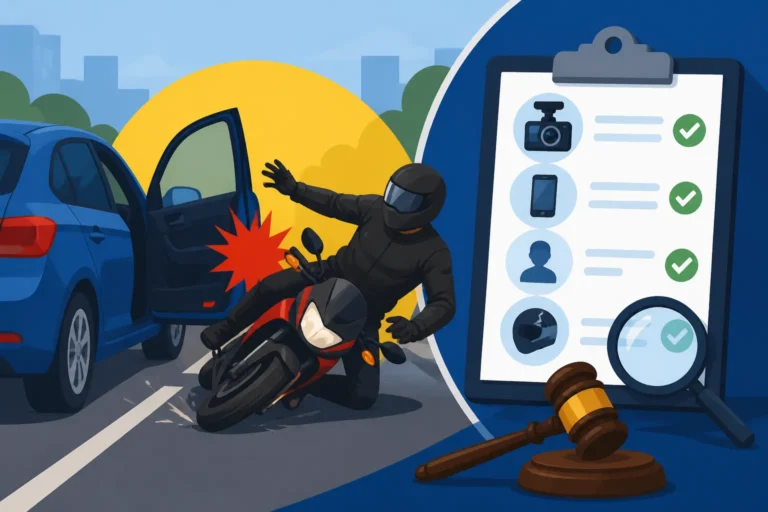
However, the police investigation isn't always the final word, especially in complex cases. Sometimes, officers might miss subtle details or make assumptions. That's why it's incredibly important for you to document as much as possible, if your injuries allow. Take photos and videos of everything: vehicle damage, road conditions, traffic signs, skid marks, and even the weather. This personal documentation can supplement or even correct official reports. Remembering to take these critical steps right after a crash can make all the difference in establishing what truly happened. For more on this, you might find our guide on What to Do After a Motorcycle Accident particularly helpful.
Understanding the Legal Framework for Fault
Determining fault isn't just about figuring out who "caused" the crash in a casual sense; it's a legal process governed by specific principles and state laws. At its core, personal injury law, including motorcycle accident claims, operates on the concept of negligence. This legal term is what dictates whether someone is financially responsible for the harm they've caused. For riders, understanding this framework is critical, as it directly impacts your ability to recover damages for your injuries and losses.
Navigating these legal waters can be daunting, especially when you're also dealing with physical recovery. It's why many riders ultimately seek professional guidance. Knowing the basic principles of negligence and how your state's laws apply is the first step in ensuring your claim is handled fairly and effectively.
What is Negligence in Motorcycle Accidents?
Negligence is essentially the failure to exercise the care that a reasonably prudent person would have exercised in the same circumstances. In a motorcycle accident context, it means one party (or sometimes both) failed to act safely, and that failure directly led to the crash and your injuries. To prove negligence, generally four elements must be established:
First, there was a duty of care. Every driver on the road, including motorcyclists, owes a duty to operate their vehicle safely and follow traffic laws to prevent harm to others. For example, a driver has a duty to look before making a turn. Second, this duty was breached. This means the at-fault driver failed to uphold that duty. Perhaps they were texting and didn't see you, or they ran a red light. Their action (or inaction) fell below the standard of reasonable care.
Third, the breach of duty caused your accident and injuries. There must be a direct link between the other driver's negligent action and your crash. If a driver runs a stop sign and collides with you, their breach directly caused your injuries. Fourth, you suffered damages as a result of that accident. These damages can include medical bills, lost wages, pain and suffering, and property damage to your motorcycle. Without actual damages, there's no claim, even if negligence occurred.
Different State Laws: Comparative vs. Contributory Negligence
The legal concept of negligence becomes even more nuanced when we consider how different states handle situations where both parties might share some degree of fault. This is where comparative and contributory negligence laws come into play, and they can dramatically affect your ability to recover compensation. It's not a one-size-fits-all situation across the United States, and knowing your state's specific rules is incredibly important.
In a contributory negligence state, if you are found to be even 1% at fault for the accident, you are completely barred from recovering any damages from the other driver. This is a very strict rule, and only a handful of states, such as Alabama, Maryland, North Carolina, and Virginia, still follow this pure form. Imagine you're riding, and a car cuts you off, but an investigation finds you were going 5 mph over the speed limit. In a contributory negligence state, you might get nothing, even if the car driver was overwhelmingly at fault. This can feel incredibly unfair to riders, who are often scrutinized more harshly.
Most states, however, follow some form of comparative negligence. This system allows you to recover damages even if you were partially at fault, but your compensation will be reduced by your percentage of fault. There are two main types:
- Pure Comparative Negligence: States like California, Florida, and New York use this. You can recover damages no matter how much at fault you are, even if it's 99%. If you're 70% at fault for an accident with $100,000 in damages, you could still recover $30,000. It's a system designed to ensure every party pays for the portion of the damage they caused.
- Modified Comparative Negligence: This is the most common system. It's similar to pure comparative negligence, but it sets a threshold. Most commonly, this threshold is either 50% or 51%.
- 50% Bar Rule: In states like North Dakota and South Dakota, if you are 50% or more at fault, you cannot recover any damages. If you're 49% at fault, you can recover 51% of your damages.
- 51% Bar Rule: In states like Texas, Ohio, and Pennsylvania, if you are 51% or more at fault, you cannot recover. If you're 50% at fault, you can still recover 50% of your damages.
Understanding these distinctions is crucial because they directly impact your potential settlement. For example, in a state like Florida, which follows pure comparative negligence, even if an insurance company tries to assign you 25% fault, you could still pursue 75% of your damages. However, in a 51% bar state, that same 25% fault would reduce your payout by that amount, but it wouldn't bar your claim entirely. If the insurance company argues you were 60% at fault, however, your claim would likely be completely denied in a 51% bar state. This is why disputing fault assignments is so important. Our detailed article on Comparative Negligence in Motorcycle Accidents delves deeper into these rules.
Key Evidence Used to Establish Fault
When it comes to proving who was at fault in a motorcycle accident, it's all about evidence. Without concrete proof, it's often your word against theirs, and unfortunately, that's a battle many motorcyclists lose due to inherent biases. Gathering and preserving every piece of evidence is paramount for building a strong case and ensuring that the true story of the accident comes to light. This evidence forms the backbone of any insurance claim or lawsuit.
From official documents to eyewitness accounts and physical traces left at the scene, each piece of evidence contributes to a comprehensive picture. Understanding what types of evidence are most valuable and how they are used can greatly empower you in the aftermath of a crash.
Police Reports and Citations
The police report is often one of the first and most critical pieces of evidence in any accident claim. When law enforcement arrives at the scene, they investigate, gather information, speak to witnesses, and often issue citations. The report documents vital details like the date, time, location, involved parties, vehicle information, and insurance details. Crucially, it will also include the responding officer's observations about the accident, diagrams of the scene, and sometimes, a preliminary determination of fault or contributing factors.
While not always definitive, a well-documented police report can strongly support your claim, especially if it indicates that the other driver violated a traffic law, such as running a red light or making an unsafe lane change. If the other driver received a citation, that's often strong evidence of their negligence. However, it's important to remember that police reports are not always infallible. Officers are human and can sometimes make mistakes or draw incorrect conclusions, especially if they didn't witness the event or if evidence was unclear. If you believe the police report contains errors or unfairly assigns blame, it is possible to seek corrections, though this can be a challenging process. To learn more about how these reports function, you can refer to our guide on How Police Reports Establish Fault.
Witness Statements and Rider Accounts
Eyewitness accounts can be incredibly powerful in establishing fault, especially when there's a dispute over who did what. Independent witnesses, those not involved in the accident, can provide an objective perspective on how the crash occurred. Their testimony can corroborate your version of events, contradict the other driver's story, or reveal details that neither party noticed in the heat of the moment. It's crucial to get their contact information at the scene—names, phone numbers, and email addresses—before they leave.
Your own detailed account of the accident is also vital. As soon as you are able, write down everything you remember: the sequence of events, what you saw, heard, and felt, the weather conditions, traffic patterns, and any statements made by the other driver. Details about the time leading up to the crash, like how long the other car was visible or whether they seemed distracted, can be crucial. Memories fade quickly under stress, so capturing these details early is key. This meticulous documentation of your experience can be a powerful counter to assumptions or false narratives.
Physical Evidence at the Scene
Physical evidence is arguably the most objective proof of what happened. Unlike human memory or perception, physical evidence doesn't lie. This includes things like skid marks, debris fields (broken glass, plastic pieces), vehicle damage patterns, and the final resting positions of the vehicles. An accident reconstruction expert can analyze these elements to determine speed, direction of travel, point of impact, and who struck whom.
For example, the length and direction of skid marks can help calculate a vehicle's speed before impact. The location of debris on the road can indicate the exact point of impact. Damage to your motorcycle and the other vehicle, specifically the type and location of dents, scratches, or paint transfers, can show the angle and force of the collision. Even something as simple as tire marks from where a vehicle veered off course can tell a story. Taking numerous photos of these details from various angles before anything is moved is essential. Think wide shots showing the entire scene, medium shots of specific damage, and close-ups of critical details like tire marks or broken lights.
Traffic Laws and Violations
Traffic laws are the rules of the road designed to ensure safety, and a violation of these laws often serves as strong evidence of negligence. If a driver runs a stop sign, speeds, fails to yield, or makes an illegal turn, and that action directly leads to an accident, they are very likely at fault. Each state has specific motor vehicle codes, and these codes clearly define safe driving practices.
For instance, if a driver makes a left turn directly in front of an oncoming motorcycle, they've likely violated a failure-to-yield law. This violation is often clear-cut proof of their negligence. Similarly, if a driver is proven to have been distracted by a cell phone, they've breached their duty of care. Even seemingly minor violations, such as an expired inspection sticker or a broken tail light, could potentially be used to argue negligence if they contributed to the crash. Understanding the specific traffic laws that may have been violated in your accident is a key step in building your case and proving fault.
Common Scenarios Where Fault is Disputed
Motorcycle accidents often involve unique challenges when it comes to determining fault. Due to their smaller size and the prevailing biases, riders frequently find themselves in situations where the other driver, or even insurance companies, try to shift blame unfairly. These common scenarios highlight why a thorough investigation and a strong understanding of the law are so crucial for motorcyclists.
It's in these moments of ambiguity or conflicting accounts that the battle over fault truly begins. Being aware of these common disputes can better prepare you to counter false narratives and advocate for a fair outcome.
The Infamous "I Didn't See the Motorcycle" Defense
This is perhaps the most infuriating and common defense offered by drivers who collide with motorcycles. It's almost a cliché, but it's used relentlessly. Drivers will claim they looked, but the motorcycle was "in their blind spot," "came out of nowhere," or was simply "too small to see." While a motorcycle's smaller profile can make it less conspicuous than a car, this defense does not automatically absolve the driver of fault. In fact, it often highlights their negligence.
Drivers have a legal and moral duty to be observant and vigilant on the road. The phrase "Look Twice, Save a Life" is specifically aimed at drivers to remind them to actively search for motorcycles. A driver claiming they "didn't see" you essentially admits they failed in their duty of care to properly scan the road, check their blind spots, and drive defensively. This isn't an excuse; it's an admission of negligent driving. Successfully countering this defense often involves demonstrating the driver's breach of duty through other evidence, such as eyewitness accounts, dashcam footage, or proving visibility conditions were clear. Many insurance companies will attempt to use this common driver excuse to assign some blame to the rider. For an in-depth look at this common defense, check out 'I Didn't See the Motorcycle' Defense Explained.
Lane Splitting and its Impact on Liability
Lane splitting, where a motorcyclist rides between lanes of stopped or slow-moving traffic, is a practice that can quickly lead to contentious fault disputes. The legality of lane splitting varies significantly from state to state. Currently, California is the only state where lane splitting is explicitly legal, provided it's done safely. Other states may have laws that implicitly allow it (by not prohibiting it) or explicitly forbid it.
If you are involved in an accident while lane splitting, determining fault becomes highly dependent on the specific laws of the state where the accident occurred and the circumstances surrounding the incident. In California, for example, if a car suddenly swerves into your lane while you are safely lane splitting, the driver of the car would likely be at fault. However, if you were lane splitting at an excessive speed or weaving erratically, you might share some, or even all, of the fault. In states where lane splitting is illegal, engaging in the practice could make it more difficult to prove the other driver was solely at fault, and you might be assigned partial blame even if the other driver was negligent. This complex issue is thoroughly explored in Lane Splitting and Motorcycle Accident Liability.
Left-Turn Accidents and Driver Responsibility
Left-turn accidents are unfortunately one of the most common and dangerous types of collisions for motorcyclists. In the vast majority of these cases, the driver making the left turn is deemed at fault. This is because drivers making left turns are required to yield the right-of-way to oncoming traffic, which includes motorcycles. When a driver turns left in front of an oncoming motorcycle, they are usually in violation of this fundamental traffic law.
The driver often claims they didn't see the motorcycle, or misjudged its speed or distance. However, these are typically not valid excuses for failing to yield. Even if the motorcyclist was speeding slightly, the primary fault often still rests with the turning driver who failed to properly assess and clear the intersection. Proving fault in these cases relies on demonstrating that the driver breached their duty to yield. Evidence such as dashcam footage, eyewitness testimony, and accident reconstruction can clearly show that the car initiated the turn when it was unsafe to do so. Our article on Left-Turn Motorcycle Accidents Explained offers more insights into these common crashes.
Road Hazards and Government Liability
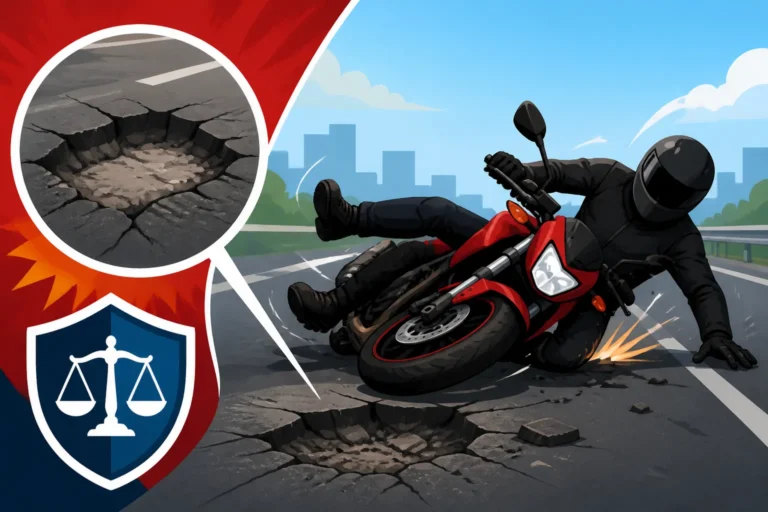
Sometimes, an accident isn't directly caused by another driver's negligence, but by dangerous road conditions or defects. Potholes, crumbling pavement, unexpected gravel or sand, missing guardrails, malfunctioning traffic lights, or debris in the road can all lead to a motorcycle crash. In these situations, fault might lie not with another driver, but with the government entity responsible for maintaining the road, or even a private contractor.
If a dangerous pothole caused you to lose control, the city or state highway department responsible for that road might be liable. However, suing a government entity is significantly more complex than suing an individual driver. There are strict notice requirements and shorter deadlines, and governmental bodies often have immunities that protect them from certain lawsuits. You would need to prove that the entity knew or should have known about the hazard and failed to address it in a timely manner. This is a very specialized area of law, and it's essential to act quickly and gather evidence such as photos of the hazard, records of complaints, and maintenance logs.
The Role of Insurance Companies in Fault Determination
After a motorcycle accident, the insurance companies step in, and this is often where the real battle over fault begins. It's crucial to understand that insurance companies, both yours and the at-fault driver's, are businesses. Their primary goal is to minimize payouts, and they will employ various tactics to achieve this. For motorcyclists, this often means facing an uphill battle due to pre-existing biases against riders.
Navigating conversations with insurance adjusters can be tricky. They are trained professionals whose job is to gather information that might reduce their company's liability. Your interactions with them can significantly impact the outcome of your claim, so knowing what to expect and how to protect yourself is vital.
How Insurers Investigate Claims
When you file a claim, the insurance company will launch its own investigation. This typically involves several steps: reviewing the police report, collecting statements from all parties involved (including you), speaking with any witnesses, examining photos and videos of the scene and vehicle damage, and sometimes even requesting medical records. They may also look into your driving history and past claims.
The adjuster's goal is to piece together what happened and assign a percentage of fault to each party. They will look for any details that could suggest you were partially at fault, even if it seems minor. For instance, they might scrutinize your speed, your helmet use, or whether you were wearing bright clothing. This information is then used to determine liability and calculate a settlement offer. It’s important to provide truthful information but avoid speculating or offering opinions about fault. Stick to the facts.
The Bias Against Motorcyclists
This is a frustrating reality that many riders unfortunately face: an inherent bias against motorcyclists in fault determination. Both insurance adjusters and sometimes even jurors can carry preconceived notions that motorcyclists are reckless thrill-seekers, more prone to speeding, weaving, or taking unnecessary risks. This bias often means that fault is unfairly shifted, even partially, onto the motorcyclist, regardless of the actual circumstances of the crash.
Insurance companies are well aware of these stereotypes and often exploit them. They might suggest that if you were on a motorcycle, you must have been doing something dangerous, even if there's no evidence to support it. This "rider bias" can be a significant hurdle in getting a fair settlement. It's why meticulously documenting every detail, demonstrating compliance with traffic laws, and presenting a clear, objective account of the accident is so vital for riders. Understanding and acknowledging this bias is the first step in combating it. Our article, How Insurance Companies Assign Blame to Riders, delves into this topic more deeply.
Negotiating with Adjusters
Negotiating with insurance adjusters is a critical phase of your claim, and it's where many riders feel overwhelmed. The adjuster will likely present an initial settlement offer that is lower than what your claim is truly worth. They might try to downplay your injuries, question your treatment, or argue that you were partially at fault to reduce the payout. They are trained negotiators, and they know how to elicit information that could harm your case.
It's important to remember that you are not obligated to accept the first offer. You also don't have to agree with their assessment of fault. Be firm, stick to the facts, and never admit fault or sign anything without fully understanding its implications. It’s often beneficial to have a detailed list of all your damages—medical bills, lost wages, pain and suffering—ready to present. If you feel pressured or if the adjuster is being unreasonable, it might be time to consider professional legal help. This is often the point where many injured riders realize they need an advocate on their side.
When Shared Fault Comes into Play
In the messy aftermath of an accident, it's not always a clear-cut case of one party being 100% at fault. Often, both drivers might have contributed in some way to the collision. This concept of shared fault is particularly relevant for motorcyclists, who, as we've discussed, frequently face assumptions of recklessness. When fault is shared, it changes the entire dynamic of a claim, affecting everything from liability to the final settlement amount.
Understanding how shared fault is determined and what it means for your financial recovery is crucial. It’s a nuanced area of law that depends heavily on your state's specific rules of comparative or contributory negligence.
What Happens When Both Parties Share Blame
When both parties share some degree of blame, it means that each person's actions contributed to the accident. This doesn't mean the severity of their contributions is equal, but rather that each had a role to play. For example, a car driver might have made an illegal lane change, but if the motorcyclist was also speeding excessively, both actions could be seen as contributing factors to the crash.
The process then involves assigning a percentage of fault to each party. This percentage is not arbitrary; it's based on the evidence collected, witness statements, police reports, and often the opinions of accident reconstruction experts. This assignment of blame can be a contentious process, with each insurance company striving to minimize their client's fault and maximize the other party's. The outcome of this percentage assignment directly impacts the amount of compensation you can recover. For a deeper dive into these situations, see our article on Shared Fault in Motorcycle Accidents.
How Your Payout is Affected by Shared Fault
The percentage of fault assigned to you directly impacts the amount of compensation you can receive, assuming your state follows a comparative negligence system. If you are deemed partially at fault, your total damages will be reduced by your percentage of fault. For example, if your total damages (medical bills, lost wages, pain and suffering) are determined to be $100,000, but you are found to be 20% at fault, your recoverable damages would be reduced by 20% ($20,000), leaving you with a maximum payout of $80,000.
This reduction happens regardless of whether it's a pure or modified comparative negligence state, as long as you are still eligible to recover. The key difference, as discussed earlier, lies in the threshold: if you exceed your state's fault threshold (e.g., 50% or 51%), you might be entirely barred from recovery. This makes fighting for a lower fault percentage absolutely critical. Every percentage point matters, as it directly translates into dollars out of your pocket. Understanding How Fault Affects Your Settlement is essential for any rider dealing with the aftermath of a crash.
| State Type | Rider's Fault Percentage | Recovery Outcome (Example: $100,000 Damages) |
|---|---|---|
| Contributory Negligence | Any % (e.g., 1%) | $0 (Claim Barred) |
| Pure Comparative Negligence | 20% | $80,000 (Reduced by 20%) |
| 70% | $30,000 (Reduced by 70%) | |
| Modified Comparative (50% Bar) | 20% | $80,000 (Reduced by 20%) |
| 50% | $0 (Claim Barred) | |
| Modified Comparative (51% Bar) | 20% | $80,000 (Reduced by 20%) |
| 50% | $50,000 (Reduced by 50%) | |
| 51% | $0 (Claim Barred) |
This table clearly illustrates why understanding your state's negligence laws and actively disputing fault assignments are so important for maximizing your potential compensation after a motorcycle accident.
Expert Witnesses and Accident Reconstruction
Sometimes, the evidence isn't enough to clearly establish fault, or the opposing side fiercely disputes your version of events. This is especially true in complex motorcycle accidents where the dynamics of the crash can be difficult to interpret from basic evidence. In such scenarios, the expertise of specialized professionals, known as expert witnesses, becomes invaluable. These individuals can bring a level of scientific analysis and experience that goes far beyond what a police officer or an insurance adjuster can provide.
Their involvement can often be the turning point in a disputed claim, transforming ambiguous circumstances into clear, scientifically supported conclusions about fault. For riders, this can be the key to overcoming biases and securing a just outcome.
When Accident Reconstruction Experts Are Necessary
Accident reconstruction experts are typically called upon when the cause of an accident is unclear, heavily disputed, or involves complex physics. They are engineers, scientists, or former law enforcement officers with specialized training in analyzing collision scenes. They use scientific principles, mathematical calculations, and sophisticated software to recreate the accident sequence.
For instance, if there are conflicting statements about vehicle speeds or points of impact, an expert can analyze skid marks, vehicle damage, road surface data, and even surveillance footage to provide an objective, data-driven reconstruction. This can be particularly crucial in motorcycle accidents where the smaller size of the bike might lead to less physical evidence, or where a driver's "I didn't see them" claim needs to be definitively disproven. Their detailed reports and testimony can carry significant weight in negotiations or in court. For more on this, see How Accident Reconstruction Determines Fault.
The Value of Specialized Expertise
The value of an accident reconstruction expert lies in their ability to translate complex physical evidence into understandable conclusions about fault. They can determine:
- Vehicle Speeds: By analyzing skid marks, crush damage, and other factors, they can estimate the speed of both vehicles before impact, potentially disproving claims of excessive speed or establishing a driver was speeding.
- Points of Impact and Angles: Precisely identifying where and at what angle vehicles collided can clarify who initiated the collision or who had the right of way.
- Driver Actions: Through forensic analysis, they can infer driver actions, such as braking, accelerating, or steering input, leading up to the crash.
- Visibility Issues: They can assess environmental factors like lighting, weather, and road curvature to determine if a driver's view was truly obstructed or if they should have seen the motorcycle.
For motorcyclists, this specialized expertise can be a powerful tool to overcome the "rider bias" and objectively demonstrate the other driver's negligence. Their findings can solidify your claim and provide irrefutable evidence that can sway insurance companies or a jury.
Seeking Legal Guidance for Fault Disputes
The process of determining fault and pursuing a claim after a motorcycle accident is rarely straightforward. It involves complex legal principles, aggressive insurance companies, and often a societal bias against riders. Trying to navigate this labyrinth on your own, especially while recovering from serious injuries, can be an overwhelming and often detrimental undertaking. This is precisely why seeking professional legal guidance is not just an option, but often a necessity for motorcyclists.
A skilled legal professional can level the playing field, protect your rights, and ensure that your side of the story is not only heard but proven with compelling evidence. Their expertise can make all the difference in securing the compensation you rightfully deserve.
Why a Motorcycle Accident Lawyer is Crucial
A motorcycle accident lawyer brings invaluable expertise to the table, especially when fault is disputed. They understand the specific challenges motorcyclists face, including the inherent bias, and know how to counter common insurance company tactics. They are adept at investigating accidents, gathering crucial evidence, interviewing witnesses, and building a strong, evidence-based case.
Furthermore, a lawyer can handle all communication with insurance adjusters, protecting you from saying anything that could inadvertently harm your claim. They can accurately assess the full extent of your damages, including future medical costs and lost earning capacity, which you might overlook on your own. Most importantly, they act as your advocate, fighting tirelessly to ensure you receive fair compensation for your injuries, damages, and pain and suffering. This advocacy can significantly increase your chances of a successful outcome, whether through settlement or trial. If you're wondering whether you need one, our article Do You Need a Motorcycle Accident Lawyer offers guidance.
The Process of Proving Fault in Court
While most motorcycle accident claims settle out of court, there are instances where a lawsuit becomes necessary, particularly when fault is highly disputed, or the settlement offer is unjust. The process of proving fault in court is a rigorous and formal one, requiring meticulous preparation and adherence to legal procedures.
It begins with filing a lawsuit, followed by a period of "discovery" where both sides exchange information, documents, and conduct depositions (interviews under oath). This is where all the evidence collected – police reports, witness statements, medical records, accident reconstruction reports, and expert testimony – is formally presented. Your lawyer will work to clearly demonstrate the other driver's negligence and how it directly caused your injuries and losses. The opposing side, naturally, will attempt to discredit your evidence and shift blame. If a settlement cannot be reached through mediation or negotiation, the case will proceed to trial, where a judge or jury will ultimately determine fault and the amount of damages. This can be a long and emotionally taxing process, underscoring the importance of having an experienced legal team by your side.
Disclaimer
Please remember that this article provides general information and insights into how fault is determined in motorcycle accidents. It is not intended as legal advice. Every accident is unique, and the laws governing fault and liability vary significantly by state. If you have been involved in a motorcycle accident, it is strongly recommended that you consult with a qualified attorney in your jurisdiction to discuss the specifics of your case and receive personalized legal counsel.