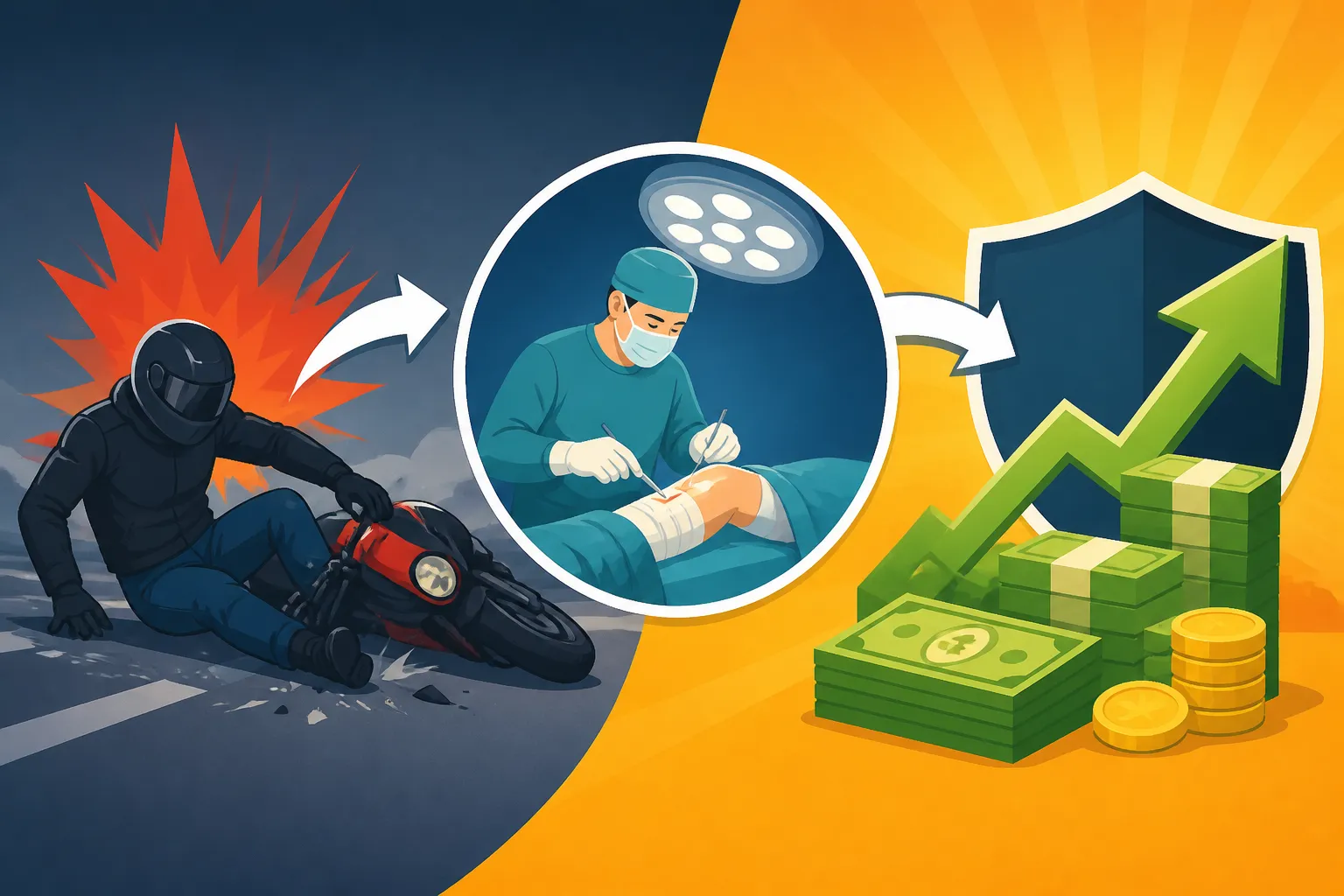
How Surgery Affects Settlement Value
Experiencing a motorcycle accident is a terrifying ordeal, but the fear can deepen considerably when doctors tell you surgery is necessary. Beyond the physical pain and the daunting recovery ahead, a common question gnaws at many riders: "How is this going to impact my motorcycle accident claim and the compensation I might receive?" This guide aims to demystify how undergoing surgery directly and significantly influences the value of your settlement.
The Immediate Impact of Surgery on Your Motorcycle Accident Claim
When you're dealing with the aftermath of a motorcycle crash, especially one severe enough to warrant surgery, the immediate concerns are always health and recovery. However, it’s crucial to understand that the need for surgery instantly elevates the complexity and potential value of your accident claim. It's a clear indicator to insurance companies and courts that your injuries are not minor and require serious medical intervention.
Medical Bills and Economic Damages Skyrocket
Let's be brutally honest: medical care in the United States is expensive, and surgery is often at the very top of that list. We're not talking about a quick doctor's visit and a prescription; we're talking about extensive procedures that quickly accumulate staggering costs. These are tangible, quantifiable expenses that are directly attributable to the at-fault party’s negligence.
Think about the sheer number of services involved. There's the initial emergency room visit, the diagnostic tests like X-rays, CT scans, or MRIs, the surgeon’s fees, the anesthesiologist’s fees, the hospital stay (which can be thousands of dollars per day), post-operative medications, and often specialized equipment or devices. For example, if you shattered a bone in your leg and needed an open reduction internal fixation (ORIF) surgery, you're looking at costs that can easily run into tens of thousands of dollars, even with insurance. All of these figures represent concrete economic damages that form the foundation of your claim. Understanding all the Types of Damages in a Motorcycle Accident Claim is crucial to building a strong case.
Prolonged Recovery and Lost Wages
Surgery isn't a quick fix; it's the beginning of a recovery journey that can be long and arduous. For many riders, this means a significant period away from work, directly impacting their income and financial stability. This isn't just about the weeks or months immediately following the surgery; it can extend much further.
Consider a rider who works in construction and needs surgery for a severe shoulder injury. They might be unable to lift, carry, or perform manual tasks for months, or even permanently. This directly translates to lost wages during recovery and, potentially, a permanent loss of earning capacity if they can no longer return to their previous occupation or must take a lower-paying job. These financial losses are not abstract; they are very real and can be documented with pay stubs, tax records, and employer statements. The impact on your ability to provide for yourself and your family is a significant component of your settlement, and the longer you are out of work due to surgical recovery, the higher this portion of your claim becomes. We often see situations where what seems like a standard Spinal Cord Injuries from Motorcycle Accidents can lead to months or even years of missed work.
Long-Term Consequences and Non-Economic Damages
While the immediate financial hit from medical bills and lost wages is significant, the true long-term impact of surgery often lies in the non-economic damages. These are the less tangible, but equally devastating, consequences that affect your quality of life. Insurance companies and courts recognize these impacts, and surgery almost always amplifies their value in a settlement.
Increased Pain and Suffering
Let's not sugarcoat it: surgery hurts. It involves cutting, manipulating, and repairing tissue, and the recovery process is often fraught with discomfort, pain, and limitations. Beyond the physical pain of the incision and healing, there's often chronic pain, nerve damage, or persistent stiffness that can linger for months or even years. This is a huge factor in determining compensation for pain and suffering.
But it’s not just physical. The emotional toll of going under the knife, the anxiety of recovery, the fear of future complications, and the frustration of being unable to do simple daily tasks can be immense. Many riders experience significant emotional distress, depression, or even post-traumatic stress disorder (PTSD) after such a traumatic event and subsequent invasive procedures. These emotional damages, alongside physical pain, are central to the non-economic portion of your settlement. It's about how the injury and subsequent surgery have robbed you of your comfort, peace of mind, and overall enjoyment of life.
Potential for Permanent Impairment, Scarring, and Future Medical Needs
One of the most profound ways surgery impacts settlement value is its potential to create lasting changes in your body. For many, surgery is a necessity to regain function, but it rarely returns you to 100% of your pre-accident self. There can be permanent limitations, reduced range of motion, chronic pain, and visible scarring or disfigurement.
Imagine a rider who suffers a severe compound fracture requiring multiple surgeries and metal plates or rods to stabilize the bone. Even after successful surgery, they might walk with a limp, have persistent aches in cold weather, or be unable to participate in hobbies they once loved, like hiking or competitive sports. Furthermore, many surgeries necessitate ongoing medical care, such as physical therapy, occupational therapy, pain management, or even future revision surgeries down the line. For instance, a joint replacement might last 10-15 years and then need to be redone. These anticipated future medical costs and the compensation for permanent impairment, scarring, or disfigurement are critical components of a comprehensive settlement. Cases involving Motorcycle Accident Traumatic Brain Injuries often require extensive, long-term care plans that dramatically increase a settlement's value.
How Insurers and Courts View Surgical Cases
Insurance companies and courts evaluate claims based on a combination of factors, but the presence of surgery acts as a significant amplifier. It's a clear, objective marker of injury severity that is difficult to dispute.
The Severity Factor
When an injury requires surgery, it automatically elevates the perceived severity of the case. Unlike minor sprains or bruises, a surgical intervention indicates a substantial bodily harm that couldn't be resolved with less invasive treatments. This isn't just about the physical injury itself but also the significant disruption it causes to a person's life.
An insurance adjuster might try to downplay a soft tissue injury, but it's much harder to argue that a broken femur requiring a titanium rod isn't a serious injury. The surgical procedure itself validates the severity of the damage caused by the accident. This level of injury severity often leads to higher settlement offers because the risk of a large jury award at trial increases significantly for the insurance company. They understand that a jury will typically sympathize more with someone who has undergone invasive surgery and endured a painful recovery.
Importance of Medical Documentation
In any personal injury claim, comprehensive medical documentation is paramount, but it becomes even more critical when surgery is involved. Every step of your medical journey, from the initial diagnosis to the surgical reports, post-operative care, physical therapy notes, and prognosis, must be meticulously recorded.
This documentation serves as irrefutable evidence. The surgeon’s notes explaining the necessity of the procedure, the detailed operative report describing what was done, and the records of every follow-up appointment all build a compelling narrative for your claim. Without clear, consistent, and detailed medical records, even the most severe injuries can be difficult to prove. It's not enough to say you had surgery; you need the paper trail to back up every aspect of your experience. This is especially true when dealing with injuries like Road Rash Injuries and Claims where documentation of wound care and potential skin grafts is essential.
Maximizing Your Settlement Value After Surgery
Undergoing surgery after a motorcycle accident is a life-altering event. While your primary focus should be on healing, understanding how to protect and maximize your legal claim is equally important to secure the financial future you deserve.
Documenting Everything Meticulously
From the moment of your accident, and especially after surgery, every piece of information becomes a potential piece of evidence. Don't underestimate the power of thorough documentation. This goes beyond just medical bills and hospital records.
Keep a detailed journal of your pain levels, your emotional state, how your injuries and recovery prevent you from performing daily tasks, enjoying hobbies, or spending time with family. Take photos of your injuries as they heal, including surgical scars. Keep receipts for all out-of-pocket expenses, such as medications, bandages, transportation to appointments, or assistive devices. Even if something seems minor, write it down and save the receipt. This meticulous record-keeping helps to quantify your non-economic damages and ensures that every penny of your economic losses is accounted for. Check out our guide on How to Document Injuries for a Claim for more in-depth advice.
The Role of Expert Testimony and Legal Representation
When surgery is involved, your case often reaches a level of complexity that demands specialized expertise. This is where medical experts and experienced legal representation become invaluable.
Medical experts, such as your treating physician, surgeon, or an independent medical examiner, can provide crucial testimony. They can explain the nature of your injuries, why the surgery was necessary, the intricacies of the procedure, and most importantly, the long-term prognosis and impact on your life. Their expert opinion can sway an insurance adjuster or a jury, confirming the legitimacy and severity of your claim. Navigating a motorcycle accident claim, especially one with surgery, is a minefield of legal and medical jargon. An attorney specializing in motorcycle accidents understands how to calculate damages, negotiate with insurance companies, and present a compelling case to maximize your settlement. They know How Insurance Companies Assign Blame to Riders and how to counter those tactics. They can bring in accident reconstructionists if fault is disputed, and medical experts to bolster your claim. If you're wondering, "Do You Need a Motorcycle Accident Lawyer," the answer is almost certainly yes when surgery is on the table. They are your strongest advocate in ensuring you receive the compensation you truly deserve. This is a critical step in How to Maximize Your Motorcycle Accident Settlement.
Here's a quick look at how various elements impacted by surgery can influence your settlement:
| Impact Area | How Surgery Elevates Value | Examples |
|---|---|---|
| Medical Expenses | Directly increases verifiable costs for procedures, hospital stays, anesthesia, post-op care. | Hospital bills ($10,000s-$100,000s), surgeon fees, physical therapy, medications, medical devices (e.g., crutches, braces). |
| Lost Wages | Requires extended time off work for recovery, potentially leading to permanent loss of earning capacity. | Weeks or months of missed paychecks, inability to return to the same profession, need for career retraining. This directly impacts How Lost Wages Are Calculated. |
| Pain & Suffering | Intensifies physical pain, emotional distress, discomfort, and psychological impact. | Chronic pain, anxiety, depression, PTSD, loss of enjoyment of hobbies, difficulty with daily activities. This is where Pain and Suffering Damages Explained becomes vital. |
| Permanent Impairment | Often results in residual functional limitations, reduced mobility, or nerve damage that lasts a lifetime. | Limited range of motion, weakness, numbness, difficulty walking, inability to lift heavy objects, requiring future assistive devices. |
| Scarring/Disfigurement | Visible scars from incisions, especially on exposed areas, can lead to significant non-economic damages. | Facial scars, scars on limbs, disfigurement impacting self-esteem and social interactions. |
| Future Medical Needs | Predicts the need for ongoing treatment, therapy, medication, or even future surgeries. | Long-term physical therapy, pain management, future implant replacement surgeries, specialized equipment, home modifications. This heavily influences How Medical Bills Affect Your Settlement. |
| Overall Case Severity | Signals a severe, undeniable injury, making it harder for insurers to dispute the claim's magnitude. | Elevates the case from "minor" to "serious," increasing the likelihood of substantial compensation and the risk of a high jury award if the case goes to trial. |
Ultimately, surgery significantly impacts your motorcycle accident settlement value because it provides undeniable evidence of severe injury, quantifiable financial losses, and profound, long-lasting effects on your life. It transforms a difficult situation into one that demands robust legal action to ensure you are fairly compensated.
Disclaimer
The information provided in this guide is for general informational purposes only and does not constitute legal advice. Motorcycle accident claims are complex and highly dependent on the specific facts of each case and the laws of the applicable jurisdiction. It is crucial to consult with a qualified motorcycle accident attorney to discuss your individual situation and receive personalized legal guidance.