How Negotiation Back-and-Forth Works
After a motorcycle accident, the last thing you want to deal with is a drawn-out battle with insurance companies. You're trying to heal, recover, and get your life back on track, but suddenly you're thrust into a complex world of settlement offers and counteroffers. This guide will walk you through the often frustrating but crucial back-and-forth negotiation process of a motorcycle accident claim, helping you understand how to navigate it effectively and work towards a fair resolution.
Understanding the Initial Offer
When you've been injured in a motorcycle accident and finally receive that first settlement offer from the at-fault driver's insurance company, it can feel like a moment of truth. However, many riders are often surprised, and frankly, insulted, by how low that initial offer usually is. It’s a common tactic, and understanding why it happens is your first step in preparing for the negotiation ahead.
Why the First Offer is Always Low
Let's be real: insurance companies are businesses, and their primary goal is to minimize their payouts. They operate on the principle of paying out as little as possible while still making a claim "go away." When they present an initial offer, it’s rarely a genuine reflection of your case's full value. Instead, it’s a strategic move, often designed to test your knowledge of the process and your resolve. They're hoping you're in a vulnerable position – perhaps you're struggling with medical bills, lost wages, or simply want to put the whole ordeal behind you – and will accept a quick, insufficient settlement. They might offer just enough to cover immediate medical expenses, completely ignoring your future needs, pain, and suffering. This is why it’s so critical to understand that this first number is simply the opening salvo, not the final word.
Identifying Red Flags in an Initial Offer
Recognizing a lowball offer isn't always easy, especially when you're overwhelmed. One of the biggest red flags is when the offer doesn't even come close to covering your documented economic damages, let alone your non-economic losses. For instance, if your medical bills alone are $25,000, and they offer $15,000, that’s a clear sign they’re not taking your claim seriously. Another red flag is if the adjuster pressures you to accept quickly, implying that the offer might disappear or decrease if you wait. They might even try to minimize your injuries, suggesting that your road rash isn't "that bad" or that your neck pain will "just go away." Look for any attempt to downplay the severity of the accident, your injuries, or the impact on your daily life. They may also try to assign blame to you, even if the police report clearly shows the other driver was at fault. This tactic is a classic move to justify a lower payout by suggesting How Insurance Companies Assign Blame to Riders. A reasonable offer should, at minimum, account for all your current medical expenses, lost income, and property damage, and include a significant component for your pain and suffering. If it doesn't, you know you're in for a negotiation.
Crafting Your Counteroffer
Once you’ve received that initial lowball offer, it's time to gather your resolve and prepare your counter. This isn't just about throwing out a higher number; it's about meticulously building a case that justifies your demands. Your counteroffer needs to be well-reasoned, thoroughly documented, and clearly articulate the full extent of your damages.
Gathering Comprehensive Documentation
The strength of your counteroffer hinges entirely on the evidence you present. This means going far beyond a simple list of medical bills. You need a comprehensive package that tells the full story of your accident and its impact. This includes, but isn't limited to:
- Medical Records and Bills: Every single visit, every prescription, every therapy session. Don't forget ambulance costs, emergency room fees, specialist consultations, and any future projected medical needs. Even seemingly minor injuries can accumulate significant costs.
- Lost Wage Statements: Pay stubs, employer letters, tax returns, and any other documentation proving income lost due to time off work for appointments, recovery, or inability to perform your job. If you’re self-employed, this might mean more detailed financial records.
- Property Damage Estimates and Receipts: For your motorcycle, gear, and any other personal items damaged in the crash. Get multiple repair estimates if possible, or official valuation if your bike was totaled.
- Proof of Pain and Suffering: While harder to quantify, this is crucial. Keep a detailed pain journal, record how your injuries have affected your daily activities, hobbies, relationships, and emotional well-being. Photos of your injuries as they heal (or don't) can also be powerful evidence.
- Police Report: This provides an objective account of the accident and often assigns initial fault.
- Witness Statements: If there were eyewitnesses, their accounts can corroborate your version of events.
- Photos and Videos from the Scene: These capture critical details like vehicle positions, road conditions, and visible injuries.
Think of your documentation as the foundation of your argument. The more thoroughly you can prove your losses, the harder it is for the insurance company to dispute them. Remember, How to Maximize Your Motorcycle Accident Settlement often comes down to the details you've meticulously collected.
Articulating Your Damages Clearly
After compiling all your evidence, you need to present it in a clear, compelling manner, usually in a formal demand letter. This letter isn't just a list; it's a narrative that explains what happened, details your injuries, outlines the treatment you've received, and itemizes all your economic and non-economic damages.
For economic damages (medical bills, lost wages, property damage), provide exact figures and attach all supporting documents. For non-economic damages like pain and suffering, emotional distress, and loss of enjoyment of life, you'll need to explain their impact. For example, if you can no longer ride your motorcycle – a passion that brought you immense joy – clearly state that. If you suffer from chronic pain that prevents you from playing with your kids or working on your hobbies, describe those limitations. This is where your pain journal becomes invaluable. You might consider using a multiplier method to estimate pain and suffering, which is common in personal injury claims, often ranging from 1.5 to 5 times your economic damages, depending on the severity and permanence of your injuries. Clearly state your bottom-line demand, but always leave room for negotiation, understanding that the figure you present is your ideal outcome, not necessarily the floor. This detailed presentation helps to counter the insurer's lowball offer and demonstrates that you understand What Affects Your Motorcycle Accident Payout.
The Iterative Negotiation Process
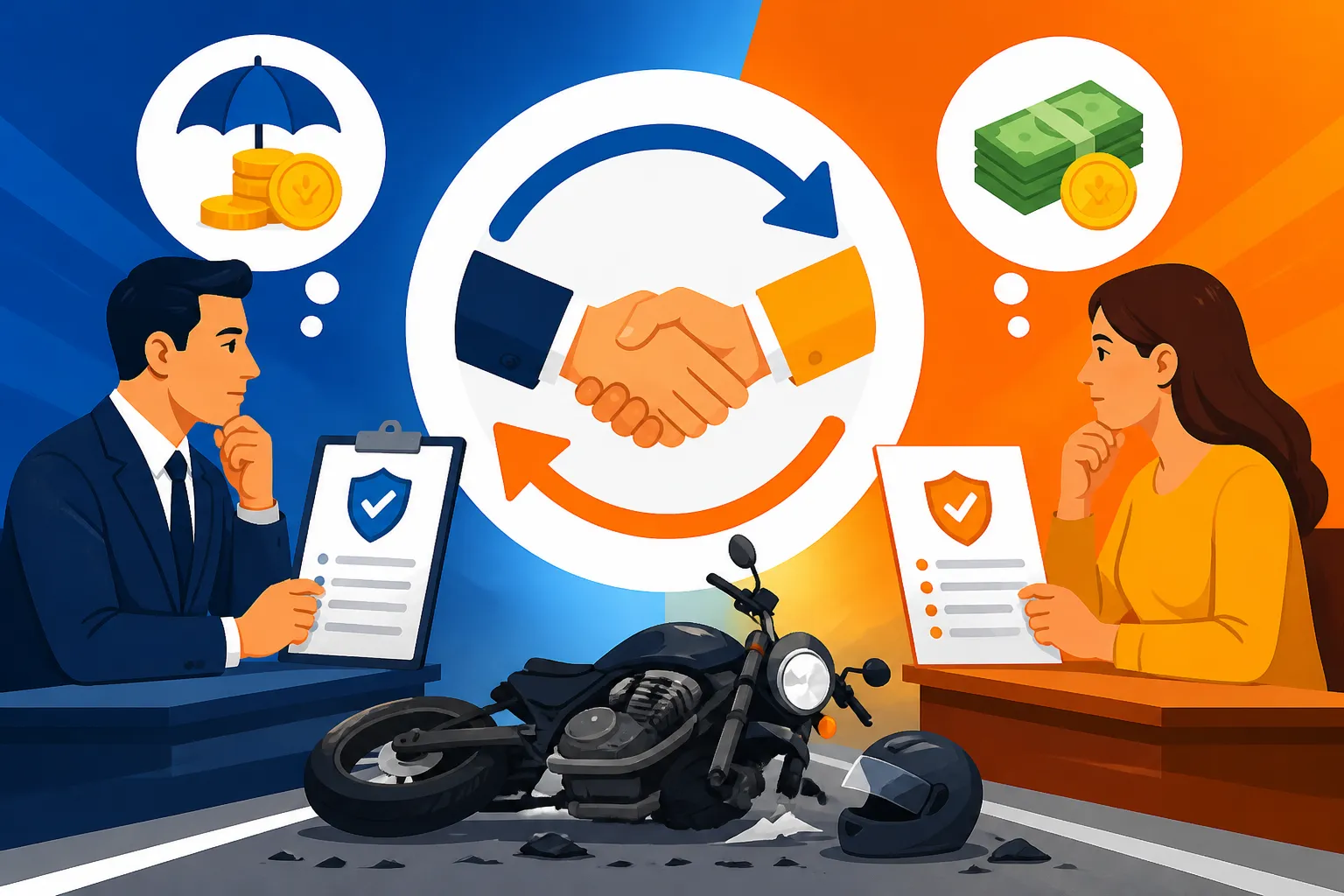
Negotiation is rarely a one-and-done deal. It's a dance, a series of offers and counteroffers that can sometimes feel like a test of endurance. After you've submitted your detailed demand letter, the insurance company will review it, and they will almost certainly come back with a revised offer that's still below your expectations, but hopefully higher than their initial one. This is where the real back-and-forth begins.
Strategies for Responding to Subsequent Offers
When the insurance adjuster comes back with their second offer, it’s important not to react impulsively. Evaluate their offer against your comprehensive demand. If it's still significantly low, you need to respond firmly but professionally. Here's how you might approach it:
- Reiterate Your Key Points: Don’t just reject their offer with a simple "no." Explain why it's unacceptable. Refer back to specific details in your demand letter, highlighting the medical bills they haven't adequately covered, the lost wages they've ignored, or the significant impact on your life that their offer fails to address. You might say, "While I appreciate the revised offer, it still doesn't account for the $X in physical therapy costs, nor does it adequately compensate for the chronic nerve pain that my doctor indicates will require ongoing treatment."
- Justify Your Number: If you're slightly adjusting your own demand downwards, be prepared to explain the rationale. Perhaps you found a small discrepancy in a bill, or you're willing to concede on a minor point to show good faith. However, if your initial demand was well-supported, you might choose to hold firm.
- Don't Be Afraid to Say No: Insurance adjusters are trained negotiators. They might use various tactics to try and wear you down. Be prepared to reject offers that don't meet your needs. Knowing When to Reject a Settlement Offer is a critical skill in this process.
- Keep a Record: Document every conversation. Note the date, time, who you spoke with, what was discussed, and any offers made. This paper trail is invaluable if disputes arise later.
Remember, each exchange is an opportunity to reinforce the validity and strength of your claim.
Knowing When to Hold Firm and When to Compromise
This is perhaps the trickiest part of the negotiation. There’s no magic formula, but here are some considerations:
- The Strength of Your Evidence: If your evidence is overwhelmingly strong and clearly shows the other party's fault and the extent of your damages, you have more leverage to hold firm. If there are weaknesses in your case – perhaps shared fault (see: Shared Fault in Motorcycle Accidents) or gaps in your medical treatment – you might need to be more open to compromise.
- Policy Limits: Every insurance policy has limits. If your damages exceed the at-fault driver's policy limits, the insurance company simply cannot offer more than that maximum. In such cases, you might need to explore options like your own underinsured motorist (UM/UIM) coverage or consider pursuing the at-fault driver’s personal assets, though this is rare.
- Your Financial Situation: While you should never accept a lowball offer out of desperation, your personal circumstances can influence your willingness to compromise. If the financial strain of medical bills and lost wages is becoming unbearable, a slightly lower but faster settlement might seem more appealing than a prolonged fight. This is a personal decision, but one that should be made with eyes wide open to the long-term implications.
- The Cost of Litigation: Going to court is expensive and time-consuming. Sometimes, accepting a slightly lower settlement that avoids a lengthy trial might be in your best interest. This is where the advice of an experienced motorcycle accident lawyer becomes invaluable, as they can accurately assess the risks and potential rewards of going to trial versus settling. They can help you understand How to Counter an Insurance Offer effectively and know when the insurer is genuinely making a fair offer.
| Negotiation Stage | Key Action | What to Expect | Important Consideration |
|---|---|---|---|
| Initial Offer | Receive first proposal from insurer. | Almost always a lowball figure. | Don't take it personally; it's a business tactic. |
| Demand Letter | Send your detailed account of damages and desired settlement. | Insurer will review, likely counter low. | Backed by all your documentation. |
| Counteroffer (Insurer) | Insurer sends a slightly higher offer. | Still likely below your expectations. | Re-evaluate against your evidence, don't rush. |
| Your Counter/Rejection | Explain why their offer is insufficient, or slightly adjust your demand. | They may stick to their number or budge incrementally. | Reference specifics from your demand letter. |
| Ongoing Back-and-Forth | Iterative exchanges, sometimes small increases. | Can be slow and frustrating. | Maintain clear communication and documentation. |
| Potential Impasse | Negotiations stop making progress. | No new offers, stalemate. | Consider mediation or legal action. |
| Settlement | Both parties agree on a final amount. | Funds dispersed after signed release. | Ensure all damages are covered, including future needs. |
When Negotiations Stall
Despite your best efforts and meticulous preparation, there are times when the back-and-forth simply grinds to a halt. The insurance company might dig in its heels, refusing to budge on a particular point, or their offers might plateau far below what you believe is fair. This can be incredibly frustrating, leaving you wondering if you'll ever reach a resolution.
Exploring Alternative Dispute Resolution
When direct negotiations reach an impasse, it doesn't automatically mean you're heading to court. There are often other avenues to explore that can help facilitate a settlement without the full cost and complexity of a trial. These are collectively known as Alternative Dispute Resolution (ADR) methods.
- Mediation: This is a very common and often effective step. In mediation, a neutral third-party mediator sits down with you (and your attorney) and the insurance company's representatives (and their attorney). The mediator doesn't make decisions or impose a settlement; instead, they facilitate communication, help each side understand the other's position, and guide the parties toward a mutually acceptable agreement. Mediators are skilled at identifying common ground and suggesting creative solutions. For example, in a complex case involving a catastrophic brain injury from a motorcycle crash, a mediator might help both sides see the long-term financial burden on the rider, leading to a more compassionate and realistic settlement. Mediation is confidential and non-binding, meaning if you don't reach an agreement, you haven't lost any rights to pursue other options.
- Arbitration: Less common for personal injury claims than mediation, arbitration involves a neutral third party (or panel) who does make a binding decision after hearing arguments and reviewing evidence from both sides. It's similar to a mini-trial but typically less formal and quicker. Sometimes, parties agree to non-binding arbitration, where the arbitrator's decision is merely a recommendation that either side can reject. This can give both parties a realistic preview of how a court might view their case.
These methods can be less adversarial and more cost-effective than litigation, providing a structured environment to break through negotiation roadblocks.
Considering Litigation as a Last Resort
If all attempts at negotiation and ADR fail to yield a fair settlement, then the unfortunate reality is that filing a lawsuit and going to trial might become your only remaining option. This is a significant decision, and it’s one that you should absolutely make in close consultation with an experienced motorcycle accident attorney.
Filing a lawsuit initiates a much more formal and lengthy legal process. It involves discovery (where both sides exchange information and evidence), depositions (where witnesses and parties give sworn testimony), and potentially a full court trial. The prospect of going to court can be daunting, but it also signals to the insurance company that you are serious about pursuing the full value of your claim. Sometimes, the threat of trial, or even the initial stages of litigation, is enough to prompt insurers to offer a more reasonable settlement, as they too want to avoid the expense and uncertainty of a jury trial. For instance, if you have a strong case for significant Pain and Suffering in Motorcycle Settlements, and the insurer refuses to acknowledge it, a lawsuit might be necessary to put your case before a jury who understands the true impact of your injuries. Your attorney can provide a realistic assessment of your chances at trial, the potential costs involved, and the possible outcomes, helping you decide if litigation is indeed the right path for your specific circumstances.
Navigating the Final Stages and Payout
Once you and the insurance company finally agree on a settlement amount, it can feel like a huge weight has been lifted. However, the process isn't quite over. There are still some crucial steps to take to ensure the settlement is properly finalized and you receive your funds.
Reviewing and Signing the Settlement Agreement
Before any money changes hands, you'll receive a formal settlement agreement, often called a release of liability. This document is extremely important, and you should read every single word of it very carefully, ideally with your attorney by your side. Signing this agreement means you are agreeing to release the at-fault driver and their insurance company from any further liability related to your accident. This means you cannot come back later and ask for more money, even if new injuries or complications arise.
The agreement will typically detail:
- The total settlement amount.
- Who is receiving the funds (usually your attorney's trust account first).
- The parties being released from liability.
- A statement that the settlement is a full and final resolution.
It’s crucial to ensure that all terms are accurate and that you fully understand what you are signing away. For example, if you're still undergoing treatment and haven't reached Maximum Medical Improvement (MMI), signing a release prematurely could mean you're on the hook for future medical bills that should have been covered by the settlement. This is why having legal counsel is so important, as they can explain the jargon and protect your interests.
Understanding Deductions and Payout Timeline
Once the settlement agreement is signed and returned, the insurance company will issue the settlement check. This check is usually sent to your attorney's client trust account. From there, your attorney will disburse the funds according to legal and contractual obligations.
Here's a breakdown of common deductions and what to expect:
- Attorney Fees: If you hired an attorney on a contingency fee basis, their fees (typically 33-40% of the gross settlement, but negotiable) will be deducted at this stage. This fee structure means they only get paid if you win your case, which is a huge relief for many riders facing medical bills.
- Case Costs: Your attorney may have fronted various costs throughout the case, such as filing fees, expert witness fees, court reporter fees for depositions, and postage. These "costs of litigation" will also be reimbursed from the settlement.
- Medical Liens: If you received medical treatment and your health insurance, Medicare, or Medicaid paid for it, they will likely have a lien on your settlement. This means they have a right to be reimbursed for the medical expenses they covered. Your attorney will negotiate with these entities to reduce the lien amount, effectively increasing How Much of a Settlement You Actually Keep.
- Other Liens: If you took out a loan against your settlement (a "litigation loan"), that amount plus interest will also be repaid.
- Unpaid Medical Bills: Any medical bills not covered by insurance will be paid from your portion of the settlement.
After all deductions, the remaining funds are yours. The timeline for receiving your net payout can vary. Generally, once the settlement check is received and clears (which can take a few days), and all liens and fees are resolved, your attorney will issue your check. This entire process, from signing the release to getting your check, typically takes anywhere from a few weeks to a couple of months, depending on the complexity of lien negotiations. Patience, even at this final stage, is key, but your attorney should keep you informed of the progress. Understanding How Long Until You Get Paid After Settling can help manage expectations.
Disclaimer
Please remember, the information provided in this guide is for informational purposes only and does not constitute legal advice. Every motorcycle accident claim is unique, and the laws governing personal injury claims vary by state. It is highly recommended to consult with a qualified motorcycle accident attorney to discuss your specific situation and understand your rights and options.