When to Hire a Motorcycle Accident Lawyer
Riding a motorcycle offers unparalleled freedom, but the unfortunate reality is that accidents can happen, leaving you feeling utterly overwhelmed, confused, and potentially seriously injured. Navigating the aftermath—from immediate medical needs to dealing with insurance adjusters and property damage—can feel like an impossible task when you're simply trying to recover. This comprehensive guide is here to shed light on precisely when bringing a motorcycle accident lawyer into your corner isn't just a good idea, but often a critical step to protect your rights and future.
Understanding the Immediate Aftermath: When Things Get Complicated
The moments following a motorcycle accident are a whirlwind of adrenaline, shock, and sometimes, excruciating pain. It's a chaotic scene, often filled with paramedics, police, and concerned bystanders, and it’s certainly not the ideal time to be making complex legal decisions. However, what happens in those initial hours and days can profoundly impact any future claim you might pursue.
Dealing with Shock and Injury Severity
Immediately after a crash, your body's natural defense mechanisms kick in. Adrenaline can mask pain, making it difficult to assess the full extent of your injuries. You might feel a dull ache that later blossoms into severe pain, or seemingly minor scrapes could turn out to be deeply painful road rash requiring extensive treatment. This uncertainty is precisely why your immediate focus should always be on your health. Seeking prompt medical attention isn't just crucial for your recovery; it also creates an undeniable record of your injuries. This documentation is invaluable down the line, as insurance companies are notoriously skeptical of delayed medical treatment. They might try to argue that your injuries weren't caused by the accident if you don't see a doctor right away, a common tactic to reduce payouts. For detailed information on typical injuries, you might find our guide on Common Motorcycle Accident Injuries helpful.
Beyond the physical wounds, the emotional and psychological toll can be immense. Many riders experience post-traumatic stress, anxiety, or depression after a severe crash. The joy of riding can be replaced by fear, and daily life might feel fundamentally altered. These non-physical injuries are just as real and can be just as debilitating, yet they are often harder to quantify and are frequently overlooked in the initial stages of a claim. Documenting these aspects of your recovery, through therapy notes or personal journals, becomes crucial.
The Initial Interaction with Insurance Companies
It won't take long for the insurance companies to start calling. Both your insurer and the at-fault driver's insurer will likely reach out, and their primary goal isn't necessarily to ensure you're fully compensated. Their aim is to minimize their financial liability, which means settling your claim for as little as possible. They might sound friendly and empathetic, but remember, they represent the insurance company's bottom line, not your best interests.
They might ask you to give a recorded statement, or try to get you to sign documents quickly. These are tactics to gather information that could potentially be used against you later. For example, saying "I'm okay" at the scene out of shock could be misinterpreted as you having no injuries, even if you're later diagnosed with severe whiplash or a concussion. Even seemingly innocent questions about your daily activities can be used to challenge the severity of your pain or your inability to work. This is a critical juncture where an experienced legal professional can step in, handle all communications, and shield you from unknowingly harming your own case.
Recognizing the Signs: When Your Claim Isn't Straightforward
Many motorcycle accident claims seem simple on the surface, but quickly become complex. It’s in these situations where the average rider, already dealing with physical and emotional recovery, can easily be outmaneuvered by seasoned insurance adjusters and their legal teams.
Disputed Fault and Blame Games
One of the most common and frustrating scenarios is when fault for the accident is disputed. It’s a sad reality that there’s a pervasive "rider bias" against motorcyclists; many assume the rider was speeding, reckless, or somehow at fault, simply because they were on a motorcycle. Drivers often claim they "didn't see" the motorcycle, a defense that, while common, doesn't automatically absolve them of responsibility. If the other driver, or their insurance company, tries to place some or all of the blame on you, your claim immediately becomes more challenging. This is especially true in states that follow comparative negligence laws, where your compensation can be reduced by the percentage of fault assigned to you. For a deeper dive, check out our article on How Fault Is Determined in Motorcycle Accidents.
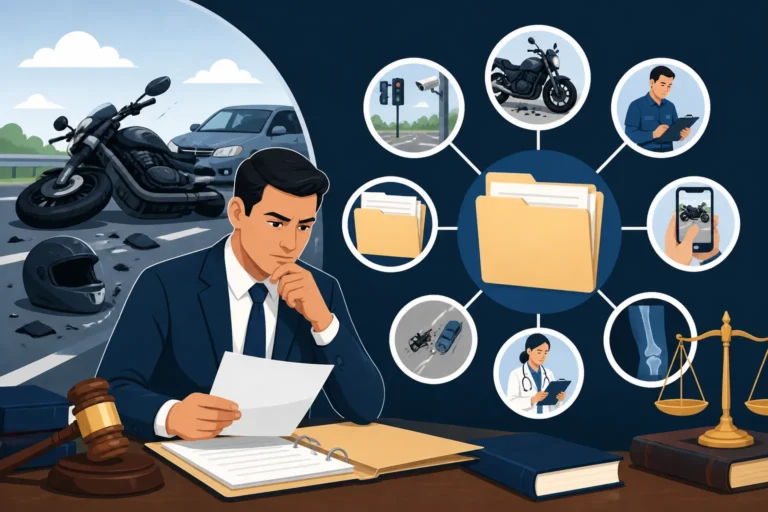
Imagine a scenario: You were riding through an intersection, and a car made a sudden left turn in front of you. The driver insists you were speeding or came out of nowhere. Without proper evidence and a strong advocate, this "he said, she said" situation can quickly turn into an uphill battle. A lawyer can immediately begin gathering evidence like traffic camera footage, witness statements, accident reconstruction reports, and police reports to clearly establish who was truly at fault. They understand how to counter biased narratives and present a compelling case that supports your version of events. Our guide on Who Is at Fault in a Motorcycle Accident offers more insights into these challenges.
Serious Injuries and Long-Term Impact
If your injuries are more than just minor scrapes and bruises, a lawyer becomes almost indispensable. Catastrophic injuries, such as traumatic brain injuries, spinal cord injuries, or amputations, involve not only immediate medical costs but also staggering long-term care expenses, rehabilitation, lost earning capacity, and immense pain and suffering. Trying to accurately calculate and demand compensation for these future damages on your own is incredibly difficult. Insurance companies will always try to minimize these figures, often offering a quick settlement that doesn't come close to covering your lifetime needs.
Consider a rider who suffers a serious spinal cord injury. They might face multiple surgeries, extensive physical therapy, modifications to their home and vehicle, and potentially a lifetime of assistive care. An experienced attorney knows how to work with medical experts, economists, and life care planners to project these future costs accurately. They understand that damages include not just your current medical bills and lost wages, but also future medical needs, loss of enjoyment of life, and the emotional distress that comes with a permanent disability. Without a legal professional guiding this process, you risk settling for a fraction of what you truly deserve and need to maintain your quality of life. Understanding Types of Damages in a Motorcycle Accident Claim can help you grasp the full scope of what you might be entitled to.
Lowball Settlement Offers from Insurers
It's a common tactic: after an accident, the insurance company might quickly offer you a lowball settlement. They'll present it as a fair and quick resolution, hoping you're desperate for money to cover immediate expenses or just want to move on. These offers are rarely, if ever, in your best interest. They often don't account for the full extent of your damages, especially those that manifest later or require long-term treatment.
When an insurer sees you don't have a lawyer, they see an opportunity to save money. They know you likely don't understand the intricacies of personal injury law, the true value of your claim, or the strategies they employ to pay out less. For instance, they might offer a few thousand dollars for a broken bone, when the actual medical bills, lost wages, and pain and suffering could easily amount to tens of thousands, or even more. A lawyer acts as a buffer, preventing you from accepting an inadequate offer. They understand How Motorcycle Accident Settlements Are Calculated and can effectively negotiate for a fair amount, demonstrating the true value of your case with solid evidence and legal arguments. They will push back against manipulative tactics and ensure your rights are protected throughout the negotiation process.
Navigating the Legal Labyrinth: Understanding Your Rights
The legal system can be an intimidating maze, especially when you're already vulnerable. There are strict rules, deadlines, and precedents that can easily trip up someone unfamiliar with the process. A motorcycle accident lawyer is your guide through this labyrinth, ensuring you don't miss crucial steps or fall victim to legal pitfalls.
The Statute of Limitations and Filing Deadlines
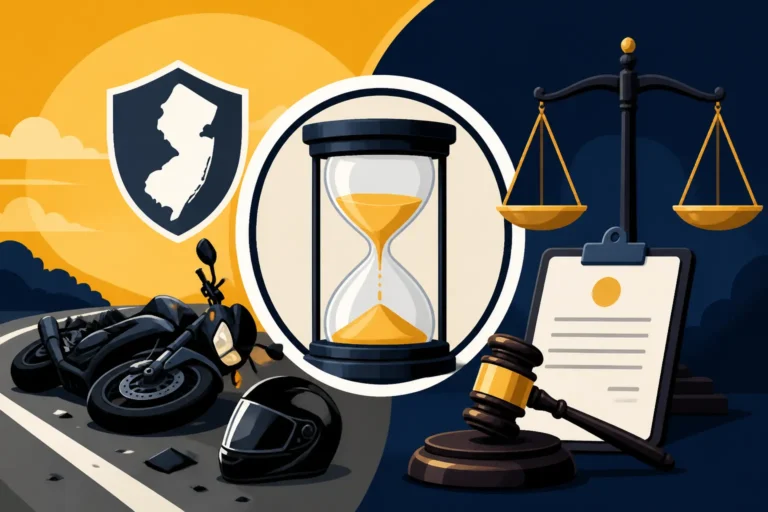
One of the most critical aspects of any personal injury claim is the statute of limitations. This is a strict legal deadline within which you must file a lawsuit, or you lose your right to pursue compensation forever. These deadlines vary significantly by state and type of claim. For example, in California, the general statute of limitations for personal injury claims is two years from the date of the injury, while in New York, it's typically three years. However, there can be exceptions and nuances, such as claims against government entities which often have much shorter filing windows (sometimes as little as 60-90 days).
Missing this deadline, even by a single day, means your case is essentially dead in the water, no matter how strong your evidence or how severe your injuries. It’s a heartbreaking mistake that can cost victims dearly. A lawyer keeps track of these critical dates, ensuring all necessary paperwork is filed correctly and on time. They understand The Statute of Limitations Explained and can navigate the complexities of specific state laws, providing peace of mind during an already stressful time. They'll make sure you don't inadvertently sign away your rights by missing a crucial deadline.
Complex Laws and "Rider Bias"
Motorcycle accident law isn't just about general personal injury. It often involves specific statutes related to motorcycles, such as lane-splitting laws (legal in California, illegal in many other states) or helmet laws (universal in some states, partial in others, or even nonexistent for adults in a few, like Iowa or New Hampshire). How these laws apply to your accident can significantly impact liability and the amount of compensation you can recover. For instance, if you were involved in a Lane Splitting and Motorcycle Accident Liability incident, the legal interpretation of your actions could be highly contentious.
Beyond specific laws, the aforementioned "rider bias" is a powerful, unwritten factor that permeates public perception, police reports, and even jury deliberations. Insurers and opposing counsel will often try to paint motorcyclists as reckless daredevils, even when the evidence clearly shows otherwise. This bias can lead to unfair fault assignments by insurance companies, attempting to shift blame onto the rider. A skilled attorney understands these biases and knows how to counteract them with objective evidence, expert testimony, and persuasive arguments, ensuring your case is judged on facts, not stereotypes. They advocate passionately to protect your reputation and your right to fair compensation, fighting against generalized assumptions often seen in cases involving motorcycle riders. It’s their job to tell your story in a way that dismantles these unfair perceptions.
The Value of Experience: What a Lawyer Brings to Your Case
Many people wonder if they can handle an accident claim on their own. While technically possible for very minor incidents, the reality is that the legal landscape of personal injury, especially involving motorcycles, is intricate. A lawyer brings a wealth of experience, resources, and strategic thinking that is incredibly difficult for an individual to replicate.
Expert Investigation and Evidence Gathering
After an accident, critical evidence can disappear rapidly. Skid marks fade, road debris is cleared, and witness memories grow hazy. An experienced motorcycle accident lawyer acts swiftly to preserve and gather all relevant evidence. They understand what to look for and how to legally obtain it. This often includes securing police reports, medical records, photographs and videos from the scene, traffic camera footage, cell phone records of the other driver (to check for distracted driving), and even vehicle black box data. They might hire accident reconstruction specialists who can meticulously analyze the scene and determine precisely how the crash occurred and who was at fault.
For example, if you were involved in a collision with a commercial truck, the lawyer would know to immediately issue a spoliation letter to the trucking company, demanding they preserve all relevant logs, maintenance records, and electronic data. Without this proactive step, crucial evidence could be conveniently "lost." This detailed, professional investigation is paramount for Proving Fault in a Motorcycle Accident and building a robust case that withstands the scrutiny of insurance adjusters and, if necessary, a jury. They know the ins and outs of evidence collection that most everyday people wouldn't even consider.
Negotiation Power and Settlement Maximization
Insurance companies have an army of adjusters and lawyers whose job is to pay out as little as possible. When you try to negotiate directly with them, you're at a significant disadvantage. You don't have their legal training, their resources, or their experience in valuing claims. An attorney, on the other hand, speaks their language. They know the industry's tactics, understand how to interpret policy language, and can effectively counter lowball offers.
A skilled lawyer knows how to build a comprehensive demand package that includes all your economic damages (medical bills, lost wages, property damage) and non-economic damages (pain and suffering, emotional distress, loss of enjoyment of life). They present this package with compelling evidence, legal arguments, and the implied threat of a lawsuit if a fair settlement isn't reached. This often leads to significantly higher settlement offers than you would ever receive on your own. They are not afraid to go to bat for you, ensuring you receive How to Maximize Your Motorcycle Accident Settlement. Their presence alone often signals to the insurance company that they need to take your claim seriously.
Courtroom Representation and Trial Readiness
While most personal injury claims settle out of court, it’s always a possibility that your case could go to trial. If negotiations fail to produce a fair offer, you need an attorney who is not only willing but also highly capable of representing you in court. Going to trial is a complex, time-consuming, and stressful process that requires extensive legal knowledge, courtroom experience, and persuasive advocacy skills.
A lawyer will prepare your case for trial from day one, gathering evidence, lining up expert witnesses, drafting legal documents, and understanding courtroom procedures. They will skillfully present your case, cross-examine opposing witnesses, and argue on your behalf to a judge and jury. Without an attorney, navigating the rules of evidence, making opening and closing statements, and conducting examinations would be virtually impossible for someone without legal training. Knowing that your lawyer is ready and able to take your case to trial often gives you leverage in settlement negotiations, as insurance companies would rather avoid the expense and uncertainty of litigation if they can.
Specific Scenarios Where a Lawyer is Crucial
While a lawyer is beneficial in nearly every motorcycle accident scenario, there are certain situations where their involvement moves from helpful to absolutely essential. These are cases riddled with complexities, where your chances of securing fair compensation without expert legal guidance are slim to none.
Uninsured or Underinsured Motorists
It's a terrifying thought: you're hit by a driver who either has no insurance or insufficient insurance to cover your substantial injuries and damages. This situation is far more common than many realize and can leave you in a dire financial predicament. In such cases, if you don't have adequate uninsured/underinsured motorist (UM/UIM) coverage on your own policy, you might feel like you're out of options. However, even with UM/UIM coverage, dealing with your own insurance company can be surprisingly challenging. They might still try to minimize your claim, even though you pay them premiums specifically for this protection.
An experienced motorcycle accident attorney can help you navigate these complex claims. They can thoroughly review your own insurance policies to identify all potential avenues of recovery, sometimes uncovering coverage that you weren't even aware you had. They will then vigorously pursue your UM/UIM claim, ensuring your insurer pays out what you are rightfully owed. They understand the nuances of these policies and can hold your own insurance company accountable, forcing them to fulfill their contractual obligations. This is especially vital in states with high uninsured driver rates, like Florida or New Mexico.
Multiple Parties or Commercial Vehicles Involved
When an accident involves more than just two passenger vehicles, the complexity escalates dramatically. If there are multiple vehicles, or if a commercial vehicle like a delivery truck, a semi-truck, or a company car is involved, identifying all potentially liable parties and their respective insurance policies becomes a challenging undertaking. In these situations, several entities could share fault, including the driver, their employer, the vehicle manufacturer, or even the maintenance company. Each party will have their own legal team and insurance adjusters, all working to deflect blame and minimize their liability.
Take for example a crash involving a rider, a passenger car, and a commercial landscaping truck. The truck might have been overloaded, improperly maintained, or the driver might have been operating it outside of federal trucking regulations. A lawyer can uncover these critical details, identifying all potential defendants and building a case against each responsible party. They can pursue claims against multiple insurance policies, ensuring that you have access to a broader pool of compensation to cover your extensive damages. This level of intricate investigation and multi-party litigation is virtually impossible to handle effectively without a seasoned legal team. This situation directly relates to the concept of Motorcycle Accident Liability: A Complete Guide.
Wrongful Death Claims
Perhaps the most tragic scenario is when a motorcycle accident results in the death of a loved one. The emotional devastation for surviving family members is profound, and grappling with legal procedures at such a time is almost unimaginable. In a wrongful death claim, family members can seek compensation for funeral and burial expenses, loss of financial support, loss of companionship, and emotional suffering. However, these claims are incredibly sensitive, legally intricate, and involve determining the monetary value of a life lost, which is a daunting task.
A lawyer specializing in wrongful death claims provides compassionate yet aggressive representation. They can handle all legal aspects, allowing the family to grieve. They understand who is legally entitled to file such a claim, what types of damages can be recovered, and how to value these profound losses. They will meticulously gather evidence, including financial records, testimony from family and friends, and expert economic analyses, to build a compelling case for full and fair compensation. Navigating the complex legal framework surrounding wrongful death claims requires dedicated expertise, ensuring that the memory of your loved one is honored with justice.
Financial Considerations: How Lawyers Get Paid
One of the biggest concerns for accident victims considering legal representation is often the cost. Many assume they can’t afford a lawyer, especially when facing mounting medical bills and lost income. However, the fee structures for personal injury attorneys are specifically designed to make legal help accessible, regardless of your current financial situation.
Contingency Fee Arrangements
The vast majority of reputable motorcycle accident lawyers work on a contingency fee basis. This means you don't pay any upfront legal fees or hourly rates. Instead, the lawyer's payment is "contingent" upon them successfully recovering compensation for you, either through a settlement or a court verdict. If they don't win your case, you typically don't owe them any attorney fees. This arrangement is a huge relief for accident victims who are already struggling financially due to medical expenses and an inability to work.
When a settlement or award is secured, the lawyer receives a pre-agreed-upon percentage of that amount. This percentage is usually between 25% and 40%, but it can vary depending on the complexity of the case, the stage at which it resolves (e.g., pre-litigation settlement vs. trial verdict), and state bar regulations. This transparent fee structure aligns the lawyer's interests directly with yours: they are motivated to achieve the largest possible recovery because their own compensation depends on it. Before signing any agreement, your lawyer will fully explain these terms, often in a free initial consultation. This makes high-quality legal representation available to everyone, not just those with deep pockets.
Understanding Case Costs and Expenses
Beyond the attorney's fees, there are also "case costs" or "litigation expenses." These are the out-of-pocket costs associated with pursuing your claim. They can include things like filing fees, court reporter fees for depositions, expert witness fees (which can be substantial, especially for medical or accident reconstruction experts), obtaining medical records and police reports, and other administrative expenses. These costs can quickly add up, especially in complex cases that go to litigation.
In most contingency fee agreements, the law firm will advance these case costs on your behalf. This means you don't have to pay them upfront. However, these costs are typically reimbursed to the law firm from your settlement or award before the attorney's contingency fee is calculated and distributed. It's crucial to have a clear understanding of how these costs will be handled from the outset. Your attorney should provide you with a detailed breakdown and explain how they will be repaid. For example, a lawyer with a 33% contingency fee might clarify that if your settlement is $100,000 and case costs were $5,000, the $5,000 would be deducted first, leaving $95,000, from which the 33% fee (approx. $31,350) would be taken. This leaves you with a net recovery of around $63,650. Understanding this distinction ensures there are no surprises when your settlement finally arrives.
The Right Time to Act: Don't Delay
While it might seem prudent to wait and see how your injuries heal or how the insurance company responds, delaying legal action after a motorcycle accident can be detrimental to your case. Time truly is of the essence when it comes to preserving evidence and protecting your legal rights.
Preserving Evidence and Witness Testimony
The moments, days, and weeks immediately following an accident are critical for evidence preservation. Skid marks on the road can quickly disappear due to weather or traffic. Debris from the crash scene is often cleared away by emergency services or local authorities. Security camera footage from nearby businesses, traffic cameras, or even doorbell cameras can be overwritten in a matter of days or weeks. Without prompt action, this invaluable evidence can be permanently lost.
Beyond physical evidence, witness memories are notoriously unreliable over time. The longer you wait, the fuzzier their recollections become. A lawyer can act quickly to interview witnesses, take their statements, and ensure their contact information is secured. They know exactly How to Document the Scene to Prove Fault and what specific details to look for. For example, nearby businesses on a busy street like Hollywood Boulevard in Los Angeles might have surveillance footage that clearly captures the incident, but that footage is typically on a short retention cycle. A lawyer can issue a preservation letter or subpoena to ensure it’s saved. Delaying means giving up potentially irrefutable proof that could be the lynchpin of your case.
Preventing Mistakes That Can Hurt Your Claim
In the wake of an accident, it’s incredibly easy to make well-intentioned mistakes that can severely jeopardize your claim. These missteps often stem from a lack of legal knowledge or an understandable desire to simply put the traumatic experience behind you. Without a lawyer guiding you, you might inadvertently say the wrong thing to an insurance adjuster, sign a document you don't fully understand, or accept a settlement offer that is far too low.
For instance, admitting any degree of fault at the scene, even something as innocuous as "I should have been more careful," can be used by the insurance company to argue that you contributed to the accident, reducing your potential compensation under comparative negligence laws. Similarly, a quick settlement offer, particularly before you have a full understanding of your long-term medical needs, can trick you into signing away your right to future compensation. This is why you should never admit fault at the scene. A lawyer can step in immediately, handle all communications with insurance companies, and ensure you don't fall into these common traps. They protect you from making irreversible errors and allow you to focus solely on your physical and emotional recovery.
Choosing the Right Advocate: Finding Your Legal Champion
Deciding to hire a lawyer is a significant step, but choosing the right lawyer is equally important. You need someone who not only understands the law but also truly grasps the unique challenges and biases faced by motorcyclists. Not all personal injury attorneys are created equal, especially when it comes to motorcycle accidents. If you're feeling lost about where to begin your search for legal help, services like LegalMatch can be a great starting point to find attorneys in your area.
Specialized Motorcycle Accident Experience
While many lawyers handle various personal injury cases, an attorney with specific experience in motorcycle accidents brings invaluable expertise to your claim. They understand the mechanics of motorcycle crashes, the common causes of Motorcycle Accidents Caused by Left-Turn Collisions, and the typical injuries sustained by riders. More importantly, they are familiar with the "rider bias" prevalent in many jurisdictions and know how to effectively counter it. This specialized knowledge allows them to anticipate the defense's arguments and build a stronger case from the outset.
An attorney who regularly handles motorcycle cases will also have a network of experts familiar with these types of accidents, including accident reconstructionists, medical professionals specializing in common motorcycle injuries (like road rash or orthopedic trauma), and vocational rehabilitation experts. They'll know the subtle differences in local laws, like specific helmet requirements or lane-splitting regulations, which can be critical to your case. Don't hesitate to ask prospective attorneys about their specific experience with motorcycle accident cases and their track record of success in this area. You want someone who rides, or at least intimately understands the culture and challenges of riding. If you're looking for a specialist, LegalMatch could help you filter for attorneys with specific experience in motorcycle accident claims.
Local Knowledge and Reputation
The legal landscape can vary significantly from state to state, and even from county to county within the same state. A lawyer with strong local knowledge understands the local courts, judges, and opposing counsel. They know what juries in your area might respond to and how local law enforcement typically handles accident investigations. This local insight can be a tremendous asset in strategizing your case and predicting potential outcomes.
Furthermore, a lawyer's reputation within the local legal community matters. Attorneys who are respected by their peers and known for their strong advocacy are often taken more seriously by insurance companies and opposing counsel. This can lead to more favorable settlement offers and better outcomes for their clients. Look for an attorney with a track record of success in your community, positive client testimonials, and strong professional standing. Services like LegalMatch can assist you in connecting with local attorneys who have proven experience and a solid reputation in handling motorcycle accident cases, providing you with options that are geographically relevant and specialized. Taking the time to research and choose the right legal champion can make all the difference in the success of your motorcycle accident claim.
When to Seek Legal Counsel: A Quick Reference
Understanding when to engage a motorcycle accident lawyer can be simplified by considering the key factors that often complicate a claim. This table offers a brief overview to help you decide.
| Scenario / Factor | Handling Claim Yourself (Likely Outcome) | Hiring a Motorcycle Accident Lawyer (Likely Outcome) |
|---|---|---|
| Minor Injuries | Potentially manageable, but risk of missing future complications. | Even small claims benefit from legal review to ensure full compensation. |
| Serious Injuries | High risk of lowball settlement, overlooking long-term costs. | Maximized compensation, accurate valuation of future medical & lost earning capacity. |
| Disputed Fault | Uphill battle, often leading to reduced or denied claims. | Strong advocacy, evidence gathering to prove fault, countering biases. |
| Insurance Tactics | Vulnerable to adjuster manipulation, recorded statements used against you. | Shielded from direct contact, all negotiations handled professionally. |
| Complex Laws (e.g., Lane Splitting) | Unaware of nuances, legal technicalities can ruin case. | Expert interpretation of specific motorcycle laws, strategic application. |
| Uninsured Motorist | Difficulty navigating your own UM/UIM policy, potential denial. | Expert in UM/UIM claims, forcing your insurer to pay rightful benefits. |
| Multiple Parties Involved | Overwhelmed by complexity, missing liable parties. | Comprehensive investigation, identifies all responsible parties and policies. |
| Statute of Limitations | High risk of missing critical deadlines, losing right to sue. | Ensures all deadlines are met, paperwork filed accurately and on time. |
| Wrongful Death | Emotionally impossible, legally complex, risking inadequate compensation. | Compassionate yet fierce representation, securing deserved family compensation. |
| Settlement Negotiations | Accepting low offers due to pressure, lack of negotiation skills. | Skilled negotiation, leverages legal standing to secure fair and maximized payout. |
Disclaimer
Please remember that this article provides general information and insights based on common legal principles and experiences. It is not intended as legal advice. Every motorcycle accident case is unique, and the specific facts and applicable laws will determine the best course of action. For personalized legal guidance concerning your specific situation, it is always recommended to consult with a qualified motorcycle accident attorney in your jurisdiction.