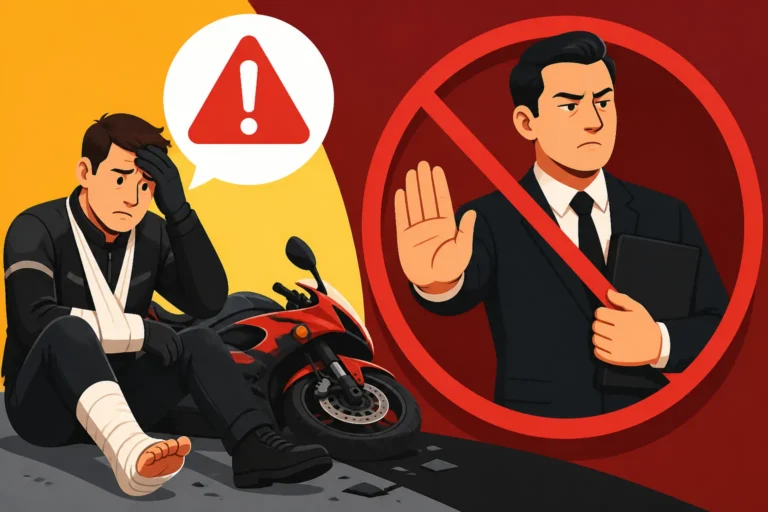
How a Lawyer Increases Your Settlement
Getting into a motorcycle accident is a terrifying experience, and in the chaotic aftermath, one of the last things you want to worry about is how you're going to get fair compensation for your injuries and damages. Many riders feel overwhelmed, alone, and frustrated by the insurance company's tactics, often leading to settlement offers that barely scratch the surface of their true losses. This comprehensive guide will walk you through precisely how a motorcycle accident lawyer can significantly increase your settlement, ensuring you receive the compensation you truly deserve.
Understanding the Initial Challenges of a Motorcycle Accident Claim
When you've been in a motorcycle crash, the moments right after can be a blur of pain, confusion, and fear. It's incredibly difficult to think clearly about legalities when your focus is on healing. But even as you recover, a whole new set of challenges arise that can severely impact your ability to get a fair settlement.
The Immediate Aftermath and Injury Severity
Motorcycle accidents, by their very nature, often result in more severe injuries compared to car accidents. There's just less protection for the rider. We're talking about everything from devastating road rash and broken bones to life-altering traumatic brain injuries and spinal cord damage. The immediate concern is always medical attention, and rightly so. You need to focus on your health. However, documenting these injuries thoroughly from the outset is crucial, and it's something many accident victims overlook or don't know how to do effectively. Without clear medical records, future claims for pain and suffering or long-term care become much harder to substantiate. For those wondering about the extent of common injuries, our guide on Common Motorcycle Accident Injuries offers more detail.
Dealing with Insurance Companies
Let's be blunt: insurance companies are not on your side. Their primary goal is to minimize payouts, regardless of how badly you're hurt or how clear the other driver's fault might seem. They have teams of adjusters and lawyers whose job it is to pay you as little as possible. They might call you within days of your accident, feigning concern while subtly trying to get you to say something that could undermine your claim. They might offer a quick, lowball settlement, hoping you'll take it out of desperation, especially if medical bills are piling up. They are experts at finding loopholes, downplaying injuries, and shifting blame. This is where many riders get caught off guard, accepting far less than their claim is actually worth because they don't understand the complex game being played.
The Bias Against Riders
It's an unfortunate truth, but a significant bias against motorcyclists exists, both within insurance companies and sometimes even among juries. There's a persistent stereotype that riders are reckless thrill-seekers, inherently more dangerous, or somehow always at fault. This prejudice can be a huge hurdle in proving your claim, even when the evidence clearly points to the other driver's negligence. Insurance adjusters will often try to leverage this bias, even attempting to assign partial blame to the rider where none exists, often using the argument that motorcyclists are harder to see, implying the rider should have been more careful. This is a common tactic, and our article on How Insurance Companies Assign Blame to Riders explains these tactics in depth.
Expertise in Valuing Your Claim Accurately
One of the most critical ways a lawyer increases your settlement is by accurately assessing the full value of your claim, which is far more complex than just tallying up immediate medical bills and bike repair costs.
Comprehensive Damage Assessment
When you're hurt, your focus is on getting better, and understandably so. But a seasoned motorcycle accident attorney looks at your damages through a much wider lens. They don't just consider the visible injuries or the immediate cost of treatment. They dig deep into all "economic damages" – things that have a clear monetary value. This includes a thorough accounting of all current medical expenses, from emergency room visits and surgeries to physical therapy and prescription medications. Beyond that, they will meticulously document lost wages from time off work, not just for the immediate recovery period but also for any future earning capacity you might lose if your injuries prevent you from returning to your previous job or working at all. They'll also factor in property damage, not just the repair or replacement of your motorcycle, but also any damaged gear like helmets, jackets, or boots. It's this comprehensive approach to Types of Damages in a Motorcycle Accident Claim that ensures no dollar is left on the table.
For example, imagine you broke your leg in a crash. You might think about the emergency room bill and the cast. A lawyer, however, considers everything: the ambulance ride, the orthopedic surgeon's fees, follow-up appointments, pain medication, crutches, lost shifts at work, and even the cost of transportation to and from physical therapy. They gather all these receipts, medical records, and employment documents to build a rock-solid case for your economic losses.
Projecting Future Costs
This is where the valuation really sets an attorney apart. Many injuries from motorcycle accidents have long-term or even permanent consequences. You might need ongoing physical therapy for years, future surgeries, adaptive equipment for your home or vehicle, or even in-home care. If you've suffered a spinal cord injury, for instance, the lifetime costs can run into the millions.
A skilled lawyer works with medical experts, life care planners, and economists to project these future expenses with a high degree of accuracy. They consider potential future lost wages, loss of enjoyment of life, and ongoing pain and suffering. Without this expert projection, an insurance company will only offer you enough to cover your immediate, obvious expenses, leaving you to foot the bill for years or decades of future care. This forward-thinking approach is crucial in calculating your Average Motorcycle Accident Settlement Amounts. This meticulous forecasting ensures that the settlement you receive truly covers the full impact your injuries will have on the rest of your life, not just the present.
Navigating the Complex Legal Landscape
The world of personal injury law is a maze of rules, deadlines, and technicalities. Trying to navigate it on your own after a traumatic accident is not only incredibly difficult but also often detrimental to your claim.
Proving Fault and Overcoming Defenses
One of the primary battlegrounds in any motorcycle accident claim is proving who was at fault. Even if you think it's clear-cut, the other party's insurance company will often try to dispute liability or shift blame to you, the rider. This is where an experienced lawyer shines. They know exactly what kind of evidence to collect, from police reports and witness statements to traffic camera footage and accident reconstruction reports. They understand how to establish negligence and demonstrate how the other driver's actions – like making an unsafe lane change or failing to yield – directly caused your accident. If you're wondering how to gather the necessary evidence, our guide on Proving Fault in a Motorcycle Accident offers valuable insights.
Furthermore, lawyers are adept at countering common defenses, such as the "I didn't see the motorcycle" excuse, which often implies rider fault. They can argue that the driver had a duty to see what was there to be seen and that their failure to do so constitutes negligence. In states with comparative negligence laws, where your settlement can be reduced by your percentage of fault, a lawyer can fight fiercely to minimize any blame assigned to you, directly impacting your final payout. Our article on How Comparative Fault Reduces Your Payout delves into this critical aspect.
Adhering to Legal Deadlines and Procedures
The legal system operates on strict timelines, known as statutes of limitations. If you miss these deadlines, you could permanently lose your right to pursue compensation, regardless of how valid your claim is. These deadlines vary by state and by the type of claim. For instance, in California, the general statute of limitations for personal injury is two years from the date of the accident, but exceptions can apply. If you're unfamiliar with these rules, it's incredibly easy to make a costly mistake.
A lawyer ensures all necessary documents are filed correctly and on time, whether it's the initial claim with the insurance company, a personal injury lawsuit, or responses to legal discovery requests. They handle all the procedural details, from drafting demand letters to filing complaints, ensuring your case moves forward smoothly within the legal framework. This expertise is critical in avoiding procedural pitfalls that could derail your claim before it even gets off the ground. Understanding The Statute of Limitations Explained is paramount for any accident victim.
Strategic Negotiation and Litigation Skills
Insurance companies have an arsenal of strategies to minimize payouts. Without an attorney, you're often negotiating against trained professionals whose job it is to ensure you get as little as possible.
Countering Lowball Offers
It's almost a certainty that the first offer you receive from an insurance company will be a lowball. They do this to test your resolve, hoping you'll be desperate enough to accept an inadequate amount. Many unrepresented individuals, tired of the fight and mounting bills, fall for this tactic.
A lawyer, however, knows the true value of your claim and isn't intimidated by these tactics. They will systematically dismantle the insurance company's arguments, presenting compelling evidence of your damages and the other party's fault. They leverage their negotiation skills, built on years of experience, to push back forcefully, demonstrating that they are prepared to go to trial if a fair settlement isn't reached. This willingness to litigate significantly increases the pressure on the insurance company to offer a more reasonable amount. If you're facing a meager offer, knowing How to Handle a Lowball Settlement Offer is critical. Services like LegalMatch can help you find attorneys experienced in these negotiations.
Preparing for Court and Trial
While most personal injury claims settle out of court, preparing for trial is an essential part of the process, even if you never step foot in a courtroom. An attorney builds your case as if it will go to trial, meticulously gathering evidence, lining up expert witnesses, and crafting persuasive legal arguments. This thorough preparation sends a clear message to the insurance company that you mean business.
If negotiations fail, your lawyer will represent you in court. They handle everything from jury selection and opening statements to cross-examining witnesses and delivering closing arguments. Their courtroom experience is invaluable, as presenting a compelling case to a jury requires a very specific set of skills that most individuals simply don't possess. The mere fact that you have an attorney who is ready and willing to take your case to trial often forces the insurance company's hand, leading to a higher settlement offer before a trial becomes necessary. This is a critical component of How Motorcycle Accident Settlements Are Calculated.
Access to Resources and Experts
A significant advantage of hiring a motorcycle accident lawyer is their access to a network of specialized resources and experts that are typically unavailable to the average individual.
Accident Reconstructionists and Medical Professionals
Motorcycle accidents can be incredibly complex, and sometimes, proving exactly how the crash occurred or the full extent of your injuries requires specialized knowledge. Lawyers often work with accident reconstructionists—experts who can analyze vehicle damage, skid marks, road conditions, and witness statements to recreate the accident scene. Their testimony can be crucial in establishing fault, especially in disputed cases.
Similarly, an attorney can connect you with medical specialists who understand motorcycle accident injuries. These doctors can provide detailed reports, offer expert opinions on your prognosis, and explain the long-term impact of your injuries. Their assessments carry significant weight, bolstering your claim for both present and future medical expenses, as well as pain and suffering. They can clarify the nuances of a Motorcycle Accident Traumatic Brain Injury or the lasting effects of road rash, for instance. These experts are costly, but a lawyer's firm often covers these upfront expenses, only recovering them if you win your case.
Documenting Evidence Effectively
Beyond identifying and retaining experts, a lawyer is meticulous about gathering and organizing all the necessary evidence to build a strong case. This includes:
- Police Reports: Analyzing reports for inconsistencies or crucial details.
- Photographs and Videos: Collecting visual evidence from the scene, your injuries, and vehicle damage.
- Witness Statements: Interviewing witnesses and securing sworn statements.
- Medical Records and Bills: Ensuring all treatment, diagnoses, and costs are thoroughly documented.
- Wage Statements: Proving lost income and future earning capacity.
- Expert Testimony: Coordinating with accident reconstructionists, medical specialists, and economists.
This comprehensive documentation is not just about quantity; it's about presenting a cohesive, compelling narrative that leaves no doubt about the severity of your damages and the liability of the other party. Their experience in handling similar cases means they know exactly what pieces of evidence are most impactful and how to present them effectively to insurance adjusters or a jury. This diligent approach is how lawyers increase your settlement by strengthening the entire foundation of your claim, preventing insurance companies from easily dismissing or downplaying your losses.
The Financial Advantage of Legal Representation
Many riders worry about the cost of a lawyer, especially when facing financial strain after an accident. However, the investment often pays for itself many times over by significantly increasing the final settlement amount.
Maximizing Economic Damages
As we discussed, a lawyer ensures that every single economic damage you've incurred is accounted for and presented convincingly. This isn't just a matter of adding up bills; it's about demonstrating the causal link between the accident and each expense. For instance, an insurance company might dispute whether certain physical therapy sessions were truly necessary. Your lawyer will work with your medical providers to clearly justify every treatment.
Beyond direct costs, they are experts at calculating and advocating for harder-to-quantify economic losses, such as loss of earning capacity. If your injury prevents you from performing the same job, or requires you to take a lower-paying one, your lawyer will bring in vocational experts and economists to quantify that long-term financial impact. This includes not just your salary, but also lost benefits, bonuses, and retirement contributions. This holistic view of your financial losses means a significantly higher demand for compensation. If you're curious about the different categories, our guide on Economic vs Non-Economic Damages Explained provides further clarification.
Securing Non-Economic Damages
Perhaps the most impactful way a lawyer increases your settlement is by effectively quantifying and arguing for non-economic damages. These are subjective losses like pain and suffering, emotional distress, loss of enjoyment of life, and disfigurement. There isn't a bill for these, making them much harder for an individual to prove and value.
A skilled attorney understands how to illustrate the profound impact your injuries have had on your life. They use your medical records, personal injury journal entries, and testimony from you and your loved ones to paint a vivid picture for the insurance company or jury. They will explain how your broken leg prevented you from riding your motorcycle, playing with your kids, or enjoying your hobbies. They'll articulate the psychological toll of chronic pain, scarring, or a traumatic brain injury. This ability to transform abstract suffering into a tangible dollar amount is a hallmark of effective legal representation and is crucial for maximizing your payout.
Handling Liens and Fees
After a settlement is reached, there are often various liens that need to be paid out of your recovery, such as medical liens from hospitals or health insurance companies. These can significantly reduce the amount of money you actually take home. An attorney is adept at negotiating down these liens, often convincing medical providers or insurers to accept a reduced amount. This means more of your settlement stays in your pocket.
Furthermore, while lawyers typically work on a contingency fee basis (meaning they only get paid if you win), they also handle all the upfront costs of litigation, such as filing fees, expert witness fees, and investigation expenses. This frees you from immediate financial burden and allows your case to proceed without delay. Without a lawyer, you would bear these costs yourself, which can be prohibitive for many.
Consider using platforms like LegalMatch to connect with qualified attorneys who understand how to manage these complex financial aspects of your claim, including negotiating liens and explaining how attorney fees work.
Here’s a quick overview of how having a lawyer can dramatically change your claim's outcome:
| Aspect of Claim | Without a Lawyer (DIY) | With a Lawyer |
|---|---|---|
| Claim Valuation | Often undervalues claim, missing future costs and non-economic damages. | Comprehensive valuation, including future medical, lost wages, and pain & suffering. |
| Evidence Collection | May miss crucial evidence, lack access to experts. | Meticulous collection, access to accident reconstructionists, medical experts. |
| Negotiation Skills | Vulnerable to lowball offers, easily overwhelmed by insurance tactics. | Aggressive negotiation, counters lowball offers, demonstrates readiness for trial. |
| Legal Compliance | Risk missing deadlines, making procedural errors. | Ensures all deadlines met, filings correct, adherence to legal procedures. |
| Fighting Bias | Struggles to overcome rider bias from insurers/juries. | Strategically addresses and minimizes rider bias, focuses on fault. |
| Trial Readiness | Ill-equipped for court, lacks litigation experience. | Prepares case for trial, skilled courtroom advocate. |
| Net Payout | Often significantly lower settlement, potentially higher out-of-pocket costs. | Statistically higher settlements, better management of liens and expenses. |
Hiring a lawyer is an investment in your future and your rightful compensation. They provide the expertise, resources, and advocacy needed to level the playing field against powerful insurance companies. This is how you truly maximize your motorcycle accident settlement. For more detailed information, consider reading How to Maximize Your Motorcycle Accident Settlement.
Disclaimer
Please remember that this information is intended for educational purposes only and should not be considered legal advice. Every motorcycle accident claim is unique, and the information provided here may not apply to your specific situation. We strongly recommend consulting with a qualified motorcycle accident attorney to discuss the specifics of your case and understand your legal options.