I Didn’t See the Motorcycle’ Defense Explained
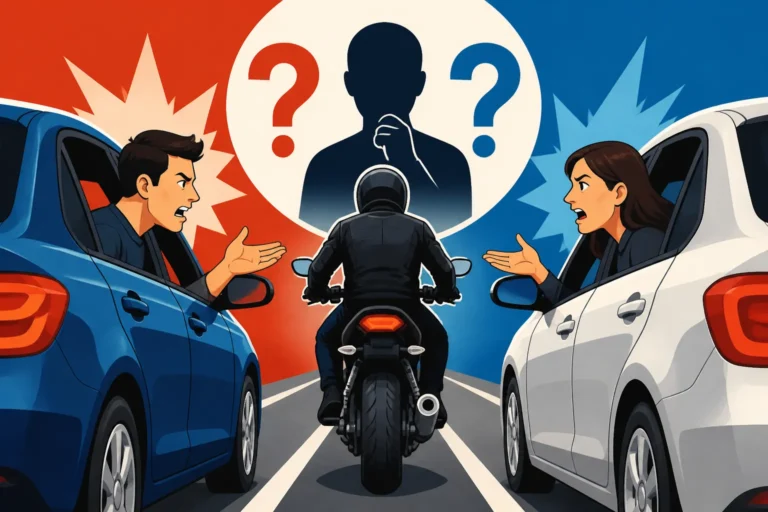
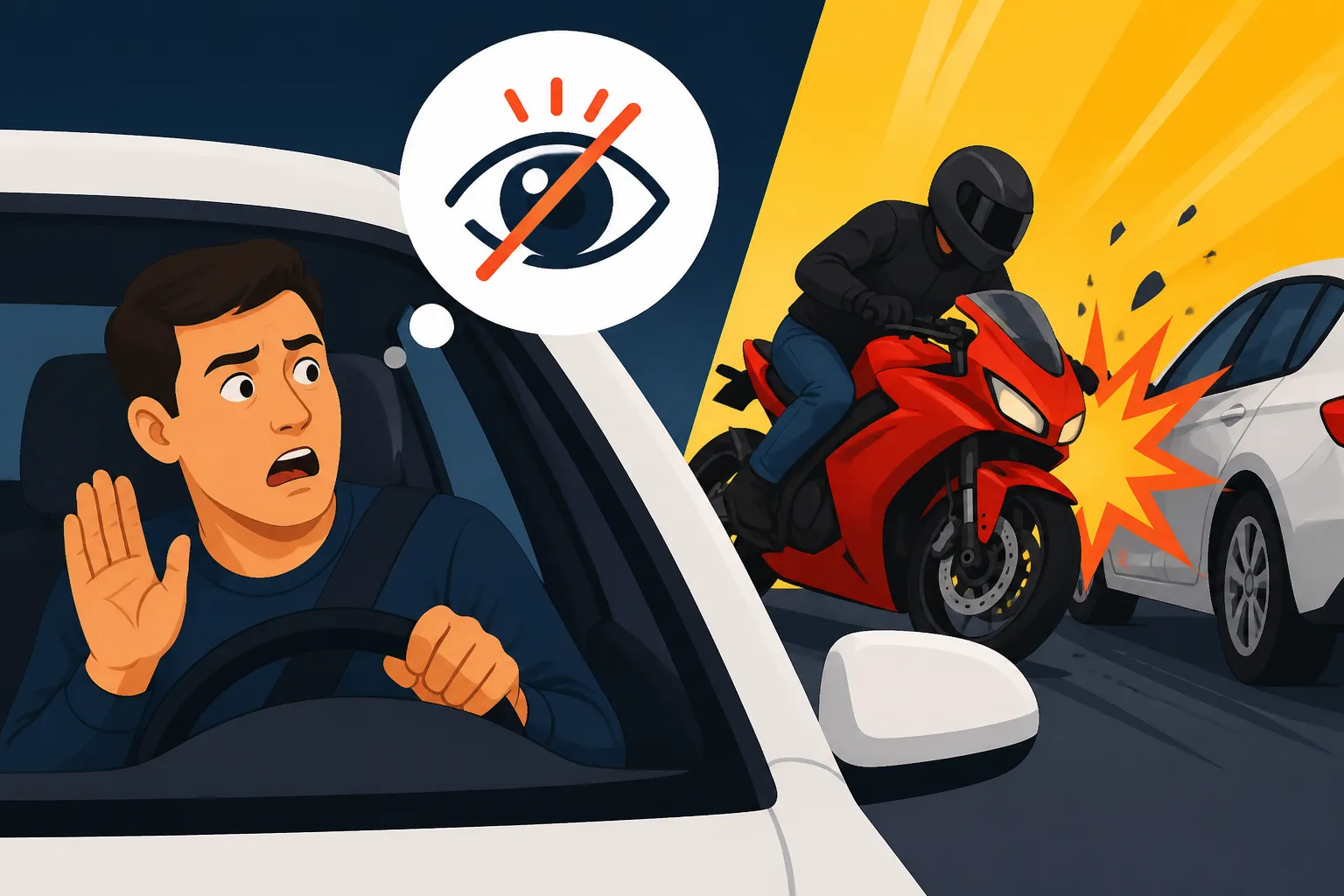
It’s a phrase that sends a shiver down the spine of every rider: "I didn't see the motorcycle." When you’ve been involved in a crash, suffered injuries, and the other driver utters those words, it feels like a punch to the gut. It minimizes your experience, attempts to shift blame, and can make you feel invisible. This guide will meticulously break down the notorious "I didn't see the motorcycle" defense, explaining why it's so common, how it impacts your accident claim, and what you can do to effectively challenge it.
Understanding the "I Didn't See the Motorcycle" Defense
The "I didn't see the motorcycle" defense isn't just a casual remark; it's a specific legal argument often employed by drivers and their insurance companies to try and mitigate or avoid liability after a motorcycle accident. It implies that because the driver claims they didn't see you, they shouldn't be held entirely responsible, suggesting you, the rider, were somehow at fault for being "unseen." This defense preys on common misconceptions about motorcycle visibility and rider behavior.
Why This Defense is So Common
The prevalence of this defense stems from a few intertwined factors. First, it taps into a genuine phenomenon known as "inattentional blindness," where people can look directly at an object but fail to perceive it if their attention is focused elsewhere. For drivers, motorcycles occupy a smaller visual footprint and behave differently than cars, making them easier to overlook, especially in complex traffic environments. Studies have shown that drivers are often looking for larger vehicles and may process motorcycles as background "noise" rather than an active threat.
Secondly, this defense is incredibly convenient for the at-fault driver. Admitting fault carries a heavy burden, both legally and psychologically. Saying "I didn't see them" allows them to express regret without explicitly accepting legal responsibility, creating a gray area that insurance companies are eager to exploit. They can then argue that the rider contributed to their own accident by not being sufficiently visible, attempting to reduce any potential payout. This tactic is a cornerstone of how insurance companies assign blame to riders, making it a critical point to understand and prepare for in any claim.
The Legal Implications for Riders
When a driver claims they didn't see your motorcycle, it directly impacts the legal framework of your personal injury claim. In most states, accident claims operate under some form of comparative negligence. This means that if you are found to be partially at fault for the accident, your potential compensation could be reduced by your percentage of fault. For example, if a jury determines you were 20% at fault for not being visible enough, and your total damages are $100,000, you might only receive $80,000.
In states with pure comparative negligence, like California, you can still recover damages even if you are mostly at fault, though your recovery will be proportionally reduced. However, in states with modified comparative negligence, such as Texas or Ohio, if you are found to be 50% or 51% or more at fault (depending on the specific state law), you might be completely barred from recovering any damages at all. This "didn't see" defense, therefore, becomes a powerful tool for the defense to shift fault, even slightly, to the rider, which can have devastating financial consequences for your settlement. It puts the onus on you to not only prove the other driver's negligence but also to disprove your own alleged lack of visibility.
The Root Causes of "Didn't See" Accidents
While the "I didn't see the motorcycle" defense can be frustrating, there are genuine psychological and environmental factors that contribute to these types of collisions. Understanding these root causes is crucial, not just for preventing future accidents but also for effectively deconstructing the defense in a legal setting. These aren't excuses for negligence, but explanations for why drivers make mistakes. Many Common Causes of Motorcycle Accidents link back to drivers simply not perceiving riders.
Perceptual Blindness and Inattentional Blindness
This is where the science comes in. Perceptual blindness, and its more specific cousin, inattentional blindness, refers to the failure to notice a fully visible, but unexpected, object because attention was focused elsewhere. Think of the famous "gorilla experiment" where people watching a video failed to see a person in a gorilla suit walk through a basketball game because they were focused on counting passes.
In the context of motorcycles, drivers are often primarily scanning for other cars, trucks, and larger obstacles. Their brains develop a "schema" for what to look for in traffic, and motorcycles, being smaller and less common, sometimes don't fit that schema. This isn't necessarily a conscious choice; it's a cognitive limitation. The human brain filters out what it deems irrelevant information to avoid sensory overload. Unfortunately, a motorcycle, especially when viewed against a complex background or at a distance, can be filtered out as "irrelevant" even when it's directly in a driver's field of vision. This phenomenon is particularly dangerous during actions like Left-Turn Motorcycle Accidents Explained, where a driver is making a judgment call about a gap in traffic.
Driver Distraction and Negligence
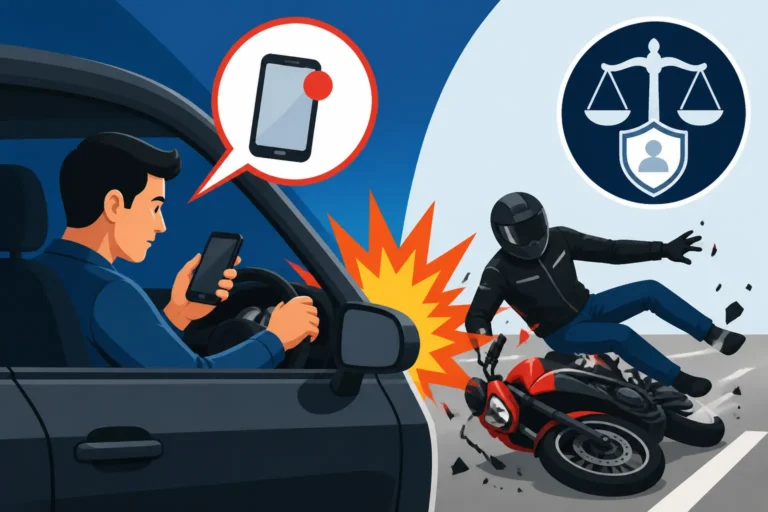
While perceptual blindness is a cognitive issue, driver distraction is a behavioral one, and it's a huge contributing factor to "didn't see" accidents. Distracted driving is rampant, whether it's from texting, talking on the phone, fiddling with the radio, eating, or even simply being lost in thought. When a driver's attention is diverted, their ability to perceive anything, let alone a smaller object like a motorcycle, is severely compromised.
Negligence extends beyond just active distraction. It also includes general inattention, failure to adequately scan intersections, not checking blind spots, or driving while fatigued. A driver might truly believe they looked and saw nothing, but their "look" was perfunctory or rushed due to distraction or simple carelessness. This type of negligence is often a core element when determining Who Is at Fault in a Motorcycle Accident, and it's crucial to gather evidence that demonstrates the driver's failure to maintain a proper lookout. If a driver involved in a Motorcycle Accidents Caused by Distracted Driving claims they didn't see you, it's often because they weren't truly looking.
Poor Visibility Conditions
Beyond human perception and distraction, environmental factors play a significant role. Poor visibility conditions can genuinely make it harder for any vehicle, including a motorcycle, to be seen. These conditions include:
- Weather: Rain, fog, snow, or even bright sun glare can reduce a driver's visual acuity. A motorcycle's smaller profile can easily blend into the blurred background of a heavy rainstorm or disappear in the blinding light of a sunrise or sunset.
- Time of Day: Dawn and dusk are notoriously dangerous times for motorcyclists. The low light and long shadows can make it difficult for drivers to accurately judge distance and speed, and motorcycles can become silhouetted against the changing light, making them less distinct. Nighttime, despite headlights, also presents unique challenges, as the limited visual information can make it harder to discern an approaching motorcycle from other light sources.
- Road Environment: Busy urban intersections with numerous visual distractions (billboards, traffic lights, pedestrians, other vehicles) can create a "cluttered" environment where a motorcycle is easily lost. Even rural roads with dense foliage or winding paths can obscure a rider from a driver's view until it's too late. When a driver states they didn't see you in these conditions, it's not always a lie, but it doesn't absolve them of the duty to drive safely and account for environmental challenges.
Proving Liability When Drivers Claim Not to See You
The "I didn't see the motorcycle" defense might sound compelling to an uninformed jury or an insurance adjuster, but it doesn't automatically absolve the other driver of fault. Your job, with the help of a knowledgeable attorney, is to dismantle this defense by presenting compelling evidence that proves the other driver's negligence. This is about proving How Fault Is Determined in Motorcycle Accidents.
Gathering Crucial Evidence at the Scene
The moments immediately following an accident are critical for preserving evidence. This is perhaps the most important phase for Motorcycle Accident Evidence for Proving Fault. If you are physically able, or if a trusted bystander can help:
- Photographs and Videos: Take extensive photos and videos of the accident scene from multiple angles. Capture the position of your motorcycle and the other vehicle, road conditions, traffic signs, debris, skid marks, and any surrounding elements like sun glare or overgrown vegetation that might be relevant. Crucially, photograph your motorcycle's headlight (was it on?), your riding gear (was it high-visibility?), and any damage to both vehicles. These images can directly contradict a claim of invisibility.
- Witness Information: If anyone saw the crash, get their contact information. Independent witness statements can be invaluable in confirming your presence and visibility.
- Police Report: A police report will document the officer's observations and potentially include citations issued to the other driver. While not always definitive, a police report can certainly establish the initial narrative of the crash. However, be aware that How a Police Report Can Hurt Your Claim if it contains inaccuracies or reflects an immediate bias against riders.
The Role of Witness Testimony
Independent witnesses can be the linchpin in cases where the driver claims they didn't see you. An objective third party can corroborate your account and often provide crucial details about the other driver's actions or inattention leading up to the crash.
- Eyewitness Accounts: Did a pedestrian or another driver clearly see your motorcycle approaching? Did they notice the other driver's head down, looking at a phone, or failing to stop at a sign? These details can directly counter the "didn't see" argument by proving you were visible and the other driver was negligent.
- Expert Witnesses: Beyond eyewitnesses, accident reconstruction experts can provide highly technical testimony. They can analyze skid marks, vehicle damage, traffic camera footage, and even vehicle event data recorders (EDR, or "black boxes") to determine speeds, braking patterns, and points of impact, effectively demonstrating that the other driver had ample time and opportunity to see your motorcycle if they had been paying attention. A professional can reconstruct the line of sight and prove that, given the circumstances, you should have been seen.
Expert Accident Reconstruction
When fault is disputed, especially with the "didn't see" defense, an accident reconstruction expert becomes invaluable. These professionals use scientific principles and advanced technology to recreate the accident sequence.
- Physics and Dynamics: They analyze factors like vehicle speeds, stopping distances, angles of impact, and road friction to determine the precise sequence of events. Their findings can often prove that the other driver had an unobstructed view of your motorcycle for a sufficient period before the collision, directly refuting the claim of invisibility.
- Line-of-Sight Analysis: Experts can perform sightline studies, often using drone footage or 3D modeling, to demonstrate exactly what the other driver could and should have seen from their perspective at various points leading up to the crash. This can visually prove that no physical obstruction prevented them from seeing you.
- Traffic Camera and Dashcam Footage: If available, footage from nearby traffic cameras or private security cameras can provide irrefutable evidence. Many vehicles now come equipped with dashcams, and if the other driver had one, that footage could be a game-changer. These recordings can show exactly when your motorcycle became visible and, more importantly, whether the other driver was actively scanning the road or distracted. This type of evidence is critical for How Dashcam Footage Proves Fault.
How Rider Actions Can Be Used Against You (and How to Mitigate It)
While the other driver's negligence is often the primary cause, insurance companies and defense attorneys will inevitably scrutinize your actions as a rider. They will look for any shred of evidence to support the "didn't see" defense by claiming you contributed to the accident. This often relates back to the concept of Shared Fault in Motorcycle Accidents.
Lane Splitting and its Perceptual Challenges
Lane splitting, where a motorcycle rides between lanes of stopped or slow-moving traffic, is legal in some states (like California) and illegal or ambiguously defined in others. Even where legal, it presents unique perceptual challenges for drivers.
- Unexpected Movement: Drivers often don't anticipate a motorcycle appearing quickly between lanes. While you might be riding safely and legally, their lack of expectation can feed into their claim of not seeing you. They might have checked their mirrors moments before, and you weren't there, leading them to believe the lane was clear.
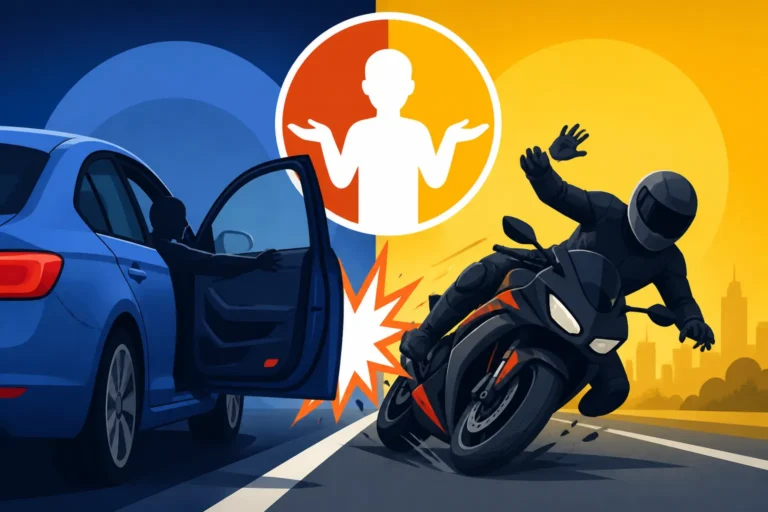
- Reduced Reaction Time: The close proximity and faster relative speed of a lane-splitting motorcycle can reduce a driver's reaction time, especially if they are making a sudden lane change or opening a car door. The defense will argue that even if they "should" have seen you, your presence in a location they weren't expecting made it impossible for them to react in time. Understanding Lane Splitting and Motorcycle Accident Liability is paramount.
The "Small Target" Fallacy and Rider Visibility
Motorcycles are inherently less visible than cars due to their smaller size. This isn't a fault of the rider but a physical reality that drivers sometimes exploit. This "small target" fallacy often underpins the "didn't see" defense.
- Size vs. Perception: Defense attorneys will argue that your smaller profile made it inherently difficult to see you, implying a lack of fault on the driver's part. They might try to use statistics about motorcycle visibility to bolster this claim.
- Countering the Argument: You can counter this by emphasizing that drivers have a legal duty to maintain a proper lookout for all vehicles, regardless of size. While motorcycles are smaller, they are still significant objects on the road. This is where evidence of your active measures to enhance visibility becomes crucial.
Importance of Protective Gear and High-Visibility Clothing
Your choice of riding gear can significantly impact your visibility on the road and, consequently, how successfully the "didn't see" defense can be used against you.
- Increased Conspicuity: Wearing bright, contrasting colors, especially fluorescent or neon colors, significantly increases your daytime visibility. Reflective materials are essential for nighttime riding. While it might seem like a style choice, it's a safety imperative that can also serve as powerful evidence in a claim.
- Legal & Claim Implications: While not wearing high-visibility gear usually won't make you at fault for an accident, an insurance company might try to argue it contributed to the driver not seeing you, potentially leveraging the concept of How Helmet Laws Affect Your Accident Claim or general negligence. Demonstrating that you were wearing a bright, DOT-compliant helmet and other high-visibility gear strengthens your case and weakens the "didn't see" argument. It proves you took proactive steps to be seen, making the other driver's claim of invisibility harder to defend. Beyond just visibility, Motorcycle Safety Gear and Legal Protection offers crucial physical safeguarding in a crash.
Navigating the Legal Landscape
The legal process after a motorcycle accident can be complex and intimidating, especially when faced with an "I didn't see you" defense. Understanding the legal framework and having a strong strategy is essential.
Comparative Negligence and Shared Fault
As mentioned earlier, most states operate under some form of comparative negligence. This legal doctrine allows for the assignment of fault to multiple parties involved in an accident.
- Pure Comparative Negligence: In states like Florida and New York, if you are found partially at fault, your compensation is simply reduced by your percentage of fault. For instance, if you're 30% at fault, you still recover 70% of your damages.
- Modified Comparative Negligence: More common in states like Texas and Ohio, this system allows recovery only if your fault is below a certain threshold (usually 50% or 51%). If you are found to be at or above that threshold, you recover nothing. The "didn't see" defense is often a tactic to push your fault percentage over this limit. This makes understanding Comparative Negligence in Motorcycle Accidents critical.
- Fighting for Your Share: Your attorney will work diligently to minimize any assignment of fault to you, presenting all available evidence to prove that the other driver's negligence was the primary cause, regardless of their claim of not seeing you.
Countering Insurance Company Tactics
Insurance companies are not on your side. Their primary goal is to minimize their payout. The "I didn't see the motorcycle" defense is a key tool in their arsenal.
- Lowball Offers: They might use this defense to justify a lowball settlement offer, hoping you'll be desperate enough to accept it. They'll argue your "lack of visibility" reduces the value of your claim.
- Shifting Blame: Insurers will often try to twist facts to portray you as an irresponsible or reckless rider, playing into negative stereotypes. They might imply that if you were truly a safe rider, you would have been seen. This phenomenon is often referred to as Rider Bias in Fault Determination.
- Documentation is Key: It is paramount to document everything: medical records, lost wages, photos of the scene, witness statements, and communications with the insurance company. This comprehensive documentation provides a factual basis to counter their subjective claims. A skilled attorney will use this evidence to aggressively negotiate on your behalf.
The Value of Legal Representation
Facing an "I didn't see the motorcycle" defense without experienced legal counsel is like bringing a knife to a gunfight. These cases are complex and require specific expertise.
- Understanding the Law: An attorney specializing in motorcycle accidents understands the nuances of comparative negligence laws in your state and how they apply to motorcycle crashes. They know how to challenge the "didn't see" defense effectively.
- Investigative Resources: They have access to accident reconstruction experts, private investigators, and other resources to gather the strongest possible evidence. They know how to prove Proving Fault in a Motorcycle Accident even when it's disputed.
- Negotiation and Litigation: A seasoned attorney will handle all communications with the insurance companies, preventing you from inadvertently harming your case. If a fair settlement cannot be reached, they are prepared to take your case to trial, advocating for your rights in court. When you're trying to figure out Do You Need a Motorcycle Accident Lawyer, this scenario is a resounding yes.
Preventative Measures for Riders
While you can't control another driver's negligence, you can take proactive steps to significantly reduce the chances of a driver using the "I didn't see the motorcycle" defense effectively. The best defense is always a good offense in terms of safety.
Enhancing Your On-Road Presence
Making yourself as conspicuous as possible is your first line of defense.
- High-Visibility Gear: Invest in a bright, full-face, DOT-compliant helmet, preferably in a color like fluorescent yellow, green, or orange. Wear a high-visibility jacket, vest, or reflective strips, especially at night or in low light. The more contrast you create against the background, the better.
- Headlights and Auxiliary Lighting: Always ride with your headlight on, day or night. Many modern motorcycles have daytime running lights (DRL) for this purpose. Consider adding auxiliary lighting, like LED running lights, that create a triangular pattern of light, which can be more easily perceived by drivers who are conditioned to look for two headlights of a car.
- Horn Use: Don't hesitate to use your horn to alert drivers to your presence, especially when approaching intersections, passing vehicles, or if you suspect a driver might not see you. A brief, assertive honk can be a lifesaver.
Defensive Riding Strategies
Beyond making yourself seen, smart riding habits can help you anticipate and react to dangerous situations.
- Maintain Space: Always maintain a safe following distance. This gives you more time to react to sudden stops or swerves by other vehicles. Also, try to keep a buffer zone around yourself, avoiding riding directly in another vehicle's blind spot.
- Eye Contact: Whenever possible, make eye contact with drivers, especially at intersections or when they are turning. Acknowledgment from the driver can offer a moment of assurance that you've been seen, though it's never a guarantee.
- Assume Invisibility: The cardinal rule for motorcyclists is to assume you are invisible. Ride as if every driver around you hasn't seen you and might make an unexpected maneuver. This mindset fosters hyper-awareness and prepares you for quick evasive action. Staying vigilant helps you avoid Motorcycle Accidents Caused by Failure To Yield, a common scenario where drivers claim not to see riders.
Staying Informed About State Laws
Knowledge of your local and state laws is crucial, both for safe riding and for protecting your legal rights.
- Helmet Laws: Understand your state's helmet laws. In some states, like California, universal helmet laws require all riders to wear a helmet, while others have partial laws (e.g., riders under 21). Even where not required, wearing a helmet is always advisable for safety and can positively impact your claim by demonstrating responsible riding. You should be familiar with Motorcycle Helmet Laws by State.
- Lane Splitting Laws: If you lane split, ensure you understand the specific regulations in your state (if any) regarding speed differentials and conditions under which it's permitted. Illegally lane splitting could strengthen a "didn't see" defense against you.
- Insurance Requirements: Ensure you have adequate insurance coverage, including uninsured/underinsured motorist (UM/UIM) coverage. This can protect you if the at-fault driver has minimal or no insurance, a common issue with drivers who are also negligent.
To help summarize, here's a table outlining key visibility factors and strategies:
| Visibility Factor | Impact on Being Seen | Rider Mitigation Strategy |
|---|---|---|
| Motorcycle Size | Smaller profile, less easily perceived by driver's peripheral vision. | Wear bright, fluorescent, and reflective gear. |
| Driver Inattention | Drivers distracted or mentally fatigued, failing to actively scan. | Assume invisibility; make eye contact; use horn assertively. |
| Background Clutter | Motorcycle blends into complex urban or natural environments. | Strategic lane positioning; create contrasting visual presence. |
| Weather Conditions | Rain, fog, sun glare reduce overall visibility. | Slow down; increase following distance; ensure clean visor. |
| Time of Day (Dawn/Dusk) | Low light, long shadows, or blinding sun can obscure riders. | Use high-beams when safe; additional auxiliary lights. |
| Lane Positioning | Riding in blind spots or too close to other vehicles. | Maintain buffer zones; avoid blind spots; adjust lane position. |
Disclaimer
Please remember, the information provided in this article is for general informational purposes only and does not constitute legal advice. Every motorcycle accident claim is unique, and the outcome depends heavily on the specific facts and applicable laws of your jurisdiction. It is always recommended to consult with a qualified motorcycle accident attorney to discuss your individual situation and legal options.