Who Is at Fault in a Unsafe Lane Changes Motorcycle Accident
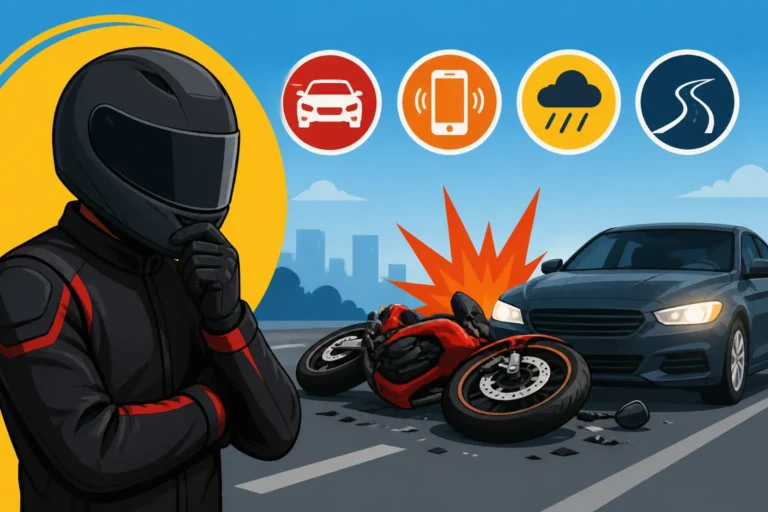
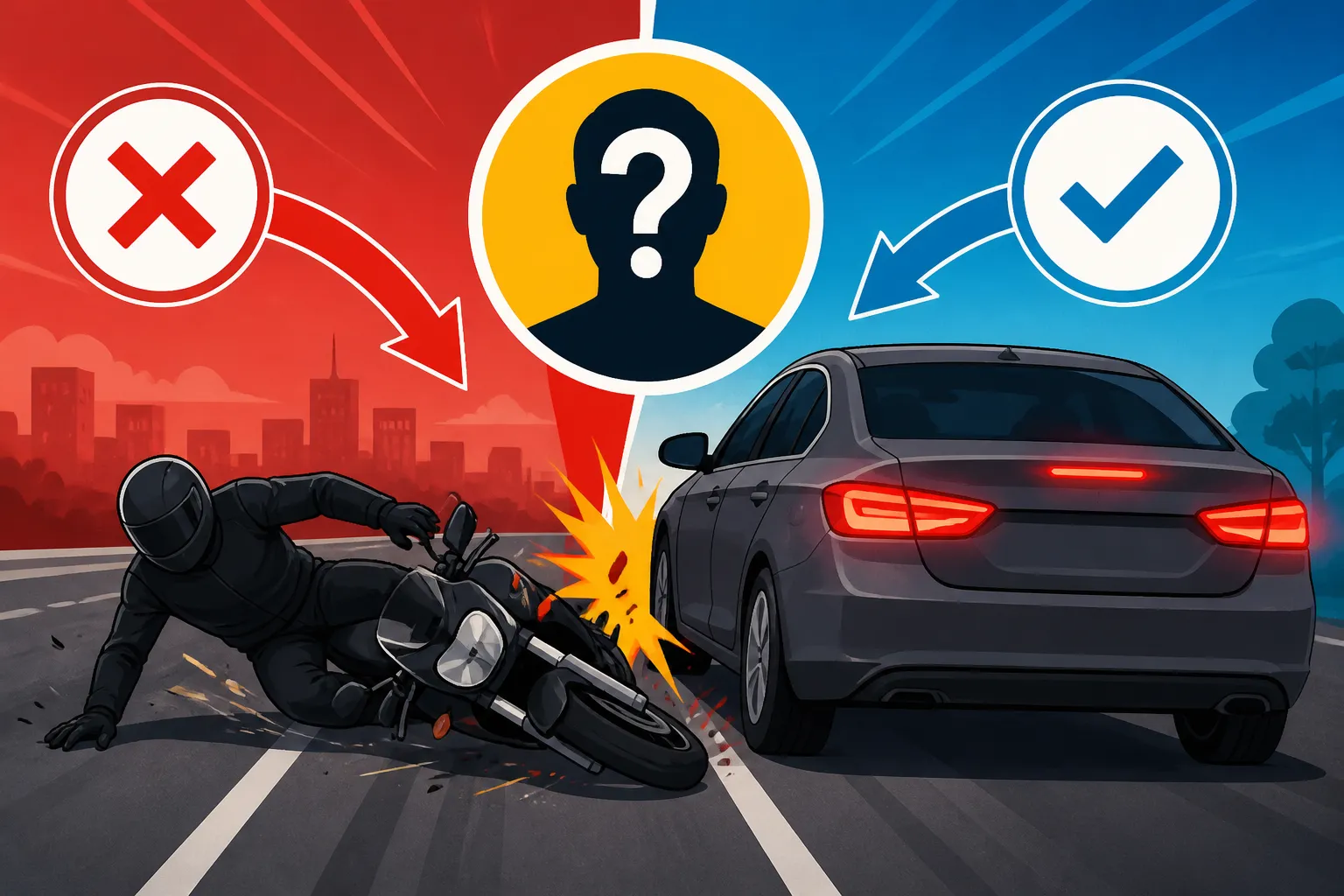
It's a moment many motorcyclists have experienced, sending a jolt of fear through even the most seasoned rider: you're cruising along, adhering to traffic laws, when a driver in another vehicle suddenly veers into your lane without warning. These unsafe lane changes aren't just frustrating; they're a leading cause of severe motorcycle accidents, often leaving riders with life-altering injuries and the daunting task of proving who was truly at fault. This comprehensive guide is designed to peel back the layers of these complex collisions, detailing how fault is determined in unsafe lane change motorcycle accidents and empowering you with the knowledge to protect your rights.
The Peril of Unsafe Lane Changes for Riders
The road can be a dangerous place, and for motorcyclists, an unsafe lane change by another driver is one of the most terrifying and common scenarios. You might be riding defensively, making yourself as visible as possible with bright gear and smart lane positioning, yet a driver might still drift into your space as if you weren't even there. The sheer disregard for safety, the lack of a simple mirror check or turn signal, can be infuriating, but the physical consequences for a rider are often far more severe than for the driver of the larger vehicle.
What Defines an Unsafe Lane Change?
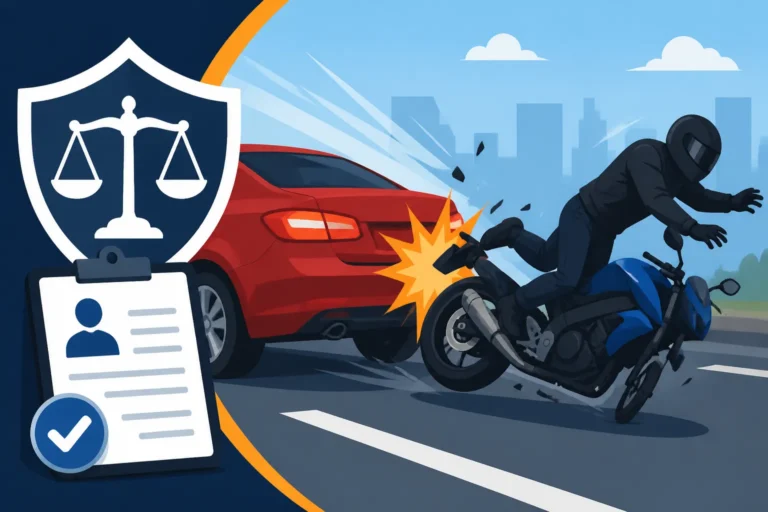
Legally speaking, an unsafe lane change isn't just a minor mistake; it's a maneuver performed without ensuring the safety of other road users, and it often involves violating specific traffic regulations. Most states have laws that explicitly require drivers to check if a lane is clear, signal their intentions, and execute the change safely. For example, in states like Arizona, A.R.S. § 28-754 mandates that a driver "shall not turn a vehicle or move right or left upon a roadway until the movement can be made with reasonable safety." This isn't just about avoiding a collision; it's about making the change in a way that doesn't force other drivers (especially riders) to take sudden, dangerous evasive action.
Imagine a situation where a driver, perhaps distracted by their phone or a passenger, abruptly decides to take an exit. They swerve across two lanes without signaling, directly into the path of a motorcyclist who was riding responsibly in the adjacent lane. Or consider a large commercial truck, whose driver fails to thoroughly check their massive blind spots before moving over, nearly pushing a motorcycle off the road. These actions are not just "accidents"; they stem from clear negligence and a failure to abide by basic road safety protocols. It's often the small, seemingly insignificant lapse in attention that can have the most devastating impact on a motorcyclist.
Why Riders Are Especially Vulnerable
Motorcycles, with their compact size and open design, inherently offer less protection than cars or trucks. This makes riders acutely vulnerable to the dangers posed by unsafe lane changes. Even when a motorcyclist is doing everything by the book—wearing high-visibility gear, keeping their headlights on, and maintaining a defensive posture—they can still be easily overlooked by inattentive drivers. This common excuse, "I didn't see the motorcycle," is frequently used by drivers involved in these collisions. However, it's generally understood in traffic law that the responsibility to check and ensure a clear path rests squarely with the driver initiating the lane change.
The inherent blind spots of larger vehicles are a major concern. A quick glance into a side mirror, or even a casual shoulder check, might completely miss a motorcycle, particularly if the driver isn't actively looking for smaller vehicles. The lack of a protective shell means that even a minor sideswipe or clip from a larger vehicle can result in catastrophic injuries for a rider. Road rash, severe fractures, debilitating traumatic brain injuries, and spinal cord damage are tragically common outcomes. These injuries can irrevocably change a rider's life, turning a routine ride into a prolonged nightmare of recovery, rehabilitation, and financial strain. It's vital to remember that this vulnerability isn't the rider's fault; it underscores the heightened duty of care other drivers owe to motorcyclists.
Determining Fault in Unsafe Lane Change Crashes
After the adrenaline subsides and the initial shock wears off, the critical question often becomes: "Who is at fault in a Unsafe Lane Changes Motorcycle Accident?" Establishing fault is the cornerstone of any personal injury claim and is essential for securing the compensation needed to cover medical bills, lost wages, and other damages. While it might seem obvious to you who was to blame, especially if you were run off the road, insurance companies and legal systems demand concrete evidence to officially assign responsibility. This process can be challenging, particularly given the preconceived notions or biases that some might hold against motorcyclists.
Key Evidence to Establish Driver Negligence
Gathering comprehensive evidence immediately following an accident is not just helpful; it's absolutely crucial. The more detailed and irrefutable your evidence, the stronger your position will be when negotiating with insurance adjusters or, if your case goes to court, presenting your claim to a jury.
- Witness Statements: Independent eyewitnesses who observed the lane change—especially if it was done without a signal or proper clearance—are invaluable. Their objective accounts can corroborate your version of events and effectively counter defenses like "I didn't see the motorcycle." Make it a priority to get their contact information, including names, phone numbers, and email addresses, right at the scene if possible.
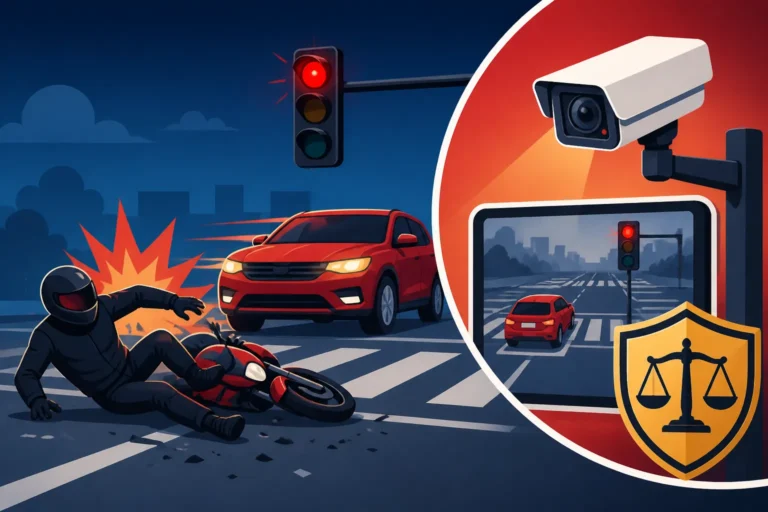
- Dashcam and Surveillance Footage: In today's world, many vehicles, both cars and motorcycles, are equipped with dashcams. If such footage exists from either vehicle involved, or from nearby traffic cameras, security cameras at businesses, or even doorbell cameras, it can provide irrefutable visual proof of the unsafe lane change. This type of evidence often provides a clear, objective view of exactly what transpired, leaving little room for dispute. You can find more insights on how to leverage such recordings in our detailed post on How Dashcam Footage Proves Fault.
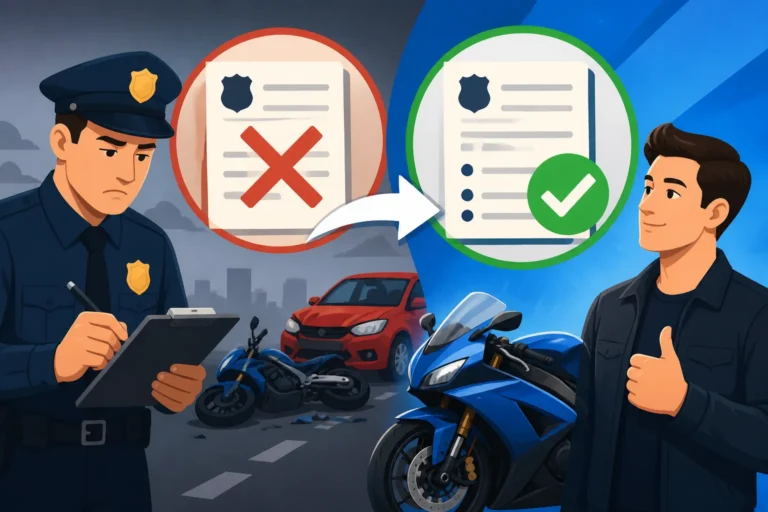
- Police Report: The official accident report filed by the investigating law enforcement officer can carry significant weight. It often includes a preliminary determination of fault, details about any traffic citations issued, diagrams of the accident scene, and statements from those involved. While it's not always the final word on fault, it provides a powerful foundation for your claim.
- Physical Evidence at the Scene: The location and characteristics of skid marks, the debris field (shattered glass, plastic fragments, vehicle parts), and gouges in the road can be analyzed by accident reconstruction experts. This physical evidence helps them determine the precise point of impact, the vehicles' trajectories, and the sequence of events leading up to the collision.
- Vehicle Damage: A thorough examination of the damage to both your motorcycle and the other vehicle can reveal a lot about the impact. Damage patterns, such as side damage to your motorcycle coupled with front or side damage to the other vehicle, often strongly indicate an unsafe lane change collision.
- Cell Phone Records: If you suspect the other driver was distracted by their cell phone at the time of the crash (e.g., texting, talking on a handheld device), their cell phone records could potentially prove usage concurrent with the accident. Obtaining these records typically requires a subpoena through legal action, but they can be powerful evidence of negligence.
Understanding Traffic Laws and Violations
Traffic laws form the bedrock of fault determination. Each jurisdiction has specific statutes designed to govern safe driving practices, including the rules for changing lanes. For example, in Florida, Statute § 316.085 outlines the proper procedure for changing lanes, including signaling and ensuring the movement can be made safely.
When a driver fails to comply with one of these foundational statutes, it can often be considered negligence per se. This legal doctrine means that the act of violating a safety statute is, in itself, sufficient proof of negligence. Common traffic violations that frequently contribute to unsafe lane change accidents include:
- Failure to Signal: This is perhaps the most straightforward and common infraction. A driver who changes lanes without activating their turn signal or signaling for a sufficient duration is in clear violation of traffic law and is often immediately deemed at fault.
- Failure to Check Blind Spots: While not always a direct "violation" like speeding, the act of initiating a lane change without adequately checking mirrors and performing a shoulder check demonstrates a clear lack of reasonable care, which is the very definition of negligence.
- Distracted Driving: A driver who is preoccupied with their phone, a GPS device, a car entertainment system, or even passengers is far more likely to miss seeing a motorcycle in an adjacent lane. Distracted driving is a pervasive and dangerous problem, and proving it can significantly strengthen your claim of fault against the other driver. For a deeper dive, read our article on Motorcycle Accidents Caused by Distracted Driving.
- Impaired Driving: Being under the influence of alcohol or drugs severely compromises a driver's perception, judgment, and reaction time, making safe and attentive driving, including proper lane changes, virtually impossible.
- Aggressive Driving or Road Rage: In some unfortunate instances, an unsafe lane change isn't just an oversight but an intentional act of aggression, such as a driver deliberately cutting off a motorcyclist. Such behavior is a clear indicator of reckless conduct and fault.
Knowing these laws and how they apply to the specific details of your accident is paramount. It’s not just about what happened, but how the incident directly violated established rules of the road, thereby placing legal responsibility on the negligent driver.
When a Rider Might Share Some Blame
While the driver making an unsafe lane change is almost always primarily at fault, the legal reality of accident claims isn't always a simple matter of good versus evil. In many states, especially those operating under comparative negligence laws, responsibility for an accident can be apportioned between both parties involved. This can be a frustrating aspect for riders, as it feels like blame is unfairly shifted, but it's a legal concept that you need to understand. Insurance companies, in particular, will vigorously seek to assign even a small percentage of fault to the motorcyclist to reduce their financial payout.
Factors That Could Imply Rider Fault
Even if another driver was the one who initiated the dangerous lane change, there are specific circumstances where an insurance adjuster or defense attorney might argue that aspects of the rider's conduct contributed to the collision. It's a common tactic used to diminish the value of your claim.
- Excessive Speed: If you were traveling at a speed significantly above the posted limit, particularly in heavy traffic conditions, an insurer might contend that your excessive speed prevented the other driver from adequately perceiving your presence or prevented you from having sufficient time to react and avoid the crash. While the other driver's negligence initiated the hazard, your speed could be presented as a contributing factor. Our detailed post, How Speeding Affects Motorcycle Accident Fault, delves deeper into this often-controversial topic.
- Improper Lane Positioning: While defensive riding often involves strategic lane positioning for visibility, riding too close to the side of a large vehicle, or remaining in a known blind spot for an extended period without passing, could potentially be cited by a zealous adjuster. However, this argument typically holds less weight than a direct traffic violation by the car driver.
- Reckless Riding: Engaging in undeniably reckless behaviors such as weaving dangerously through traffic, performing stunts, or riding erratically can put you in a vulnerable position. If your riding actions were clearly outside the bounds of safe and lawful operation, it could be argued that you contributed to creating the dangerous circumstances leading to the collision.
- Lack of Proper Lighting or Gear: Although not usually a direct cause of a lane change accident, if you were riding at night without proper headlights, or in dark, low-visibility clothing, an insurance company might attempt to argue that this made it unreasonably difficult for the other driver to spot you. This argument is generally weaker than a direct traffic violation, but it's a possibility they might raise.
- Failure to Take Evasive Action: This is a contentious argument. While all drivers have a general duty to avoid accidents when possible, the onus is primarily on the driver performing the lane change. However, an insurance company might try to argue that if there was a clear and safe opportunity for a reasonable and prudent rider to take evasive action to avoid the crash, and you failed to do so, it could imply some degree of fault on your part. This is often an aggressive and unfair defense tactic, but it does exist.
The Impact of Shared Fault on Your Claim
Understanding the concept of shared fault is absolutely critical, especially in states that adhere to comparative negligence laws. The vast majority of U.S. states employ some form of comparative negligence, which means that any compensation you might receive can be reduced by the percentage of fault assigned to you. For example, in a "pure" comparative negligence state like Florida, if you are found to be 20% at fault for an accident, your total damages (which include medical bills, lost wages, and pain and suffering) would be reduced by 20%. So, a $100,000 claim would ultimately result in an $80,000 payout.
Conversely, states like Texas operate under a "modified" comparative negligence rule with a 51% bar. This means that if you are determined to be 51% or more at fault, you are legally barred from recovering any damages. If your fault is found to be 50% or less, your recovery is simply reduced by your assigned percentage of fault. These distinctions are why fiercely disputing any assertion of shared fault is so important, as even a small percentage can significantly impact your financial recovery.
Here's a simplified overview of how different comparative negligence rules can affect your settlement:
| State Type | Rider Fault Percentage | Payout Impact | Example (for $100,000 claim) |
|---|---|---|---|
| Pure Comparative Negligence | 10% | Payout reduced by 10% | $90,000 |
| 60% | Payout reduced by 60% | $40,000 | |
| Modified Comparative (51% Bar) | 10% | Payout reduced by 10% | $90,000 |
| 50% | Payout reduced by 50% | $50,000 | |
| 51% | No Payout (barred from recovery) | $0 | |
| Contributory Negligence | Any (even 1%) | No Payout (completely barred from recovery) | $0 |
This table dramatically illustrates how critical it is to understand the specific laws of the state where your accident occurred, such as Motorcycle Accident Fault Laws in Illinois. These laws directly dictate how much compensation you can ultimately receive to address your extensive medical expenses, lost income, vehicle damage, and the significant emotional and physical pain you've endured.
Steps After an Unsafe Lane Change Accident
The immediate aftermath of a motorcycle accident can be a whirlwind of pain, confusion, and shock. However, the crucial actions you take (or refrain from taking) in the minutes, hours, and days following the incident can profoundly influence your ability to prove fault and recover the compensation you need. Many riders, severely injured and disoriented, might feel completely overwhelmed, but knowing these steps in advance can make a world of difference.
Documenting the Scene and Injuries
Your absolute first priority must always be your safety and obtaining immediate medical attention. Even if you believe you're fine or only have minor scrapes, it's imperative to be thoroughly checked by paramedics at the scene or to go to an emergency room. Many severe injuries, such as internal bleeding, concussions, or even a traumatic brain injury, might not present with immediate, obvious symptoms. Ignoring these could not only endanger your health but also weaken your future injury claim.
Once your immediate medical needs are addressed, or if you are safely able to, meticulous documentation of the accident scene is vital:
- Call the Police: Always contact law enforcement, regardless of how minor the accident seems or if the other driver tries to dissuade you. A police report creates an official, unbiased record of the incident. It often includes the officer's initial assessment of fault, any traffic citations issued, and a diagram of the accident scene. This report is a critical piece of evidence for your claim.
- Gather Information: Exchange essential information with the other driver. This includes their full name, phone number, driver's license number, license plate number, and their insurance company and policy details. If there are passengers in their vehicle, get their names as well.
- Take Extensive Photos and Videos: Use your smartphone to document everything visually. Don't be shy; take dozens of pictures and videos from various angles. Key things to capture include:
- Damage to both your motorcycle and the other vehicle, zoomed in and out.
- The final resting positions of both vehicles before they are moved (if it's safe to do so).
- Any skid marks, tire marks, or debris on the road.
- Traffic signs, signals, road conditions, and surrounding landmarks to establish the location.
- The other driver's license plate and insurance card clearly visible.
- Any visible injuries you have, even minor ones like scrapes or bruising, and torn clothing.
- The overall weather conditions and time of day.
- Identify and Collect Witness Information: If anyone witnessed the collision, approach them politely and ask for their names and contact details. Independent witness statements are incredibly powerful, especially if the other driver later disputes your account or claims they didn't see you. For more on this, our post on How Witnesses Affect Motorcycle Fault is an excellent resource.
- Do Not Admit Fault: This is perhaps the most crucial rule. Never apologize, make statements of regret, or admit any degree of fault at the accident scene, even casually. Anything you say can and will be used against you by insurance companies to deny or minimize your claim. Simply stick to the facts when speaking with police and the other driver.
Navigating Insurance Companies and Legal Options
Dealing with insurance companies after an unsafe lane change accident can be incredibly challenging and frustrating. Insurance adjusters are trained professionals whose primary goal is to minimize the amount their company pays out, and they may employ various tactics to shift blame or offer a settlement far below your claim's true value.
- Report the Accident (Strategically): You'll need to report the accident to your own insurance company as soon as is reasonably possible. When communicating with any insurance adjuster (yours or the other driver's), provide only the most basic facts: where, when, and who was involved. Refuse to provide a recorded statement or discuss the details of the accident or your injuries without first consulting with an experienced legal professional.
- Continue Medical Treatment: Follow through with all recommended medical evaluations and treatments. Any gaps in your medical care can be exploited by insurance companies, who might argue that your injuries aren't as severe as you claim or weren't directly caused by the accident. Meticulously documenting your injuries for a claim is paramount.
- Consult a Motorcycle Accident Attorney: This is often the most critical step you can take. An attorney specializing in motorcycle accidents understands the unique legal and social challenges riders face, including potential biases. They can conduct a thorough investigation, gather all necessary evidence, handle all communications with insurance companies on your behalf, and ensure that all available damages—including medical expenses, lost wages, and pain and suffering—are properly calculated and pursued. They can also provide invaluable guidance on your state's specific laws, such as Motorcycle Accident Fault Laws in Washington, and expertly navigate the intricacies of your claim.
- Be Wary of Early Settlement Offers: It's common for insurance companies to quickly offer a lowball settlement, especially if you are unrepresented. These offers are rarely adequate to cover the full spectrum of your damages, particularly the long-term medical costs, future lost income, and the significant pain and suffering that often accompany serious motorcycle injuries. Never sign any documents or accept any offer without first seeking qualified legal advice.
- Understand Your Entitled Damages: An attorney will help you fully understand all the types of damages you are legally entitled to recover. These typically include "economic damages" such as current and future medical bills, lost income, property damage, and rehabilitation costs. They also include "non-economic damages" like pain and suffering, emotional distress, loss of enjoyment of life, and disfigurement. The average motorcycle accident settlement amounts can vary dramatically based on the severity and documentation of these damages.
An unsafe lane change accident can be a traumatic, life-altering event. By taking proactive steps to document the incident and by securing experienced legal representation, you significantly enhance your ability to hold the at-fault driver accountable and secure the comprehensive compensation required to heal, recover, and begin rebuilding your life. Don't let the frustration and carelessness of another driver dictate your future; empower yourself with expert support and knowledge.
Disclaimer
Please remember that this guide offers general information and insights into motorcycle accident claims and fault determination. Every accident is unique, and the laws governing personal injury claims vary significantly by state. This content should not be considered legal advice. For personalized guidance regarding your specific situation, it is always recommended to consult with a qualified motorcycle accident attorney in your jurisdiction.