How Road Defects Cause Motorcycle Crashes
Riding a motorcycle offers unparalleled freedom and exhilaration, but it also comes with a unique set of vulnerabilities, especially when navigating our roadways. One of the most insidious threats isn't other drivers, but the very ground beneath your tires: road defects. These seemingly minor imperfections can turn a pleasant ride into a devastating crash, leaving riders with severe injuries and facing the daunting task of figuring out who is responsible. This guide will delve deep into how these hazards cause motorcycle accidents, what to do if you encounter one, and the complex path to holding negligent parties accountable.
The Hidden Dangers of Imperfect Roads for Riders
We often take the roads we ride on for granted, assuming they're generally safe. However, for motorcyclists, what might be a minor bump for a car can be a catastrophic hazard. The dynamic nature of two-wheeled travel means that even small anomalies in the road surface can drastically impact stability, control, and ultimately, safety.
Common Types of Road Defects
Roads, unfortunately, are not always maintained to perfect standards. Over time, due to weather, heavy traffic, and sometimes just sheer neglect, various defects emerge that pose significant risks to motorcyclists. Understanding these common culprits is the first step in recognizing the dangers.
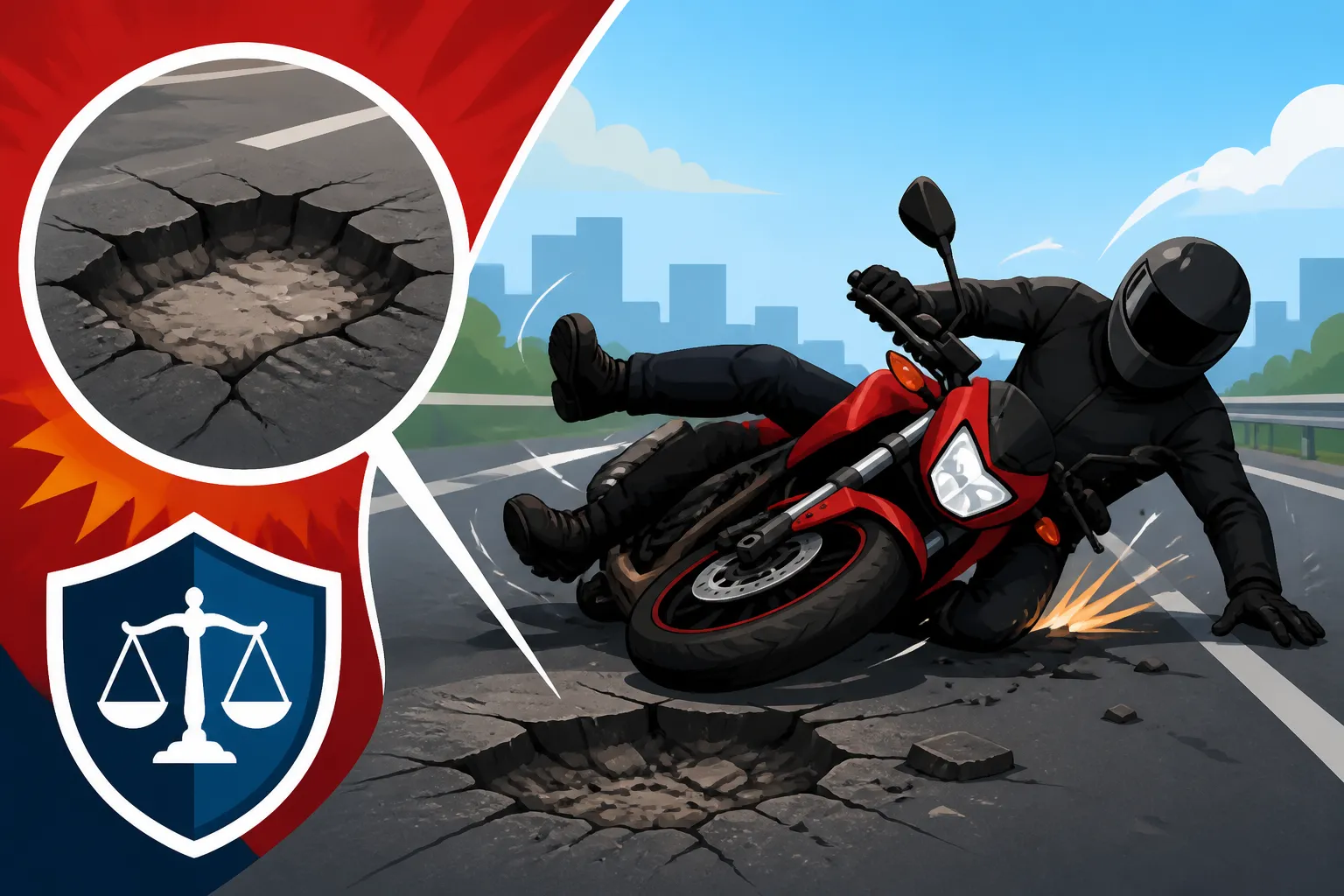
Think about a sudden dip or rise you encounter. For a rider, this isn't just uncomfortable; it can compress your suspension violently, potentially leading to a loss of traction or "tank slapper" that throws you off balance. Then there are the infamous potholes – deep, sudden depressions that can swallow a motorcycle tire whole, bending rims, blowing out tires, and often causing the rider to go over the handlebars. Even cracks, especially those running parallel to your direction of travel, can be treacherous. Your tire can get caught in them, jerking the bike unexpectedly and leading to a loss of control, which is a major factor in many Common Causes of Motorcycle Accidents.
Beyond these structural issues, debris is another massive problem. Gravel, sand, oil spills, construction materials, or even animal carcasses can appear out of nowhere. Imagine rounding a corner on a brisk morning ride, leaning into the turn, only to hit a patch of loose gravel. The bike washes out from under you in an instant. Construction zones are particularly hazardous, often featuring uneven transitions between paved sections, temporary plates that shift, or exposed rebar. Sometimes, the road design itself can be a defect, such as improperly banked curves, inadequate drainage leading to standing water, or missing guardrails in dangerous spots. The list goes on, from faded lane markings to poorly placed manhole covers, each representing a potential trap for an unsuspecting rider.
Why Motorcycles Are Especially Vulnerable
It's not just that road defects exist; it's how they interact with the unique dynamics of a motorcycle that makes them so dangerous. Unlike a car, which has four points of contact with the road and a wide, stable base, a motorcycle balances on two relatively narrow tires. This fundamental difference amplifies the impact of any road imperfection.
When a car hits a pothole, its four tires, heavier weight, and robust suspension system absorb much of the shock, often allowing the driver to maintain control, albeit with some discomfort. A motorcycle, however, experiences a much more acute and destabilizing force. The small contact patch of a motorcycle tire, typically no bigger than a credit card, means that traction is paramount. When this limited contact is disrupted by a bump, a slick patch of oil, or loose gravel, the loss of grip can be immediate and severe. The bike can wobble, pitch forward or backward, or even lift off the ground momentarily, all of which compromise the rider's ability to steer and brake effectively.
Furthermore, riders are directly exposed to the environment. There's no steel cage, no airbags, no seatbelts to protect them. When a road defect causes a motorcycle to crash, the rider is usually thrown from the bike, leading to direct impact with the road, other vehicles, or roadside objects. This vulnerability often results in much more severe injuries like broken bones, spinal cord damage, traumatic brain injuries, and extensive Road Rash Injuries and Claims. It's a stark reminder that while the thrill of riding is undeniable, the margin for error on a poorly maintained road is incredibly thin.
Documenting Road Defects After a Crash
When the unthinkable happens and a road defect causes your motorcycle crash, the chaos and pain can be overwhelming. However, what you do in the immediate aftermath can make a monumental difference in proving liability later. Insurers and legal teams will scrutinize every detail, and the burden of proof often falls heavily on the injured rider.
Gathering Evidence at the Scene
If you are physically able, documenting the scene is absolutely critical. This isn't just about taking a quick snapshot; it's about building a comprehensive visual and factual record of the hazard that caused your accident. Your smartphone is your best friend here. Start by taking wide-angle photos that capture the overall scene, showing the road defect's location in relation to landmarks, intersections, or addresses. Then, move closer to take detailed pictures of the defect itself.
Focus on its size, depth, and specific characteristics. If it's a pothole, get a shot of its diameter and how deep it is. If it's an uneven transition, show the difference in height. Use objects for scale, like a ruler, a coin, or even your boot, to give a clear indication of the defect's dimensions. Take photos from multiple angles, including eye-level shots that demonstrate how visible or hidden the defect might have been to a driver (or you) approaching it. Also, photograph any lack of warning signs, cones, or barricades that should have been present. Document the weather conditions, road lighting, and any other environmental factors that might have contributed to the crash.
Don't forget to capture images of your motorcycle's damage and your own visible injuries. Damage to your wheels, tires, or suspension can serve as powerful evidence that a specific road defect caused the impact. The more detailed and varied your photographic evidence, the stronger your case will be. Remember, the road might be repaired quickly, so these initial photos could be the only physical record you have. This comprehensive approach is a cornerstone of Motorcycle Accident Evidence for Proving Fault.
The Role of Witnesses and Police Reports
Beyond your personal documentation, independent accounts from witnesses and the official record from law enforcement are invaluable. If anyone stopped to help or saw the accident happen, get their contact information. Their testimony can corroborate your account of the road defect and how it contributed to the crash. They might have even noticed the defect before your accident or seen other vehicles struggle with it. Their observations can lend critical weight to your claim, especially if the responsible party later tries to deny the defect existed or claim it wasn't a hazard.
The police report is another vital piece of the puzzle. When officers respond to the scene, they will create an official report detailing the circumstances of the accident. Ideally, this report should mention the road defect as a contributing factor. However, police reports aren't always perfect, and sometimes officers might overlook or downplay road hazards, especially if their focus is on immediate traffic flow or driver actions. It's not uncommon for a police report to unfairly assign blame to a rider. If you feel the police report doesn't accurately reflect the presence or severity of the road defect, or if it attributes fault incorrectly, it's a frustration many riders face. While you can't change the original report, you can provide supplementary evidence or statements to challenge its findings later. Understanding How Police Reports Establish Fault can help you know what to look for and how to address discrepancies.
Establishing Liability for Road Hazard Accidents
After a motorcycle crash caused by a road defect, one of the most challenging aspects is determining who is legally responsible. Unlike a typical vehicle-on-vehicle accident where fault usually rests with another driver, road hazard cases involve identifying the entity responsible for maintaining the road and then proving their negligence. This process is often complex and requires specialized knowledge.
Identifying the Responsible Party
The first hurdle is figuring out who owns and maintains the stretch of road where your accident occurred. This isn't always straightforward. Roads can be under the jurisdiction of various governmental entities, including:
- Municipalities (Cities/Towns): Local streets, sidewalks, and sometimes even smaller state routes within city limits. For example, if you crash on a pothole on Main Street in downtown Portland, Oregon, the City of Portland might be responsible.
- Counties: Larger rural roads, county highways, and some arterial roads outside city jurisdiction.
- State Departments of Transportation (DOT): Major highways, interstates, and primary state routes. In California, for instance, Caltrans is responsible for maintaining state highways.
- Federal Government: Very rarely, on federal lands or military bases, but generally, federal funds are used by state and local agencies.
- Private Entities: Less common for public roads, but sometimes private companies or developers are responsible for roads within private communities, construction sites, or toll roads.
Once the responsible party is identified, you must prove they had "notice" of the defect. This means they either knew about the defect (actual notice) or should have known about it because it had existed for a long enough time that a reasonable maintenance crew would have discovered it (constructive notice). Proving notice is often the biggest challenge in these cases. Did someone report the pothole to the city's 311 service? Was it part of a scheduled inspection route that was neglected? These are the kinds of questions that need to be answered to build a strong case. This step is crucial for understanding Who Is Liable for a Pothole Motorcycle Accident.
Proving Negligence and Causation
Even after identifying the responsible party and showing they had notice, you still need to prove negligence. This involves demonstrating four key elements:
- Duty of Care: The responsible entity owed a duty to maintain the roadway in a reasonably safe condition for all users, including motorcyclists. This is generally accepted.
- Breach of Duty: The entity breached this duty by failing to properly maintain the road, repair the defect in a timely manner, or adequately warn the public about the hazard. For instance, if the City of Seattle knew about a crumbling section of road for weeks and did nothing, that could be a breach.
- Causation: The road defect directly caused your motorcycle accident and subsequent injuries. This is where your detailed documentation from the scene becomes paramount. You need to show that but for the defect, the accident would not have occurred. Evidence like skid marks leading to the defect, damage matching the defect's characteristics, and expert testimony can help establish this link.
- Damages: You suffered quantifiable damages as a result of the accident, such as medical bills, lost wages, property damage, and pain and suffering.
Proving these elements, particularly against a government entity, can be incredibly difficult due to doctrines like sovereign immunity, which often shield governmental bodies from lawsuits. However, exceptions exist, particularly when the government's negligence is clear. This intricate process highlights why understanding How Fault Is Determined in Motorcycle Accidents is vital.
Navigating a Claim Against a Government Entity
Suing a governmental entity for a motorcycle accident caused by a road defect is not like filing a claim against another driver's insurance company. There are entirely different rules, stricter deadlines, and specific legal hurdles to overcome. Many riders find themselves frustrated and overwhelmed when they discover these unique challenges.
Strict Deadlines and Procedural Requirements
One of the most critical differences when dealing with a government entity is the incredibly tight window for filing a claim. While a typical personal injury lawsuit might have a statute of limitations of two or three years (or even longer in some states for certain types of claims), claims against governmental entities often have much shorter deadlines. In many states, you might only have 90 days to six months from the date of the accident to file a formal "Notice of Claim" with the appropriate government agency.
Missing this deadline, even by a single day, can be fatal to your case, regardless of how strong your evidence is. This "notice of claim" isn't a lawsuit; it's a formal written notification to the government agency that you intend to pursue a claim for damages. It must usually include specific details, such as the date, time, and location of the incident, a description of the defect, and the nature of your injuries. This process is vastly different from a standard personal injury claim and demands immediate action. Many riders are caught off guard by these strict requirements, making it crucial to understand How Long You Have to Hire a Lawyer and act quickly.
| Government Entity Type | Example of Jurisdiction | Typical Claim Process Challenges | Unique Deadlines |
|---|---|---|---|
| Municipal (City) | City streets, parks | Proving "actual" or "constructive" notice to city. | Often 6 months for notice of claim. |
| County | County roads, rural highways | Identifying specific department responsible for maintenance. | Similar to city, usually 6 months. |
| State (DOT) | State highways, interstates | Sovereign immunity defenses, extensive bureaucratic processes. | Can be 1 year for notice, but varies greatly by state. |
| Private Contractor | Toll roads, construction zones | Contractual complexities, identifying specific negligence on job site. | Standard personal injury statute of limitations (1-3 years). |
Overcoming Governmental Immunity
The concept of "sovereign immunity" is a significant barrier in claims against government entities. Historically, the government could not be sued without its consent. While this has been modified over time, governments still retain a degree of immunity from lawsuits, which means they can't be sued for every accident that occurs on their property.
However, this immunity is not absolute. Most states have waived sovereign immunity to some extent, allowing lawsuits under specific circumstances. Common exceptions to governmental immunity that might apply in a road defect case include:
- Negligent Maintenance: The government can be held liable if it negligently maintained the roadway, failing to fix known hazards or conduct reasonable inspections.
- Failure to Warn: If the government knew about a dangerous condition but failed to place adequate warning signs, cones, or barricades, liability might be established.
- Creation of a Hazardous Condition: If the government's own actions (e.g., faulty road construction, improper drainage design) created the defect, they could be held responsible.
To overcome governmental immunity, your legal team will need to demonstrate that your case falls squarely within one of these recognized exceptions. This often involves extensive investigation, gathering maintenance records, accident histories for that particular road section, and potentially expert testimony on civil engineering or road safety standards. It's a battle against a large, well-resourced opponent, making it essential to have a clear understanding of your state's specific laws regarding Motorcycle Accident Fault Laws in California or wherever your accident occurred, as these laws vary widely. Ultimately, navigating these complexities to prove that you should recover damages for your injuries, medical bills, and lost wages means building a comprehensive case that tackles both the facts of the accident and the specific legal rules governing claims against public entities.
What to Do Immediately After a Road Hazard Crash
The moments after a motorcycle crash are often confusing and painful, but taking the right steps can significantly impact your ability to recover damages from a road defect. Your immediate actions are critical for your health and the strength of any future claim.
Prioritizing Your Safety and Seeking Medical Attention
Your personal safety and health should always be your absolute top priority. First and foremost, check yourself for injuries. Even if you feel fine, adrenaline can mask pain. Move to a safe location if possible, away from traffic, but do not move your motorcycle or disturb the scene more than necessary for safety. Call emergency services immediately. Dial 911 (or your local emergency number) to report the accident and request medical assistance if you are injured, or police presence to document the scene even if injuries seem minor.
Seeking immediate medical attention is non-negotiable, even if you don't think you're seriously hurt. Many serious injuries, particularly head injuries or internal bleeding, have delayed symptoms. A doctor's visit immediately after the crash creates an official medical record, which is crucial evidence for any future claim. Gaps in medical treatment can be used by insurance companies to argue that your injuries weren't severe or weren't related to the accident. Your health and your claim both depend on prompt medical evaluation.
Documenting the Scene and Gathering Information
Once your immediate safety and medical needs are addressed, if you are able, focus on documenting the scene as thoroughly as possible. As discussed earlier, take numerous photos and videos of the road defect from various angles, distances, and with objects for scale. Capture any warning signs that were present or, crucially, any that were missing. Photograph your motorcycle's damage, your gear, and your visible injuries.
Exchange information with any other drivers involved, even if they weren't directly part of your crash but witnessed the road hazard. Get their names, contact details, insurance information, and license plate numbers. If there were other witnesses, ask for their contact information as well. Their unbiased account of the road defect and the accident can be invaluable. Do not apologize, admit fault, or speculate about the cause of the accident to anyone at the scene, including police officers or other parties. Stick to the facts. This meticulous documentation is central to What to Do After a Motorcycle Accident.
Notifying Authorities and Legal Considerations
File a police report if one hasn't already been created. The police report is an official record that can verify the date, time, and location of the accident, and ideally, document the road defect. Ensure that the report accurately reflects the facts and includes details about the road hazard. If you notice inaccuracies, you can work to provide supplementary information later.
Finally, contact an attorney experienced in motorcycle accident claims as soon as possible. As we've covered, claims against government entities have very strict deadlines and complex procedures, including specific "notice of claim" requirements. An experienced lawyer can help you navigate these legal waters, identify the responsible party, gather necessary evidence, and ensure that all deadlines are met. They can also help you understand the full extent of your Types of Damages in a Motorcycle Accident Claim and work to maximize your compensation. The sooner you involve legal counsel, the better protected your rights and your claim will be.
Disclaimer
This information is for educational purposes only and not legal advice. Every motorcycle accident claim is unique, and the laws regarding liability for road defects vary significantly by jurisdiction. It is crucial to consult with a qualified attorney to discuss the specifics of your case and understand your legal options.