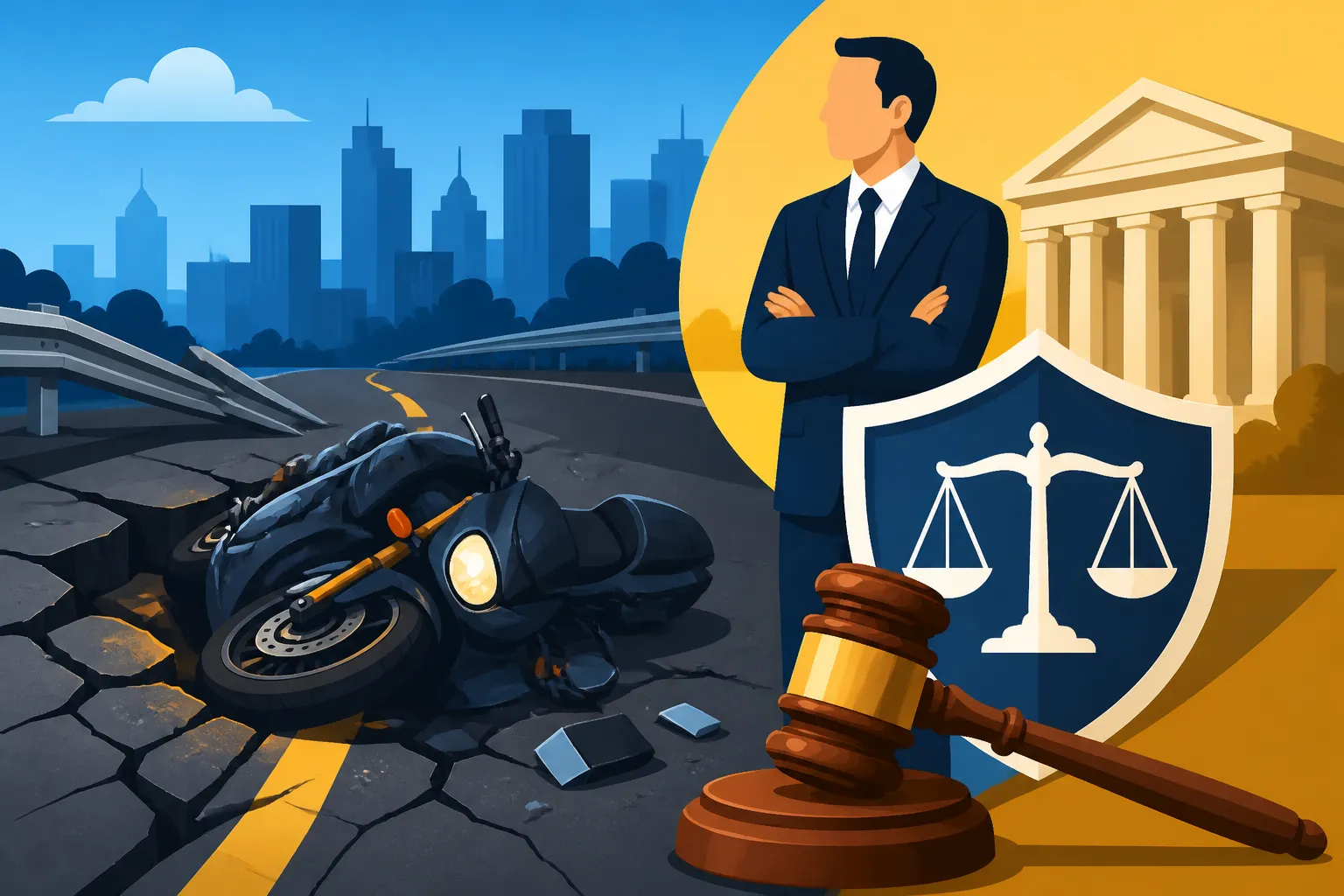
Suing a City for a Dangerous Road
It’s incredibly frustrating, and frankly, terrifying, when a motorcycle accident isn't just about another driver's mistake but stems from the very road beneath your wheels. You hit a massive pothole, a patch of crumbling pavement, or encounter debris that wasn't properly cleared, and suddenly, your ride turns into a nightmare. This guide will walk you through the complex, often daunting, process of pursuing a claim when a dangerous road condition caused your motorcycle accident, explaining how to potentially sue the city or government entity responsible.
Understanding Government Liability for Road Hazards
When you're out on two wheels, you expect the roads to be reasonably safe and maintained. Unfortunately, that's not always the reality. Unlike suing another driver, taking action against a city, county, or state government for a dangerous road condition presents a unique set of challenges due to specific legal protections they enjoy. It’s not simply a matter of proving the road was bad; you have to navigate the concept of sovereign immunity and demonstrate that the responsible government entity failed in its duty.
The Doctrine of Sovereign Immunity and Its Exceptions
At its core, sovereign immunity is a legal principle that protects government entities from being sued without their consent. Historically, this meant you couldn't sue the "king" or, in modern terms, the government. However, most states have enacted laws, often called "tort claims acts," that waive this immunity under certain conditions, allowing citizens to pursue claims for negligence. The catch is that these waivers are often narrow and come with very strict rules and deadlines.
For instance, a city generally won't be held liable for every tiny crack or imperfection in the road. They are typically only responsible for dangerous conditions they created, or knew about (or should have known about) and failed to fix within a reasonable timeframe. This "notice" requirement is often the biggest hurdle in these types of cases. You might be able to find more information on Government Liability for Road Hazards to help clarify these specific legal nuances. It's a tough road, literally and figuratively, but understanding this foundation is crucial.
Identifying the Responsible Government Entity
One of the first puzzles you’ll need to solve is figuring out which government entity is actually responsible for the stretch of road where your accident occurred. This isn't always as straightforward as it sounds. City streets are maintained by the municipal government, county roads by the county, and major highways often fall under state jurisdiction, like the Department of Transportation (DOT) in California or the Texas Department of Transportation (TxDOT). Even within a city, some roads might be state routes passing through, creating overlapping responsibilities.
For example, if you crash on a state highway that runs through downtown Phoenix, your claim might be against the Arizona Department of Transportation, not the City of Phoenix. If it's a local street in Tempe, then Tempe's Public Works Department would likely be the target. Knowing exactly who maintains the road is paramount because each entity will have its own specific rules and deadlines for filing a claim. A little detective work upfront can save you a lot of grief down the line.
Common Dangerous Road Conditions
Motorcyclists are particularly vulnerable to road hazards that might barely register for a car or truck. What’s a minor bump for a four-wheeler can be catastrophic for a rider. Common dangerous road conditions that can lead to motorcycle accidents include:
- Potholes and Cracked Pavement: These are probably the most obvious culprits. A deep pothole can throw a bike off balance instantly, leading to a loss of control. Similarly, severe cracks or crumbling pavement can compromise traction.
- Debris and Loose Gravel: Construction sites often leave behind loose gravel, sand, or other debris that can cause a motorcycle to slide out, especially when cornering. Even natural elements like fallen branches or excessive leaves can create treacherous conditions. You might be interested in Who Is Liable for a Gravel or Debris Crash if this was the cause of your accident.
- Poor Road Design or Construction: Sometimes, the road itself is designed poorly – inadequate banking on curves, sudden drops in elevation, or dangerous transitions between lanes. Defective drainage systems can also lead to standing water, creating hydroplaning risks, especially after heavy rain.
- Malfunctioning Traffic Signals or Missing Signs: While not strictly a "road condition," poorly maintained traffic signals, faded stop signs, or missing warning signs can contribute to dangerous intersections and cause accidents that the government might be held liable for.
These are just a few examples, but the key is that the condition must pose an unreasonable risk to riders using the road in a foreseeable manner.
Steps to Take After an Accident on a Dangerous Road
The immediate aftermath of any motorcycle accident is chaotic and frightening, but when a dangerous road is involved, your actions at the scene are even more critical for a potential claim against a government entity. Every detail you gather can become a vital piece of evidence.
Documenting the Accident Scene
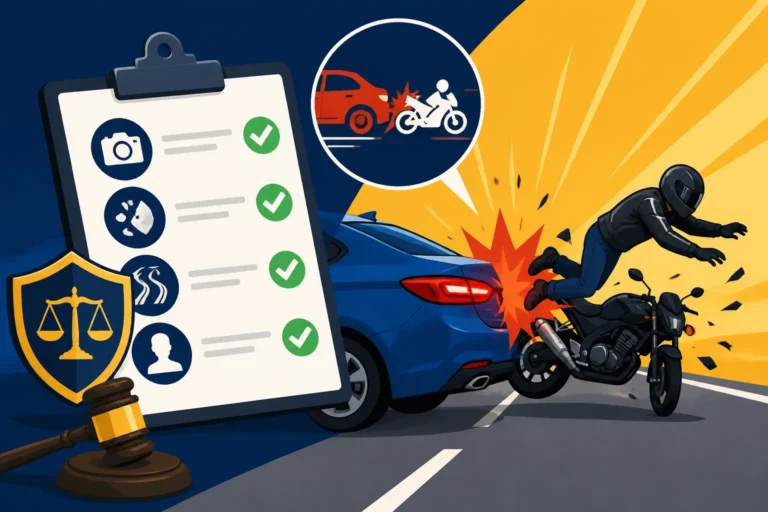
Right after an accident, if you are able and safe to do so, documenting the scene is paramount. This isn't just about showing your bike's damage; it's about proving the road condition itself. Take as many photos and videos as possible, from multiple angles.
Focus on:
- The specific hazard: Get close-up shots of the pothole, debris, or damaged pavement. Use a common object (like a helmet, glove, or even a dollar bill) for scale.
- Its surroundings: Show the hazard in relation to the road, nearby landmarks, traffic signs, and the general environment.
- Your motorcycle's final resting place: Document its position relative to the hazard.
- Weather conditions: Note if it was raining, sunny, or foggy, as this can affect visibility and road conditions.
- Tire marks or skid marks: If present, capture these as they can indicate how the accident unfolded.
Detailed documentation strengthens your claim considerably. For more guidance, check out How to Document the Scene to Prove Fault. Remember, the more evidence you have, the harder it is for the city to deny the dangerous condition existed or caused your crash.
Reporting the Incident and Seeking Medical Attention
Your health is always the top priority. Even if you feel okay, get checked out by paramedics at the scene or go to an urgent care clinic or hospital immediately. Motorcycle accidents often result in delayed symptoms, and a medical record created right after the crash is crucial for linking your injuries to the incident. Waiting too long can allow the opposing side to argue your injuries weren't severe or weren't caused by the accident.
Beyond medical care, you must report the accident. Call 911 to get law enforcement (police or highway patrol) to the scene. Their report can document the accident location and, sometimes, even note the road condition. However, also consider reporting the dangerous road directly to the appropriate city or state public works department. This creates a formal record that the government was notified, which can be critical for establishing their "notice" of the hazard. You can learn more about What to Do Immediately After a Motorcycle Accident for comprehensive first steps.
Gathering Critical Evidence
Building a strong case against a government entity requires a mountain of evidence. Beyond your own documentation, you’ll need to actively seek out additional proof.
Consider:
- Witness statements: Did anyone see the accident or notice the dangerous road condition before? Get their contact information and a brief statement. Their independent account can be invaluable.
- Traffic camera footage: Many intersections and highway stretches have cameras. Request footage quickly, as it's often deleted after a short period.
- Maintenance records: The government entity responsible for the road keeps records of repairs, inspections, and citizen complaints. These can show if they knew about the hazard and failed to act.
- Prior complaints: Were other citizens reporting the same pothole or road hazard? This is a powerful way to prove the government had "constructive notice" – meaning they should have known about it.
- Expert opinions: An accident reconstruction expert or civil engineer can analyze the scene and provide testimony on how the road condition caused your crash and why it was dangerous.
This diligent evidence gathering is what will set your case apart, especially when facing a government entity that often has significant resources to defend itself. Reviewing Motorcycle Accident Evidence for Proving Fault can give you even more ideas on what to collect.
Navigating the Claims Process Against a Municipality
Suing a city or state isn't like filing a claim with an insurance company after a fender bender. There are extremely stringent procedures and timelines that, if not followed precisely, can lead to your case being dismissed before it even begins. This is where the intricacies of government claims really come into play.
Strict Deadlines for Filing a Notice of Claim
Perhaps the most critical difference when dealing with a government entity is the "notice of claim" requirement. Unlike the typical personal injury statute of limitations (which can be 1-3 years in most states), you usually have a much shorter window – often as little as 30 to 180 days – to file a formal "notice of claim" with the responsible government agency. This notice officially informs them of your intent to sue and details your claim.
Missing this deadline, even by a single day, can permanently bar you from seeking compensation, regardless of how strong your case might be. For example, in California, you generally have six months (180 days) from the date of injury to file a written claim against a public entity. In other states like New York, the timeline might be 90 days. These deadlines are non-negotiable, and they apply even if you're still recovering in the hospital. This strict timeframe alone is why consulting with an attorney experienced in government claims is almost always necessary. You'll find more insights into How Long You Have to File a Motorcycle Claim which highlights these critical time limits.
Specific Requirements for Notice
The "notice of claim" isn't just a simple letter; it's a formal document with specific legal requirements that vary by state and sometimes even by municipality. It typically needs to include:
- Your name and contact information.
- The date, time, and exact location of the accident.
- A detailed description of the dangerous road condition that caused the accident.
- A brief description of your injuries and the damages you’ve sustained.
- The names of any government employees involved (if known).
- A statement of the monetary amount of the claim (often a general estimate at this early stage).
Filing an incomplete or incorrectly formatted notice can also lead to denial. The government wants to make sure they have all the pertinent information to conduct their own investigation. This isn't just bureaucratic red tape; it's a fundamental part of their legal defense strategy. They might try to poke holes in your notice to invalidate your claim, so precision is key.
City Investigation and Potential for Denial
Once you've submitted your notice of claim, the government entity will typically open an investigation. This might involve their legal department, public works, or risk management teams. They will review your submitted claim, inspect the accident site, and gather their own records to determine if they bear any responsibility. Don't expect a quick acceptance; government entities are often highly resistant to admitting fault, especially given the potential for significant payouts.
It’s common for the city or state to deny your claim at this stage. This denial isn't the end of the road; it's often a formal prerequisite that allows you to then file a lawsuit in court. The denial simply means they haven't agreed to settle the matter administratively. After a denial, you'll generally have another, longer, statute of limitations (typically one or two years from the date of the denial, or sometimes from the accident date, depending on the state) to file a lawsuit. However, navigating this process requires deep legal expertise, which is why Do You Need a Motorcycle Accident Lawyer is a question many riders face at this juncture.
Proving Your Case and Maximizing Your Claim
Successfully suing a city for a dangerous road requires more than just showing up and saying the road was bad. It demands a meticulous presentation of evidence and often the insight of specialized experts to convincingly demonstrate negligence and the direct link to your injuries.
The Importance of Expert Witnesses
In cases involving dangerous roads, expert witnesses are not just helpful; they are often essential. These professionals can provide credible, objective testimony that clarifies complex technical issues for a judge and jury.
- Accident Reconstruction Experts: These experts can analyze skid marks, vehicle damage, road conditions, and police reports to determine exactly how the accident occurred and what role the dangerous road played. They can use specialized software and physics principles to recreate the crash, making it clear how the hazard directly led to your loss of control.
- Civil Engineers and Road Design Experts: These professionals can testify about proper road design standards, maintenance protocols, and whether the specific road hazard violated these standards. They can explain how the pothole or design flaw created an unreasonable risk. For instance, an expert might show that a curve's banking was insufficient for the posted speed limit, or that a drainage system was improperly designed, leading to dangerous standing water.
Their testimony can be the difference between a dismissed claim and a successful recovery, especially since government entities will often bring their own experts to counter your claims.
Comprehensive Evidence to Support Your Case
Beyond expert testimony, a robust collection of various types of evidence is crucial for proving negligence and the extent of your damages.
- Maintenance Logs and Inspection Reports: These official records, obtained through legal discovery, can show when the road was last inspected or repaired. If the logs show a long period without maintenance, or if they reveal a history of similar complaints about the same stretch of road, it powerfully supports your claim that the city had notice and failed to act.
- Prior Citizen Complaints: If other residents or riders had reported the exact same pothole or road condition to the city before your accident, this is golden. It demonstrates that the city was explicitly notified of the danger. Your lawyer can often uncover these complaints through public records requests or discovery.
- Traffic Studies and Accident Data: Sometimes, a particular section of road has a history of accidents. Traffic studies or accident reports for that area can show a pattern of danger, indicating a systemic issue that the government should have addressed.
- Medical Records and Bills: These documents detail the full extent of your injuries, the treatments you've received, and the costs incurred. They are essential for calculating your economic damages.
- Lost Wage Statements: Proof of income and time missed from work due to your injuries allows you to claim compensation for lost wages. This can include pay stubs, tax returns, and employer statements.
Each piece of evidence builds upon the last, painting a complete picture of the city's negligence and the devastating impact it had on your life. Understanding How Fault Affects Your Settlement is key here, as proving the city's fault directly impacts your potential compensation.
Damages You Can Claim and Maximizing Your Settlement
The goal of any personal injury claim is to recover compensation for all the harm you've suffered. In a dangerous road case against a city, the types of damages you can claim typically fall into two categories: economic and non-economic.
- Economic Damages: These are quantifiable financial losses. They include:
- Medical Expenses: Past and future hospital bills, doctor visits, physical therapy, medications, and medical equipment.
- Lost Wages: Income you lost because you couldn't work due to your injuries.
- Loss of Earning Capacity: If your injuries permanently affect your ability to work or earn at your previous capacity.
- Property Damage: The cost to repair or replace your motorcycle, helmet, and other damaged gear.
- Non-Economic Damages: These are more subjective losses that don't have a direct monetary value but significantly impact your quality of life. They include:
- Pain and Suffering: Physical pain, discomfort, and emotional distress caused by your injuries.
- Emotional Distress: Anxiety, depression, PTSD, and other psychological impacts of the accident.
- Loss of Enjoyment of Life: The inability to participate in hobbies, activities, or aspects of life you enjoyed before the accident.
While many of these damages are similar to other personal injury claims, remember that some states cap the amount of non-economic damages you can recover from a government entity. For a deep dive into what you can claim, check out Types of Damages in a Motorcycle Accident Claim. Maximizing your settlement in such a complex case often hinges on the thoroughness of your evidence, the strength of your legal argument, and the skill of your attorney in navigating the specific challenges of government liability.
| Stage of Claim | Typical Timeline (Varies by State) | Key Action | Why it's Critical |
|---|---|---|---|
| Accident Occurrence | Day 0 | Document scene, seek medical aid | Creates immediate records; establishes link between accident, injuries, and road condition. |
| Notice of Claim | 30 – 180 days (e.g., California: 180 days; New York: 90 days) | File formal notice with government entity | Strict, non-negotiable deadline; missing it can permanently bar your claim. |
| Government Investigation | 45 – 90 days after notice | City/State reviews claim and evidence | Government determines if they will accept or deny the claim administratively. |
| Claim Denial (Typical) | Varies after investigation | Formal letter of denial | Often a prerequisite to filing a lawsuit; opens the door to court action. |
| File Lawsuit | 6 months – 2 years after denial/accident | Initiate legal action in court | Adheres to the civil statute of limitations, which is separate from the notice of claim deadline. |
| Discovery | Several months to a year+ | Exchange evidence, depositions | Gathers crucial information from both sides, including maintenance logs and expert testimony. |
| Negotiation/Mediation | Ongoing during discovery | Attempts to settle out of court | Opportunity to reach a settlement agreement without the need for a trial. |
| Trial (If no settlement) | Can take years | Present case to judge/jury | Final determination of fault and damages by the court. |
Disclaimer
Please remember that this article provides general information and insights into suing a city for a dangerous road after a motorcycle accident. Every accident and legal jurisdiction is unique, and the laws governing government liability can be incredibly complex and vary significantly by state and local municipality. This content should not be considered legal advice. It is highly recommended to consult with a qualified personal injury attorney specializing in motorcycle accidents and government claims in your specific area to discuss the details of your case.