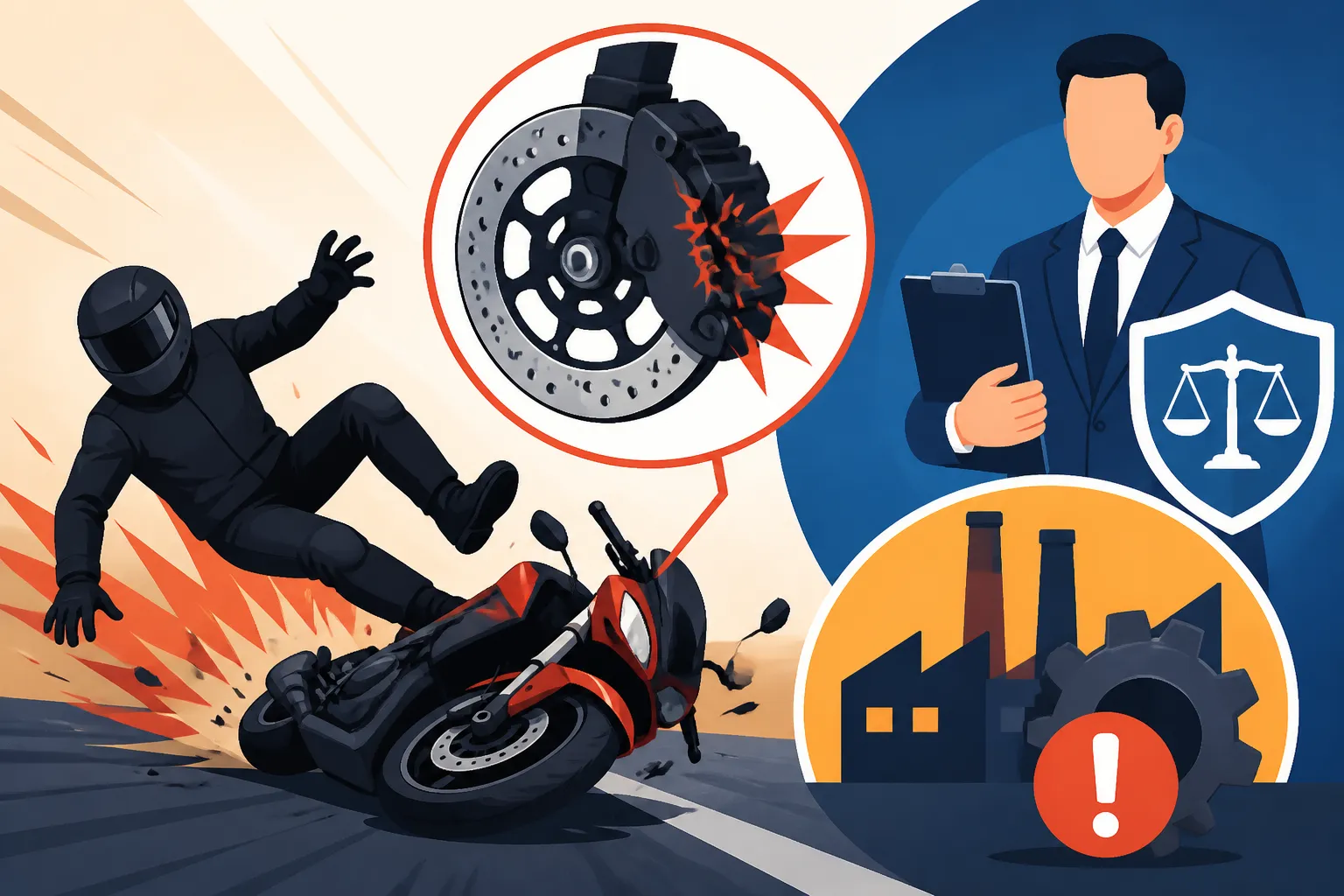
Manufacturer Fault for Brake Failure
Experiencing a motorcycle brake failure is one of the most terrifying scenarios a rider can face. One moment you're cruising, feeling the freedom of the open road, and the next, your primary safety mechanism gives out, leading to a sudden, often catastrophic, accident. It's an incredibly frustrating and dangerous situation, leaving you injured and wondering what went wrong. This guide aims to shed light on what constitutes manufacturer fault for brake failure in a motorcycle accident and how to navigate the complexities of proving it.
Understanding Motorcycle Brake Failure
When your motorcycle’s brakes fail, it’s not just an inconvenience; it’s a critical safety issue that can result in severe injuries or even be fatal. It's a rider's worst nightmare, and understanding the nuances of how and why brakes fail is the first step in addressing the aftermath.
Common Causes of Brake Failure
Motorcycle brakes are sophisticated systems, and their failure can stem from a variety of sources. Often, riders immediately assume it's a maintenance issue, but that's not always the case.
For instance, you might experience a sudden loss of brake pressure, making your lever feel spongy or go straight to the handlebar. This could be due to a catastrophic fluid leak, a failed master cylinder, or a blown brake line. Imagine you’re on the Pacific Coast Highway, enjoying the curves, and suddenly, as you approach a sharp turn, your front brake lever offers no resistance. This isn't just scary; it's a direct threat to your life. Other times, the failure might be more insidious, a gradual degradation where the brakes simply don't have the stopping power they once did, or they become grabby and unpredictable. This could point to issues with calipers seizing, worn-out pads, or contaminated brake fluid. Even Anti-lock Braking Systems (ABS) can malfunction, leading to a loss of control when you need it most. We often discuss general Common Causes of Motorcycle Accidents, but brake failure stands out as particularly unsettling because it takes away your direct control.
How Brake Failure Leads to Accidents
The way a brake failure manifests directly impacts the type of accident that follows. A complete and sudden loss of braking power, particularly at speed, often leads to rear-end collisions with vehicles in front, or running off the road if attempting to avoid an obstacle. If your front brake locks up due to a defect, it can instantly throw you over the handlebars, causing a high-side accident. Conversely, if only the rear brake locks, you might go into an uncontrollable skid.
Consider a scenario where you're riding through downtown Austin, navigating busy intersections. A car suddenly pulls out in front of you without yielding. You instinctively grab the brakes, but they offer no resistance. Without time to react, you collide with the vehicle. In another case, perhaps your brakes become excessively hot and "fade" on a long downhill stretch in the Great Smoky Mountains, causing you to lose control and swerve. These situations aren't just about the initial mechanical failure; they're about the split-second decisions you can't make because your equipment has betrayed you. The severe lack of control and unexpected forces at play mean that injuries are almost always serious in these types of crashes.
Identifying Manufacturer Fault in Brake Failure
The crucial distinction in any brake failure accident is determining whether the failure was due to a manufacturing defect or improper maintenance or normal wear and tear. This is where the complexities begin, and it's vital to know what to look for.
Types of Manufacturing Defects
Manufacturer fault generally falls into three main categories within product liability law: design defects, manufacturing defects, and warning defects.
A design defect means there's an inherent flaw in the blueprint of the braking system itself, making it unsafe no matter how perfectly it's manufactured. For instance, if a specific model of motorcycle, say a certain year's Harley-Davidson, consistently experiences a critical component like the master cylinder failing under normal operating conditions due to an undersized reservoir or a material that can't withstand typical heat cycles, that's a design flaw. It means every single unit produced with that design carries the same risk.
A manufacturing defect, on the other hand, occurs when the design is sound, but an error during the assembly or production process makes a specific unit dangerous. Perhaps a batch of brake calipers for a Honda CBR was cast with a weak spot in the metal, or a crucial bolt in the braking system of a Kawasaki Ninja was not torqued to specification on the assembly line. These are isolated incidents of poor execution, rather than an issue with the original design. These are often harder to trace back to the manufacturer without detailed investigation.
Lastly, a warning defect (or marketing defect) exists when the manufacturer fails to provide adequate instructions or warnings about non-obvious dangers associated with the product. While brake systems usually come with maintenance instructions, if there's a specific, unusual vulnerability that could lead to catastrophic failure under certain conditions that aren't clearly warned about, that could be a warning defect. For instance, if a particular brake fluid or pad material reacts unexpectedly with a component in a way that wasn't disclosed.
Distinguishing Defects from Wear and Tear
This is the biggest hurdle in proving manufacturer fault. Insurance companies and manufacturers will almost always try to blame the rider for neglecting maintenance or for excessive wear and tear. They'll argue that worn brake pads, degraded fluid, or rusted lines are simply part of owning a motorcycle and should have been addressed by the owner.
However, a defect is different. Wear and tear is predictable and gradual; a defect often manifests suddenly or prematurely. If your brake pads, which should last thousands of miles, suddenly disintegrate after only a few hundred, that might suggest a material defect. If a brake line ruptures without any signs of external damage or abrasion, especially on a relatively new bike, it strongly suggests a manufacturing or material flaw rather than simple aging. A reputable mechanic should be able to identify if a component failed due to an inherent weakness (like a stress fracture in a caliper housing) rather than being ground down from use or corroded from lack of care. This distinction is critical because it shifts the blame from the rider to the party responsible for the product's safety. Understanding How Fault Is Determined in Motorcycle Accidents is paramount here.
Proving Manufacturer Liability
Once you suspect a manufacturing defect caused your brake failure, the real work of proving liability begins. This isn't a simple task, as manufacturers have significant resources to defend against such claims.
Evidence Collection for Defective Brakes
The most critical step immediately following a motorcycle accident involving suspected brake failure is preserving the evidence. Do not let your bike be salvaged or repaired before it has been thoroughly inspected. The motorcycle, especially the braking components, becomes the primary piece of evidence. This means taking detailed photos and videos of the damaged bike at the scene, focusing specifically on the brake system. Look for ruptured lines, seized calipers, disconnected components, or any visible anomalies.
Beyond the immediate scene, it is crucial to have the bike professionally inspected by an independent mechanic who specializes in motorcycle forensics or defect analysis, not just general repairs. This expert can meticulously examine the brake fluid, lines, calipers, master cylinder, pads, rotors, and ABS unit for any signs of defect. They might look for metallurgical flaws, improper assembly, or component fatigue that wouldn't typically occur with normal use. They'll document everything with written reports, photographs, and sometimes even laboratory analysis. Gathering Motorcycle Accident Evidence for Proving Fault is a painstaking process, but absolutely necessary. This also includes securing any recall notices related to your motorcycle model and year, as a recall could be direct evidence of a known defect.
The Role of Expert Witnesses
Given the technical nature of brake systems and manufacturing processes, expert witnesses are almost indispensable in proving manufacturer liability. These aren't just any mechanics; they are specialized engineers, metallurgists, accident reconstructionists, or product safety experts.
An accident reconstruction expert can analyze the crash scene, skid marks, impact points, and the physics of the accident to determine if a brake failure was indeed the initiating event. Their expertise in How Accident Reconstruction Determines Fault can be vital in establishing a timeline and sequence of events. A mechanical engineer specializing in brake systems can inspect the failed components, sometimes using advanced techniques like scanning electron microscopy to find microscopic flaws in materials or welds. They can then provide expert testimony explaining how a specific defect led to the failure, why it was a manufacturing or design flaw, and how it directly caused the accident. This testimony can be incredibly powerful in court, translating complex technical information into understandable terms for a jury. It clearly demonstrates the mechanical shortcomings and links them directly to the manufacturer's responsibility, making it clear When to Hire an Accident Reconstruction Expert or similar specialists.
Legal Theories for Manufacturer Fault Claims
When pursuing a claim against a manufacturer, you'll generally do so under product liability law. This area of law provides specific avenues for consumers injured by defective products.
Strict Liability, Negligence, and Breach of Warranty
There are primarily three legal theories under which you can bring a product liability claim against a manufacturer for a defective motorcycle braking system:
-
Strict Liability: This is often the most favorable theory for an injured rider. Under strict liability, you generally don't have to prove the manufacturer was negligent or careless in designing or manufacturing the product. Instead, you only need to prove that:
- The product (your motorcycle's brake system) was defective.
- The defect made the product unreasonably dangerous.
- You were using the product as intended (or in a reasonably foreseeable manner).
- The defect caused your injuries.
- The product was defective when it left the manufacturer's control.
This theory streamlines the process by removing the burden of proving intent or negligence, focusing solely on the product's inherent danger. Many states have adopted strict product liability laws, recognizing the difficulty consumers face in proving specific acts of negligence by large corporations.
-
Negligence: To prove negligence, you would need to show that the manufacturer failed to exercise reasonable care in the design, manufacturing, or warning process, and this failure directly led to the brake defect and your subsequent injury. This is a higher bar than strict liability, as it requires demonstrating the manufacturer's specific fault or oversight. For example, if you could show the manufacturer knew about a flaw in a brake component but failed to issue a recall, that could be evidence of negligence.
-
Breach of Warranty: This theory applies when the manufacturer fails to uphold a promise, either express or implied, about the quality or safety of its product. An express warranty might be a written guarantee, like an owner's manual stating the brakes are designed to meet certain safety standards. An implied warranty generally means the product is fit for its ordinary purpose – in this case, the brakes should function safely to stop the motorcycle. If the brakes fail due to a defect, the manufacturer has breached this implied warranty.
Navigating a Product Liability Claim
Pursuing a product liability claim, especially against a major motorcycle manufacturer, is a complex and resource-intensive undertaking. These companies have vast legal teams and financial resources dedicated to defending against such lawsuits. They will often argue that the defect was user-induced, due to poor maintenance, aftermarket modifications, or even rider error.
A successful product liability claim requires thorough investigation, compelling expert testimony, and a deep understanding of state-specific product liability laws. For example, some states have specific statutes of limitations for filing product liability claims, usually running from the date of injury or when the defect was discovered. Beyond the immediate parties, sometimes other entities in the "chain of distribution" can also be held liable, such as the distributor or the retailer, especially if they knew about the defect. This is part of the broader concept of Manufacturer Liability for Defective Parts. Gathering evidence like maintenance records, recall notices, and even reports of similar incidents involving the same brake system or motorcycle model can bolster your case significantly.
What to Do After a Motorcycle Accident Involving Brake Failure
The moments immediately following a motorcycle accident are chaotic, but your actions can have a profound impact on your ability to pursue a claim for manufacturer fault.
Immediate Steps at the Scene
Your first priority after any motorcycle accident is to ensure your safety and seek medical attention. Even if you feel fine, injuries like whiplash, internal bleeding, or concussions can have delayed symptoms. Call 911 immediately. If you can safely do so, move yourself and your motorcycle out of the flow of traffic.
Once medical attention is sought and emergency services are on their way, begin to document everything. Take as many photos and videos as possible of the accident scene, your injuries, and especially your motorcycle's damaged braking system. Focus on the brake lines, calipers, master cylinder, and levers. Note any leaks, breaks, or disconnected parts. Get contact information from any witnesses. If the police arrive, ensure they create an accident report and that it accurately reflects your account, specifically mentioning the brake failure. It’s also important to remember What to Do After a Motorcycle Accident generally, as these initial steps are universally important.
Documenting and Preserving Evidence
Beyond the scene, preserving your motorcycle is paramount. Do not allow your bike to be taken to a salvage yard where critical evidence might be destroyed, or to a general repair shop that might inadvertently compromise the evidence. Arrange for it to be stored securely where it can be professionally examined by an independent forensic mechanic or engineer. This step cannot be overstated. Without the physical evidence of the defective brake components, proving manufacturer fault becomes exceedingly difficult.
Keep a detailed record of all medical treatments, doctor visits, medications, and any other expenses related to your injuries. Also, start a journal to document your pain, suffering, and how the injuries are affecting your daily life. This helps in claiming Pain and Suffering in Motorcycle Settlements. Gather all receipts for repairs, towing, and any other accident-related costs. This meticulous documentation will be critical for assessing the full scope of your Types of Damages in a Motorcycle Accident Claim and for building a strong case. Ultimately, consulting with an experienced motorcycle accident attorney as soon as possible is highly recommended. They can guide you through these complex steps, ensure evidence is properly preserved, and begin the investigation necessary to hold the manufacturer accountable. Knowing When to Hire a Motorcycle Accident Lawyer can make all the difference in your claim.
Important Considerations for a Manufacturer Fault Claim
Successfully navigating a manufacturer fault claim requires a solid understanding of the timeline and potential challenges involved. It’s not a quick process, and patience is key.
The Statute of Limitations
Every state has a strict deadline for filing a personal injury lawsuit, known as the statute of limitations. This period typically begins on the date of the accident, though there can be exceptions, such as the "discovery rule" where the clock starts when the defect was, or reasonably should have been, discovered. For product liability claims, this can sometimes be more nuanced than a typical car accident claim. For instance, in California, the general statute of limitations for personal injury is two years, but some states like Missouri also have a two-year limit, while others like New York have three years.
Missing this deadline can mean losing your right to file a lawsuit forever, regardless of how strong your case is. This is why it is so crucial to act quickly after your accident. An attorney specializing in product liability and motorcycle accidents will be well-versed in the specific statutes that apply in your jurisdiction and can ensure all deadlines are met. Understanding the Statute of Limitations Explained is a fundamental aspect of any successful claim.
Financial Investment and Resources
Bringing a product liability claim against a major motorcycle manufacturer often requires a substantial financial investment. The costs can quickly add up, covering expert witness fees, forensic analysis, court filing fees, deposition costs, and more. These expenses can easily reach tens of thousands of dollars, or even more, particularly if the case goes to trial.
Most injured riders do not have these funds readily available, which is why working with a personal injury attorney who takes cases on a contingency fee basis is often the best option. This means the attorney will cover all upfront costs and only gets paid if they win your case, taking a percentage of the final settlement or award. This arrangement allows injured individuals to pursue justice without the burden of immediate financial strain. The attorney essentially acts as your financial partner in the litigation, absorbing the risk. This access to resources is one of the primary reasons Do You Need a Motorcycle Accident Lawyer for these complex cases.
The Power of Previous Incidents and Recalls
When building a case for manufacturer fault, evidence of similar incidents or recall notices can be incredibly powerful. If other riders have experienced the same brake failure issue with the same model and year of motorcycle, it strengthens the argument that the problem lies with a systemic defect, not an isolated incident or rider error. Your legal team will often conduct extensive research to uncover such patterns, sometimes even delving into National Highway Traffic Safety Administration (NHTSA) databases for consumer complaints or recall campaigns.
A recall notice, issued by the manufacturer or mandated by a regulatory body, is almost irrefutable proof of a known defect. While a recall itself doesn't automatically mean your specific incident was caused by that defect, it significantly aids in establishing the manufacturer's knowledge of a dangerous flaw. If your motorcycle was subject to a recall for its braking system that you were unaware of or that hadn't been performed, it creates a very strong case for manufacturer liability. It demonstrates a history of issues that can underscore your claim about the defect's role in your accident.
Disclaimer
Please remember that this article provides general information and is not a substitute for professional legal advice. Every motorcycle accident claim is unique, and the information presented here may not apply to your specific situation. If you have been involved in a motorcycle accident, especially one involving suspected manufacturer fault, it is strongly recommended that you consult with an experienced motorcycle accident attorney to discuss your legal options.