How to Prove Fault in a Left-Turn Collisions Crash
Riding a motorcycle offers unparalleled freedom, but it also means facing unique dangers, especially when navigating intersections. One of the most terrifying and common scenarios for riders is a collision with a vehicle making a left turn directly into their path. It’s an all-too-frequent nightmare that leaves riders with serious injuries and the frustrating burden of proving they weren't to blame. This guide will meticulously break down how to gather crucial evidence and build a strong, irrefutable case to prove fault when a left-turn collision impacts your motorcycle, ensuring your rights are protected.
Understanding Left-Turn Collisions and Why They Happen
Left-turn collisions are a leading cause of motorcycle accidents, and they often result in devastating injuries for the rider. The perception of motorcycles, or rather the lack of it, plays a huge role here. Drivers of larger vehicles sometimes struggle to accurately judge the speed and distance of an approaching motorcycle, leading them to believe they have enough time to complete a left turn when, in reality, they don't. This misjudgment is compounded by issues like distracted driving, impaired driving, or simply a failure to pay attention to oncoming traffic. It’s a systemic problem that puts riders at a severe disadvantage.
The "Didn't See the Motorcycle" Excuse
You've heard it, or you've experienced it: the driver's immediate and often dismissive claim that they "didn't see the motorcycle." This isn't just a common phrase; it's a deeply ingrained societal bias that motorcycle riders face. For many years, this excuse has been used by at-fault drivers and insurance companies alike to shift blame away from the driver and onto the rider. They might suggest your motorcycle was in their "blind spot," or that your speed or visibility was somehow a factor, even if you were riding perfectly legally and safely.
The reality is, a driver has a legal obligation to look for and yield to oncoming traffic, which absolutely includes motorcycles, before initiating a left turn. The "I didn't see you" defense doesn't automatically absolve them of fault. It often points to negligence on their part, a failure to keep a proper lookout, rather than an inherent invisibility of your motorcycle. This excuse is a prime example of the kind of Rider Bias in Fault Determination you might face, and understanding how to combat it is crucial for your claim.
Driver Negligence vs. Rider Responsibility
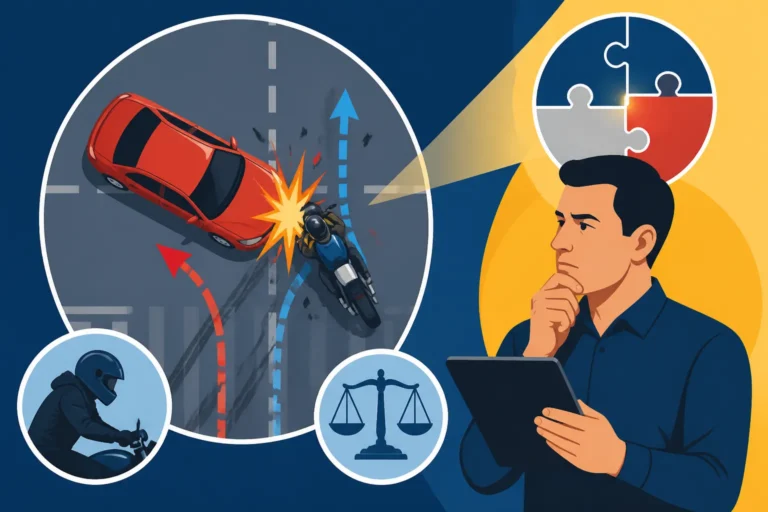
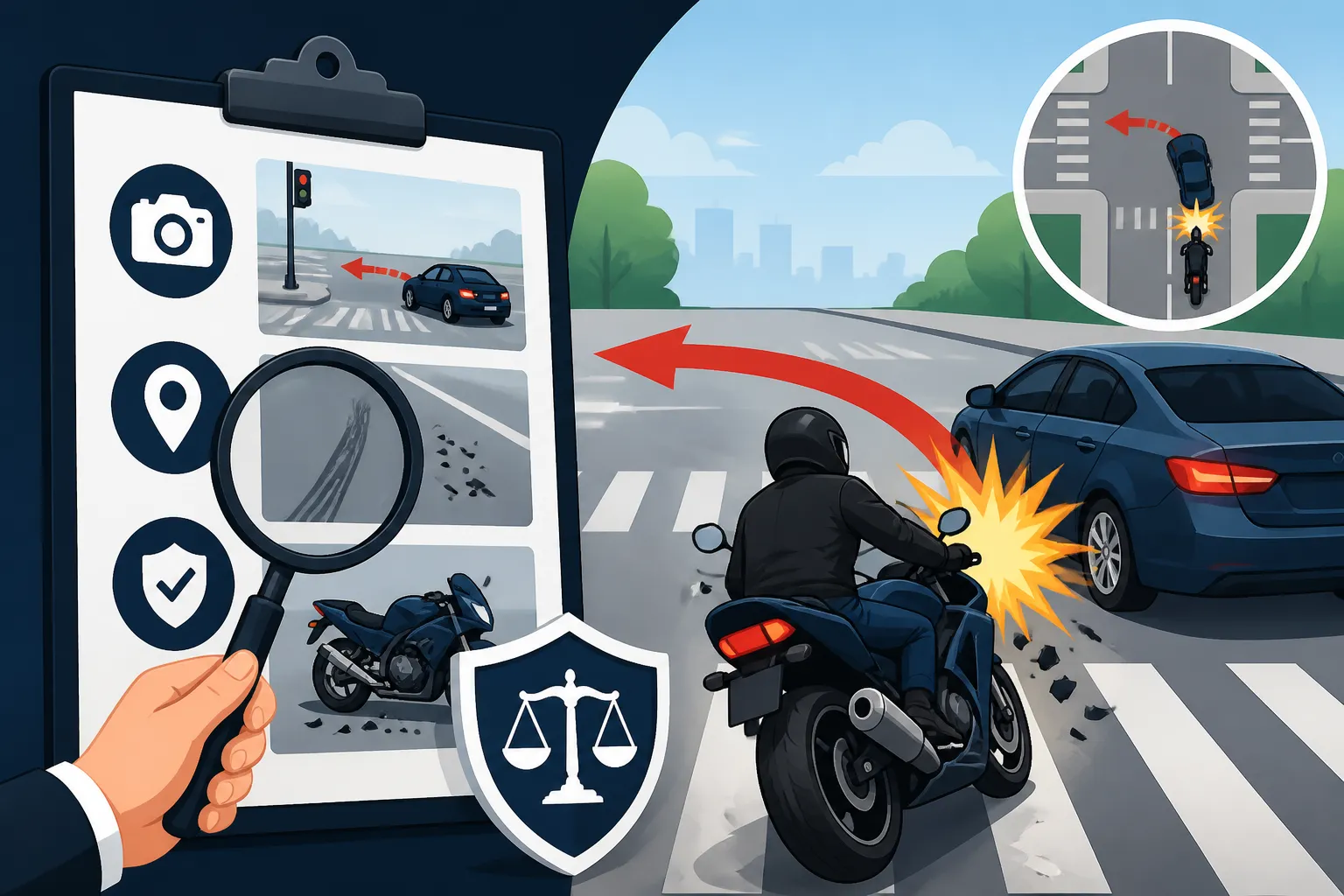
In a left-turn collision, fault almost always lies with the turning vehicle. The legal principle here is generally that a driver making a left turn must yield the right-of-way to any oncoming vehicles that are so close as to constitute an immediate hazard. This means if you were proceeding straight through an intersection, or were already in the intersection, the turning driver should have waited for you to pass. Their failure to do so is a clear act of negligence.
However, insurance companies and opposing legal teams will aggressively look for any way to assign even partial blame to the motorcyclist. They might argue you were speeding, lane splitting, or even that your bright colored gear somehow blended in with the background. Even if you were doing nothing wrong, they will try to find a crack in your story. This is why meticulously documenting every detail of the accident and understanding Who Is at Fault in a Motorcycle Accident is paramount. You need to be prepared to demonstrate that the other driver's actions were the direct cause of the collision, not some perceived failing on your part.
Key Evidence for Proving Fault
After the shock of a left-turn collision begins to subside, the critical work of gathering evidence to prove fault immediately begins. What you do in the moments, hours, and days following the crash can make or break your claim. It’s not just about telling your side of the story; it's about providing undeniable proof.
Immediate Actions at the Scene
Your immediate actions after a left-turn collision are absolutely vital. First and foremost, check for injuries – your own and anyone else involved. If you or anyone else is hurt, call 911 immediately. Even if you feel okay, it's always best to get checked out by paramedics. Once safety is addressed, move your motorcycle and yourself to a safe location if possible, but only if doing so won't compromise evidence.
Next, and this is crucial: never, ever admit fault or apologize. Even a simple "I'm so sorry!" can be twisted by insurance companies later to imply you accepted responsibility. Exchange information with the other driver – name, contact details, insurance information, and license plate number. If there are witnesses, get their contact information too. Their independent accounts can be invaluable. This entire process is part of What to Do After a Motorcycle Accident.
| Evidence Type | How It Helps Prove Fault | Why It's Crucial |
|---|---|---|
| Police Report | Documents officer's initial findings, diagrams, and citations. | Often the first official record of fault, though not always conclusive. |
| Witness Statements | Independent accounts corroborate your version of events. | Neutral third-party perspectives are highly credible. |
| Photos/Videos | Visual proof of vehicle damage, road conditions, debris, traffic signals, skid marks. | Unbiased depiction of the accident scene, impact points. |
| Dashcam/Security Footage | Objective, real-time recording of the collision. | The most powerful evidence for establishing precise fault. |
| Medical Records | Document injuries sustained and link them to the accident. | Proves the extent of damages, crucial for compensation. |
| Accident Reconstruction | Expert analysis of physical evidence, vehicle data, and physics to determine collision dynamics. | Can scientifically establish fault even when evidence is sparse or disputed. |
Documenting the Scene and Injuries
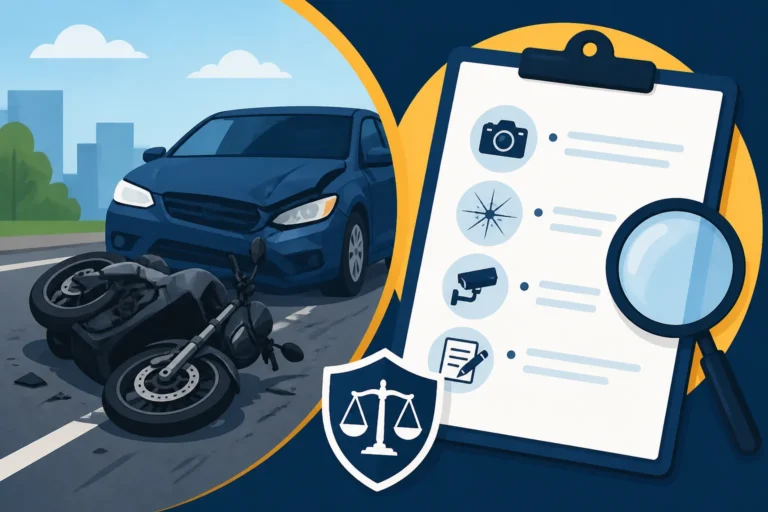
Modern smartphones are powerful tools for documenting an accident scene. Take as many photos and videos as you can. Get wide shots showing the entire intersection, the position of both vehicles, and traffic signs or signals. Then, get close-up shots of the damage to your motorcycle and the other vehicle, focusing on the points of impact. Look for skid marks, debris, shattered glass, and anything else that tells a story about how the collision occurred. If the other driver was making a left turn, capture their vehicle's final resting position relative to the lane you were in. Make sure to capture the condition of the road, weather, and lighting. These photos can be critical for How to Document the Scene to Prove Fault.
Beyond the scene, meticulously document your injuries. Take photos of road rash, bruising, and any other visible injuries as they appear and evolve over the days and weeks after the crash. Keep a detailed journal of your pain levels, doctor's appointments, medications, and how your injuries are impacting your daily life. This personal record, combined with official medical documents, will be vital for substantiating your claim for damages. Remember, your physical injuries are undeniable proof of the impact you suffered.
Official Reports and Witness Statements
The police report is often the first official document outlining the accident. While it doesn't definitively assign fault in every case, it provides valuable details like the date, time, location, involved parties, and any citations issued. If the other driver was cited for failing to yield, that's powerful evidence in your favor. However, be aware that police reports aren't infallible, and sometimes they contain inaccuracies or reflect a bias against motorcyclists. Understanding How Police Reports Establish Fault is important, but also knowing that they can be challenged is key.
Witnesses are another goldmine of information. Independent witnesses, especially those who don't know either party, can provide unbiased accounts of what they saw. Their testimony can directly contradict the "I didn't see the motorcycle" defense. If a witness saw the other driver distracted, speeding, or simply failing to look, their statement can be pivotal. Always try to get their contact information at the scene, as How Witnesses Affect Motorcycle Fault can significantly strengthen your position. Sometimes, even nearby businesses might have surveillance cameras that captured the collision, providing objective video evidence that leaves no doubt about who was at fault in a left-turn collision.
Legal Principles and Challenges in Left-Turn Cases
Proving fault in a left-turn collision involving a motorcycle often delves into specific legal principles and common challenges. It's rarely a straightforward process, as insurance companies are experts at minimizing payouts.
How Traffic Laws Assign Blame
Most jurisdictions have clear traffic laws governing left turns. Generally, a driver intending to turn left must yield the right-of-way to any vehicle approaching from the opposite direction that is close enough to constitute an immediate hazard. This means if you were proceeding straight through the intersection, the turning driver was obligated to wait for you. Their failure to do so is a violation of traffic law and a strong indicator of negligence.
For instance, in states like California, the Vehicle Code explicitly states that a driver turning left must yield to oncoming vehicles. If a driver in San Diego makes an illegal left turn into a motorcyclist, their violation of this code is direct evidence of their fault. These regulations are the backbone of proving How Fault Is Determined in Motorcycle Accidents. However, be aware that states can have slightly different interpretations or specific rules for certain intersections, so understanding the local statutes where your accident occurred is crucial.
Overcoming Rider Bias and Shared Fault
One of the biggest hurdles in any motorcycle accident claim, especially a left-turn one, is the inherent bias some people hold against motorcyclists. Insurance adjusters, and even some jurors, might subconsciously assume the rider was speeding, reckless, or somehow responsible for putting themselves in a dangerous situation. This prejudice is real, and it’s what fuels the "I Didn't See the Motorcycle" Defense Explained. You need to be ready to aggressively counter these stereotypes with facts and evidence.
Furthermore, many states operate under comparative negligence laws, which means fault can be shared between parties. For example, in a state like Florida, which uses a pure comparative negligence system, if it's determined you were 10% at fault for the accident (perhaps due to slight speeding, even if the primary fault lies with the turning driver), your eventual settlement could be reduced by that 10%. This concept of Shared Fault in Motorcycle Accidents makes it even more important to have an airtight case proving the other driver's complete responsibility. Even in modified comparative negligence states like Texas, where you can't recover if you're 51% or more at fault, the insurance company will try to push your percentage of fault as high as possible.
The Role of Accident Reconstruction Experts
When fault is heavily disputed, or the physical evidence is complex, an accident reconstruction expert can be an invaluable asset. These highly specialized professionals use scientific principles, physics, vehicle dynamics, and advanced software to analyze all available data – photos, videos, police reports, skid marks, vehicle damage, and even black box data from modern cars. They can create detailed models and simulations of the accident, determining factors like vehicle speeds, angles of impact, and lines of sight.
An expert's testimony can provide a clear, unbiased explanation of how the accident unfolded, scientifically proving which driver was at fault. For example, if the other driver claims you were speeding excessively, an accident reconstructionist can often determine your actual speed based on skid marks and impact deformation. This expertise can dismantle opposing arguments and leave little room for doubt, especially in complex cases where When Fault Is Disputed in a Motorcycle Crash or in situations involving Motorcycle Accident Evidence for Proving Fault where the sequence of events needs precise clarification. Such an expert can turn a he-said-she-said scenario into a clear, scientifically supported narrative that powerfully argues your case.
Disclaimer
Please remember that this article provides general information and is not legal advice. Every motorcycle accident case is unique, and the information presented here may not apply to your specific situation. Laws vary by jurisdiction, and it is crucial to consult with a qualified legal professional specializing in motorcycle accident claims for personalized advice regarding your case.