Motorcycle Gear Laws and Requirements
Riding a motorcycle offers unparalleled freedom, but it also comes with a unique set of responsibilities and, let's be honest, a fair amount of confusion when it comes to the rules of the road – especially concerning protective gear. It's frustrating enough trying to navigate traffic, let alone trying to keep up with the ever-changing tapestry of state-specific gear laws and requirements. This guide is here to untangle that web, helping you understand not just what the law demands, but why it matters for your safety and, critically, for your peace of mind should you ever be involved in an accident.
The Foundation of Motorcycle Gear Laws: Why They Exist
Motorcycle gear laws aren't just arbitrary rules dreamt up by bureaucrats; they're rooted deeply in public safety and the grim statistics of motorcycle accidents. When you're out on two wheels, you're inherently more exposed than someone in a car, which means even a minor fender-bender can have catastrophic consequences for a rider. These laws are designed to mitigate those risks, protecting riders from themselves, and often, from the inattentiveness of other drivers. It's a pragmatic approach to a very real problem, aiming to reduce serious injuries and fatalities.
Protecting Yourself and Others on the Road
At its core, wearing proper motorcycle gear is about self-prespreservation. Helmets, jackets, gloves, sturdy boots, and other protective clothing aren't just fashion statements; they're your first, and often only, line of defense in a crash. Think about the sheer force involved in even a low-speed impact. Without a helmet, your head is completely vulnerable to traumatic brain injury. Without a proper riding jacket, that asphalt will strip away your skin in seconds, leading to severe road rash that can be incredibly painful and difficult to heal.
These laws acknowledge that while riding is a personal choice, the consequences of a crash often extend beyond the individual. A severely injured rider requires extensive medical care, which can strain public resources and insurance systems. Moreover, the emotional and financial toll on families can be immense. By mandating certain types of gear, states are attempting to reduce the severity of injuries, thereby safeguarding not just the rider but also the broader community from the fallout of a serious accident. It’s about creating a baseline of safety for everyone sharing the road.
Reducing Healthcare Burdens and Societal Costs
Beyond individual suffering, the economic impact of severe motorcycle accidents is staggering. Medical bills for a traumatic brain injury or a spinal cord injury can easily climb into the hundreds of thousands, if not millions, of dollars over a lifetime. These costs are often borne by insurance companies, taxpayers through public health programs, and ultimately, by society at large. States implement gear laws in part to curb these escalating healthcare expenditures.
Consider a scenario in a state like Massachusetts, which has a universal helmet law. If a rider is involved in a collision and sustains a critical head injury, the costs of emergency care, surgery, rehabilitation, and long-term support can be astronomical. If that rider had been wearing a DOT-compliant helmet, the severity of the injury, and thus the associated costs, might have been significantly reduced. While no gear can guarantee complete protection, it dramatically improves outcomes. This economic consideration, while perhaps less talked about than personal safety, plays a significant role in the legislative decisions made by states regarding motorcycle gear requirements. It's a way to manage the collective risk and ensure resources are not unduly stretched.
Navigating Universal Versus Partial Helmet Laws
One of the biggest sources of confusion for riders is the patchwork of helmet laws across the United States. It's not a "one size fits all" situation, and what's legal in one state could get you a ticket – or worse, significantly impact your accident claim – in another. Understanding the distinction between universal and partial helmet laws is crucial, especially if you plan on riding across state lines or if you're just starting out and trying to figure out what gear you actually need.
States with Universal Helmet Laws
Universal helmet laws are the most straightforward: they require all motorcycle riders and passengers, regardless of age or experience level, to wear a DOT-compliant helmet at all times when riding. These laws are typically found in states that prioritize public safety above all else when it comes to motorcycling. Currently, there are 18 states, along with the District of Columbia, that enforce universal helmet laws.
For instance, in California, widely known for its motorcycling culture, a universal helmet law has been in effect since 1992. This means whether you're a seasoned veteran cruising the Pacific Coast Highway or a new rider just getting your endorsement, your helmet must be on and properly fastened. Similarly, states like Georgia and New York also enforce universal helmet laws. If you're riding through Atlanta or navigating the busy streets of Manhattan, you'll see riders adhering to this strict requirement. This uniformity simplifies things for riders in these states, as there's no ambiguity about who needs to wear a helmet. For riders venturing into these states, it's a clear message: put on your helmet, or risk a citation and potentially, much more severe consequences in a crash. You can learn more about specific regulations in California by checking out our guide on Motorcycle Helmet Law in California.
States with Partial Helmet Laws
Partial helmet laws represent a middle ground, requiring helmets only for specific groups of riders, most commonly those under a certain age. The age cutoff varies significantly from state to state, making it a particularly tricky area to navigate. Many of these laws also include provisions related to insurance coverage or rider experience.
Take Texas, for example. While often thought of as a state with more relaxed regulations, Texas has a partial helmet law that requires riders and passengers under the age of 21 to wear a helmet. However, riders aged 21 and older can legally ride without a helmet if they have completed a motorcycle safety course or carry adequate health insurance coverage. This means a rider over 21 without a helmet might be perfectly legal if they meet one of those criteria, but an 18-year-old would be in violation. Florida also has a similar partial law, requiring helmets for riders under 21, but allowing those 21 and older to ride without one if they have at least $10,000 in medical benefits insurance. These nuances mean that merely knowing the age restriction isn't enough; you need to understand the full scope of the law in each state you plan to ride in. Ignoring these details could lead to tickets, fines, or, in the unfortunate event of a crash, arguments from insurance companies attempting to reduce your settlement based on How Helmet Use Affects Comparative Negligence.
States Without Universal Helmet Laws for All Riders
While all states require some form of head protection for younger riders, a few states have notably less stringent rules for adult motorcyclists. These states typically allow riders aged 18 or 21 and older to choose whether or not to wear a helmet. However, it’s important to clarify that "no helmet law" almost always means "no universal helmet law" – there are still provisions for younger riders.
For instance, Iowa and Illinois are two of a handful of states that do not have a universal helmet law for all riders. In Illinois, if you're 18 or older, you technically aren't legally required to wear a helmet. This might sound appealing to some who prefer the wind in their hair, but it comes with significant risks. Not only are you increasing your chances of severe injury in a crash, but insurance companies and opposing legal teams will almost certainly use your choice not to wear a helmet against you if you're injured. They'll argue that your injuries would have been less severe had you been wearing a helmet, potentially reducing any compensation you might receive for medical bills or pain and suffering. It’s a choice that has far-reaching consequences beyond just the initial ride. Even in these states, advocating for full protective gear, including a quality helmet, is always the smartest move for your safety and your future.
Here’s a simplified breakdown of common helmet law categories in the U.S.:
| Category | Description | Example States (illustrative, not exhaustive) | Impact on Accident Claim |
|---|---|---|---|
| Universal Helmet Law | All riders and passengers, regardless of age, must wear a DOT-compliant helmet. | California, New York, Georgia, Massachusetts | Generally strengthens your claim for head injuries if you were wearing one. If not, it can be used to argue contributory negligence, potentially reducing your payout significantly, even if the other driver was clearly at fault. |
| Partial Helmet Law | Helmets required for riders/passengers under a specific age (e.g., 18 or 21). Often includes exceptions for older riders with specific insurance or safety course completion. | Texas, Florida, Arizona, Pennsylvania | If you meet the exemption criteria and chose not to wear a helmet, it might not be a direct legal violation, but insurers will still try to use the "helmet defense" to reduce damages for head injuries. If you are under the age requirement and not wearing one, your claim could be severely hampered, and you could face fines. More on The Helmet Defense Explained. |
| No Universal Helmet Law | No statewide requirement for adult riders (typically 18 or 21+), though younger riders almost always still need one. | Iowa, Illinois, New Hampshire, Wyoming | While legal, riding without a helmet in these states can still significantly impact your accident claim for head injuries. Insurers will argue that your injuries were preventable or exacerbated by not wearing a helmet, potentially leading to a reduced settlement under comparative negligence principles. It is almost always better to wear a helmet, regardless of local laws, for maximum protection. |
Beyond Helmets: Eye Protection Requirements
It’s easy to focus solely on helmets, given their critical role in protecting your head, but eye protection is another non-negotiable piece of gear in many states, and for good reason. Imagine riding down the highway at 60 mph when a pebble, an insect, or even just a gust of wind carrying road debris hits your unprotected eye. The sudden pain and obscured vision could cause you to lose control, leading to a much more dangerous situation than a mere irritation. This is why many states have specific laws regarding eye protection.
Specific Eye Protection Standards
Most states that mandate eye protection require it to be shatter-resistant and offer clear, unobstructed vision. This means you can't just throw on any old pair of sunglasses and call it a day; the protection needs to be specifically designed for motorcycle use. Generally, acceptable forms of eye protection include a face shield integrated into your helmet, goggles designed for riding, or impact-resistant glasses.
For example, in many states, if your helmet doesn't have a face shield, you'll need separate goggles or glasses. In North Carolina, the law specifies that if a motorcycle is not equipped with a windshield, the operator and passenger must wear goggles or a face shield. The key is that whatever you choose, it must be effective in preventing airborne objects from striking your eyes. This isn't just about comfort; it's about maintaining your ability to see and react to hazards on the road, which is fundamental to safe riding. When shopping for gear, look for products from reputable brands that explicitly state they meet safety standards, similar to what you’d find at a retailer like Cycle Gear. They typically stock a wide range of DOT-compliant helmets with integrated face shields, as well as standalone goggles and riding-specific eyewear.
Windshields as an Alternative
In certain states, having a windshield on your motorcycle can exempt you from the eye protection requirement. The idea is that a properly designed and maintained windshield provides sufficient deflection of wind, debris, and insects, offering a similar level of protection to goggles or a face shield. However, there are often specific criteria for what constitutes an "adequate" windshield.
Generally, a windshield must be tall enough to deflect wind and debris over your head, and it must be free of cracks or distortions that could impair your vision. If you have a low-profile fairing or a small windscreen that doesn't effectively cover your eyes at speed, you'll likely still need to wear additional eye protection. It’s also important to remember that a windshield can get dirty, scratched, or fogged up, still requiring you to maintain vigilance and potentially wear supplementary eye protection in adverse conditions. Always double-check your state's specific vehicle equipment laws, as what passes as eye protection in one area might not in another. Even if a windshield provides legal coverage, many experienced riders still opt for glasses or goggles to prevent dry eyes or irritation on long rides, further enhancing their safety.
Apparel and Footwear Laws: Are There Any?
When it comes to motorcycle gear, helmets and eye protection are the most commonly legislated items. However, many riders wonder if there are actual laws about what they wear on their bodies or feet. The short answer is: typically not, but there are vital distinctions between legal requirements and incredibly strong safety recommendations. While specific apparel laws are rare, the absence of proper riding gear can still profoundly impact your safety and, unfortunately, the outcome of any accident claim you might file.
State-Specific Apparel Recommendations Versus Laws
In the vast majority of U.S. states, there are no specific laws mandating the use of motorcycle jackets, riding pants, or reinforced clothing. You won't find a statute that says your jacket must be made of leather or textile with armor, nor one that dictates the abrasion resistance of your riding jeans. The legal landscape here is largely silent, allowing riders personal discretion.
However, this lack of legal mandate should absolutely not be misinterpreted as permission to ride without appropriate protective apparel. Organizations like the Motorcycle Safety Foundation (MSF) and countless experienced riders strongly recommend "all the gear, all the time" (ATGATT). This means wearing a durable jacket, riding pants, gloves, and sturdy over-the-ankle boots on every single ride. While you might legally be able to ride in a t-shirt and shorts in many states, doing so leaves you terrifyingly vulnerable to severe road rash, broken bones, and other debilitating injuries in even a minor slide or fall. When you look at the aftermath of a low-speed tip-over without a jacket, the skin loss can be gruesome and takes months to heal, sometimes requiring skin grafts. Therefore, while laws might not force your hand, common sense and a commitment to your own well-being certainly should.
Gloves and Footwear: General Safety Advice and Rare Legal Mandates
Similar to jackets and pants, specific laws mandating motorcycle-specific gloves or boots are exceedingly rare in the United States. You won't often find legislation dictating that your gloves must have knuckle protection or that your boots need to be over-the-ankle and made of leather. However, just because it isn't a law doesn't mean it isn't critically important for your safety.
Gloves provide crucial protection for your hands, which are often the first thing to hit the ground in a fall. Good riding gloves will protect against abrasion, offer impact protection for knuckles, and provide a better grip on the handlebars, especially in wet or cold conditions. Similarly, sturdy, over-the-ankle boots protect your feet and ankles from crushing injuries, fractures, and road rash. They also help maintain grip on the footpegs and protect against hot exhaust pipes. While not legally required in places like Texas or Florida, failing to wear proper footwear could mean a broken ankle or a foot shredded by asphalt. In the event of an accident, even if there's no law broken, the lack of appropriate gloves or boots could lead insurance adjusters to argue that your injuries were exacerbated by your attire, potentially impacting your claim. Always prioritize your safety and wear protective gloves and boots designed for riding, much like the extensive selection you would find at a well-stocked retailer like Cycle Gear. These items are investments in your continued ability to ride and live comfortably.
Motorcycle Equipment Laws: Lights, Mirrors, and More
Beyond what you wear, your motorcycle itself is subject to a host of equipment laws designed to ensure its safe operation on public roads. These regulations cover everything from lighting and mirrors to exhaust systems, and they're crucial for making sure your bike is visible, controllable, and not creating undue hazards or noise. Ignoring these laws can lead to tickets, but more importantly, it can compromise your safety and potentially affect liability in an accident.
Headlight and Taillight Regulations
Ensuring your motorcycle's lighting system is fully functional and compliant is paramount for visibility, especially for other drivers who often claim they "didn't see" a motorcycle. Most states require motorcycles to have at least one operating headlight that emits white light, and at least one operating taillight that emits red light. Furthermore, these lights typically need to be on at all times, even during daylight hours. This "headlight-on" requirement for motorcycles is common across the U.S., including states like California and New York, and it's backed by research showing that it significantly increases conspicuity.
Beyond just being "on," there are often specifics about brightness, height, and proper alignment. For instance, some states have regulations on auxiliary lighting, ensuring it doesn't blind oncoming traffic or violate color requirements. Your brake light must also illuminate properly when the brake is applied, and turn signals (if equipped, which most modern bikes are) must be visible from both front and rear. If your lights are dim, broken, or improperly installed, it could not only earn you a citation but also make it harder to prove the other driver was at fault in an accident if they claim they couldn't see you. Ensuring all your lights are bright, clean, and working before every ride is a simple yet critical safety check.
Mirror and Signal Requirements
Mirrors and turn signals are essential tools for situational awareness and communicating your intentions to other drivers. Most states require motorcycles to have at least one rearview mirror, typically mounted on the handlebars, providing a clear view of the road behind. Some states, like California and Florida, require two mirrors. These mirrors must be properly adjusted and provide an unobstructed view of at least 200 feet to the rear. Riding with a missing or cracked mirror is not only illegal in many places but severely compromises your ability to safely change lanes or detect hazards approaching from behind.
Turn signals, while sometimes optional on older bikes depending on the state and original equipment, are almost universally required on modern motorcycles. They must be amber in color, mounted at specific heights, and flash at a standard rate. Using hand signals for turns is an alternative in some jurisdictions if your bike isn't equipped with turn signals, but it's always safer and clearer to use functional electronic signals. Failing to signal a turn or lane change is a common traffic violation and, in an accident scenario, could be used by the opposing party to argue that you contributed to the collision, even if they were primarily at fault. Proper maintenance of these components is not just about legal compliance; it's about active safety and effective communication on the road.
Exhaust and Noise Laws
Motorcycle exhaust systems and the noise they produce are frequent targets of legislation, often due to public complaints about excessive noise. While aftermarket exhaust systems are popular for their performance and sound, it's crucial to ensure they comply with local and state noise ordinances. These laws vary widely, from general "loud muffler" prohibitions to specific decibel limits measured at a certain distance. For example, California has particularly strict exhaust regulations, often requiring aftermarket systems to be certified by the California Air Resources Board (CARB).
In other states, like Pennsylvania, while there aren't explicit decibel limits, the law states that a motorcycle cannot produce "excessive or unusual noise." This subjective language can make it difficult for riders to know if they're compliant, often leaving it up to an officer's discretion. Riding with an illegally loud exhaust can lead to fines, particularly in urban areas. Beyond tickets, excessively loud exhausts can sometimes draw negative attention from other drivers and the public, potentially reinforcing negative stereotypes about motorcyclists. While this doesn't directly cause an accident, it's part of the overall environment riders navigate. It’s always best to research your local and state laws before modifying your exhaust and to consider options that balance performance with legal compliance.
The "Helmet Defense" and Accident Claims
Imagine you're involved in a motorcycle accident that wasn't your fault – a car driver blew through a stop sign, for instance. But you weren't wearing a helmet, even though the law in your state allows it for adults. The other driver's insurance company will almost certainly try to use this fact against you, especially if you suffered a head injury. This tactic is known as the "helmet defense," and it's a common way for insurers to try and reduce the amount of compensation they have to pay out.
How Lack of Gear Can Impact Your Claim
Even in states where helmet use isn't universally mandated for adults, failing to wear one can have significant repercussions on your accident claim. Insurance adjusters and opposing lawyers will argue that your injuries, particularly head injuries, would have been less severe or entirely avoided had you been wearing a DOT-compliant helmet. This falls under the legal principle of "comparative negligence" or "contributory negligence," depending on the state.
For example, if you're in a partial helmet law state like Florida and you're over 21 with adequate medical insurance, you might be legally allowed to ride without a helmet. However, if you get into an accident and suffer a traumatic brain injury (TBI), the insurance company will aggressively argue that your decision not to wear a helmet contributed to the severity of your TBI. They might claim that while their client was 100% at fault for the collision, you are, for instance, 30% responsible for the extent of your head injury because you chose not to wear a helmet. If a jury or settlement negotiation accepts this argument, your compensation for medical bills, lost wages, and pain and suffering related to the TBI could be reduced by that 30%. This can be a devastating blow to your recovery funds, highlighting the critical importance of understanding How Helmet Laws Affect Your Accident Claim and the potential financial ramifications of personal choices on the road.
Proving You Wore Appropriate Gear
If you were wearing a helmet and other appropriate gear at the time of an accident, it's crucial to document this fact thoroughly. This proof can serve as a powerful counter-argument against any "helmet defense" tactics from the opposing side. Your goal is to provide undeniable evidence that you took all reasonable precautions for your safety.
Start by taking photographs of your damaged helmet and other gear immediately after the accident, if it's safe to do so. These photos not only show that you were wearing the gear but also how the impact affected it, demonstrating its protective capabilities. Keep the actual damaged helmet and gear; they are physical evidence. Do not throw them away, as tempting as it might be to discard a ruined helmet. Obtain statements from witnesses who saw you wearing your gear. If emergency responders noted your helmet use in the police report, that's also strong evidence. Medical records often mention if a patient was wearing a helmet, especially in the context of head injuries. Having this documentation can significantly strengthen your case, helping to prove that you acted responsibly and that your injuries were a direct result of the other party's negligence, not your lack of protection. For more in-depth information, consider reading How to Prove You Wore a Helmet to ensure you're fully prepared.
Choosing the Right Gear: More Than Just Legal Compliance
While adhering to legal requirements is a baseline, truly prioritizing your safety on a motorcycle goes far beyond simply checking off boxes. The right gear isn't just about avoiding a ticket; it's about making sure you walk away from an incident with minimal injury, maximizing your enjoyment of riding, and protecting your future well-being. Investing in quality, purpose-built motorcycle gear is one of the smartest decisions any rider can make.
Essential Protective Gear for Every Ride
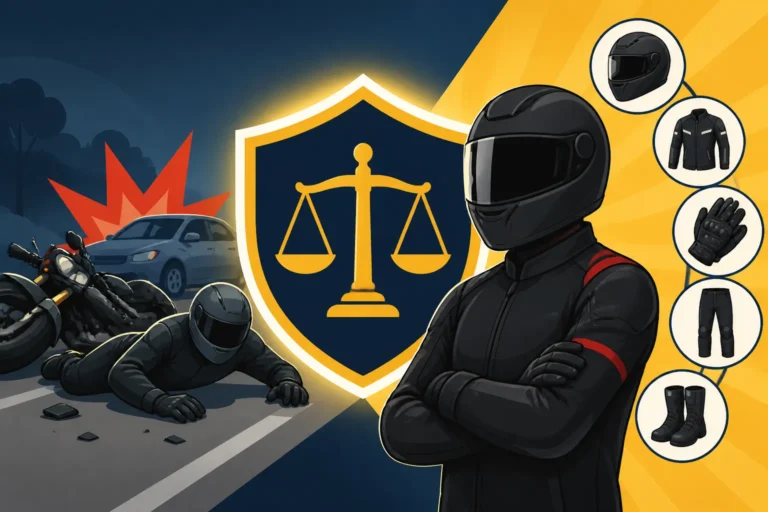
Regardless of what state laws dictate, there's a widely accepted "essential list" of protective gear that every rider should wear, every single time they throw a leg over their bike. This isn't just a suggestion; it's a proven strategy for injury prevention.
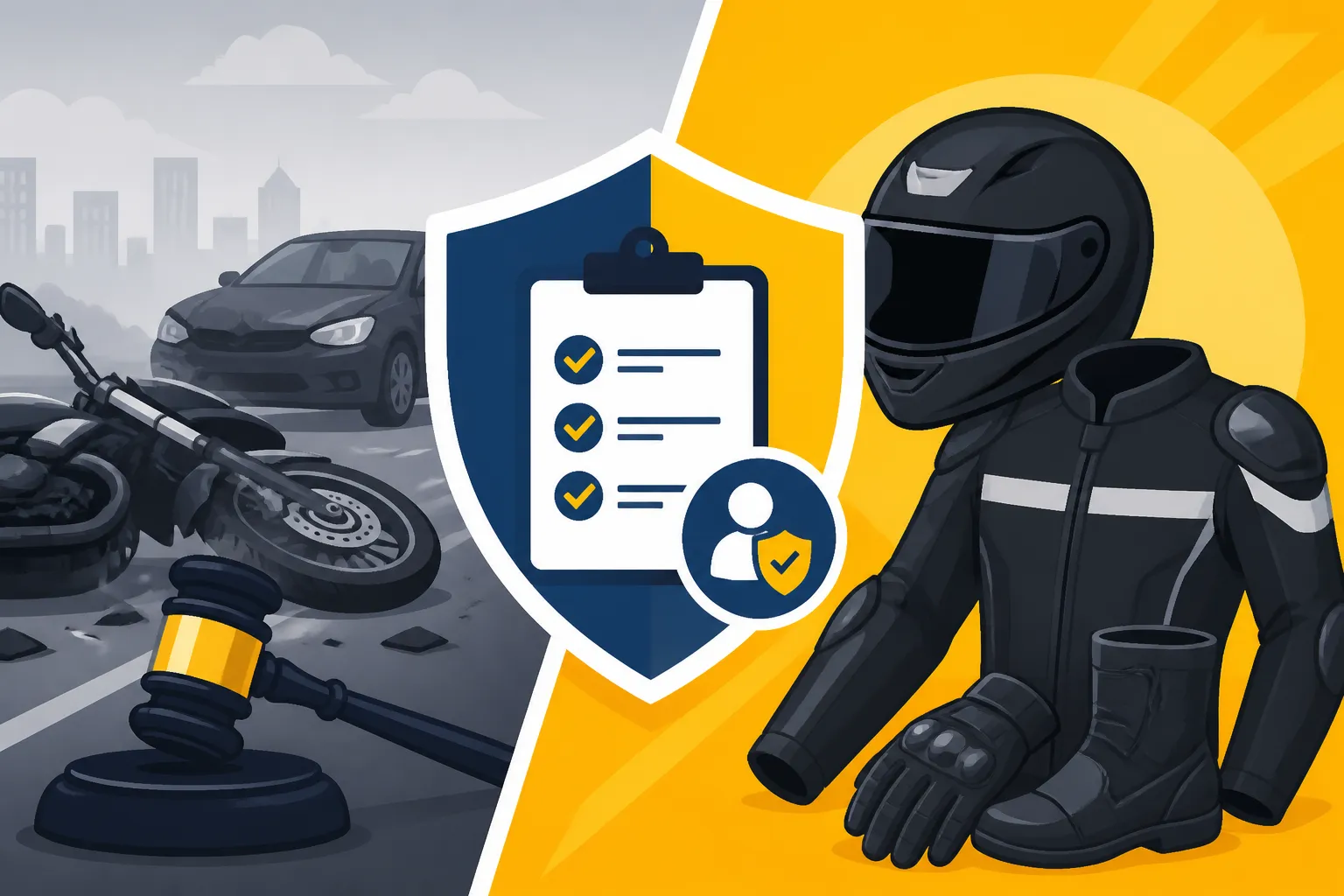
- DOT-Compliant Helmet: This is non-negotiable. Choose a full-face helmet for maximum protection, even if your state only requires a half-helmet. Look for certifications like DOT, ECE, or Snell.
- Armored Jacket: A dedicated riding jacket made of abrasion-resistant materials like leather or specialized textiles (Cordura, Kevlar, etc.) with CE-rated armor in the shoulders, elbows, and back. This protects against road rash and impact injuries.
- Riding Pants: Forget denim jeans. Opt for riding pants made from abrasion-resistant materials, often with integrated knee and hip armor. These are designed to slide, not shred, on asphalt.
- Full-Finger Gloves: Protect your hands, which are often the first point of impact in a fall. Look for leather or textile gloves with palm sliders and knuckle protection.
- Over-the-Ankle Boots: Sturdy boots with good ankle support, oil-resistant soles, and impact protection are crucial. They prevent crushing injuries, road rash, and provide a secure grip on the pegs.
Wearing this full complement of gear not only dramatically reduces your risk of severe injury but also contributes to your confidence and comfort on the road. Imagine a scenario where a deer jumps out in front of you. While you might not avoid the crash entirely, your full gear significantly increases your chances of surviving with much less severe injuries, transforming a potential life-altering event into a recoverable one.
Brands and Quality: Making Informed Choices
When it comes to motorcycle gear, quality truly matters. There's a significant difference between cheap, generic gear and well-engineered, tested protective equipment. While budget constraints are real for many riders, treating protective gear as an investment, rather than an expense, is the right mindset. Research reputable brands known for their safety and durability.
Brands like Shoei, Arai, AGV, and HJC are highly regarded for their helmets, offering advanced safety features and comfortable fits. For jackets and pants, Alpinestars, Dainese, REV'IT!, and Tourmaster are popular choices that offer robust protection. Gloves from brands like Held, Klim, and Five Advanced Gloves provide excellent abrasion and impact resistance. When you visit a specialty motorcycle gear store, such as a local Cycle Gear outlet, you'll often find knowledgeable staff who can guide you through the various options, ensuring your helmet fits correctly and that your jacket and pants offer the right level of protection and comfort for your riding style. Don't be afraid to try on different brands and models, comparing features like armor type, ventilation, and fit. Remember, gear that doesn't fit properly won't protect you effectively. Making an informed choice now could be the difference between a minor scrape and a major injury down the line.
Navigating Out-of-State Gear Laws
For many motorcycle enthusiasts, part of the joy of riding is the open road, which often means crossing state lines. However, this also means potentially encountering different motorcycle gear laws in each new jurisdiction. What’s perfectly legal in your home state might be a violation just a few miles down the highway, and ignorance of the law is rarely an excuse. Understanding how to navigate these varying regulations is key to avoiding fines and ensuring you're adequately protected wherever your journey takes you.
Reciprocity and Varying Regulations
The concept of "reciprocity" in legal terms usually refers to states recognizing each other's licenses or vehicle registrations. While this generally applies, it doesn't always extend to specific gear laws, particularly helmet laws. For instance, if you're a rider over 21 from Iowa, where helmets are not universally required, and you ride into a universal helmet law state like Missouri, you are now subject to Missouri's laws. This means you must wear a DOT-compliant helmet, regardless of what's allowed in your home state.
The complexities arise when you factor in the partial helmet laws. Let's say you're a 20-year-old rider from a state that allows riders under 21 to go without a helmet if they've completed a safety course (a rare but hypothetical scenario). If you ride into a state like Texas, which requires all riders under 21 to wear a helmet, your home state's rules won't protect you. You'd be in violation. This shifting legal landscape can be frustrating, as it places the burden on the rider to know the specific laws of every state they enter. A quick search for "Motorcycle Helmet Laws by State" before a long trip can save you a lot of headaches, and potential legal trouble. Always err on the side of caution when in doubt.
Best Practices for Interstate Riding
Given the complex and often contradictory nature of state-specific gear laws, adopting a few best practices for interstate riding can save you a lot of grief and ensure your safety.
- Always Wear a DOT-Compliant Full-Face Helmet: This is the golden rule. Even if your home state or a state you're visiting allows you to ride without a helmet (or with a less protective novelty helmet), wearing a full-face, DOT-certified helmet (preferably also ECE or Snell certified) provides the maximum protection and ensures you're compliant with virtually every state's helmet requirements. It eliminates all ambiguity.
- Carry Required Eye Protection: Always have goggles or a helmet with a face shield. Even if you have a windshield that might be legal in some states, having dedicated eye protection means you’re covered regardless of the local interpretation or if your windshield becomes damaged or dirty.
- Dress in Full Protective Apparel: As discussed earlier, while not legally mandated, wearing a riding jacket, pants, gloves, and boots is a non-negotiable safety measure. This gear protects you from road rash, impact injuries, and the elements, making your ride safer and more comfortable. Plus, if you end up in an accident, having worn full gear can help counter arguments that your injuries were self-inflicted by lack of protection.
- Research Your Route: Before embarking on a multi-state trip, take a few minutes to look up the motorcycle gear laws, especially helmet and eye protection laws, for every state you plan to traverse. Knowing the rules beforehand empowers you to make informed decisions and pack appropriately.
By following these best practices, you not only ensure legal compliance across diverse jurisdictions but, more importantly, you significantly enhance your personal safety. This focus on comprehensive protection, much like shopping for quality gear at Cycle Gear, ensures you're ready for anything the road throws your way, making your adventures safer and more enjoyable.
Disclaimer
The information provided in this guide is intended for general informational purposes only and does not constitute legal advice. Motorcycle laws, including those related to helmets and protective gear, vary significantly by state and can change. It is crucial to consult with local law enforcement or a qualified legal professional for the most current and accurate information regarding motorcycle laws in your specific jurisdiction. Reliance on any information provided in this guide is solely at your own risk.