Motorcycle Headlight and Equipment Laws
Riding a motorcycle offers unparalleled freedom, but that freedom comes with a significant responsibility: understanding and adhering to the myriad of laws designed to keep you and others safe. One area that often trips up even seasoned riders is the complex web of motorcycle headlight and equipment laws. It’s not just about having a headlight; it’s about its brightness, height, and even whether it's on during the day. This guide will meticulously break down these crucial regulations, helping you navigate the legal landscape and ensure your bike is always street-legal.
Understanding State-Specific Headlight Requirements
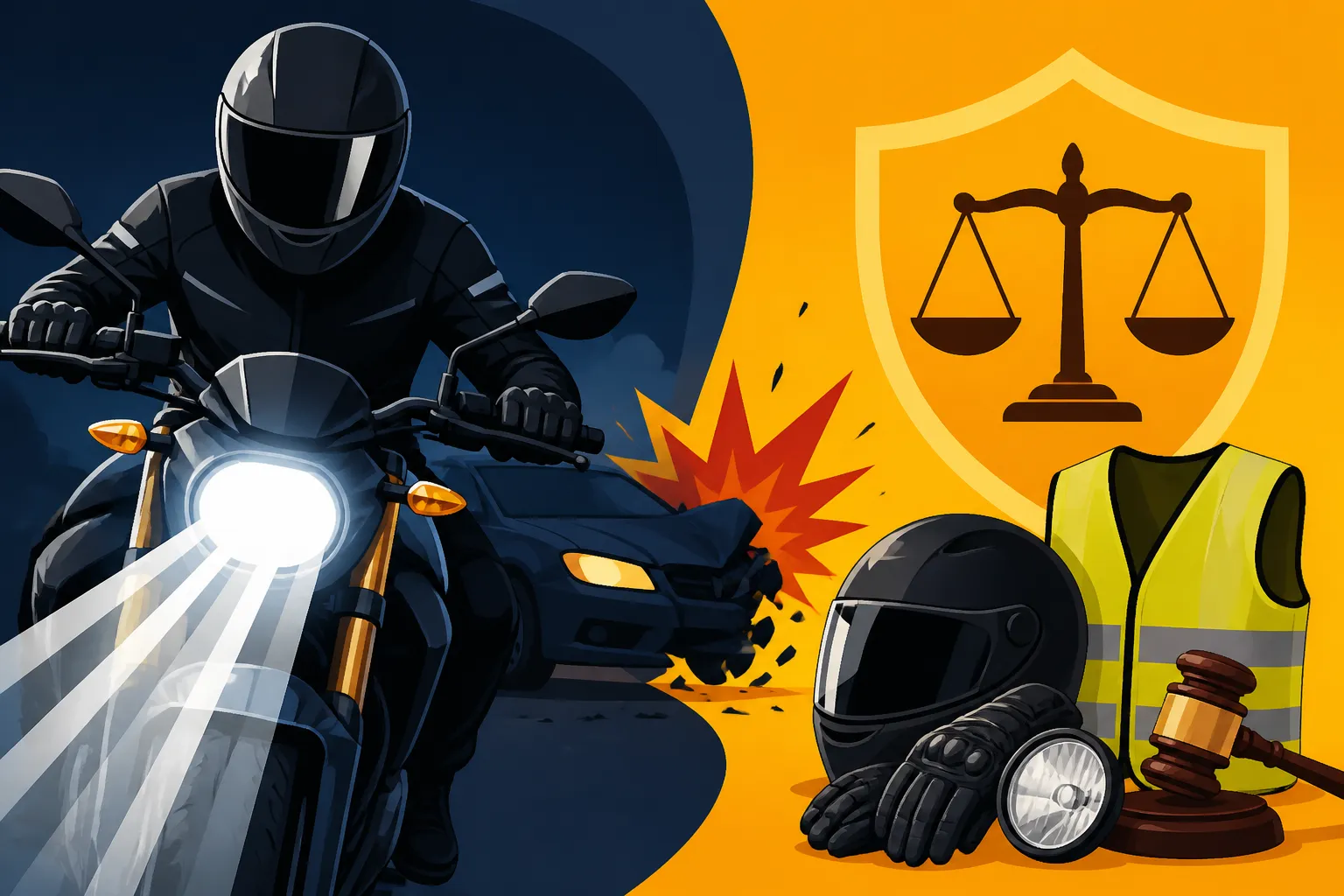
Motorcycle headlights are arguably the most critical piece of safety equipment after your helmet. They don't just help you see the road; they're essential for other drivers to see you, especially with the persistent "I didn't see the motorcycle" defense that often comes up after an accident. The laws governing these lights can vary significantly from one state to another, making it a constant challenge for riders who travel or relocate.
Daytime Headlight Use and Modulators
Many states have embraced the wisdom of "always on" policies for motorcycle headlights, recognizing that it significantly boosts rider visibility. For instance, states like California, Oregon, and Washington mandate that motorcycles operate with their headlights on at all times, including during daylight hours. This isn't just a suggestion; it's a legal requirement designed to make riders more conspicuous to cars, which often struggle to perceive motorcycles due to their smaller size. Ignoring this rule can lead to a citation and potentially weaken your position in an accident claim, even if your headlight didn't directly cause the collision.
Beyond a steady beam, some states permit the use of headlight modulators. These devices cause your headlight to flash rapidly, typically at a frequency that is noticeable but not distracting to other drivers. The idea behind modulators is to draw even more attention to your presence on the road. While legal under federal law for motorcycles, state laws vary, so it's paramount to check your local Department of Motor Vehicles (DMV) regulations or state vehicle code before installing one. A modulator that's perfectly legal in, say, Florida might raise eyebrows or even earn you a ticket in a state like New Jersey if their specific statutes haven't caught up with federal guidelines or have stricter interpretations.
Headlight Placement, Height, and Color Regulations
The position, height, and color of your motorcycle’s headlights are also tightly regulated. Generally, headlights must be mounted at a certain height from the ground—typically no lower than 24 inches and no higher than 54 inches, though this can shift slightly by state. This ensures that the light beam is projected effectively onto the road without blinding oncoming traffic or being too low to be seen. If you've customized your bike, perhaps with a raked front end or an aftermarket fairing, it's crucial to verify that your headlight still complies with these spatial requirements.
When it comes to color, the rule is almost universally consistent: headlights must emit a white or amber light. Any deviation, such as blue, red, or green lights, is usually illegal for forward-facing illumination, as these colors are often reserved for emergency vehicles or are simply deemed unsafe for general road use. While some riders enjoy experimenting with colored accent lighting, ensure it doesn't interfere with your primary headlights or create confusion for other drivers. Always double-check your state's specific vehicle code to confirm permissible colors and mounting locations, as non-compliant lighting can not only result in fines but also potentially compromise your safety and your legal standing after an incident.
Essential Lighting Beyond the Headlight
While your main headlight is crucial, it's far from the only light your motorcycle needs to be legal and safe. Effective lighting on all sides of your bike is paramount for communicating your presence and intentions to other road users. Neglecting these other vital lighting components can lead to dangerous misunderstandings and serious legal repercussions in the event of a crash.
Taillights and Brake Lights: Visibility from Behind
Your motorcycle's taillights and brake lights are your primary means of communicating your presence and deceleration to anyone behind you. Every state requires at least one red taillight, visible from a specific distance, usually around 500 feet, which stays illuminated whenever your headlight is on. This continuous red glow serves as a constant warning to trailing vehicles, especially during low-light conditions or inclement weather. For riders, ensuring this light is clean, bright, and undamaged is a routine but critical safety check.
The brake light, which illuminates more brightly when you apply your brakes, is equally vital. It needs to be activated by both your front and rear brake controls and must be distinctly brighter than your regular taillight. This differential brightness immediately signals to drivers behind you that you are slowing down or stopping, allowing them precious extra seconds to react. Many states, like New York, specifically detail these requirements, stipulating that the brake light must be visible and unmistakably convey a braking action. Faulty brake lights are a significant hazard; if you're rear-ended and your brake light wasn't working, even if the other driver was primarily at fault for distracted driving, their insurance company might argue that your non-compliant equipment contributed to the accident, potentially reducing your compensation.
Turn Signals and Reflectors: Communicating Your Intent
Turn signals are your voice on the road, clearly indicating your intention to change lanes or make a turn. While most states mandate the use of turn signals, usually amber in color and visible from specific distances, a few states still permit hand signals as a legal alternative. However, even where hand signals are permissible, electrical turn signals offer superior visibility, especially in heavy traffic or at night, and are generally recommended for enhanced safety. It's not uncommon for older or custom bikes to forgo turn signals, relying solely on hand signals, but this practice can be risky and may not be fully understood by all drivers, especially those unfamiliar with motorcycle hand signals.
In addition to active lighting, reflectors play a passive yet essential role in making your motorcycle visible. Most states require certain reflectors, typically amber on the front and sides, and red on the rear. These static reflective surfaces catch light from other vehicles, providing an extra layer of visibility when your active lights might not be enough or if they've failed. Many riders often overlook the importance of these small but mighty safety features. Before heading out, especially after making any modifications or purchasing aftermarket accessories from places like Cycle Gear, it’s a good habit to ensure all your reflectors are present, clean, and positioned correctly according to your state’s vehicle code.
Other Mandatory Equipment for Motorcycle Safety
While lights are paramount, a motorcycle's safety arsenal extends far beyond illumination. A host of other equipment, from mirrors to exhaust systems, plays a crucial role in preventing accidents and ensuring you're a responsible road user. These items are not mere suggestions; they are legally mandated and neglecting them can lead to tickets, accidents, and complications in any post-crash legal proceedings.
Mirrors and Horns: Crucial for Awareness
Visibility isn't just about being seen; it's also about seeing what's around you. That's where mirrors come in. Most states require motorcycles to have at least one rearview mirror, providing an unobstructed view of the road behind you for a specified distance, often 200 feet. Many riders opt for two mirrors for maximum situational awareness, and it's generally a wise choice. It allows you to monitor blind spots more effectively and quickly assess traffic conditions without constantly turning your head. A broken or missing mirror isn't just an inconvenience; it's a significant safety hazard that can prevent you from reacting to sudden traffic changes, and it's definitely a ticketable offense.
Equally important, and often taken for granted, is your motorcycle's horn. This isn't just for expressing your frustration in traffic; it's a critical safety device used to alert other drivers or pedestrians to your presence in potentially dangerous situations. State laws typically mandate that a motorcycle horn must be audible from a certain distance, usually around 200 feet. It must produce a sound that is distinct and unambiguous, not just a feeble peep. Regular checks to ensure your horn is fully functional, loud, and clear are essential. Imagine a scenario where a car is drifting into your lane, and your horn fails; it’s a terrifying thought that underscores why these seemingly simple pieces of equipment are so fundamentally important to your safety on the road.
Exhaust Systems and Noise Regulations
Ah, the roar of a motorcycle engine – it's a symphony to some, a nuisance to others. While many riders enjoy the distinctive sound of an aftermarket exhaust, virtually all states have laws regarding exhaust systems and noise levels. The universal requirement is that your motorcycle must have a muffler to prevent excessive noise. Riding without a muffler, or with one that's been modified to be excessively loud (often called "straight pipes"), is illegal in every state and will almost certainly get you pulled over.
Beyond just having a muffler, many jurisdictions have specific decibel (dB) limits for motorcycle exhaust noise, often measured at a certain distance or engine RPM. For example, California has fairly strict noise regulations, typically around 80 dB, which can be a real challenge for some popular aftermarket systems. Even if you love the sound, a police officer with a decibel meter can issue a citation if your bike exceeds the legal limit. It’s important to research your local and state noise ordinances before installing a new exhaust system. While a new exhaust might boost performance or aesthetics, ensure it complies with the law to avoid fines and potential issues, especially if you get into an accident and the police report notes an illegal exhaust, which could be used to imply reckless riding.
Handlebars and Fenders: Ergonomics and Safety
Even components like handlebars and fenders, which many consider aesthetic choices, are often subject to legal requirements. Handlebar height is a common regulation, with many states stipulating that the grips cannot be higher than a rider's shoulder or, in some cases, a specific number of inches above the seat or attachment point. These laws are primarily designed to ensure riders have proper control and a clear line of sight. Handlebars that are too high can impair steering, make emergency maneuvers difficult, and obstruct visibility, making you less safe on the road.
Fenders are another item that can be surprisingly legally important. Both front and rear fenders are usually required to prevent dirt, water, and debris from being thrown up by the tires, protecting both the rider and other vehicles. While minimalistic "fender eliminator" kits are popular for their sleek look, they often reduce the fender to a size that is legally non-compliant. Before modifying your fenders, consult your state's vehicle code to ensure you're not inadvertently creating a legal problem. Riding with legally insufficient fenders can lead to tickets and, in some cases, could be cited as a contributing factor in an accident if debris from your tire caused an issue for another driver.
The Legal Consequences of Non-Compliance
It's easy to think of equipment violations as minor infractions, a slap on the wrist. But ignoring motorcycle equipment laws can have a much broader and more severe impact than just a quick fine. The legal system takes these regulations seriously because they are directly tied to road safety, and non-compliance can escalate quickly, affecting your wallet, your driving record, and even your ability to ride.
Citations, Fines, and Points on Your License
The most immediate consequence of operating a motorcycle with non-compliant equipment is receiving a traffic citation. Police officers are trained to spot violations, whether it's a headlight out, an excessively loud exhaust, or handlebars that are too high. The fines for these infractions can vary widely depending on the state and the specific violation. A simple taillight malfunction might be a relatively small fine, but multiple violations or egregious issues like a lack of a muffler could result in much steeper penalties.
Beyond the monetary cost, many equipment violations also come with points added to your driving record. Accumulating too many points can lead to increased insurance premiums, a suspension of your motorcycle endorsement, or even a full driver's license suspension. For example, in states like Virginia, certain equipment violations can quickly add up, affecting your standing with the DMV. It’s not just about the one-time sting of a ticket; it’s about the long-term impact on your driving privileges and financial stability. This cumulative effect is why it's so important to address any equipment issues promptly rather than hoping you won't get caught.
Impoundment and Inspection Issues
In more severe or persistent cases of non-compliance, particularly if your motorcycle is deemed unsafe for the road, law enforcement has the authority to impound your vehicle. Imagine riding your customized chopper, only to have it towed away because the handlebars are significantly over the legal height limit or the exhaust is deemed a public nuisance. Recovering an impounded vehicle involves towing fees, storage fees, and often requires that the non-compliant equipment be fixed before the bike can be released, adding considerable expense and hassle.
Furthermore, many states, such as North Carolina and Virginia, require annual safety inspections for all registered vehicles, including motorcycles. During these inspections, licensed mechanics meticulously check all mandated equipment, including headlights, turn signals, brake lights, mirrors, horn, exhaust, tires, and even handlebar height. If your motorcycle fails inspection due to non-compliant equipment, you won't be able to renew your registration until the issues are resolved. This can put your riding plans on hold indefinitely and force you to incur unexpected repair costs. This preventative measure ensures that all vehicles on the road meet minimum safety standards, safeguarding everyone.
How Equipment Violations Impact Your Accident Claim
When you're involved in a motorcycle accident, the focus immediately shifts to fault and damages. While you might assume a broken headlight wouldn't matter if a car ran a red light and hit you, insurance companies and opposing legal teams are masters at finding any detail to reduce their liability. Your motorcycle's equipment status can become a surprisingly potent weapon against you.
The "Helmet Defense" and Analogous Arguments
You might be familiar with the "helmet defense," where insurance companies try to argue that a rider's injuries would have been less severe if they had been wearing a helmet, even if the helmet wasn't legally required in that state. This defense, as explored in articles like The Helmet Defense Explained, attempts to shift a portion of the blame to the injured rider. A similar principle can be applied to other equipment violations.
Imagine you're hit by a distracted driver, but your motorcycle’s brake light was out. Even though the primary fault lies with the distracted driver, their legal team might argue that your non-functioning brake light contributed to the accident by failing to adequately warn them of your deceleration. Or consider a situation where a lack of proper reflectors made you less visible during dusk. While these might seem like minor infractions compared to a driver running a stop sign, the opposing side will seize on any deviation from legal standards to reduce the value of your claim. They want to create doubt, to suggest that your negligence in maintaining your equipment played a role, however small, in the severity or occurrence of the accident.
Comparative Negligence and Reduced Settlements
This brings us directly to the concept of comparative negligence, a legal doctrine common in most states. Under comparative negligence rules, if you are found to be partially at fault for an accident, your total compensation can be reduced by your percentage of fault. This is a critical factor in How Comparative Negligence Reduces Your Payout. So, if your faulty brake light meant you were deemed 10% responsible for a rear-end collision, your total settlement for medical bills, lost wages, and pain and suffering could be reduced by 10%.
Even if the equipment violation didn't directly cause the crash, it can still influence How Fault Is Determined in Motorcycle Accidents. An insurance company might argue that your non-compliant equipment demonstrated a general disregard for safety, which contributed to the overall risk of the accident. This is where How Insurance Companies Assign Blame to Riders can become incredibly frustrating for motorcyclists, who often face unfair stereotypes. For instance, if you had an excessively loud, illegal exhaust system, even if it had no bearing on the crash itself, the other side might try to use it to paint you as a reckless rider. This subtle but insidious tactic is designed to diminish the perceived value of your claim and underscore why adhering to all equipment laws is not just about avoiding tickets, but about protecting your rights and future compensation after an accident.
Staying Street Legal: Practical Tips for Riders
Navigating the labyrinth of motorcycle equipment laws can feel daunting, but it doesn't have to be a constant source of stress. With a proactive mindset and a few consistent habits, you can confidently ensure your ride is always street-legal, keeping you safe and protecting your interests in any unforeseen circumstances.
Regular Pre-Ride Checks and Maintenance
One of the simplest yet most effective ways to ensure your motorcycle is compliant and safe is to adopt a routine of pre-ride checks. Before every ride, take a few minutes to walk around your bike and quickly inspect key components. This includes checking that your headlights, taillights, and brake lights are all fully functional. Test your turn signals, both front and rear, and make sure your horn lets out a strong, clear sound. Glance at your mirrors to confirm they are securely mounted and provide a clear view. This quick routine can catch issues like a burnt-out bulb or a loose mirror stem before they become a problem on the road.
Beyond these quick checks, regular maintenance is crucial. Burnt-out bulbs, worn-out tires, or a loose exhaust baffle don't happen overnight. Incorporating equipment checks into your broader maintenance schedule, whether you do it yourself or have a mechanic handle it, ensures that your bike remains in top condition. Keeping a small stock of common replacement bulbs can save you from an unexpected ticket or, more importantly, a dangerous situation. Remember, the goal isn't just to pass an inspection; it's to maintain the highest level of safety and reliability for every mile you ride.
Understanding Aftermarket Modifications and Legalities
Customizing a motorcycle is a huge part of the riding culture, offering a unique opportunity to personalize your machine. However, the allure of aftermarket parts must be balanced with the reality of legal compliance. Before you install that sleek new exhaust, those mini turn signals, or a radical set of ape hangers, it is absolutely essential to research the specific laws in your state. A product advertised as "off-road use only" might seem like a minor detail, but it's a huge red flag that it probably isn't street legal.
When purchasing aftermarket parts, even from reputable retailers like Cycle Gear, it’s your responsibility to ensure they meet local and state regulations. Don't assume that if a store sells it, it's automatically legal for your road bike. Check for DOT (Department of Transportation) compliance stamps on lighting components, helmet laws, and ensure any modifications like handlebar height or exhaust noise levels fall within permissible limits. Many states publish detailed motorcycle handbooks online, or you can consult your local DMV or even a knowledgeable police officer. Being informed upfront can save you significant headaches, fines, and potential issues if you ever find yourself needing to prove your bike's compliance after an accident. Protecting yourself also means understanding Motorcycle Safety Gear and Legal Protection and Motorcycle Accident Liability: A Complete Guide from all angles.
| Equipment Type | Common Requirement | Example States | Notes on Variation |
|---|---|---|---|
| Headlight | Must be on at all times (day and night). White/amber light. | CA, OR, PA, NY, FL | Some states allow modulators, others are silent or prohibit. |
| Brake Light | Red, brighter than taillight, activated by both brakes. Visible 500 ft. | TX, NY, GA, IL | Always check functionality, a common failure point. |
| Turn Signals | Amber, front/rear. Visible X distance. | Most states require | A few states still permit hand signals as primary. |
| Mirrors | At least one rearview mirror, visible 200 ft to the rear. | TX, FL, CA | Many riders prefer two for better visibility. |
| Horn | Audible from at least 200 ft. | All states | Must be distinct, not just a weak chirp. |
| Exhaust | Muffler required. Noise limits (e.g., ~80-92 dB). | CA, AZ, WA | Aftermarket exhausts are often the biggest source of non-compliance. |
| Handlebars | Not higher than shoulder level (or specific inches above seat). | CA, TX, PA | Varies significantly; check specific state code carefully. |
| Fenders | Front and rear required to prevent debris kick-up. | All states | "Fender eliminator" kits can often lead to non-compliance. |
Disclaimer
This article is for general informational purposes only and does not constitute professional advice. Laws and regulations vary by location and change over time. Consult a qualified professional for guidance on your specific situation.