How to Pursue Multiple Insurance Policies
Getting into a motorcycle accident is terrifying and disorienting enough. Then, when the dust settles and you start tallying up the medical bills, lost wages, and property damage, a new wave of panic can set in: what if the at-fault driver's insurance policy simply isn't enough to cover everything? This guide is here to walk you through the complex, often frustrating, but absolutely essential process of pursuing multiple insurance policies to ensure you receive the full compensation you deserve.
Understanding Why One Policy Might Not Be Enough
After a motorcycle crash, the instinct is often to focus solely on the at-fault driver's liability insurance. While that's certainly a primary avenue for recovery, the harsh truth is that a single policy often falls short, leaving injured riders in a significant financial bind.
The Harsh Reality of Motorcycle Accident Damages
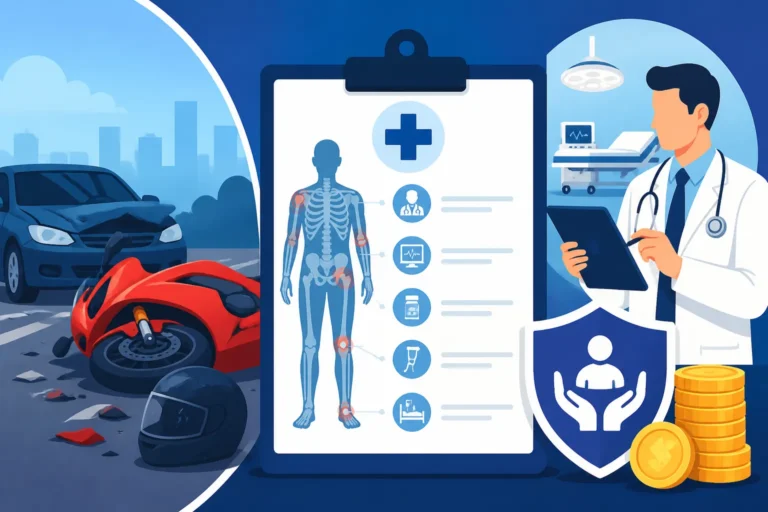
Let's be blunt: motorcycle accidents, by their very nature, tend to result in far more severe injuries than typical car-on-car collisions. There's simply less protection between you and the road. We're talking about things like debilitating road rash, broken bones that require multiple surgeries, and devastating head or spinal cord injuries that can lead to lifelong disability. These aren't just minor bumps and bruises; they often translate into astronomical medical costs, prolonged rehabilitation, and a significant loss of income, both in the short term and for years to come.
Consider a scenario where you've suffered a serious leg injury, requiring multiple surgeries, extensive physical therapy, and a long recovery period that keeps you out of work for six months. Your initial hospital stay alone could be tens of thousands of dollars. Add in specialist visits, medications, rehabilitation, and the wages you've missed, and suddenly you're looking at hundreds of thousands of dollars in damages. These are the kinds of financial burdens that can cripple a family, and they highlight why it’s so critical to understand the true scope of your Types of Damages in a Motorcycle Accident Claim.
The Limitations of a Single Insurance Policy
Most drivers carry only the minimum liability insurance required by their state, which, let's be honest, is often woefully inadequate for serious injuries. For instance, in many states, the minimum might be $25,000 for bodily injury per person. If your medical bills alone exceed that amount, the at-fault driver's policy is exhausted, and you're left holding the bag for the rest. Even drivers with higher coverage, say $100,000, can quickly see those limits eaten up by a severe motorcycle accident.
This is why focusing on just one policy is a risky gamble. Insurance companies, by design, are in the business of paying out as little as possible. They will scrutinize every expense, every claim, and every aspect of your accident, often trying to find ways to reduce their payout, or even attempting to assign partial fault to you, which can significantly How Comparative Negligence Reduces Your Payout. If you rely solely on the at-fault driver's policy and it proves insufficient, you could be left with significant unpaid bills and future expenses, making it crucial to explore every available avenue for compensation.
Identifying Potential Additional Insurance Policies
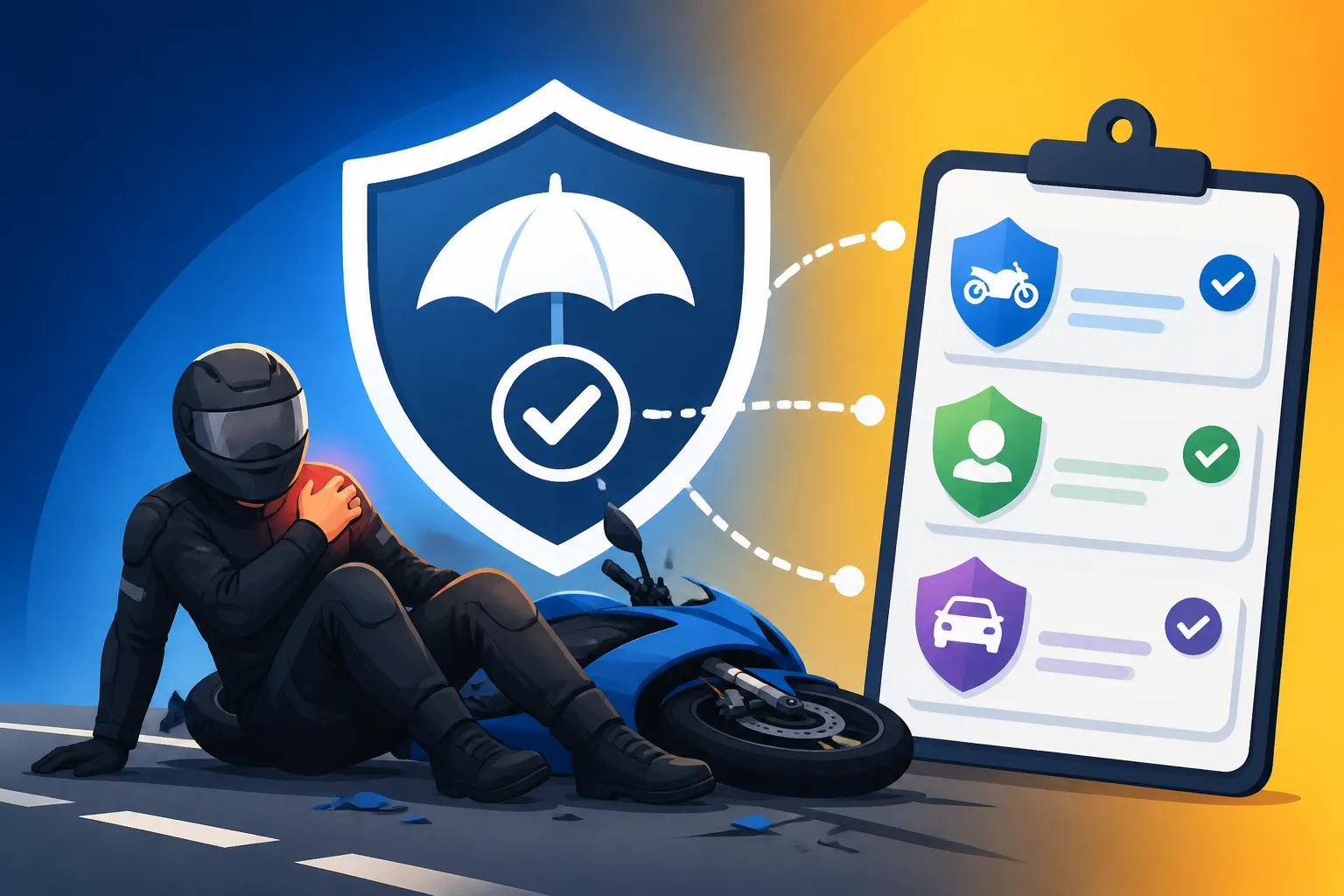
When the at-fault driver's policy doesn't cut it, it’s time to cast a wider net. Many riders don't realize the range of additional insurance policies that might be available to them, either through their own coverage or other third parties, which can make a world of difference in your recovery.
Your Own Uninsured/Underinsured Motorist UM/UIM Coverage
This is, hands down, one of the most vital coverages any motorcycle rider can have, yet many overlook it or opt for minimal limits. Uninsured/Underinsured Motorist (UM/UIM) coverage is designed specifically for situations where the at-fault driver either has no insurance (uninsured) or their insurance limits are too low to cover your damages (underinsured). This coverage steps in to pay for your medical bills, lost wages, and pain and suffering, up to your policy limits, effectively acting as the other driver's insurance when theirs isn't enough.
For example, if the at-fault driver only has $25,000 in bodily injury coverage, but your damages total $150,000, your UM/UIM policy could cover the remaining $125,000 (assuming you have sufficient limits). It's your insurance protecting you from other negligent drivers who don't carry adequate coverage. Understanding How UM/UIM Coverage Increases Payouts can be a game-changer for your financial recovery, especially when you encounter When the Driver Is Underinsured.
Household Policies and Umbrella Coverage
Beyond your personal motorcycle insurance, other policies within your household might offer a layer of protection. This can include:
- Your own auto insurance policy: Even if the accident happened on your motorcycle, some components of your primary auto insurance might extend to you, particularly medical payments (MedPay) or personal injury protection (PIP) coverage if you live in a no-fault state. These policies can help cover immediate medical expenses regardless of who was at fault.
- Other residents' auto policies: If you live with family members who have their own auto insurance policies, their UM/UIM coverage might, in some states, extend to you as a household member, even if you weren't driving their car. This is often referred to as "stacking" coverage across multiple policies.
- Umbrella insurance policies: These are fantastic, often underutilized, policies that provide an additional layer of liability protection above and beyond the limits of your primary auto, home, or motorcycle insurance. If your damages far exceed the limits of all other primary policies, an umbrella policy can kick in, offering millions of dollars in additional coverage. They're designed for catastrophic events, and a serious motorcycle accident certainly qualifies. While they are typically owned by you or a household member, their expansive nature means they are a critical component to investigate.
Third-Party Policies Beyond the At-Fault Driver
Sometimes, the at-fault driver isn't the only one responsible. Other entities might share liability, opening up additional avenues for compensation. This is where a thorough investigation by an experienced professional becomes invaluable.
- Employer liability: If the at-fault driver was working at the time of the accident (e.g., a delivery driver, a commercial vehicle operator), their employer's commercial insurance policy might be liable. These policies typically have much higher limits than individual personal auto policies.
- Government entity liability: Were the poor road conditions, a malfunctioning traffic light, or insufficient signage a contributing factor to your crash? If so, a local, county, or state government entity could be held partially responsible. Suing a government entity is notoriously complex and has strict notice requirements, but it's a possibility that shouldn't be overlooked in cases of Motorcycle Accidents Caused by Road Hazards.
- Vehicle or parts manufacturer: In rare but impactful cases, a defect in the other vehicle (or even your motorcycle) could contribute to the accident or exacerbate your injuries. If a faulty brake system on the other car or a defective tire on your bike played a role, the manufacturer could be held liable through product liability claims.
- Maintenance companies: If an improperly serviced vehicle or equipment malfunctioned due to negligent maintenance, the responsible company could bear some liability.
Expanding your search beyond the immediate at-fault driver's policy is crucial for maximizing your What Affects Your Motorcycle Accident Payout.
The Process of Stacking and Pursuing Multiple Claims
Navigating multiple insurance claims is far more complicated than dealing with just one. It requires a strategic approach, meticulous documentation, and a deep understanding of insurance law and negotiation tactics.
Notifying All Relevant Insurers
After a motorcycle accident, one of the first critical steps is to notify all potentially relevant insurance companies. This includes your own motorcycle insurer, any auto insurers in your household (especially for UM/UIM or MedPay/PIP), and the at-fault driver's insurer. Even if you're unsure if a policy applies, it's often better to notify them promptly. Many policies have strict deadlines for reporting an accident, and missing these could jeopardize your claim.
It's important to remember that notifying doesn't mean giving a recorded statement or signing any documents until you fully understand their implications. It merely means informing them that an incident occurred and that you may be making a claim. An experienced lawyer can handle these initial communications, ensuring you don't inadvertently say something that could be used against you later. This proactive communication is a key step to First Steps to Protect Your Motorcycle Claim.
Navigating Complex Claim Filings
Each insurance policy has its own set of rules, procedures, and deadlines. Filing claims with multiple insurers means dealing with different adjusters, different forms, and potentially different legal interpretations. For instance, your UM/UIM carrier might require you to exhaust the at-fault driver's policy limits before they will pay out. They may also demand to be involved in any settlement negotiations with the primary insurer.
Moreover, the order in which policies pay out (known as "priority of payment") can be complex and depends on state law and specific policy language. You might have to jump through hoops with one insurer before another one even considers your claim. This is where the coordination of a legal professional becomes invaluable, as they can manage these intricate processes, ensuring all deadlines are met and all necessary documentation, from medical records to accident reports, is properly submitted. Trying to handle this alone while recovering from serious injuries is an immense burden.
The Importance of a Coordinated Approach
Successfully pursuing multiple insurance policies demands a highly coordinated strategy. You need to ensure that evidence collected for one claim is shared appropriately with others, that settlement offers are evaluated in the context of the entire pool of available insurance, and that you avoid pitfalls like signing a general release too early. A general release with one insurer could inadvertently waive your rights to pursue claims with other insurers.
Here's a simplified look at how various policies might interact:
| Policy Type | Who Owns It | When It Applies | Key Benefit | Potential Issues & Coordination Needs |
|---|---|---|---|---|
| At-Fault Driver's Liability | At-fault driver | When they are solely or primarily at fault | Primary source of compensation for your injuries | Often has low limits; adjusters will try to minimize payout; may require exhaustion before other policies kick in. |
| Your Medical Payments (MedPay) | You (or household member) | Covers your medical bills regardless of fault | Quick access to funds for immediate medical care | Usually has lower limits (e.g., $5,000-$10,000); often requires reimbursement (subrogation) from final settlement. |
| Your Uninsured/Underinsured Motorist (UM/UIM) | You (or household member) | When at-fault driver is uninsured or underinsured | Supplements damages when other policy is insufficient to cover all losses | Can be subject to "anti-stacking" rules in some states; insurer may request to approve any settlement with the primary insurer. |
| Your Umbrella Policy | You (or household member) | Kicks in after primary policies are exhausted | Provides significant additional coverage for catastrophic damages | Typically requires underlying auto/home policies to be exhausted first; may have specific motorcycle exclusions. |
| Other Third-Party Liability | Other negligent parties | When another entity shares fault | Expands the pool of available funds for significant damages | Proving liability can be complex and requires extensive investigation. |
An attorney experienced in motorcycle accidents knows how to manage these moving parts. They can negotiate with multiple adjusters simultaneously, ensure you don't inadvertently prejudice one claim while pursuing another, and guide you through the process to ensure you recover the maximum possible compensation from all available sources. This is a primary way How a Lawyer Increases Your Settlement.
Common Challenges and How to Overcome Them
Dealing with a single insurance company is tough enough. When you're pursuing multiple policies, the challenges multiply. Insurance companies, even your own, are businesses focused on their bottom line, not on your recovery.
Insurers' Resistance and Denial Tactics
You might think your own insurance company would be on your side, especially when it comes to UM/UIM coverage, but that's not always the case. Insurance companies, even those you pay premiums to, are often reluctant to pay out large claims. They might employ various tactics to resist paying or to minimize your payout. They could argue that your injuries weren't as severe as claimed, that a pre-existing condition is to blame, or even that your own actions contributed to the accident. They might deny that multiple policies can be stacked, or they may try to find exclusions in your policy language.
This is where having a strong legal advocate is paramount. A lawyer understands How Lawyers Deal with Insurance Companies and can counter these tactics effectively. They will present a comprehensive case, backed by solid evidence, medical documentation, and expert testimony, to demonstrate the full extent of your damages and the applicability of each policy.
Avoiding Double Recovery Pitfalls
While the goal is to maximize your compensation, you cannot "double dip" – meaning you can't recover twice for the same loss from different policies. For example, if your MedPay coverage pays for $5,000 of your medical bills, your UM/UIM carrier will generally subtract that $5,000 from their payout for medical expenses. This is to prevent you from being compensated for the same expense more than once.
This concept, known as the "collateral source rule" in some contexts, varies by state. An attorney will meticulously track all payouts and expenses to ensure you're fully compensated without running into double recovery issues, which could lead to liens or demands for repayment. They'll also manage any subrogation claims, where one insurer tries to recover money they paid out from the at-fault party's insurer.
Understanding State-Specific Anti-Stacking Rules
One of the most significant challenges when pursuing multiple insurance policies is navigating state-specific laws regarding "stacking." Stacking refers to combining the limits of multiple insurance policies to increase the total amount of available coverage. Some states allow stacking, allowing you to combine UM/UIM limits from multiple vehicles on your policy or even from multiple policies within the same household. Other states have "anti-stacking" laws, which prevent you from doing so or severely limit it.
For example, in a state that allows stacking, if you have two motorcycles, each with $100,000 in UM/UIM coverage, you might be able to stack them for a total of $200,000 in coverage. In an anti-stacking state, you might only be able to recover up to the single highest policy limit. The nuances of these laws can be incredibly complex and vary widely from state to state. This is why it’s so important to consult with a lawyer who is deeply familiar with the Motorcycle Accident Fault Laws in California or your specific state's regulations, as these rules directly impact how much you can ultimately recover. They can explain How Policy Limits Cap Your Settlement and how best to navigate these restrictions.
Dealing with a motorcycle accident and its aftermath is an incredibly challenging experience. Knowing that you might have multiple insurance policies to pursue can offer a glimmer of hope, but the process itself is fraught with potential pitfalls. By understanding your options, documenting everything meticulously, and seeking expert legal guidance, you can significantly increase your chances of securing the full and fair compensation you need to rebuild your life. For many, this comprehensive approach is the only way to genuinely recover the Average Motorcycle Accident Settlement Amounts that reflect the true cost of their injuries and losses.
Disclaimer
Please remember that this information is for educational purposes only and should not be considered legal advice. Motorcycle accident claims and insurance laws are complex and vary by jurisdiction. You should consult with a qualified legal professional to discuss the specifics of your case and obtain advice tailored to your situation.