Manufacturer Liability for Defective Parts
There are few things more frustrating, and frankly, terrifying, than being out on your motorcycle, enjoying the open road, only to have something completely out of your control go wrong with the bike itself. You ride safely, you watch out for other drivers, but what happens when the very machine you trust fails you? This comprehensive guide will walk you through the complexities of manufacturer liability when a defective motorcycle part leads to an accident, helping you understand your rights and options.
Understanding Product Liability in Motorcycle Accidents
When a motorcycle accident happens, our minds often jump to things like distracted drivers, road hazards, or even rider error. But sometimes, the fault lies not with a driver or the rider, but with the machine itself—specifically, a defective part. This is where the legal concept of product liability comes into play, and it's a crucial area for any rider to understand.
What Exactly is Product Liability?
At its core, product liability is about holding manufacturers, distributors, and even retailers responsible when a defective product causes injury or harm. It’s built on the idea that consumers have a right to expect products they purchase to be safe for their intended use. For motorcycles, this means that every component, from the smallest bolt to the entire frame, should function as designed and advertised, without inherent flaws that could put a rider at risk. It’s a legal framework that essentially says, "If you make it, sell it, or put your name on it, and it's defective and hurts someone, you're on the hook."
This isn't about minor inconveniences; it's about serious, life-threatening failures. Think about a braking system that suddenly gives out, or a tire that delaminates at highway speeds. These aren't just unfortunate events; they are often the direct result of a breakdown in the chain of responsibility from design to delivery. The law recognizes that consumers, especially motorcycle riders, are in a vulnerable position and often lack the technical expertise or resources to detect latent defects before they cause catastrophic damage. Because of this, the legal burden often shifts to the manufacturer to prove their product was not defective, once a defect is reasonably alleged.
Why Defective Parts are a Serious Threat to Riders
Motorcycles, by their very nature, offer less protection than enclosed vehicles. There's no steel cage, no airbags, and often, nothing between you and the asphalt but your gear. This inherent vulnerability means that any mechanical failure, no matter how seemingly small, can have far more devastating consequences for a motorcyclist than it might for someone in a car or truck. A car driver might experience a minor fender-bender from a brake failure, but a rider could be thrown clear, suffering severe road rash, broken bones, or even traumatic brain injuries.
The stakes are simply higher for us on two wheels. Imagine a scenario where you're cruising down a busy interstate, perhaps near Los Angeles, and your throttle suddenly sticks wide open. Or perhaps you're navigating a tight turn on a scenic route through the Blue Ridge Mountains, and your suspension unexpectedly collapses. These aren't just scary thoughts; they are real possibilities when defective parts make their way onto our bikes. The trust we place in our machines is paramount to safe riding. When that trust is betrayed by a manufacturing defect, it can lead to immediate and severe danger, making Common Causes of Motorcycle Accidents much more likely and often completely unavoidable for the rider. The injuries can be extensive, often leading to long-term physical, emotional, and financial burdens that no rider should have to face due to someone else's negligence in the production process.
Types of Manufacturing Defects Leading to Accidents
When we talk about product liability, it's not a one-size-fits-all situation. There are distinct categories of defects that can lead to motorcycle accidents, each with its own nuances in how they are proven and how liability is assigned. Understanding these differences is key to building a strong case.
Design Defects
A design defect means that the product, even if manufactured perfectly according to its specifications, is inherently dangerous due to its design. It's a flaw in the blueprint, if you will, not in the execution. This implies that every single motorcycle of that particular model or every part manufactured to that design carries the same risk.
For instance, consider a hypothetical scenario where a new motorcycle model is designed with a fuel line positioned too close to the engine's exhaust manifold. Even if the fuel line and manifold are perfectly manufactured from high-quality materials, the design itself creates an unreasonable risk of overheating and a potential fire hazard. Another example could be a motorcycle frame designed with insufficient structural integrity at a critical stress point, making it prone to cracking under normal riding conditions. The manufacturer, in these cases, could have (and should have) designed the product in a safer way without compromising its utility. Proving a design defect often requires an expert engineer to testify that a safer, economically feasible alternative design existed at the time of manufacturing. This kind of claim scrutinizes the choices made on the drawing board, long before any physical product ever rolled off an assembly line.
Manufacturing Defects
This is probably what most people think of when they hear "defective part." A manufacturing defect occurs when a product departs from its intended design, even though all possible care was exercised in the preparation and marketing of the product. Essentially, the design was good, but something went wrong during the production or assembly process, making a specific unit or batch of units unsafe.
Imagine a batch of brake calipers coming off a production line where a machine was calibrated incorrectly, leading to internal components being slightly misaligned or a critical seal not being properly installed. While the design for the caliper might be perfectly safe, these specific units now pose a significant risk of failure. Similarly, a crucial weld on a swingarm might be weak due to improper welding techniques, or an incorrect grade of metal might have been used for a specific bolt, making it prone to shearing. These are not systemic design issues affecting every bike of that model, but rather isolated (though potentially widespread within a batch) failures during the actual making of the product. The focus here is on quality control, assembly errors, or the use of substandard materials during the manufacturing phase. These defects can be notoriously difficult to spot until they tragically lead to an accident, underscoring the importance of meticulous inspections and rigorous quality assurance protocols in manufacturing facilities.
Marketing Defects Failure to Warn
Sometimes, the product itself isn't inherently flawed in its design or manufacturing, but it becomes dangerous because consumers aren't given adequate warnings about its potential risks or clear instructions on how to use it safely. This is often referred to as a "marketing defect" or "failure to warn."
Consider a motorcycle tire that has a specific optimal inflation pressure for certain load conditions, but the owner's manual or tire sidewall doesn't clearly communicate this, or perhaps provides misleading information. If a rider follows the instructions (or lack thereof) and the tire fails due to improper inflation, leading to a crash, the manufacturer could be liable for failing to adequately warn the consumer. Another example might be a specialized fluid or lubricant that, if mixed with a different type, could cause a system failure, but the packaging doesn't provide a clear warning against such mixing. While we as riders are expected to exercise common sense and read manuals, manufacturers have a legal obligation to inform us of non-obvious dangers and proper usage to mitigate risks that cannot be eliminated through design or manufacturing processes. This type of defect highlights the crucial role of clear, comprehensive, and accessible safety information provided by the product manufacturer to prevent foreseeable harm.
Common Defective Motorcycle Parts and Their Impact
When a motorcycle part fails, the consequences can be catastrophic. Unlike a car, where a component failure might lead to inconvenience or a minor accident, on a motorcycle, it can mean immediate loss of control, severe injury, or worse. Let's dive into some of the more common culprits and how their failure can impact a rider.
Brake System Failures
Few systems are as critical to a motorcycle's safety as its brakes. When they fail, it's often sudden and leaves a rider with precious little time or ability to react, especially at speed or in heavy traffic. Brake system failures can stem from a variety of defects.
One common issue involves hydraulic components. A manufacturing defect could lead to a weak spot in a brake line, causing it to burst under pressure, or a faulty master cylinder might not generate enough pressure to activate the calipers. Imagine trying to scrub speed off on a busy highway in Phoenix, Arizona, only for your front brake lever to go limp—a truly terrifying scenario that often results in a rear-end collision or the rider swerving into another lane. Caliper defects, such as pistons seizing or seals failing, can also lead to partial or complete loss of braking power. If the brake pads themselves are made with substandard materials that degrade prematurely or detach from their backing plates, the rider is left with metal-on-metal friction, or no friction at all. These failures often occur without warning, transforming a routine ride into an emergency situation where the rider's only hope is a combination of luck and evasive maneuvers. The sudden inability to slow down or stop can lead directly to Motorcycle Accidents Caused by Rear-End Collisions or Motorcycle Accidents Caused by Intersection Accidents, with potentially devastating outcomes.
Tire and Wheel Assembly Defects
Our tires are our only contact with the road, and the wheels they're mounted on are fundamental to stability and control. Defects in these areas are particularly dangerous because they can instantly compromise handling, leading to a loss of balance and control.
Tread separation is a serious, often catastrophic, tire defect where the layers of the tire detach, typically at highway speeds. This can cause an immediate blowout, sending the motorcycle violently out of control. Think about riding down I-95 in Florida, and suddenly, your rear tire disintegrates—it's not just a flat, it's an immediate threat to your life. Beyond the tread, the tire's construction itself can be faulty; for example, if the sidewall integrity is compromised during manufacturing, it might fail under normal stress. Wheel defects are equally concerning. Faulty welds on spokes or rims can lead to cracks and eventual collapse, especially when hitting a pothole or other road debris. Manufacturing errors in the hub or bearing assemblies can cause wheels to wobble or even detach. Any of these failures can cause a sudden, uncontrollable deviation from the rider's path, often throwing them from the motorcycle or into oncoming traffic. The rapid and unpredictable nature of these failures often means the rider has no opportunity to correct or recover, highlighting the extreme danger of these product defects.
Frame and Suspension Component Issues
The frame is the backbone of the motorcycle, providing the structural integrity for all other components. The suspension system, meanwhile, dictates ride quality, handling, and stability. Defects in either can have profound effects on a motorcycle's predictability and safety.
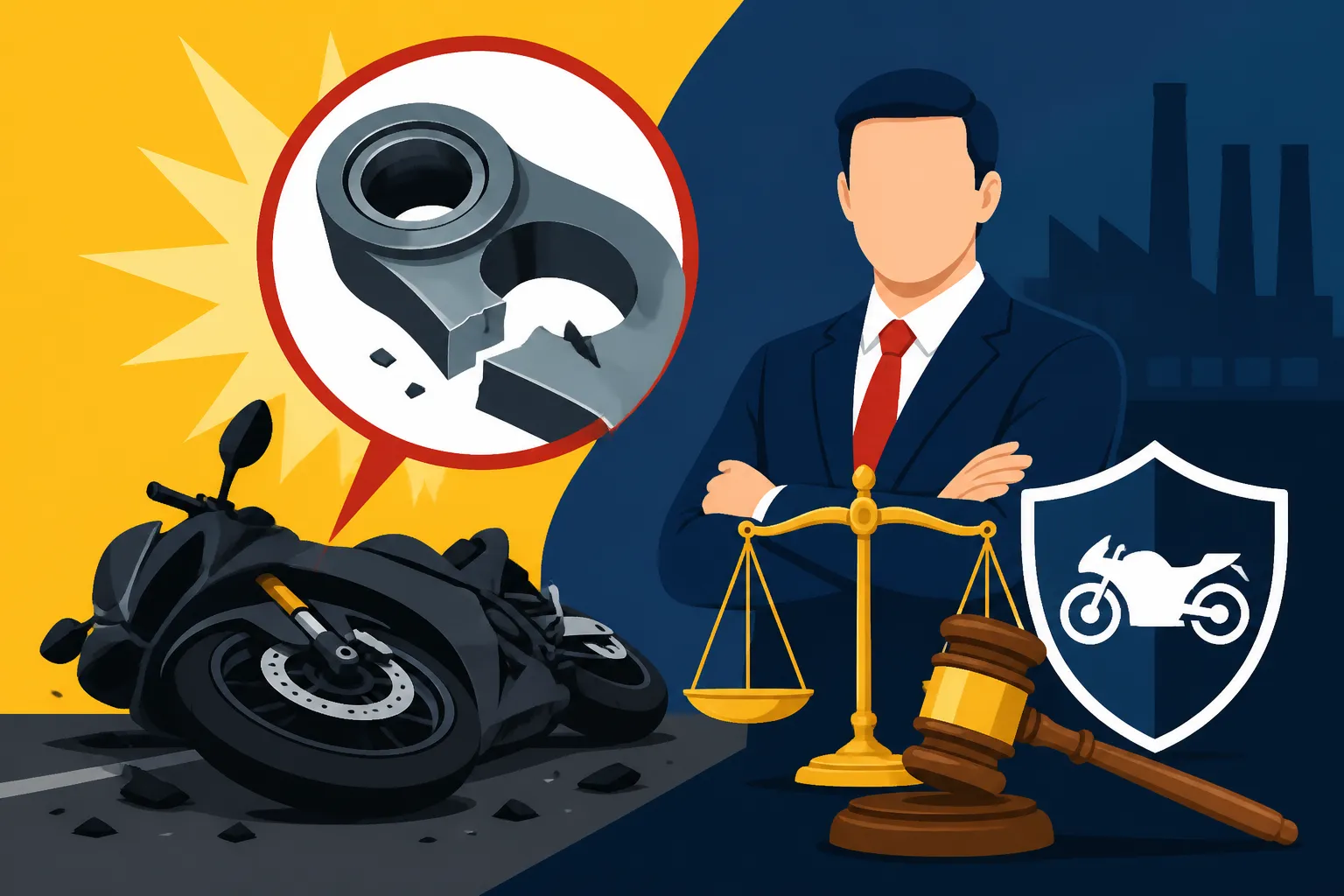
Frame defects could include weak welds that eventually crack under the stresses of riding, or even improper metallurgy in certain sections that lead to fatigue fractures. Imagine a motorcycle frame developing a crack near the steering head after only a few thousand miles—this can cause dangerous instability, especially during turns or at higher speeds. Similarly, suspension components like forks, shocks, and swingarms are under constant stress. A defective shock absorber might fail to dampen properly, leading to a bouncy, uncontrolled ride, while a faulty swingarm could fracture, causing the rear wheel to lose alignment or even separate from the bike. These issues might not cause an immediate, explosive accident but can lead to a gradual degradation of handling that makes the bike unpredictably dangerous. A rider might notice subtle changes in handling before a catastrophic failure, but these changes can be hard to diagnose until it's too late. When these crucial components fail, the motorcycle's ability to maintain a stable, predictable path is severely compromised, greatly increasing the risk of a crash, particularly if the rider encounters a sudden obstacle or needs to perform an evasive maneuver.
Engine and Fuel System Malfunctions
While not always leading to a loss of control in the same dramatic fashion as a brake or tire failure, defects in the engine and fuel system can still trigger severe accidents, especially on busy roads.
A manufacturing defect in the engine could lead to a sudden and complete loss of power. Imagine merging onto a highway in Dallas, Texas, and your engine abruptly dies, leaving you coasting at significantly reduced speed while surrounding traffic continues at 70 mph. This can create a severe hazard, forcing other drivers to make sudden maneuvers or leading to a rear-end collision. Fuel system defects are also incredibly dangerous. A faulty fuel line, a leaking fuel tank seam, or a defective fuel pump could lead to fuel leaks, posing a significant fire risk, especially in the event of a minor tip-over or accident. Furthermore, a sticking throttle, where the throttle mechanism fails to return to idle after being twisted, can cause uncontrolled acceleration. This is an immediate and terrifying loss of control that requires quick thinking and, often, a complete shutdown of the motorcycle, which itself can be dangerous at speed. These types of failures may not result in the motorcycle directly veering off course, but by creating unexpected and dangerous situations, they can set off a chain of events leading to a serious accident, emphasizing the critical need for all internal components to be free of defects.
Proving Manufacturer Liability After a Motorcycle Crash
You’ve been in a motorcycle accident, and you strongly suspect a faulty part was to blame. Now comes the hard part: proving it. This isn't as straightforward as proving another driver ran a red light. Holding a manufacturer accountable involves a specialized legal approach and significant evidence.
The Burden of Proof: What You Need to Show
In a product liability case involving a defective motorcycle part, the burden of proof rests on you, the injured rider, to establish several key elements. It’s not enough to simply say, "My brakes failed." You need to demonstrate specific facts.
Firstly, you must prove that the product had a defect. This means showing there was either a design flaw, a manufacturing error, or an inadequate warning (as discussed earlier). For example, if your front fork snapped, you can't just assert it was weak; you need to provide evidence, perhaps through expert analysis, that the metal was improperly tempered during manufacturing or that the design itself was inherently flawed for the stresses it was intended to bear. Secondly, you need to prove that this defect caused your injuries. This is a crucial link, establishing a direct causal connection between the faulty part and the harm you suffered. If, for instance, a tire blowout occurred and you crashed, you need to show that the blowout was due to a defect and that this defect directly led to the accident and your subsequent injuries. Thirdly, you must show that you were using the product as intended or in a reasonably foreseeable manner. If you were intentionally performing dangerous stunts that the motorcycle wasn't designed for, and a part broke, it becomes much harder to hold the manufacturer liable. However, "foreseeable use" can extend beyond strictly intended use; for example, a manufacturer might foresee someone carrying a slightly heavier load than recommended, even if it's not ideal. Meeting this burden often means navigating complex technical details and legal precedents. This is why preserving all evidence, seeking prompt medical attention, and consulting with legal professionals are critical first steps after What to Do After a Motorcycle Accident.
Gathering Critical Evidence for Your Claim
Successfully proving manufacturer liability hinges almost entirely on the quality and quantity of evidence you can present. This isn't a time to be shy or overlook details.
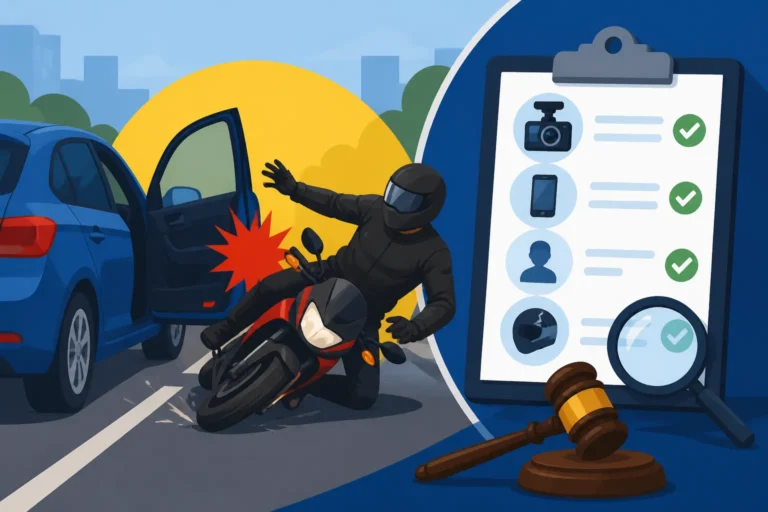
Right after the crash, if you are able, document everything. Take comprehensive photos and videos of the accident scene, including your motorcycle, the other vehicles involved (if any), road conditions, and crucially, any visible damage to the part you suspect failed. These initial photos can be invaluable, offering a snapshot of the scene before anything is moved or altered. However, the most critical piece of evidence is usually the motorcycle itself, and specifically, the allegedly defective part. It is absolutely vital that you do not allow the motorcycle to be repaired, sold, or disposed of. This evidence must be preserved in its post-accident condition. This is because forensic engineers and accident reconstructionists will need to examine the part to determine the precise nature of the defect and how it contributed to the crash. Without the physical evidence, your case becomes incredibly difficult to prove. Additionally, search for any recall notices related to your motorcycle model or specific parts. Manufacturers sometimes issue recalls after discovering defects, and finding one pertinent to your bike can significantly bolster your claim. Keep all maintenance records, purchase receipts for parts, and any communication you've had with the dealership or manufacturer. This detailed approach to Motorcycle Accident Evidence for Proving Fault is often the cornerstone of a successful product liability claim.
The Role of Expert Witnesses
In product liability cases, the average person, and even many lawyers, simply don't have the specialized knowledge to understand complex mechanical failures or engineering principles. This is where expert witnesses become indispensable.
These professionals, such as forensic engineers, materials scientists, or accident reconstructionists, possess highly specialized knowledge and experience that allows them to analyze the evidence and provide informed opinions to the court. A forensic engineer, for example, might examine a fractured swingarm, conduct metallurgical tests, and determine if the failure was due to a manufacturing flaw, a design defect, or external factors. They can explain how the defect occurred and why it led to the accident. An accident reconstructionist can analyze skid marks, vehicle damage, and other physical evidence to recreate the sequence of events leading up to the crash, helping to demonstrate the causal link between the part failure and the accident. These experts don't just state an opinion; they provide detailed reports, calculations, and often perform simulations or demonstrations to illustrate their findings. Their testimony is often the linchpin that connects a vague suspicion of a defective part to scientifically proven fault, making their involvement critical in cases where How Accident Reconstruction Determines Fault is complex. This expertise comes at a cost, but it's an investment that can make or break a product liability claim. If you're wondering When to Hire an Accident Reconstruction Expert, the answer is almost certainly yes in a suspected defective part case.
Navigating the Legal Landscape of Product Liability Claims
The world of product liability law can be a maze, especially when you're trying to heal from an accident. There are specific rules about who can be held responsible, what challenges you might face, and how long you have to act. Understanding these aspects is crucial for anyone considering a claim related to a defective motorcycle part.
Who Can Be Held Liable? Beyond the Manufacturer
While we often talk about "manufacturer liability," the legal net in product liability cases can be cast much wider. It's not always just the company that assembled the final product that can be held accountable. In a chain of distribution, multiple parties can potentially share responsibility.
This "chain of distribution" can include the actual manufacturer of the motorcycle, of course, but also the manufacturer of the specific defective component (if it was made by a different company). For instance, if a Harley-Davidson motorcycle crashed due to a faulty tire, both Harley-Davidson and the tire manufacturer, perhaps a company like Michelin or Dunlop, could potentially be held liable. Beyond the original creators, distributors, wholesalers, and even the retailer who sold you the motorcycle or the part can sometimes be named in a lawsuit. This is because each entity in the chain has a responsibility to ensure the safety of the product they are placing into the stream of commerce. For example, a dealership that installed a known defective part or failed to properly inspect a motorcycle before sale might also face liability. The specific laws on this can vary by state, but generally, the goal is to hold any party accountable who introduced a dangerous product to the consumer. Identifying all potentially liable parties is a critical early step in building your case, as it can broaden the pool of available insurance coverage for your damages.
Potential Defenses Manufacturers Might Use
Don't expect manufacturers to simply roll over and admit fault. They have legal teams dedicated to defending against product liability claims, and they will employ various strategies to try and shift blame or negate your claim.
One common defense is to argue that the product was misused or modified by the rider. If you installed aftermarket parts that weren't compatible, or performed modifications that altered the bike's original design, they might argue that your actions, not a defect, caused the failure. They might also claim a lack of proper maintenance, suggesting that if you had followed the recommended service schedule, the part wouldn't have failed. For example, if a brake line failed due to extreme corrosion and you hadn't had your brakes inspected in years, they might point to your negligence. Another common defense involves alleging rider fault, suggesting that even if a part was defective, your own riding actions (like speeding or distracted riding) were the primary cause of the accident. This often ties into Comparative Negligence in Motorcycle Accidents, where your recovery might be reduced if you're found partially at fault. Finally, manufacturers might argue that the defect wasn't "unreasonably dangerous" or that the risk was "open and obvious," meaning a reasonable user should have been aware of it. Navigating these defenses requires a sophisticated understanding of both engineering principles and legal strategy.
Understanding the Statute of Limitations
Time is not on your side after a motorcycle accident, especially in product liability claims. Every state has a "statute of limitations," which is a strict legal deadline for filing a lawsuit. If you miss this deadline, you will almost certainly lose your right to seek compensation, regardless of how strong your case might be.
The specific timeframe varies by state, but it can range from one to six years, with two or three years being common for personal injury claims. However, product liability cases sometimes have their own specific statutes of limitations, and there might also be a "statute of repose," which sets an absolute deadline regardless of when the injury was discovered (e.g., you can't sue for a defect in a product manufactured more than 10 years ago, even if you just discovered it). This is why immediate action is critical. While you're focusing on recovery, the clock is ticking. For instance, in California, the general statute of limitations for personal injury is two years from the date of the injury, but there could be nuances for product liability. Don't assume you have plenty of time. Moreover, if your claim involves a government entity responsible for a road hazard that contributed to the accident, the notice period for filing against them is often much shorter, sometimes as little as 30-180 days. Understanding these deadlines and acting promptly is absolutely essential to protect your legal rights. This is a primary reason why you should consider When to Hire a Motorcycle Accident Lawyer as soon as possible after your crash.
What to Do If You Suspect a Defective Part Caused Your Accident
Discovering or suspecting that a mechanical failure caused your motorcycle crash can be a profoundly upsetting realization. It shifts the entire dynamic of the accident and your potential claim. Knowing what steps to take immediately can make a significant difference in your ability to seek justice and compensation.
Prioritizing Safety and Documentation
First and foremost, your health and safety are paramount. If you've been in an accident, seeking immediate medical attention is non-negotiable, even if you feel okay. Adrenaline can mask serious injuries, and a doctor's visit creates an official record of your physical condition immediately following the crash, which is crucial for any personal injury claim, especially one involving Motorcycle Accident Traumatic Brain Injuries or Spinal Cord Injuries from Motorcycle Accidents.
Once your immediate medical needs are addressed, the next critical step is thorough documentation of the accident scene, if you are able to do so safely. This means taking as many photos and videos as possible from various angles. Focus not only on the overall scene, road conditions, and any other vehicles involved, but specifically on your motorcycle. Get close-ups of the alleged defective part and any damage to it or surrounding components. Note any fluid leaks, unusual wear patterns, or breakages that seem out of place. Interview witnesses and get their contact information, as their testimony could be invaluable in corroborating your account of events. If police responded, make sure they are aware of your suspicion regarding a defective part; their How Police Reports Establish Fault might not immediately capture this detail but it’s important to get it on record. This initial evidence gathering forms the bedrock of your claim, laying out the narrative of what happened and providing tangible proof of the conditions immediately after the incident.
Preserving the Evidence
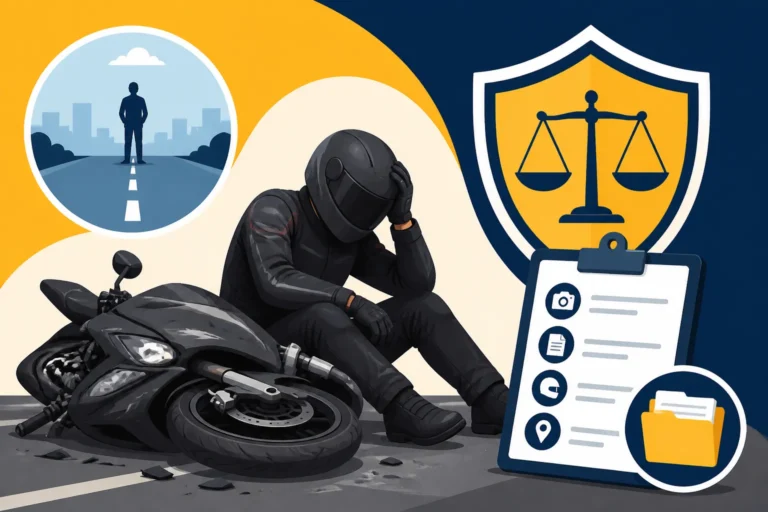
This is perhaps the single most crucial piece of advice for any rider who suspects a defective part caused their crash: DO NOT repair, alter, sell, or dispose of your motorcycle or the suspected defective part. This evidence is irreplaceable and will be the heart of any product liability investigation.
It's natural to want your bike fixed or to move on from a totaled machine, but resist this urge. Once the part is repaired or discarded, it becomes incredibly difficult, if not impossible, for experts to conduct the necessary forensic analysis to prove a defect. Imagine the brake caliper that failed is replaced, or the tire that blew out is thrown away. How can an engineer prove it was defective without examining the actual component? Instead, arrange for the motorcycle to be stored securely. You might need to pay for storage, but it's an investment in your potential claim. If the part in question is small and detachable, carefully remove and label it, storing it in a safe place. Document its removal with photos and notes. Your insurance company might push to total the bike or repair it quickly; explain to them that you suspect a defect and need to preserve the evidence. They may not understand product liability, so be firm. This careful preservation is often the difference between a successful claim and one that never gets off the ground.
Here's a quick reference table for evidence preservation:
| Action | Description | Importance |
|---|---|---|
| Seek Medical Attention | Get immediate medical evaluation, even for minor symptoms. | Establishes immediate link between crash and injuries; crucial for health and legal documentation. |
| Document the Scene | Take photos/videos of the crash site, road, vehicles, and suspected defective parts. | Provides unbiased visual record, helps recreate accident, crucial for showing damage. |
| Preserve the Motorcycle | Do NOT repair, sell, or discard the bike or suspected defective parts. | Absolute critical step. Allows forensic experts to examine the physical evidence for defects. Once altered, evidence is lost. |
| Collect Witness Info | Get names, contact details, and statements from any witnesses. | Independent verification of accident circumstances, including observations of bike failure. |
| Keep All Records | Maintain medical bills, repair estimates, purchase receipts, maintenance logs, police reports. | Supports claims for Types of Damages in a Motorcycle Accident Claim and verifies ownership/maintenance history. |
| Research Recalls | Check for any recalls on your motorcycle model or specific components. | A recall notice can be strong evidence of a known defect. |
Seeking Legal Guidance Early
Product liability cases are notoriously complex. They pit you, an individual, against large corporations with immense legal and financial resources. Trying to navigate this alone is a monumental, often impossible, task. This is why seeking legal guidance from an attorney specializing in motorcycle accidents and product liability is not just advisable, it's essential.
An experienced lawyer knows how to investigate these types of claims, working with forensic experts, understanding complex engineering reports, and challenging the legal defenses that manufacturers inevitably raise. They can help you properly preserve evidence, identify all potential defendants in the chain of distribution, and handle communications with both your insurance company and the manufacturer's legal team. Furthermore, an attorney can help you understand the full scope of your damages, including future medical costs, lost earning capacity, and pain and suffering, ensuring you don't accept a lowball settlement that doesn't adequately cover your losses. The sooner you bring a lawyer on board, the better. They can guide you from day one, ensuring critical steps like evidence preservation and adherence to statutes of limitations are met. This early intervention is key to protecting your rights and giving you the best chance to How to Maximize Your Motorcycle Accident Settlement. If you're wondering Do You Need a Motorcycle Accident Lawyer after a crash involving a suspected defective part, the answer is almost always a resounding yes. They are your advocate in a highly specialized and challenging legal battle.
Disclaimer
Please remember that this information is intended for educational purposes only and does not constitute legal advice. Motorcycle accident claims, especially those involving manufacturer liability for defective parts, are complex and highly specific to individual circumstances and state laws. It is crucial to consult with a qualified attorney experienced in motorcycle accident and product liability cases to discuss your specific situation and receive personalized legal guidance.