Who Is at Fault in a Motorcycle Intersection Accident?
Riding a motorcycle offers a sense of freedom and connection to the road that few other experiences can match. But that freedom often comes with heightened vulnerability, especially at intersections. These busy crossroads are unfortunately prime locations for serious motorcycle accidents, leaving riders not only with devastating injuries but also the frustrating question of who is truly at fault. This guide will walk you through the complex dynamics of intersection crashes, detailing common scenarios, how blame is assigned, and crucial steps you can take to protect yourself and your claim.
The Unique Dangers of Intersections for Motorcyclists
Intersections are inherently risky places for any vehicle, but they pose a particular threat to motorcyclists. It's not just about other drivers failing to look; it's about a combination of factors that make riders especially vulnerable when navigating these complex traffic hubs. The constant flow of turning vehicles, varying speed limits, and multiple points of conflict create a hazardous environment that demands constant vigilance from riders, and unfortunately, often falls short from other drivers.
Why Riders Are Often Unseen
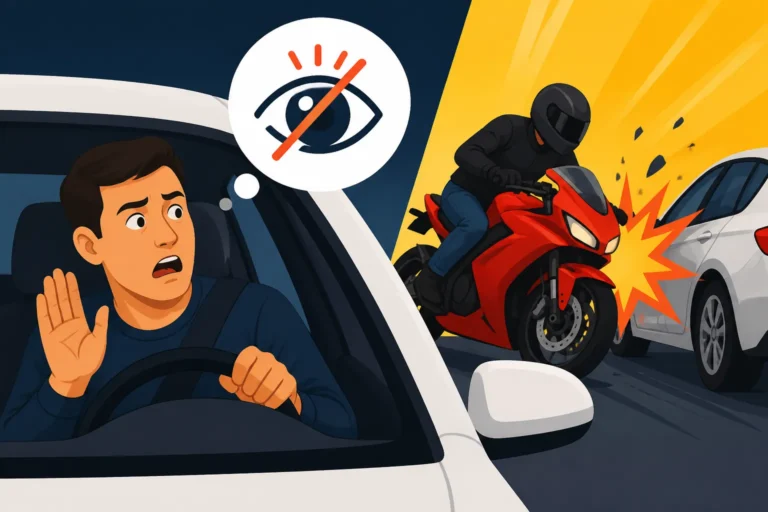
One of the most disheartening phrases a motorcyclist can hear after an accident is, "I didn't see you." This isn't just an excuse; it's often a genuine, yet negligent, reality known as the "looked but failed to see" phenomenon. Drivers are conditioned to look for larger vehicles—cars, trucks, SUVs. Their brains unconsciously filter out smaller objects like motorcycles, even when a rider is clearly visible. This cognitive bias means that a driver might literally look in your direction, register no threat, and proceed to turn or pull out, directly into your path.
This issue is compounded by a motorcycle's smaller profile. We don't occupy as much visual space, and our single headlight can sometimes blend into the background or be mistaken for a distant vehicle. Factors like certain motorcycle colors, the angle of the sun, or even a vehicle's A-pillar blind spots can further reduce a rider's visibility, turning a routine intersection into a deadly trap. The tragic irony is that even when a rider is doing everything right—wearing bright gear, using their lights, maintaining a safe speed—they can still become a victim because another driver simply wasn't looking for them. This profound vulnerability is why motorcyclists often bear the brunt of intersection collisions, suffering far more severe injuries than the occupants of the larger vehicle involved.
High-Risk Scenarios at Intersections
Intersections aren't all built the same, and each type presents its own set of dangers for motorcyclists. Think about a typical four-way stop: drivers are supposed to take turns, but often rush, or misunderstand who has the right of way, especially when a motorcycle is involved. Then there are busy signalized intersections with multiple turn lanes and complex timing, where a driver might try to "beat the light" or misjudge the speed of an oncoming bike. T-intersections, where traffic from a side street merges or crosses, also create common accident points.
The danger is amplified by driver complacency. Many drivers go through intersections on autopilot, relying on habits rather than actively scanning for all potential threats. They might assume that any oncoming vehicle will be a car and misjudge the speed or proximity of a motorcycle. This isn't just negligent; it's a systemic problem that puts riders at a constant disadvantage. Whether it's a driver attempting a quick left turn across traffic, running a red light, or simply not checking their blind spots before changing lanes within the intersection, the consequences for a motorcyclist are almost always catastrophic.
Common Causes and Fault Determination in Intersection Accidents
When a motorcycle accident happens at an intersection, the question of fault immediately arises. This isn't always straightforward, even if it seems obvious to you. Insurance companies and legal teams will scrutinize every detail to assign blame, and as riders, we often face an uphill battle due to societal biases against us. Understanding the most common scenarios can help you prepare for what comes next.
Left-Turn Collisions
Ah, the dreaded left-turn collision. This is arguably the most prevalent type of intersection accident involving motorcycles, and it almost always happens the same way: a car attempting a left turn pulls directly into the path of an oncoming motorcycle. The driver of the car often claims they "didn't see" the motorcycle, or misjudged its speed, leading to a catastrophic T-bone or head-on impact. In most cases, the turning vehicle has a legal duty to yield to oncoming traffic, meaning the car driver is usually at fault. This particular scenario is so common that it has its own extensive discussion in articles like Left-Turn Motorcycle Accidents Explained.
However, even in clear-cut situations, insurance adjusters might try to assign partial blame to the motorcyclist. They might argue you were speeding, or that your headlights weren't on, or that you were in a blind spot (even if it was the driver's responsibility to check). It’s crucial to understand the rules of the road regarding yielding, and to have evidence that clearly shows the other driver's failure to do so. This often involves witness statements, traffic camera footage, or even accident reconstruction to demonstrate that the car violated your right-of-way.
Drivers Running Lights or Stop Signs
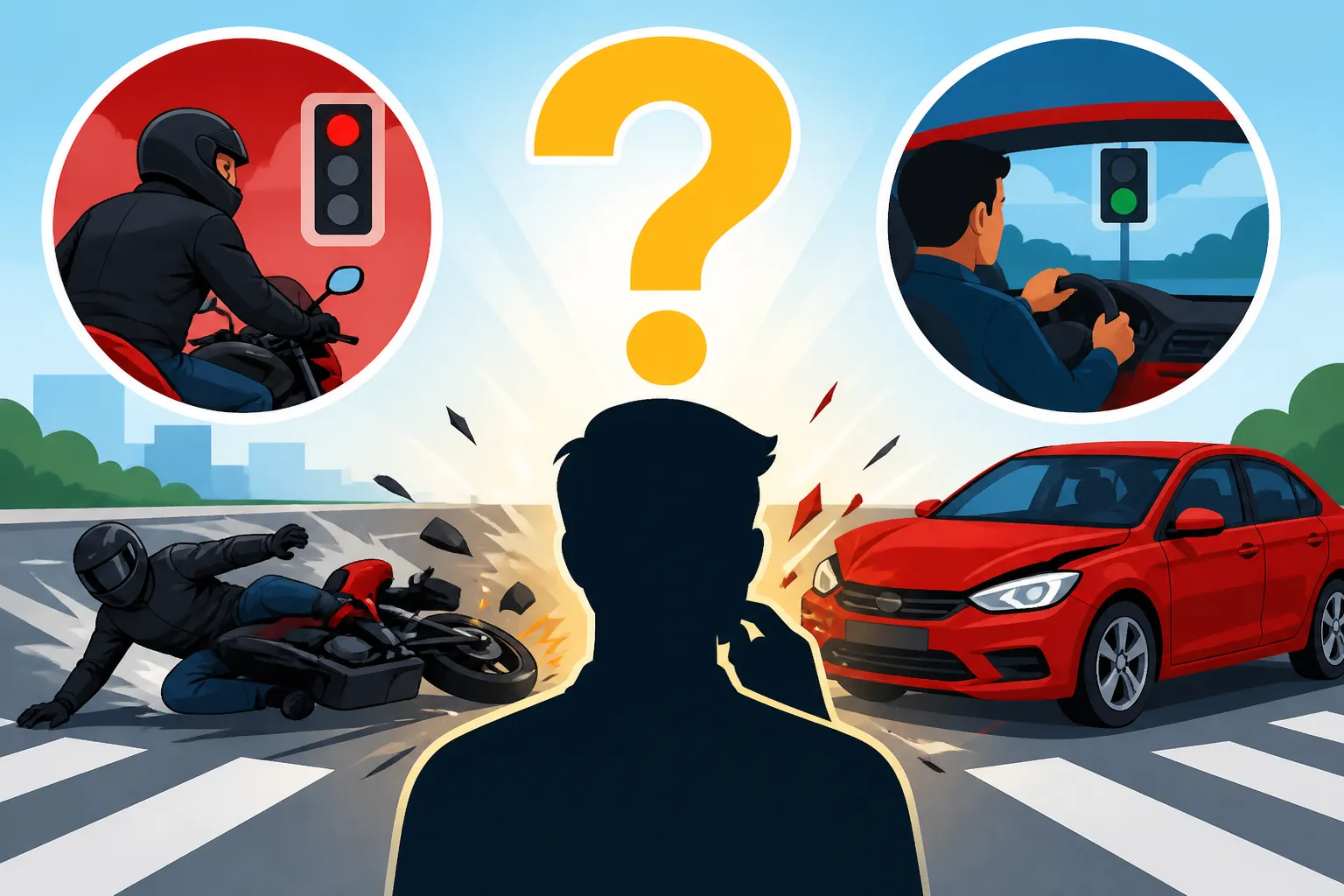
Another devastating scenario at intersections involves drivers who outright disregard traffic signals or stop signs. This could be a driver speeding through a yellow light that's already turned red, or one who blows through a stop sign without even tapping their brakes. In these instances, fault is generally clear-cut: the driver who violated the traffic law is liable for the accident. However, proving this isn't always as simple as it sounds.
While a police report can certainly help, especially if a citation was issued, eyewitness accounts become incredibly valuable. If there are no witnesses, proving who had the green light or who ran the stop sign can come down to circumstantial evidence like skid marks, vehicle damage, or the resting positions of the vehicles, which an accident reconstructionist can analyze. Sometimes, we can find nearby surveillance cameras from businesses like a gas station or a convenience store that might have captured the incident, providing undeniable proof. Learning How to Prove a Driver Ran a Red Light can be a huge asset in these situations. Without clear evidence, it can quickly devolve into a "he said, she said" situation, making your claim much harder to win.
Distracted or Impaired Driving
In today's world, distracted driving is an epidemic, and it makes intersections even more perilous. A driver looking at their phone, adjusting the radio, or even talking to passengers can easily miss a motorcycle, especially when navigating a complex intersection. Their attention is simply not on the road, and they fail to react to changing traffic conditions or the presence of a motorcycle. This negligence can lead to various types of crashes, including left-turn violations, rear-end collisions, or failing to stop at a light. We dive deeper into this concerning trend in Motorcycle Accidents Caused by Distracted Driving.
Even worse are cases of impaired driving, whether from alcohol, drugs, or even severe fatigue. An impaired driver's reaction time is significantly reduced, their judgment is clouded, and their ability to perceive motorcycles is severely compromised. If you suspect the other driver was impaired, it's vital that the police investigate and conduct appropriate tests. Proving impairment, especially through toxicology reports, makes assigning fault much easier. However, even without a DUI charge, evidence of erratic driving or witness accounts of impairment can strengthen your case. How Drunk Driving Affects a Motorcycle Claim outlines these serious implications.
| Intersection Accident Type | Typical At-Fault Party | Common Driver Excuse | Key Evidence to Collect |
|---|---|---|---|
| Left-Turn Collision | Turning Car Driver | "I didn't see you." / "You were speeding." | Witness statements, traffic camera, debris field, vehicle damage. |
| Running Red Light/Stop Sign | Driver Violating Signal | "It was yellow." / "I stopped." | Witness statements, traffic camera, police citation. |
| Rear-End Collision | Driver Behind | "You stopped suddenly." / "I was distracted." | Skid marks, dashcam, witness statements, phone records (if possible). |
| Unsafe Lane Change (in intersection) | Driver Changing Lanes | "You were in my blind spot." | Witness statements, vehicle damage, road markings. |
| Failure to Yield (e.g., merging) | Driver Failing to Yield Right-of-Way | "I thought I had time." | Witness statements, traffic laws, accident reconstruction. |
The Process of Establishing Fault in an Intersection Crash
Determining who is at fault after an intersection motorcycle accident isn't a simple matter of pointing fingers. It involves a methodical collection of evidence, understanding traffic laws, and often, skilled negotiation with insurance companies who are rarely on your side. For a comprehensive overview of how fault is assigned, check out How Fault Is Determined in Motorcycle Accidents.
The Critical Role of Police Reports and Citations
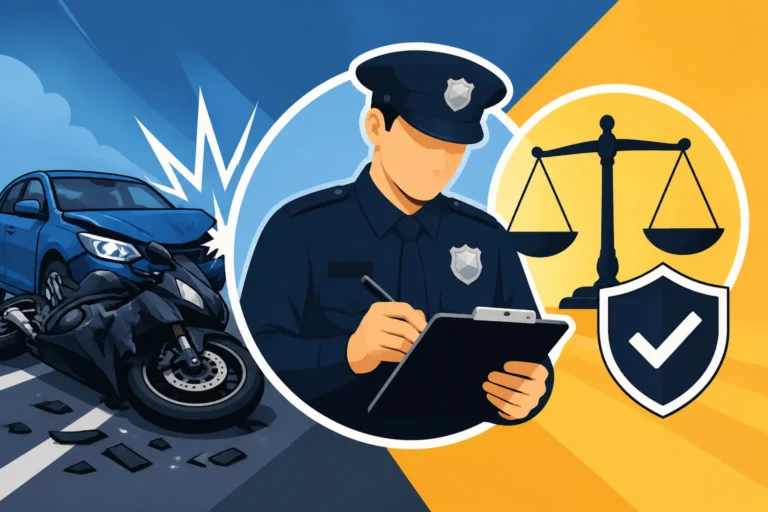
Immediately after an accident, the responding police officers will conduct an initial investigation and generate a police report. This document is incredibly important because it provides an official, third-party account of the incident. It will include details like the date, time, location, parties involved, vehicle information, and, crucially, a narrative description of how the accident occurred. Officers will note observations such as the final resting positions of vehicles, skid marks, road conditions, and often, witness statements. If an officer issues a traffic citation to one of the drivers involved—say, for running a red light or failing to yield—that can be strong evidence of fault.
However, it's important to remember that a police report isn't the final word on liability. Officers are not always accident reconstruction experts, and their report is based on their initial findings at the scene, which can sometimes be incomplete or even inaccurate. In some instances, a police report might even contain assumptions or biases against motorcyclists. For more on this, you might find our guide on How Police Reports Establish Fault insightful. If you believe the report contains errors or unfairly assigns blame, it might be possible to get it corrected, though this is a challenging process covered in How to Correct a Wrong Police Report. Still, it forms a foundational piece of evidence that insurance companies will rely heavily upon.
Gathering Evidence: From Witnesses to Traffic Cameras
Beyond the police report, a successful motorcycle accident claim hinges on a robust collection of evidence that clearly proves the other driver's negligence. Eyewitnesses are often invaluable, especially in intersection accidents where perspectives on traffic signals or right-of-way can be crucial. Imagine a scenario: you're riding through a green light, and a car suddenly pulls out from the cross street. A pedestrian waiting to cross saw the entire event unfold and can corroborate that the car ran a red light. Their unbiased testimony can be a game-changer. That's why we emphasize the importance of How Witnesses Affect Motorcycle Fault.
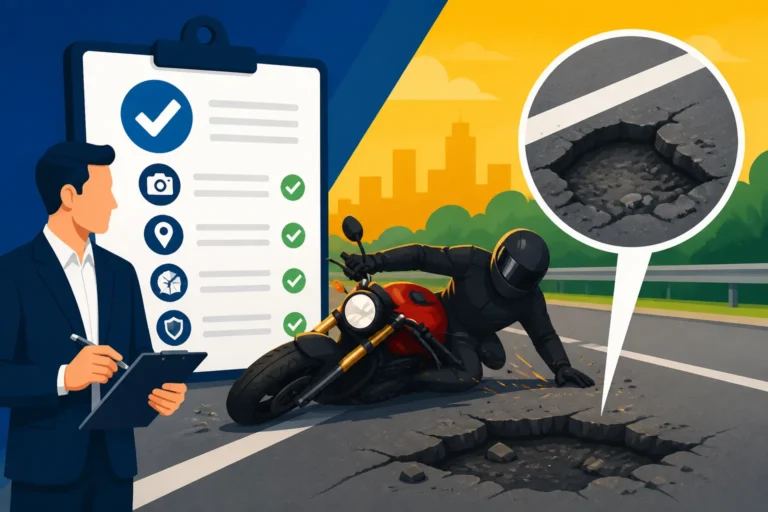
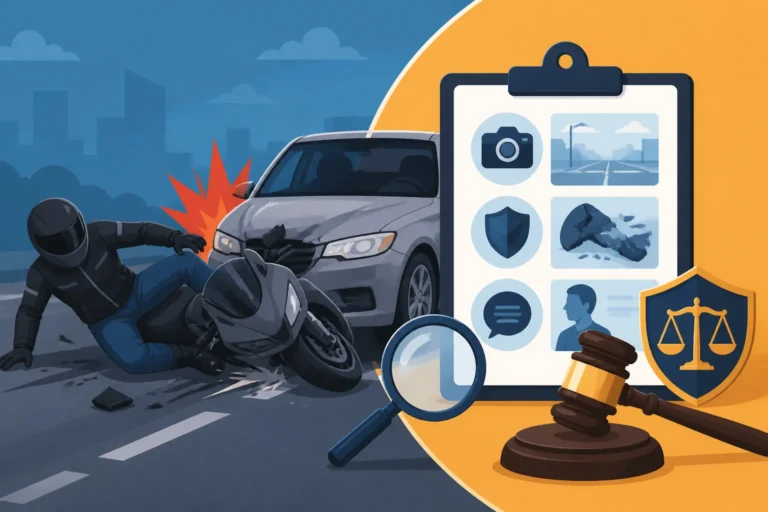
But don't stop there. Photos and videos taken at the scene are critical. This means pictures of the vehicles from multiple angles, damage sustained, road conditions, traffic signals, skid marks, and even the surrounding environment. If there are security cameras on nearby businesses or even public traffic cameras, their footage can offer irrefutable proof of what happened. Dashcam footage, if either vehicle had it, is gold. If you're physically able, collecting this kind of visual evidence at the scene is paramount. Otherwise, a legal professional can assist in tracking it down. Every piece of Motorcycle Accident Evidence for Proving Fault helps build a clearer picture for your claim.
Understanding Right-of-Way Rules
Traffic laws governing intersections are designed to prevent collisions by clearly defining who has the right-of-way. When these rules are violated, it often establishes fault. For example, at a four-way stop, the general rule is that the first vehicle to arrive has the right-of-way, or if two arrive simultaneously, the vehicle to the right goes first. If a driver fails to adhere to this, they are generally at fault. Similarly, a driver making a left turn at a green light must yield to oncoming traffic, including motorcycles. Failing to do so makes them liable.
States like California have specific rules about Motorcycle Accident Fault Laws in California which can vary, so it's important to know the laws where your accident occurred. Understanding these regulations is key to demonstrating that the other driver's actions constituted a breach of their legal duty. When a driver ignores a red light, fails to stop at a stop sign, or doesn't yield when required, they are directly violating a traffic law, which is strong evidence of their negligence. An attorney well-versed in How Traffic Violations Affect Fault can use these specifics to build a compelling case on your behalf.
Steps to Take Immediately After an Intersection Accident
The moments immediately following an intersection motorcycle accident are chaotic, painful, and often confusing. But what you do (or don't do) in this critical window can significantly impact your physical recovery and the strength of any future injury claim. It’s absolutely vital to prioritize safety and then to document everything you possibly can.
Prioritizing Safety and Documenting the Scene
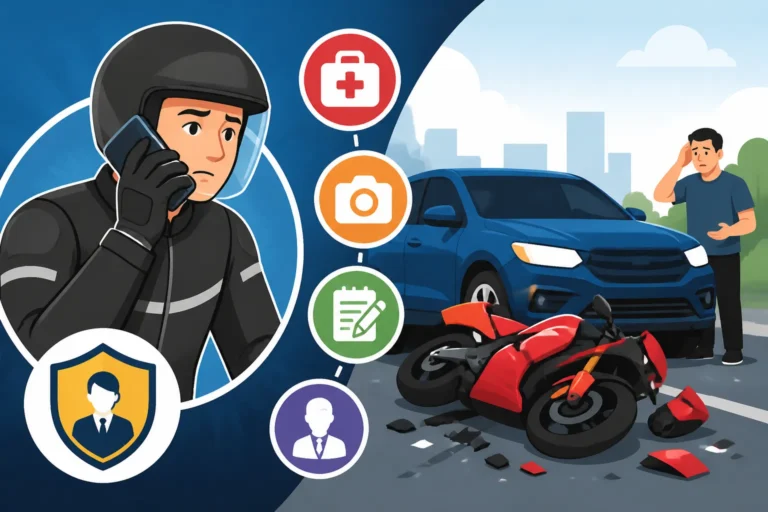
Your first priority, always, is your safety and well-being. If you are injured, do not attempt to move. If you are able to move and it's safe to do so, get yourself and your motorcycle out of the flow of traffic to prevent further incidents. Immediately call 911 to report the accident and request medical assistance and police presence. Even if you feel "fine," the adrenaline can mask serious injuries, and you might have delayed symptoms after a motorcycle crash. Always get checked out by paramedics at the scene or at an emergency room. Our guide What to Do Immediately After a Motorcycle Accident goes into more detail about these crucial first steps.
Once paramedics and police are on their way, if you are physically able, begin documenting the scene. Use your phone to take as many photos and videos as possible. Capture the damage to your motorcycle and the other vehicle, the positions of both vehicles, skid marks, debris, traffic signs, road conditions, and any visible injuries you or your passenger sustained. Get contact information from witnesses, including their names, phone numbers, and email addresses. Never, ever apologize or admit fault, even if you think you might have made a mistake. Comments like "I'm so sorry!" can be twisted by insurance companies to imply admission of guilt. This seemingly small detail is addressed in Why You Should Never Admit Fault at the Scene.
Medical Care and Legal Consultation
After the immediate aftermath, getting thorough medical attention is paramount. See a doctor as soon as possible, even if you declined care at the scene. Some severe injuries, like internal bleeding or whiplash, may not manifest for hours or even days. A clear medical record from the very beginning of your recovery is critical for your claim. Gaps in medical treatment can be exploited by insurance companies to argue that your injuries weren't severe or weren't caused by the accident. Following through with all recommended treatments and therapies creates a strong paper trail that links your injuries directly to the crash.
Once your immediate medical needs are addressed, reaching out to a motorcycle accident lawyer should be your next step. Insurance companies, even your own, are not on your side. Their primary goal is to pay out as little as possible. They might offer a quick, lowball settlement before you even understand the full extent of your injuries and damages. A lawyer specializing in motorcycle accidents understands the bias against riders and knows how to counter common insurance tactics. They can help you prove fault, calculate your damages (including future medical costs and lost wages), and negotiate for a fair settlement. For serious intersection accidents, having an advocate by your side is essential. Our guide, Do You Need a Motorcycle Accident Lawyer, explores this more deeply, emphasizing why early legal consultation is often the best defense for your rights and recovery.
Disclaimer
The information provided in this blog post is intended for general informational purposes only and does not constitute legal advice. Motorcycle accident laws vary significantly by state, and the specifics of your case will depend on the unique circumstances surrounding your accident. It is highly recommended to consult with a qualified motorcycle accident attorney to discuss your individual situation and understand your legal rights and options.