Who Is at Fault in a Tailgating Motorcycle Accident
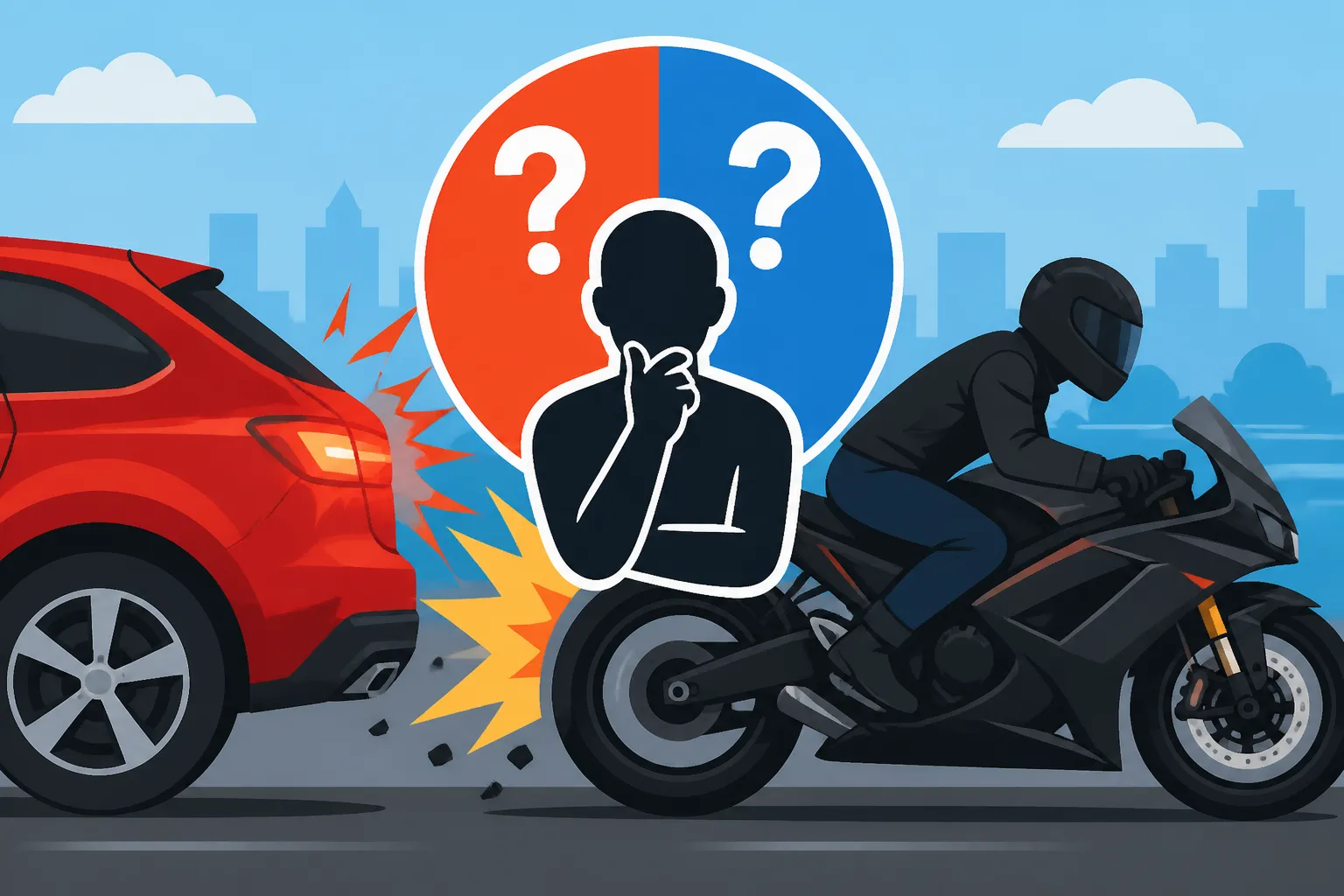
One of the most unsettling experiences for any rider is looking in their rearview mirror and seeing a vehicle following far too closely, or worse, feeling the sudden impact from behind. Tailgating motorcycle accidents can be devastating, often leading to severe injuries for the rider, and determining fault in these crashes isn't always as straightforward as it seems. This comprehensive guide will walk you through the nuances of tailgating collisions, explain how fault is typically assigned, and outline the crucial steps you need to take to protect your rights and potential claim.
Understanding Tailgating and Its Dangers on a Motorcycle
When you're out on two wheels, you're constantly aware of your surroundings, and that awareness sharpens significantly when you spot a driver who's too close for comfort. Tailgating isn't just annoying; it's a significant hazard that puts motorcyclists at an incredibly high risk, especially given our lack of substantial physical protection compared to a car.
What Constitutes Tailgating
At its core, tailgating is defined as following another vehicle too closely, leaving insufficient space to stop safely if the lead vehicle brakes suddenly. While there isn't a universally prescribed distance in feet or car lengths, traffic laws in most states, including California and Texas, refer to maintaining a "reasonable and prudent" distance. This distance must allow the driver to stop without hitting the vehicle in front, considering factors like speed, road conditions, and visibility. The classic "three-second rule" is a widely taught guideline: pick a fixed object on the road, and when the vehicle in front passes it, you should count three seconds before your vehicle reaches that same object. If you get there sooner, you're too close. For motorcycles, many seasoned riders advocate for even more space due to our shorter braking distances and the increased danger of being rear-ended.
It's not just about the distance, either. Tailgating often comes with aggressive behaviors, such as flashing high beams, erratic lane changes, or even honking, all designed to intimidate the lead driver into speeding up or moving over. When this driver is behind a motorcycle, they might underestimate our ability to stop quickly or simply not see us as clearly, compounding the risk. This combination of close proximity and aggressive driving creates a volatile situation, far more dangerous for the rider than for the occupant of the larger vehicle behind them.
Why Tailgating is Especially Dangerous for Riders
For motorcyclists, tailgating isn't just a nuisance; it's a direct threat to life and limb. We don't have the protective cage of a car, no airbags, no crumple zones. A rear-end collision, even at relatively low speeds, can launch a rider off their bike, leading to devastating injuries like road rash, broken bones, spinal cord damage, or traumatic brain injuries. The impact often causes the motorcycle to become unstable, potentially throwing the rider into oncoming traffic or against fixed objects.
Furthermore, a motorcyclist’s visibility is already a constant concern. Many drivers claim they "didn't see the motorcycle," even in broad daylight. When a vehicle is tailgating, the driver’s field of vision is restricted even further, making it harder for them to react to sudden changes in traffic ahead of the motorcycle. They might also be distracted by their phone or other activities, making them even less likely to perceive the danger. Imagine riding on a busy highway like I-35 in Texas, and a massive truck is riding your tail. The sheer difference in mass means that even a minor tap could have catastrophic consequences for you. This inherent vulnerability means that while tailgating is risky for all drivers, it's exponentially more so for those of us on two wheels, making these types of incidents particularly terrifying and serious.
Establishing Fault in a Tailgating Motorcycle Accident
Determining who is at fault in a motorcycle accident, especially a rear-end collision caused by tailgating, is a critical step in recovering damages for your injuries and losses. While it might seem obvious that the tailgating driver is to blame, the legal process involves examining all the specific circumstances of the crash.
The Presumption of Fault for Rear-End Collisions
In most rear-end collision scenarios, the driver of the trailing vehicle is presumed to be at fault. This legal presumption, often referred to as the "following too closely" rule, stems from the idea that a driver has a responsibility to maintain a safe following distance and be attentive enough to stop or react safely to traffic conditions ahead. If you get hit from behind, the initial assumption is that the driver behind you failed in this duty. This principle applies whether you were stopped at a traffic light, slowing down for traffic, or even had to brake suddenly to avoid another hazard. The law typically places the burden on the trailing driver to prove why they were not at fault.
For motorcyclists, this presumption is a vital starting point. If you were stopped at an intersection in downtown Chicago and got hit from behind by a distracted driver, the initial police report will almost certainly place fault on the car. This doesn't mean the case is open-and-shut, as insurance companies will always try to find reasons to minimize their payout. However, the legal framework generally acknowledges the inherent responsibility of the rear driver. Understanding this presumption is crucial because it forms the baseline for how your claim will likely be viewed from the outset by law enforcement, insurance adjusters, and potentially, a jury. It directly supports your claim that the other driver's negligence, specifically their tailgating, was the direct cause of the collision and your injuries.
When the Lead Rider Might Share Blame
While the trailing driver is usually at fault in a rear-end crash, there are specific, albeit rarer, circumstances where the lead motorcyclist might share some degree of responsibility. This concept is tied to Comparative Negligence in Motorcycle Accidents, where multiple parties can contribute to an accident. For example, if a motorcyclist suddenly and without warning slams on their brakes in the middle of a highway with no apparent hazard, or if their brake lights are non-functional, an argument could be made for shared fault.
Consider a scenario where a rider intentionally "brake-checks" a tailgating driver as a form of retaliation. This aggressive and illegal maneuver could shift some or even a significant portion of the blame onto the motorcyclist, even if the driver behind them was initially tailgating. Another instance could be if a rider's motorcycle has defective brake lights, making it impossible for the following driver to know they are slowing down. However, it's important to note that these situations are exceptions rather than the rule. Insurance companies, eager to reduce their liability, will often try to pin some blame on the motorcyclist through what is known as "rider bias," even when the rider did nothing wrong. It's their tactic to lower potential settlement amounts, and something you should be prepared to fight against. This is why accurately documenting the scene and your actions is so important.
Key Evidence to Prove Fault in a Tailgating Crash
Proving fault in a motorcycle accident, particularly one involving tailgating, requires concrete evidence. It's not enough to simply say the other driver was too close; you need objective proof that substantiates your claim. This evidence helps counteract any attempts by the other driver or their insurance company to shift blame onto you.
Gathering Critical Information at the Scene
The moments immediately following an accident are chaotic and often painful, but what you do (or don't do) at the scene can profoundly impact your ability to prove fault later. Your absolute first priority is your safety and seeking medical attention, but if you're able, gathering information is paramount. Take photos and videos of everything: the position of both vehicles, any skid marks, road conditions, traffic signs, debris on the road, and damage to both your motorcycle and the other vehicle. The photos should capture the context of the accident, showing the other vehicle's proximity to yours after the collision, which can hint at their following distance before impact.
Additionally, get the other driver's insurance and contact information, and if possible, speak to any witnesses. Their unbiased accounts can be invaluable. If a police officer responds, ensure they create an official police report. While the report itself isn't always definitive proof of fault, it often contains crucial observations and citations that can support your case. Remember, never admit fault at the scene, even if you think you might have made a mistake. Just stick to the facts and your observations.
The Role of Witness Statements and Traffic Cameras
Independent witnesses can be the unsung heroes of a motorcycle accident claim. Their perspective, untainted by the direct involvement of the crash, often carries significant weight. A witness who saw the other driver tailgating for an extended period before the impact, or who observed aggressive driving behaviors, can provide compelling testimony. This is especially true if the witness has no relationship with either party. If you don't get their contact information at the scene, your legal team might be able to canvas the area later, looking for potential witnesses from nearby businesses or residences.
Beyond human eyes, technology often provides objective proof. Traffic cameras are becoming increasingly common in cities across the country, from busy intersections in Los Angeles to downtown areas in Atlanta. These cameras can capture the entire sequence of events, clearly showing the other vehicle's dangerous proximity, its speed, and the point of impact. Dashcam footage, whether from your motorcycle or the other vehicle (or even a nearby vehicle), is another goldmine of evidence. Many riders now use helmet cams or dashcams precisely for this reason. Even surveillance footage from nearby businesses might have captured the incident. Securing this footage promptly is crucial, as it is often overwritten within a few days or weeks.
Expert Analysis and Accident Reconstruction
In complex tailgating cases, especially those involving significant injuries or disputed fault, an accident reconstruction expert can be invaluable. These professionals use scientific principles, physics, and sometimes even 3D modeling to analyze the scene and determine precisely how the accident occurred. They can examine skid marks, vehicle damage, debris fields, and even the "black box" data recorder from modern vehicles to establish speed, braking patterns, and points of impact.
For instance, an expert might be able to calculate the approximate following distance of the trailing vehicle based on the force of impact, the damage sustained, and the vehicles' final resting positions. They can definitively state whether a driver had enough time and distance to stop if they had been following at a safe distance. This kind of expert testimony can be powerful in court, helping a judge or jury understand the mechanics of the collision and the role that tailgating played. When fault is disputed in a motorcycle crash, their objective findings can often sway an insurance company or court in your favor, particularly when the other driver tries to claim you stopped too suddenly or acted erratically.
Navigating Shared Fault and Comparative Negligence
Even if the other driver was clearly tailgating, you might encounter arguments from their insurance company that you were somehow partly to blame. This is where the concept of comparative negligence comes into play, and it's something every rider needs to understand.
How Comparative Negligence Works in Tailgating Cases
Comparative negligence is a legal doctrine that allows fault to be apportioned among multiple parties involved in an accident. Instead of a winner-take-all scenario, a court or insurance adjuster determines what percentage of the blame each party carries. Most states operate under some form of comparative negligence. For instance, in "pure comparative negligence" states like California, even if you are found 99% at fault, you can still recover damages for the 1% of fault attributed to the other driver. However, many states, like Texas and Florida, use "modified comparative negligence" (often the 51% rule), meaning you can only recover damages if you are found to be 50% or less at fault. If your fault exceeds that threshold, you might recover nothing.
In a tailgating incident, an insurer might argue that you suddenly swerved, changed lanes without signaling, or braked too hard. Even if these claims are minor, they aim to reduce the other driver's liability. For example, if you were found to be 10% at fault for having a partially obscured brake light, and the other driver was 90% at fault for tailgating, your total compensation would be reduced by 10%. Understanding the specific comparative negligence laws in your state is crucial, as it directly impacts how much compensation you can expect. This is where a knowledgeable motorcycle accident lawyer can really help, by fighting against unfair fault assignments and ensuring your percentage of fault is minimized.
Impact on Your Claim and Potential Settlement
The percentage of fault assigned to you directly impacts your final settlement amount. Let's say your total damages (medical bills, lost wages, pain and suffering) are calculated at $100,000. If you are found 20% at fault, your recoverable damages would be reduced to $80,000. This is why insurance companies work so hard to assign even a small percentage of fault to the motorcyclist. They know every percentage point reduces their payout.
Consider a rider named David in Arizona. He was hit from behind by a car that was tailgating him on a freeway. David suffered a broken leg and extensive road rash, with total damages estimated at $75,000. The insurance company for the tailgating driver tried to argue that David changed lanes too abruptly just before the crash, attempting to assign him 25% fault. If they succeeded, David's potential settlement would drop from $75,000 to $56,250. This is a significant difference, highlighting why every detail matters when How Fault Affects Your Settlement. Having strong evidence, like dashcam footage showing the other vehicle’s prolonged tailgating and your steady driving, can be instrumental in fighting these claims and protecting your deserved compensation. Don't let an insurer nickel-and-dime you simply because they can find a minor, debatable action on your part.
What to Do After a Tailgating Motorcycle Accident
The moments immediately following a tailgating accident are often a blur of pain, adrenaline, and confusion. However, taking the right steps can make a monumental difference in your ability to recover, both physically and financially. This isn't just about protecting a future claim; it's about protecting yourself right now.
Prioritizing Safety and Medical Attention
Your health and safety are paramount after any motorcycle accident. Even if you feel "okay" or just shaken up, you must seek medical attention immediately. Adrenaline can mask pain and the severity of injuries. Internal injuries, concussions, or even fractures might not be immediately apparent. Call 911 if you are seriously injured, or have someone else do it. If you can move safely, get yourself and your motorcycle out of the flow of traffic to prevent further collisions. Once emergency services arrive, allow paramedics to evaluate you. Even if you decline ambulance transport, go to an urgent care clinic or your doctor as soon as possible. A gap in medical treatment can be used by insurance companies to argue that your injuries weren't severe or weren't caused by the accident. What to Do Immediately After a Motorcycle Accident is to prioritize your well-being; everything else can follow.
Documenting your injuries through medical records is the single most important piece of evidence for your personal injury claim. Be thorough with your doctors, explaining every ache, pain, and limitation. Follow all medical advice, attend all appointments, and keep a detailed record of your symptoms and recovery. This consistent medical documentation is crucial for proving the extent of your injuries and their direct link to the tailgating accident.
Documenting Everything for Your Claim
Beyond immediate medical care, diligently documenting the accident scene and its aftermath is vital for your claim. As mentioned earlier, taking detailed photos and videos of the scene, vehicle damage, and any visible injuries is critical. Get contact information from witnesses and the other driver. If the police respond, ask for their report number. But the documentation doesn't stop there.
Maintain a comprehensive file of everything related to your accident:
- Medical records and bills: Keep track of all doctor visits, hospital stays, prescriptions, physical therapy, and any other medical expenses.
- Lost wages documentation: If you missed work, gather pay stubs, employment records, and a letter from your employer detailing your absence and lost income.
- Motorcycle repair estimates: Get detailed quotes for repairing or replacing your bike.
- Correspondence: Keep copies of all emails, letters, and notes from phone calls with insurance adjusters, medical providers, and legal counsel.
- Injury journal: Write down how your injuries impact your daily life, your pain levels, and any emotional distress you experience. This can be powerful evidence for pain and suffering damages.
Remember, every piece of paper, every photo, every record, helps build a strong case and can be used as Motorcycle Accident Evidence for Proving Fault. The more diligently you document, the harder it will be for insurance companies to dispute your damages or shift blame.
Disclaimer
Please remember that this article provides general information and is not a substitute for professional legal advice. Every motorcycle accident case is unique, and the laws regarding fault and compensation vary by state. If you've been involved in a tailgating motorcycle accident, it is highly recommended to consult with a qualified personal injury attorney to discuss the specifics of your situation and understand your legal options.