Fault in a Single-Motorcycle Accident
It’s a frustrating and often bewildering experience when you find yourself picking up the pieces after a motorcycle accident, especially when no other vehicle was directly involved. Many riders automatically assume they are entirely at fault in what’s known as a single-motorcycle accident, leading to feelings of despair and a reluctance to pursue any compensation. This comprehensive guide is here to shed light on those confusing situations, explaining that "single-bike" doesn't automatically mean "solely rider's fault," and showing you how to investigate and understand who might truly be liable.
Understanding What Defines a Single-Motorcycle Accident
When we talk about a "single-motorcycle accident," it often conjures an image of a rider simply losing control, perhaps due to their own error. However, the legal definition and real-world implications are far more nuanced. It simply means that your motorcycle was the only vehicle that collided with something, whether it was the pavement, a guardrail, a tree, or even just the air. What it doesn't automatically mean is that you, the rider, are the one to blame for the entire incident.
Dispelling the Myth of Automatic Rider Fault
Let’s be honest: there’s a pervasive stereotype that motorcyclists are inherently reckless, always speeding, or just generally more prone to accidents due to their own poor judgment. This bias often extends to single-motorcycle accidents, where many, including some insurance adjusters and even the general public, are quick to jump to the conclusion that the rider must have been at fault. This can be incredibly disheartening and can lead riders to give up on their claims before they even really start. But it's a myth that needs to be thoroughly dispelled. Just because another vehicle didn't physically hit you doesn't mean another party didn't cause your accident. The nuances of How Fault Is Determined in Motorcycle Accidents are critical here, as they apply just as much to single-vehicle incidents as they do to multi-car collisions.
Imagine you’re cruising down a familiar road in rural Pennsylvania, enjoying the ride, when suddenly you hit an unmarked, freshly formed pothole hidden by a shadow. Your front wheel washes out, and you go down. No car hit you. But are you truly at fault for the condition of the road? Absolutely not. Or consider a situation where a dog darts out from a yard without a leash, forcing you to swerve violently, resulting in a crash. The dog didn't physically impact you, but its presence, and the owner's negligence, certainly caused the accident. These are just a couple of examples where the myth of automatic rider fault is unequivocally shattered.
Key Characteristics of a Single-Vehicle Crash
A single-motorcycle accident, from a legal standpoint, refers to any incident where only one motor vehicle (your motorcycle) is involved in the collision itself. This means no other car, truck, or even bicycle made direct contact with your bike. The aftermath might involve contact with stationary objects, the ground, or even just the sudden application of brakes or a swerve that results in a loss of control. The critical distinction isn't whether another party was involved in the events leading up to the crash, but whether another vehicle collided with yours.
For instance, if a car cuts you off, forcing you to lay your bike down to avoid a collision, that’s technically a single-motorcycle accident if no contact was made. However, the fault might clearly lie with the driver of the car that cut you off. This is why thorough investigation is paramount. It’s not about finding a crash, but about understanding the chain of events that led to that crash. The principles outlined in a comprehensive guide to Motorcycle Accident Liability: A Complete Guide demonstrate that liability isn't always about direct impact.
Common Scenarios Where Riders Are NOT Solely at Fault
While it's easy for onlookers or even insurance companies to assume a rider is always to blame in a single-vehicle crash, that's often far from the truth. There are many real-world scenarios where external factors, or the actions of another party, are the primary cause of a motorcycle accident, even without a direct collision. Understanding these situations is key to protecting your rights and pursuing a fair claim.
Road Hazards and Environmental Factors
Riders are acutely aware of the dangers that road conditions pose. A small patch of gravel, a deceptively deep pothole, or an oil slick can be minor nuisances for a car but catastrophic for a motorcycle. When these hazards cause a single-motorcycle accident, the fault may not lie with the rider at all.
- Potholes, Gravel, and Debris: Picture this: you’re riding through a construction zone on I-75 in Florida. There are no warning signs, and suddenly your front tire hits a patch of loose gravel left by a work crew. You lose traction and go down. In this case, the construction company, the city, or even the state Department of Transportation could be liable for failing to maintain safe road conditions or provide adequate warnings. Similarly, an enormous pothole that seems to appear overnight, unmarked and unaddressed, can devastate a rider. The city or county often has a responsibility to maintain their roads. Understanding road hazards and liability can be a game-changer for your claim.
- Oil Slicks, Water, and Ice: Unexpected oil slicks from poorly maintained vehicles, standing water after a sudden downpour, or black ice on shaded roads can all cause a rider to lose control. While navigating such conditions requires skill, if the hazard was unforeseen, unaddressed, or the result of another party’s negligence (e.g., a truck leaking oil), fault could shift.
- Poor Road Design or Maintenance: Sometimes, it's not a temporary hazard but a fundamental flaw in the road itself. A sharp, unmarked turn with insufficient banking, faded lane markings, or crumbling shoulders can all contribute to an accident. In these cases, it might be possible to pursue a claim against the government entity responsible for the road's design and maintenance, as detailed in our guide on Government Liability for Road Hazards.
Defective Motorcycle Parts or Mechanical Failure
Even the most skilled rider on the most well-maintained bike can be vulnerable to a single-motorcycle accident if a critical component fails unexpectedly. When a defect in the motorcycle itself causes a crash, the responsibility often falls on the manufacturer or even the dealer who sold the faulty part.
- Brake Failure: Imagine you’re riding your Harley-Davidson through the mountains of North Carolina, approaching a tight curve, and your brakes suddenly give out without warning. You attempt to engine brake but lose control and slide. If a manufacturing defect caused the brake failure, you could have a product liability claim against the motorcycle manufacturer or the brake component supplier.
- Tire Blowouts: A catastrophic tire blowout at highway speeds can instantly destabilize a motorcycle. While rider maintenance is important, if the tire had a manufacturing defect not detectable by a reasonable inspection, the tire manufacturer could be held liable. This is particularly true if there have been recalls or known issues with that specific brand or model of tire.
- Steering or Suspension Issues: Faulty steering components or a sudden suspension collapse could lead to a loss of control. These are often complex cases requiring expert analysis to determine if the failure was due to a defect rather than wear and tear or improper maintenance. Our article on Manufacturer Liability for Defective Parts goes into much more detail on how these claims work.
Unforeseen Animal Encounters
Riding through rural areas, or even suburban neighborhoods, often means sharing the road with wildlife. An animal suddenly darting into your path can force an evasive maneuver, leading to a crash without direct contact with the animal itself.
- Wild Animals: A deer jumping out of a treeline near a state park in Michigan, a coyote crossing a desert highway in Arizona, or a black bear emerging from the woods in Washington State can all cause a rider to swerve or brake sharply, resulting in a single-motorcycle accident. While you generally can't sue a wild animal, understanding the circumstances is important.
- Domestic Animals: If a leashed dog breaks free and runs into the road, or a horse gets loose from its pasture due to a poorly maintained fence, and you crash trying to avoid it, the animal's owner could be held liable for their negligence. Property owners have a responsibility to keep their domestic animals contained and prevent them from creating hazards on public roads.
Distracted or Reckless Third Parties Without Collision
Perhaps one of the most maddening scenarios for a motorcyclist is when another driver's negligence causes an accident, but they drive away, or no direct contact occurs. It feels like you're left holding the bag, but you shouldn't be.
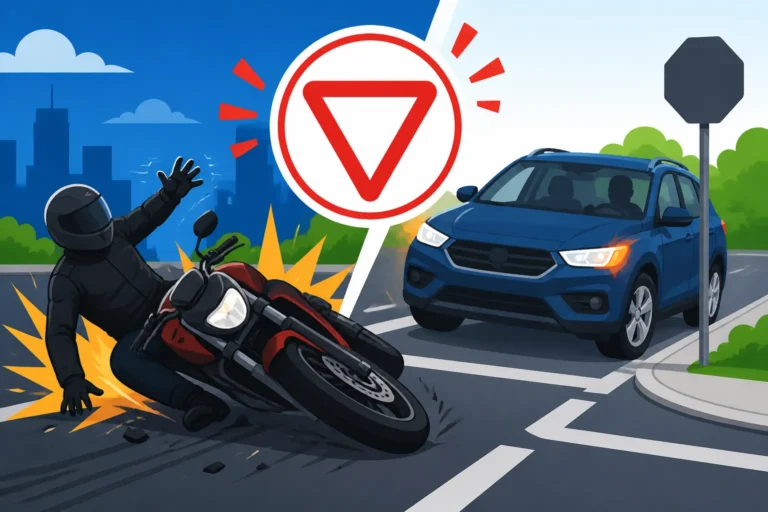
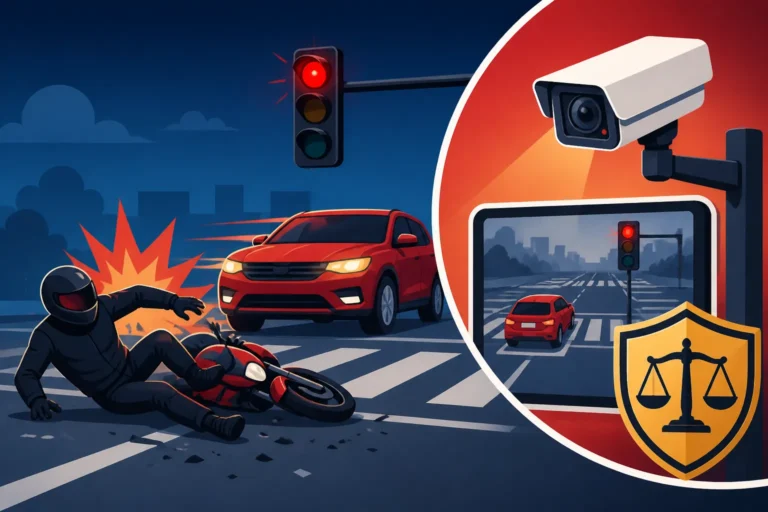
- Near-Misses and Evasive Action: A car suddenly swerving into your lane without signaling, a driver running a red light at an intersection in downtown Los Angeles, or a vehicle pulling out from a side street without yielding the right-of-way can all force a motorcyclist into a desperate maneuver. If you crash while avoiding a collision, the other driver is still at fault, even if there was no physical contact. This situation often involves the classic "I didn't see the motorcycle" defense, which is often used by negligent drivers to try and shift blame.
- 'Dooring' Accidents: Imagine riding alongside parked cars on a busy street in Chicago. Suddenly, a car door swings open directly into your path without warning. You might not hit the door, but if you crash swerving to avoid it, the occupant of that vehicle is generally liable. These types of incidents can cause severe injuries and significant damage to your bike.
When Rider Error Plays a Role in Single-Motorcycle Accidents
While it’s crucial to challenge the assumption that a single-motorcycle accident is always the rider’s fault, it’s equally important to acknowledge that sometimes, rider error does play a significant, if not primary, role. Being honest about these possibilities helps in understanding the full scope of liability and what to expect in a claim. No rider is perfect, and sometimes our own actions contribute to unfortunate outcomes.
Common Rider Mistakes Leading to Crashes
When a single-motorcycle accident is indeed primarily the result of the rider's actions, certain common mistakes are often at play. These aren't always malicious or reckless, but they can still be deemed negligent.
- Speeding or Aggressive Riding: Pushing the limits of your motorcycle, especially on unfamiliar roads or in congested areas, significantly increases the risk of losing control. Entering a curve too fast, weaving through traffic, or racing can lead to a single-bike crash, and if excessive speed is determined to be the cause, liability will likely fall squarely on the rider. Law enforcement and accident investigators can often determine speed through skid marks, damage patterns, and witness statements. How Speeding Affects Motorcycle Accident Fault is a critical read for understanding the implications here.
- Impaired Riding (DUI/DWI): Riding under the influence of alcohol or drugs severely impairs judgment, reaction time, and coordination. If a single-motorcycle accident occurs while a rider is intoxicated, they will almost certainly be found at fault. Beyond the personal injury claim, this also carries significant criminal penalties.
- Lack of Skill or Experience: Sometimes a rider attempts maneuvers or navigates conditions beyond their skill level. A new rider might take a powerful sportbike onto challenging mountain roads and simply misjudge a turn, leading to a crash. While unfortunate, if the crash is directly attributable to the rider's inability to safely operate the motorcycle under the circumstances, they may be deemed at fault.
- Misjudging Road Conditions or Turns: Even experienced riders can misjudge a turn, fail to account for adverse road conditions (like an unexpected patch of sand on an otherwise clear road), or become distracted for a moment. These momentary lapses can lead to a loss of control and a single-motorcycle accident.
The Impact of Riding Conditions and Experience
The environment and a rider's experience level are always factors, and sometimes they combine with rider actions to contribute to a single-motorcycle accident.
- Adverse Weather Conditions: Riding in heavy rain, dense fog, or on icy roads demands extreme caution. While a well-maintained road should be safe, if a rider proceeds at a speed or in a manner unsafe for the conditions, and then crashes, they might be found partially or wholly at fault. For example, if you decide to ride through a sudden blizzard in Colorado and crash, it's difficult to argue external fault when you chose to ride in dangerous conditions.
- Unfamiliar Roads or Terrain: Exploring new roads is part of the joy of motorcycling, but it also carries risks. Riding too fast on an unfamiliar, winding country road with blind corners, or attempting off-road trails without proper experience or equipment, can easily lead to a single-motorcycle crash. The expectation is that riders adjust their riding style to match their environment and knowledge of the terrain.
- Riding Beyond One's Skill Level: Whether it’s trying to keep up with more experienced friends, attempting advanced riding techniques, or simply buying a bike that's too powerful for one's current abilities, riding beyond one's skill level dramatically increases the chance of an accident. When this results in a loss of control, it can be hard to assign blame elsewhere.
Proving Fault and Navigating Your Claim
Regardless of whether you believe another party is at fault or if you're worried about being blamed, the key to any motorcycle accident claim, especially a single-vehicle one, lies in solid proof. Insurance companies are notorious for trying to place How Insurance Companies Assign Blame to Riders, and without robust evidence, you'll be fighting an uphill battle.
Gathering Critical Evidence at the Scene
The moments immediately following an accident are critical for collecting evidence that can make or break your claim. Even if you're injured, if you are able, secure as much information as possible. The advice in What to Do After a Motorcycle Accident is paramount here.
- Document Everything with Photos and Videos: If you can, take pictures and videos from multiple angles. Capture the entire scene, including your motorcycle's position, damage to the bike, your injuries, and any road hazards like potholes, gravel, or debris. Don't forget to photograph skid marks, relevant traffic signs, weather conditions, and the surrounding environment. If another vehicle was involved in a near-miss, try to get photos of its license plate or a description. Our guide on Photos to Take to Prove Motorcycle Fault provides a detailed checklist.
- Look for Witnesses: Did anyone see what happened? Even if they didn't see the crash itself, they might have observed the lead-up, like a car swerving into your lane, or they might be able to corroborate the presence of a road hazard. Get their contact information immediately. Our article on How Witnesses Affect Motorcycle Fault explains how crucial their testimony can be.
- Call the Police: Always call the police, even if no other vehicle was involved and you think you’re okay. A police report creates an official record of the incident and can document critical details like road conditions, potential causes, and witness statements. While a police report isn't the final word on fault, it provides an invaluable foundation. Be careful what you say, though; How a Police Report Can Hurt Your Claim if it inaccurately assigns blame.
- Never Admit Fault: In the aftermath of a traumatic event, it's easy to second-guess yourself or feel overwhelmed. Do not apologize or admit fault, even if you think you might be to blame. Simply state the facts as you know them to the police and exchange information. Why You Should Never Admit Fault at the Scene is a principle that can save your entire claim.
Dealing with Insurance Companies and Their Biases
Insurance adjusters are trained to minimize payouts, and they often come into motorcycle accident claims with preconceived notions about riders. They will likely try to attribute the accident to rider error, even if there's evidence to the contrary.
- Expect Scrutiny: Your claim will face intense scrutiny. Insurers will look for any reason to deny or reduce your compensation, often using common stereotypes. They might argue you were speeding, distracted, or simply inexperienced. Our piece on How Insurers Use Rider Stereotypes Against You explains these tactics in depth.
- Don't Give Recorded Statements: You are generally not required to give a recorded statement to the at-fault driver's insurance company. Anything you say can be twisted and used against you. It's best to consult with an attorney before speaking with any insurance adjusters beyond basic reporting.
- Provide Evidence Proactively: Rather than waiting for the insurance company to deny your claim based on their assumptions, proactively provide them with all the evidence you've gathered. This includes photos, witness statements, medical records, and any documentation of road hazards or mechanical issues. Detailed steps on How to Document the Scene to Prove Fault will be your best defense.
The Role of Accident Reconstruction Experts
In complex single-motorcycle accidents, especially when fault is disputed or the cause isn't immediately clear, an accident reconstruction expert can be invaluable.
- Unbiased Analysis: These experts are highly trained professionals who use scientific principles, physics, and engineering to analyze accident scenes, vehicle damage, and other data to determine exactly how an accident occurred. They can calculate speeds, angles of impact (even with the ground), and the sequence of events.
- Proving External Factors: An accident reconstruction expert can often conclusively prove that a hidden road hazard, a sudden mechanical failure, or an evasive maneuver due to another driver's negligence was the true cause of the single-motorcycle accident. This evidence can be incredibly powerful in countering insurance company biases and establishing liability. Learn more about How Accident Reconstruction Determines Fault and When to Hire an Accident Reconstruction Expert.
- Expert Testimony: If your case goes to trial, the testimony of an accident reconstruction expert can be crucial in explaining complex technical details to a jury in an understandable way, swaying their opinion in your favor.
Here's a quick look at potential at-fault parties in a single-motorcycle accident:
| Scenario Leading to Accident | Potential At-Fault Party | Key Evidence to Gather |
|---|---|---|
| Road Hazard (pothole, debris) | Government entity (city, county, state DOT) | Photos/video of hazard, location, witness statements, maintenance records |
| Defective Part (brakes, tires) | Manufacturer, parts supplier, dealership (seller) | Mechanic's report, recalled part info, maintenance records, accident reconstruction |
| Animal Encounter (dog, horse) | Animal owner (negligent containment) | Witness statements, animal control reports, photos of animal/fence |
| Evasive Maneuver (near-miss car) | Other driver (even if no contact) | Witness statements, dashcam footage, traffic camera footage, police report |
| Rider Error (speeding, impairment) | Rider (personal responsibility) | Police report, toxicology reports, witness statements, accident reconstruction |
Remember, navigating a motorcycle accident claim, especially a single-vehicle one, can be complex and intimidating. Understanding the potential causes beyond your own actions and knowing how to document and prove them is your best defense against unfair blame.
Disclaimer
The information provided in this guide is intended for general informational purposes only and does not constitute legal advice. Motorcycle accident claims are highly fact-specific, and the laws regarding liability, negligence, and comparative fault vary significantly by state. It is crucial to consult with a qualified motorcycle accident attorney in your jurisdiction to discuss the specifics of your case and understand your legal options. Relying solely on the information presented here without professional legal counsel is not recommended.