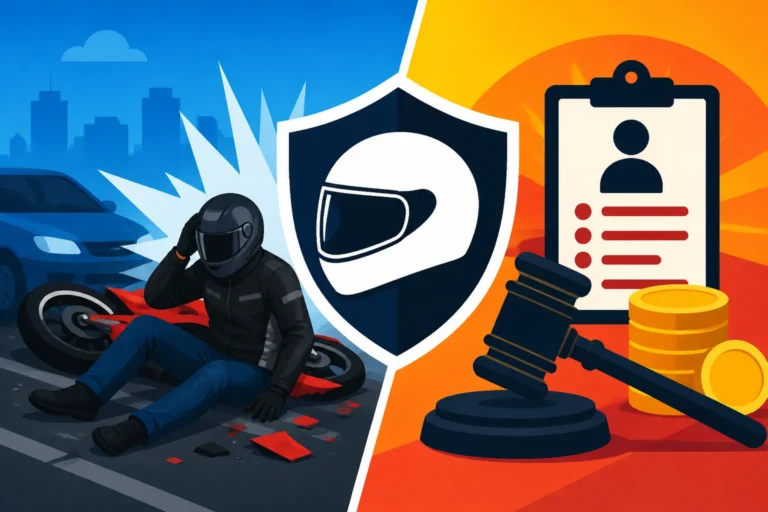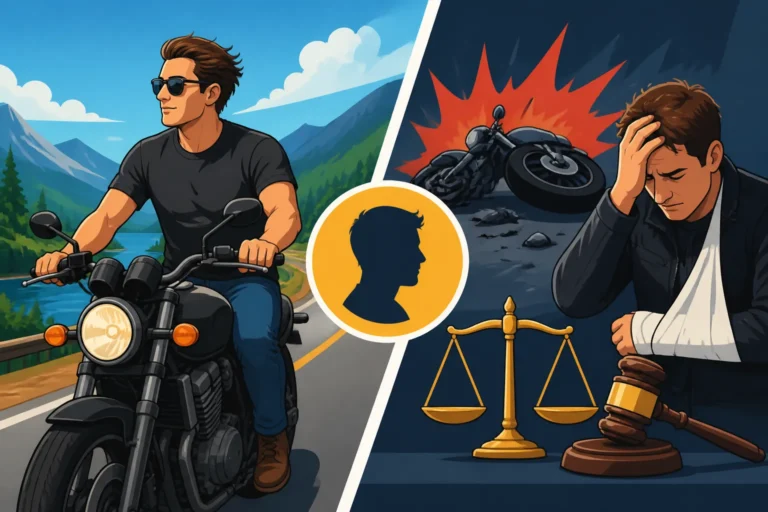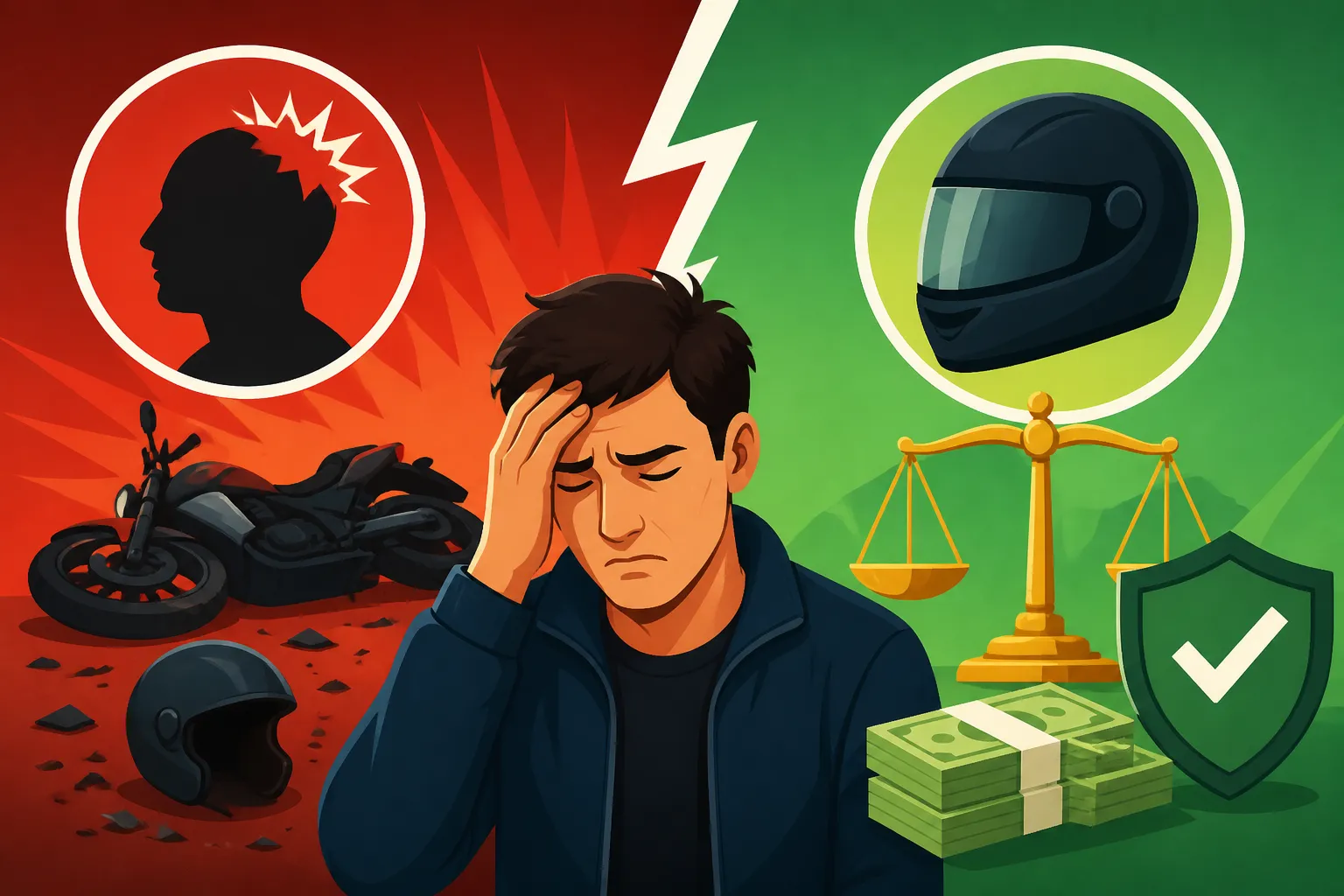
How Not Wearing a Helmet Affects Your Settlement
One of the most nerve-wracking questions after a motorcycle accident, especially if you weren't wearing a helmet, is how this might impact your ability to get the compensation you deserve. It’s a harsh reality that riders often face an uphill battle, and something as seemingly personal as helmet choice can become a weapon against your claim. This comprehensive guide will meticulously break down how not wearing a helmet can affect your settlement, exploring the legal nuances and practical implications you might encounter.
Understanding Motorcycle Helmet Laws Across the Nation
Let's face it, the open road is part of the appeal, and for some, that includes the freedom of the wind in their hair. But when an accident happens, those personal choices come under intense scrutiny. The legal requirements for helmet use vary significantly from state to state, creating a complex patchwork that can feel impossible to navigate when you're already recovering from an injury.
Universal Helmet Laws
In some states, everyone on a motorcycle, regardless of age or experience, is required to wear a helmet. These are often referred to as universal helmet laws. States like California, Georgia, and New York have these laws in place, meaning that if you're riding a motorcycle on public roads, you must have a helmet on. This isn't just a recommendation; it's a legal mandate. If you're involved in a crash in one of these states without a helmet, you've technically broken the law, and that fact can be brought up in court or by insurance adjusters.
The rationale behind universal laws is primarily safety, aiming to reduce head injuries and fatalities. From a legal claim perspective, violating a universal helmet law can put you at a significant disadvantage, as it opens the door for the defense to argue that you contributed to your own injuries, even if the other driver was clearly at fault. Understanding the specific Motorcycle Helmet Laws by State is a critical first step for any rider.
Partial Helmet Laws
Then you have states with what are known as partial helmet laws. These laws typically require certain riders to wear helmets, often based on age. For instance, many states mandate helmet use for riders under 18 or 21. Florida and Texas are prime examples of states with partial helmet laws, where riders over a certain age who carry sufficient medical insurance might be exempt from wearing a helmet.
The complexity here is that if you fall into an exempt category, your decision not to wear a helmet might not be a violation of the law. However, even if it's not illegal, it doesn't necessarily shield you from the "helmet defense," which we'll discuss next. Insurance companies can still argue that even if legal, your choice increased the severity of your injuries. This gray area makes these cases particularly challenging to argue.
States with No Helmet Law
Believe it or not, a few states have no helmet law whatsoever, or their laws are so minimal they are effectively considered "no helmet law" states for adult riders. For example, Iowa and New Hampshire are known for their minimal or absent adult helmet mandates. In these places, the argument that you broke a law by not wearing a helmet generally doesn't hold water.
However, even in states with no helmet law, an insurance company or defense attorney can still try to argue that your injuries were made worse because you weren't wearing a helmet. They'll lean on the common perception of safety and the known benefits of helmets, trying to prove that a prudent person would have worn one regardless of the law. It’s a tough pill to swallow when you're adhering to the law, but still face such accusations.
The "Helmet Defense" in Motorcycle Accident Claims
This is where things get particularly frustrating for riders. Even when the other driver is clearly at fault for causing the accident, insurance companies and their legal teams often try to shift some blame onto the motorcyclist, especially if they weren't wearing a helmet. This tactic is formally known as the "helmet defense," and it can drastically reduce the amount of compensation you receive.
How Insurance Companies Use the Helmet Defense
Insurance companies are profit-driven entities, and their primary goal is to pay out as little as possible. When a rider is injured and wasn't wearing a helmet, it's a golden opportunity for them to argue that the rider is partially responsible for the extent of their own injuries, specifically head injuries. They don't usually claim the helmet would have prevented the accident itself, but rather that it would have minimized or prevented the head trauma.
For example, imagine you were T-boned by a distracted driver who ran a red light. You suffer a severe traumatic brain injury. If you weren't wearing a helmet, the insurance company for the at-fault driver might argue that while their driver caused the collision, your TBI would have been less severe, or perhaps non-existent, had you been wearing a helmet. This argument is powerful because, intuitively, it makes sense to many people. It’s a way for them to reduce their liability, and they're very good at it. The specifics of The Helmet Defense Explained can be quite nuanced.
Burden of Proof for the Helmet Defense
The good news, if there is any in this scenario, is that the burden of proof typically falls on the defense. They can't just allege that your injuries would have been less severe; they usually have to prove it. This often requires them to hire expert witnesses, such as accident reconstructionists or medical professionals, who can testify that your head injury was directly exacerbated or caused by the absence of a helmet.
These experts might present evidence regarding the dynamics of the crash, the point of impact on your head, and how a properly fitted, DOT-compliant helmet would have absorbed or redirected the force. This can involve complex scientific and medical testimony, which is why fighting the helmet defense often requires equally compelling expert testimony from your side. It's not a simple "yes or no" situation; it's a battle of experts.
The Intersection of Helmet Use and Comparative Negligence
Most states operate under some form of comparative negligence, which is a legal principle that allows courts to apportion fault among all parties involved in an accident. This is where not wearing a helmet can really sting your settlement.
Pure Comparative Negligence
In states like California, which follow a "pure comparative negligence" rule, you can still recover damages even if you are found to be mostly at fault for an accident. However, your total compensation will be reduced by your percentage of fault. So, if you're found 30% at fault for your head injury because you weren't wearing a helmet, and your total damages are $100,000, you would only recover $70,000.
This system might seem fairer because it allows for some recovery, but it still means your settlement could take a significant hit. The key is that the "fault" assigned for not wearing a helmet isn't about causing the accident itself, but about contributing to the severity of your own injuries. This is a crucial distinction that insurance companies exploit. You can learn more about how Comparative Negligence in Motorcycle Accidents works.
Modified Comparative Negligence
Many states, like Texas and Georgia, use a "modified comparative negligence" rule, often referred to as the "51% rule" or "50% rule." Under this system, you can only recover damages if you are found to be less than 51% (or 50%, depending on the state) at fault. If your fault meets or exceeds that threshold, you might be barred from recovering any compensation at all.
Consider a scenario in a 51% rule state: the other driver made an unsafe lane change, causing your crash, but the jury decides you are 40% at fault for your head injury because you weren't wearing a helmet and the law required you to. You can still recover 60% of your damages. But if that percentage of fault for not wearing a helmet pushes you to 51% or higher (e.g., if you were speeding and not wearing a helmet), you could walk away with nothing, even if the other driver initiated the collision. This makes the helmet defense incredibly dangerous for your claim. How Comparative Negligence Reduces Your Payout is a must-read for anyone in this situation.
Impact on Specific Damages and Your Payout
When you're dealing with the aftermath of a motorcycle accident, you're not just looking at immediate medical bills. You're facing a cascade of financial, physical, and emotional costs. The helmet defense can impact virtually every category of damages you might seek.
Economic Damages
Economic damages are the tangible, quantifiable losses you incur due to the accident. This includes things like medical bills, lost wages, rehabilitation costs, and property damage to your bike. If the defense successfully argues that not wearing a helmet exacerbated your head injuries, these costs can be significantly reduced.
For example, if your traumatic brain injury would have been a mild concussion with a helmet, but without one it's a severe TBI requiring extensive long-term care, the defense will argue that the difference in those costs (the cost of treating a severe TBI versus a mild concussion) should not be borne by their client. This means that a significant portion of your future medical expenses and lost earning capacity, directly related to the head injury, could be on the chopping block. Even if the crash severely damaged your bike, the focus will unfairly shift to your head injuries.
Non-Economic Damages
Non-economic damages are the less tangible, but equally devastating, losses like pain and suffering, emotional distress, loss of enjoyment of life, and disfigurement. These damages are often a substantial portion of a motorcycle accident settlement, especially in cases involving severe injuries.
The helmet defense can attack non-economic damages even more aggressively. If a jury believes your severe pain and suffering, or your inability to enjoy hobbies, stems from a head injury that could have been mitigated by a helmet, they may be less sympathetic. This can lead to a drastic reduction in the amount awarded for pain and suffering, which often relies on the jury's perception of your blamelessness in the severity of your suffering. It's a cruel irony that your suffering can be devalued based on a personal choice that may not have even been illegal. Understanding Economic vs Non-Economic Damages Explained is crucial here.
The Nuance of DOT-Compliant Helmets and Novelty Helmets
It's not enough to just wear a helmet. The type of helmet you wear can also become a point of contention for insurance companies seeking to minimize payouts. This is where the distinction between a DOT-compliant helmet and a novelty helmet becomes critically important.
What Constitutes a DOT-Compliant Helmet
A DOT-compliant helmet is one that meets the safety standards set by the U.S. Department of Transportation. These helmets are rigorously tested to ensure they can withstand impacts, offer adequate penetration resistance, and provide proper peripheral vision. They usually have a DOT sticker on the back, and inside, they'll have a label from the manufacturer stating compliance with FMVSS 218 (Federal Motor Vehicle Safety Standard 218). These helmets are designed to protect your head in a crash, significantly reducing the risk of serious injury.
If you were wearing a DOT-compliant helmet, even if you suffered a head injury, it strengthens your argument that you took reasonable precautions. The defense would then have a much harder time claiming your injuries were worsened by lack of proper head protection. This is why always investing in quality, certified gear from reputable retailers like Cycle Gear is so important – not just for safety, but for your legal standing. Understanding What Is a DOT-Compliant Helmet can save you a lot of grief.
The Risks of Novelty Helmets
Novelty helmets, on the other hand, are often thinner, lighter, and lack the internal padding and energy-absorbing materials necessary to meet DOT standards. They might offer minimal protection against abrasion but are virtually useless against impact forces. While they might look cool, they offer little to no real protection in a crash. Crucially, they do not have the DOT certification sticker.
If you were wearing a novelty helmet and suffered a head injury, the defense will likely treat it as if you weren't wearing a helmet at all. They'll argue that because it offered no real protection, your injuries are just as severe as if you had worn nothing. This can open the door to the full force of the helmet defense, significantly compromising your claim, even if you technically had something on your head. This situation falls under the category of Novelty Helmets and Legal Risk and can be devastating to your case.
Strategies to Counter the Helmet Defense
Facing the helmet defense can feel overwhelming, but it's not an automatic loss. There are strategies and arguments that can be employed to minimize its impact on your settlement.
Proving the Helmet Wouldn't Have Prevented or Reduced Injury
One of the most effective ways to counter the helmet defense is to demonstrate that, even if you had been wearing a DOT-compliant helmet, your injuries would not have been prevented or significantly reduced. This often requires expert testimony from an accident reconstructionist or biomechanical engineer.
For example, if your head injury resulted from a crush injury, where your head was compressed between two heavy objects, an expert might testify that no helmet, regardless of its quality, could have protected against that specific type of trauma. Or, if the injury was to a part of your body other than your head (e.g., a spinal injury or road rash on your arms), the absence of a helmet is irrelevant to those specific injuries. This shifts the focus back to the other driver's negligence as the sole cause of those particular damages. You can also explore When Helmet Non-Use Cannot Be Used Against You.
Emphasizing the Other Driver's Sole Negligence
Regardless of the helmet issue, it's crucial to keep the focus on the other driver's actions that caused the accident. The helmet defense is about the severity of injuries, not the cause of the crash. Your legal team will work tirelessly to highlight every aspect of the other driver's negligence: distracted driving, speeding, failure to yield, or any other traffic violation.
By presenting a strong case for the other driver's unequivocal fault in initiating the collision, you can limit the jury's inclination to blame you. For instance, if a driver pulled out in front of you without looking, leading to a Left-Turn Motorcycle Accidents Explained, your attorney will ensure that the driver's failure to see you and yield the right-of-way is front and center. While the helmet may still be a factor, a clear picture of the other driver's carelessness can mitigate its impact.
Leveraging the Eggshell Skull Rule
The "eggshell skull" rule is a legal principle that states a defendant must take their victim as they find them. In other words, if the defendant's negligence causes injury to someone who is particularly vulnerable (e.g., due to a pre-existing condition), they are still liable for the full extent of the injuries, even if a "normal" person wouldn't have been as severely harmed.
While typically applied to pre-existing medical conditions, some arguments can be made by analogy regarding the helmet defense. While it's a stretch to say not wearing a helmet is a "pre-existing condition," the principle reinforces that the defendant is responsible for the actual damage they caused. It doesn't allow them to say, "Well, if you were tougher, you wouldn't be this hurt." This is a complex area, and how it applies to helmet defense often depends on the specific jurisdiction and facts.
The Critical Role of an Experienced Motorcycle Accident Attorney
Navigating the complexities of a motorcycle accident claim, especially when the helmet defense is in play, is not something you should attempt alone. The stakes are too high, and the insurance companies have vast resources.
Why You Need Specialized Legal Expertise
Motorcycle accident cases are inherently more challenging than car accident cases. There's an unfair bias against riders, and the helmet defense is just one example of how insurance companies try to capitalize on this. A personal injury attorney who specializes in motorcycle accidents understands these biases and has specific experience countering them.
They know the local laws inside and out, including the nuances of Motorcycle Accident Fault Laws in California or any other state. They can anticipate the arguments the defense will make and proactively gather the evidence and expert testimony needed to refute them. They've likely handled similar cases before and know exactly what strategies work and what pitfalls to avoid. This specialized knowledge is invaluable when your health and financial future are on the line.
Investigating and Building Your Case
Your attorney will conduct a thorough investigation, going beyond the police report to gather all available evidence. This includes reviewing accident scene photos, witness statements, medical records, and potentially hiring experts. They will analyze the impact dynamics, scour your medical history for any relevant details, and consult with medical professionals to accurately assess the extent of your injuries and future needs.
When facing the helmet defense, they might engage biomechanical engineers to model the forces involved in the crash and demonstrate how a helmet would (or wouldn't) have affected your specific injuries. They will work to document every single one of your Types of Damages in a Motorcycle Accident Claim, ensuring no stone is left unturned in establishing the true value of your case.
Negotiating with Insurance Companies
Once all the evidence is collected, your attorney will handle all communications and negotiations with the insurance companies. This is where their experience truly shines. Insurance adjusters are trained negotiators whose job is to minimize payouts. They will use every tactic in their playbook, including emphasizing your lack of a helmet, to reduce their offer.
Your attorney will counter these arguments with evidence, legal precedent, and a clear understanding of your state's comparative negligence laws. They will ensure that you don't accept a lowball offer and will fight for the maximum compensation you deserve, taking into account How Insurance Policy Limits Affect Your Payout and other factors. If negotiations fail, they'll be prepared to take your case to court.
Other Gear and Your Accident Claim
While the helmet is often the focal point of the defense, other protective gear can also play a role, both positively and negatively, in your accident claim. It's not just about what's legally required; it's about what constitutes reasonable safety.
The Role of Proper Riding Gear
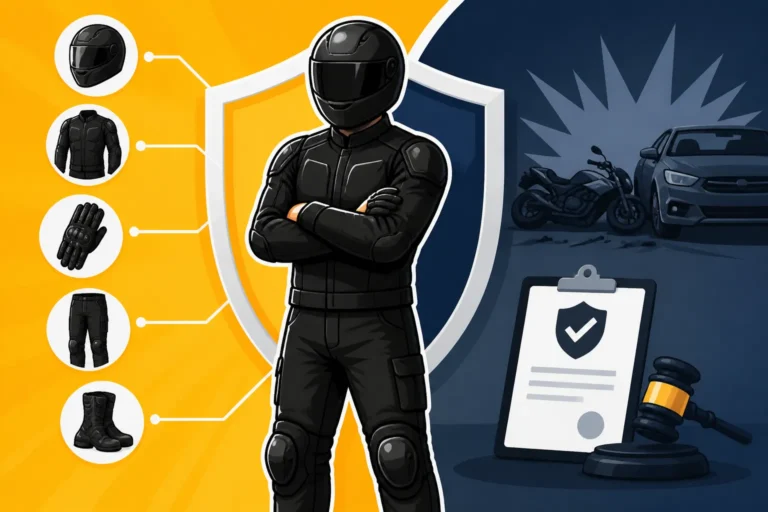
Beyond helmets, wearing appropriate riding gear such as a protective jacket, pants, gloves, and sturdy boots can significantly reduce the severity of injuries like road rash, broken bones, and abrasions. For instance, a quality leather or armored textile jacket and pants from a brand like Cycle Gear can mean the difference between extensive skin grafts and minor abrasions.
If you were wearing comprehensive riding gear, this can work in your favor. It demonstrates that you are a responsible rider who takes safety seriously, which can help counter any negative stereotypes or assumptions the defense might try to paint about motorcyclists. It shows you made a conscious effort to protect yourself, even if you weren't wearing a helmet. Motorcycle Safety Gear and Legal Protection is a crucial topic for all riders.
How Lack of Gear Can Affect Your Claim
Conversely, if you were riding without adequate protective gear (e.g., shorts and a t-shirt), and suffered extensive road rash or other injuries to your extremities, the defense might attempt to use this against you as well. While not as impactful as the helmet defense for head injuries, they could argue that your decision to ride without proper gear contributed to the extent of your other injuries.
This again falls under the umbrella of comparative negligence. The argument would be that while the other driver caused the crash, your injuries would have been less severe if you had worn appropriate protection. This might lead to a reduction in damages for road rash treatment, scarring, and associated pain and suffering. It's a reminder that every choice you make on the road can have repercussions in a legal claim.
What to Do After a Motorcycle Accident If You Weren't Wearing a Helmet
The moments immediately following a motorcycle accident are critical, and even more so if you weren't wearing a helmet. Your actions can significantly impact the strength of your future claim.
Seek Immediate Medical Attention
Your health is paramount. Even if you don't feel severely injured, or are worried about the helmet issue, you must seek immediate medical attention. Adrenaline can mask pain, and some serious injuries, especially head injuries, might not be immediately apparent. A prompt medical evaluation creates an official record of your injuries, which is vital for your claim.
Delaying medical treatment can hurt your case in two ways: first, it could worsen your injuries, and second, the defense might argue that your injuries weren't serious or that they were caused by something else after the accident. Don't let the fear of the helmet defense prevent you from getting the care you need. Always prioritize your well-being. What to Do Immediately After a Motorcycle Accident provides a detailed roadmap.
Document Everything You Can
If you are able, document the scene thoroughly. Take photos and videos of everything: the position of your motorcycle and the other vehicle, road conditions, traffic signs, skid marks, and any visible injuries. Exchange information with the other driver and gather contact details from any witnesses.
Even if you weren't wearing a helmet, documenting the scene can still prove the other driver's fault in causing the collision. The more evidence you have of their negligence, the stronger your case will be for holding them responsible for the crash, even as you prepare to address the helmet defense regarding your head injuries. Detailed photos of your damaged gear, for example, can show the force of impact.
Consult a Motorcycle Accident Attorney Immediately
This is perhaps the most crucial step. Do not talk to the other driver's insurance company or sign anything without first consulting an experienced motorcycle accident attorney. They will want to get a statement from you, and anything you say can be used against you, especially regarding your helmet use.
An attorney can advise you on your rights, explain the helmet laws in your state (e.g., Motorcycle Helmet Law in Florida), and begin building your case. They can help protect you from making statements that could jeopardize your claim and will handle all communications with insurance companies on your behalf. The sooner you involve an attorney, the better your chances of successfully navigating the complexities of your claim.
| Factor | Universal Helmet Law State | Partial Helmet Law State (Age 21+) | No Helmet Law State |
|---|---|---|---|
| Legality of No Helmet | Illegal (Statutory Violation) | Legal (if exempt) | Legal |
| Helmet Defense Impact | Stronger argument for defense | Moderate argument for defense | Weaker but still possible for defense |
| Comparative Negligence Exposure | High (for head injuries) | Moderate to High (for head injuries) | Low to Moderate (for head injuries) |
| Burden of Proof for Defense | Easier to establish negligence | Requires expert to prove injury link | Requires expert to prove injury link |
| Potential Settlement Reduction | Substantial | Significant | Possible |
Disclaimer
The information provided in this guide is for general informational purposes only and does not constitute legal advice. Motorcycle accident claims are complex, and the specific laws and outcomes can vary significantly based on your location and the unique facts of your case. It is essential to consult with a qualified and experienced motorcycle accident attorney to discuss your individual situation and receive personalized legal advice.