Helmet Laws and Head Injury Claims
Riding a motorcycle comes with an undeniable sense of freedom, but it also carries inherent risks, especially when it comes to head injuries. The aftermath of a motorcycle accident can be devastating, leaving riders and their families grappling with severe medical conditions, financial strain, and complex legal questions. One of the most common and often misunderstood aspects that arise in these challenging times is how helmet laws impact a head injury claim. This guide aims to thoroughly explain the intricate relationship between helmet use, state laws, and your ability to secure the compensation you deserve.
The Critical Role of Helmets in Motorcycle Safety and Injury Prevention
When you climb onto your bike, whether for a quick commute or a long-haul adventure, you're embracing a unique form of travel. However, with that comes a heightened vulnerability compared to being encased in a car. Head injuries are, without a doubt, among the most catastrophic outcomes of a motorcycle accident, and understanding how helmets mitigate this risk is the first step toward appreciating their crucial role, not just in safety, but also in legal claims.
Understanding the Severity of Head Injuries
A head injury isn't just a bump on the noggin; it can range from a mild concussion to a life-altering traumatic brain injury (TBI). Imagine the sheer force involved when a rider is thrown from their motorcycle, impacting asphalt or another vehicle. Without a helmet, that delicate organ housing your thoughts, memories, and personality is directly exposed. Even a seemingly minor head strike can lead to a concussion, characterized by symptoms like dizziness, confusion, and memory issues. These "minor" injuries can sometimes have surprisingly long-lasting effects, impacting cognitive function, mood, and quality of life for months or even years.
More severe head injuries, or TBIs, can involve skull fractures, internal bleeding, diffuse axonal injury, and brain contusions. The consequences of these injuries are often permanent, leading to paralysis, speech impediments, severe cognitive deficits, and even a persistent vegetative state. The medical care for such injuries is astronomical, often requiring extensive hospital stays, multiple surgeries, rehabilitation, and lifelong care. When we talk about head injuries, we're not just discussing physical pain; we're talking about a potential complete upheaval of a person's entire existence and the immense burden placed upon their loved ones. The raw vulnerability of a rider's head in a collision makes protection paramount.
How Helmets Offer Protection
So, how exactly does a piece of headgear make such a profound difference? A properly designed and certified motorcycle helmet acts as a multi-layered shield, specifically engineered to absorb and distribute the kinetic energy generated during an impact. The outer shell, typically made from materials like fiberglass, carbon fiber, or polycarbonate, is designed to be tough enough to resist penetration and to spread the force of impact over a wider area. This prevents localized pressure points that could otherwise lead to skull fractures.
Beneath the outer shell lies the critical impact-absorbing liner, usually made of expanded polystyrene (EPS) foam. This foam is designed to crush and deform upon impact, slowing down the head's movement and reducing the sudden deceleration that causes brain injury. Think of it like a crumple zone for your head. Finally, a comfort padding layer and a retention system (the chin strap) keep the helmet securely in place, ensuring it performs its job when you need it most. Full-face helmets offer the most comprehensive protection, safeguarding not only the top and sides of the head but also the face, jaw, and chin from abrasion, fractures, and flying debris. Open-face helmets provide less comprehensive protection, leaving the face exposed, which can be a significant factor in facial injuries and claims.
The Human Cost of Not Wearing a Helmet
The statistics are stark and paint a clear picture of the human cost involved when riders choose to forego a helmet. Studies consistently show that helmets are highly effective in preventing fatal and severe head injuries. For example, the National Highway Traffic Safety Administration (NHTSA) estimates that helmets saved over 1,800 lives in a single recent year and could have saved hundreds more if all motorcyclists had worn them. These aren't just numbers; they represent brothers, sisters, parents, and friends whose lives were tragically cut short or irrevocably altered.
Consider a hypothetical scenario: a rider, enjoying a Sunday afternoon cruise, is involved in a collision with a car that suddenly turns left in front of them. If that rider is wearing a DOT-compliant full-face helmet, they might suffer a broken arm, road rash, and a concussion, but their brain might be largely intact. If the same rider, in the same accident, wasn't wearing a helmet, the outcome could easily be a severe TBI, permanent disability, or even death. The financial burden alone, reaching into the millions for severe TBIs, pales in comparison to the loss of a rider's ability to live an independent life, to work, or to enjoy their passions. This stark reality underscores why helmet laws are in place and why insurance companies scrutinize helmet use so closely after an accident.
Navigating the Landscape of Motorcycle Helmet Laws by State
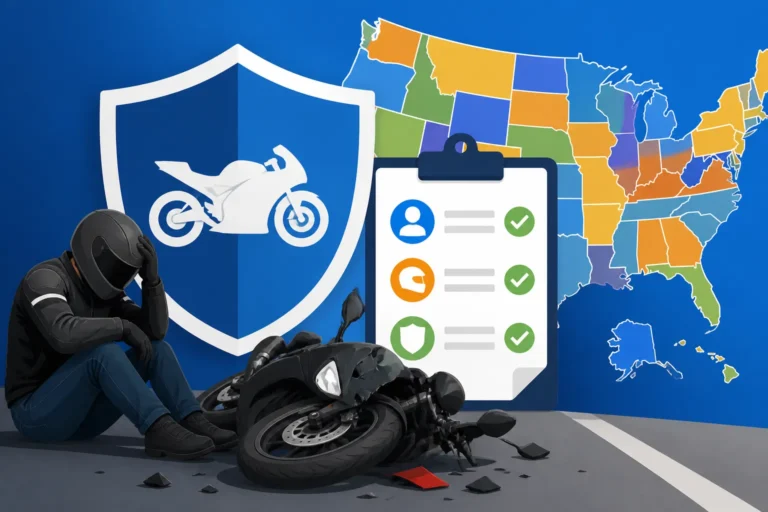
Motorcycle helmet laws across the United States are far from uniform, creating a confusing patchwork of regulations for riders. What's legal in one state might land you a hefty fine or even impact your injury claim in another. Understanding these state-specific nuances is crucial, not just for compliance on the road, but also for navigating the complexities of a legal claim if an accident occurs. For a more complete overview, check out our guide on Motorcycle Helmet Laws by State.
Universal Helmet Laws Explained
Some states uphold what are known as "universal helmet laws." This means that every single person riding on a motorcycle, whether as a driver or a passenger, regardless of age or experience, is legally required to wear a DOT-compliant motorcycle helmet. There are no exceptions based on age, insurance coverage, or rider experience. States like California, Georgia, and New York are prominent examples of jurisdictions with universal helmet laws.
The rationale behind these laws is straightforward: to maximize safety and minimize the devastating impact of head injuries on riders and the healthcare system. In these states, a rider pulled over without a helmet will likely face a citation and a fine. More critically, if a rider in a universal helmet law state is involved in an accident and sustains a head injury while not wearing a helmet, it can significantly complicate their injury claim, regardless of who was at fault for the collision itself. Insurers will almost certainly raise the "helmet defense," arguing that the rider's own negligence contributed to the severity of their injuries.
Partial Helmet Laws and Their Specifics
The majority of states operate under "partial helmet laws." These regulations typically require certain groups of riders to wear helmets, most commonly those under a specific age. For instance, many states mandate helmet use for riders under 18 or 21 years old. However, some partial laws also include clauses related to insurance coverage. For example, in Florida, riders 21 years of age or older may ride without a helmet if they are covered by an insurance policy providing at least $10,000 in medical benefits for injuries incurred in a motorcycle accident. Texas has a similar law.
This type of law creates a complex situation. A rider over 21 in Florida, with the appropriate insurance, is legally allowed to ride without a helmet. If they are involved in an accident and sustain a head injury, the legal argument becomes much more nuanced than in a universal helmet state. While they weren't breaking the law, an insurance company might still attempt to argue that the decision not to wear a helmet constituted contributory negligence, leading to greater injury. This is a subtle but critical distinction and underscores the importance of understanding specific state laws. Our article on Universal vs Partial Helmet Laws Explained delves deeper into these distinctions.
States with No Helmet Law
A handful of states currently have no specific motorcycle helmet laws whatsoever, meaning adult riders are not legally mandated to wear a helmet, regardless of age or insurance status. States such as Illinois, Iowa, New Hampshire, and Montana fall into this category. While this offers riders maximum freedom of choice, it also places them at the highest risk for severe head trauma in an accident.
From a legal standpoint, riding without a helmet in a state with no helmet law presents a unique challenge for insurance companies attempting to use the "helmet defense." Since no law was violated, it's harder for an insurer to argue "negligence per se" (negligence by violating a statute). However, they might still argue that any reasonable and prudent person would wear a helmet for safety, regardless of the law, and that this failure contributed to the injuries. This is often framed under common law principles of avoidable consequences or comparative negligence. Even in these states, the lack of a helmet can be a significant hurdle when pursuing a head injury claim, potentially impacting the value of a settlement. Our article on States with No Helmet Law explores this topic further.
The "Helmet Defense" and How Insurers Use It
After a motorcycle accident, especially one involving a head injury, the question of whether you were wearing a helmet will almost certainly come up. This isn't just about safety; it's a cornerstone of what the insurance industry refers to as the "helmet defense." Understanding this tactic is crucial because it can dramatically impact your ability to recover full compensation for your injuries.
What is the Helmet Defense?
The "helmet defense" is an argument often employed by at-fault drivers' insurance companies to reduce their liability in a motorcycle accident claim. Essentially, the insurance company contends that even if their insured driver was entirely at fault for causing the collision, the severity of the rider's head injuries would have been significantly lessened, or even prevented altogether, had the rider been wearing a proper, DOT-compliant helmet. They're not denying their driver caused the crash; they're arguing the extent of your injuries (specifically head injuries) is partly your fault due to your choice regarding head protection.
Imagine a scenario where a distracted driver operating a Geico-insured vehicle makes an illegal U-turn, directly into the path of a motorcyclist. The motorcyclist, not wearing a helmet, sustains a severe traumatic brain injury. While the distracted driver is clearly negligent for the U-turn, Geico's lawyers might argue, "Yes, our client caused the crash, but the rider's TBI would have been a mild concussion, or perhaps entirely avoided, if they had worn a helmet." This argument aims to shift a portion of the responsibility for the damages onto the injured rider, thereby reducing the amount the insurance company has to pay out. For a detailed explanation, see The Helmet Defense Explained.
How Insurers Try to Reduce Your Payout
Insurance companies, whether it's Progressive, Farmers, or any other, are in the business of minimizing payouts. The helmet defense is a powerful tool in their arsenal. They will scrutinize police reports, medical records, and witness statements to determine if a helmet was worn. If you weren't wearing one, or if it wasn't DOT-compliant, they will likely use this fact to their advantage. Their tactics might include:
- Devaluing Pain and Suffering: Head injuries, particularly TBIs, often involve immense pain and suffering, emotional distress, and loss of enjoyment of life. Insurers will argue that these non-economic damages should be significantly reduced because the rider's own actions (not wearing a helmet) exacerbated their suffering.
- Contesting Medical Expenses: They might dispute the necessity or extent of certain medical treatments related to the head injury, claiming that these costs wouldn't have been incurred if a helmet had been used.
- Shifting Blame for Long-Term Consequences: For permanent disabilities resulting from a TBI, insurers will vigorously argue that these long-term impacts are a direct result of the rider's failure to wear a helmet, not solely the fault of their insured driver.
The goal is to convince either a jury or you, the injured party, that your settlement should be lower because you contributed to the severity of your injuries. This strategy is specifically designed to chip away at the total value of your claim. Understanding How the Helmet Defense Reduces Settlements can help you prepare for these challenges.
Comparative Negligence and Helmet Non-Use
The success of the helmet defense often hinges on the specific state's comparative negligence laws. Comparative negligence systems assign a percentage of fault to each party involved in an accident. If you are found to be partially at fault for your injuries (even if not for the cause of the accident), your total damage award can be reduced proportionally.
- Pure Comparative Negligence (e.g., California): In states with pure comparative negligence, you can recover damages even if you are 99% at fault. However, your payout will be reduced by your percentage of fault. So, if your head injury claim is valued at $500,000, but a jury finds you 20% responsible for the severity of your head injury because you weren't wearing a helmet, your award would be reduced to $400,000.
- Modified Comparative Negligence (e.g., Texas, Florida): Most states follow a modified comparative negligence rule, typically with a 50% or 51% bar. If you are found to be 50% or 51% (depending on the state) or more at fault for your injuries, you may be barred from recovering any damages at all. For example, in Texas, if you are found to be more than 50% at fault, you get nothing. If a jury determines that your failure to wear a helmet made you 51% responsible for your severe head injury, even if the other driver caused the crash, you could lose your entire claim.
The interplay between helmet non-use and comparative negligence is incredibly complex. An insurance company will go to great lengths to convince a court or jury that your lack of a helmet substantially increased your injury, thereby increasing your share of "fault" for your damages. It's a key reason why it's so important to consult with a legal expert who understands how Comparative Negligence in Motorcycle Accidents applies to your situation.
Proving Helmet Compliance: DOT Standards and Evidence
Just "wearing a helmet" isn't always enough to protect your claim. For legal purposes, especially when dealing with the nuances of a head injury, the helmet needs to meet specific standards, and you need to be able to demonstrate that it was worn correctly. This is where DOT compliance and meticulous documentation come into play.
Understanding DOT Helmet Requirements
When we talk about a "DOT-compliant helmet," we're referring to one that meets the safety standards set by the U.S. Department of Transportation, specifically Federal Motor Vehicle Safety Standard (FMVSS) 218. This standard outlines requirements for impact attenuation, penetration resistance, chin strap integrity, and peripheral vision. A DOT-compliant helmet is rigorously tested to ensure it can absorb significant impact energy, protecting your brain from trauma in a crash. You can usually identify a DOT-compliant helmet by a sticker on the back that clearly states "DOT FMVSS No. 218." Reputable brands often make this certification a key selling point.
It's crucial to distinguish DOT-compliant helmets from "novelty helmets." Novelty helmets might look cool or stylish, but they offer little to no real protection in an accident. They are often thin-shelled, lack an energy-absorbing liner, and have flimsy retention systems. While they might satisfy a minimal interpretation of a "helmet" to some, they absolutely do not meet the legal or safety standards required. If you're wearing a novelty helmet and suffer a head injury, the insurance company will treat it much like not wearing a helmet at all, arguing that it provided no meaningful protection. When you're ready to purchase, stores like Cycle Gear can help you find a helmet that explicitly states its DOT compliance, ensuring you're getting the protection you need and the documentation for your claim. Our guide on DOT Helmet Requirements Explained offers more insights into what to look for.
The Importance of a Properly Worn Helmet
It’s not just about having a DOT-compliant helmet; it's about wearing it correctly. An improperly worn helmet offers significantly reduced protection and can still be used against you in a claim. Imagine a helmet that's too loose, allowing it to shift around your head during an impact. Or a chin strap that's unbuckled or not snug, causing the helmet to fly off upon initial impact. In these scenarios, even the best helmet in the world can't do its job effectively.
A helmet should fit snugly, without being uncomfortably tight, and it should not move independently of your head when you try to rotate it. The chin strap should always be securely fastened so that only one or two fingers can fit comfortably between the strap and your chin. After an accident, if there's evidence that your helmet was improperly worn, an insurance adjuster might argue that your actions contributed to your injuries, even if the helmet itself was DOT-approved.
Documenting Helmet Use After an Accident
The immediate aftermath of an accident is chaotic, but documenting your helmet use is incredibly important. If you were wearing a helmet, ensure that this fact is noted in the police report. If the helmet was damaged in the crash, do not discard it. This damaged helmet becomes vital physical evidence.
Take clear photographs of:
- Your helmet, particularly showing any damage it sustained.
- The DOT sticker on the back, confirming its compliance.
- The chin strap, showing it was fastened.
- Your head and face, showing how the helmet protected you (or any injuries that occurred despite the helmet).
If there were witnesses to the accident, their testimony confirming you were wearing a helmet can also be incredibly valuable. Even if you were unconscious or disoriented, the presence of your helmet at the scene, or testimony from first responders, can help establish this crucial fact. This evidence helps directly counter the helmet defense by showing that you took reasonable precautions. Collecting these details diligently can be pivotal in proving your case, and for more on this, you can read our article, How to Prove You Wore a Helmet.
How Helmet Use Impacts Your Head Injury Claim
The presence or absence of a helmet, and its compliance with safety standards, isn't just a side note in a motorcycle accident claim; it can be a central pillar of the entire legal process, particularly when head injuries are involved. The ramifications can be severe, directly influencing the amount of compensation you might receive.
Direct Impact on Damages for Head Injuries
If you sustain a head injury in a motorcycle accident and were not wearing a DOT-compliant helmet (especially in a state with a universal or partial helmet law where you were legally required to wear one), you are likely to face an uphill battle in recovering full damages. Insurance companies will immediately pounce on this fact, using the helmet defense to argue that your injuries were exacerbated by your own negligence. This can lead to a significant reduction, or even a complete denial, of compensation for medical bills, lost wages, and pain and suffering directly related to your head injury.
For instance, if your medical records show a severe TBI, but you weren't wearing a helmet in California (a universal helmet law state), the insurer might argue that a substantial portion of the cost of your TBI treatment should not be covered by them because you contributed to the injury. They might even bring in medical experts to testify that your injuries would have been far less severe had you been wearing proper head protection. This isn't just speculation; it's a common and effective tactic for reducing payouts. Our detailed guide on How Not Wearing a Helmet Affects Your Settlement provides more context on this critical issue.
Effects on Non-Head Injury Claims
You might wonder, "If I wasn't wearing a helmet but suffered a broken leg and not a head injury, does it still matter?" The answer is, unfortunately, yes, it can. While not wearing a helmet wouldn't directly cause a broken leg or road rash, insurance companies might still try to use your helmet non-use to paint you as a reckless rider. This can subtly, or not so subtly, influence how a jury perceives you and your overall claim.
An insurer might argue that a rider who disregards helmet laws is generally negligent or careless, attempting to undermine your credibility. While it shouldn't legally reduce compensation for injuries unrelated to your head, the perception of recklessness can sometimes impact the non-economic damages (like pain and suffering) awarded for other injuries. Jurors, even unconsciously, might assign less sympathy or a lower value to a claim if they believe the injured party acted negligently in other aspects. For instance, while a lack of a helmet does not directly cause an arm fracture, it can create a narrative that the rider was generally disregarding safety. We explain this in more detail in Does Not Wearing a Helmet Affect Non-Head-Injury Claims.
Countering the Helmet Defense
Successfully countering the helmet defense requires a strategic approach. One common method is to argue that, even with a helmet, the specific head injury you sustained was unavoidable due to the extreme force or nature of the impact. For example, an accident reconstruction expert might testify that the collision was so severe that a head injury would have occurred even if a DOT-compliant helmet was worn. Medical experts can also provide testimony, explaining that certain types of brain injuries can happen regardless of helmet use, or that the helmet simply wouldn't have prevented the particular mechanism of injury.
Another strategy involves demonstrating that the helmet defense is irrelevant to the specific damages being sought. If the primary injuries are a broken pelvis and severe road rash, and you are not seeking extensive compensation for a head injury, then the helmet defense might hold less weight. Furthermore, in states with no helmet law, the argument shifts from "you broke the law" to "you acted imprudently," which can be a weaker argument for the defense. Regardless, having an experienced legal team is crucial to develop a robust counter-argument tailored to the specifics of your case and your state's laws. Check out our strategies for How to Counter the Helmet Defense for more helpful information.
Beyond Head Injuries: Other Motorcycle Gear and Your Claim
While helmets are paramount for head protection, they are just one component of a rider's safety gear. The full suite of protective riding gear plays an equally vital role in preventing or mitigating other severe injuries and can significantly influence the strength and value of your accident claim.
The Protective Value of Full Riding Gear
Think of full riding gear as your second skin, designed specifically for the rigors of the road. This typically includes:
- Armored Jackets and Pants: Made from abrasion-resistant materials like leather or specialized textiles (e.g., Cordura, Kevlar), these are equipped with CE-rated armor at impact points like shoulders, elbows, hips, and knees. This gear is essential for preventing road rash, deep lacerations, and even protecting against fractures by absorbing impact.
- Gloves: Essential for protecting hands, which are often the first point of contact in a fall. Good gloves offer abrasion resistance and impact protection, safeguarding against broken fingers and severe skin loss.
- Boots: Sturdy, ankle-high riding boots protect feet and ankles from crushing injuries, fractures, and abrasions, keeping them safe from the bike and the road surface during a slide or impact.
Wearing full gear from head to toe dramatically reduces the severity of injuries like road rash, broken bones, and joint damage. It’s an investment in your safety and can be seen as an act of due diligence that strengthens your legal position, demonstrating you took reasonable steps to protect yourself. Many riders find excellent protective gear options at stores like Cycle Gear, ensuring they are well-equipped for every ride. For more on this, read Motorcycle Safety Gear and Legal Protection.
How Gear or Lack Thereof Affects Injury Claims
The impact of wearing, or not wearing, full protective gear on your injury claim mirrors some aspects of the helmet defense. If you sustain severe road rash, multiple fractures, or other bodily injuries that could have been less severe with proper gear, the at-fault driver's insurance company may argue that you contributed to the extent of your own injuries. For instance, if you were riding in a t-shirt and shorts and suffer extensive third-degree road rash requiring skin grafts, the insurer might contend that appropriate riding leathers would have prevented much of that trauma.
This argument falls under the same principle of comparative negligence or avoidable consequences: if you could have reasonably prevented or reduced the severity of your injuries by wearing appropriate gear, your recoverable damages might be reduced. While it's harder for an insurer to completely dismiss a claim based on lack of riding gear (as opposed to a legally mandated helmet), it can certainly influence the jury's perception of your carefulness and ultimately affect the settlement amount, especially for non-economic damages. Our article, How Gear Affects Injury Severity, discusses this in detail.
Documenting Gear Damage as Evidence
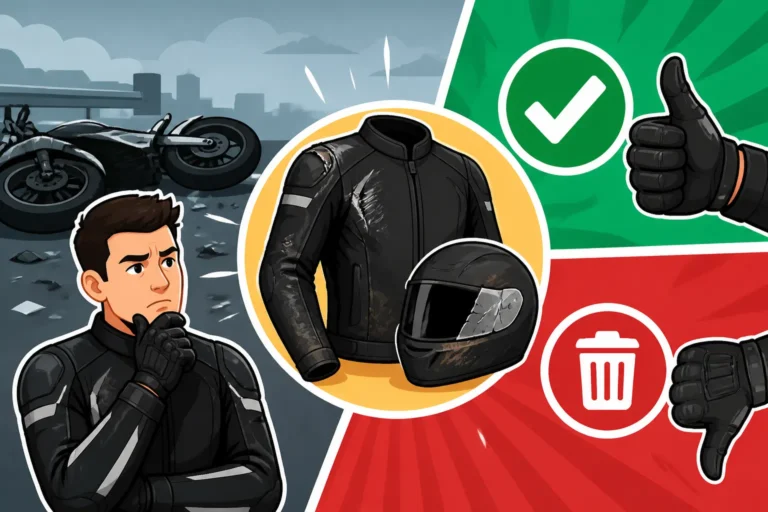
Just like with your helmet, any damaged riding gear becomes crucial evidence after an accident. If your jacket is torn, your gloves shredded, or your boots scuffed, these items tell a story. They can graphically demonstrate the force of impact and the protection they offered, or failed to offer.
Take clear, detailed photos of:
- All damaged articles of clothing, jackets, pants, gloves, and boots.
- Any rips, tears, abrasions, or crushed armor.
- The condition of your gear before the accident if you have photos, to show the damage is new.
This documentation serves multiple purposes:
- Proving Impact Severity: Severely damaged gear can illustrate just how forceful the collision was, corroborating your version of events.
- Demonstrating Protection: If you walked away with minor injuries despite heavily damaged gear, it proves the gear did its job, supporting your proactive safety measures.
- Supporting Damages for Gear Replacement: You can claim the cost of replacing damaged gear as part of your property damages.
By preserving and documenting your damaged gear, you create tangible evidence that can significantly bolster your injury claim and counter any arguments that you were negligent in protecting yourself. Our article on How Gear Damage Supports Your Claim offers more tips on what to document.
State-Specific Nuances and Legal Assistance
The general principles of helmet laws and their impact on head injury claims are complex, but applying them to your specific situation requires an understanding of the state you're in. Each jurisdiction has its own interpretations and precedents, making legal guidance invaluable.
Variances in Helmet Defense Application by State
While the concept of the "helmet defense" exists nationwide, its practical application and effectiveness can vary dramatically from state to state. For example, in a pure comparative negligence state like California, even if the helmet defense is successfully applied and you're found 20% at fault for your head injury, you can still recover the remaining 80% of your damages. However, in a modified comparative negligence state like Arizona, if a jury or judge finds you 51% or more responsible for the severity of your head injury due to not wearing a helmet, you would likely be barred from recovering any compensation for that specific injury.
Some states might also have specific statutes or case law that limit how the helmet defense can be used. For instance, some courts may rule that the helmet defense is only applicable to head injuries and cannot be used to reduce damages for other bodily harm. Others might require very specific expert testimony to prove that a helmet would have definitively prevented or reduced the injury. Understanding the subtle yet significant differences in how Motorcycle Accident Fault Laws in California or Motorcycle Helmet Law in Florida are applied is critical for anyone pursuing a claim.
The Role of an Experienced Motorcycle Accident Lawyer
Navigating these complexities alone, especially while recovering from serious injuries, is an immense challenge. This is precisely why engaging an experienced motorcycle accident lawyer is not just helpful, but often essential. A lawyer who specializes in motorcycle accidents understands:
- State-Specific Helmet Laws: They can accurately interpret the nuances of your state's helmet laws and how they apply to your case.
- The Helmet Defense: They know the tactics insurance companies use and have strategies to effectively counter them. This might involve commissioning accident reconstruction reports, securing expert medical testimony, or presenting compelling arguments about causation.
- Comparative Negligence: They can analyze how comparative negligence rules in your state will affect your claim and work to minimize any assigned fault.
- Evidence Collection: They will ensure all crucial evidence, from police reports and witness statements to medical records and damaged gear, is properly collected and preserved to strengthen your case.
Essentially, a lawyer acts as your advocate, protecting your rights and fighting to maximize your settlement while you focus on recovery. They can take on the burden of dealing with insurance companies, allowing you to avoid falling prey to their tactics. If you're wondering Do You Need a Motorcycle Accident Lawyer, especially after a crash involving head injuries, the answer is almost always yes.
Proactive Steps for Riders
Ultimately, the best defense against the "helmet defense" and severe head injuries is proactive safety.
- Always Wear a DOT-Compliant Helmet: This is non-negotiable. Invest in a high-quality, full-face, DOT-certified helmet from a reputable retailer like Cycle Gear. Ensure it fits correctly and the chin strap is always fastened.
- Wear Full Riding Gear: While not always legally mandated, full protective gear (armored jacket, pants, gloves, boots) offers crucial protection against other common motorcycle injuries and demonstrates a commitment to safety that can benefit your legal position.
- Document Everything After an Accident: If the unthinkable happens, take photos of your helmet (especially if it's damaged), your gear, the accident scene, and your injuries. Seek immediate medical attention, even if you feel fine, as some head injuries have delayed symptoms.
By taking these steps, you not only significantly enhance your personal safety on the road but also build a much stronger foundation for any potential injury claim, protecting your financial and physical well-being in the long run.
Comparative Table of Helmet Laws and Claim Impact
This table offers a simplified overview of how helmet laws can impact a head injury claim across different scenarios.
| Feature | Universal Helmet Law States (e.g., CA, GA, NY) | Partial Helmet Law States (e.g., FL, TX for 21+) | No Helmet Law States (e.g., IL, IA, NH) |
|---|---|---|---|
| Legal Requirement | All riders must wear a DOT-compliant helmet. | Specific age groups (e.g., under 18/21) or conditions (e.g., no insurance). | No legal requirement for adult riders. |
| Helmet Defense Impact | Strongest. Easy for insurers to argue "negligence per se" for head injuries. | Varies. If legally exempt, insurer argues "unreasonable risk." If required, strong. | Weaker, as no law broken. Insurer argues "unreasonable risk/avoidable consequences." |
| Comparative Negligence | Rider's recovery for head injury likely reduced by percentage of fault for non-use. | Reduction based on state's negligence rules & legal requirement status. | Reduction based on state's negligence rules; focus on "reasonable person" standard. |
| Head Injury Claim Outcome | Significant challenge; potential for substantial reduction or denial of head injury damages. | Mixed; depends on age/insurance compliance. Can still face arguments of contributing to injury. | Challenges persist; may reduce payout, but less direct legal fault for non-use. |
| Recommendation | Always wear a DOT-compliant helmet. | Always wear a DOT-compliant helmet, even if legally exempt. | Always wear a DOT-compliant helmet for safety and claim protection. |
Disclaimer
The information provided in this guide is for general informational purposes only and does not constitute legal advice. Motorcycle accident claims are highly complex and state-specific laws vary significantly. If you have been involved in a motorcycle accident, it is crucial to consult with a qualified motorcycle accident attorney in your jurisdiction to discuss your specific situation and understand your legal rights and options.