How Helmet Laws Vary for Mopeds and Scooters
It can be incredibly confusing to navigate the rules of the road when you're on two wheels, especially when it comes to helmet laws that seem to change depending on whether you're on a full-blown motorcycle, a zippy scooter, or a humble moped. Many riders wonder if they truly need the same level of protection for a lower-speed ride. This comprehensive guide will untangle the often-complex world of helmet requirements for mopeds and scooters, helping you understand your obligations and protect yourself.
Defining Mopeds and Scooters Legally
Before we dive into helmet laws, it’s crucial to understand that the legal definitions of mopeds and scooters vary significantly from state to state and often differ from those for motorcycles. This isn't just bureaucratic red tape; these distinctions directly impact everything from licensing requirements to, you guessed it, helmet laws. What might be considered a scooter in one state could legally be a moped or even a motorcycle in another, completely changing your legal obligations. This often leads to frustrating situations where riders are unsure if they're following the law, especially if they travel across state lines.
Moped Definitions and Requirements
Generally, a moped is characterized by its engine size and speed capabilities. Most states define a moped as a two- or three-wheeled vehicle with an engine displacement of 50 cubic centimeters (cc) or less, and a top speed that typically doesn't exceed 30 miles per hour. For instance, in states like Florida, a vehicle is classified as a moped if it has no more than 2 brake horsepower and a top speed of 30 mph. Crucially, mopeds are often designed to be pedal-assisted, combining a small engine with bicycle pedals, though many modern versions omit the pedals.
Because of their limited power and speed, some states treat mopeds more like bicycles than motorcycles. This can sometimes translate into more relaxed licensing and registration requirements – in some places, you might only need a regular driver's license, or even no license at all, for a moped. However, assuming these relaxed rules extend to helmet requirements can be a dangerous oversight, as we'll explore. It's not uncommon for riders to unknowingly be out of compliance because they assume a moped is exempt from certain safety regulations that apply to larger bikes.
Scooter Definitions and Requirements
Scooters, on the other hand, tend to be a broader category and can be much more ambiguous. Legally, they often fall into one of two main classifications depending on their engine size. A scooter with an engine of 50cc or less is frequently grouped with mopeds and may share similar licensing and helmet requirements. These are often the smaller, lighter models popular for urban commuting, like a Honda Ruckus or a classic Vespa Primavera 50. In these cases, the legal distinction between a "moped" and a "scooter" might be purely aesthetic or based on whether it has pedals.
However, once a scooter's engine exceeds 50cc, it's typically reclassified as a motorcycle in the eyes of the law, even if it still has the step-through frame and automatic transmission characteristic of a scooter. For example, a 150cc Vespa GTS or a Suzuki Burgman 400 will almost certainly require a motorcycle endorsement on your driver's license and will be subject to the same helmet laws as a full-size Harley-Davidson. This is a critical distinction that many new scooter owners miss, leading to potential legal trouble and, more importantly, inadequate safety precautions. Always check your local Department of Motor Vehicles or equivalent agency for the precise legal definition based on engine size, speed, and whether it requires a motorcycle endorsement.
Distinguishing from Motorcycles
The key to understanding helmet laws for mopeds and scooters often lies in how they are not motorcycles in the eyes of the law, or when they become motorcycles. Motorcycles, by definition, generally have larger engines (usually above 50cc), higher top speeds, and require a specific motorcycle endorsement (M-class license) to operate. They also typically have universal helmet laws in many states. When a scooter's engine size pushes it into the motorcycle category, all motorcycle rules apply.
The legal distinctions aren't always intuitive. For instance, an electric bicycle with a small motor that assists pedaling up to 20 mph is usually not considered a moped or scooter, and generally has no helmet law requirement for adults, though it's always wise to wear one. But an electric scooter that can hit 35 mph without pedaling might very well be classified as a moped or even a motorcycle, depending on the state's specific language regarding electric propulsion. The gray areas can be frustrating, especially if you're trying to figure out your obligations. The general rule of thumb is that the higher the speed and engine power, the more likely it is to be subject to full motorcycle laws, including strict helmet requirements and a specific license. This often means that riders of more powerful scooters should consult information on Motorcycle Helmet Laws by State.
General Helmet Law Categories
Just like for traditional motorcycles, helmet laws for mopeds and scooters generally fall into a few broad categories across the United States: universal, partial, or no specific law. However, what makes it particularly tricky for mopeds and scooters is that a state might have one type of law for motorcycles, but a completely different set of rules for these smaller, often less powerful vehicles. It’s a patchwork system that demands careful attention to local regulations.
Universal Helmet Laws and Their Reach
States with universal helmet laws require all riders, regardless of age or experience, to wear a DOT-compliant helmet when operating a motorcycle. The critical question for moped and scooter riders is whether their vehicle legally falls under the "motorcycle" umbrella in that specific state. For example, in California, which has a universal helmet law, any "motor-driven cycle" capable of exceeding 30 mph or with more than 2 brake horsepower is often classified as a motorcycle, meaning both you and your passenger must wear a helmet. This applies to most scooters, even many under 150cc, and some more powerful mopeds.
However, some states, even those with universal motorcycle helmet laws, might carve out specific exceptions for very low-speed mopeds or electric scooters. It's not a given that a universal law automatically covers every two-wheeled vehicle with a motor. The rationale often ties back to the perceived risk level; a vehicle limited to 25 mph might be seen as less hazardous than one capable of highway speeds. This creates a nuance where a rider might be compliant on a traditional motorcycle but unknowingly non-compliant on a scooter if they haven't thoroughly checked the specific definitions. Understanding Universal vs Partial Helmet Laws Explained can illuminate these subtleties.
Partial Helmet Laws for Younger Riders
Many states operate under partial helmet laws, which typically mandate helmet use only for riders under a certain age, commonly 18 or 21. For full-size motorcycles, this means adult riders (over the age threshold) often have the choice to wear a helmet or not, provided they meet other requirements like having sufficient insurance or safety course completion.
The situation with mopeds and scooters in these states can be even more varied. Sometimes, the age requirement for mopeds and scooters mirrors that of motorcycles. For instance, in Texas, riders under 21 must wear a helmet on a motorcycle, and this often extends to mopeds and scooters that fall under the state's motor vehicle definitions. However, other states might have stricter requirements for mopeds and scooters, or even no specific age exemption, essentially treating them with a universal helmet law regardless of what applies to motorcycles. This is often based on the idea that these vehicles are popular with younger, less experienced riders, or that their smaller size makes them inherently more vulnerable. This means a 22-year-old might be legally able to ride their Harley without a helmet in a partial-law state, but legally required to wear one on their 50cc scooter.
States with No Specific Moped/Scooter Helmet Laws
While rare for traditional motorcycles, some jurisdictions might have very lenient or no explicit helmet laws for certain categories of mopeds or low-power scooters, especially if they are grouped with bicycles or classified below a certain threshold. For example, in states like New Hampshire, where adult motorcyclists have a choice regarding helmets, it's possible that very low-powered mopeds or electric scooters that fall outside the "motorcycle" definition may not have a helmet requirement for adults.
However, even if there's no legal requirement, choosing not to wear a helmet on any motorized two-wheeled vehicle is a significant risk. From an injury perspective, the human head doesn't care if the vehicle is a 50cc moped or a 1000cc sport bike; an impact at even low speeds can cause devastating brain injuries. And while legally you might be in the clear, insurers might still try to use your lack of a helmet against you in an accident claim, even if it wasn't legally required. This is where understanding How Helmet Laws Affect Your Accident Claim becomes critical, regardless of the letter of the law. Always prioritize safety over legality in these situations.
State-by-State Variations for Mopeds and Scooters
The reality of helmet laws for mopeds and scooters is a bewildering kaleidoscope of state-specific regulations. There's no single, overarching federal law that dictates these requirements, leaving each state to craft its own definitions and rules. This means that a helmet that's perfectly legal and optional for you on your scooter in one state might be mandatory, or even illegal if it's not DOT-compliant, just across the border. It's a prime example of why knowing your local laws, and the laws of any state you plan to ride through, is absolutely essential.
Examples of Strict States
States like California and New York are well-known for their strict, universal helmet laws for motorcycles, and this strictness generally extends to most mopeds and scooters. In California, any two-wheeled vehicle with a motor, regardless of its size, that can travel over 15 mph on flat ground is often subject to the universal helmet law. This means whether you're on a powerful cruiser or a small 50cc scooter, if it can get up to decent speeds, you need a helmet. The idea here is that all motorized two-wheelers inherently carry a higher risk than bicycles, and thus require the same level of head protection. This strict approach aims to reduce injuries across the board for all riders, regardless of their chosen vehicle.
In these states, there’s very little ambiguity. If it has a motor and two wheels and isn't purely pedal-powered, you're likely expected to wear a helmet. This is often enforced by local law enforcement officers who are less concerned with the nuanced legal definitions and more with ensuring rider safety. If you're riding in a strict state, investing in a high-quality, DOT-approved helmet from a reputable retailer like Cycle Gear is a no-brainer, not just for compliance but for your own well-being.
Examples of Age-Based States
Many states employ an age-based system, often requiring helmets for riders under 18 or 21. For mopeds and scooters, this approach can sometimes be even more complex. Take Florida, for instance: while motorcyclists over 21 can legally ride without a helmet if they carry at least $10,000 in medical insurance, the law for mopeds (defined as having an engine under 50cc and a top speed of 30 mph) specifically states that riders under 16 must wear a helmet. For riders 16 and older, helmets are not legally required on mopeds. However, if that scooter is more powerful than 50cc, it's considered a motorcycle, and then the motorcycle helmet law applies, meaning riders under 21 need a helmet, and those over 21 need the insurance coverage waiver.
Texas also follows an age-based rule for motorcycles, requiring helmets for riders under 21. For mopeds and scooters, the situation depends on how they're classified. A moped (under 25 mph) might require a helmet only for riders under 15, while a motor-driven cycle (up to 30 mph) might follow the under-21 rule. It’s a maze, isn't it? These distinctions highlight the importance of not just knowing your age, but also the specific legal classification of your vehicle within your state. This is precisely where understanding States with Partial Helmet Laws comes into play.
States with More Lenient Rules
While less common, some states do have more lenient or absent helmet laws for certain categories of mopeds and scooters, especially those with very low engine displacement or speed restrictions. In some states, a vehicle legally classified as a "motorized bicycle" or a "low-speed electric bicycle" (which some scooters fall into) might not be subject to any helmet law for adult riders. This isn't to say it's a good idea to ride without one, but legally, the requirement might not exist.
For example, in states like Iowa, adult motorcyclists are not required to wear helmets. This leniency often extends to mopeds and scooters if they are not explicitly grouped under motorcycle statutes. However, even in these states, riders under a certain age (e.g., 18) are often still required to wear helmets. It's important to remember that "lenient" doesn't mean "safe" or "wise." Even a low-speed fall from a moped can result in serious head injuries. Always consult the specific vehicle codes in your state for the most accurate and up-to-date information regarding your particular moped or scooter.
| State | Motorcycle Helmet Law | Moped/Scooter Helmet Law (General) | Notes |
|---|---|---|---|
| California | Universal (All Riders) | Universal (Most Scooters/Mopeds) | Any motor-driven cycle over 15 mph generally requires a helmet. Very strict. |
| Florida | Partial (Under 21 OR no insurance) | Partial (Under 16 for mopeds, under 21 for scooters >50cc) | Mopeds (under 50cc, 30 mph max) require helmets only for riders under 16. Scooters >50cc follow motorcycle law. |
| Texas | Partial (Under 21 OR no insurance) | Partial (Depends on classification/speed) | Mopeds (under 25 mph) may only require helmets for riders under 15. Scooters >50cc follow motorcycle law (under 21). |
| New Hampshire | Partial (Under 18) | Partial (Often under 18, check specific vehicle type) | Generally more lenient for adults, but rules can vary greatly for specific low-speed motorized cycles. Always verify classification. |
| Michigan | Partial (Under 21 OR no insurance) | Partial (Under 21) | Scooters and mopeds are generally subject to similar helmet laws as motorcycles, requiring helmets for those under 21, or if not adequately insured. |
Disclaimer: This table provides general information and is not legal advice. Laws are subject to change and vary by specific vehicle definition within each state. Always check current state statutes.
Why These Distinctions Exist
It can feel incredibly frustrating when you're trying to figure out why a 50cc scooter has different helmet rules than a 250cc motorcycle, especially when both seem capable of causing significant injury in a crash. These distinctions aren't arbitrary; they’re typically rooted in a mix of historical context, perceived risk levels, technological advancements, and even public policy lobbying efforts. Understanding these underlying reasons can help shed some light on the often-confusing legal landscape.
Historical Context and Vehicle Evolution
The evolution of mopeds and scooters plays a significant role in how they're classified today. Mopeds, in their original form, were literally "motorized bicycles" – regular bicycles with small engines added for assistance. They were designed for low-speed urban travel, often at speeds comparable to a fast bicycle. Because of this, early regulations often grouped them with bicycles, with few or no specific helmet laws.
As technology advanced, mopeds and scooters became more powerful, faster, and more prevalent, especially after World War II in Europe and Asia, and then later in the US. However, existing laws for "motorcycles" were often too broad or too strict for these lighter vehicles, leading states to create new categories. These categories were an attempt to strike a balance between allowing affordable, fuel-efficient transportation and ensuring public safety. The "50cc or less" rule is a common remnant of this historical attempt to differentiate lighter, slower vehicles from true motorcycles, a rule that often dictates helmet requirements even now. This historical context is why the lines between a bicycle, a moped, and a motorcycle can sometimes feel so blurry in legislation.
Perceived Risk Levels and Speed Limits
A primary driver behind different helmet laws is the perceived risk associated with the vehicle. Policymakers often argue that a moped limited to 30 mph poses a lower risk of severe injury than a motorcycle capable of 100 mph on the freeway. This lower perceived risk at slower speeds is a common justification for more lenient helmet laws for mopeds and some smaller scooters. The idea is that head injuries are less likely to be fatal or catastrophic at very low impact speeds.
However, this perception doesn't always align with reality. Even a low-speed collision or fall can lead to traumatic brain injury if the head strikes the pavement or another object without protection. According to the National Highway Traffic Safety Administration (NHTSA), helmets are estimated to be 37% effective in preventing fatalities for motorcycle riders. While specific statistics for mopeds and scooters are harder to isolate, the physics of an impact remain the same for the human skull. This discrepancy between perceived and actual risk often leaves riders vulnerable. Even if you're only puttering around town at 20 mph, a decent lid can literally be a lifesaver. This points to the deeper conversation about Motorcycle Safety Gear and Legal Protection beyond just helmets.
Lobbying and Public Perception
Lobbying efforts and public perception also play an undeniable role in shaping helmet laws. Motorcycle rights organizations have historically lobbied against universal helmet laws, arguing for rider choice, especially for adult riders. These efforts have led to many states adopting partial helmet laws. Mopeds and scooters, being a different demographic, sometimes benefit or suffer from these broader legislative battles. For instance, if a state decides to relax motorcycle helmet laws for adults, it might inadvertently create a loophole or a more lenient stance for higher-powered scooters that are legally classified as motorcycles.
Conversely, some communities might view mopeds and scooters as primarily used by younger, less experienced riders, or even as nuisance vehicles, leading to calls for stricter safety regulations, including mandatory helmets. The perception of these vehicles as "toys" rather than serious transportation can sometimes lead to different legislative approaches. The legal definitions of mopeds and scooters are often a direct result of legislators trying to respond to these various pressures and public sentiments while balancing individual freedom with public safety. This complex interplay often contributes to the confusion riders face when trying to understand their obligations.
The Impact on Accident Claims
So, you've had an unfortunate spill on your moped or scooter. You're injured, your ride is damaged, and now you're wondering how this whole accident claim thing works, especially with those quirky helmet laws. The legal status of your helmet (or lack thereof) can significantly impact your ability to recover damages and the amount of compensation you might receive, even if the other driver was clearly at fault. This is where the intricacies of negligence and legal defenses truly come into play, making an already stressful situation even more daunting.
The "Helmet Defense" for Moped/Scooter Riders
Insurance companies and opposing legal teams are always looking for ways to reduce their liability. One of their most common tactics in two-wheeled vehicle accidents, including those involving mopeds and scooters, is the "helmet defense." This defense argues that your injuries, particularly head injuries, would have been less severe, or perhaps even avoided entirely, had you been wearing a helmet, or a DOT-compliant helmet, even if one wasn't legally required. It's an argument of "contributory negligence" or "comparative negligence," depending on your state's laws.
For example, if you're riding your scooter in a state with a partial helmet law (like Florida for adults on mopeds) and you're over the age requiring a helmet, you might think you're in the clear. However, if you suffer a head injury after being hit by a car, the insurance company for the at-fault driver might still argue that a helmet would have mitigated your damages. They're not saying you were at fault for the accident itself, but rather that you contributed to the severity of your injuries. This can be a tough pill to swallow when you're already dealing with pain and recovery, and it makes understanding The Helmet Defense Explained incredibly important for any rider.
Reduced Payouts Due to Non-Compliance
If the helmet defense is successful, it can lead to a significant reduction in your settlement or judgment amount. In states that follow comparative negligence rules, a court or insurance adjuster might assign a percentage of fault for your injuries to you for not wearing a helmet. For instance, if your total damages (medical bills, lost wages, pain and suffering) are $100,000, but a jury decides your failure to wear a helmet contributed 20% to the severity of your head injury, your compensation might be reduced by that 20%, leaving you with $80,000 for that specific injury. This can dramatically affect How Much Can No Helmet Reduce a Settlement.
This reduction isn't always limited to head injuries, either. While the primary argument focuses on head trauma, a strong case from the defense could influence a jury's overall perception of your responsibility for your own safety, potentially affecting non-head injury damages as well, though this is harder for them to prove. This is why even if you're in a state with very lenient moped or scooter helmet laws, voluntarily choosing to wear a proper, DOT-approved helmet is a powerful way to protect both your head and your potential accident claim.
Proving Causation of Injuries
Another critical aspect of the helmet defense, especially for mopeds and scooters, is the burden of proving causation. The defense must demonstrate that your lack of a helmet caused or worsened your head injuries. They can't just assert it; they usually need expert medical testimony to support their claim. This is why it's crucial to have a qualified attorney on your side who understands motorcycle and scooter accident dynamics. They can challenge the defense's medical experts and argue that the injuries would have occurred even with a helmet, or that the helmet would not have offered protection against the specific type of impact.
For example, if you suffered a broken leg but no head injury, the argument that a helmet would have prevented your leg injury is simply not plausible. However, if you sustained a serious traumatic brain injury (TBI) and weren't wearing a helmet, the causation link is much stronger for the defense. This is where the stakes are incredibly high, and expert testimony becomes paramount. An attorney can also help gather evidence to show that your other protective gear, if worn, reduced other injuries, and ensure that How to Document Injuries for a Claim is done thoroughly from the outset.
Staying Compliant and Safe
Riding a moped or scooter can be a fantastic way to navigate urban environments or simply enjoy the open air, but it comes with inherent risks, just like any other motorized vehicle. Navigating the legal landscape of helmet laws and understanding how to protect yourself effectively is not just about avoiding fines; it's about safeguarding your health and your future. Regardless of what the law in your state dictates for your specific two-wheeled vehicle, there are proactive steps you can take to ensure you're both compliant and as safe as possible.
Choosing the Right Helmet
The first and most important step is selecting a helmet that meets safety standards. This means looking for a helmet that is DOT-compliant. The DOT (Department of Transportation) certification sticker indicates that the helmet has met specific federal safety standards designed to protect against head impacts. You'll typically find this sticker on the back of the helmet. Be wary of "novelty helmets" that might look cool but lack DOT certification; these offer minimal protection and can actually hurt your accident claim.
Beyond basic DOT compliance, consider the type of helmet that best suits your riding style and needs. Full-face helmets offer the most comprehensive protection, covering your entire head, face, and chin, which is vital in a face-first impact. Open-face or three-quarter helmets offer good head protection but leave your face vulnerable, necessitating good eye protection. Half-helmets offer the least coverage and are generally not recommended for maximum safety, even if legally permissible for some moped or scooter classifications. When you're at a store like Cycle Gear, don't hesitate to ask their staff about different helmet types and their safety features. They can help you find a comfortable, well-fitting helmet that meets all necessary standards. For more specific guidance, read up on How to Choose a a DOT-Approved Helmet.
Beyond the Helmet: Other Essential Gear
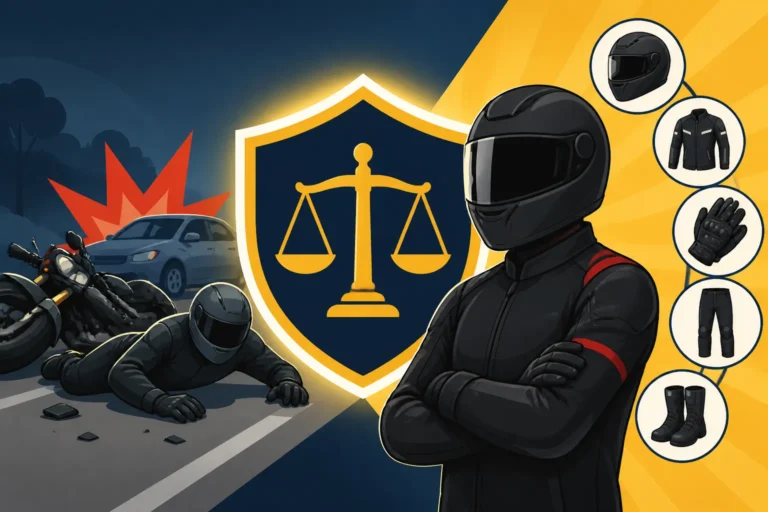
While the helmet is paramount, true safety goes beyond just head protection. The vulnerabilities of moped and scooter riders are similar to those of motorcyclists, meaning other protective gear can dramatically reduce injuries like road rash, broken bones, and joint damage.
Consider investing in:
- Armored Jackets: A good riding jacket, often made from abrasion-resistant materials like leather or textile, with CE-rated armor in the shoulders, elbows, and back, can prevent severe road rash and impact injuries.
- Riding Pants: Jeans offer very little protection in a slide. Dedicated riding pants, again with abrasion resistance and knee/hip armor, are a much safer choice.
- Gloves: In a fall, our instinct is to put our hands out. Sturdy riding gloves protect your palms and fingers from severe abrasion and impact.
- Over-the-Ankle Boots: Proper riding boots can protect your feet and ankles from crushing injuries and severe road rash. Sneakers offer almost no protection.
While most states don't have mandatory gear laws beyond helmets (and sometimes eye protection), wearing this additional gear is a proactive measure that not only protects you but can also demonstrate to an insurance company that you were taking reasonable steps to protect yourself, which can be beneficial in an accident claim. Explore Motorcycle Gear Laws and Requirements to understand legal minimums and best practices.
Best Practices for All Two-Wheeled Riders
Regardless of whether you're on a powerful motorcycle or a nimble moped, fundamental safe riding practices remain the same and are crucial for preventing accidents in the first place.
- Be Visible: Mopeds and scooters are small and can be easily overlooked by drivers. Wear bright colors, use your headlights, and consider reflective gear, especially at night.
- Ride Defensively: Always assume other drivers don't see you. Scan intersections, maintain safe following distances, and be prepared for sudden stops or maneuvers from other vehicles. Learn about Common Causes of Motorcycle Accidents to anticipate risks.
- Understand Traffic Laws: Know the specific traffic laws for your vehicle type in your area. This includes understanding lane positioning, turning rules, and parking regulations.
- Regular Maintenance: Keep your moped or scooter in good working order. Check tires, brakes, lights, and fluid levels regularly. A mechanical failure can be just as dangerous as another driver's negligence.
- Continuous Training: Even if not legally required, consider taking a basic rider course. The skills learned, like emergency braking and evasive maneuvers, are invaluable for riders of all two-wheeled vehicles.
By combining the right gear with smart riding habits, you significantly enhance your safety and peace of mind on the road, no matter what you're riding.
Disclaimer
Please remember that the information provided in this article is for general informational purposes only and does not constitute legal advice. Laws regarding motorcycle, moped, and scooter operation, including helmet requirements, vary significantly by state and are subject to change. It is crucial to consult with a qualified legal professional or your state's Department of Motor Vehicles for the most accurate and up-to-date information pertaining to your specific situation and location. Relying solely on this general information may not be sufficient for making legal or safety decisions.