What States Only Require Helmets Under 21
It's incredibly frustrating, isn't it? You want to do the right thing and stay safe on your motorcycle, but the patchwork of helmet laws across different states can feel like a confusing mess. One minute you're riding free, the next you're wondering if you're breaking the law just by crossing a state line. This guide is here to untangle that confusion, specifically focusing on the states where helmet requirements hinge on your age, particularly if you're under 21, so you can ride informed and confident.
Understanding Motorcycle Helmet Laws in the U.S.
When you're out on the open road, the last thing you want to be worrying about is whether your helmet choice is compliant with local laws. The truth is, there's no single federal motorcycle helmet law that applies everywhere in the United States. Instead, each state sets its own rules, leading to a complex landscape that can vary dramatically from one border to the next. This diversity in legislation means that what's perfectly legal in one state might land you a ticket, or worse, complicate an accident claim, in another. It's a key reason why understanding these nuances is so important for every rider. For a broader overview, take a look at our comprehensive guide on Motorcycle Helmet Laws by State.
Universal Helmet Laws Explained
Let's start with the clearest category: universal helmet laws. In these states, every rider and passenger, regardless of age or experience, is legally required to wear a helmet when operating or riding on a motorcycle. This isn't just a suggestion; it's a hard and fast rule. States like California, New York, and Massachusetts are well-known for their universal helmet requirements. The rationale here is straightforward: helmets save lives and reduce severe injuries. By making it mandatory for all, these states aim to maximize safety for their entire riding population. If you ride in a state with universal helmet laws, there's no wiggle room or age-based exceptions to consider.
These laws are often backed by extensive research showing the effectiveness of helmets in preventing traumatic brain injuries and fatalities. For instance, in states like California, where universal helmet laws have been in place for decades, studies consistently demonstrate lower rates of head injuries among motorcyclists compared to states with less stringent rules. It’s a measure of public health, aimed at reducing the burden on emergency services and long-term care facilities, as well as protecting individual riders.
Partial Helmet Laws Focus on Age
Now, this is where things get a bit more intricate and directly address the core of our discussion today. Partial helmet laws don't mandate helmets for everyone. Instead, they typically specify certain groups of riders who must wear a helmet, while others are exempt. The most common criterion for these partial laws is age. Many states implement what are often referred to as "under 21" helmet laws, meaning that if you're below a certain age, usually 21, you're required to wear a helmet, but if you're older, you might have the option to ride without one.
This distinction creates a unique set of circumstances for riders. Imagine being 20 years old and having to wear a helmet, while your 22-year-old riding buddy can legally choose not to. It highlights the nuanced legal landscape that motorcyclists navigate daily. These age-based rules are frequently paired with other requirements for older riders, such as having a certain amount of medical insurance coverage if they choose to ride helmetless. Understanding these specific age limitations is key to staying compliant, especially if you're a younger rider or if you often ride with younger passengers.
States with Partial Helmet Laws Requiring Helmets Under 21
For many riders, the real confusion begins when you enter a state with partial helmet laws. These aren't just "some people wear helmets" rules; they're very specific, often hinging on a rider's age, particularly the 21-year-old threshold. It's a significant difference from the universal laws where everyone is covered. The underlying intention is often to protect younger, potentially less experienced riders, who might be at a higher risk of severe injury in a crash. It also acts as a compromise between advocates for universal helmet laws and those who champion individual rider choice.
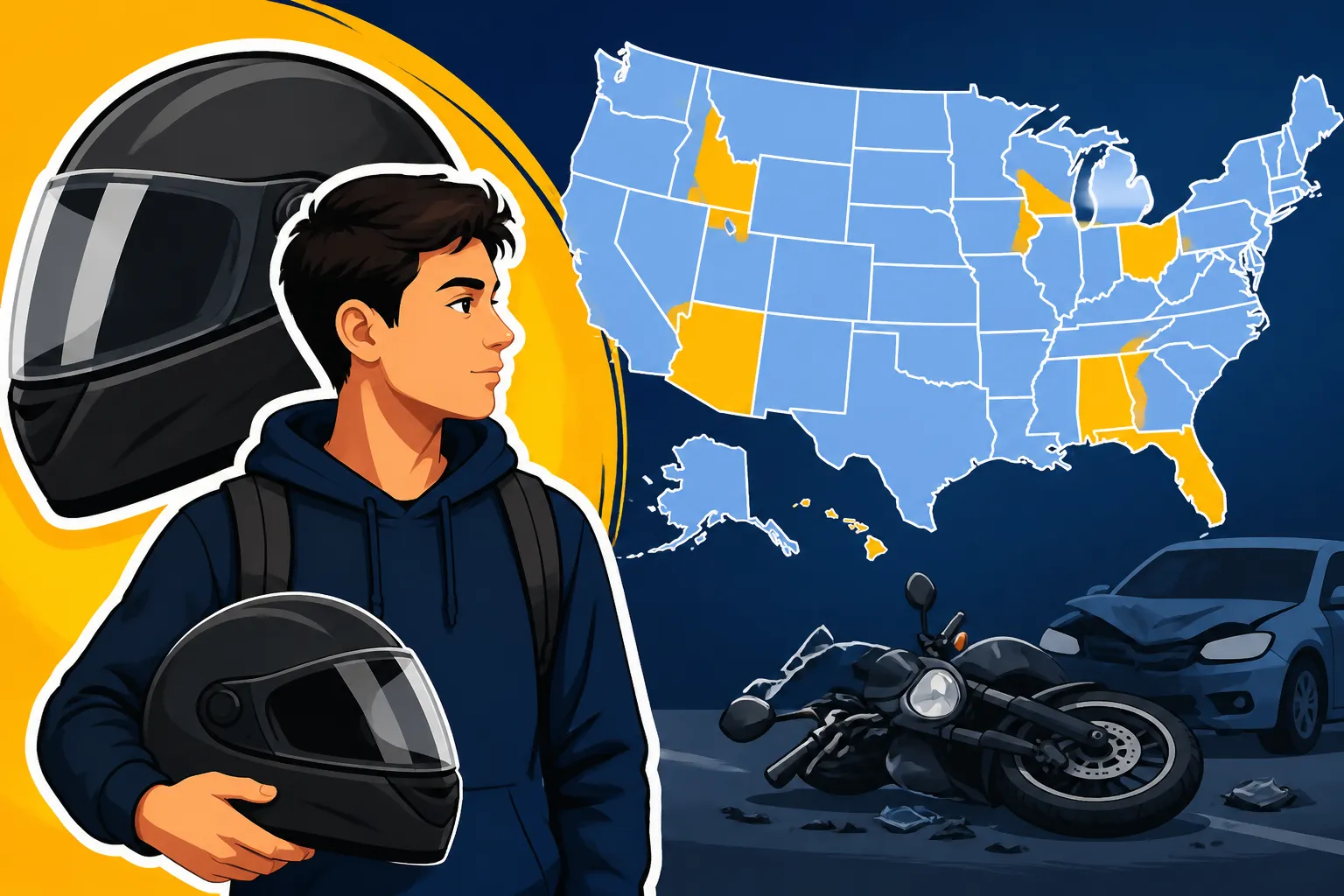
The list of states that fall into this category can shift, so it's always smart to double-check current regulations before a long trip. However, consistently you'll find states like Florida, Texas, Iowa, and Pennsylvania operating under variations of this "under 21" rule. Each state puts its own spin on the law, often adding additional stipulations about insurance coverage for those who are legally allowed to ride without a helmet. It's not just about your birth year; it's about understanding the full scope of the law in the specific place you're riding. This is why our article on Universal vs Partial Helmet Laws Explained goes into even more detail about these differences.
The Rationale Behind Age-Based Laws
Why do some states choose this age-based approach instead of a blanket rule? There are several compelling reasons that often factor into legislative decisions. One primary consideration is the protection of younger riders. Statistically, younger, less experienced motorcyclists may be at a higher risk of being involved in accidents due to a combination of factors, including developing riding skills, risk assessment, and sometimes, a lack of comprehensive training. By mandating helmets for this age group, states aim to mitigate the more severe consequences of potential crashes for those deemed most vulnerable. It's a preventative measure, designed to reduce severe head injuries, which can be life-altering and incur immense medical costs.
Another significant aspect of the rationale involves balancing public safety with personal liberty. Many motorcyclists champion the right to choose whether or not to wear a helmet, viewing it as a personal decision. Partial helmet laws often represent a political compromise, allowing older, presumably more experienced riders the freedom of choice while still addressing the safety concerns for a demographic perceived as needing more protection. Furthermore, these laws can also be influenced by insurance industry considerations. Often, states with partial laws require helmet-exempt riders to carry substantial medical insurance policies, shifting the financial burden of potential injuries away from public healthcare systems and onto private insurance.
A Deep Dive into Key States
Let's take a closer look at a couple of prominent states that exemplify these age-based helmet laws, highlighting their specific requirements and any additional clauses that riders need to be aware of.
Florida's Distinct Rules
Florida is a prime example of a state with partial helmet laws, and its regulations are often discussed by riders. In Florida, if you're under 21, wearing a DOT-compliant helmet is a mandatory requirement. There's no exception to this rule for younger riders. However, if you are 21 years of age or older, you have the option to ride without a helmet, provided you meet a specific condition: you must be covered by an insurance policy that provides at least $10,000 in medical benefits for injuries incurred in a motorcycle accident. This medical benefits clause is crucial because it ensures that if an older, helmetless rider is involved in a crash, there's a mechanism in place to cover their immediate medical expenses, thereby reducing the strain on public resources.
The state's policy is a direct reflection of the balance between individual freedom and public safety, with the insurance requirement acting as a safeguard. For riders in Florida, especially those transitioning from under to over 21, understanding this specific insurance mandate is just as important as knowing the age cutoff. It's not enough to simply hit your 21st birthday; you need to ensure you have the proper coverage if you choose to ride without a helmet. This detail also significantly impacts what happens if you're involved in an accident, as your insurance coverage will be scrutinized.
Texas's Specific Requirements
Texas also employs an age-based helmet law, though with its own unique twist. Similar to Florida, all motorcycle operators and passengers under the age of 21 are required to wear a DOT-approved helmet. For riders 21 and older, the helmet requirement is waived if they either have successfully completed a motorcycle operator training and safety course (approved by the Texas Department of Public Safety) or if they are covered by an insurance policy providing at least $10,000 in medical benefits for motorcycle-related injuries. This dual-option approach gives older riders two pathways to legally ride helmetless: demonstrate proficiency through a safety course or ensure financial protection through adequate insurance.
This flexibility in Texas's law aims to promote rider education and responsibility. By offering the option of a safety course, the state implicitly encourages riders to enhance their skills, which can contribute to overall road safety. The insurance component serves the same function as in Florida, ensuring a financial safety net. Riders moving to or through Texas should be acutely aware of these conditions. It's not uncommon for riders from universal helmet law states to be caught off guard by the specific requirements needed to ride legally without a helmet in Texas if they are over 21.
Other Notable States with Age-Based Rules
Several other states also employ partial helmet laws centered around age, often with slightly different age cutoffs or additional conditions. For example, in states like Iowa, riders under the age of 18 are typically required to wear helmets, while those 18 and older have the option. Similarly, states such as Georgia, Louisiana, South Carolina, and Wisconsin have provisions that often require helmets for riders under 18 or 19.
The specifics can vary greatly: some states might exempt riders over 18, others over 19, and some, like Florida and Texas, use the 21-year-old benchmark, often coupling it with an insurance mandate. It's vital to remember that these details are not static and can change with legislative updates. Always consult the most current Department of Motor Vehicles or state transportation official resources for the most up-to-date and accurate information for any specific state you plan to ride in. This diligence can prevent unexpected fines and ensure you're always riding within the bounds of the law.
| State | Universal Helmet Law | Partial Helmet Law (Under 21) | Partial Helmet Law (Under 18/19) | No Helmet Law (for Adults) |
|---|---|---|---|---|
| Alabama | Yes (under 19) | |||
| Arizona | Yes (under 18) | |||
| California | Yes | |||
| Florida | Yes | (21+ w/ insurance) | ||
| Georgia | Yes (under 16) | |||
| Iowa | Yes (under 18) | |||
| Louisiana | Yes (under 18) | |||
| Michigan | Yes (under 21, w/ exceptions) | (21+ w/ insurance/training) | ||
| Nevada | Yes | |||
| New York | Yes | |||
| Pennsylvania | Yes (under 18) | |||
| South Carolina | Yes (under 21) | |||
| Texas | Yes | (21+ w/ insurance/training) | ||
| Wisconsin | Yes (under 18) |
Note: This table provides a general overview. Specific exemptions and requirements (e.g., insurance minimums, safety course completion) may apply in states with partial laws.
Implications of Age-Based Helmet Laws for Riders
Understanding the letter of the law is one thing, but truly grasping its implications is another. For riders, particularly those navigating the age-based requirements, these laws carry significant weight beyond just avoiding a ticket. They touch upon everything from legal consequences if you're caught without a helmet to potentially life-altering safety considerations if you choose to ride without one when legally allowed. It’s about personal responsibility and understanding the full spectrum of outcomes.
For example, a young rider in Florida who is 19 years old and chooses to ride without a helmet is not only breaking the law but is also exposing themselves to a much higher risk of severe injury. Conversely, an older rider in the same state, aged 25, might legally choose not to wear a helmet, but that choice doesn't diminish the inherent risks. These laws force riders to confront the balance between individual freedom and the undeniable safety benefits that helmets provide, regardless of what the law might permit for their age group.
Legal Consequences of Non-Compliance
Breaking a state's helmet law, even if it's an age-based partial law, can lead to a series of undesirable legal consequences. The most immediate is usually a traffic citation, which can carry a fine. Depending on the state and the specific circumstances, this fine could range from a minor nuisance to a significant financial hit. For instance, in some areas, a helmet violation might be treated similarly to other moving violations, resulting in points being added to your driving record. Accumulating too many points can lead to increased insurance premiums, or even the suspension of your motorcycle endorsement or driver's license.
Beyond fines and points, repeat offenses or riding without the required insurance (in states where it's a condition for helmet exemption) can lead to more serious penalties. These could include impoundment of your motorcycle or a longer-term impact on your ability to operate a vehicle. It's not just about the immediate cost of a ticket; it's about the compounding effects on your driving record, insurance rates, and overall legal standing as a rider. The financial and administrative hassle alone should be a strong deterrent against disregarding these laws.
Safety Considerations and Injury Risk
Legal requirements aside, the fundamental reason helmet laws exist is safety. Helmets are incredibly effective at reducing the risk of head injuries, traumatic brain injuries (TBIs), and fatalities in motorcycle accidents. This fact remains true whether a state has universal, partial, or no helmet laws for certain age groups. For a rider, choosing not to wear a helmet, even when legally permitted by an age-based law, significantly increases their vulnerability. Head injuries can lead to permanent disabilities, cognitive impairments, and dramatically alter a person's quality of life. Understanding Motorcycle Accident Traumatic Brain Injuries can help illustrate the severity.
Studies consistently show that motorcyclists not wearing helmets are at a much higher risk of suffering severe or fatal head injuries compared to those who are helmeted. The statistics don't differentiate between a 20-year-old and a 25-year-old; the protective benefits of a helmet are universal. While partial laws offer a choice to older riders, that choice comes with an inherent and elevated risk. Every time you throw a leg over your bike, you're making a decision about your safety, and a helmet is arguably the most critical piece of safety gear you can wear, regardless of what your birth certificate says.
Helmet Use and Its Impact on Accident Claims
It's one thing to understand helmet laws in theory, but when an accident actually happens, the legal landscape surrounding helmet use becomes intensely practical and can directly affect your ability to recover damages. Even in states where you might be legally allowed to ride without a helmet due to your age, insurance companies and opposing legal teams can still use your helmetless status against you. This is a critical point that many riders overlook until it's too late.
Imagine you're an older rider in a partial helmet law state, legally riding without a helmet, and a car turns left in front of you, causing a collision. While the car driver is clearly at fault for the Left-Turn Motorcycle Accidents Explained, the fact that you weren't wearing a helmet can still become a point of contention in your injury claim. It's a harsh reality that can complicate an already stressful situation.
The "Helmet Defense" in Partial Law States
The "helmet defense" is a legal tactic commonly employed by insurance companies and defense attorneys when a helmetless rider is injured in an accident. Even if you were legally allowed to ride without a helmet in your state because you were over 21 (or whatever the age threshold is), the defense might argue that your injuries, particularly head injuries, would have been less severe if you had been wearing a helmet. This argument doesn't necessarily claim you were at fault for the accident itself, but rather that you contributed to the severity of your own injuries.
This defense can have a significant impact on your potential settlement. In many states, especially those that follow comparative negligence rules, if it can be proven that your own actions (like not wearing a helmet) contributed to your injuries, your overall compensation could be reduced. For example, if a jury determines you were 20% responsible for the extent of your head injury because you weren't wearing a helmet, your awarded damages might be reduced by that same 20%. Our article on How Helmet Laws Affect Your Accident Claim delves deeper into this complex issue, and it's essential reading for anyone riding in a partial law state. Understanding How the Helmet Defense Reduces Settlements is paramount.
Documenting Helmet Use (or Non-Use)
In the unfortunate event of an accident, documenting whether you were wearing a helmet – or legally not wearing one – becomes crucial for your injury claim. If you were wearing a helmet, preserving it as evidence, even if it's damaged, can be vital. Photos of you at the scene with your helmet on, or even witness statements confirming its use, can help counter any "helmet defense" arguments. For instance, if you suffered a concussion despite wearing a helmet, the defense cannot claim that your injury was solely due to not wearing one.
On the flip side, if you were legally riding without a helmet in a partial law state, it's still important to establish that you met all legal criteria for that exemption (e.g., being over 21 and having the required medical insurance). Having documentation of your age and insurance policy readily available can support your position. However, be prepared for the insurance company to still try and use your helmetless status to reduce your payout, arguing that even with the legal exemption, a helmet would have lessened your injuries. This is a battle you may face, and it highlights why protective gear, like a DOT-compliant helmet from a reputable retailer such as Cycle Gear, is always your best defense, both on the road and in court.
Navigating Helmet Laws When Traveling
Motorcycle touring is one of life's great pleasures, but nothing sours a road trip faster than getting pulled over for an unexpected legal violation. The fluid nature of helmet laws, especially age-based ones, makes interstate travel particularly tricky for motorcyclists. What's perfectly legal in your home state might be a ticketable offense just a few miles down the road in another. It's a common source of frustration, as you're expected to know the laws of every jurisdiction you pass through.
This is where the nuances of partial helmet laws really come into play. A rider from a universal helmet state might assume everyone wears a helmet, while a rider from a "no law" state might forget that some states still require helmets for younger riders, or for all riders. Failing to do your homework before crossing state lines can lead to legal issues, fines, and even complications if you're involved in an accident away from home. Being proactive about understanding the varying regulations is a mark of a responsible rider.
Out-of-State Riders and Reciprocity
When you cross state lines, the general rule of thumb is that you are subject to the laws of the state you are currently riding in. This concept is often referred to as reciprocity, though in the context of traffic laws, it primarily means you must abide by the local rules. So, if you're a 25-year-old rider from a state with no adult helmet law, but you ride into a state like California, which has a universal helmet law, you must put on a helmet. Conversely, if you're a 19-year-old from a universal helmet state traveling through Texas, you would still be required to wear a helmet, even if your home state only mandates it for those under 18.
This means that your "home state" law does not automatically travel with you. It's not uncommon for riders to receive citations simply because they were unaware of the local regulations. It's your responsibility to know the rules of the road for every state on your route. This is particularly important for young riders under 21 who might be accustomed to one set of rules but find themselves in a state with different age-based requirements. Always plan your route and check the helmet laws for each state you intend to enter.
How to Stay Informed
Staying informed about the ever-changing landscape of motorcycle helmet laws, especially age-based ones, requires a bit of due diligence. The most reliable sources for current regulations are typically the official Department of Motor Vehicles (DMV) websites or state transportation departments for each state you plan to visit. These government sites provide the most accurate and up-to-date legal information. Avoid relying solely on forums or outdated articles, as laws can change.
Another excellent resource can be reputable motorcycle organizations or associations that often publish consolidated guides to state laws. Before a long trip, map out your route and take a few minutes to research the specific helmet laws, including any age restrictions or insurance mandates, for each state. Apps or GPS devices might offer some information, but always cross-reference with official state sources. Being proactive in your research will ensure that your focus remains on the joy of the ride, rather than the worry of legal infractions.
The Importance of DOT-Compliant Helmets
Whether your state requires a helmet universally, partially, or not at all, one thing remains constant: if you choose to wear a helmet, it needs to be one that offers genuine protection. And in the eyes of the law, that typically means a DOT-compliant helmet. It’s not just about having something on your head; it’s about having a piece of equipment that has met specific safety standards designed to protect you in a crash. This distinction is incredibly important, not only for your safety but also for the legitimacy of your gear should you ever need to prove compliance in a legal context.
Many riders, especially newer ones, might not understand the difference between a novelty helmet and a truly protective one. However, this knowledge can be life-saving. Investing in a quality, DOT-compliant helmet from a trusted source like Cycle Gear is one of the smartest decisions any motorcyclist can make. It's a layer of defense that no rider should compromise on.
What Makes a Helmet DOT-Compliant
A DOT-compliant helmet is one that meets the minimum safety standards set by the U.S. Department of Transportation (DOT), specifically under Federal Motor Vehicle Safety Standard (FMVSS) 218. These standards dictate various aspects of helmet construction and performance, including impact attenuation (how well the helmet absorbs shock), penetration resistance, and retention system strength (the chin strap). Helmets that meet these standards will have a "DOT" sticker on the back, usually accompanied by the manufacturer's name, model, and size.
But it's not just about the sticker. A DOT-compliant helmet will typically feature a thick inner liner made of expanded polystyrene (EPS) foam, which is crucial for absorbing impact energy. It will also have a sturdy outer shell and a robust chin strap system. These elements work together to distribute impact forces, protect against penetration, and keep the helmet securely on your head during a collision. Knowing these characteristics helps you identify a truly safe helmet versus a cheap imitation. For more detail, check out What Is a DOT-Compliant Helmet.
Avoiding Novelty Helmets
One of the most dangerous choices a motorcyclist can make, especially when considering helmet compliance and safety, is opting for a "novelty" helmet. These helmets are designed purely for aesthetic purposes – think super thin shells, minimal or no inner padding, and often very flimsy chin straps. They might look cool or unique, but they offer virtually no protection in an accident. Crucially, they do not meet DOT safety standards and often lack the official DOT sticker. If they do have one, it's usually a fake.
Riding with a novelty helmet, even in a state where you're legally permitted to ride without a helmet (due to age or other exemptions), is a significant risk. In the eyes of the law, if you're in an accident, a novelty helmet provides no more protection than wearing a baseball cap. This means that if you sustain head injuries, the "helmet defense" can be used against you even more forcefully, arguing that your choice of non-protective headgear contributed directly to your injuries. It’s a costly mistake that can undermine your safety and your legal standing. Always opt for genuine safety gear from places like Cycle Gear.
Beyond the Helmet: Other Protective Gear Considerations
While helmets rightly get a lot of attention, especially when discussing legal requirements, it's crucial to remember that a helmet is just one piece of the puzzle when it comes to motorcycle safety. A helmet protects your head, but the rest of your body is equally vulnerable in a crash. For serious riders, wearing a full complement of protective gear is not just about avoiding road rash; it's about minimizing injuries and, yes, even strengthening your position in a potential accident claim. This applies whether you're a young rider under 21 or an older, experienced veteran.
The culture around riding gear varies widely among motorcyclists, but the undeniable truth is that proper gear acts as a second skin, offering crucial abrasion resistance and impact protection. It's an investment in your well-being, complementing your helmet to create a comprehensive safety system. Don't let a focus on just helmet laws overshadow the importance of protecting your entire body.
Full Riding Gear for Maximum Protection
For truly comprehensive protection, think head-to-toe. This includes a sturdy, abrasion-resistant jacket (leather or textile with armor), riding pants (not just jeans), gloves designed for motorcycle use, and over-the-ankle boots. Each piece plays a vital role. A good riding jacket, often equipped with CE-rated armor in the shoulders, elbows, and back, can prevent severe road rash and absorb impact energy in a slide or fall. Riding pants, similarly, offer reinforced areas at the hips and knees.
Gloves protect your hands, which are often the first thing to hit the ground in a fall, preventing painful scrapes and broken bones. Over-the-ankle boots safeguard your feet and ankles from crushing injuries and abrasions. Choosing gear that fits well and is appropriate for your riding style and climate will enhance comfort and, more importantly, effectiveness. Quality gear from brands you can find at places like Cycle Gear is designed specifically for the unique demands of motorcycling and is far superior to regular street clothes in an accident.
How Gear Affects Injury Claims
Wearing full riding gear, even when it's not legally mandated (as only helmets are in most states), can subtly but significantly affect your motorcycle accident claim. While a driver's negligence is still the primary factor in determining fault, the extent of your injuries and how they were sustained can come under scrutiny. If you were wearing full protective gear, it demonstrates that you took reasonable steps to mitigate potential injuries. This proactive approach can make it harder for defense attorneys to argue that you contributed to the severity of your own injuries due to a lack of care. For related information, see Motorcycle Safety Gear and Legal Protection.
Imagine two riders involved in similar accidents. One was wearing full gear, including a helmet, jacket, gloves, and boots, and sustained mostly minor injuries despite the severity of the crash. The other was wearing minimal gear (t-shirt, jeans, no helmet, though legally allowed due to age) and suffered extensive road rash, broken bones, and a severe head injury. While both might pursue claims against the at-fault driver, the rider with full gear might face fewer challenges regarding the severity of their injuries being questioned. Wearing protective gear isn't just about reducing physical harm; it's about building a stronger narrative of responsible riding that can positively influence your settlement outcome.
Disclaimer
Please remember that this article provides general information and is not intended as legal advice. Motorcycle laws, especially those concerning helmets and accident claims, are complex and vary significantly by state and specific circumstances. It is always recommended to consult with a qualified legal professional for advice tailored to your individual situation, especially after a motorcycle accident. Laws can change, and this content may not reflect the most current regulations.