Who Has to Prove the Helmet Mattered
One of the most frustrating aspects after a motorcycle accident, especially when you're trying to heal and make sense of everything, is when the other side tries to shift blame onto you. You might be dealing with significant injuries, and suddenly, the conversation turns to whether you were wearing a helmet, even if your most severe injuries aren't even to your head. This guide is here to unravel the complex question of who actually bears the burden of proving whether your helmet (or lack thereof) made a difference in your motorcycle accident claim.
Understanding the Helmet Defense and Its Impact
When you're involved in a motorcycle accident, the legal process can feel like a labyrinth, and one of the most common detours you might encounter is what's known as the "helmet defense." This isn't just an offhand remark; it's a specific legal strategy used by the at-fault driver's insurance company to reduce the compensation you might receive, or in some cases, deny your claim altogether. It preys on the often-misguided public perception of motorcyclists and aims to assign partial blame to the rider.
What Is the Helmet Defense
At its core, the helmet defense is an argument made by the defense (usually the at-fault driver and their insurance company) that your injuries, particularly head and brain injuries, would have been less severe or even avoided if you had been wearing a helmet, or a compliant helmet, at the time of the crash. It implies that your own actions (or inactions) contributed to the extent of your damages. This defense relies heavily on the principles of comparative or contributory negligence, depending on your state's laws. For instance, in states like California, which uses a "pure comparative negligence" rule, even if you are found 1% at fault for your injuries, your compensation can be reduced proportionally.
The defense isn't just about whether you had a helmet; it can also question its type (e.g., DOT-compliant versus a novelty helmet), how it was worn, or if it was properly fastened. They're looking for any crack in your armor, both literally and figuratively. They will argue that had you simply taken all "reasonable precautions," your injuries wouldn't be as substantial, thus attempting to lower the value of your claim significantly. This often comes up in cases involving significant head trauma, but insurers might try to introduce it even for other injuries, hoping to paint a picture of an irresponsible rider. For a deeper dive into how this legal strategy can impact your case, you might find our article on The Helmet Defense Explained particularly illuminating.
How Insurance Companies Utilize This Defense
Insurance companies, whether it's a major carrier like GEICO, State Farm, or Progressive, are businesses, and their primary goal is to minimize payouts. The helmet defense is a powerful tool in their arsenal. They will often bring it up early in negotiations, even before a lawsuit is filed, to put pressure on you. For example, if you suffered a traumatic brain injury (TBI) but weren't wearing a DOT-compliant helmet in a state with a universal helmet law, the insurer will pounce on this. They'll argue that your TBI was preventable or less severe if you had complied with the law, thereby reducing the "pain and suffering" and future medical expenses they believe they owe.
They might send you a "reservation of rights" letter, indicating that they are investigating your claim but may deny or reduce coverage based on certain factors, with helmet non-use often being one of them. Their adjusters are trained to ask very specific questions about your gear during initial conversations, so be incredibly cautious about what you say. They might even request your medical records to scour them for any doctor's notes suggesting helmet non-use exacerbated your condition. It’s a subtle but relentless tactic designed to chip away at the value of your claim and make you feel as though you somehow brought this injury upon yourself, even if the other driver was clearly negligent. This defense directly affects how they assign blame to riders.
The Burden of Proof: Who Has to Prove What
This is where the rubber meets the road. In legal terms, "burden of proof" refers to the obligation of a party in a case to present evidence to support their claim. When it comes to the helmet defense, understanding who has to prove what is absolutely critical to protecting your rights and your potential compensation. It’s not simply assumed that if you weren’t wearing a helmet, your injuries are automatically your fault.
The Defendant's Responsibility to Prove Non-Use Impact
Contrary to what many riders might fear, the initial burden is typically on the defendant – the at-fault driver or their insurance company – to prove that your failure to wear a helmet directly contributed to or worsened your specific injuries. This is a crucial point that often gets overlooked. The defense can't just assert, "He wasn't wearing a helmet, so his head injury is his own fault." They have to actually prove a causal link. This often involves hiring their own expert witnesses, such as accident reconstructionists or medical professionals, who will testify that based on the crash dynamics and medical evidence, a helmet would have either prevented the head injury or significantly reduced its severity.
For example, if you suffered a broken leg and a concussion in a crash, and you weren't wearing a helmet, the defense cannot use the helmet defense to reduce your compensation for the broken leg. The non-use of a helmet has no causal relationship with a broken leg. For the concussion, however, they would need to present evidence that a helmet would have mitigated that specific head injury. This requires compelling scientific and medical testimony, which isn't always easy for them to provide definitively. This legal nuance is fundamental in understanding How Helmet Laws Affect Your Accident Claim.
The Plaintiff's Role in Countering the Defense
As the injured rider, you (the plaintiff) certainly have a role in countering this defense, even though the primary burden of proof lies with the defendant. Your role is essentially to rebut their claims. If you were wearing a helmet, you’ll need evidence to prove it. This could include witness statements, police reports noting helmet use, or even photos of you wearing a helmet before the accident. If your helmet was damaged in the crash, preserving that damaged helmet as evidence is incredibly important. A reputable motorcycle parts store, like Cycle Gear, could even verify the DOT-compliance of your helmet if you still have the tags or packaging.
However, if you were not wearing a helmet, your counter-argument would focus on demonstrating that your head injuries would have occurred or been just as severe even if you had been wearing one. This might sound counterintuitive, but head injuries can happen even with a helmet, especially in high-impact crashes. You would likely need your own medical experts to testify that given the nature of the impact, your specific head injuries were unavoidable or that other non-head injuries are entirely separate from helmet use. Additionally, you might argue that your non-head injuries (like road rash or broken bones) are completely unrelated to helmet use, so the helmet defense shouldn't apply to those damages. This often involves detailed medical records and expert testimony to establish causation and refute the defendant's claims.
Key Evidence to Counter the Helmet Defense
Successfully countering the helmet defense isn't just about arguing; it's about providing concrete, compelling evidence. This is where thorough investigation and expert analysis become invaluable. The stronger your evidence, the harder it will be for the insurance company to use your helmet choice against you.
Accident Reconstruction and Expert Testimony
Accident reconstructionists are specialists who can meticulously analyze every detail of a crash, from skid marks and vehicle damage to impact angles and debris fields. Their job is to recreate the sequence of events and determine the forces involved. When facing a helmet defense, these experts can provide crucial insights. They can testify about the mechanics of the accident and whether the force of impact was so extreme that a helmet, even a DOT-compliant one, might not have prevented or significantly reduced your particular head injuries.
For instance, if a car made an abrupt Left-Turn Motorcycle Accidents Explained directly into your path, causing a high-speed, direct impact, an accident reconstructionist could explain that the resulting forces were beyond what even the most protective helmet could fully absorb. This kind of expert testimony can effectively cast doubt on the defendant's claim that a helmet would have made a difference, shifting the narrative back to the at-fault driver's negligence as the primary cause of your injuries. Their analysis helps to establish causality and the true extent of impact forces.
Medical Expert Opinions and Causation
Medical experts, specifically neurologists, neurosurgeons, or trauma specialists, play a pivotal role in countering the helmet defense. These professionals can review your medical records, imaging scans (like CTs and MRIs), and the details of the accident to offer an informed opinion on the nature and severity of your injuries. They can testify whether your specific head injury, such as a severe skull fracture or diffuse axonal injury, was of a type that a helmet would likely not have prevented or substantially mitigated given the crash dynamics.
Furthermore, medical experts can clearly differentiate between head injuries and other injuries you sustained, such as Motorcycle Spinal Cord Injury Claims and Compensation or Motorcycle Broken Bones Claims and Compensation. They can explain that these other injuries are entirely independent of helmet use and should not be subject to any reduction in compensation due to the helmet defense. Their testimony focuses on the medical causation of your injuries, providing a scientific basis to challenge the defendant’s attempts to link all damages directly to helmet non-use. Documenting your injuries for a claim with clear medical records is paramount here.
Documentation of Helmet Use and Compliance
If you were wearing a helmet, proving it is straightforward but crucial. This isn't just about saying you had one on; it's about evidence. Photos from the scene of the accident, if taken, that show you wearing a helmet, or even your helmet lying near you, are powerful. Witness statements from people who saw you riding with a helmet before the crash, or even after, can also bolster your claim. The police report, if it mentions helmet use, is another key piece of evidence. Remember, law enforcement officers often document details like helmet use in their initial reports.
Beyond simply proving you wore a helmet, you might also need to demonstrate its compliance with safety standards. A DOT-approved helmet, for example, meets minimum federal safety requirements. If your helmet was damaged in the crash, preserve it! The damaged helmet itself can be evidence, showing that it absorbed impact forces as designed. You might have purchased your helmet from a reputable retailer like Cycle Gear, and having a receipt or proof of purchase could further strengthen the argument that you invested in proper, compliant safety gear. This documentation helps directly refute any claims that you were negligent in your choice or use of protective headgear.
State-Specific Helmet Laws and Their Influence
The legal landscape concerning helmet use varies dramatically from state to state, and these differences can profoundly influence how the helmet defense is applied in your motorcycle accident claim. What's permissible in one state might be a major liability in another, making local knowledge incredibly important.
Universal vs. Partial Helmet Laws
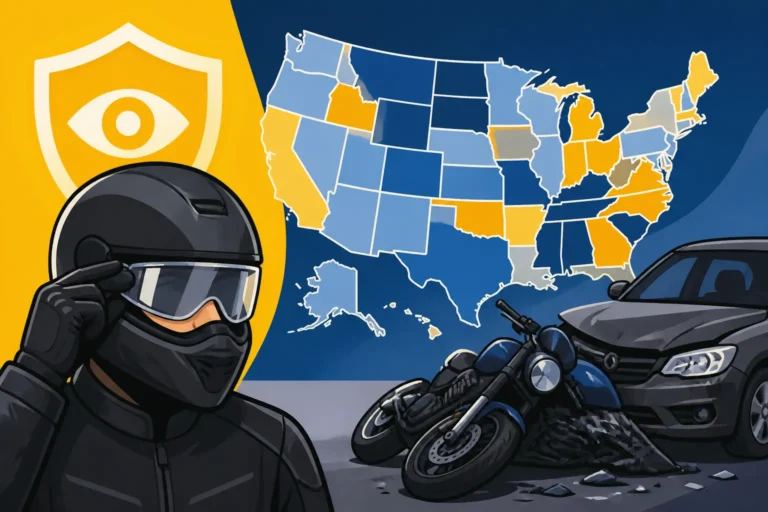
States generally fall into one of three categories regarding helmet laws: universal, partial, or no helmet law. In States with Universal Helmet Laws, all riders and passengers are legally required to wear a helmet. In these jurisdictions, if you were not wearing a helmet and sustained a head injury, the helmet defense can be particularly potent. The defense will argue that you violated a clear legal mandate, strengthening their argument for comparative or contributory negligence.
Conversely, States with Partial Helmet Laws typically require helmets only for younger riders (e.g., under 18 or 21) or for those without sufficient insurance coverage. If you are an adult rider in a partial helmet law state and were not legally required to wear a helmet, the defense's argument is significantly weakened. While they might still attempt to argue that it was negligent to ride without one, the absence of a legal mandate makes their claim of your "fault" harder to prove. Some states, though rare, have no helmet laws at all, further complicating the defense's position. Understanding your state's specific regulations, such as Motorcycle Helmet Law in Florida or Motorcycle Helmet Law in California, is fundamental to anticipating and addressing this defense.
Jurisdictional Nuances and Legal Precedents
Beyond the basic categories of helmet laws, each state’s courts have their own unique history of legal precedents and interpretations regarding the helmet defense. Some states have specific statutes or court rulings that dictate how, or even if, helmet non-use can be used to reduce damages. For instance, some states might limit the helmet defense solely to head injuries, preventing the defense from arguing that non-head injuries (like road rash, which protective gear from Cycle Gear could help prevent) would have been mitigated by a helmet. Other states might have strict requirements for the type of expert testimony needed to establish causation between helmet non-use and injury severity.
For example, in a state like Texas, which has a partial helmet law, an adult rider over 21 with adequate insurance might not be legally required to wear a helmet. If they crash and suffer a head injury, the defense would still try to argue negligence, but the lack of a legal requirement makes it a tougher sell than in California, where universal helmet laws apply. The specific wording of your state's comparative negligence laws, whether it's "pure" or "modified," also plays a huge role in how much your compensation can be reduced if the helmet defense is successfully applied. This is why local legal expertise is crucial; an attorney familiar with your state's specific statutes and judicial history can provide the most accurate assessment of how the helmet defense might impact your case.
Burden of Proof for Helmet Defense
| Aspect | Who Carries the Burden? | What Must Be Proven? | Key Evidence |
|---|---|---|---|
| Helmet Defense Assertion | Defendant (At-fault party/Insurer) | That the rider's non-use or improper use of a helmet caused or exacerbated specific head/brain injuries. | Accident reconstruction, medical expert testimony linking non-use to injuries, photos of crash scene, police report. |
| Countering the Defense | Plaintiff (Injured Rider) | Either that a helmet was worn, or that the head injuries would have occurred/been just as severe with a helmet, or that other injuries are unrelated. | Witness statements, helmet damage, medical expert testimony on unavoidable injury, receipts for DOT-compliant gear. |
What to Do Immediately After a Motorcycle Accident
Beyond the complexities of the helmet defense, the immediate aftermath of a motorcycle accident is a whirlwind of chaos and critical decisions. What you do in the moments, hours, and days following a crash can significantly impact your health and the strength of any future legal claim. It's easy to feel overwhelmed, but having a clear plan can make all the difference.
Prioritize Safety and Medical Attention
Your first and foremost concern should always be your safety and health. Even if you feel okay after a minor fender-bender, the adrenaline can mask serious injuries. Always seek medical attention immediately. Call 911 if you're seriously injured, or go to an emergency room or urgent care clinic as soon as possible. Some injuries, like internal bleeding or a mild traumatic brain injury, might not be immediately apparent but can have severe long-term consequences. Getting a thorough medical evaluation not only ensures you receive the care you need but also creates an official record of your injuries, which is vital for any claim. A gap in treatment can be used by insurance companies to argue your injuries weren't severe or weren't caused by the accident. This is a critical step to First Steps to Protect Your Motorcycle Claim.
While waiting for help, if you're able and it's safe to do so, try to move your motorcycle and yourself to a safe location away from traffic. Turn on your hazard lights. If there are other vehicles involved, ensure their occupants are also safe. Never try to be a hero if you're in pain or suspect an injury. Your health comes first, always.
Document the Scene and Gather Information
In the immediate aftermath, while your memory is fresh, gather as much information and documentation as possible. This is not about assigning blame on the spot, but about factual preservation. Take photos and videos of everything: the scene of the accident from multiple angles, damage to your motorcycle, damage to other vehicles, road conditions (potholes, debris), traffic signs, skid marks, and any visible injuries you or others sustained. If you were wearing a helmet, take photos of it, especially if it's damaged. This visual evidence can be incredibly powerful later, proving crucial details like How Dashcam Footage Proves Fault.
Exchange information with all parties involved: names, contact details, insurance information, and vehicle license plate numbers. If there were witnesses, get their names and contact information as well; their unbiased accounts can be invaluable, especially when fault is disputed. Obtain a police report number if law enforcement responds to the scene. Be cooperative with the police, but remember not to admit fault or speculate about the cause of the accident. Stick to the facts. This meticulous documentation is how you can How to Document the Scene to Prove Fault effectively.
Final Thoughts on Protecting Your Claim
Navigating a motorcycle accident claim, especially when facing a "helmet defense," is undeniably challenging. It often feels like an uphill battle where stereotypes and legal technicalities are used to diminish your suffering and rightful compensation. However, understanding the intricacies of the burden of proof, knowing what evidence is crucial, and acting decisively in the aftermath of a crash can significantly strengthen your position.
Remember, the initial burden to prove the helmet mattered in exacerbating your specific injuries falls squarely on the defendant. Your role is to understand how to counter those arguments with strong medical evidence, accident reconstruction, and thorough documentation. Whether you wore a helmet from a trusted retailer like Cycle Gear or opted for other gear, every detail matters. Don't let an insurance company diminish your claim by unfairly pinning blame on your gear choices without solid proof. Protecting your claim starts with knowledge, proactive steps, and often, the right legal guidance.
Disclaimer
The information provided in this blog post is intended for general informational purposes only and does not constitute legal advice. Motorcycle accident laws, including those pertaining to helmet use and comparative negligence, vary significantly by state and jurisdiction. It is crucial to consult with a qualified personal injury attorney in your area for advice regarding your specific situation and legal rights. Reliance on any information provided in this article is solely at your own risk.