Motorcycle Back Injury: Claims and Compensation
Experiencing a motorcycle accident is a terrifying ordeal, and when you realize you've sustained a back injury, the fear and uncertainty can be overwhelming. The spine is incredibly complex and vital, and injuries to it can drastically alter your life, causing not just immense physical pain but also significant emotional and financial strain. This comprehensive guide is here to walk you through everything you need to know about navigating claims and seeking fair compensation for a motorcycle back injury, helping you understand the process and what to expect during this challenging time.
Understanding the Severity of Motorcycle Back Injuries
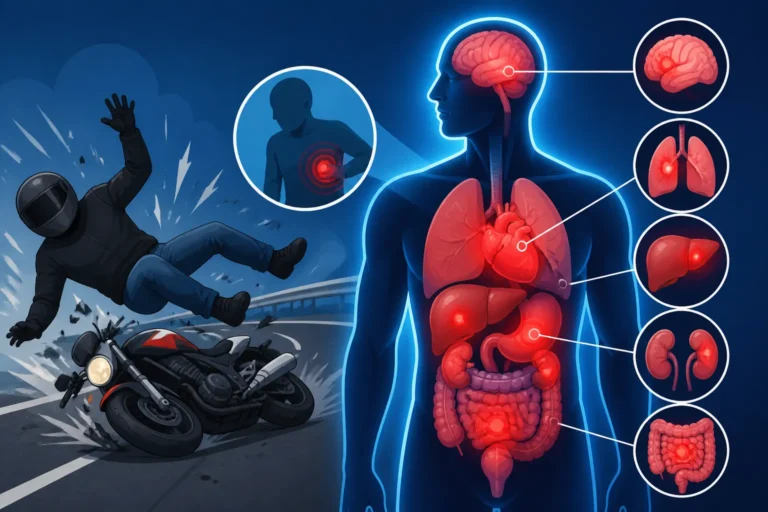
Motorcycle accidents are notorious for causing severe injuries, and back injuries are tragically common among riders. Unlike occupants in a car who have seatbelts, airbags, and a surrounding steel frame, motorcyclists are directly exposed to the forces of impact. This vulnerability means that even seemingly minor crashes can result in serious, life-altering damage to the spine.
Common Types of Back Injuries in Motorcycle Accidents
The human spine is a marvel of engineering, a column of bones (vertebrae), discs, nerves, and soft tissues that supports our body, allows movement, and protects the spinal cord. When subjected to the violent forces of a motorcycle crash, any of these components can be severely damaged.
Spinal fractures, where one or more vertebrae are broken, are particularly devastating. These can range from minor compression fractures, which might heal with rest and a brace, to burst fractures or fracture-dislocations, which can lead to instability of the spine or even partial or complete paralysis if the spinal cord is compromised. Imagine hitting the pavement at speed, or being thrown from your bike and landing awkwardly. The immense pressure on your spine can cause a vertebra to shatter, similar to how a brittle object breaks under sudden force. Recovery often involves extensive surgery, long periods of immobilization, and rigorous physical therapy, potentially leaving you with chronic pain or limited mobility.
Then there are herniated or bulging discs. The discs between your vertebrae act as cushions. A sudden impact, twist, or jolt can cause one of these discs to rupture or push out of its normal alignment, pressing on nearby nerves. This pressure can result in excruciating pain, numbness, tingling, and weakness that radiates down your arms or legs. Many riders describe it as a constant, burning agony that makes sitting, standing, or even sleeping incredibly difficult. While some disc injuries can be managed with conservative treatments like injections or physical therapy, severe cases often require surgical intervention, such as a discectomy or spinal fusion, to alleviate pressure and stabilize the spine.
Beyond the bones and discs, the intricate network of ligaments, tendons, and muscles supporting your back can suffer significant damage. Sprains occur when ligaments are stretched or torn, while strains involve damage to muscles or tendons. These soft tissue injuries, though sometimes dismissed as "just a sprain," can be incredibly painful and debilitating, leading to chronic stiffness, muscle spasms, and restricted movement. Recovery often requires extensive physical therapy, pain management, and a significant period away from work and your regular activities. While they may not sound as dramatic as a broken back, the long-term impact of chronic soft tissue pain can be profound, making even simple daily tasks a struggle.
Why Back Injuries are So Prevalent and Serious for Riders
The simple truth is that motorcycles offer very little in the way of passive safety compared to cars. When a car driver makes an error, like a sudden lane change or a failure to yield, the motorcyclist is often left with nowhere to go. The resulting impact, often with another vehicle or the unforgiving road surface, subjects the rider to direct, unmitigated forces. This lack of a protective shell means that riders are far more susceptible to severe trauma, especially to the back and spine.
The mechanics of a motorcycle accident often involve high-impact collisions, ejection from the bike, or being thrown to the ground. These scenarios can lead to severe compression, twisting, or hyperextension of the spine. For example, in a rear-end collision, a rider can be propelled forward, then violently snapped backward, causing whiplash in the neck and severe compression in the lower back. If you're thrown from your bike, the landing itself can be catastrophic, with your body absorbing the full force of the fall, leading to fractures or spinal cord damage. Even seemingly minor incidents, like hitting a pothole at speed or being knocked off balance, can cause a sudden jolt that damages the delicate structures of the spine. When discussing the various kinds of impacts, it becomes clear why addressing Common Causes of Motorcycle Accidents is so crucial for rider safety and understanding liability.
Furthermore, the design of a motorcycle itself can contribute to back injuries. Many sport bikes place the rider in a hunched-over position, which can strain the lower back even during normal riding. In a crash, this posture can exacerbate spinal injuries. Cruisers, while offering a more relaxed riding position, still leave the rider exposed. Unlike a car accident where the impact might be absorbed by various crumple zones and safety features, a motorcycle crash means your body is the crumple zone. The injuries are often direct and severe, requiring immediate and extensive medical intervention.
Immediate Steps After a Motorcycle Back Injury
The moments immediately following a motorcycle accident can be chaotic and frightening, especially if you're in pain. However, the actions you take (or don't take) in these crucial hours and days can significantly impact your health and the success of any future claim.
Prioritizing Medical Attention and Documentation
Your health is paramount. Even if you feel okay after a crash, the adrenaline can mask pain and serious injuries, especially to the back. Many spinal injuries have delayed symptoms, only manifesting hours or days later as swelling increases or nerves become more compressed. Do not try to tough it out. If you suspect any back pain, stiffness, or numbness, seek immediate medical attention. This means calling for an ambulance or going to the emergency room right away. Ignoring pain or delaying treatment not only jeopardizes your recovery but can also be used by insurance companies to argue that your injuries weren't severe or weren't directly caused by the accident.
Once you're at the hospital or doctor's office, be thorough in describing all your symptoms, no matter how minor they seem. Detail the location, type, and intensity of your back pain, and any radiating numbness or tingling. Ensure that all your complaints are documented in your medical records. Doctors will likely order imaging tests like X-rays, CT scans, or MRIs to properly diagnose the extent of your back injury. These diagnostic images are critical pieces of evidence, providing objective proof of your condition.
Follow all medical advice diligently. Attend every follow-up appointment, physical therapy session, and specialist consultation. Every single doctor's note, therapy record, prescription, and bill contributes to a comprehensive picture of your injury and its impact. This meticulous documentation will be invaluable when it comes time to calculate Economic vs Non-Economic Damages Explained. Keeping a personal injury journal where you record your daily pain levels, limitations, and how the injury affects your life is also highly recommended. This helps to chronicle your journey and provides detailed insights into your experience.
Notifying Insurance and Preserving Evidence
Once your immediate medical needs are addressed, you need to notify your insurance company, and potentially the other driver's insurance, about the accident. Do this as soon as possible, but be careful what you say. Stick to the facts – where and when the accident occurred, and that you sustained injuries, including a back injury, and are seeking medical attention. Do not admit fault or speculate about the cause of the accident. Remember, anything you say can be used against you.
Preserving evidence from the accident scene and your injuries is absolutely critical for building a strong claim. If you were able to, or if someone else helped you, take photographs and videos at the scene. These should include:
- The position of all vehicles involved: Show how your motorcycle and the other vehicle ended up.
- Damage to your motorcycle: Capture every dent, scratch, and broken part. This helps illustrate the force of impact.
- Damage to the other vehicle: Document their damage as well.
- Skid marks, debris, and road conditions: These details can help an accident reconstruction expert later determine what happened. Also, document any road hazards that might have contributed, as liability could extend to a government entity.
- Traffic signals and signs: Show the context of the intersection or road.
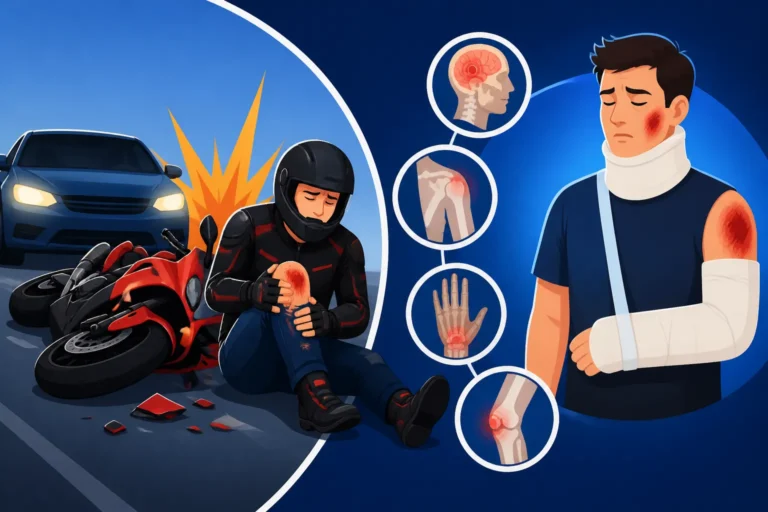
- Visible injuries: Take clear, close-up photos of any bruises, cuts, or abrasions you sustained. This includes any road rash.
- Your protective gear: Photos of your helmet, jacket, and other gear, especially if they are damaged, demonstrate the impact and your efforts to protect yourself. This can be crucial in countering arguments like The Helmet Defense Explained.
Beyond the immediate aftermath, continue to document your recovery. As mentioned, an injury journal is excellent. Take regular photos of your healing injuries, especially if you have scarring or visible limitations. Keep track of all your medical appointments, receipts for medical expenses, transportation costs to appointments, and records of any lost wages or missed work. This detailed evidence package will be essential when calculating your overall damages.
Types of Damages for a Motorcycle Back Injury Claim
When you've suffered a back injury in a motorcycle accident due to someone else's negligence, you're entitled to seek compensation for a wide range of damages. These damages typically fall into two main categories: economic and non-economic. Understanding the distinction and how each is calculated is crucial for ensuring you receive a fair settlement.
Economic Damages: Tangible Financial Losses
Economic damages are the calculable, out-of-pocket expenses and financial losses you incur as a direct result of your back injury. These are often easier to quantify because they come with bills, invoices, and pay stubs.
-
Medical Expenses: This is usually the largest component of economic damages for a back injury. It includes everything from your initial emergency room visit, ambulance ride, diagnostic tests (X-rays, MRIs, CT scans), specialist consultations (orthopedists, neurologists, pain management doctors), surgeries, hospital stays, medications, physical therapy, chiropractic care, and rehabilitation programs. Crucially, it also includes future medical expenses – the cost of ongoing treatment, potential future surgeries, lifelong pain management, and adaptive equipment you might need for the rest of your life. For a severe spinal cord injury, these future costs can be astronomical, potentially totaling millions of dollars over a lifetime.
-
Lost Wages and Loss of Earning Capacity: If your back injury prevents you from working, you can claim compensation for lost income. This covers the wages you've already missed, as well as the income you will foreseeably miss in the future if your injury leads to temporary or permanent disability. If your back injury forces you to take a lower-paying job or prevents you from working at your full capacity for the rest of your life, you can also claim "loss of earning capacity." This accounts for the difference between what you could have earned and what you will earn due to your injury. This often requires expert testimony from vocational rehabilitation specialists and economists.
-
Property Damage: While your body is the primary concern, the damage to your motorcycle also constitutes an economic loss. This includes the cost of repairing your bike or, if it's totaled, its fair market value before the accident. It can also include the cost of damaged riding gear, like your helmet, jacket, boots, or specialized back protector.
Here's a quick overview of common economic damages:
| Category | Description | Examples |
|---|---|---|
| Medical Expenses | All costs related to diagnosis, treatment, and recovery from the injury, both past and future. | ER visits, surgeries, hospital stays, doctor appointments, MRI/CT scans, physical therapy, prescription medications, assistive devices (braces, wheelchairs), home modifications for accessibility. |
| Lost Wages | Income lost due to inability to work after the accident. | Salary, hourly wages, commissions, bonuses, benefits (vacation/sick time used), self-employment income, tips. |
| Loss of Earning Capacity | Diminished ability to earn income in the future due to permanent injury or disability. | If a back injury prevents a construction worker from returning to their physically demanding job and they must take a lower-paying desk job. |
| Property Damage | Costs to repair or replace damaged personal property. | Motorcycle repair or replacement, damaged helmet, riding jacket, boots, gloves, phone, watch. |
| Out-of-Pocket Expenses | Other direct costs incurred due to the accident and injury. | Transportation to medical appointments, childcare services while undergoing treatment, prescription co-pays, over-the-counter pain relief, modifications to a vehicle for accessibility. |
Non-Economic Damages: Intangible Suffering
Non-economic damages are the subjective, non-monetary losses that result from your back injury. These are often harder to quantify with a specific dollar amount but are no less real or impactful. These damages compensate you for the profound negative impact the injury has had on your quality of life.
-
Pain and Suffering: This is the most commonly recognized non-economic damage. It encompasses the physical pain you've endured and will continue to endure, from the immediate trauma of the accident to chronic pain, discomfort, and limitations. Pain and Suffering Damages Explained delve into how this often subjective experience is valued in a legal claim. For a severe back injury, especially one involving nerve damage, the pain can be constant, debilitating, and significantly impact every aspect of your life.
-
Emotional Distress: Beyond physical pain, a serious back injury can lead to significant emotional and psychological trauma. Many motorcycle accident victims experience anxiety, depression, fear, PTSD (Post-Traumatic Stress Disorder), anger, frustration, and sleep disturbances. The inability to ride, work, or engage in hobbies can lead to a sense of loss and identity crisis. This emotional suffering is a legitimate component of your claim.
-
Loss of Enjoyment of Life: If your back injury prevents you from participating in activities you once loved – riding your motorcycle, playing sports, hiking, spending time with family, or even simple daily pleasures – you can seek compensation for this "loss of enjoyment of life." For a rider, the inability to get back on two wheels due to a debilitating back injury can be particularly heartbreaking.
-
Loss of Consortium: If your back injury has negatively impacted your relationship with your spouse or partner, they may be able to file a claim for "loss of consortium." This covers the loss of companionship, intimacy, affection, and assistance that your spouse experiences due to your injuries.
Calculating non-economic damages is complex and often involves a multiplier method, where your economic damages are multiplied by a factor (typically between 1.5 and 5, or even higher for catastrophic injuries) to arrive at a value for your pain and suffering. The severity of your injury, its long-term prognosis, and its impact on your daily life are all crucial considerations in determining this multiplier.
The Claims Process with a Back Injury Focus
Navigating the claims process after a motorcycle accident, especially with a serious back injury, can feel like a daunting journey. It's not just about filling out forms; it's about understanding the nuances of insurance tactics and effectively proving the extent of your suffering.
Navigating Insurance Companies and Their Tactics
Let's be blunt: insurance companies are businesses, and their primary goal is to pay out as little as possible. When you have a back injury, you can expect them to be particularly scrutinizing. They often view motorcycle riders with an inherent bias, sometimes assuming the rider was reckless or at fault, regardless of the actual circumstances. This "rider bias" can be a significant hurdle. They might try to downplay the severity of your injuries, suggesting they're not as bad as you claim or that they existed before the accident.
One common tactic is offering a quick, lowball settlement early on. They might contact you while you're still recovering, stressed, and perhaps facing mounting medical bills, hoping you'll accept a small offer just to make it go away. This offer almost certainly won't cover your long-term costs. It's crucial not to accept this or sign any medical releases that allow them unrestricted access to your entire medical history. That full history could expose pre-existing conditions that the insurance company will then try to blame for your current back pain, even if the accident clearly aggravated it.
Insurance adjusters might also try to get you to make statements that contradict your official report or admit some level of fault. Remember, you are not obligated to give them a recorded statement. If they call, politely decline and direct them to your legal representation if you have one. Understanding How Insurance Companies Assign Blame to Riders is key to protecting your interests. They might also drag out the process, hoping you'll get frustrated and settle for less. This is where patience and persistence, often facilitated by legal counsel, become essential.
Proving Your Back Injury and Its Impact
For a back injury claim, comprehensive and undeniable proof is your strongest asset. The burden of proof lies with you, the injured party, to demonstrate that the accident caused your back injury and quantify the resulting damages.
Medical Evidence: This is the cornerstone of your claim. Objective medical documentation is incredibly powerful. This includes:
- Diagnostic Imaging: X-rays, MRIs, and CT scans that clearly show fractures, herniated discs, spinal cord compression, or other structural damage. These are hard to dispute.
- Doctor's Notes and Reports: Detailed notes from your orthopedic surgeon, neurologist, physical therapist, and other specialists outlining your diagnosis, prognosis, treatment plan, and limitations. These should explicitly link your injury to the motorcycle accident.
- Medical Bills: Every bill from every appointment, procedure, and prescription.
- Expert Testimony: In complex cases, a medical expert witness (e.g., an orthopedic surgeon or neurologist) might be needed to explain the extent of your injuries to a jury, discuss the long-term prognosis, and testify about the necessity and cost of future medical care.
Personal Testimony and Impact Statements: While objective medical evidence is crucial, your personal experience adds depth and humanity to your claim.
- Injury Journal: As mentioned earlier, keeping a detailed log of your daily pain levels, how the injury affects your sleep, mood, ability to perform daily tasks, and participate in hobbies provides a compelling narrative of your suffering.
- Witness Statements: If friends, family, or colleagues can attest to the changes in your physical abilities and emotional state since the accident, their statements can be very powerful.
- Photos and Videos: Visual evidence of your injuries (bruises, scars, casts, reliance on crutches or a wheelchair) and how they limit your activities can be highly persuasive.
- Testimony from Vocational Experts: If your back injury impacts your ability to work, a vocational expert can assess your pre-injury earning capacity versus your post-injury earning capacity, providing a quantifiable figure for lost earning potential.
Connecting your back injury directly to the accident is paramount. This often involves demonstrating the clear temporal link (the injury occurred immediately after the crash) and showing that the type of impact suffered in the accident is consistent with the type of back injury sustained. Medical professionals will play a key role in making this connection, affirming that the accident was indeed the cause of your injury.
Factors Affecting Your Back Injury Claim's Value
Determining the true value of a motorcycle back injury claim isn't a simple calculation. Many variables come into play, influencing how much compensation you might ultimately receive. Understanding these factors can help manage your expectations and guide your strategy.
Severity of Injury and Long-Term Prognosis
The single most significant factor in determining the value of your claim is the severity of your back injury. A minor back strain that resolves with a few weeks of physical therapy will naturally yield a far lower settlement than a catastrophic spinal cord injury resulting in paralysis.
Consider the following aspects of severity:
- Type of Injury: Is it a soft tissue sprain, a herniated disc, a vertebral fracture, or damage to the spinal cord itself? Spinal cord injuries, which often lead to partial or complete paralysis, are considered among the most severe and typically result in the highest compensation due to lifelong care needs, lost income, and profound impact on quality of life.
- Need for Surgery: Injuries requiring surgery, especially complex spinal surgeries like fusions or disc replacements, significantly increase the value of a claim due to higher medical costs, longer recovery times, and increased pain and suffering.
- Permanent Impairment or Disability: Will your back injury lead to permanent limitations, chronic pain, or disability? If you're unable to return to your previous job, or if your ability to engage in daily activities, hobbies, and family life is permanently diminished, your claim's value will reflect this. This includes considerations for adaptive equipment, ongoing care, and future modifications to your home or vehicle.
- Long-Term Prognosis: What do doctors predict for your future? Will your condition worsen over time? Will you need continuous physical therapy, pain management injections, or even more surgeries years down the line? These future costs and ongoing suffering are crucial components of your compensation.
- Impact on Quality of Life: How does the back injury affect your daily existence? Can you lift objects, sit for long periods, walk without pain, or sleep comfortably? Can you still participate in sports, social activities, or simply play with your children? The more profoundly your life has been altered, the higher the non-economic damages will typically be.
For example, a rider in California who suffers a spinal fusion due to a drunk driver's negligence might see a significantly higher settlement compared to a rider in Florida with a less severe disc bulge that resolves with conservative treatment. The profound, lifelong implications of a catastrophic back injury are reflected in higher average motorcycle accident settlement amounts.
Comparative Negligence and Policy Limits
Even if the other driver was clearly at fault, your actions might come under scrutiny, especially in states that apply comparative negligence rules. How Comparative Negligence Reduces Your Payout explains this concept in detail. In many states, if you are found partially at fault for the accident, your total compensation can be reduced by your percentage of fault. For instance, if a jury determines your damages are $500,000, but you were 20% at fault for speeding, you would only receive $400,000. Some states, like North Carolina, use contributory negligence, where even 1% fault can bar you from any recovery. This makes proving fault unequivocally critical in motorcycle accident cases.
Another critical factor is the available insurance coverage. No matter how severe your back injury or how high your damages, your compensation is ultimately capped by the at-fault driver's insurance policy limits. If their policy only covers $100,000 for bodily injury, and your damages are $500,000, you could be left with a substantial gap. This is where your own uninsured/underinsured motorist (UM/UIM) coverage becomes incredibly important. If the at-fault driver has insufficient coverage, your UM/UIM policy can kick in to cover the difference, up to your policy limits. This is why it's so vital to understand How Policy Limits Cap Your Settlement. Without adequate UM/UIM coverage, even the most catastrophic back injury could leave you with substantial uncompensated losses if the at-fault driver is underinsured.
When to Consider Legal Representation for a Back Injury
A serious back injury from a motorcycle accident is rarely a straightforward claim. The complexities involved in medical treatment, rehabilitation, financial recovery, and dealing with resistant insurance companies often necessitate professional legal guidance.
The Complexity of Serious Back Injury Cases
Let's face it, your focus after a back injury should be on healing, not battling insurance adjusters or navigating legal jargon. Motorcycle back injury cases are inherently complex for several reasons:
- Extensive Medical Costs: As we've discussed, back injuries can rack up astronomical medical bills, both immediate and long-term. Calculating these future costs accurately requires significant expertise, often involving medical economists and life care planners to project expenses for years or even decades. Without this, you risk settling for far less than you'll actually need.
- Long-Term Impact: The long-term consequences of a back injury, such as chronic pain, permanent disability, and diminished quality of life, are difficult to quantify. An attorney understands how to present these intangible damages effectively and can connect you with experts who can articulate the full scope of your suffering to an insurance company or a jury.
- Disputed Fault: Insurance companies frequently try to assign some degree of fault to the motorcyclist, even when it's unwarranted. This is where a skilled attorney becomes invaluable, investigating the accident thoroughly, gathering evidence like police reports, witness statements, and accident reconstruction data to definitively prove the other driver's negligence. They know how to counter common defenses like the "I didn't see the motorcycle" argument.
- Expert Witnesses: Complex back injury cases often require various expert witnesses, from medical professionals who can testify about your prognosis to vocational experts who can assess lost earning capacity and accident reconstructionists who can provide a scientific understanding of the crash dynamics. An experienced attorney has a network of these experts and knows how to leverage their testimony effectively.
The sheer volume of paperwork, medical records, and legal procedures involved can be overwhelming for someone recovering from a debilitating back injury. An attorney handles all of this, allowing you to focus on your recovery. For anyone asking themselves, Do You Need a Motorcycle Accident Lawyer, a serious back injury almost always points to "yes."
Maximizing Your Compensation and Protecting Your Rights
Hiring a motorcycle accident attorney levels the playing field against large insurance companies that have vast resources and legal teams at their disposal. An attorney acts as your advocate, solely focused on protecting your rights and maximizing your compensation.
They will:
- Conduct a Thorough Investigation: Go beyond the police report to gather all available evidence, including surveillance footage, dashcam footage, cell phone records of the at-fault driver, and accident scene diagrams.
- Accurately Value Your Claim: Using their experience and access to experts, they will meticulously calculate both your economic and non-economic damages, ensuring no potential compensation is overlooked.
- Negotiate with Insurance Companies: Attorneys are skilled negotiators who understand insurance tactics. They will handle all communications with the at-fault driver's insurance, present a strong demand letter, and fight for a fair settlement. They know when to push back against lowball offers and when to advise moving towards litigation.
- Represent You in Court (if necessary): While most claims settle out of court, an attorney will prepare your case for trial from day one. This readiness often encourages insurance companies to offer a more reasonable settlement, knowing your legal team is prepared to take the case to a jury.
- Manage Deadlines and Procedures: They ensure all legal deadlines, such as the statute of limitations for filing a lawsuit, are met. Missing these deadlines can permanently bar you from recovering any compensation.
- Handle Liens: If your health insurance or other providers have paid for your medical care, they may have a lien on your settlement. Your attorney can negotiate down these liens, ensuring you keep more of your compensation.
Ultimately, having an attorney on your side provides peace of mind and significantly increases your chances of securing the full and fair compensation you deserve for your motorcycle back injury. They protect you from being taken advantage of during one of the most vulnerable times of your life.
Disclaimer
Please remember that this article provides general informational guidance and should not be considered legal advice. Motorcycle accident claims are complex and highly dependent on the specific facts of your case and the laws of your jurisdiction. It is always recommended to consult with a qualified motorcycle accident attorney to discuss your individual situation and get personalized legal advice.