Motorcycle Accidents Caused by Intersection Accidents
Riding through intersections, for many motorcyclists, can feel like navigating a minefield. That brief moment of uncertainty, the quick glance from a driver, or worse, the outright failure to see you, can lead to some of the most devastating motorcycle accidents. It’s a frustrating reality that despite our best efforts at defensive riding, the odds at a crossroads often feel stacked against us. This guide aims to shed light on why intersection accidents are so perilous for riders, explore the common scenarios, discuss how fault is determined, and arm you with the knowledge to protect yourself and your claim should the unthinkable happen.
The Unique Dangers Motorcyclists Face at Intersections
Intersections are inherently risky for everyone, but for motorcyclists, they present a magnified threat. The dynamic nature of traffic, coupled with common driver behaviors and perceptual challenges, makes these zones particularly treacherous.
Visibility Issues and the "Looked But Didn't See" Phenomenon
One of the most disheartening and common refrains after an intersection accident involving a motorcycle is, "I looked, but I didn't see them." This isn't always a malicious lie; it's a well-documented cognitive phenomenon. Our brains are incredibly efficient at filtering information, and unfortunately, motorcycles, with their smaller profiles and single headlights, can sometimes be overlooked by drivers scanning for larger vehicles like cars or trucks. This phenomenon, often called "inattentional blindness" or "selective attention," means a driver might physically look in your direction but fail to process your presence.
Imagine you're approaching an intersection on your bike, obeying all traffic laws, visible, perhaps even wearing bright gear. A car driver at the cross street or preparing for a left turn checks for traffic, but their brain, consciously or subconsciously, prioritizes larger, more common threats. They might register something in their peripheral vision but not interpret it as a fast-approaching motorcycle. This lapse in perception, however unintentional, can lead to a driver pulling out directly into your path, making a left turn right in front of you, or cutting you off without warning. The frustration for riders is immense: we're constantly told to be visible, to ride defensively, and yet, our presence can still be ignored with tragic consequences.
Vulnerability to Severe Injuries
When a motorcycle collides with a car or truck, especially at an intersection where speeds can vary wildly, the motorcyclist is almost always on the receiving end of the most severe damage. Unlike occupants in a car, who are protected by a steel cage, airbags, and seatbelts, a rider has virtually no crumple zone. The forces involved in even a seemingly minor fender-bender for a car can be catastrophic for a motorcyclist.
Common motorcycle accident injuries resulting from intersection collisions often include traumatic brain injuries, spinal cord injuries, multiple fractures, and severe road rash. A rider might be thrown from their bike, impacting the ground, the other vehicle, or even fixed objects like light poles or curbs. Even at slower intersection speeds, the kinetic energy transferred during a collision is immense. For instance, a collision at 30 mph can lead to injuries typically seen in falls from several stories high. The lack of protection means that your body absorbs the full impact, leading to long-term physical and emotional consequences. This inherent vulnerability underscores why drivers have a heightened responsibility to look out for motorcycles, particularly at complex intersections.
Common Intersection Accident Scenarios and Driver Negligence
Intersections are hotbeds for traffic interactions, and unfortunately, many drivers fail to exercise the necessary caution when sharing these spaces with motorcyclists. Several specific scenarios repeatedly lead to devastating crashes for riders.
Left-Turn Collisions
This is arguably the most common and dangerous type of intersection accident for motorcyclists. It usually happens when a car is turning left at an intersection and collides with an oncoming motorcycle that is proceeding straight through. The car driver might misjudge the motorcycle's speed, distance, or simply not see the motorcycle at all. We often discuss these harrowing events in detail, such as in our article, "Left-Turn Motorcycle Accidents Explained".
Consider a classic scenario: a rider is cruising down a main thoroughfare, approaching a green light at an intersection. In the opposite lane, a car is waiting to make a left turn. The driver of the car, either impatient, distracted, or genuinely failing to perceive the motorcycle's presence or speed, decides to "beat" oncoming traffic. They turn directly into the motorcycle's path. The result is almost always a T-bone collision, with the motorcycle slamming into the side of the turning vehicle. The rider is typically ejected from their bike, often suffering severe leg, pelvic, and internal injuries. The car driver's failure to yield the right-of-way in such situations is a clear act of negligence, yet proving it can still be a challenge.
Failure to Yield and Running Red Lights/Stop Signs
Beyond left turns, many intersection accidents stem from a driver's general disregard for traffic control devices and right-of-way rules. A driver might pull out from a side street directly into a motorcyclist's lane without stopping at a stop sign, or they might try to sneak through a yellow light that has already turned red. These actions represent a blatant disregard for safety and often catch motorcyclists completely off guard. Our discussion on "Motorcycle Accidents Caused by Failure To Yield" delves deeper into this particular negligence.
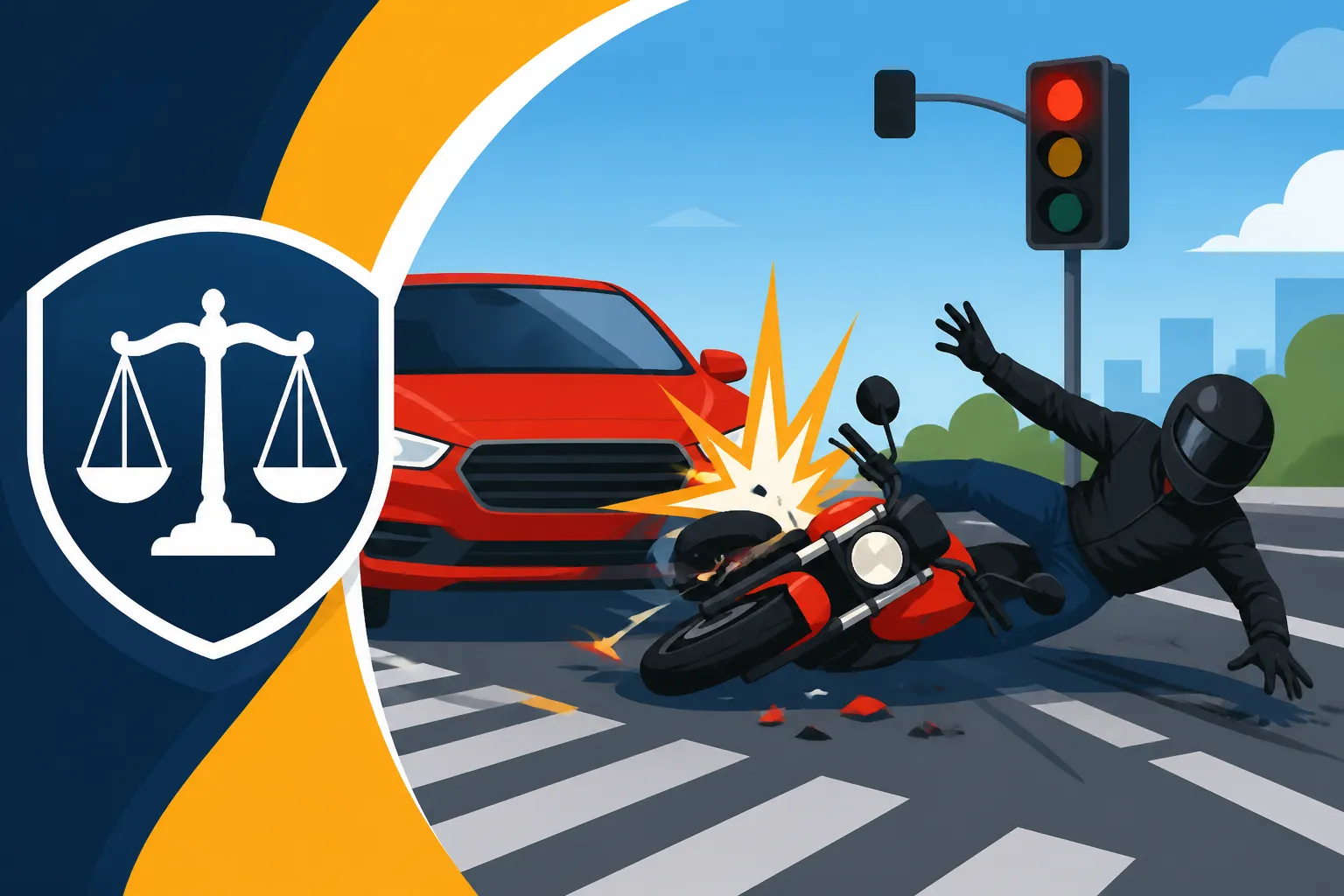
Imagine you're on your bike, approaching an intersection where you have the green light. Suddenly, a car from the cross-street blows through their red light, either because they were looking at their phone, trying to make the light, or simply not paying attention. You, as the motorcyclist, have mere seconds to react, if at all. This kind of sudden, unexpected intrusion into your path forces evasive maneuvers that can be just as dangerous as the collision itself. You might lay the bike down to avoid a direct impact, resulting in road rash and fractures, or swerve into another lane, creating a multi-vehicle pile-up. In cases of pure failure to yield or running a red light, the other driver's fault is usually quite clear, but this doesn't diminish the severity of the consequences for the rider.
Rear-End Collisions at Stopped Intersections
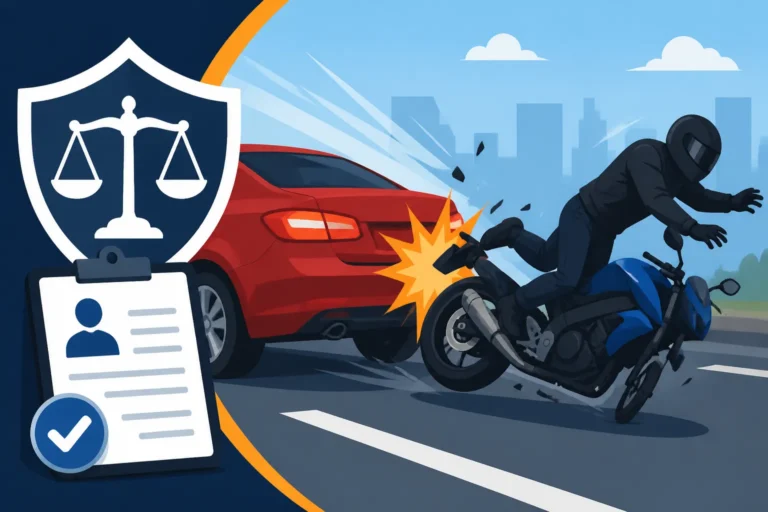
It’s easy to think of intersection accidents as head-on or side-impact, but even when you’re doing everything right and stopped safely at a red light or stop sign, you’re still vulnerable to a rear-end collision. Drivers, especially those distracted by their phones or internal navigation systems, frequently fail to notice a motorcycle stopped in front of them.
Picture this: you’re at a busy intersection in downtown San Diego, waiting for the light to change. You’ve got your brakes on, maybe even shifted into neutral, just relaxing for a moment. Then, with a sudden jolt and screech of tires, you’re slammed from behind by a car that simply didn't stop in time. Because a motorcycle offers no buffer zone like a car's trunk, the impact is directly transferred to your body and your bike. This can throw you forward, potentially into the intersection, or crush your legs and spine against your own motorcycle or the car in front of you. Injuries from these incidents can range from serious whiplash and back damage to broken ankles, legs, and even spinal injuries. Our article "Motorcycle Accidents Caused by Rear-End Collisions" explores these scenarios in more detail, highlighting the critical importance of situational awareness even when stationary.
Establishing Fault in an Intersection Motorcycle Accident
Determining who is responsible after an intersection crash is paramount for any motorcycle accident claim. While it might seem straightforward in many cases, insurance companies are notoriously aggressive in trying to assign some degree of blame to the motorcyclist.
The Role of Traffic Laws and Right-of-Way
At its core, establishing fault in an intersection accident revolves around who had the legal right-of-way according to traffic laws. These laws are designed to regulate how vehicles move through intersections, ensuring a predictable flow and preventing collisions. For instance, the driver who has a green light or a stop sign and proceeds straight generally has the right-of-way over a driver turning left. Similarly, a vehicle already in the intersection often has priority.
When a driver runs a red light or a stop sign, or makes an illegal turn, their violation of these fundamental traffic laws typically establishes clear fault. However, even with seemingly obvious violations, insurance adjusters might attempt to complicate matters. They might argue that the motorcyclist was speeding, riding recklessly, or simply "not paying attention," even if the primary cause was their insured's negligence. Understanding "How Fault Is Determined in Motorcycle Accidents" is crucial, as this knowledge empowers you to counter these common deflection tactics. Even if traffic laws appear to point clearly to the other driver's fault, expect the insurance company to scrutinize every detail of your riding behavior.
Contributory and Comparative Negligence
In the unfortunate event of a motorcycle accident, the concept of shared fault can significantly impact your ability to recover compensation. Most states operate under either a "comparative negligence" or "contributory negligence" system. While only a handful of states, like Alabama, Maryland, North Carolina, and Virginia, still follow the strict "contributory negligence" rule (where if you are even 1% at fault, you cannot recover any damages), most states adhere to some form of "comparative negligence."
Under comparative negligence, if you are found partially at fault for the accident, your compensation will be reduced by your percentage of fault. For example, if a jury determines your total damages are $100,000, but you were 20% at fault because you were slightly speeding, you would only recover $80,000. Some states use "pure comparative negligence" (like California and Florida), allowing recovery even if you are mostly at fault (e.g., 99%), while others use "modified comparative negligence" (like Texas and Ohio), which bars recovery if your fault exceeds a certain threshold, usually 50% or 51%. Insurers will aggressively seek to assign as much fault as possible to the motorcyclist, even if it's just a small percentage, because every percentage point reduces their payout. Understanding "Comparative Negligence in Motorcycle Accidents" is essential for knowing how your actions might affect your claim.
The "Rider Bias" Factor
This is a bitter pill for many riders, but it's a reality we must confront: a significant bias against motorcyclists often exists, both with insurance companies and, at times, with the general public or even jury members. The stereotype of the reckless, daredevil biker can unfortunately taint the perception of an accident, even when the car driver was clearly at fault.
Insurance companies, leveraging this prejudice, will often try to paint the motorcyclist as the instigator, suggesting they were speeding, weaving through traffic, or engaging in dangerous maneuvers, regardless of the actual circumstances. They exploit the public's preconceived notions, sometimes influencing police reports or witness statements. This bias can make it incredibly difficult for riders to receive fair compensation, even when evidence strongly supports their innocence. Our detailed piece on "How Insurance Companies Assign Blame to Riders" offers valuable insights into these tactics. Overcoming this rider bias requires presenting a rock-solid case built on irrefutable evidence, clearly demonstrating the other driver's negligence and your own adherence to safety. It's an unfortunate hurdle, but one that a skilled legal team can help you clear.
Gathering Crucial Evidence to Support Your Claim
The moments immediately following an intersection motorcycle accident are chaotic, but what you do or don't do can significantly impact your ability to prove fault and secure compensation. Gathering solid evidence is your shield against unfair blame.
Immediate Actions at the Scene
After ensuring your immediate safety and calling 911 (even for seemingly minor injuries, as adrenaline can mask pain), documenting the scene is paramount. This isn't just about calling the police; it's about being your own first investigator. Take as many photos and videos as you safely can with your phone. Capture the overall intersection, the positions of all vehicles, specific points of impact, vehicle damage, skid marks, debris, traffic signals (are they still working? what color were they for each direction?), and any road hazards like potholes or gravel. Make sure to get clear shots of license plates and insurance information from the other driver.
Equally important is collecting contact information from any witnesses. People often want to help, but they'll quickly leave if not asked for their details. A disinterested witness statement can be invaluable, especially when police reports are sometimes incomplete or biased. Crucially, do not admit fault or apologize to anyone at the scene, including the other driver or law enforcement. Stick to the facts. While it's human nature to want to explain, anything you say can be used against you later. Our guide "What to Do After a Motorcycle Accident" provides a comprehensive checklist for these critical first steps, emphasizing the importance of detailed photo evidence for "Motorcycle Accident Evidence for Proving Fault".
Leveraging Technology and Expert Analysis
In today's interconnected world, technology offers powerful tools for proving fault. If you have a dashcam on your motorcycle (and seriously, if you don't, consider getting one), that footage can be irrefutable evidence of what transpired. Likewise, many modern cars have "black box" event data recorders (EDRs) that can log speed, braking, and other vehicle parameters moments before a crash. City traffic cameras, often at major intersections, might also have captured the accident. Your attorney can subpoena this footage. For example, in a busy intersection in downtown Atlanta, traffic cameras might show a driver blowing a red light or a vehicle making an illegal turn.
Beyond raw data, accident reconstruction experts can be game-changers in complex intersection cases. These specialists use physics, engineering principles, and data from the scene (skid marks, vehicle damage, debris fields, EDR data) to recreate the accident sequence. They can provide compelling testimony on vehicle speeds, angles of impact, and who caused the collision. If distracted driving is suspected, your lawyer might even be able to subpoena the other driver's cell phone records to show they were actively using their phone at the time of the crash. All these technological and expert resources are vital for countering the "I didn't see you" defense and proving the other driver's negligence.
Official Reports and Medical Documentation
The police report, while not the final word on fault, is a critical piece of evidence. It documents the officer's initial observations, witness statements, and often assigns preliminary fault or notes traffic violations. However, police reports can sometimes contain inaccuracies or be influenced by rider bias, so it’s important to understand "How Police Reports Establish Fault" and how to potentially correct them if needed.
Perhaps even more critical is comprehensive medical documentation. Seek immediate medical attention after any accident, even if you feel fine. Adrenaline can mask pain, and some injuries, like concussions or internal bleeding, may not manifest symptoms for hours or even days. Follow all medical advice, attend every appointment, and keep detailed records of all treatments, medications, and therapy sessions. This documentation links your injuries directly to the accident and substantiates your claims for medical expenses, pain and suffering, and lost wages. A gap in treatment or failure to follow doctor's orders can be used by insurance companies to argue that your injuries weren't severe or weren't directly caused by the crash. Detailed documentation for "How to Document Injuries for a Claim" is your best defense.
Navigating the Insurance Claim Process
After an intersection motorcycle accident, dealing with insurance companies can feel like entering another battleground. It's crucial to understand their tactics and how to protect your rights.
Dealing with Insurance Adjusters
The insurance adjuster's primary role is to protect the insurance company's bottom line, not to ensure you receive maximum compensation. They are highly trained negotiators whose goal is to minimize payouts. They will often contact you quickly after an accident, feigning concern, and ask for a recorded statement. This is a trap. Anything you say in a recorded statement, even seemingly innocent remarks, can be twisted and used against you to deny or devalue your claim. They might try to get you to admit partial fault or downplay your injuries.
You are not obligated to give a recorded statement to the at-fault driver's insurance company. It is always best to politely decline and direct them to your attorney. They may also offer a quick, lowball settlement, especially if they know you're not represented by a lawyer and are under financial strain. Accepting this offer will require you to sign a release, forfeiting your right to pursue further compensation, even if your injuries turn out to be more severe than initially thought. Understanding "How to Negotiate a Motorcycle Accident Settlement" is vital, but having an attorney handle these interactions is even better.
Understanding Damages and Compensation
A motorcycle accident claim seeks to recover "damages," which are the monetary losses you’ve incurred as a result of the collision. These typically fall into two categories: economic and non-economic. Economic damages are quantifiable financial losses, such as medical bills (past and future), lost wages (past and future earning capacity), property damage (for your motorcycle and gear), and other out-of-pocket expenses. Non-economic damages are more subjective and include pain and suffering, emotional distress, loss of enjoyment of life, and disfigurement. Our article on "Types of Damages in a Motorcycle Accident Claim" explains these in detail.
Calculating these damages, especially for future medical costs or long-term pain and suffering, can be complex. Insurance companies will try to undervalue these significantly. For instance, they might argue that your lost wages aren't as high as you claim or that your pain isn't as severe. A thorough accounting of all your losses, supported by medical records, pay stubs, and expert testimony, is crucial. For severe injuries, anticipating future medical costs—like ongoing therapy, surgeries, or adaptive equipment—is paramount to ensure you receive a fair settlement. This is where knowing "How Motorcycle Accident Settlements Are Calculated" becomes incredibly important.
The Benefit of Legal Representation
Facing off against a large insurance company alone, especially while recovering from serious injuries, is an incredibly daunting and often losing battle. This is precisely why having an experienced motorcycle accident lawyer on your side is not just helpful, it's often essential. A lawyer specializing in motorcycle accidents understands the nuances of these cases, the biases involved, and the tactics insurance adjusters employ. They know how to gather critical evidence, interview witnesses, work with accident reconstructionists, and accurately calculate the full extent of your damages.
They will handle all communications with the insurance companies, shielding you from their aggressive tactics and ensuring you don't inadvertently jeopardize your claim. A lawyer will also know when to push for negotiation and when to prepare for litigation if a fair settlement cannot be reached. Many studies and anecdotal evidence suggest that individuals represented by attorneys receive significantly higher settlements than those who try to negotiate on their own. Our guide "Do You Need a Motorcycle Accident Lawyer" lays out many reasons why professional legal help is a wise investment, explaining "What a Motorcycle Accident Lawyer Does" for clients like you.
Specific Intersection Scenarios and Liability Nuances
Intersections, by their very nature, involve complex interactions. Beyond the general issues of right-of-way, specific scenarios and unique factors can significantly influence how liability is determined.
The 'I Didn't See You' Defense
This is perhaps the most infuriating and ubiquitous defense raised by drivers who cause motorcycle accidents at intersections. The driver claims, "I looked, but I didn't see the motorcycle." While it might sound like an innocent oversight, in the eyes of the law, "I didn't see you" is rarely an acceptable excuse for negligence. Drivers have a legal duty to maintain a proper lookout and to see what is there to be seen. Failing to see a motorcycle that was clearly visible, even if the driver claims to have looked, often constitutes a breach of that duty. This defense is so common and frustrating that we've dedicated an entire article to breaking down the "'I Didn't See the Motorcycle' Defense Explained".
When a driver uses this defense, they are essentially trying to shift the blame to the motorcyclist, implying that the rider was somehow invisible or in their blind spot. However, if the motorcycle was operating legally, had its headlight on (which is often required by law), and was not excessively speeding or engaging in reckless behavior, the onus is on the driver to explain their failure to perceive the motorcycle. An experienced motorcycle accident attorney can effectively counter this defense by presenting evidence of the motorcycle's visibility, the intersection layout, the driver's obstructed view (if any), and the legal duty to look adequately.
Multi-Vehicle Intersection Collisions
While many intersection accidents involve a car and a motorcycle, it's not uncommon for three or more vehicles to be involved, especially in busy urban areas or on major highways with complex interchanges. These multi-vehicle pile-ups at intersections introduce layers of complexity to determining fault and liability. For instance, a chain reaction rear-end collision might occur at a red light, or a driver might swerve to avoid one collision and strike another vehicle (including a motorcycle) in the intersection.
In these situations, fault can be apportioned among multiple drivers. It might be that the initial cause was one driver running a red light, but another driver's distracted reaction contributed to the extent of the damage or involved other vehicles. Each driver's insurance company will be eager to shift as much blame as possible to the others. This makes a clear, thorough police report even more vital, as are multiple witness statements. Navigating claims against several insurance policies and potentially multiple at-fault parties is incredibly challenging and almost always requires the expertise of a seasoned legal team who can untangle the various threads of negligence and hold all responsible parties accountable.
Road Hazards and Intersection Design Flaws
Sometimes, the primary cause or a contributing factor to an intersection motorcycle accident isn't another driver's negligence, but a defect in the roadway itself or a flaw in the intersection's design. This could include issues like poorly maintained roads, massive potholes, obscured stop signs or traffic signals due to overgrown trees, malfunctioning traffic lights, or even dangerous grading that makes it difficult to see oncoming traffic. We discuss these dangers in our guide to "Motorcycle Accidents Caused by Road Hazards".
Consider an intersection in a town like Flagstaff, Arizona, known for its harsh winters. A pothole that started small might have grown into a significant hazard due to freeze-thaw cycles, catching a rider off guard and causing them to lose control, leading to a collision with another vehicle. Or perhaps a traffic light at a busy New York City intersection is notoriously short, leading to hurried left turns and increased risk. In such cases, the municipality or government entity responsible for maintaining the road or traffic signals could be held liable. Suing a government entity, however, involves a completely different set of rules and stricter deadlines (often much shorter than typical personal injury statutes of limitations), making it an intricate legal process that absolutely requires specialized legal counsel.
| Common Intersection Scenario | Typical Driver Negligence | Impact on Motorcyclist | Key Evidence for Rider |
|---|---|---|---|
| Left-Turn Collision | Driver fails to yield right-of-way, misjudges speed/distance. | T-bone impact, ejection, severe lower body, internal injuries. | Witness statements, dashcam, traffic camera, accident reconstruction. |
| Running Red Light/Stop Sign | Driver distracted, impatient, fails to stop. | Direct impact, forced evasive maneuvers, single-vehicle crash. | Witness statements, traffic camera footage, black box data, police report. |
| Rear-End at Stop | Driver distracted, tailgating, fails to see stopped motorcycle. | Thrown forward, crushed legs/spine, whiplash, bike damage. | Witness statements, dashcam, physical evidence (skid marks), police report. |
| Failure to Yield (General) | Driver pulls out from side street, merges unsafely. | Side impact, broadside collision, loss of control. | Witness statements, traffic camera, intersection layout analysis. |
| Multi-Vehicle Pile-Up | Combination of failures, chain reaction. | Multiple impacts, severe and complex injuries. | All evidence types, requiring thorough investigation and reconstruction. |
| Road Hazard-Related Collision | Government entity fails to maintain road/signals. | Loss of control, swerving, collision with object or vehicle. | Photos of hazard, maintenance records, expert testimony on road design. |
Disclaimer
The information provided in this blog post is intended for general informational purposes only and does not constitute legal advice. Motorcycle accident laws are complex and vary by jurisdiction. If you have been involved in a motorcycle accident, it is highly recommended to consult with a qualified personal injury attorney to discuss your specific situation and legal options.