Is a Motorcycle Road Rash a Permanent Injury
That sickening scrape, the immediate burning sensation, and the raw, exposed skin underneath your gear (or worse, without it) – few things are as viscerally terrifying and painful for a motorcyclist as road rash. It's not just a minor scrape; it’s a serious injury that can leave you wondering if your skin will ever look or feel the same again. This guide will delve deep into what road rash truly is, its potential for long-term complications, and whether it can indeed leave permanent marks on your body and your life.
Understanding Road Rash and Its Severity
When you go down on a motorcycle, the asphalt or concrete becomes a giant, unforgiving grater against your skin. This isn't your average playground boo-boo; it’s a high-speed, high-friction injury that can strip away layers of flesh in seconds. Understanding the nature and severity of road rash is the first step in grasping its potential for lasting impact.
What Exactly is Road Rash?
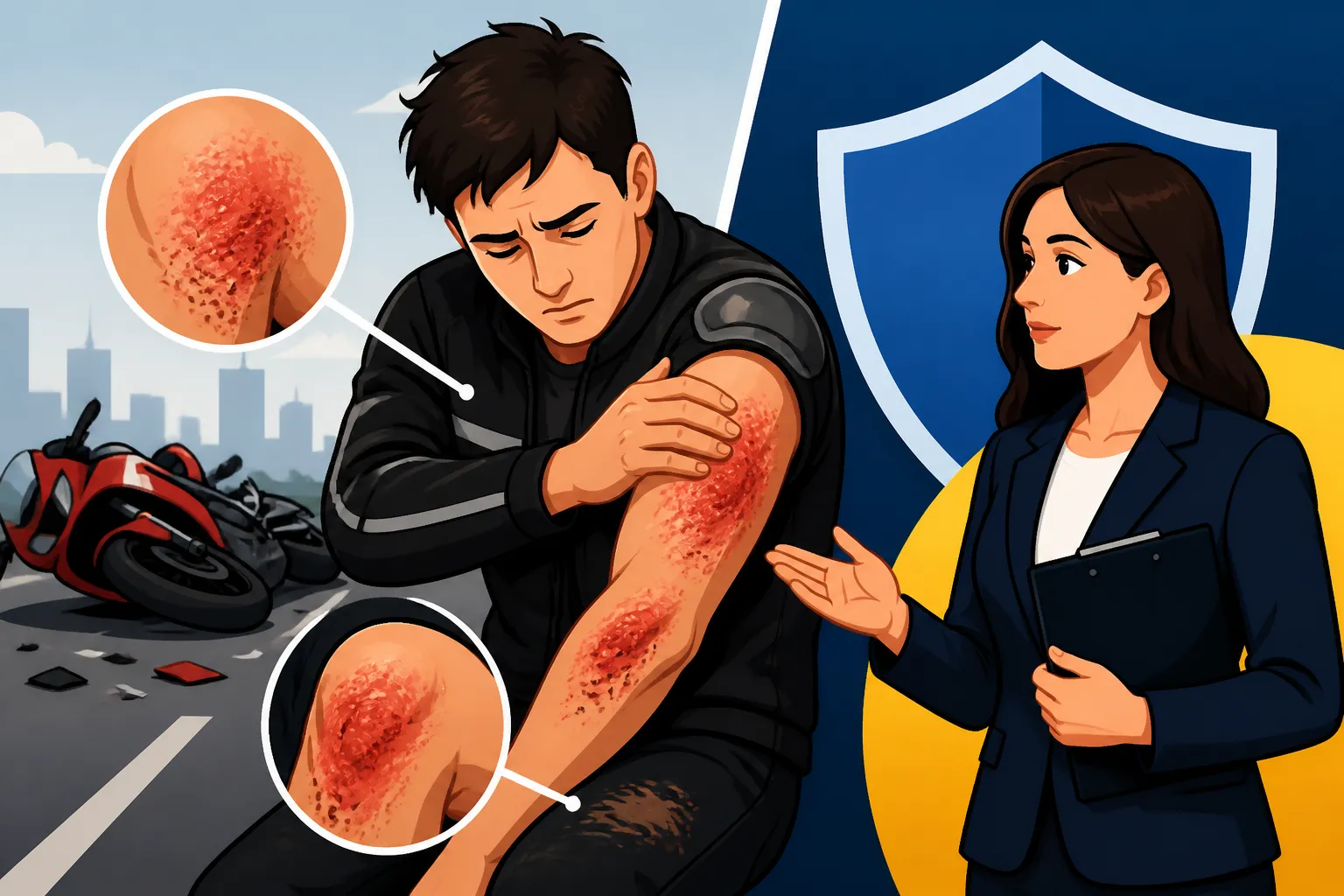
"Road rash" is the common term for an abrasion injury sustained when skin rubs or scrapes against a rough surface, like pavement, during a slide or fall. Think of it like a severe burn, but instead of heat, it's friction and impact that cause the damage. The severity depends on a multitude of factors: your speed at impact, the surface material, how long you slide, and most importantly, the quality of your Motorcycle Safety Gear and Legal Protection. A rider in full leathers might walk away with minor scuffs, while someone in shorts and a t-shirt could face devastating, life-altering injuries.
The damage goes beyond just the top layer of skin. It can involve the epidermis (outer layer), dermis (middle layer with nerves, blood vessels, hair follicles), and even deeper tissues like subcutaneous fat, muscle, or bone in severe cases. Debris from the road – gravel, dirt, glass, even tiny shards of metal – often gets embedded deep into the wound, which is not only incredibly painful but also significantly complicates healing and increases the risk of infection.
Degrees of Road Rash
Just like burns, road rash is classified into degrees based on how deep the skin layers are damaged. These classifications are crucial for medical professionals to determine treatment and for understanding the potential for permanent injury.
- First-Degree Road Rash: This is the most superficial type, affecting only the epidermis. It often looks like a bad scrape or sunburn, with redness, minor swelling, and tenderness. There might be some weeping of clear fluid. While painful and uncomfortable, these usually heal relatively quickly without scarring, provided there's no infection. Think of it as the kind of scrape you get when you stumble while jogging, but spread over a larger area.
- Second-Degree Road Rash: This is where things start to get serious. It penetrates through the epidermis and into the dermis. You'll see significant redness, blistering, and intense pain. The skin might appear raw and moist. Depending on the depth into the dermis, it can be further categorized as superficial or deep second-degree. Superficial second-degree often heals well with minimal scarring, but deep second-degree road rash carries a much higher risk of permanent scarring, discoloration, and even nerve damage. These are the injuries that demand immediate and thorough medical attention.
- Third-Degree Road Rash: This type is characterized by damage extending through all layers of the skin – epidermis, dermis, and into the subcutaneous fat layer. The wound might look leathery, charred, or waxy, and surprisingly, there might be less pain in the center of the wound due to nerve damage. These injuries are incredibly serious, often require skin grafts, and almost always result in significant, permanent scarring, disfigurement, and potential functional impairment.
- Fourth-Degree Road Rash: While less commonly discussed as a distinct category for road rash specifically, some medical professionals use this to describe abrasions that penetrate through all skin layers and fat, exposing muscle, tendon, or even bone. These are catastrophic injuries requiring extensive surgical intervention, often multiple skin grafts, and lead to profound, permanent disfigurement, functional loss, and potentially amputation. These types of injuries are also at high risk for severe infection and prolonged recovery periods.
The deeper the road rash, the more likely it is to become a permanent injury in terms of scarring, skin texture changes, and potential nerve damage. This is why proper assessment and treatment are so vital, especially when you consider filing a Road Rash Injuries and Claims.
The Journey to Recovery: Healing and Complications
The moments and days following a motorcycle accident are critical, not just for your immediate safety but for the long-term prognosis of any injuries, especially road rash. The path to recovery can be fraught with challenges, and how you manage them can significantly impact whether your injuries heal completely or leave lasting reminders.
Immediate Treatment and Medical Care
After a motorcycle crash, even if you feel okay, seeking medical attention for any Common Motorcycle Accident Injuries is paramount. For road rash, the first priority at a medical facility is thorough cleaning, which can be excruciatingly painful but absolutely necessary. This process, often called debridement, removes all the embedded dirt, gravel, and foreign material. If this isn't done completely, it can lead to "traumatic tattooing" where debris becomes permanently embedded under the skin, leaving dark, discolored patches.
Once cleaned, the wound needs to be dressed properly to prevent infection and promote healing. This usually involves sterile, non-adhesive dressings changed regularly, sometimes daily. Depending on the severity, antibiotics (topical or oral) are often prescribed to ward off bacterial infections. A tetanus shot is also a common and crucial preventative measure, as road debris can harbor tetanus bacteria. For deeper road rash, pain management is a significant concern, requiring strong medications, especially during dressing changes. The commitment to this rigorous medical care plan is not just about comfort; it's about minimizing complications that could lead to permanent damage.
Potential Complications During Healing
The healing process for severe road rash is complex and can take weeks or even months. During this time, several complications can arise that can turn a temporary injury into a permanent one.
- Infection: This is arguably the most common and dangerous complication. Open wounds are a direct invitation for bacteria. Signs of infection include increased redness, swelling, warmth, pus, foul odor, and fever. Untreated infections can spread to deeper tissues (cellulitis), enter the bloodstream (sepsis), and severely impede healing, leading to more extensive scarring and tissue loss. If you notice any of these symptoms, immediate medical attention is non-negotiable.
- Nerve Damage: The dermis is rich with nerve endings. Deep road rash can damage these nerves, leading to a range of sensory issues. You might experience persistent numbness, tingling, hypersensitivity to touch, or even chronic burning pain (neuropathic pain) in the affected area. This damage can sometimes be permanent, impacting your quality of life long after the skin has superficially healed.
- Scarring: While some scarring is almost inevitable with deeper road rash, certain types of scars are particularly problematic.
- Hypertrophic scars are raised, red, and itchy scars that stay within the boundaries of the original wound.
- Keloid scars are more aggressive, growing beyond the original wound boundaries, often thick and discolored.
- Atrophic scars are depressed or sunken scars, often appearing as pits.
- Contractures are severe forms of scarring where the new skin tightens and restricts movement, especially if the injury is over a joint like the knee or elbow. This can severely limit your range of motion and require surgical intervention.
- Discoloration: Even when scars aren't raised, the new skin might be permanently discolored, appearing lighter (hypopigmentation) or darker (hyperpigmentation) than the surrounding healthy skin. This can be particularly noticeable on visible areas like the face, arms, or legs.
- Psychological Impact: Beyond the physical, the emotional and psychological toll of a severe road rash cannot be overstated. The trauma of the accident itself, coupled with the pain, the lengthy recovery, and the potential for permanent disfigurement, can lead to anxiety, depression, body image issues, and even PTSD. This mental anguish is a very real, and often permanent, consequence of such injuries.
When Road Rash Becomes a Permanent Injury
The question isn't always if road rash will leave a mark, but what kind of mark, and for how long. For many, the consequences of a severe road rash extend far beyond the initial healing period, leading to permanent physical changes and ongoing challenges. These lasting impacts are a significant component of What Affects Your Motorcycle Accident Payout.
Recognizing Permanent Scarring and Disfigurement
For many riders, the most obvious and emotionally challenging permanent injury from road rash is scarring. While a first-degree abrasion might fade away completely, anything deeper often leaves a lasting signature.
- Visible Scars: These can range from subtle textural changes and discoloration to prominent, raised, or depressed patches of skin. Imagine a deep second-degree road rash on your forearm that heals but leaves a patch of skin that's permanently lighter, shiny, and lacks hair follicles. Or a third-degree injury on your leg that required skin grafts, resulting in a patchwork appearance where the grafted skin is a different texture and color than your natural skin. These scars are not just cosmetic; they can be itchy, sensitive to temperature changes, and less durable than healthy skin.
- Disfigurement: This term often goes beyond a simple scar. Disfigurement implies a change in the normal appearance of a body part that is noticeably altered from its original form. For example, a severe road rash on the face could lead to distorted features, uneven skin texture, or traumatic tattooing that resists removal. Injuries to joints, like a knee or elbow, might result in contractures that physically pull the limb into an abnormal position, causing a visible deformity. The psychological impact of disfigurement can be profound, leading to severe self-consciousness, social anxiety, and a significant drop in confidence. This emotional burden, combined with the physical changes, is often factored into How Pain And Suffering Are Calculated in a Motorcycle Claim.
Chronic Pain and Nerve Damage
Beyond visible scars, many road rash victims grapple with invisible, yet debilitating, permanent injuries: chronic pain and nerve damage. This isn't just residual soreness; it's a persistent, often agonizing condition.
- Neuropathic Pain: This type of pain arises directly from damage to the nerves. It can manifest as burning, tingling, shooting pains, numbness, or extreme sensitivity to even light touch. A rider might experience constant discomfort in an area that superficially looks healed. This is different from typical musculoskeletal pain and often requires specialized treatment, including nerve blocks, specific medications, or physical therapy. Imagine experiencing a constant pins-and-needles sensation or a burning ache in your hip, years after the skin healed, because the deep nerve endings were shredded in the crash.
- Hypersensitivity or Hyposensitivity: Nerve damage can also lead to areas of skin that are either overly sensitive (hypersensitive) or have reduced sensation (hyposensitive). Hypersensitivity can make wearing clothing or even light touch unbearable, significantly impacting daily life. Conversely, hyposensitivity (numbness) can be dangerous as it reduces awareness of injury or temperature extremes in the affected area, making you more prone to future harm. These conditions can be permanent, requiring ongoing management and adaptation.
Functional Impairments and Mobility Issues
The most severe road rash injuries, particularly those involving deep tissue damage or occurring over joints, can lead to permanent functional impairments and mobility issues.
- Contractures and Restricted Movement: As mentioned earlier, severe scarring, especially from third or fourth-degree road rash or extensive skin grafts, can tighten and pull the skin, leading to contractures. These essentially "shrink-wrap" the skin, severely limiting the range of motion in affected joints. For example, a contracture across the knee could prevent full extension or flexion, making walking, riding, or even climbing stairs incredibly difficult or impossible. These often require reconstructive surgery, physical therapy, and ongoing stretching to mitigate, but full pre-injury mobility may never be restored.
- Weakened Skin and Tissue: Skin that has been grafted or severely scarred is often less elastic, thinner, and more fragile than healthy skin. It might be more prone to cracking, tearing, or ulceration, especially under stress or impact. This weakened tissue can be a permanent vulnerability, affecting your ability to participate in certain activities or requiring extra precautions. Consider a rider who, after a severe road rash on their back, finds their skin highly sensitive to sunlight, prone to chafing, and easily damaged, impacting their ability to comfortably wear a backpack or certain protective gear. In some cases, such profound and lasting functional limitations might even qualify for Permanent Disability Compensation.
Documenting Road Rash for a Motorcycle Accident Claim
Navigating the aftermath of a motorcycle accident, especially one involving severe road rash, means dealing with not only physical recovery but also the complex world of insurance claims and potential litigation. Thorough documentation of your injuries is not merely good practice; it's absolutely critical to proving the extent of your damages and ensuring you receive fair compensation for your suffering, including for the permanent aspects of your road rash.
Why Documentation is Key
The insurance company's primary goal is to minimize their payout. Without concrete evidence, they will argue that your injuries were not as severe as claimed, or that they were not directly caused by the accident. This is where meticulous documentation becomes your most powerful tool. It builds an undeniable record of your injury, its severity, the treatment you received, and the impact it has had on your life. For a road rash injury, which can be visually graphic, this detailed record is particularly important in demonstrating both economic damages (medical bills, lost wages) and non-economic damages (pain and suffering, disfigurement, emotional distress). The more thoroughly you document, the clearer the picture you paint of your losses, which directly influences How Motorcycle Accident Settlements Are Calculated.
Evidence to Support Your Claim
Building a strong case for your road rash injury requires a multi-faceted approach to evidence collection. Each piece of information acts like a brick in the foundation of your claim, reinforcing the reality of your suffering and the justice you deserve.
- Detailed Medical Records: This is the bedrock of any personal injury claim. Ensure every single visit, diagnosis, treatment, medication, and recommendation from emergency room staff, surgeons, dermatologists, plastic surgeons, pain management specialists, and physical therapists is recorded. These records should meticulously detail the initial assessment of your road rash (e.g., "third-degree abrasion spanning 20% of the right leg"), the debridement procedures, any skin grafts, wound care instructions, follow-up appointments, and prognosis for recovery. Gaps in treatment can be used by insurers to argue your injuries weren't serious or that you didn't follow medical advice, so it's vital to maintain continuous care.
- Before and After Photos of Injuries: Photographs are incredibly compelling visual evidence. Take clear, well-lit photos of your road rash from multiple angles immediately after the accident, during the debridement process, throughout the various stages of healing, and after the wound has closed to show residual scarring and discoloration. Date-stamped photos can vividly illustrate the progression, or lack thereof, of your recovery and the permanence of your scars. Capture the raw nature of the injury, the surgical sites, the bandages, and then the lasting marks.
- Personal Injury Journal: Your personal narrative is invaluable. Keep a daily journal documenting your pain levels, specific symptoms (itching, burning, numbness), limitations in daily activities (difficulty showering, sleeping, walking), emotional state, and any impact on your hobbies or work. This journal helps connect the medical facts to your personal experience of suffering, giving a voice to your pain and loss of enjoyment of life. For instance, you could write entries about how difficult it is to wear jeans over your scarred thigh, or how the chronic itching disrupts your sleep. This type of documentation is crucial for proving How to Document Injuries for a Claim.
- Testimony from Medical and Mental Health Professionals: Beyond written records, a statement or testimony from your treating physicians, physical therapists, or even a psychologist can be incredibly powerful. They can speak to the severity of your injuries, the long-term prognosis, the need for future medical care (e.g., scar revision surgery, ongoing pain management), and the psychological impact of disfigurement or chronic pain. Their expert opinion lends significant weight to your claim regarding the permanence of your road rash.
- Proof of Economic Damages: Keep meticulous records of all medical bills, prescription costs, co-pays, and any out-of-pocket expenses related to your road rash. Also, document lost wages, including pay stubs, employment records, and a letter from your employer confirming time off due to injury. These tangible financial losses form the backbone of your economic damages claim.
Collecting and organizing all this evidence can feel overwhelming when you're also trying to heal, which is why many riders seek professional help. For insights into average compensation, you might want to review information on the Average Settlement for Road Rash.
| Degree of Road Rash | Description of Injury | Risk of Permanent Scarring | Risk of Chronic Pain/Nerve Damage | Risk of Functional Impairment | Typical Healing Time (approx.) |
|---|---|---|---|---|---|
| First-Degree | Epidermis only | Low to None | Very Low | None | 1-2 weeks |
| Second-Degree | Epidermis & Dermis | Moderate to High | Moderate | Low to Moderate | 2-4 weeks (superficial) |
| Third-Degree | All skin layers, into fat | High to Certain | High | Moderate to High | Weeks to Months (often skin grafts) |
| Fourth-Degree | All layers, exposing muscle/bone | Certain, Severe | Certain, Severe | High to Profound | Months (multiple surgeries) |
Ultimately, while many minor road rash injuries will heal completely, the deeper and more extensive types of road rash often leave behind permanent scars, chronic pain, nerve damage, and sometimes even functional limitations. Understanding this reality is crucial for both your physical recovery and any legal actions you might need to take. It's often advisable to talk to a professional to discuss your options, especially if you're dealing with serious injuries; consider if Do You Need a Motorcycle Accident Lawyer to guide you through the complexities. For a deeper understanding of how fault can impact your claim, review a Motorcycle Accident Liability: A Complete Guide.
Disclaimer
The information provided in this article is for general informational purposes only and does not constitute legal, medical, or professional advice. Always consult with a qualified attorney, medical professional, or other relevant expert for advice specific to your situation.