Who Is at Fault in a Lane Splitting Motorcycle Accident
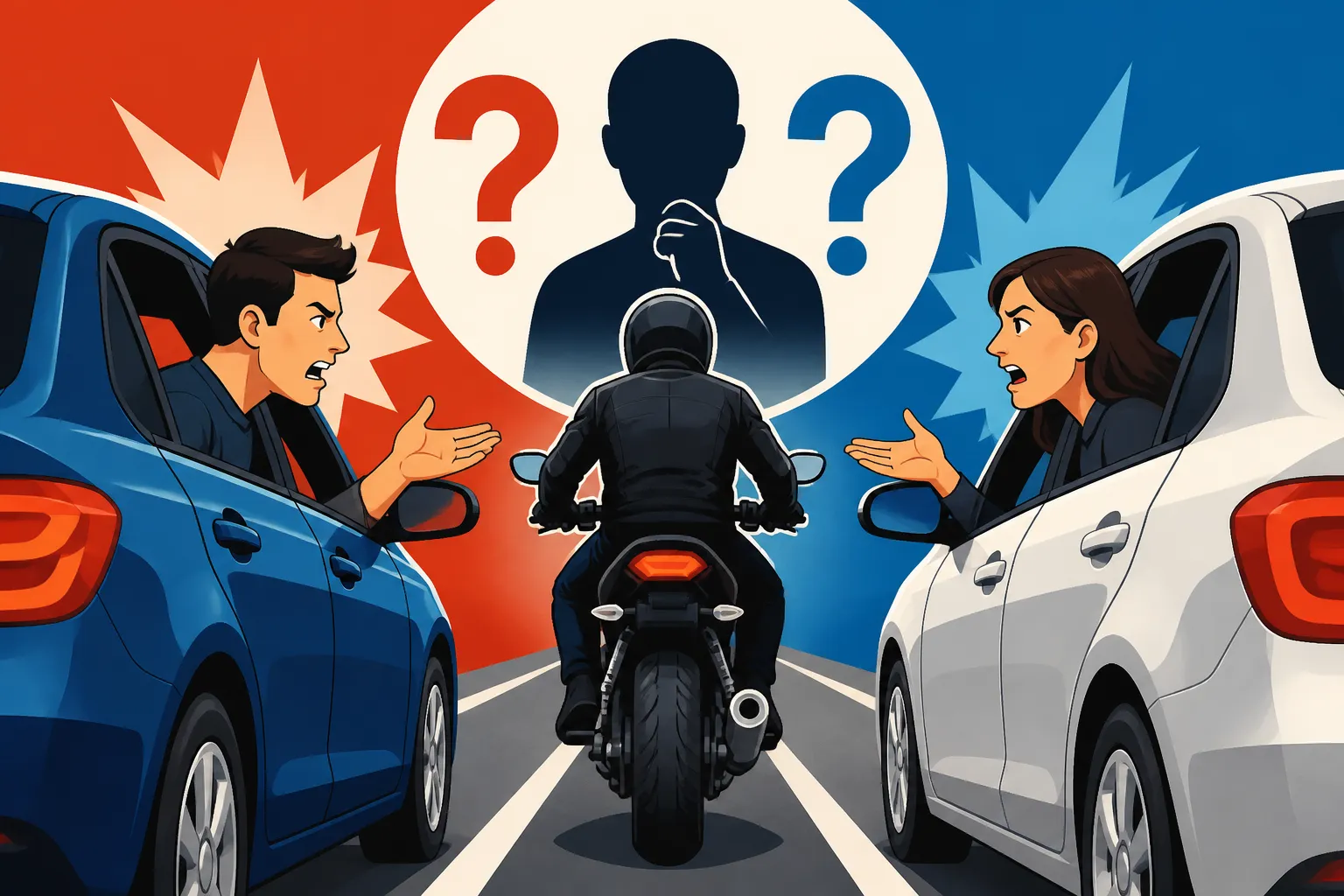
Riding your motorcycle, feeling the open road, and navigating traffic can be incredibly freeing – but it also comes with unique challenges, especially when it comes to maneuvers like lane splitting. If you've been in a motorcycle accident while lane splitting, you know the immediate confusion and worry that sets in: "Who is really at fault here?" It's a complex question, often misunderstood by both drivers and riders, and it can profoundly impact your ability to recover damages. This guide will meticulously break down the intricacies of determining fault in a lane splitting motorcycle accident, helping you understand the legal landscape, what evidence matters, and how to protect your rights.
Understanding Lane Splitting Laws and Perceptions
Lane splitting, or white-lining as some call it, is one of those motorcycle maneuvers that draws strong opinions and often, a lot of confusion. Many drivers in cars simply don't understand it, or worse, they resent it. This misunderstanding can quickly complicate matters if an accident occurs.
What Exactly Is Lane Splitting?
Let's get crystal clear on what we're talking about. Lane splitting generally refers to riding a motorcycle between lanes of stopped or slow-moving traffic going in the same direction. It’s distinct from lane filtering, which usually applies to moving through stopped traffic at an intersection to get to the front of the line. The idea behind lane splitting is to improve traffic flow, reduce congestion, and in some arguments, enhance rider safety by allowing motorcyclists to escape bumper-to-bumper situations where they might be vulnerable to rear-end collisions.
However, the execution of lane splitting isn't a free-for-all. There are usually guidelines, even in states where it's legal, concerning speed differentials, the width of the lanes, and the surrounding traffic conditions. For example, weaving aggressively through traffic at high speeds would likely be considered reckless driving, not lawful lane splitting, even in states where the practice is permitted. It's about careful, controlled movement, not just darting through gaps.
State-Specific Legality: The Legal Landscape
This is where things get tricky, and it's absolutely crucial to know the laws in your specific state. As of my last check, California is the only state where lane splitting is explicitly legal, with guidelines established by the California Highway Patrol (CHP). In most other states, the law is either silent on lane splitting (meaning it's not explicitly legal or illegal, which can lead to ambiguity), or it's explicitly illegal. Some states, like Arizona, implement laws against "lane sharing," which effectively prohibits lane splitting, while others might classify it under general reckless driving statutes.
The legality of lane splitting directly impacts how fault is determined after an accident. If you're lane splitting in a state where it's illegal, you automatically face an uphill battle, as your actions could be deemed negligent per se, or at least contribute significantly to the accident. Conversely, if you're lane splitting legally and responsibly in California, a driver's sudden lane change into your path holds them largely accountable. Understanding these nuanced state laws is foundational to any claim. You can learn more about Lane Splitting Legality and Fault by State to understand the specific rules in your area.
Common Misconceptions About Lane Splitting
One of the biggest hurdles motorcycle riders face after a lane splitting accident is the pervasive misconception among the general public, and sometimes even law enforcement and insurance adjusters, that lane splitting is always dangerous or illegal. Many drivers simply aren't aware that it's permissible in some areas, or they believe it's inherently reckless. This "rider bias" can be incredibly frustrating.
It's common for car drivers to exclaim, "I didn't even see the motorcycle!" or to blame the rider for being "where they shouldn't be," even when the rider was operating within legal parameters. This knee-jerk reaction often comes from a lack of education and a predisposition to see motorcycles as inherently risky. This bias often translates into initial fault assignments, which can then be difficult to overturn without strong evidence and legal representation. It's an unfortunate reality that riders often have to work harder to prove their innocence simply because they were on two wheels.
Determining Fault in a Lane Splitting Motorcycle Accident
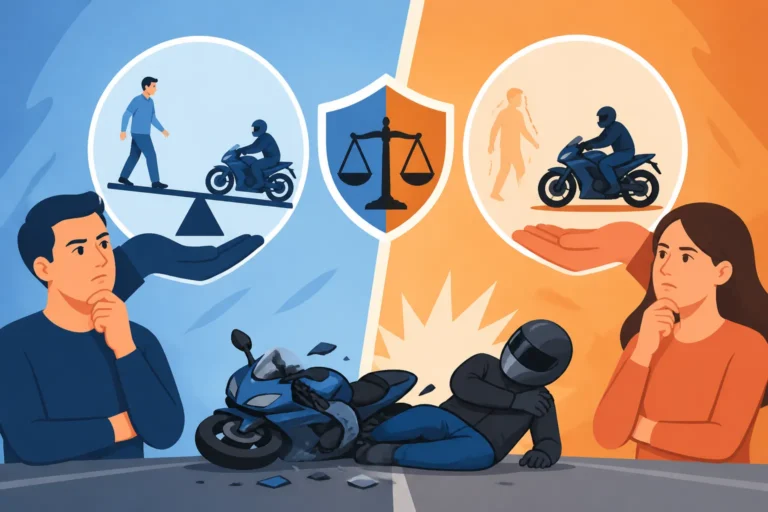
When a motorcycle accident happens during lane splitting, pinpointing who is at fault isn't always straightforward. It's rarely a black-and-white situation, and often, both parties might share some degree of responsibility. This makes the investigative process incredibly important.
When the Car Driver Is Primarily at Fault
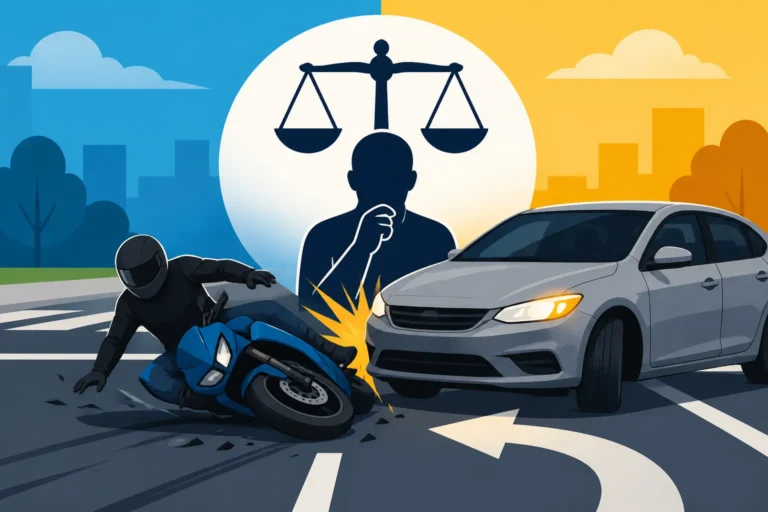
Even when a motorcycle is lane splitting, drivers of other vehicles still have a duty of care on the road. Many scenarios lead to the car driver being primarily at fault, especially if the lane splitting was conducted legally and safely. A common scenario involves a car driver making a sudden, unsafe lane change without checking their blind spots. A driver who swerves into a lane already occupied by a lane-splitting motorcycle, particularly without signaling, is likely to be found at fault. This often falls under the category of Motorcycle Accidents Caused by Unsafe Lane Changes.
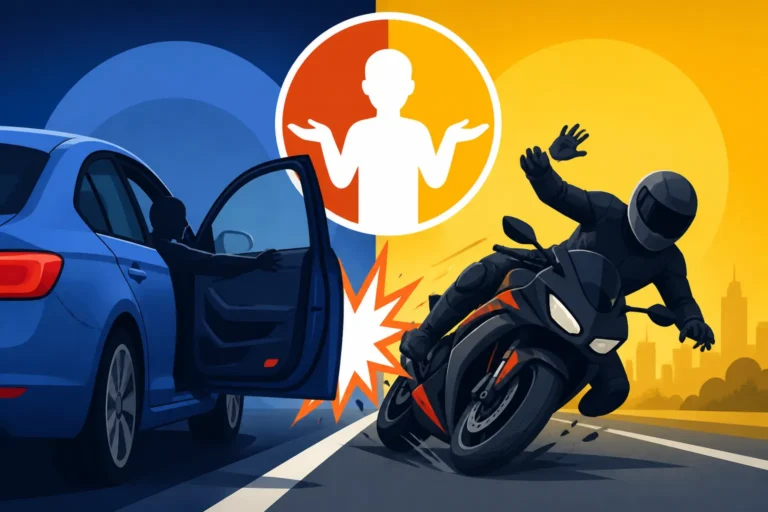
Another frequent cause is distracted driving. A driver texting, talking on the phone, or otherwise not paying attention might drift into another lane, or fail to notice a motorcycle in their periphery, causing a collision. Similarly, a driver opening their car door into the path of a lane-splitting motorcycle (a "dooring" accident) is typically at fault. Regardless of the motorcycle's position, a driver is generally expected to ensure the safety of their surroundings before taking such actions. These situations highlight that even with lane splitting, basic rules of the road and driver attentiveness remain paramount.
When the Motorcycle Rider Bears Some Fault
It's vital to acknowledge that a motorcycle rider can also contribute to a lane splitting accident. Even in states where lane splitting is legal, there are usually guidelines to follow. Exceeding these guidelines, such as splitting lanes at an excessive speed (especially relative to the stopped or slow-moving traffic), splitting lanes when traffic is moving at highway speeds, or weaving recklessly between vehicles, could assign partial or even primary fault to the rider. For instance, if a rider is traveling 30 mph faster than surrounding traffic while lane splitting in California, where guidelines suggest a maximum 10 mph speed differential, they could be deemed negligent.
Riding in conditions that make lane splitting inherently unsafe, such as on roads with narrow lanes, poor visibility, or during adverse weather, can also factor into fault determination. Failing to use proper signaling or riding without proper lighting could also contribute. Ultimately, even with the legal right to split lanes, riders are expected to do so responsibly and safely. If a rider's actions are deemed reckless or negligent, it can impact their ability to recover damages significantly. This is why it's crucial to understand When a Rider Is Partially at Fault and how it might affect your claim.
The Role of Comparative Negligence
Most states in the U.S. operate under some form of comparative negligence. This legal doctrine acknowledges that multiple parties can share fault in an accident. Instead of a "winner takes all" approach, damages are reduced by the percentage of fault assigned to each party. For instance, if you're deemed 20% at fault for a lane splitting accident, your total damages award would be reduced by 20%. This is a critical concept to understand when dealing with insurance adjusters and potential litigation.
There are different types of comparative negligence. Some states, like California, follow "pure comparative negligence," meaning you can recover damages even if you are mostly at fault (e.g., 90% at fault), though your recovery will be significantly reduced. Other states, like Texas or Ohio, adhere to "modified comparative negligence" with a 51% bar. This means if you are found 51% or more at fault, you cannot recover any damages. Florida, on the other hand, recently shifted from pure to modified comparative negligence with a 51% bar. This legal nuance is exceptionally important in lane splitting cases, as insurers will almost always try to assign some percentage of fault to the motorcycle rider. Understanding How Comparative Negligence Reduces Your Payout is vital for managing expectations in your claim.
Key Evidence for Proving Fault in Lane Splitting Crashes
In the immediate aftermath of a motorcycle accident, especially one involving lane splitting, emotions can run high, and memory can be unreliable. That's why gathering concrete evidence is paramount. Without it, your word against another driver's can quickly become a he-said, she-said scenario, which is rarely good for a motorcycle rider.
Gathering Critical Evidence at the Scene
The moments following a crash are chaotic, but if you're able, collecting evidence at the scene is incredibly powerful. First and foremost, the official police report is often the bedrock of any accident claim. This document will detail the officers' initial assessment, witness statements, and any traffic citations issued. However, be aware that How a Police Report Can Hurt Your Claim if it contains inaccuracies or unfavorable conclusions, so it's important to review it carefully.
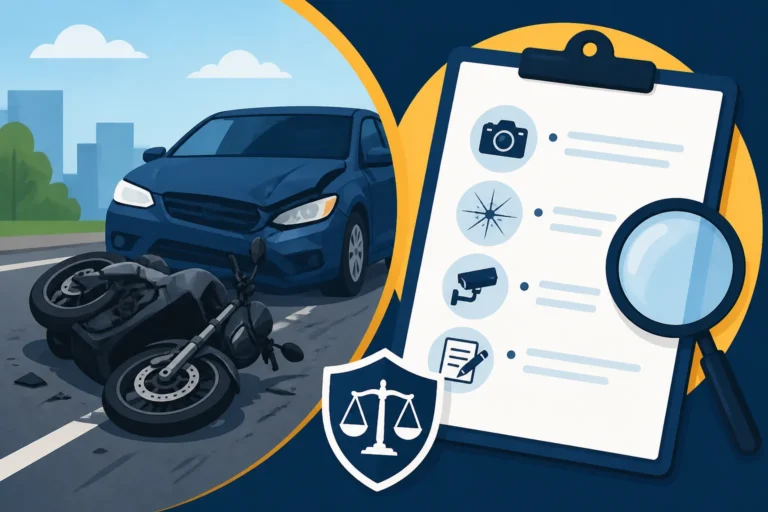
Beyond the police, eyewitness testimony is gold. Independent witnesses, those not involved in the crash, can provide an unbiased account of what they saw, including vehicle speeds, lane changes, and other critical details that corroborate your story. Get their contact information immediately. Photos and videos from the scene are also indispensable. Capture images of vehicle damage, road conditions, traffic signs, skid marks, debris, and the positions of all vehicles involved before they are moved. If the other driver admits fault or says something incriminating, record it if legally permissible, or make a note of it. Many vehicles now have dashcams, and if the other vehicle or a nearby witness's car has one, that footage could be crucial evidence to solidify How Dashcam Footage Proves Fault.
Expert Witnesses and Accident Reconstruction
Sometimes, the scene evidence isn't enough to definitively determine fault, especially in complex lane splitting accidents where speeds, angles, and precise movements are critical. This is where expert witnesses, particularly accident reconstruction specialists, become invaluable. These professionals use scientific principles, physics, and detailed analysis of physical evidence (like vehicle damage, skid marks, and crash dynamics) to recreate the accident sequence. They can determine factors such as impact speeds, points of impact, and vehicle trajectories, offering a clear, objective narrative of how the crash unfolded.
For lane splitting accidents, an accident reconstructionist can often determine if the motorcycle was following proper guidelines (e.g., speed differential) or if the car driver made an abrupt or illegal maneuver. They can counter claims by the other driver that they "didn't see" the motorcycle or that the motorcycle "came out of nowhere." Their expert testimony can carry significant weight in negotiations with insurance companies or, if necessary, in court, providing a technical perspective that goes beyond subjective accounts.
The Importance of Documentation and Medical Records
Proving fault is one thing; proving the extent of your damages is another, and medical records are central to this. After a motorcycle accident, always seek immediate medical attention, even if you feel fine. Some serious injuries, like concussions or internal bleeding, might not present symptoms immediately. Any delay in treatment can be used by insurance companies to argue that your injuries weren't severe or weren't caused by the accident. Your medical records serve as concrete documentation of your injuries, the treatments you've received, and your prognosis.
Keep a detailed journal of your recovery, noting pain levels, limitations, doctor's appointments, medications, and how your injuries impact your daily life. This personal account, combined with official medical documents, helps paint a comprehensive picture of your suffering and losses. This information is crucial for calculating both your economic damages (medical bills, lost wages) and non-economic damages (pain and suffering). Without thorough documentation, insurance adjusters will try to minimize your settlement, so understanding How to Document Injuries for a Claim is critical.
Navigating the Aftermath: What to Do Next
A motorcycle accident, especially one involving lane splitting, can be an overwhelming experience. Beyond the immediate physical injuries, the legal and financial repercussions can feel like a heavy burden. Knowing the right steps to take immediately and in the days and weeks that follow can make a world of difference in protecting your rights and securing fair compensation.
Immediate Steps After a Lane Splitting Accident
Your safety is always the top priority. If you can, move yourself and your motorcycle to a safe location out of the flow of traffic. Check for injuries and call 911 immediately to report the accident and request medical assistance. Even if you feel okay, paramedics can assess you, and their report becomes part of your medical documentation. Next, notify the police. A police report provides an official record of the incident and can be crucial for insurance claims, as discussed earlier. Make sure to exchange information with the other driver, including their name, contact details, insurance information, and vehicle license plate number. Do not apologize or admit fault, even casually, as anything you say can be used against you later.
While still at the scene, if your condition allows, gather as much evidence as possible. Take photos and videos of everything: the vehicles, the surrounding area, road conditions, traffic signs, and any visible injuries. Look for potential witnesses and ask for their contact information. Their independent accounts can be invaluable. This diligent documentation from the start lays a strong foundation for your claim. Remember, taking Photos to Take to Prove Motorcycle Fault can significantly strengthen your case.
Dealing with Insurance Companies and Their Tactics
Dealing with insurance companies after an accident, especially a lane splitting one, can be a frustrating and often intimidating experience. Their primary goal is to minimize their payout, and they are masters at finding reasons to deny or devalue claims. They might try to use your lane splitting as an immediate justification to assign fault to you, even if you were operating legally. They might offer a quick, lowball settlement, hoping you'll accept before fully understanding the extent of your injuries and long-term costs.
It's common for insurance adjusters to ask for recorded statements or insist you sign medical authorizations. Be very cautious. It's almost always best to consult with an attorney before giving any recorded statements or signing anything, as these can be used against you to undermine your claim. They might also try to downplay your injuries or suggest that your pre-existing conditions are the true cause of your pain. An experienced legal professional understands these tactics and can protect you from making crucial mistakes that could jeopardize your compensation.
Seeking Legal Guidance
Given the complexities of lane splitting laws, the potential for shared fault, and the aggressive tactics of insurance companies, seeking legal guidance from a qualified motorcycle accident attorney is often the most critical step you can take. A lawyer specializing in motorcycle accidents will have a deep understanding of state-specific lane splitting laws, comparative negligence rules, and how to effectively counter common arguments used against riders.
An attorney can conduct a thorough investigation, gather crucial evidence (including dashcam footage, traffic camera footage, and expert testimony), negotiate with insurance companies on your behalf, and ensure all your damages – from medical bills and lost wages to pain and suffering – are properly calculated and pursued. They can also advise you on your options if the settlement offer isn't fair and prepare your case for trial if necessary. Don't let the fear of legal fees deter you; many personal injury attorneys work on a contingency fee basis, meaning they only get paid if you win your case. You'll want to choose an attorney who has a track record of handling similar cases, as they will know How Lawyers Deal with Insurance Companies and advocate effectively for your rights.
| Aspect of Fault | Car Driver Primarily at Fault | Motorcycle Rider Partially at Fault | Shared Fault Considerations |
|---|---|---|---|
| Common Scenarios | Unsafe lane change, distracted driving, dooring, failure to yield. | Excessive speed while splitting, unsafe gaps, reckless weaving, splitting in illegal states. | Driver's sudden move + rider's speed, both failing to check blind spots. |
| Legal Basis | Driver's duty of care, traffic laws (signaling, safe passing). | Violation of lane splitting guidelines, reckless driving statutes. | Comparative negligence laws (pure vs. modified). |
| Key Evidence | Dashcam footage, witness statements, police report (citations for driver). | Dashcam showing rider speed, expert reconstruction, traffic camera footage. | All of the above, focused on both parties' actions. |
| Impact on Claim | Strong claim for rider, higher potential settlement. | Settlement reduced by rider's percentage of fault. | Settlement reduced based on assigned percentages, potential for no recovery in 51% bar states. |
Disclaimer
Please remember that this article provides general information and does not constitute legal advice. Every motorcycle accident case is unique, and the information presented here may not apply to your specific situation. Laws regarding motorcycle accidents, fault, and lane splitting vary significantly by state and can change. For personalized advice and guidance regarding your motorcycle accident claim, it is crucial to consult with a qualified personal injury attorney in your jurisdiction.