Can You Still Recover If You Were Partly at Fault
It’s a frustrating scenario many riders face: you’ve been in a motorcycle accident, you’re hurting, your bike is trashed, and then the crushing question hits you – what if I was partly to blame? The fear that even a small percentage of fault could completely derail your ability to recover any damages is a very real and valid concern. This guide is here to shed light on how shared fault works in motorcycle accident claims, ensuring you understand that a partial blame doesn't necessarily mean no recovery.
The Frustration of Shared Fault: Understanding Comparative Negligence
Let’s be honest, there’s a pervasive bias against motorcyclists on the road. When an accident happens, it often feels like everyone, from the initial responding officers to the insurance adjusters, is quick to assume the rider must have done something wrong. This inherent prejudice makes the concept of "shared fault" even more agonizing for us. You’re already dealing with significant injuries and property damage, and then you’re told you might have contributed to the crash, potentially reducing the compensation you desperately need. It's a tough pill to swallow, and it's why understanding the legal nuances of fault is so critical.
What "Partly at Fault" Really Means for Riders
When we talk about being "partly at fault," we're delving into the legal doctrine known as comparative negligence. This means that if you contribute to the cause of an accident, your ability to recover damages from the other party can be affected. It's not an all-or-nothing game in most places. Instead, the court or insurance company assigns a percentage of fault to each party involved. For example, if you were speeding slightly, but the other driver made an illegal left turn, a jury might decide the other driver was 80% at fault, and you were 20% at fault. That 20% doesn't automatically mean you get nothing; it usually means your total recoverable damages will be reduced by that percentage.
This concept becomes particularly relevant for motorcycle riders because of common scenarios that often lead to accusations of shared fault. Perhaps you were lane splitting, which is legal in California but not in many other states, or maybe you were riding without your headlight on during daylight hours, even if not explicitly required by law, which an insurance company might argue contributed to visibility issues. These seemingly minor details can be magnified by adjusters looking to reduce their payout. Understanding the Common Causes of Motorcycle Accidents often sheds light on why these fault determinations are made.
State-Specific Rules: Pure vs. Modified Comparative Negligence
The exact impact of being partly at fault depends heavily on the laws of the state where the accident occurred. Different states follow different versions of comparative negligence, which can drastically change your outcome. There are generally two main types: pure comparative negligence and modified comparative negligence.
Pure Comparative Negligence: In states like California, Florida, and New York, a "pure" comparative negligence rule is followed. This means you can recover damages even if you are mostly at fault – even if you are 99% at fault, you can still recover 1% of your damages. While recovering 1% might not sound like much, it ensures that anyone who suffers harm due to another's negligence can seek some form of compensation, no matter their own contribution. For instance, if your medical bills, lost wages, and pain and suffering total $100,000, and you're found 70% at fault, you could still recover $30,000. It's not ideal, but it's far better than zero.
Modified Comparative Negligence: Most other states, however, follow some form of "modified" comparative negligence. This rule sets a threshold for fault. If your assigned fault percentage exceeds this threshold, you may be barred from recovering any damages at all.
- The 50% Bar Rule: In states like Colorado and North Carolina, if you are found to be 50% or more at fault, you cannot recover any damages. This means if you're 49% at fault, you can still recover 51% of your damages, but if you're 50% at fault, your claim is completely barred. This is a very strict line.
- The 51% Bar Rule: Many states, including Texas, Ohio, and Pennsylvania, use a 51% bar rule. Under this system, you can still recover damages as long as your fault is 50% or less. If your fault is determined to be 51% or more, you recover nothing. This extra percentage point can make a monumental difference in your financial recovery after a devastating crash.
It's crucial to know your state's specific rule, as it’s one of the most significant factors in determining How Comparative Negligence Reduces Your Payout.
Here's a quick look at how various states approach comparative negligence:
| State Type | Fault Threshold | Recovery Rule | Example States |
|---|---|---|---|
| Pure Comparative | None | Can recover damages regardless of your percentage of fault, reduced proportionately. | California, Florida, New York, Washington, Arizona |
| Modified 50% Bar | 50% | Cannot recover if your fault is 50% or more. If 49% or less, damages are reduced by your fault percentage. | Colorado, North Carolina, Maryland (contributory for general negligence) |
| Modified 51% Bar | 51% | Cannot recover if your fault is 51% or more. If 50% or less, damages are reduced by your fault percentage. | Texas, Pennsylvania, Ohio, Illinois, Michigan, Georgia, Virginia |
| Contributory Negligence | 1% | Cannot recover any damages if you are found even 1% at fault. (Only a few states still follow this strict rule). | Alabama, Maryland (for some cases), North Carolina (modified) |
(Note: Laws are complex and can change; this table provides a general overview and isn't legal advice.)
How Your Fault Impacts Your Potential Recovery
The moment an insurance adjuster or defense attorney can pin any fault on you, they will. They are in the business of minimizing payouts, and establishing shared fault is a primary tactic. This isn't just about what happened leading up to the crash, but also about decisions you made regarding safety gear or even how you responded immediately afterward.
The Direct Impact on Your Settlement Amount
Let’s say you were involved in an accident in a state with a 51% modified comparative negligence rule, like Texas. You sustained $200,000 in damages (medical bills, lost wages, pain and suffering, property damage).
- If you're found 10% at fault, your settlement would be reduced by 10%, meaning you could recover $180,000.
- If you're found 40% at fault, your settlement would be reduced by 40%, leaving you with $120,000.
- However, if you're found 51% or more at fault, you would recover nothing. This threshold is incredibly important and demonstrates how critical it is to fight every percentage of fault unfairly attributed to you.
The process of determining fault is rarely straightforward. It involves police reports, witness statements, accident reconstruction, and often intense negotiation. Each percentage point shaved off your fault directly translates into more money in your pocket, money that is vital for covering extensive Medical Expenses in a Motorcycle Claim and rebuilding your life.
The "Helmet Defense" and Other Factors that Assign Fault to Riders
Insurance companies are notorious for using any available legal angle to assign fault to a motorcyclist. One of the most common, especially in states with partial or no helmet laws, is the "helmet defense." This argument claims that even if the other driver caused the crash, your injuries would have been less severe (or non-existent) if you had been wearing a helmet, or a DOT-compliant helmet, in particular. Even if your state doesn't require helmets for all riders, such as Florida (where riders over 21 with $10,000 medical insurance can ride without one), the defense could still argue that your failure to wear one contributed to your head injuries. The Helmet Defense Explained delves deeper into this often-used tactic.
Beyond helmets, other factors can be used to assign fault:
- Speeding: Even if you weren't the primary cause of the accident, exceeding the speed limit, even slightly, can be used to argue you had less time to react or that your speed increased the severity of the impact.
- Lane Splitting: As mentioned, if you were lane splitting in a state where it's not legal (or doing it recklessly where it is legal, like in California), this will almost certainly be used against you.
- Improper Lane Changes or Following Too Closely: Any traffic violation on your part, no matter how minor, can be leveraged.
- Lack of Proper Endorsement/License: While riding without a motorcycle endorsement doesn't cause an accident, insurers might try to argue it indicates a lack of experience, which contributed to your inability to avoid the crash.
- Lack of Reflective Gear or Headlights: In low light conditions, they might claim you weren't visible enough, regardless of the other driver's primary negligence.
Insurance companies will try to How Insurance Companies Assign Blame to Riders in every way possible. They have skilled legal teams and adjusters whose job it is to reduce payouts. This means you need to be prepared for them to scrutinize every detail of your riding behavior leading up to the accident.
Strategies for Recovering Damages When You're Partially at Fault
The good news is that even if you bear some fault, there are proactive steps you can take to protect your claim and maximize your potential recovery. This requires diligence, thorough documentation, and a strategic approach.
Gathering Evidence to Minimize Your Assigned Fault
The key to fighting against unfair fault assignments is robust evidence. Don't assume the police report or the other driver's statement tells the whole story. You need to gather your own facts immediately after the accident, if possible, and continue to build your case.
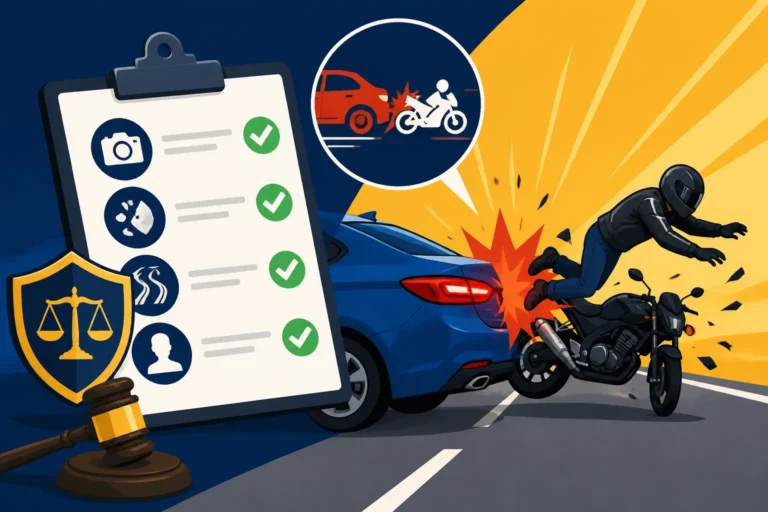
- Document the Scene Thoroughly: Take pictures and videos from multiple angles. Capture damage to all vehicles, skid marks, road conditions, traffic signs, and any debris. If there are dashcams or surveillance cameras nearby, note their locations. These details are vital for an
Accident Reconstruction Expertto accurately assess what happened and Motorcycle Accident Evidence for Proving Fault. - Collect Witness Information: Eyewitnesses can provide crucial, unbiased accounts, especially in cases where there's Rider Bias in Fault Determination. Their testimony can counter the "I didn't see the motorcycle" defense, a common refrain from drivers involved in crashes with bikes. Get names, phone numbers, and email addresses.
- Seek Immediate Medical Attention: Don't tough it out. Even if you feel fine, adrenaline can mask injuries. A prompt medical examination creates an official record of your injuries, linking them directly to the accident. Gaps in treatment can be used by insurers to argue your injuries weren't severe or were sustained elsewhere.
- Maintain Detailed Records: Keep a meticulous record of all medical appointments, treatments, medications, and expenses. Document your pain levels, limitations, and how the injuries impact your daily life. An
Injury Journalcan be incredibly powerful in illustrating your suffering. - Traffic Laws and Regulations: Understand the specific
Motorcycle Accident Fault Laws in your state. If you know the rules, you can better argue against claims that you violated them. For example, if you were riding in a state with universal helmet laws, proving you wore a DOT-compliant helmet is crucial.
The more evidence you have that supports your narrative and minimizes your fault, the stronger your position will be during negotiations. This is how you What Evidence Disproves Rider Fault.
Negotiating with Insurers and Fighting Unfair Blame
Once fault percentages are on the table, often by the insurance company, the real battle begins. Insurers will almost always try to assign a higher percentage of fault to the motorcyclist, knowing that it directly reduces their payout. They may also use How Insurers Use Rider Stereotypes Against You to imply you were reckless or irresponsible.
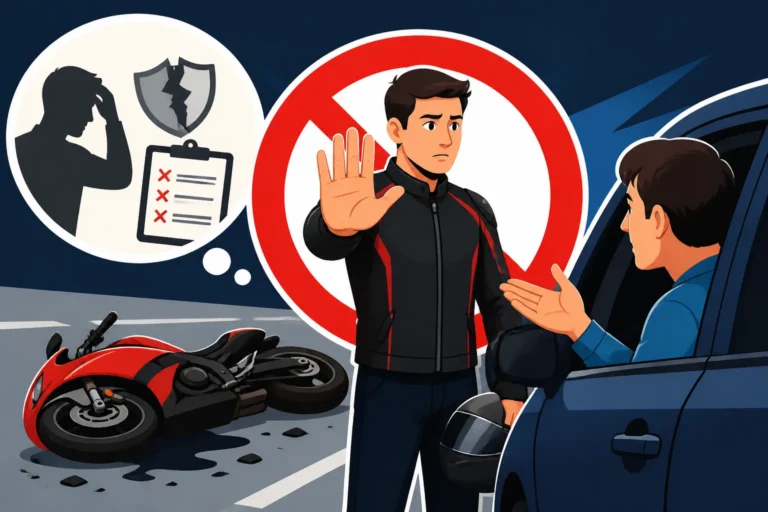
- Never Admit Fault: Even a simple "I'm sorry" at the accident scene can be twisted into an admission of guilt. Stick to the facts when speaking with police or the other driver, and never apologize or accept blame.
- Be Cautious with Insurance Adjusters: Remember, the other driver's insurance adjuster is not on your side. They will ask leading questions and try to get you to make statements that can hurt your claim. Keep your responses factual and brief. Do not give a recorded statement without legal counsel.
- Submit a Strong Demand Letter: Once your medical treatment is complete or you've reached Maximum Medical Improvement (MMI), your attorney can prepare a comprehensive demand letter. This letter will outline the facts of the accident, your injuries, damages, and a clear argument for the other driver's fault while minimizing any assigned to you. This is a critical step in How to Negotiate a Motorcycle Accident Settlement.
- Counter Lowball Offers: It's almost guaranteed that the first offer from the insurance company will be a lowball. They're testing the waters to see how desperate or uninformed you are. Do not accept it. Your attorney will help you analyze the offer against your actual damages and advise on a counter-offer.
Fighting unfair blame requires persistence and a deep understanding of how insurance companies operate. They're counting on you feeling overwhelmed and just accepting whatever they offer. Don't fall for it.
The Role of Legal Counsel in Shared Fault Cases
Navigating a motorcycle accident claim where shared fault is a factor is incredibly complex. It’s not just about proving the other driver was wrong; it’s about strategically defending yourself against allegations that you contributed to the crash. This is precisely where experienced legal counsel becomes invaluable.
Why an Attorney is Crucial in Comparative Negligence Claims
Let's face it, after a motorcycle crash, you're not in the best position to conduct a thorough investigation, understand complex state laws, and negotiate with aggressive insurance adjusters, especially when your well-being is compromised. An attorney who specializes in motorcycle accidents brings several critical advantages:
- Expert Knowledge of State Laws: An attorney will know the specifics of your state's comparative negligence laws, whether it's pure, modified 50%, or modified 51%. They understand how these rules apply to your unique situation and how to leverage them.
- Independent Investigation: A good lawyer won't just rely on the police report. They'll conduct their own thorough investigation, collecting additional evidence, interviewing witnesses, and, if necessary, working with
Accident Reconstruction Expertsto paint a clear picture of what happened and reduce your assigned fault. - Dealing with Insurance Companies: Lawyers know the tactics insurance adjusters use to How Insurers Use Rider Stereotypes Against You and unfairly assign blame. They can effectively counter these arguments, protecting you from making statements that could harm your claim. This is vital in How to Fight an Unfair Fault Assignment.
- Valuing Your Claim Accurately: An attorney can accurately assess all your damages, including current and future medical expenses, lost wages, pain and suffering, and property damage. They can help you determine How Motorcycle Accident Settlements Are Calculated and ensure you aren't settling for less than your case is worth, especially when your recovery might be reduced by a fault percentage.
- Negotiation Skills: Experienced lawyers are skilled negotiators. They can present your case compellingly, argue against inflated fault assignments, and work to secure the highest possible settlement. If a fair settlement isn't possible, they are prepared to take your case to trial.
Trying to handle a shared fault claim yourself is like going to court without knowing the law. The other side has professional legal teams, and you deserve the same level of expertise. That’s why the question Do You Need a Motorcycle Accident Lawyer in such scenarios usually has a resounding "yes."
Understanding the Settlement Process with Shared Fault
The settlement process in a shared fault case generally follows these steps:
- Initial Investigation and Evidence Gathering: Your attorney gathers all relevant documents, including police reports, medical records, witness statements, and accident scene photos.
- Demand Letter: A comprehensive demand letter is sent to the at-fault driver’s insurance company, detailing your injuries, damages, and a proposed settlement amount, along with a legal argument for minimizing your fault.
- Negotiation: The insurance company will typically respond with a lower offer, often emphasizing your percentage of fault. Your attorney will engage in negotiations, presenting counter-arguments and further evidence to reduce your assigned fault and increase the settlement amount.
- Litigation (if necessary): If negotiations fail to yield a fair offer, your attorney may recommend filing a lawsuit. This can involve discovery, depositions, and potentially a trial, where a judge or jury will ultimately determine fault and damages.
- Settlement Agreement or Verdict: If an agreement is reached or a verdict is rendered, the final amount is determined. If you were found partially at fault, the total damages awarded would be reduced by your assigned percentage. For example, if a jury awards $150,000 in damages but finds you 25% at fault, your net recovery would be $112,500.
It's a marathon, not a sprint, especially when fault is disputed. But with the right strategy and legal representation, recovering damages, even when you were partly at fault, is absolutely possible. Remember, your focus should be on your recovery and getting back on the road safely. Let the experts handle the complex legal dance.
Disclaimer
Please remember that this information is for educational purposes only and does not constitute legal advice. Motorcycle accident laws vary significantly by state, and the details of each accident are unique. It is crucial to consult with a qualified motorcycle accident attorney in your jurisdiction to discuss the specifics of your case and understand your legal options.