Universal vs Partial Helmet Laws Explained
Riding a motorcycle offers unparalleled freedom, but it also comes with a unique set of responsibilities and legal considerations, especially when a crash occurs. One of the most perplexing areas for many riders revolves around helmet laws – whether you need one, when, and how that decision might impact you after an accident. This guide is designed to demystify universal and partial helmet laws, exploring their nuances and critically examining how your helmet choice can influence your motorcycle accident claim.
Understanding the Landscape of Motorcycle Helmet Laws
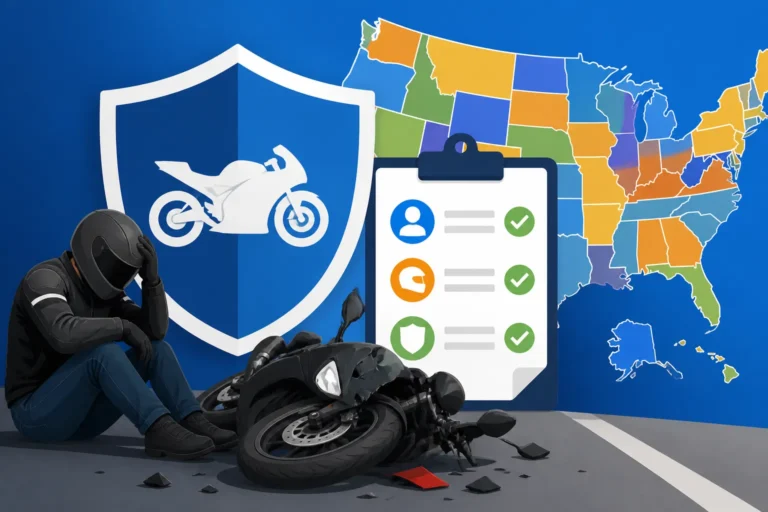
The first thing you realize when you look at motorcycle helmet laws across the United States is that there's no single, consistent rule. It's a patchwork, a mosaic of regulations that vary dramatically from one state line to the next. This can be incredibly frustrating for riders who enjoy long-distance trips or even just commuting across state borders, as what's perfectly legal in one place might land you a ticket – or worse, complicate an injury claim – just a few miles down the road.
The Fundamental Divide: Universal vs. Partial
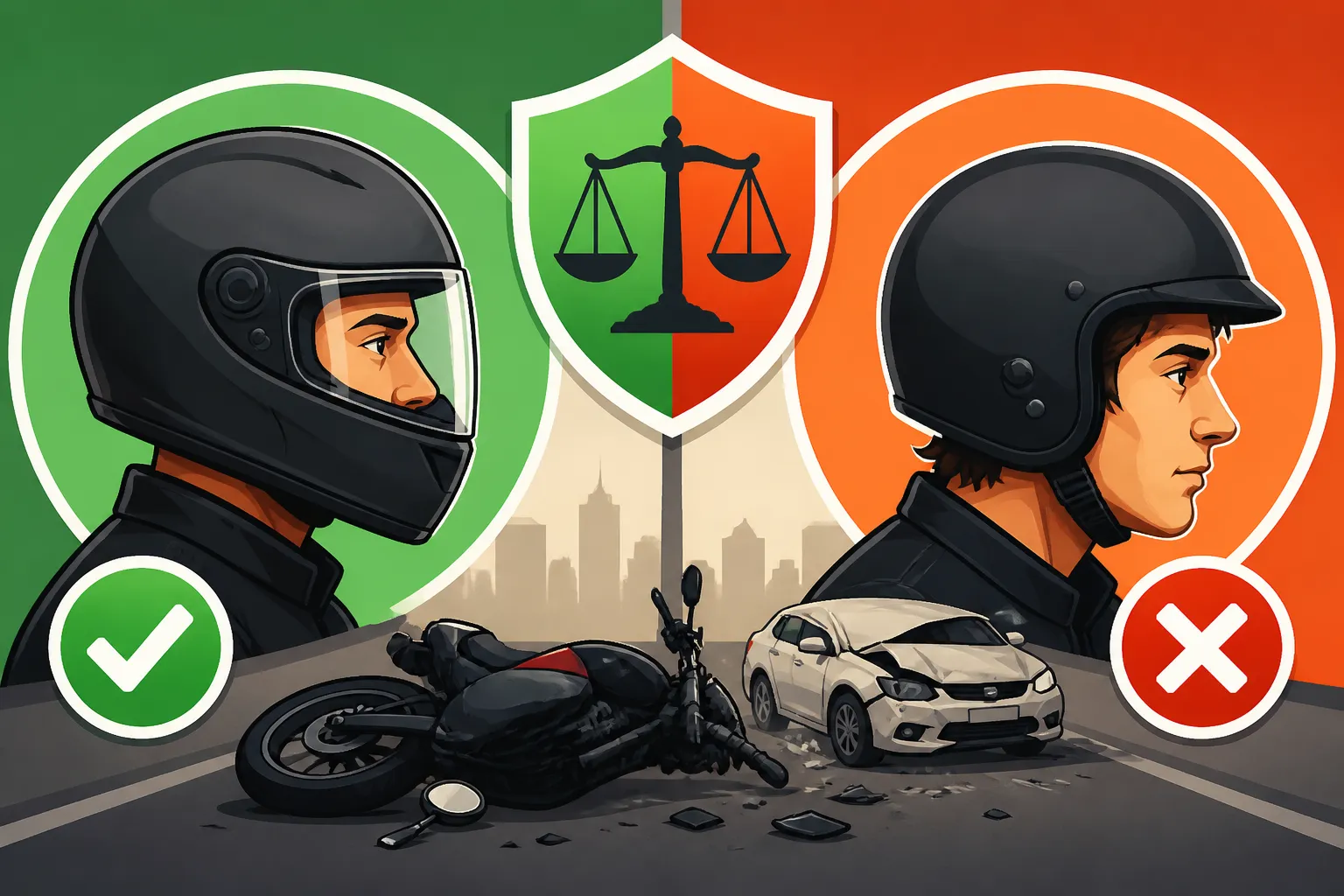
At its core, the difference between universal and partial helmet laws is about who is required to wear a helmet, if anyone. A universal helmet law means that all motorcycle operators and passengers, regardless of age or experience level, must wear a DOT-compliant helmet whenever they are riding. There are no exceptions for age, insurance coverage, or rider training. States like California and Georgia operate under universal laws, making helmet use a non-negotiable part of every ride. The reasoning is clear: helmets save lives and prevent devastating injuries, thereby reducing public health costs and long-term suffering. For riders in these states, the decision isn't really a decision at all – it's a legal requirement.
On the other hand, partial helmet laws are a bit more lenient, or at least they appear that way on the surface. These laws typically mandate helmet use only for specific groups of riders, most commonly those under a certain age (often 18 or 21). Beyond that age threshold, adult riders may have the option to ride without a helmet, provided they meet certain conditions. These conditions often include carrying a specific amount of medical insurance or having completed an approved safety course. States like Texas and Florida fall into this category. This approach attempts to balance individual liberty with public safety, acknowledging the desire for personal choice while still offering some protection to younger or less experienced riders. However, as we’ll explore, this "choice" can come with significant repercussions if you’re involved in a crash.
A Brief History of Helmet Legislation
The history of motorcycle helmet laws in the U.S. is surprisingly contentious and rooted deeply in both public health efforts and personal freedom debates. The initial push for universal helmet laws came in the 1960s. The federal government, through the National Highway Safety Act of 1966, incentivized states to enact universal helmet laws by threatening to withhold federal highway funds if they didn't comply. This led to nearly all states adopting universal helmet mandates by the early 1970s, significantly reducing motorcycle fatalities and head injuries.
However, the tide began to turn in the late 1970s. Rider advocacy groups, like the American Motorcyclist Association (AMA), championed the idea of individual choice, arguing that adult riders should have the right to decide whether to wear a helmet. This led to the repeal of the federal funding sanctions in 1976. Without the federal incentive, many states began to relax their universal laws, transitioning to partial helmet laws or, in a few cases, no helmet laws at all. This shift resulted in an unfortunate rise in motorcycle fatalities and head injuries in those states. Today, we're left with this complex system, where federal agencies still advocate for universal laws, but the decision ultimately rests with individual state legislatures. This historical back-and-forth highlights the ongoing tension between safety regulations and personal freedoms that riders often grapple with, especially when considering the legal aftermath of an accident.
Universal Helmet Laws: What They Entail
For many riders, especially those living in or traveling through states with universal helmet laws, the decision to wear a helmet is taken out of their hands entirely. This isn't just about personal safety; it's a direct legal requirement with tangible consequences for non-compliance, particularly if you find yourself in the unfortunate situation of a motorcycle accident.
Defining Universal Helmet Laws
A universal helmet law dictates that every single person riding a motorcycle, whether they are the operator or a passenger, must wear a protective helmet. There are no age carve-outs, no exceptions for experience, and no alternative requirements like carrying extra insurance. If you're on two wheels (or sometimes three, depending on the specific state law regarding trikes or autocycles) and moving, that helmet needs to be on your head and properly secured. For example, states like California have long upheld a universal helmet law, mandating helmet use for all riders since 1992. Similarly, New York and Georgia require helmets for all riders. These laws are typically quite strict, and police officers routinely enforce them.
The definition also extends to the type of helmet required. It's not just any helmet; it must be a DOT-compliant helmet. This means the helmet has met the safety standards set by the U.S. Department of Transportation. These standards relate to impact attenuation, penetration resistance, and retention system effectiveness. You'll usually see a DOT sticker on the back of a compliant helmet. Riding with a "novelty" helmet that doesn't meet these standards is often treated the same as riding without a helmet at all, both by law enforcement and, crucially, by insurance companies after an accident. This is why investing in quality, DOT-approved gear from a reputable retailer like Cycle Gear is not just a safety measure, but a legal safeguard.
The Rationale Behind Universal Mandates
The reasoning behind universal helmet laws is primarily rooted in public health and safety, supported by extensive research and statistics. Study after study consistently shows that motorcycle helmets are incredibly effective at preventing head injuries and fatalities. The National Highway Traffic Safety Administration (NHTSA) estimates that helmets saved thousands of lives annually. When all riders are required to wear helmets, the societal benefits are significant. Serious head injuries can lead to long-term disabilities, requiring extensive medical care, rehabilitation, and potentially lifelong support. These costs are often borne by public healthcare systems, insurance companies, and ultimately, taxpayers.
Beyond the individual protection and cost savings, universal helmet laws aim to create a consistent safety culture. They remove ambiguity, making it clear to everyone on the road, both riders and other drivers, what the expectation is. This can indirectly contribute to safer roads by emphasizing responsibility. For instance, in states with universal laws, there's less room for debate over whether a head injury could have been prevented had the rider chosen to wear a helmet. The law assumes they should have been wearing one, shifting the focus of an accident claim more squarely onto questions of fault and direct causation, rather than the rider's personal choice regarding safety gear.
Impact on Accident Claims in Universal States
If you're involved in a motorcycle accident in a state with universal helmet laws, your adherence to these laws can significantly impact your claim. If you were wearing a DOT-compliant helmet as required, and still sustained head injuries, it strengthens your position that you took all reasonable precautions. Your legal team can argue that your injuries were a direct result of the other party's negligence, and not due to any failure on your part to follow safety laws.
However, even in universal helmet law states, insurance companies can still try to employ the "helmet defense." This is where they argue that even with a helmet, your injuries could have been less severe, or that your specific helmet wasn't adequate, or that it wasn't worn correctly. While this argument is often weaker in universal law states, it's not impossible for insurers to attempt. For instance, they might scrutinize whether your helmet was properly buckled or if it was an older model past its effective lifespan. This is why having strong evidence – such as photos of your damaged, DOT-compliant helmet at the scene, and medical records detailing your injuries – is paramount. Your compliance with the law provides a strong foundation for your claim, but it doesn't automatically mean a smooth road to settlement. Understanding How Helmet Laws Affect Your Accident Claim is crucial, even when you've done everything right.
Partial Helmet Laws: The Age-Based Distinction
Stepping outside the universal mandates, we enter the realm of partial helmet laws. These laws represent a compromise, attempting to balance public safety with personal freedom, but they introduce a layer of complexity that riders need to be acutely aware of, especially when navigating the aftermath of a motorcycle accident.
Understanding Partial Helmet Requirements
Partial helmet laws, also known as age-specific or conditional helmet laws, generally require helmets only for riders below a certain age. This age cutoff is most commonly 18 or 21. For example, in Texas, riders under 21 must wear a helmet. However, if you're 21 or older, you can ride without a helmet if you've completed an approved motorcycle safety course or are covered by an insurance policy providing at least $10,000 in medical benefits for injuries incurred in a motorcycle accident. Florida has a similar law, requiring riders under 21 to wear helmets, but those 21 and older can ride helmet-free if they carry at least $10,000 in medical insurance benefits.
This means that for adult riders in these states, the choice appears to be theirs. However, it's a choice laden with specific legal conditions. Failing to meet these conditions while riding without a helmet can result in a traffic citation, and critically, it can severely jeopardize any accident claim you might have. It's not simply a matter of preference; it's about fulfilling specific statutory requirements that are often intertwined with financial responsibility or demonstrated safety knowledge. Riders need to be intimately familiar with the specific partial helmet laws in their state to avoid unexpected legal trouble.
The Debates and Compromises Leading to Partial Laws
The existence of partial helmet laws is a direct result of heated debates that pit personal liberty against public safety. Advocates for partial laws, often represented by rider groups, argue that experienced adult motorcyclists should have the freedom to make their own choices about protective gear. They emphasize the responsibility of the individual, suggesting that mandatory helmet laws infringe upon fundamental rights. This perspective often highlights the idea that riders are inherently aware of the risks and should be free to assume them.
Conversely, public health organizations, medical professionals, and safety advocates consistently push for universal laws, citing undeniable evidence that helmets prevent severe injury and death. They argue that the societal cost of catastrophic head injuries – financially, emotionally, and physically – far outweighs the argument for individual choice. Partial laws, therefore, represent a legislative compromise. They acknowledge the strong arguments for personal freedom for adults while attempting to mitigate some of the most severe risks by mandating helmets for younger, less experienced riders, or requiring financial preparedness (insurance) for those who choose not to wear one. This balancing act, however, often leads to situations where riders find themselves in a legal gray area after an accident, where their personal choice becomes a significant point of contention.
Navigating Accident Claims in Partial Law States
This is where things can get particularly complicated for riders in partial helmet law states. If you were legally riding without a helmet, but suffered a head injury in a collision, the insurance company for the at-fault driver will almost certainly invoke the "helmet defense." This defense argues that your injuries, particularly head and brain injuries, would have been prevented or significantly reduced had you been wearing a helmet, even if you weren't legally required to do so. This falls under the legal principle of "mitigation of damages" or Comparative Negligence in Motorcycle Accidents. The defense will essentially claim that you failed to take reasonable steps to protect yourself, and therefore, your compensation for head injuries should be reduced or even denied.
For example, imagine you're a 35-year-old rider in Florida, legally riding without a helmet because you have the required medical insurance. A distracted driver turns left in front of you, causing a serious collision. You suffer a traumatic brain injury. While the other driver is clearly at fault for the collision itself, their insurance company will likely argue that your brain injury, and the massive medical bills associated with it, are largely your fault for not wearing a helmet. They might try to reduce your settlement by a significant percentage, claiming you are partially responsible for the severity of your own injuries, even if not for the cause of the accident. This is a common tactic, and successfully navigating it often requires robust legal representation to challenge the defense's assertions and ensure you receive fair compensation.
The "Helmet Defense" and Its Impact on Your Claim
The "helmet defense" is perhaps one of the most insidious and frustrating tactics employed by insurance companies against injured motorcyclists. It's a strategic maneuver designed to shift blame, reduce payouts, and capitalize on the prevailing biases against riders. Understanding this defense is critical for anyone who might find themselves in an accident, regardless of their state's specific helmet laws.
What is the Helmet Defense
The helmet defense is an argument made by the defense (usually the at-fault driver's insurance company) in a personal injury lawsuit, claiming that a motorcyclist's injuries, particularly head injuries, were either caused or exacerbated by their failure to wear a helmet. Even in states where helmets are not universally mandated for adults, or even in states where they are, but the rider wasn't wearing one or wasn't wearing a DOT-compliant one, this defense can be raised. The core of the argument is that the rider failed to "mitigate their damages" – meaning they didn't take reasonable steps to prevent or lessen the severity of their injuries.
This defense isn't just about head injuries. Insurers may try to broaden the scope, suggesting that a rider's overall vulnerability without a helmet implies a disregard for safety that somehow contributes to all their injuries, or that their choice indicates a higher risk tolerance. It's a way to introduce the concept of "shared fault" for injuries, even if the other driver was 100% at fault for causing the crash itself. The insurance company hopes to convince a jury or judge that because the rider chose not to wear a helmet, they bear some responsibility for the extent of their harm, thus reducing the amount of compensation they are owed. This tactic relies heavily on prevailing societal stereotypes about motorcyclists being reckless, which is an unfortunate reality riders often face.
Proving Causation and Damages
To counter the helmet defense, an injured rider and their legal team must rigorously prove causation and damages. This means demonstrating, through strong evidence, that the other driver's negligence was the direct cause of the accident and your injuries, and that even if a helmet might have prevented some head trauma, it wouldn't have prevented all your injuries or the other economic losses you've suffered. This is where expert testimony becomes incredibly valuable.
Accident reconstruction experts can analyze the crash dynamics to show the forces involved and how specific injuries occurred, sometimes demonstrating that even with a helmet, certain injuries (like spinal injuries or broken bones from impact) were unavoidable. Medical experts can testify that the particular head injury suffered was due to extreme forces that even a helmet might not have completely negated, or that the injury itself isn't a head injury at all but something else, like Motorcycle Spinal Cord Injury: Claims and Compensation or other Common Motorcycle Accident Injuries. The burden of proof typically falls on the defense to prove that the helmet would have made a difference. They need to show a clear causal link between the lack of a helmet and the specific head injury sustained, which can be challenging, especially for severe crashes.
Strategies to Counter the Helmet Defense
Successfully fighting the helmet defense requires a proactive and strategic approach. Here are some key strategies:
- Document Helmet Use (If Applicable): If you were wearing a DOT-compliant helmet, take clear photos of it at the scene, especially if it's damaged. This serves as undeniable proof that you took precautions. Keep the damaged helmet as evidence.
- Seek Immediate Medical Attention: Get thoroughly examined after an accident, even if you feel okay. This establishes a clear medical record of your injuries directly after the crash, making it harder for insurers to argue later that injuries appeared due to delayed treatment or other factors.
- Focus on Unrelated Injuries: Many serious motorcycle accident injuries, such as severe road rash (like the kind that leads to Road Rash Injuries and Claims), broken bones, internal organ damage, or spinal cord injuries, are not preventable by a helmet. Your legal team can emphasize these injuries as fully compensable, regardless of helmet use.
- Highlight the Defendant's Negligence: Keep the focus on the at-fault driver's actions. Emphasize how their distracted driving, speeding, or failure to yield directly caused the crash, regardless of your helmet status.
- Expert Testimony: As mentioned, medical and accident reconstruction experts can provide scientific backing to counter the defense's claims, showing that either a helmet wouldn't have prevented the injury or that the injury is unrelated to helmet use.
- Understand Your State's Laws: Knowing if your state has The Helmet Defense Explained and how it is applied is crucial. Some states have laws specifically limiting when non-helmet use can be used against a rider. For instance, in some jurisdictions, not wearing a helmet can only reduce damages for head injuries, not other bodily injuries.
- Invest in Quality Gear: While not a legal counter-defense after the fact, wearing high-quality protective gear, easily found at places like Cycle Gear, significantly reduces the likelihood and severity of injuries, which in turn reduces the leverage the helmet defense has. Even if you don't wear a helmet in a partial law state, wearing a reinforced jacket, gloves, and boots demonstrates a commitment to safety that can subtly influence a jury or claims adjuster.
Ultimately, countering the helmet defense often comes down to strong evidence and skilled legal advocacy to challenge the insurance company's narrative and protect your right to full compensation.
State-Specific Nuances and Variations
Beyond the broad categories of universal and partial helmet laws, the legal landscape for motorcyclists is peppered with unique state-specific rules and interpretations. These nuances can dramatically affect a rider's liability and ability to recover damages after an accident.
Beyond Universal and Partial: Other Factors
While the universal vs. partial distinction covers the main requirements, some states layer on additional conditions or have unique interpretations. For instance, in Florida, adult riders aged 21 and over are not required to wear a helmet if they carry an insurance policy with at least $10,000 in medical benefits. This is a crucial condition; without that specific insurance, riding helmet-less is illegal, even for adults. This illustrates how closely intertwined helmet laws can be with insurance requirements, adding another layer of complexity for riders.
Furthermore, specific rules might apply to passengers. In some states with partial laws for operators, all passengers might still be required to wear helmets, regardless of age. Similarly, the laws might differentiate between two-wheeled motorcycles, three-wheeled motorcycles (trikes), or autocycles. What's required for a classic Harley-Davidson might be different for a Polaris Slingshot. Before hitting the road, especially for a cross-country adventure, it’s imperative to consult resources like Motorcycle Helmet Laws by State to understand every specific regulation that might apply to you and your ride.
The Role of DOT-Compliance and Novelty Helmets
It's not enough to simply wear a helmet; it must be a compliant helmet. The U.S. Department of Transportation (DOT) sets specific safety standards that helmets must meet. A DOT-compliant helmet undergoes rigorous testing for impact absorption, penetration resistance, and retention system strength. These helmets are designed to genuinely protect your head in a crash. You can usually identify a DOT-compliant helmet by the DOT sticker on the back and, often, a label inside the helmet indicating compliance with Federal Motor Vehicle Safety Standard (FMVSS) 218.
In stark contrast are "novelty helmets." These helmets, often resembling older-style or minimalist designs, typically do not meet DOT safety standards. They offer minimal, if any, protection in an accident. Riding with a novelty helmet is often viewed by law enforcement and insurance companies as equivalent to riding without a helmet at all. If you're involved in an accident while wearing a novelty helmet, the defense will almost certainly argue that it provided no meaningful protection, making the "helmet defense" even stronger against your claim. This is a critical point; while a full-face helmet might not be everyone's style, choosing a What Is a DOT-Compliant Helmet over a novelty helmet is a non-negotiable step for both safety and legal protection.
Out-of-State Riders and Reciprocity
One of the most common dilemmas for touring motorcyclists is understanding which state's helmet laws apply when they cross borders. The general rule is that you are subject to the motorcycle laws of the state you are currently riding in. So, if you're an adult rider from a partial law state like Texas and you ride into California, you must wear a helmet, even if you wouldn't need one back home. Conversely, if you're from California and ride into Texas, and you meet Texas's specific conditions for riding helmet-free (e.g., you're 21+ and have $10,000 medical insurance), you could legally ride without a helmet there.
However, the implications for an accident claim can still be complex. Even if you were legally helmet-free in a partial law state, an insurance company from a universal law state might still try to argue that a helmet would have reduced your injuries, playing on prevailing biases. It's crucial to be aware of the laws of neighboring states if you plan on extended rides. Always assume the stricter law applies, or carry a helmet just in case. The safest practice, regardless of the state's law, is to wear a DOT-compliant helmet on every ride.
Maximizing Your Claim Despite Helmet Law Complexities
Being involved in a motorcycle accident is inherently traumatic, and the legal aftermath can feel overwhelming, especially when confusing helmet laws are thrown into the mix. Even if there are complexities around helmet use, it's absolutely possible to build a strong claim. The key lies in strategic actions taken immediately after the crash and meticulous documentation.
Immediate Steps After an Accident
The moments immediately following a motorcycle accident are chaotic, but how you react can profoundly impact your future claim. Your absolute first priority is safety and your health. If you are injured, seek medical attention right away. Do not try to tough it out or assume minor aches will disappear. Adrenaline can mask serious injuries, some of which may have delayed symptoms.
Once you've ensured your safety and called emergency services, documentation becomes paramount. If you were wearing a helmet, and it was damaged, take photos of it at the scene. Capture it from multiple angles, showing any cracks, scrapes, or deformation. Also, photograph its DOT sticker if visible. This visually confirms your compliance and how the helmet absorbed impact. Collect contact information from any witnesses, as their testimony can corroborate your account of the accident and potentially counter any "rider bias" from police or insurance adjusters. Furthermore, remember not to admit fault to anyone at the scene, including the other driver, witnesses, or even police officers. Just state the facts. These steps are crucial for protecting your rights and ensuring you have the evidence needed to prove your case, as outlined in guides like What to Do Immediately After a Motorcycle Accident.
The Importance of Documentation
The success of any personal injury claim, especially a motorcycle accident claim, hinges on thorough and consistent documentation. This isn't just about the immediate aftermath; it's an ongoing process that supports your narrative and quantifies your losses.
Firstly, medical records are your foundation. Every doctor's visit, every treatment, every prescription, and every therapist's note creates an undeniable record of your injuries, pain, and recovery journey. Gaps in treatment can be exploited by insurance companies to argue your injuries weren't serious or were caused by something else. So, follow all medical advice and keep every piece of paper.
Secondly, police reports and witness statements are critical. The police report documents the official account of the accident, including who was cited, if anyone. Witness statements can provide unbiased accounts of what happened, often contradicting the other driver's version of events or insurance company narratives.
Thirdly, photos and videos are invaluable. This includes not just your helmet, but also your motorcycle's damage, the accident scene from various angles, road conditions, traffic signs, and any visible injuries on your body (e.g., road rash, bruises, swelling). Ongoing photos of your recovery can also be compelling evidence of your pain and suffering.
Finally, keep a personal injury journal. Document your daily pain levels, limitations, emotional distress, and how your injuries impact your daily life, hobbies, and work. This "pain and suffering" evidence is often difficult to quantify but is a significant component of your claim.
Why Legal Counsel is Crucial
Navigating the complexities of motorcycle accident claims, especially with the added layer of helmet laws and the notorious "helmet defense," is not something you should attempt alone. An experienced motorcycle accident lawyer is your strongest ally.
A seasoned attorney understands the specific helmet laws in your state and how they apply to your case. They know how insurance companies operate, how they try to lowball settlements, and how they attempt to use the helmet defense to reduce payouts. They can strategically counter these tactics, gather necessary evidence, and even bring in expert witnesses (like accident reconstructionists or medical professionals) to bolster your claim. For instance, a skilled lawyer can dissect the arguments of How Comparative Negligence Reduces Your Payout and work to minimize the percentage of fault assigned to you, even if you were partially at fault due to helmet use or other factors.
Furthermore, a lawyer handles all communication with insurance adjusters, protecting you from inadvertently saying something that could harm your case. They calculate the full value of your damages, including economic losses (medical bills, lost wages, property damage) and non-economic losses (pain and suffering, emotional distress, loss of enjoyment of life). By taking on the legal burden, your attorney allows you to focus on what truly matters: your physical and emotional recovery.
Broader Protective Gear and Your Accident Claim
While helmets rightfully get a lot of attention in the discussion of motorcycle safety and accident claims, they are just one component of a comprehensive safety strategy. The full spectrum of protective gear plays a crucial role not only in preventing injuries but also in strengthening your legal position after a crash.
Beyond Helmets: The Value of Full Riding Gear
True motorcycle safety extends far beyond just wearing a helmet. A full ensemble of riding gear acts as your second skin, offering crucial protection against the harsh realities of an asphalt encounter. This includes:
- Riding Jackets: Typically made from abrasion-resistant materials like leather or specialized textiles (e.g., Cordura, Kevlar), these jackets often include CE-approved armor at key impact points like shoulders, elbows, and back. They dramatically reduce the severity of Road Rash Injuries and Claims and can prevent fractures.
- Riding Pants: Similar to jackets, these provide abrasion resistance and impact protection for your hips and knees. Regular jeans offer virtually no protection in a slide.
- Gloves: Crucial for protecting your hands, which are often the first point of contact with the ground in a fall. Good gloves offer abrasion resistance and knuckle protection.
- Boots: Sturdy, ankle-high riding boots protect your feet and ankles from impact, crushing injuries, and abrasion. They also offer better grip on the pegs and control over the bike.
Investing in high-quality gear from reputable brands, easily found at stores like Cycle Gear, isn't just about looking the part; it's a vital part of your personal safety system. This gear is designed to literally save your skin, bones, and potentially your career if you depend on your hands or feet for work.
How Gear Affects Injury Severity and Damages
The link between wearing full protective gear and reducing injury severity is direct and undeniable. While a helmet protects your head, a jacket minimizes road rash on your torso and arms, gloves save your hands, and boots shield your feet. This reduction in injury severity has a significant impact on your accident claim:
- Less Severe Injuries: If your injuries are less severe (e.g., minor road rash instead of deep tissue damage requiring skin grafts), your medical bills will likely be lower, and your recovery time shorter. This translates to lower overall economic damages, but also less pain and suffering. However, it also means insurance companies have less to fight against, and less room to argue that you contributed to the severity of your own injuries.
- Strengthening Your Claim: When you present evidence of wearing full protective gear, it demonstrates to insurance adjusters, judges, and juries that you are a responsible rider who takes safety seriously. This can subtly, but powerfully, counter negative stereotypes about motorcyclists and make it harder for the defense to argue that you were negligent or reckless, even if they try to deploy the helmet defense. It shows you were doing everything in your power to protect yourself.
- Direct Impact on Damages: While your gear protects you, it also incurs damage. The cost of replacing expensive, specialized riding gear that was destroyed in an accident is a legitimate economic damage that should be included in your claim.
Conversely, if you're riding without adequate gear and suffer severe road rash, broken bones from exposed limbs, or extensive soft tissue damage, the defense may try to argue that these injuries could have been prevented or minimized had you worn proper protection. This can lead to a reduction in your compensation for those specific injuries under the principle of comparative negligence.
Documenting Gear Damage as Evidence
Just like with a damaged helmet, your damaged riding gear can be powerful physical evidence in your accident claim. After an accident, if you are able and it is safe to do so, document all damage to your jacket, pants, gloves, and boots with clear, detailed photographs. Show tears, scuffs, melted spots, and any signs of impact.
This documentation serves multiple purposes:
- Proving Impact Force: Damaged gear visually illustrates the force and severity of the impact. A jacket shredded from a slide clearly shows the abrasive forces at play, corroborating your account of the accident's intensity.
- Supporting Injury Claims: The areas where your gear is damaged correspond to where your body sustained impact or abrasion. If your jacket is torn at the elbow, and you have an elbow injury, the damaged jacket provides compelling visual evidence of how that injury occurred and that the gear attempted to protect you.
- Demonstrating Precaution: Showing that your gear was damaged while protecting you reinforces your image as a responsible rider. It demonstrates that you proactively minimized risk, making it harder for the defense to paint you as reckless or irresponsible. This can be especially important in states where Motorcycle Accident Liability: A Complete Guide might lean towards rider bias.
- Calculating Property Damage: The cost to replace your destroyed gear is a valid part of your property damage claim. Be sure to keep receipts for your original gear purchases and get quotes for replacement costs.
Always keep your damaged gear, rather than discarding it. It can be a vital piece of physical evidence that speaks volumes about the crash dynamics and your proactive efforts to protect yourself.
Disclaimer
Please remember, this article provides general information and is not legal advice. Motorcycle accident laws, including helmet and gear requirements, vary significantly by state and can be complex. The information provided here should not be used as a substitute for professional legal counsel. If you've been involved in a motorcycle accident, it is highly recommended to consult with a qualified attorney in your jurisdiction to discuss the specifics of your case and understand your legal rights and options.