Motorcycle Helmet Law in Missouri
Riding the open roads of Missouri on your motorcycle offers an unparalleled sense of freedom, but that freedom comes with serious responsibilities, especially when it comes to safety and the law. Many riders wonder about the exact requirements for helmets in the state and, more critically, how those laws might impact them if the unthinkable happens and they're involved in an accident. This comprehensive guide is here to clarify Missouri's motorcycle helmet law, shed light on how it can affect your personal injury claim, and equip you with the knowledge to protect yourself both on the road and in the aftermath of a crash.
Unpacking Missouri's Motorcycle Helmet Law: Who Needs to Wear One?
Let's cut right to it, because there's often a lot of confusion floating around, particularly with neighboring states having different rules. In Missouri, the law is quite clear and, for many years, it has been considered one of the stricter states. There's no wiggle room or special exemptions based on age or insurance coverage when it comes to who must wear a helmet.
The Specifics of Missouri's Universal Helmet Law
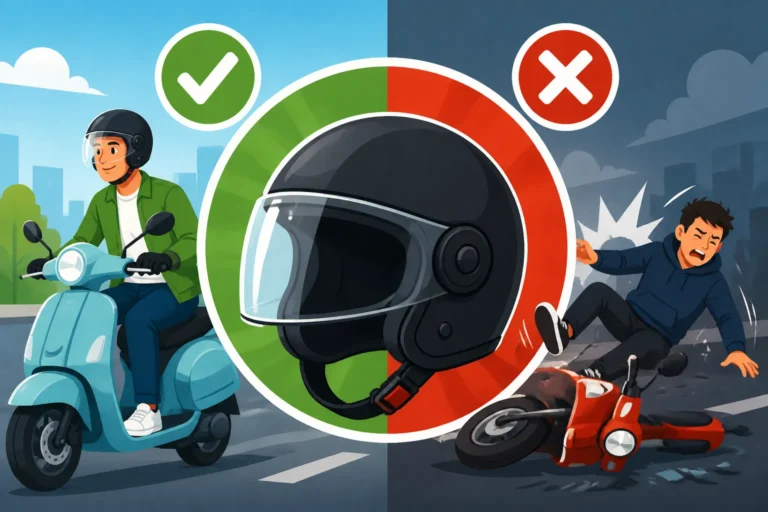
Missouri operates under a universal helmet law, which means every single person riding a motorcycle in the state, whether they are the operator or a passenger, is legally required to wear a protective helmet. This isn't just a suggestion; it's a hard and fast rule outlined in Missouri Revised Statute (RSMo) 302.020. This statute essentially states that no person shall operate or ride as a passenger on any motorcycle or motor-driven cycle upon any highway unless he or she is wearing protective headgear.
This law was actually reinstated in 2020 after a period where riders 21 and older could ride without a helmet if they had health insurance. That exemption is gone. Now, it's back to a universal requirement for everyone, regardless of age, experience, or insurance status. This change was largely driven by safety concerns and the undeniable statistics showing increased head injury severity when helmets are not worn. So, if you're planning a ride through the Ozarks, a quick trip down Highway 61, or just commuting in St. Louis or Kansas City, that helmet needs to be securely fastened. For a broader overview of how different states approach this, you might find our article on Motorcycle Helmet Laws by State quite insightful.
Dispelling Myths: Age and Experience Don't Exempt You
It's common to hear riders say, "Oh, I'm over 21, I don't need one," or "I've been riding for decades, I know what I'm doing." While experience is invaluable, and age often brings wisdom, neither provides an exemption from Missouri's universal helmet law. This is a critical point that often catches riders off guard, especially those who might be visiting from states with more lenient partial helmet laws, where only younger riders are mandated to wear helmets.
Imagine you're a seasoned rider from Iowa, where riders over 21 aren't required to wear helmets. You cruise into Missouri for a rally, enjoying the scenic routes, and suddenly you find yourself pulled over. The fact that you're an experienced rider or that your home state has different rules won't matter to a Missouri State Highway Patrol officer. The law applies to everyone on Missouri roads. This absolute nature of the law is designed to maximize safety for all riders, acknowledging that even the most skilled operators can be involved in unforeseen accidents.
What About Passengers?
The law isn't just for the person holding the handlebars. It explicitly includes passengers. So, if you're taking a friend or loved one for a ride, they also need to be wearing a DOT-compliant helmet. This makes perfect sense when you think about it; a passenger is just as vulnerable, if not more so, in the event of a crash. Their safety is paramount, and the law reflects that. Ensuring your passenger is properly geared up, including a helmet, is part of your responsibility as the motorcycle operator.
This also extends to what type of helmet. It needs to be one that meets safety standards, not just any head covering. We’ll delve deeper into what makes a helmet compliant in a bit, but for now, just remember: if there's a head on your motorcycle, there needs to be a legal helmet on that head.
Beyond the Ticket: How Not Wearing a Helmet Impacts Your Accident Claim in Missouri
Getting a ticket for not wearing a helmet is one thing, and it's certainly an inconvenience and a fine you'd rather avoid. But the repercussions can be far more serious if you're involved in a motorcycle accident while not wearing a helmet. This is where the legal and financial implications really start to hit home, potentially jeopardizing your ability to recover compensation for your injuries.
The "Helmet Defense" and Comparative Negligence
In Missouri, like many other states, if you are injured in an accident and weren't wearing a helmet, the opposing party (usually the at-fault driver's insurance company) will almost certainly try to invoke what's known as the "helmet defense." This defense argues that your injuries, particularly head injuries, would have been less severe or even avoided entirely had you been wearing a helmet. Even if the other driver was clearly at fault for causing the crash, the insurance company will argue that your failure to wear a helmet contributed to the severity of your injuries.
Missouri operates under a system of pure comparative negligence. This means that if you are found to be partially at fault for your injuries, your total damages award will be reduced by your percentage of fault. For example, if a jury determines your damages are $100,000, but you were 20% at fault for your head injury due to not wearing a helmet, your award could be reduced by $20,000, leaving you with $80,000. It's a tricky area, and insurance companies are highly skilled at using this to reduce their payout. Understanding How Helmet Laws Affect Your Accident Claim is crucial, as this defense can significantly impact your settlement.
Real-World Scenarios: How Insurers Exploit Non-Compliance
Let's imagine a scenario. You're riding your Harley-Davidson on Highway 30 outside St. Louis, and a distracted driver in an SUV suddenly merges into your lane without looking, causing a collision. You're thrown from your bike, sustaining a broken arm, severe road rash, and a concussion. If you weren't wearing a helmet, even though the driver was 100% at fault for the crash itself, their insurance company (like GEICO or Progressive) will immediately seize on your non-compliance.
They'll argue that while the driver caused the accident, your concussion and perhaps other related head trauma could have been prevented or mitigated by a helmet. They might even try to suggest that a portion of your emotional distress or other non-economic damages related to the head injury should be reduced. This isn't just about head injuries either; some insurers might try to broadly apply the principle of negligence to your overall claim, even if your other injuries (like the broken arm) are unrelated to helmet use. They'll paint a picture that you were irresponsible, hoping to sway a jury or, more commonly, pressure you into accepting a much lower settlement offer. This is precisely How Insurers Use Rider Stereotypes Against You.
Proving Your Injuries and Damages with or without a Helmet
Regardless of helmet use, documenting your injuries meticulously is paramount. After any motorcycle accident, your first priority should always be seeking immediate medical attention, even if you feel fine. Adrenaline can mask pain, and some serious injuries, especially head trauma, might not present symptoms right away. A doctor's diagnosis, treatment records, and prognosis will be critical evidence.
If you were wearing a helmet, these records, combined with photos of your damaged helmet, can actually strengthen your case by showing you took precautions and that the impact was severe despite your efforts. If you weren't wearing a helmet, the challenge becomes proving that your injuries, particularly head injuries, were unavoidable given the circumstances of the crash, or that the other driver's negligence was so egregious that it overrides the helmet defense. This is where expert testimony, like from accident reconstructionists or medical professionals, can be vital to demonstrate the direct causal link between the other driver's actions and your specific injuries, regardless of helmet use. Our guide on Motorcycle Accident Evidence for Proving Fault offers more detailed advice on gathering crucial information.
Table: Missouri Motorcycle Helmet Law and Claim Impact
| Aspect | Missouri Helmet Law Requirement | Impact on Injury Claim (if violated) |
|---|---|---|
| Operator | Universal: Required for all riders, regardless of age. | Opposing party will use "helmet defense" to reduce compensation for head/neck injuries. Could face a reduction in overall settlement. |
| Passenger | Universal: Required for all passengers, regardless of age. | Similar to operator, their claim for head/neck injuries can be reduced. Operator might also face liability for allowing non-compliant passenger. |
| Helmet Type | Must be DOT-compliant. | Non-DOT helmets treated similarly to no helmet by insurers, potentially leading to reduced compensation. |
| Legal Penalty (No Helmet) | Traffic citation, fine, points on license. | Admitting fault in part or entirely by violating traffic law can complicate proving the other driver's sole fault in a crash. |
| Comparative Negligence | Pure Comparative Negligence state. | Your percentage of fault for injury severity (due to not wearing helmet) will directly reduce your total awarded damages. |
Understanding DOT Compliance and Choosing the Right Helmet
It's not enough to simply put something on your head. The law specifies that the helmet must be a "protective helmet," which in practical terms means it needs to meet certain safety standards. This is where DOT compliance comes into play, and it's a distinction every rider in Missouri needs to understand.
What Makes a Helmet DOT-Compliant?
The term "DOT-compliant" refers to helmets that meet the safety standards set by the U.S. Department of Transportation's Federal Motor Vehicle Safety Standard (FMVSS) 218. These standards are rigorous, covering things like impact attenuation (how well the helmet absorbs shock), penetration resistance, chin strap strength, and peripheral vision. When a helmet is DOT-compliant, it means it has undergone testing and is certified to offer a minimum level of protection in a crash. You'll usually find a "DOT" sticker on the back of such helmets.
A DOT-compliant helmet will have a thick inner liner (typically 1 inch or more of firm polystyrene foam), a sturdy chin strap with strong rivets, and it will generally feel substantial. Brands like Shoei, Arai, Bell, and HJC are well-known for producing a wide range of DOT-compliant helmets, often exceeding the minimum standards. If you're unsure, check for the DOT certification sticker, and if you're shopping in person, ask the staff at a reputable motorcycle gear store like Cycle Gear; they'll be able to guide you toward certified options. For more details on what this actually entails, check out our guide on DOT Helmet Requirements Explained.
The Dangers of Novelty Helmets
On the flip side, we have "novelty helmets." These are often lightweight, minimalist shells that might look cool or fulfill a certain aesthetic, but they do not meet DOT safety standards. They usually lack the thick impact-absorbing liner, have flimsy chin straps, and offer virtually no protection in a crash. Many times, they'll have a fake "DOT" sticker that can be easily peeled off, or no sticker at all.
Riding with a novelty helmet in Missouri is essentially the same, from a legal and safety standpoint, as riding without a helmet. If you get into an accident wearing one, the "helmet defense" will be just as aggressively applied by insurance companies. They'll argue that your novelty helmet offered no real protection, contributing to the severity of your injuries. This can devastate your Motorcycle Accident Settlement Process Explained, as insurers will use any avenue to reduce payouts. It’s important to understand the significant Novelty Helmets and Legal Risk they pose.
Investing in Your Safety and Your Claim
Choosing a quality, DOT-compliant helmet isn't just about avoiding a ticket or satisfying a legal requirement; it's about protecting your brain, your future, and your ability to pursue a successful personal injury claim. A well-fitting, full-face DOT-compliant helmet offers the best protection against head and facial injuries, which are often the most devastating in motorcycle crashes. Investing in good gear is like investing in an insurance policy for your body.
When you're shopping for new gear, consider visiting a local Cycle Gear store in Missouri or browsing their extensive online selection. They carry a wide variety of DOT-approved helmets across different styles and price points, and their staff can help you find the right fit and type for your riding style. Proper Motorcycle Safety Gear and Legal Protection extends beyond just helmets; it includes jackets, gloves, and boots that can minimize road rash and other injuries, which can also play a role in how your injuries are perceived during a claim. Remember, protecting yourself physically also strengthens your position legally.
Protecting Yourself: Steps After a Missouri Motorcycle Accident
Even with all the precautions in the world, accidents can still happen. Knowing what to do in the immediate aftermath of a motorcycle crash in Missouri is critical, not just for your health, but also for preserving any future legal claim you might have. Every step you take (or don't take) can significantly impact the outcome.
Immediate Actions to Take at the Scene
The moments immediately following a motorcycle accident are often chaotic and frightening, but clear-headed actions can make a huge difference.
- Prioritize Safety and Seek Medical Attention: First and foremost, check yourself and anyone else involved for injuries. If you are able, move yourself and your motorcycle to a safe location out of traffic, but only if it's truly safe to do so. Call 911 immediately to report the accident and request an ambulance if anyone is injured. Even if you feel okay, it's always best to be checked by paramedics. Refusing medical attention at the scene can be used against you later by insurance companies trying to downplay your injuries.
- Contact Law Enforcement: In Missouri, if an accident involves injury, death, or property damage exceeding $500, you are legally required to report it to the police. Call the Missouri State Highway Patrol or local police department. A police report, while not always definitive on fault, provides an official record of the incident, gathers basic facts, and identifies witnesses. Be factual, but avoid admitting fault, even implicitly. You can find more comprehensive advice in our guide, What to Do Immediately After a Motorcycle Accident.
- Exchange Information: Get the name, contact information, insurance details, and license plate number of the other driver(s). If there were any passengers, get their information too.
- Document the Scene: This is absolutely crucial. Take as many photos and videos as you can with your phone. Capture the position of all vehicles, damage to your motorcycle and the other vehicle(s), skid marks, road conditions, traffic signs, weather, and any visible injuries you or your passenger sustained. Also, photograph the other driver’s license plate, insurance card, and driver's license. If you were wearing a helmet, take clear photos of any damage to it, as this can be vital evidence in demonstrating impact severity. For a detailed list of what to photograph, see Photos to Take to Prove Motorcycle Fault.
Documenting Everything for Your Claim
The aftermath of an accident involves a lot of paperwork and communication. Keep everything organized.
- Medical Records: Continue all recommended medical treatment. Follow your doctor's orders diligently. Keep a detailed record of every doctor's visit, therapy session, prescription, and medical bill. This documentation directly supports your claim for economic damages and helps prove the extent of your injuries. Gaps in treatment can be used by insurance companies to argue that your injuries weren't serious or weren't caused by the accident.
- Lost Wages Documentation: If your injuries force you to miss work, keep records of your missed days, hourly wage or salary, and any lost opportunities for overtime or bonuses. Pay stubs, tax returns, and letters from your employer will be necessary to prove your lost earning capacity.
- Journal Your Recovery: Maintain a journal detailing your daily pain levels, limitations, emotional distress, and how your injuries are impacting your daily life and hobbies. This personal account can be powerful evidence for non-economic damages like pain and suffering.
- Communications Log: Keep a log of all communications with insurance adjusters, medical providers, and legal professionals. Note the date, time, who you spoke with, and a summary of the conversation. Never give a recorded statement to the other driver's insurance company without consulting a legal professional. They are not on your side and will use anything you say against you.
When to Consult a Legal Professional
Navigating a motorcycle accident claim in Missouri can be incredibly complex, especially when factors like helmet laws and comparative negligence come into play. Even if you think your case is straightforward, insurance companies are experts at minimizing payouts. They often have significant resources dedicated to finding reasons to deny or reduce your claim.
It's almost always in your best interest to consult with an experienced Missouri motorcycle accident attorney as soon as possible after a crash. They can help you understand your rights, evaluate the strength of your claim, gather necessary evidence, deal with aggressive insurance adjusters, and negotiate for the fair compensation you deserve. An attorney can effectively counter the "helmet defense" and argue against attempts to unfairly assign you fault. Furthermore, they will ensure you don't miss crucial deadlines, like Missouri's five-year statute of limitations for personal injury claims. Our article, When to Hire a Motorcycle Accident Lawyer, provides a more in-depth discussion on this important decision.
Disclaimer
Please remember that this article provides general information and insights into Missouri motorcycle helmet laws and their potential impact on accident claims. It is not intended as legal advice. Laws can change, and every accident case is unique. For personalized legal guidance regarding your specific situation, it is always recommended to consult with a qualified attorney in Missouri who specializes in motorcycle accident law.