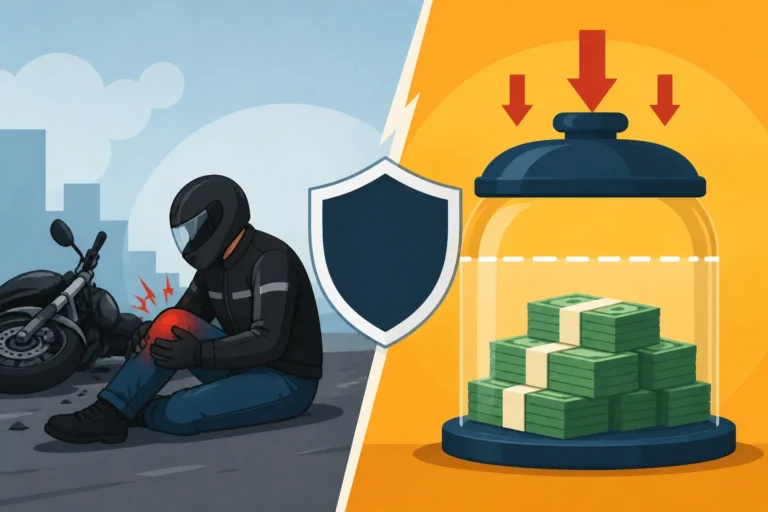
Average Settlement for a Motorcycle Facial Injuries
Motorcycle accidents often leave riders with devastating injuries, and among the most traumatic are facial injuries. The sheer thought of disfigurement, the pain, the lengthy recovery, and the sheer cost can be overwhelming, leaving many wondering what a fair settlement might look like. This comprehensive guide aims to shed light on the complex factors that influence the average settlement for motorcycle facial injuries, helping you understand your potential claim and the path ahead.
Understanding the Severity of Facial Injuries in Motorcycle Accidents
When you hit the asphalt on a motorcycle, your face, despite a helmet, is incredibly vulnerable. Unlike a car, there's no steel frame or airbag to absorb impact. The direct trauma can lead to a horrifying array of injuries, from minor lacerations to severe bone fractures and permanent disfigurement. These aren't just cosmetic issues; they impact your ability to eat, speak, breathe, and even see, profoundly affecting your daily life.
Types of Facial Injuries and Their Impact
Motorcycle crashes can inflict a wide spectrum of facial injuries, each carrying its own unique set of challenges and implications for recovery and settlement. You might be dealing with anything from road rash that strips away layers of skin to complex fractures that require extensive surgical intervention.
One of the most common, yet often underestimated, is severe road rash. While it might sound superficial, road rash on the face can be incredibly painful, lead to deep infections, and result in significant scarring or even keloid formation. When the face impacts the ground, it acts like sandpaper, grinding away skin, muscle, and even bone in severe cases. This kind of injury often requires meticulous wound care, debridement, and potentially skin grafts, especially for deeper third-degree road rash. The long-term impact isn't just physical discomfort; it often involves visible scarring that can last a lifetime, changing a person's appearance and self-perception. For more insight into these types of injuries, you might find our guide on Road Rash Injuries and Claims helpful.
Beyond skin deep, facial fractures are a brutal reality for many riders. These can include fractured jaws (mandible or maxilla), broken orbital bones around the eyes, nasal fractures, or even fractures of the cheekbones (zygomatic arch). A broken jaw can make eating and speaking excruciatingly difficult, often requiring wiring the jaw shut for weeks, drastically altering diet and communication. Orbital fractures can impair vision, lead to double vision, or cause eye displacement. The implications go far beyond the initial pain; these fractures often require complex reconstructive surgery involving plates, screws, and extensive healing time, sometimes even leading to permanent facial asymmetry or nerve damage.
Immediate and Long-Term Medical Treatment
The journey after a facial injury from a motorcycle accident is almost always long and arduous, starting with immediate emergency medical care and often extending into years of specialized treatments. The costs associated with this care quickly add up and form a significant part of any settlement.
Emergency treatment is just the beginning. At the scene, paramedics will prioritize stabilizing your condition, especially if there's significant bleeding or airway obstruction. Once at the hospital, you'll likely undergo extensive imaging like CT scans to identify the full extent of bone fractures and internal damage. Surgeons, often a team including oral and maxillofacial surgeons, plastic surgeons, and ophthalmologists, will work to reconstruct the damaged areas. This could involve setting broken bones, repairing lacerations, and performing initial skin grafts. The initial surgery might be extensive, but it's rarely the final step.
The long-term treatment plan can be even more complex and costly. You might face multiple reconstructive surgeries to correct deformities, improve function, or minimize scarring. Dental injuries, which are also common, often require extensive and expensive restorative work, like implants, crowns, or bridges, which may need replacement over your lifetime. Physical therapy or occupational therapy might be necessary to regain function in your jaw or facial muscles. Additionally, psychological counseling is frequently required to cope with the emotional distress, body image issues, and PTSD that often accompany severe facial trauma. Understanding How Medical Bills Affect Your Settlement is crucial here, as these ongoing costs need to be thoroughly documented and projected.
Key Factors Influencing Your Settlement for Facial Injuries
Determining the "average" settlement for motorcycle facial injuries is notoriously difficult because every case is unique. However, several critical factors consistently play a pivotal role in shaping the final payout. These factors range from the meticulous documentation of your injuries to the often-invisible toll the trauma takes on your emotional well-being.
Injury Documentation and Medical Records
In any personal injury claim, and especially one involving severe facial trauma, robust documentation of your injuries and their treatment is paramount. Without clear, comprehensive records, insurance companies will seize any opportunity to downplay the severity or dispute the necessity of your medical care.
From the moment you receive emergency treatment, every medical record becomes a vital piece of evidence. This includes ambulance reports, emergency room notes, diagnostic imaging results (X-rays, CT scans, MRIs), surgical reports, discharge summaries, physical therapy notes, and prescriptions. It's not enough to simply have these records; they must paint a consistent and compelling picture of your injuries, the pain you've endured, and the impact on your life. Photos of your injuries, taken at various stages of healing, are also incredibly powerful. High-resolution images from the scene, the ER, post-surgery, and during recovery can visually demonstrate the extent of your suffering and disfigurement. For a more detailed look at what you need to collect, our resource on How to Document Injuries for a Claim can provide excellent guidance.
Beyond basic medical records, expert medical testimony is often critical for significant facial injury claims. Your treating physicians, and sometimes independent medical examiners, can provide written reports or even testify in court about the nature and extent of your injuries, the necessity of past and future treatments, and the long-term prognosis. They can explain complex medical procedures in understandable terms and project future medical expenses, which is vital when calculating a fair settlement. Without this thorough and expert documentation, it becomes incredibly challenging to justify the significant compensation often required for such debilitating injuries.
Impact on Quality of Life and Psychological Trauma
While medical bills and lost wages represent concrete, calculable losses, the profound impact of facial injuries on your quality of life and psychological well-being often represents the largest portion of a settlement. These non-economic damages are harder to quantify but are no less real or deserving of compensation.
Facial injuries don't just affect your physical appearance; they can dramatically alter how you interact with the world. Difficulty eating, speaking, or even smiling can lead to social isolation and a severe blow to self-confidence. Imagine living with chronic pain from nerve damage or jaw issues, or the constant self-consciousness of visible scarring. These daily struggles are a form of suffering that impacts your personal relationships, professional opportunities, and overall enjoyment of life. This area of compensation is generally referred to as Pain and Suffering Damages Explained, which includes emotional distress, disfigurement, and loss of enjoyment.
The psychological toll can be immense. Many accident victims experience post-traumatic stress disorder (PTSD), anxiety, and depression following such a traumatic event and subsequent physical changes. The experience of seeing your own face altered, or dealing with the stares and questions of others, can lead to significant mental health challenges that require ongoing therapy and support. Documenting this psychological trauma through therapist notes, psychiatric evaluations, and even a personal injury journal detailing your emotional struggles is just as important as documenting physical injuries. These are very real and debilitating losses that must be factored into your total damages.
Fault and Liability Considerations
Even with severe facial injuries, the amount you can recover in a settlement is heavily influenced by who was at fault for the motorcycle accident. If you are found to share some degree of responsibility, your potential compensation could be significantly reduced, or even barred entirely in some states.
Most states operate under some form of comparative negligence, which means that the compensation you receive can be reduced by your percentage of fault. For instance, in a state like California, which follows pure comparative negligence, if your facial injuries are valued at $500,000 but you are found to be 20% at fault for the crash (perhaps you were speeding slightly), your settlement would be reduced by 20% to $400,000. Other states use modified comparative negligence rules, such as the 50% or 51% rule, where if your fault meets or exceeds a certain threshold, you might be completely barred from recovery. This is a critical aspect that insurers will almost always try to leverage against you. You can learn more about how this impacts your claim in our article on How Comparative Negligence Reduces Your Payout.
Proving the other driver's fault is therefore paramount. This involves collecting evidence like police reports, witness statements, traffic camera footage, and accident reconstruction expert analysis. If the other driver was clearly negligent – for example, they made an illegal left turn in front of you, were distracted, or driving under the influence – establishing their liability becomes more straightforward. However, if fault is disputed, or if the insurer tries to use common rider stereotypes against you, it can complicate the claim significantly. This is why a thorough investigation into Who Is at Fault in a Motorcycle Accident is essential for any motorcycle accident claim.
Calculating Damages: Economic vs. Non-Economic Losses
When you're reeling from a motorcycle accident that left you with facial injuries, the last thing you want to think about is money. But understanding how your damages are calculated is crucial for ensuring you receive fair compensation. Your losses fall into two main categories: economic, which are tangible costs, and non-economic, which cover the intangible suffering and impact on your life.
Economic Damages: The Tangible Costs
Economic damages are the straightforward, calculable financial losses you incur as a direct result of your facial injuries. These are the bills and receipts that prove your financial hardship and represent a concrete figure for compensation.
The most significant component of economic damages for facial injuries is often medical expenses. This includes everything from the initial ambulance ride and emergency room visit to multiple surgeries, specialist consultations (e.g., plastic surgeons, oral surgeons, ophthalmologists, dermatologists), dental work, prescription medications, physical therapy, and even future medical treatments like scar revision or further reconstructive surgeries. These costs can easily run into hundreds of thousands of dollars, especially if long-term care or adaptive equipment is needed. Keeping meticulous records of all medical bills and receipts, and obtaining projections for future necessary treatments, is non-negotiable. Our article on Types of Damages in a Motorcycle Accident Claim offers a broader overview.
Beyond medical costs, lost wages and loss of earning capacity are also critical. If your facial injuries prevented you from working, even temporarily, you deserve compensation for those lost earnings. This includes not just your base salary but also bonuses, commissions, and benefits. For self-employed riders, calculating lost income can be more complex but is equally important. If your injuries are so severe that they permanently affect your ability to perform your job or limit your future career potential – for example, if a severe facial disfigurement impacts a public-facing role – you can claim for loss of earning capacity. This requires an economic expert to project your lost future income, which can be a substantial sum over a lifetime.
Non-Economic Damages: The Intangible Toll
While economic damages cover your direct financial losses, non-economic damages address the profound and often lifelong suffering and impact on your quality of life that facial injuries almost certainly cause. These are inherently subjective and more challenging to assign a monetary value to, yet they are crucial for truly comprehensive compensation.
The primary non-economic damage in a facial injury case is pain and suffering. This encompasses not only the intense physical pain from the initial trauma and subsequent surgeries but also the chronic pain you might endure for months or years. Imagine the constant ache from a jaw fracture or the nerve pain from facial trauma. Beyond physical pain, emotional distress is a massive component. This includes the psychological anguish, anxiety, depression, and even PTSD that can stem from the accident itself and the dramatic change in your appearance. The fear, sadness, and frustration of facing a long recovery and an altered self-image are all part of this. For a deeper dive into this, check out Emotional Distress Damages.
Furthermore, disfigurement is a profound and unique aspect of facial injuries. Permanent scarring, facial asymmetry, or altered features can lead to a significant loss of enjoyment of life. This might manifest as social anxiety, avoidance of public situations, or even difficulty in intimate relationships. The inability to fully express emotions due to nerve damage or stiffness in facial muscles also falls under this category. While no amount of money can truly restore your previous appearance or erase the trauma, compensation for these non-economic damages aims to acknowledge and alleviate the immense suffering you've endured and will continue to experience. Insurance companies often use a "multiplier method" to calculate pain and suffering, multiplying economic damages by a factor ranging from 1.5 to 5 or more, depending on the severity of the injury.
Here's a simplified table illustrating potential damage components for various facial injuries:
| Type of Facial Injury | Common Economic Damages | Common Non-Economic Damages | Key Long-Term Impact |
|---|---|---|---|
| Severe Road Rash | ER visits, wound care, debridement, skin grafts, scar revision surgery, dermatologist consultations, pain medication, lost wages. | Physical pain, emotional distress, disfigurement (scarring), reduced self-confidence, social anxiety. | Permanent visible scarring, hyperpigmentation, keloid formation, chronic itching. |
| Jaw Fracture | ER visits, oral surgery, dental work (implants, crowns), orthodontics, pain medication, liquid diet costs, physical therapy (jaw mobility), lost wages. | Severe physical pain, difficulty eating/speaking, emotional distress, altered facial structure, loss of enjoyment of food, impaired social interaction. | Chronic jaw pain, TMJ issues, malocclusion, limited jaw movement, permanent dental issues, facial asymmetry. |
| Nasal Fracture | ER visits, ENT specialist, rhinoplasty (reconstructive surgery), pain medication, breathing aids, lost wages. | Physical pain, breathing difficulties, altered appearance, emotional distress, reduced self-esteem. | Permanent nasal deformity, chronic breathing issues, loss of smell, persistent congestion. |
| Orbital Fracture | ER visits, ophthalmologist, orbital surgery, vision tests, pain medication, corrective lenses, lost wages. | Physical pain, double vision, blurred vision, emotional distress, fear of blindness, reduced quality of life. | Permanent vision impairment, double vision, sunken eye, chronic headaches, nerve damage. |
| Facial Lacerations | ER visits, suturing, plastic surgery for scar revision, dermatologist, pain medication, lost wages. | Physical pain, emotional distress, disfigurement (scarring), self-consciousness, social anxiety. | Permanent scarring, nerve damage leading to numbness or paralysis, altered facial expressions. |
Navigating the Settlement Process and Maximizing Your Payout
Dealing with the aftermath of a motorcycle accident with facial injuries is a heavy burden. On top of your physical and emotional recovery, you're faced with the daunting task of navigating the complex world of insurance claims and legal procedures. It’s easy to feel overwhelmed, but understanding the process and preparing effectively can significantly improve your chances of a fair settlement.
The Role of Insurance Companies
After an accident, the at-fault driver's insurance company quickly becomes a central player in your recovery journey. It's crucial to remember that their primary goal is to minimize their payout, not to ensure your complete recovery. They will often employ tactics designed to reduce the value of your claim, especially when serious injuries like facial trauma are involved.
Initially, an insurance adjuster will contact you. They might sound friendly and empathetic, but they are gathering information that can be used against you. They may ask for a recorded statement or offer a quick, lowball settlement, especially if you're not yet aware of the full extent of your injuries or long-term prognosis. Never provide a recorded statement or sign any documents without legal counsel. Insurers might also try to argue that your injuries are not as severe as claimed, that they are pre-existing, or that you were partly at fault for the accident. This is where comprehensive medical documentation and strong legal representation become absolutely vital. It’s important to know How Insurance Companies Assign Blame to Riders as they frequently attempt to shift fault away from their policyholders.
Insurance companies are also notorious for delays. They might request repeated documentation, take weeks to respond, or deny claims on technicalities. These tactics are designed to wear you down, hoping you'll accept a lower offer out of desperation. Be prepared for a drawn-out process and resist the urge to settle prematurely. Waiting until you've reached Maximum Medical Improvement (MMI), meaning your condition has stabilized and further significant improvement isn't expected, is generally advisable. This ensures all your current and future medical needs are accounted for.
Strategies for a Stronger Claim
Maximizing your settlement for motorcycle facial injuries requires a proactive and well-documented approach. Every step you take, from the accident scene to the negotiation table, can either strengthen or weaken your claim.
One of the most powerful things you can do is gather comprehensive evidence immediately after the accident and continue to document your recovery. This includes taking numerous photos and videos of the accident scene, vehicle damage, and especially your facial injuries from different angles and at various stages of healing. Collect contact information from any witnesses. Keep an injury journal detailing your pain levels, emotional struggles, limitations, and how your facial injuries impact your daily life. Retain all medical bills, receipts for medications, and records of lost wages. This detailed evidence package will form the backbone of your demand letter. For more tips on documenting the scene and your injuries, refer to How to Document the Scene to Prove Fault and How to Document Your Recovery.
Finally, considering legal representation from an experienced motorcycle accident attorney can make a significant difference. A lawyer understands the intricacies of personal injury law, how to value severe injury claims, and how to negotiate effectively with insurance companies. They can gather necessary expert testimony, challenge unfair fault assignments, and prepare your case for trial if a fair settlement cannot be reached. While it’s possible to handle minor claims on your own, the complexity and high stakes of facial injury claims make professional legal guidance invaluable. They can help you properly assess What Affects Your Motorcycle Accident Payout and strategize to secure the best possible outcome.
Disclaimer
The information provided in this article is for general informational purposes only and does not constitute legal or medical advice. Motorcycle accident claims are highly complex and dependent on individual circumstances and state laws. It is crucial to consult with a qualified legal professional and medical expert for advice tailored to your specific situation.