When the Driver Is Clearly at Fault
Being involved in a motorcycle accident is a terrifying experience, but it can feel even more frustrating when you know, without a shadow of a doubt, that the other driver was entirely at fault. You're left dealing with injuries, bike damage, and the upheaval of your life, all while the other party's negligence seems glaringly obvious. This guide is here to walk you through what "clearly at fault" truly means in a motorcycle accident, what steps you need to take, and how to navigate the claims process to ensure you get the full compensation you deserve.
Understanding Clear Fault in Motorcycle Accidents
When you’re riding, you’re constantly scanning, anticipating, and reacting to the unpredictable nature of the road. So, when a car suddenly swerves into your lane without signaling, or blows through a stop sign right in front of you, the fault often feels incredibly clear. But what does "clearly at fault" actually entail in the eyes of the law and insurance companies? It's more than just a gut feeling; it's about undeniable evidence pointing directly to the other driver's actions as the sole cause of the collision.
What "Clearly at Fault" Really Means
In legal terms, "clear fault" generally refers to situations where the evidence overwhelmingly demonstrates that one party's actions directly caused an accident, leaving little to no room for dispute regarding who was responsible. This isn't about minor traffic infractions or disagreements over who had the right of way in a complex intersection. It's about instances where a driver's violation of a traffic law or a clear act of negligence directly led to the crash, making it almost impossible for them or their insurance company to reasonably deny liability. Think of it as hitting a grand slam – the ball is undeniably out of the park, no arguing with the umpire on that one.
It’s a crucial distinction because when fault is truly clear, it can significantly streamline the claims process, though it doesn't always make it easy. Contrast this with a situation where fault is disputed, perhaps in a complex multi-vehicle pileup or an accident involving obscure right-of-way rules. In those cases, you might be looking at a drawn-out investigation, accident reconstruction, and potentially even litigation, where both sides are trying to prove the other's culpability. When the driver is clearly at fault, the focus shifts from who caused the accident to how much compensation you are owed for your injuries and damages.
Common Scenarios of Clear Driver Fault
There are specific types of motorcycle accidents where the other driver's fault is almost always unequivocally clear. These are the situations that make you want to shake your head and wonder what the other driver was thinking. Understanding these common scenarios can help you recognize the strength of your position if you find yourself in such a predicament.
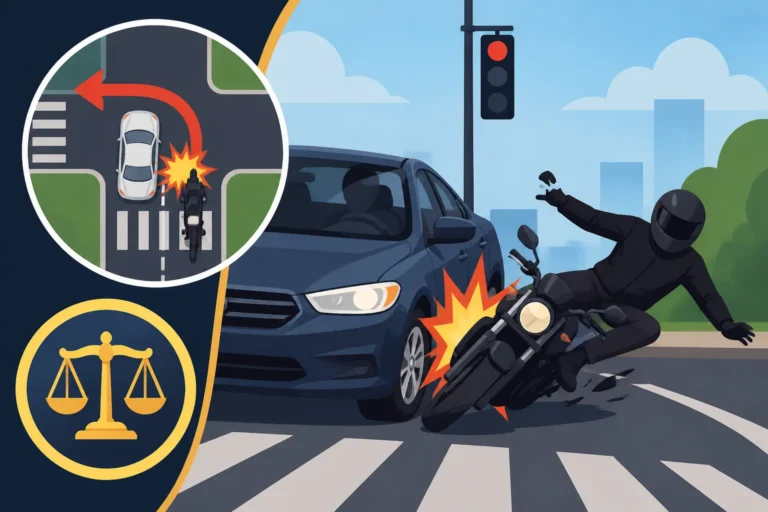
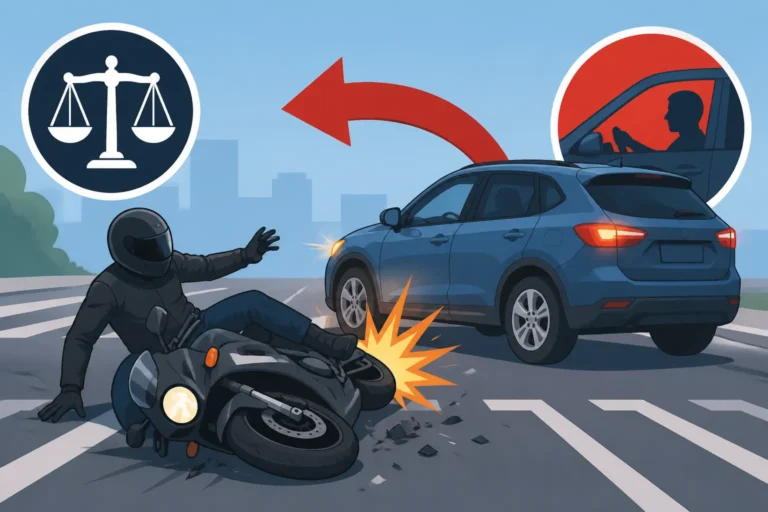
One of the most frequent and clearly at-fault scenarios involves a driver making a left turn directly in front of an oncoming motorcycle. This is notoriously dangerous for riders, as the driver often claims they "didn't see" the motorcycle. However, the law generally places a high burden on the turning driver to ensure the intersection is clear. You can learn more about this common issue in our guide on Left-Turn Motorcycle Accidents Explained.
Another undeniable situation is a rear-end collision. If a car slams into the back of your motorcycle while you're stopped at a light, yielding, or moving with traffic, it's almost always the fault of the trailing driver. They are responsible for maintaining a safe following distance and being aware of traffic conditions. Similarly, if a driver runs a red light or a stop sign and collides with you, their violation of traffic laws makes their fault clear. This is often easily proven with witness statements or intersection cameras. These types of incidents often fall under the umbrella of Common Causes of Motorcycle Accidents.
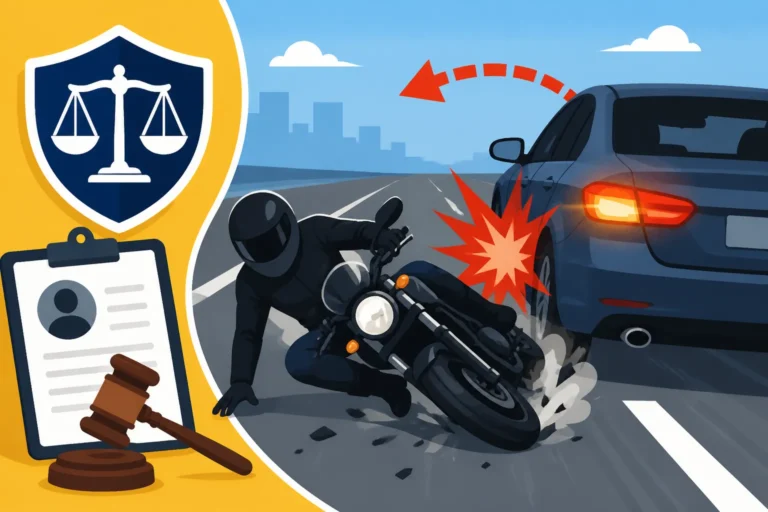
Less common, but equally clear, are instances where a driver makes an unsafe lane change without looking, forcing you off the road or directly into their path. Or perhaps they were clearly distracted, looking down at their phone, and swerved into your lane or hit you while stopped. While proving distraction can sometimes be tricky, if there are witnesses or the driver admits it, their fault is unequivocal.
Immediate Steps to Take When Fault Is Obvious
Even when the other driver's fault is glaringly obvious, what you do in the immediate aftermath of a motorcycle accident is critical. It’s easy to feel overwhelmed, angry, or even in shock, but these first few moments and hours are crucial for your safety and for building a strong foundation for your claim. Don’t let the clarity of fault lull you into thinking you can skip any steps.
Prioritizing Safety and Seeking Medical Attention
Your safety and well-being must always be your absolute top priority. Regardless of how clear the other driver's fault might seem, the most important thing is to assess yourself and any passengers for injuries. Motorcycle accidents, even seemingly minor ones, can result in significant trauma. Adrenaline can mask pain, so even if you feel "fine," it’s crucial to seek medical attention.
Move yourself and your motorcycle to a safe location if possible, away from traffic. Call 911 immediately to report the accident and request emergency medical services if you or anyone else is injured. Even if you decline ambulance transport, it’s advisable to go to an urgent care clinic or emergency room as soon as possible after leaving the scene. A prompt medical examination ensures that all your injuries are documented from the start, which is vital for your claim. Gaps in medical treatment can be exploited by insurance companies later, even when fault is clear. Remember, you can't assume what happened internally just because you feel okay on the outside. Early documentation from medical professionals creates an undeniable record of your injuries directly linked to the accident, strengthening your case regardless of the other driver's clear culpability.
Documenting the Scene with Undeniable Evidence
The clearer the evidence, the smoother your claim process will be, even if the other driver is clearly at fault. Your goal is to gather undeniable proof that supports what you already know: the other driver caused this. Start by taking extensive photos and videos of everything at the scene. This includes your motorcycle, the other vehicle, the position of both vehicles, any skid marks, debris, traffic signs, road conditions, and the surrounding area. Get close-ups of damage and wider shots to show the overall context. If the other driver was clearly at fault, capturing evidence like their vehicle's position after running a red light or the impact point on your rear fender from a rear-end collision will be invaluable.
Next, identify and speak to any witnesses. Independent witnesses are gold. They have no vested interest in the outcome and their unbiased accounts can strongly corroborate your version of events. Get their names, phone numbers, and email addresses. Ask them what they saw and if they would be willing to provide a statement to the police or your attorney. The police report is another critical piece of evidence. Ensure law enforcement officers respond to the scene. Their official findings, including any citations issued to the other driver, will carry significant weight. Our guide on What to Do After a Motorcycle Accident offers more in-depth advice on these initial steps. Even if the other driver admits fault at the scene, always gather this evidence, as their story can change once their insurance company gets involved.
Types of Evidence That Prove Clear Driver Fault
When the other driver is clearly at fault in a motorcycle accident, your success in a claim hinges on presenting an airtight case. This means compiling irrefutable evidence that leaves no room for doubt about who caused the collision. Gathering specific types of proof is key to demonstrating the other driver's negligence and securing the compensation you deserve.
Police Reports and Traffic Citations
A police report is often the cornerstone of proving fault in any accident, and it carries even more weight when the other driver's negligence is obvious. When officers respond to the scene, they investigate, interview parties and witnesses, and document their findings in an official report. This report will include details such as the date, time, and location of the crash, a diagram of the accident scene, and a preliminary determination of fault. If the other driver was clearly at fault, the police report is likely to reflect this.
Even more powerful is a traffic citation issued to the other driver. If the officer determines that the other driver violated a specific traffic law—such as running a red light, failing to yield, or making an unsafe lane change—they will issue a ticket. This citation serves as strong evidence of their negligence. While a traffic citation isn't a definitive legal ruling of civil fault, it provides compelling support for your claim that the other driver was responsible. Insurance companies often give significant credence to police findings, especially when backed by a citation. Our article on How Police Reports Establish Fault delves deeper into how this crucial document can impact your case.
Witness Testimonies and Surveillance Footage
Beyond official reports, the statements of independent witnesses can provide powerful, unbiased verification of the other driver's clear fault. People who observed the accident unfold, but who are not involved themselves, offer an objective perspective. Their testimony can confirm that the other driver was distracted, failed to yield, or otherwise acted negligently, directly causing the crash.
Imagine a scenario where a driver pulls out of a parking lot directly into your path on a main road. A pedestrian who saw the entire incident unfold, confirming the driver never looked, provides invaluable support. Our piece on How Witnesses Affect Motorcycle Fault explains just how impactful these statements can be. Make sure to get their contact information at the scene, as their memory will be freshest immediately after the event.
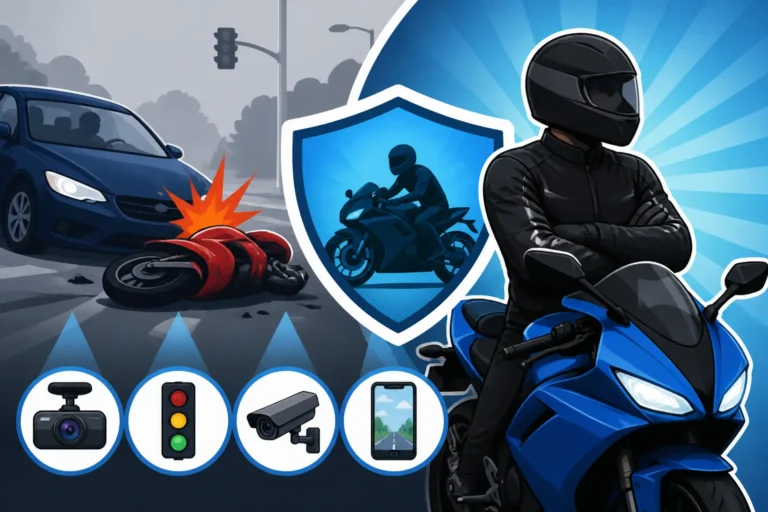
Even more compelling is surveillance footage. With the proliferation of dashcams, traffic cameras, and business security systems, there’s an increasing chance that your accident might have been caught on video. Footage of the accident unequivocally showing the other driver's illegal maneuver or reckless behavior can be the ultimate "smoking gun" for proving clear fault. This visual evidence removes all doubt, leaving little room for the other party to dispute their responsibility. For instance, if a driver runs a red light and a nearby traffic camera captures it, that's virtually unassailable proof.
Physical Evidence and Accident Reconstruction
Sometimes, the scene itself tells the story of clear fault. Physical evidence found at the crash site can often corroborate your account and demonstrate the other driver's liability. This includes things like the location of debris, skid marks, gouges in the road, and the final resting positions of the vehicles involved. For example, if your motorcycle was rear-ended, the damage to the front of the other vehicle and the rear of your bike, coupled with the absence of skid marks from your tires, clearly points to the other driver's failure to brake.
When the physical evidence is complex or needs professional interpretation, an accident reconstruction expert can be a game-changer. These specialists use scientific principles, physics, and engineering to analyze crash data and determine how an accident occurred. They can examine tire marks, vehicle damage, and other environmental factors to precisely reconstruct the sequence of events. Even when fault seems clear to you, an expert's detailed report can provide an unassailable, scientific explanation that holds up against any challenges from the opposing insurance company. This kind of expert analysis is often crucial in reinforcing Motorcycle Accident Evidence for Proving Fault, particularly if the other side tries to introduce doubt.
Navigating the Claims Process with Clear Fault
Having clear fault on your side is a huge advantage, but it doesn't mean the claims process will be entirely straightforward. Insurance companies, even those representing clearly negligent drivers, are businesses focused on minimizing payouts. Knowing how to communicate and what evidence to present is vital to ensure your claim moves forward efficiently and effectively.
Initial Communication with Insurance Companies
After an accident, you'll inevitably need to communicate with insurance companies – both your own and the at-fault driver's. This initial contact is critical, and how you handle it can set the tone for your entire claim. While it might seem counterintuitive when fault is clear, it's essential to be cautious and measured in your statements.
When you report the accident to your own insurer, give them the facts. Provide the basic details of the crash, the other driver's information, and mention that the police were involved. Your own insurance company might assist you with property damage or medical payments depending on your coverage (like MedPay), and they'll handle subrogation against the at-fault driver's policy.
When speaking with the at-fault driver's insurance adjuster, be polite but firm. Stick to the undisputed facts of the accident. Do not speculate, guess, or offer opinions. Do not admit any fault, even if you think you might have contributed in a minor way (which is unlikely if the driver is "clearly at fault"). Never give a recorded statement without first speaking to a qualified legal professional. Adjusters are trained to ask questions in ways that can elicit responses detrimental to your claim, even with clear fault. Remember, their primary goal is to pay as little as possible, so they will look for any ambiguity or inconsistency to reduce liability. Simply state what happened, provide the police report number if you have it, and inform them that you are seeking medical attention for your injuries.
Presenting Your Case: Demand Letters and Evidence
Once you've undergone initial medical treatment and gathered all necessary documents, it's time to formally present your case to the at-fault driver's insurance company. This typically begins with a demand letter, which is a formal document outlining the facts of the accident, the extent of your injuries, the damages you've incurred, and a specific monetary amount you are seeking for a settlement.
Even with clear fault, a well-crafted demand letter is crucial. It consolidates all your evidence into a compelling narrative. You'll attach copies of the police report, medical bills, medical records, proof of lost wages, photographs of the accident scene and your injuries, witness statements, and any other documentation that supports your claim. This comprehensive package demonstrates to the insurance company that you have a strong, well-supported case and are serious about pursuing fair compensation.
The goal here is to leave the insurance adjuster with no doubt that their insured was negligent and that your damages are directly a result of that negligence. The stronger and more organized your evidence, the harder it will be for them to deny or significantly devalue your claim. A detailed demand letter, even when the driver is clearly at fault, helps set the stage for productive negotiation and shows the insurer you've done your homework.
Potential Hurdles Even with Clear Fault
You might think that if the other driver is clearly at fault, your motorcycle accident claim will be a walk in the park. Unfortunately, that's often not the reality. Even with undeniable evidence, you can still face frustrating hurdles from insurance companies who are skilled at finding ways to minimize their payouts.
The "Rider Bias" and Stereotypes
One of the most insidious challenges motorcyclists face, even when fault is clear, is the persistent "rider bias." This refers to the unfair stereotypes and prejudices held against motorcyclists by some jurors, law enforcement, and, most frequently, insurance adjusters. There's an underlying assumption that riders are inherently reckless, speed demons, or "asking for it" by riding a motorcycle. This bias can manifest in subtle (or not-so-subtle) attempts by the at-fault driver's insurance company to shift a percentage of blame onto you, even when their insured clearly caused the accident.
For example, an adjuster might try to argue that even though their driver ran a stop sign, you "should have seen them coming" or were "going too fast," implying a degree of comparative negligence on your part. This tactic aims to reduce the amount they have to pay out. They might also suggest that your injuries were more severe because you chose to ride a motorcycle, rather than accepting that the severity is due to the impact of their client's negligence. Being aware of this bias is essential, as it helps you anticipate and counter these unfair arguments. Our in-depth look at Rider Bias in Fault Determination provides valuable insights into how these stereotypes can unfairly impact your claim and how insurance companies often How Insurance Companies Assign Blame to Riders.
Lowball Offers and Undervalued Damages
Another common tactic, even with clear fault, is for the insurance company to make a lowball settlement offer. They know their client is liable, but they still want to pay as little as possible. This initial offer might cover your immediate medical bills and some property damage, but it will likely significantly undervalue your pain and suffering, lost wages, future medical needs, or the true extent of your bike's damage.
They might argue that your medical treatment was excessive, that your lost wages aren't fully supported, or that your pain and suffering isn't worth as much as you claim. This is where detailed documentation becomes paramount. You need to meticulously track all your medical expenses, keep records of lost income, and even maintain a pain journal to fully illustrate the impact of your injuries. Never accept the first offer, especially if it doesn't fully account for all your damages. Our article on How to Handle a Lowball Settlement Offer gives you practical strategies for recognizing and countering these insufficient proposals. Remember, clear fault doesn't equate to automatic maximum compensation; you still have to fight for it.
Dealing with Uninsured or Underinsured Drivers
What happens when the driver who is clearly at fault either has no insurance or not enough insurance to cover your extensive damages? This is a heartbreaking reality for many motorcyclists. You’ve done everything right, the fault is crystal clear, and yet, the at-fault party simply doesn't have the financial resources to compensate you fully.
If the at-fault driver is uninsured, your best recourse is typically your own uninsured motorist (UM) coverage, if you purchased it. This coverage kicks in to protect you when the negligent driver has no insurance. If they are underinsured, meaning their policy limits are too low to cover all your medical expenses, lost wages, and pain and suffering, then your underinsured motorist (UIM) coverage would be your next line of defense.
It's a frustrating situation because even with clear fault, the source of recovery becomes complicated. You might have to pursue a claim against your own insurance company (for UM/UIM), or in rare cases, pursue a personal lawsuit against the at-fault driver directly, which can be challenging if they have limited assets. Understanding your own policy's UM/UIM limits is crucial before an accident occurs, as this coverage can be a lifesaver in these scenarios. Explore our detailed guide on What Happens When Damages Exceed Coverage and How UM/UIM Coverage Increases Payouts for more information on navigating these complex situations.
Maximizing Your Settlement When Fault Is Undeniable
When the driver who caused your motorcycle accident is clearly at fault, you might think the compensation will naturally fall into place. While clear liability is a significant advantage, it's still up to you (and often your legal team) to demonstrate the full extent of your losses and aggressively pursue the maximum possible settlement. Don't leave money on the table just because fault isn't disputed.
Accurately Documenting All Damages
Even with clear fault, the insurance company will still try to minimize the financial impact of the accident. Your job is to present a comprehensive record of every single dollar lost and every single way your life has been negatively affected. This goes far beyond just the initial hospital bill.
Start with all your economic damages. These are the easily quantifiable losses, such as medical bills (from ambulance rides, emergency room visits, specialist appointments, physical therapy, prescriptions, and future medical care), lost wages (from time off work due to injury and recovery), and property damage to your motorcycle and gear. Keep every receipt, every invoice, and every pay stub. Get letters from your employer detailing missed workdays and lost income. For future medical costs, you may need projections from doctors, especially for long-term injuries or potential surgeries. Our article on How Medical Bills Affect Your Settlement elaborates on the importance of this meticulous documentation.
Then, there are non-economic damages, often referred to as "pain and suffering." These are harder to quantify but are a significant component of motorcycle accident settlements. They include physical pain, emotional distress, mental anguish, loss of enjoyment of life, and scarring or disfigurement. Keep a detailed journal documenting your daily pain levels, how your injuries prevent you from doing activities you once enjoyed, and any emotional trauma you experience. This personal record, combined with medical records and therapist notes, provides a powerful narrative for your suffering. Our guide on Pain and Suffering in Motorcycle Settlements offers more insight into how these damages are valued.
The Role of a Motorcycle Accident Attorney
You might be wondering, "If fault is so clear, do I really need a lawyer?" The answer, almost universally, is yes. Even with undeniable evidence against the other driver, a skilled motorcycle accident attorney can make an enormous difference in the outcome of your claim.
First, an attorney understands the nuances of personal injury law and how to present your case in the most compelling way possible. They know how to collect and organize all the critical evidence, interpret police reports, secure expert witness testimony (like accident reconstructionists or medical specialists), and build a rock-solid case that anticipates and counters insurance company tactics. They're also adept at dealing with the common "rider bias" we discussed earlier, ensuring that stereotypes don't unfairly diminish your claim.
More importantly, a lawyer acts as your advocate and negotiator. They have experience dealing with insurance adjusters who, as we've noted, are focused on minimizing payouts. An attorney can effectively counter lowball offers, negotiate medical liens, and ensure that all your damages, both economic and non-economic, are fully valued and pursued. They can also explain complex legal terms, navigate statutes of limitations, and represent you in court if a fair settlement cannot be reached through negotiation. Having a legal professional on your side allows you to focus on your recovery, knowing that your claim is in expert hands. Many riders ask themselves Do You Need a Motorcycle Accident Lawyer, and with clear fault, the answer is often still a resounding yes for maximizing your recovery.
Clear Fault vs. Disputed Fault: A Claim Comparison
Understanding the difference between clear fault and disputed fault is crucial for managing expectations and strategizing your motorcycle accident claim. While clear fault gives you a strong starting position, neither scenario guarantees an easy ride.
| Feature | Clear Fault Scenario | Disputed Fault Scenario |
|---|---|---|
| Evidence of Liability | Overwhelming and direct (e.g., police report, citation, dashcam, clear traffic violation). | Ambiguous or conflicting (e.g., "he said, she said," complex intersection, multiple vehicles). |
| Initial Insurance Stance | Acknowledges primary liability, but may still challenge extent of damages or try partial blame. | Will likely deny liability or assign significant comparative negligence to you. |
| Investigation Phase | Focus is more on documenting damages and medical treatment. | Extensive investigation into fault, gathering witness statements, potentially accident reconstruction. |
| Negotiation Ease | Generally smoother, as the "who" is settled. Focus shifts to "how much." | Can be contentious and protracted, requiring strong arguments for liability before damages. |
| Settlement Timeline | Potentially quicker due to clear liability, but still depends on injury severity and negotiations. | Often longer, as fault must be established first, potentially leading to litigation. |
| Need for Legal Help | Highly recommended to maximize damages and counter lowball offers. | Almost essential to prove fault and protect your rights. |
| Typical Outcome | Higher likelihood of a favorable settlement covering most damages, assuming strong evidence of damages. | Risk of reduced settlement (due to comparative negligence) or no recovery if fault cannot be proven. |
Disclaimer
Please remember that this article provides general information and is not legal advice. Every motorcycle accident claim is unique, and the laws governing personal injury claims vary by state. It is always recommended to consult with a qualified motorcycle accident attorney to discuss the specifics of your case and receive personalized legal guidance.