How to Prove a Driver Failed to Yield
There are few things more infuriating for a motorcyclist than being involved in a crash because another driver simply didn't see you or, worse, saw you and decided to pull out anyway. These "failure to yield" accidents are incredibly common and often devastating for riders, leaving you not only injured but also struggling to prove the other driver's clear negligence. This guide will walk you through the essential steps and types of evidence needed to firmly establish that the driver failed to yield, protecting your rights and ensuring you can seek the compensation you deserve.
Understanding "Failure to Yield" in Motorcycle Accidents
When we talk about a "failure to yield," it sounds straightforward, but in the context of a motorcycle accident, it encompasses a range of dangerous actions that often lead to severe outcomes. It’s essentially when a driver, by law, should have given way to your motorcycle but didn't, causing a collision.
What Constitutes Failing to Yield?
Failing to yield isn't just about ignoring a "Yield" sign. It's a broad category of traffic violations where a driver doesn't grant the right-of-way to another vehicle, like your motorcycle, when they are legally required to do so. Think about those moments when you're cruising along, minding your own business, and suddenly a car darts out in front of you. That's typically a failure to yield.
Common scenarios where a driver fails to yield to a motorcycle include:
- Left-Turn Collisions: This is arguably one of the most common and dangerous scenarios. A driver turning left at an intersection often misjudges the speed or distance of an oncoming motorcycle, or simply doesn't see it, and turns directly into its path. The driver making the left turn almost always has a duty to yield to oncoming traffic. These are devastating, often resulting in direct impact and severe injuries. To understand this further, you might want to read our detailed guide on Left-Turn Motorcycle Accidents Explained.
- Pulling Out from a Stop Sign or Driveway: A driver at a stop sign, or exiting a private driveway, is obligated to ensure the road is clear before proceeding. If they pull out into an intersection or onto a street when your motorcycle is approaching, they have failed to yield.
- Changing Lanes Unsafely: Drivers are required to check their blind spots and ensure a lane change can be made safely. If a driver merges into your lane, cutting you off or directly colliding with you, they've failed to yield to your presence in that lane. This is particularly relevant given how often motorcycles are overlooked in blind spots.
- Entering a Main Road from a Ramp: When entering a freeway or highway from an on-ramp, drivers must yield to traffic already on the main road. If a driver merges without sufficient space or forces you to brake or swerve, they've committed a failure to yield.
- Intersection Accidents Beyond Left Turns: This can involve running a stop sign, a red light, or failing to yield to pedestrian crosswalks, which can have ripple effects that involve a motorcyclist. When a driver fails to stop or yield at a four-way stop, for instance, and causes an Motorcycle Accidents Caused by Intersection Accidents, it's a clear violation.
In each of these situations, the underlying principle is the same: the other driver had a legal duty to wait or adjust their actions to avoid interfering with your motorcycle's right of way, and they failed to do so.
The Disproportionate Impact on Riders
It’s no secret that motorcyclists are incredibly vulnerable on the road. Unlike a driver in a car or truck, you don't have a steel cage, airbags, or seatbelts protecting you. When a driver fails to yield, it often results in a direct, head-on, or T-bone collision, throwing the rider from their bike and into direct contact with the pavement, other vehicles, or roadside obstacles.
The consequences are frequently catastrophic. We’re talking about severe road rash that might require skin grafts, broken bones that take months to heal, internal injuries, spinal cord injuries that can lead to paralysis, and devastating traumatic brain injuries. These injuries often require extensive medical treatment, multiple surgeries, long-term rehabilitation, and can leave you with permanent disabilities. This stark reality means that proving fault in a failure-to-yield accident isn't just about principle; it's absolutely critical for securing the compensation needed to cover your astronomical medical bills, lost wages, and the immense pain and suffering you endure. Our guide on Common Motorcycle Accident Injuries delves deeper into the types of injuries riders face.
Gathering Crucial Evidence at the Scene
The moments immediately following a motorcycle accident are chaotic and traumatic, but they are also incredibly critical for your claim. What you do and gather at the scene can make or break your ability to prove the other driver's failure to yield.
Documenting the Immediate Aftermath
This is where your smartphone becomes your best friend. Don’t hesitate to start documenting everything, even if you’re shaken up. The more comprehensive your evidence, the stronger your case.
- Photographs and Videos: This cannot be stressed enough. Take pictures and videos from every conceivable angle.
- Vehicle Positions: Capture the final resting positions of both your motorcycle and the other vehicle before anything is moved. This is crucial for accident reconstruction experts later.
- Damage: Document the damage to your motorcycle and the other vehicle. Show impact points clearly. Significant damage on the front or side of the other vehicle might indicate they struck you after failing to yield.
- Road Marks: Look for skid marks, gouges, or debris on the road. These can show braking distances, points of impact, and directions of travel.
- Traffic Controls: Photograph any relevant traffic signs (stop signs, yield signs), traffic lights (if they were working, or if the accident happened at an uncontrolled intersection), and road markings (turn arrows, solid lines). This directly speaks to the other driver's legal obligations.
- Surroundings: Take wide shots that show the intersection, any obstructions to view (bushes, buildings, parked cars), and weather conditions.
- Your Injuries: While painful, photograph visible injuries like road rash, cuts, or bruising.
- The Police Report: As soon as possible, call 911. The police report is an official document that can be invaluable. The responding officer will investigate, interview drivers and witnesses, and may issue citations. A citation for "failure to yield" against the other driver is incredibly powerful evidence for your claim. Even if a citation isn't issued, the officer's observations, diagrams, and notes about the scene can be crucial. Our post on How Police Reports Establish Fault explains more about their importance.
- Witness Statements: People who saw the accident unfold are your best allies. Many failure-to-yield accidents boil down to "he said, she said," and an independent witness can corroborate your account.
- Identify Witnesses: Look for anyone nearby who stopped or paused.
- Collect Contact Information: Get their full names, phone numbers, and email addresses.
- Brief Statement: If they’re willing, ask them what they saw and make a quick note or record it on your phone. Crucially, do not press them or tell them what you want them to say. Just let them tell you what they witnessed. For more on this, check out How Witnesses Affect Motorcycle Fault.
Collecting Driver Information and Statements
While your instinct might be to confront the other driver, remember to remain calm and focused on gathering information.
- Exchange Information: Get the other driver's full name, contact number, driver's license number, vehicle license plate number, and insurance information (company and policy number).
- Do Not Admit Fault: This is paramount. Even a casual "I'm so sorry, are you okay?" can be twisted by insurance companies as an admission of fault. Stick to factual exchanges only. Don't engage in discussions about how the accident happened, and definitely do not apologize or express blame. Let the evidence speak for itself.
- Note Driver Behavior: Discreetly observe the other driver. Do they seem distracted (on their phone)? Impaired (slurred speech, unsteady)? Aggressive? These observations could be important later.
Taking these immediate steps after an accident, despite the shock and pain, is fundamental to proving that the other driver failed to yield and establishing Motorcycle Accident Evidence for Proving Fault.
Beyond the Scene: Building Your Case
Once you've managed the immediate aftermath of the accident, the work of building a compelling case really begins. Proving a driver failed to yield often requires more than just initial evidence; it involves a detailed investigation and professional analysis.
Leveraging Expert Testimony and Accident Reconstruction
Sometimes, the raw evidence isn't enough to tell the whole story, especially when fault is disputed. This is where experts come in, providing objective analysis that can clearly demonstrate a failure to yield.
- Accident Reconstruction Experts: These professionals are invaluable. They use scientific principles, physics, and engineering to analyze all available data—vehicle damage, skid marks, road conditions, traffic camera footage, witness statements, and even vehicle black box data—to recreate the accident scene. They can determine vehicle speeds, braking distances, angles of impact, and the precise sequence of events. For a failure to yield scenario, an accident reconstructionist can conclusively show that the other vehicle entered your path when you had the right-of-way, and that your actions were consistent with a rider who was operating safely. Their testimony can be incredibly persuasive to an insurance adjuster or a jury. Our article on How Accident Reconstruction Determines Fault provides more depth on this critical tool.
- Traffic Engineers: In some cases, the design of an intersection or road might have contributed to the driver's failure to yield (e.g., poor sightlines, confusing signage). A traffic engineer can analyze the location and offer expert opinions on contributing factors, which can also shift some liability, or at least solidify the other driver's responsibility.
- Human Factors Experts: These experts can analyze how human perception and reaction times play a role. They might assess visibility issues, driver distractions, or how a driver's expectation influenced their failure to see your motorcycle. For example, if the driver claims "I didn't see the motorcycle," a human factors expert can explain how environmental or cognitive factors could have played a role, but that doesn't excuse the driver's legal duty to yield.
Medical Records and Injury Documentation
Your injuries are direct evidence of the impact and severity of the other driver's negligence. Thorough documentation of your medical journey is non-negotiable.
- Seek Immediate Medical Attention: Even if you feel "okay" after the crash, see a doctor. Adrenaline can mask pain, and some serious injuries, like concussions or internal bleeding, may not manifest symptoms for hours or even days. A delay in seeking treatment can be used by insurance companies to argue that your injuries weren't serious or weren't caused by the accident.
- Comprehensive Medical Records: Keep every single medical record: doctor's notes, hospital reports, diagnostic test results (X-rays, MRIs, CT scans), prescription lists, physical therapy records, and bills. These documents link your injuries directly to the accident and demonstrate the extent of your suffering and financial losses.
- Injury Journal: Maintain a daily journal detailing your pain levels, limitations, treatments, and how your injuries are affecting your daily life, work, and recreational activities. This personal account can provide powerful insight into your pain and suffering damages, which are often significant in motorcycle accident claims. Knowing How to Document Injuries for a Claim is vital for maximizing your recovery.
- Photographs of Recovery: Continue to take photos of your injuries as they heal (or don't heal). This includes wound progression, scars, or any visible changes that illustrate the long-term impact of the crash.
Traffic Laws and Violations
The foundation of a failure-to-yield claim rests on traffic laws. Understanding these laws and how they apply to your accident is paramount.
- State-Specific Laws: Every state has specific statutes governing right-of-way rules at intersections, stop signs, and during lane changes. For example, in California, Vehicle Code 21801(a) requires a driver turning left to yield to any vehicle approaching from the opposite direction. If the other driver received a traffic ticket at the scene, such as for "failure to yield" or "unsafe lane change," this is compelling evidence of their fault.
- Admissibility in Court: While a traffic citation itself might not always be direct proof of civil liability, it strongly indicates that the officer believed the other driver violated a specific traffic law. This violation can establish a presumption of negligence, making it much harder for the other driver's insurance company to deny fault.
- Local Ordinances: Beyond state laws, local municipalities might have specific ordinances related to traffic control or right-of-way in certain areas. These can also be relevant to your case.
By diligently collecting and presenting this evidence, you strengthen your position significantly, moving beyond mere allegations to clear, demonstrable proof that the other driver failed to yield. This comprehensive approach is key to securing a fair settlement in your Motorcycle Accident Liability: A Complete Guide.
Overcoming Common Defenses and Challenges
Insurance companies are not in the business of paying out large settlements easily, especially when it comes to motorcycle accidents. They will scrutinize every detail to minimize their liability, and they have a few common defenses they rely on when a driver has failed to yield.
The "I Didn't See You" Defense
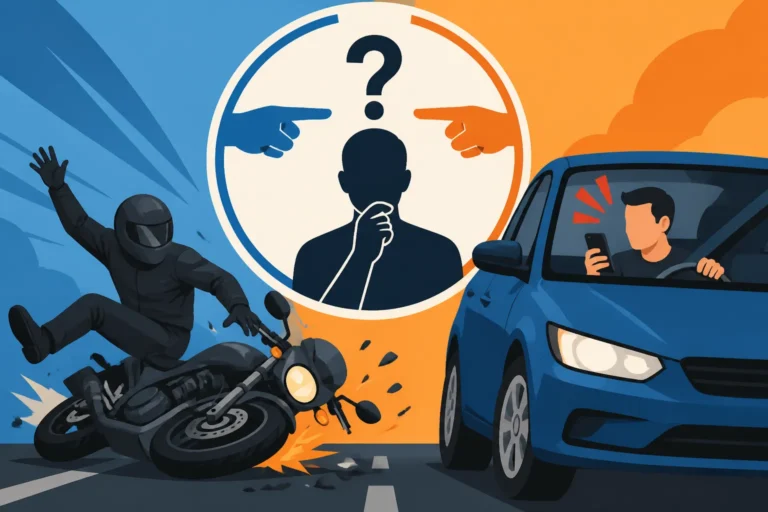
This is perhaps the most infuriating and pervasive defense used by drivers and their insurance companies after a motorcycle accident. The driver will claim they simply "didn't see" your motorcycle, suggesting that you somehow appeared out of nowhere or were inherently inconspicuous. While drivers often genuinely fail to perceive motorcycles, this excuse does not absolve them of their legal responsibility.
- Driver Negligence: The core legal principle here is that drivers have a duty to operate their vehicles safely and be aware of their surroundings. This includes actively looking for and identifying all other road users, especially motorcycles, which are known to be smaller and less noticeable. A failure to see what is plainly visible is a failure to exercise reasonable care.
- Combating the Defense with Evidence:
- Visibility: Did you have your headlight on? Were you wearing bright, reflective gear? While not legally required everywhere, this proactive safety equipment helps counter the "unseen" argument. Photos of your gear and bike at the scene can be useful.
- Line of Sight: Accident reconstruction can prove that the other driver had an unobstructed view of your approaching motorcycle. Were there any visual obstructions? If not, their claim of "not seeing you" is weaker.
- Traffic Volume: Was it a busy intersection? Drivers are expected to exercise greater caution in complex traffic environments.
- "Looked But Failed to See": Sometimes, drivers look in the direction of an oncoming motorcycle but fail to register it, a phenomenon known as "inattentional blindness." While a psychological explanation, it doesn't excuse their legal duty to perceive and react safely. The article on The 'I Didn't See the Motorcycle' Defense Explained goes into much more detail on how to challenge this argument.
- Rider Bias: Unfortunately, there's a pervasive bias against motorcyclists, often portraying them as reckless. Insurance adjusters might try to leverage this stereotype. Your evidence must be strong enough to overcome this prejudice and clearly show the other driver's negligence. Being prepared to fight Rider Bias in Fault Determination is essential.
Shared Fault and Comparative Negligence
Even if the other driver clearly failed to yield, their insurance company will almost certainly try to argue that you were at least partially at fault for the accident. This tactic, known as comparative negligence (or contributory negligence in some states), aims to reduce the amount of compensation they have to pay you.
- How it Works: In states with comparative negligence laws (like California's pure comparative negligence or Texas's modified comparative negligence), your compensation can be reduced by the percentage of fault assigned to you. For example, if you sustained $100,000 in damages but were found 20% at fault, your recovery would be reduced to $80,000. In strict contributory negligence states (very few remain for personal injury cases), if you are found even 1% at fault, you could be barred from recovering any damages. Understanding these nuances is crucial, and our guide on Comparative Negligence in Motorcycle Accidents is an excellent resource.
- Common Allegations Against Riders:
- Speeding: "You were going too fast for the conditions/intersection."
- Lack of Visibility: "You weren't wearing bright enough clothing, or your headlight wasn't on."
- Unsafe Lane Splitting: In states where it's legal, they might argue you were doing it unsafely. If you were involved in a Motorcycle Accidents Caused by Lane Splitting, fault determination can become complex.
- Failure to Avoid: "You had time to react and avoid the collision but didn't."
- Countering Shared Fault Claims:
- Detailed Evidence: Your comprehensive collection of photos, witness statements, accident reconstruction reports, and police reports will be your primary defense. These documents demonstrate your adherence to traffic laws and safe riding practices.
- Expert Analysis: An accident reconstruction expert can often refute claims of excessive speed or failure to react, showing that the accident was unavoidable from your perspective due to the other driver's sudden failure to yield.
- Documentation of Compliance: If you were wearing a DOT-approved helmet and appropriate gear, it helps establish you as a responsible rider, countering negative stereotypes.
- Negotiation: Even if some minor fault is assigned to you, it doesn't mean your claim is worthless. The negotiation process with the insurance company will involve arguing over the precise percentage of fault. This is why having an experienced motorcycle accident lawyer is so beneficial; they are skilled at minimizing your assigned fault and maximizing your recovery.
Proving a driver failed to yield requires tenacity and meticulous evidence collection, both at the scene and during the investigative phase. By understanding the legal definitions, diligently gathering every piece of evidence, and anticipating the common defenses, you significantly improve your chances of holding the negligent driver accountable for the devastation they caused.
Key Evidence for Proving Failure to Yield
| Type of Evidence | How it Proves Failure to Yield |
|---|---|
| Police Report | Official documentation of the accident; may include officer's opinion of fault, citations issued (e.g., failure to yield, running a stop sign/red light), detailed diagrams, and initial statements. |
| Photographs & Video | Captures final resting positions of vehicles, damage, relevant traffic signs/lights, road markings (e.g., crosswalks, turn lanes), skid marks, and any visual obstructions, all of which directly show where and how the right-of-way was violated. |
| Witness Statements | Independent accounts from third parties corroborating your version of events, confirming the other driver's specific actions (or inactions) that constituted failure to yield. |
| Accident Reconstruction | Expert analysis using physics and engineering to recreate the crash, demonstrating vehicle speeds, trajectories, points of impact, and proving the other driver entered your right-of-way path. |
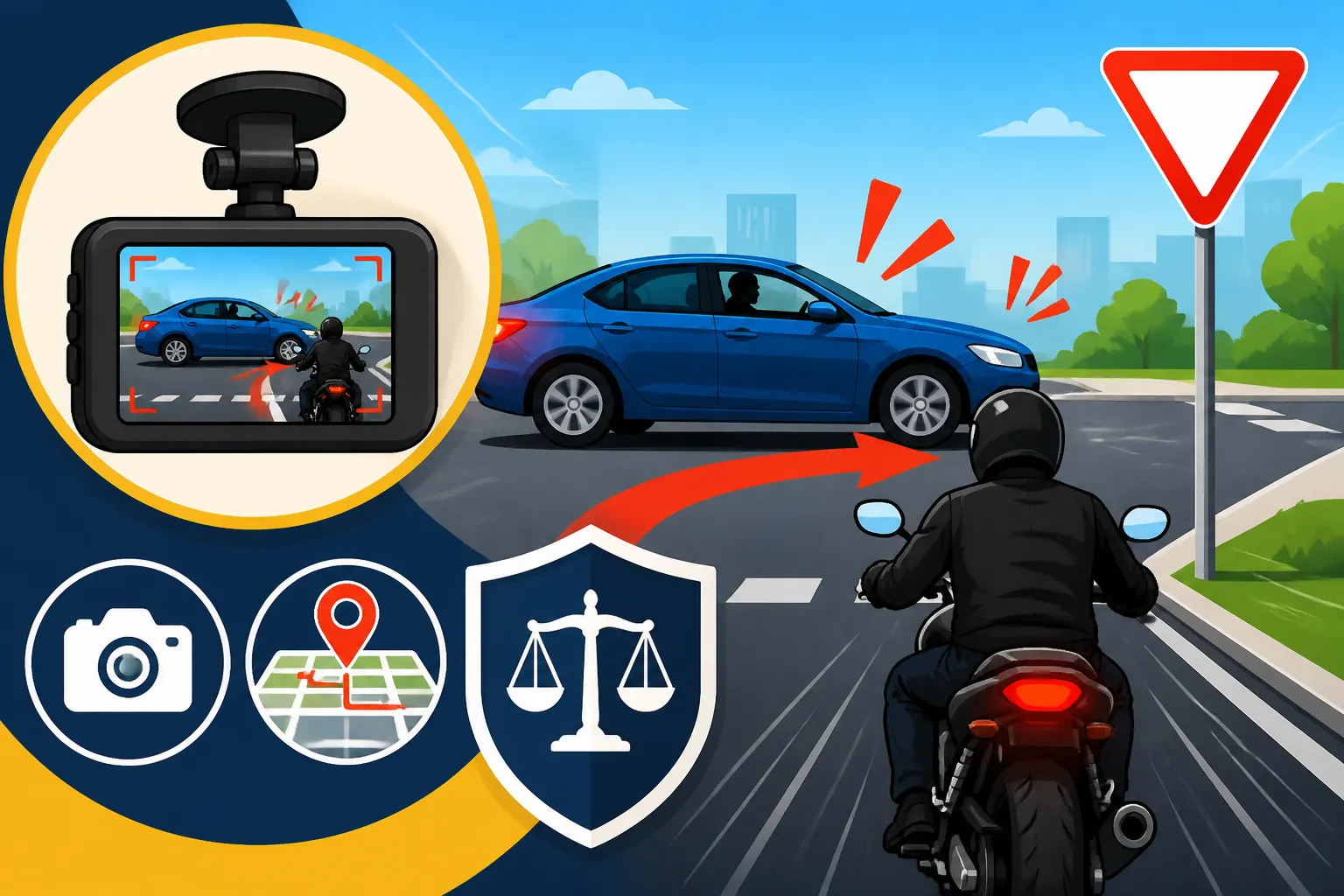
| Traffic Camera Footage | Direct visual proof from municipal cameras, dashcams, or nearby security cameras showing the exact moment of the failure to yield, including traffic signal status or vehicle movements. |
| Driver's License & Insurance Info | Essential contact information for the at-fault driver and their insurance provider to initiate the claim. |
| Medical Records | Detailed documentation of injuries, treatments, and prognosis directly linking the severity of your harm to the impact caused by the driver's negligence, strengthening the overall claim for damages. |
| Personal Injury Journal | A consistent log of your pain, limitations, and how injuries impact your daily life, providing a human element to the damages suffered. |
| Vehicle Black Box Data | Data from newer vehicles that can record speed, braking, and steering inputs in the moments leading up to a crash, providing objective data on the other driver's actions. |
Disclaimer
The information provided in this blog post is intended for general informational purposes only and does not constitute legal advice. Motorcycle accident laws vary significantly by state and jurisdiction. It is crucial to consult with a qualified motorcycle accident attorney to discuss the specifics of your case and understand your legal rights and options. Relying solely on the information presented here without professional legal guidance is not recommended.