When Helmet Non-Use Cannot Be Used Against You
Navigating the aftermath of a motorcycle accident is already a nightmare, filled with pain, confusion, and anxiety about medical bills and bike repairs. Add to that the pervasive worry that if you weren't wearing a helmet, your entire claim might be dismissed, and it feels like the world is against you. But here's the honest truth: while helmet use is undeniably vital for safety, there are specific, crucial situations where not wearing one cannot automatically be used to torpedo your entire motorcycle accident claim. This guide will walk you through those scenarios, giving you a clearer picture of your rights and the realities of the legal landscape.
Understanding the "Helmet Defense" in Motorcycle Accident Claims
It's a frustrating reality that when a motorcycle accident occurs, one of the first things insurance companies or opposing legal teams often try to do is shift blame, even subtly, to the rider. The "helmet defense" is a prime example of this strategy. It's designed to imply, or even outright argue, that your injuries would have been less severe, or perhaps non-existent, if only you had been wearing a helmet.
What the Helmet Defense Entails
At its core, the helmet defense is an argument by the defendant (usually the at-fault driver or their insurance company) that your own negligence in not wearing a helmet contributed to the severity of your injuries, particularly head injuries. They use this argument to try and reduce the amount of compensation you can recover. It’s an attempt to minimize their liability by maximizing your perceived fault, or at least your contribution to your own damages. For instance, if you suffered a severe traumatic brain injury in a state that doesn't mandate helmet use for all riders, the defense might still argue that had you worn a helmet, the injury would have been less severe, thus reducing the compensation they owe for that specific injury. This defense can feel like a direct attack, especially when you’re already dealing with immense pain and suffering. It's a tactic designed to exploit any perceived vulnerability in your case.
How Insurers Leverage Rider Bias
Let's be blunt: there's often a lingering, unfair bias against motorcyclists. Some people, including some jurors or even insurance adjusters, unfortunately, harbor preconceived notions that riders are reckless or inherently put themselves at risk. The helmet defense plays right into this bias. An insurance company like GEICO or Progressive might seize on the fact that you weren't wearing a helmet, even if it was legally permissible in your state, to paint a picture of you as irresponsible. They might argue that a "reasonable" person would have worn one, regardless of the law. This isn't about proving fault for the accident itself, but rather about diminishing your damages. It’s a subtle but powerful way to influence perceptions and devalue your claim, making it feel like you're being punished for a choice that may not even be relevant to all of your injuries. You can learn more about how insurance companies assign blame to riders in general.
The Burden of Proof for the Defense
Here's where the helmet defense can hit a roadblock for the opposing side: they carry the burden of proof. It's not enough for them to simply point out that you weren't wearing a helmet. They must demonstrate a direct causal link between your non-use of a helmet and the specific head injuries you sustained. They have to prove that wearing a helmet would have prevented or significantly reduced those particular injuries. This often requires expert testimony, such as from accident reconstructionists or medical professionals, to establish that causation. Without this direct link, their argument weakens considerably. For example, if you sustained a broken leg and road rash, the absence of a helmet has no bearing on those specific injuries, and the defense would struggle to argue otherwise successfully. This principle is a key factor in understanding when helmet non-use cannot be used against you.
Varying State Helmet Laws and Their Impact
The legal landscape surrounding motorcycle helmets is anything but uniform across the United States. What's legal in one state could be a violation in another, and these differences play a significant role in how the helmet defense can be applied in an accident claim.
Universal vs. Partial Helmet Laws
States generally fall into one of three categories: universal helmet laws, partial helmet laws, or no helmet laws at all (though these are rare for motorcycles). In states with universal helmet laws, like California or Georgia, all riders, regardless of age, are required to wear a DOT-compliant helmet. In these states, if you weren't wearing a helmet and sustained a head injury, the defense has a stronger prima facie case for contributory negligence regarding that specific injury.
However, many states operate under partial helmet laws. For instance, in Florida or Texas, riders over a certain age (typically 21) who carry adequate medical insurance may be exempt from wearing a helmet. If you're riding legally in one of these states without a helmet, the legal ground for the helmet defense becomes much shakier. If a 40-year-old rider with sufficient insurance is injured in Austin, Texas, while legally riding without a helmet, the mere fact of non-use doesn't automatically imply negligence. The law explicitly permits it under certain conditions, making it harder for the defense to argue a breach of duty of care. Understanding your state's specific rules is paramount; our guide on motorcycle helmet laws by state provides detailed information on this.
Age-Specific Helmet Requirements
Beyond universal and partial laws, many states have age-specific helmet requirements. Often, riders under the age of 18 or 21 are mandated to wear helmets, even in states where adult riders may have an exemption. If a minor is involved in an accident and wasn't wearing a helmet as required by their state's law, this could be used more effectively by the defense to argue for reduced damages related to head injuries. The reasoning here is that the minor, or their guardian, failed to comply with a direct legal safety mandate.
However, even in such cases, the burden still rests on the defense to prove that the helmet's absence caused or exacerbated the head injury. If the minor suffered a broken arm and a concussion, and the defense can only credibly argue the helmet might have lessened the concussion, the compensation for the broken arm remains unaffected. It’s a nuanced area, and simply being underage and unhelmeted doesn't automatically forfeit all claims.
How State Laws Impact Accident Claims
The specific helmet law in effect at the location and time of your accident can significantly dictate the strength of the helmet defense. In states where helmet use is optional for adult riders, the defense cannot argue that you violated a law by not wearing one. Instead, they might pivot to arguing that even though it was legal, it was still an "unreasonable" choice, which is a much tougher sell in court. This is particularly true for non-head injuries.
For example, if you were riding legally without a helmet in New Hampshire (one of the few states without a universal helmet law for adults), and another driver runs a stop sign, causing you to suffer extensive road rash and a shattered pelvis, the fact that you weren't wearing a helmet is largely irrelevant to those injuries. The driver's clear negligence in running the stop sign is the direct cause of your non-head trauma. Even if you also sustained a minor concussion, the defense would still need to prove the helmet would have made a difference, and they couldn't argue you broke any law regarding helmet use. This directly relates to the concept of how helmet laws affect your accident claim.
The Crucial Link of Causation: "But For" the Helmet
One of the most powerful counterarguments against the helmet defense is the concept of causation. The defense can’t just say, "You weren't wearing a helmet." They have to prove that your lack of a helmet directly caused or worsened your specific head injuries.
The "But For" Argument
In legal terms, this is often referred to as the "but for" argument. The defense must prove that "but for" your failure to wear a helmet, your head injury would not have occurred or would have been significantly less severe. This is a high bar to clear. Consider a scenario in rural Montana, where adult riders are not required to wear helmets. If you’re riding legally without a helmet and a distracted driver makes an illegal U-turn, causing you to be ejected from your bike. You sustain severe internal bleeding and multiple broken ribs. While you might have a scrape on your head, the primary, life-threatening injuries have absolutely no causal link to whether or not you wore a helmet. In such a case, the "but for" argument regarding a helmet would fall completely flat for the significant injuries.
The opposing side needs to present compelling evidence, often from medical experts, that directly ties the absence of head protection to the severity of the head injury. If they can't establish this clear, demonstrable link, then the helmet defense cannot be effectively used against you for those particular injuries.
Injuries Unrelated to Head Trauma
This is perhaps the most straightforward scenario where the helmet defense holds no weight. Many common motorcycle accident injuries have absolutely no connection to helmet use. We're talking about everything from broken bones in limbs to internal organ damage, severe road rash, spinal cord injuries, or even psychological trauma like PTSD.
Imagine you're cruising down I-10 near Phoenix, Arizona, a state where riders 18 and older are not required to wear helmets if they have insurance. A car suddenly merges into your lane without looking, causing you to swerve violently and lay down your bike. You suffer a shattered collarbone, a severely sprained ankle, and extensive road rash across your arms and legs. You might have been wearing a full-face helmet that you picked up from Cycle Gear that morning, or you might not have been. Regardless, the fact of helmet use, or non-use, is utterly irrelevant to these specific injuries. The negligence of the other driver in making an unsafe lane change is the sole cause of your fractured collarbone and road rash. The insurance company cannot reasonably argue that a helmet would have prevented a broken ankle or internal bruising. This is a critical point that often gets overlooked in the initial panic after a crash.
Expert Testimony and Accident Reconstruction
When causation is disputed, expert witnesses become incredibly important. An accident reconstructionist can analyze the scene, vehicle damage, and impact points to determine the mechanics of the crash and how forces were distributed. They can often provide insights into whether a helmet would have mitigated a head injury given the specific impact angles and forces involved.
Similarly, a medical expert can analyze your injuries, your medical history, and the crash specifics to offer an opinion on whether the absence of a helmet directly contributed to the severity of your head trauma. For instance, if you suffered a severe laceration to your forehead but scans show no brain injury, a medical expert might testify that a helmet would have prevented the laceration but had no bearing on potential brain damage because there wasn't any. These experts help establish or debunk the causal link that the helmet defense relies upon, proving that in many scenarios, the injuries sustained were simply due to the impact, not the lack of a helmet.
When Your Injuries Don't Depend on a Helmet
While helmets are designed to protect your head, many serious injuries sustained in a motorcycle accident simply aren't head-related. In these instances, the "helmet defense" loses almost all its power.
Road Rash and Other Abrasions
Road rash is one of the most common and often painful injuries motorcyclists suffer, regardless of helmet use. It occurs when your skin slides across the pavement, causing abrasions that can range from mild scrapes to severe degloving injuries requiring skin grafts. Whether you were wearing a helmet or not, your arms, legs, back, and torso are still exposed to the abrasive road surface. The defense cannot reasonably argue that a helmet would have prevented road rash on your elbows or a severe abrasion on your hip.
For example, if you were riding your Harley-Davidson on a scenic route through the Tennessee mountains and a car veers into your lane, forcing you to lay down your bike. You slide for several feet, resulting in deep road rash on your left arm and thigh, and you also sustain a broken wrist. Even if you chose not to wear a helmet, the other driver's negligence is the undisputed cause of your road rash and broken wrist. The helmet defense is completely inapplicable here. This is why understanding Road Rash Injuries and Claims is so important, as these are significant damages regardless of helmet use.
Spinal Cord and Neck Injuries
Spinal cord and neck injuries are incredibly serious and often result from the violent forces involved in a motorcycle crash, regardless of helmet use. These injuries can occur from sudden deceleration, twisting motions, or direct impact to the body, transmitting force up the spine. While a helmet protects the skull, it generally does not prevent the whipping motion (whiplash) that can strain neck ligaments or the compressive forces that can damage vertebrae or the spinal cord itself.
Consider a rider in North Carolina who is struck from behind by a speeding vehicle. The impact throws the rider forward, causing severe whiplash and a herniated disc in their cervical spine. Even if the rider was not wearing a helmet (and was legally allowed to do so for their age and insurance status), the neck injury is a direct result of the rear-end collision's forces, not the absence of head protection. The helmet simply isn't designed to stabilize the entire spine in such a manner. In cases of Motorcycle Spinal Cord Injury Claims and Compensation, the focus will be on the direct cause of the trauma, which is often the crash dynamics, not helmet adherence.
Broken Bones and Internal Trauma
Motorcycle accidents often lead to a litany of broken bones—femurs, tibias, ribs, clavicles, hands, and feet are all common sites of fractures. Similarly, internal injuries like organ damage, internal bleeding, or collapsed lungs can occur from blunt force trauma. None of these types of injuries are typically prevented or mitigated by wearing a helmet.
Imagine a rider in Ohio, legally riding without a helmet, who is T-boned at an intersection by a driver running a red light. The impact shatters their pelvis and causes a ruptured spleen. The absence of a helmet in no way contributed to these devastating injuries. The direct cause is the force of the collision and the driver's blatant disregard for traffic laws. In such a scenario, any attempt by the defense to introduce the helmet defense would be frivolous and easily dismissed. The focus would rightfully be on the other driver's fault and the extensive Types of Damages in a Motorcycle Accident Claim suffered by the rider.
This table illustrates common non-head injuries where helmet non-use is generally irrelevant:
| Injury Type | How It Occurs in a Motorcycle Crash | Irrelevance of Helmet Use |
|---|---|---|
| Road Rash | Sliding on pavement | Helmet protects head, not skin on limbs/torso |
| Broken Bones | Direct impact, crushing, twisting forces | Helmet protects skull, not skeletal structure throughout body |
| Spinal Cord Injuries | Whiplash, compression, violent twisting of torso/neck | Helmet protects skull; spinal column movement is main concern |
| Internal Organ Damage | Blunt force trauma to torso or abdomen | Helmet protects head; internal organs are unrelated to head protection |
| Soft Tissue Injuries | Sprains, strains, tears in muscles/ligaments | Helmet protects skull; soft tissues elsewhere are still vulnerable |
| Burns | Contact with hot engine parts or fire | Helmet protects head; skin on other body parts is still exposed to heat |
| Facial Injuries | Impact with road/objects (if open-face helmet) | Even with open-face, jaw/chin can be injured; full-face would protect, but not related to head injury |
Proving Non-Causation or Irrelevance
Successfully countering the helmet defense means proving that either you were legally compliant, or that even if you weren't, the lack of a helmet had no bearing on your injuries. This requires careful documentation and strategic presentation of evidence.
Gathering Evidence of Non-Causation
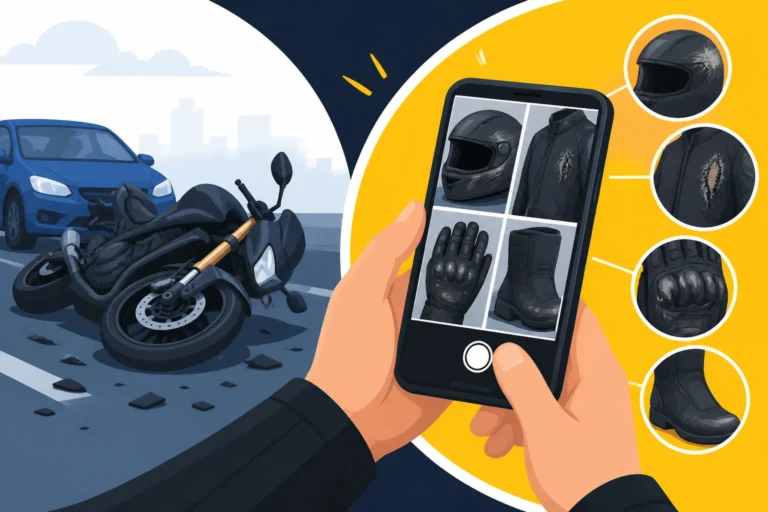
The key to disproving the helmet defense lies in meticulously documenting all aspects of your injuries and the accident scene. Immediately after a crash, if you are able, take photos of your bike, the other vehicle, the road conditions, and any visible injuries. These photos, especially of injuries to parts of your body clearly not covered by a helmet (like road rash on your arms or legs), serve as compelling visual evidence that helmet use was irrelevant to those specific injuries. Additionally, gather medical records from every doctor, hospital, and specialist you see. These records detail the nature and extent of your injuries. Your medical team can provide opinions on the cause of injuries, and specifically state which injuries are not head-related. For example, an emergency room report stating a fractured tibia and severe lacerations to the forearm makes it very difficult for the defense to argue helmet non-use was a factor. This careful documentation is crucial for proving fault in a motorcycle accident.
Witness Accounts and Police Reports
Witnesses can be invaluable in establishing the facts surrounding your accident and potentially rebutting the helmet defense. An objective witness might testify that they saw the other driver clearly run a red light, or that your head never even made contact with the pavement. If witnesses observed your head was protected by something other than a helmet (e.g., a leather cap that offered no impact protection but isn't a helmet), they can also clarify that your primary injuries were to your lower body or torso.
The police report, while not always definitive on fault, can also be helpful. It will usually document if a helmet was worn or not, and sometimes, the officers' observations of your injuries. If the report lists a broken leg but no visible head trauma, it supports the argument that helmet non-use is irrelevant to your more significant injuries. However, remember that how a police report can hurt your claim is also a possibility, so it's essential to understand its implications.
Medical Expert Opinions
This is where the rubber meets the road. Medical experts, such as neurologists, orthopedic surgeons, or trauma specialists, can provide detailed opinions on the specific mechanisms of your injuries. They can testify that, based on their medical expertise, your spinal cord injury was caused by sudden rotational forces that a helmet does not mitigate, or that your internal bleeding resulted from crushing forces to your chest cavity, unrelated to head impact.
For instance, if you suffered a severe concussion but also a complex wrist fracture, a neurologist might state that even with a helmet, a concussion might still occur depending on the impact, but an orthopedic surgeon can definitively state that the wrist fracture is a direct result of impact to the wrist, entirely independent of head protection. These expert testimonies are often critical in court to definitively separate head injuries (where a helmet might have played a role) from all other injuries (where it clearly did not). They can offer irrefutable evidence that Motorcycle Traumatic Brain Injury Claims and Compensation is distinct from claims for a broken leg.
The Overriding Factor of Driver Negligence and Fault
Ultimately, in many motorcycle accident claims, the question of who was at fault for causing the crash itself often outweighs the discussion of helmet use, especially when it comes to non-head injuries. A driver's negligent actions are the primary cause of the collision and the resulting trauma.
Driver Negligence and Fault
When another driver's negligence directly causes an accident, their fault is the foundational element of your claim. This could be anything from a driver distracted by their phone, failing to yield, running a red light, or making an unsafe lane change. In these situations, the driver's actions are the direct cause of the collision. Whether you were wearing a helmet or not doesn't change the fact that their negligence led to the crash.
Consider a scenario in sunny Miami, Florida. An elderly driver, looking down at their GPS, suddenly swerves into your lane without signaling, forcing you off the road. You crash, sustaining multiple broken ribs and a punctured lung. While Florida has a partial helmet law, allowing riders over 21 with insurance to ride without a helmet, the crucial point is that the driver's distracted driving caused the accident. The severe injuries to your chest and lungs are a direct result of the collision, completely independent of whether you had a helmet on. The discussion of Who Is at Fault in a Motorcycle Accident would overwhelmingly point to the distracted driver.
Road Hazards and Third-Party Liability
Sometimes, an accident isn't solely the fault of another driver, but rather due to hazardous road conditions or a defective motorcycle part. Potholes, debris in the road, oil slicks, or faulty traffic signals can all contribute to a crash. In these cases, liability might fall on a municipality, a construction company, or even a vehicle manufacturer.
For instance, if you hit a massive, unmarked pothole on a poorly maintained county road in rural Pennsylvania, causing you to lose control and suffer a severe ankle fracture and dislocated shoulder. Even if you were not wearing a helmet (and Pennsylvania has a partial helmet law), the municipality responsible for road maintenance could be held liable for your injuries because they failed to address a known hazard. The helmet defense is irrelevant here because the cause of your crash and injuries stems from the road hazard, not your head protection status. This highlights how Government Liability for Road Hazards can be a crucial aspect of a claim.
Comparative Negligence Principles
Many states follow some form of comparative negligence. This legal doctrine allows an injured party to recover damages even if they were partially at fault for the accident or their injuries, but the compensation is reduced by their percentage of fault. In states like California, which uses pure comparative negligence, even if you are found 90% at fault, you can still recover 10% of your damages.
The helmet defense, if successfully argued, might lead to a finding that you were comparatively negligent only for your head injuries. It might not impact compensation for your broken leg or road rash. So, while your total settlement might be slightly reduced, it doesn't nullify your entire claim. For instance, if you're in a shared fault state like Texas, and a jury determines the car driver was 80% at fault for hitting you, and your lack of a helmet was 20% responsible for your concussion, you'd still recover 80% of your concussion damages, plus 100% of any other non-head-related damages. It’s important to understand How Comparative Negligence Reduces Your Payout and how it applies specifically to your situation, rather than assuming it's a complete bar to recovery.
The Role of Full Safety Gear
While the helmet defense primarily targets head injuries, it's worth noting that wearing full motorcycle safety gear can generally strengthen your overall claim. Gear like sturdy jackets, gloves, and riding boots from a reputable brand like Cycle Gear not only offers crucial protection against road rash and impact but also visually demonstrates a commitment to safety. This can subtly counter any attempts by the defense to paint you as a reckless rider. Even if you legally forgo a helmet, showing that you took other significant precautions can work in your favor when negotiating a settlement or if a case goes to trial. After all, Motorcycle Safety Gear and Legal Protection goes beyond just helmets.
What to Do if Helmet Non-Use is Being Used Against You
It's one thing to understand the legal principles; it's another to navigate the real-world challenge of an insurance adjuster trying to use your helmet choice against you. Don't let them intimidate you.
Collecting Your Own Evidence
Your first and most important step is to gather every piece of evidence you can. This includes detailed photos of the accident scene, vehicle damage, and all your injuries. Take pictures of your injuries as they heal, documenting their severity. Get copies of all police reports, medical records, and bills. If you were wearing other protective gear (like a riding jacket or gloves), document that as well. Even if you weren't wearing a helmet, showing that you wore other safety equipment can demonstrate a general caution and help refute claims of overall recklessness. This kind of evidence is critical to Proving Fault in a Motorcycle Accident.
Remember to keep a journal of your pain, limitations, and how your injuries affect your daily life. This can be crucial in proving non-economic damages like Pain and Suffering in Motorcycle Settlements.
Legal Counsel is Crucial
Facing an insurance company alone, especially when they're using tactics like the helmet defense, can be overwhelming. This is precisely why you need a knowledgeable legal advocate. A skilled motorcycle accident attorney understands the nuances of helmet laws in your state, the burden of proof required for the helmet defense, and how to effectively counter these arguments. They can call upon expert witnesses (medical, accident reconstruction) to definitively prove that your injuries were not caused or exacerbated by the absence of a helmet. They will also be adept at navigating the complexities of How Fault Is Determined in Motorcycle Accidents and ensuring that your rights are protected.
Don't assume your case is lost just because you weren't wearing a helmet. A good lawyer will assess your unique situation, fight against unfair blame, and work to maximize your compensation, focusing on the at-fault party's negligence. They can explain how Do You Have to Wear a Helmet to Recover Damages might apply in your specific jurisdiction.
Disclaimer
Please remember that this article provides general information and is not legal advice. Every motorcycle accident claim is unique, and the laws regarding helmet use and negligence vary significantly by state and specific circumstances. It is crucial to consult with a qualified motorcycle accident attorney in your jurisdiction to discuss the specifics of your case and understand your legal rights and options.