How Helmet Damage Documents Crash Force
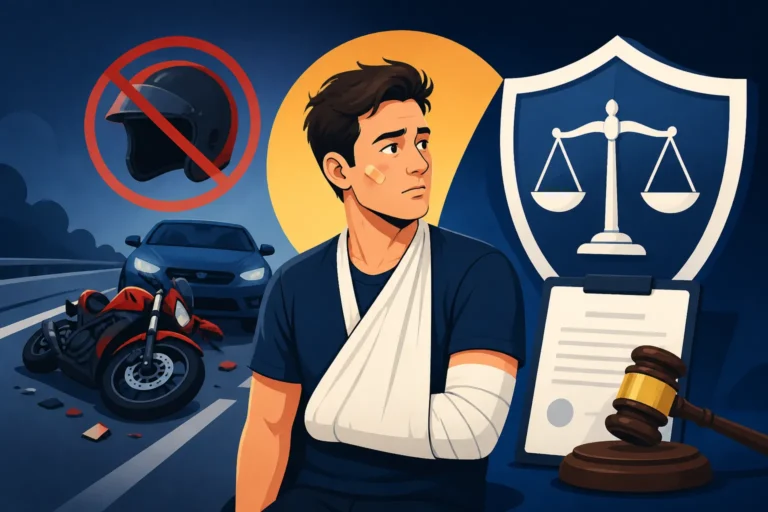
When you've been in a motorcycle accident, the world often feels like it's spinning out of control. Beyond the immediate shock, pain, and the frustrating reality of a damaged bike, there's the overwhelming question of what comes next, especially when it comes to your recovery and any potential claim. One often overlooked but incredibly powerful piece of evidence in the aftermath of a crash is the damage to your helmet. It might seem like just another broken item, but a damaged helmet tells a vivid, silent story about the forces at play during the accident, offering crucial insights into the impact severity and, ultimately, helping to document the crash force.
Understanding How Helmets Absorb Impact Energy
The helmet you wear isn't just a fashion statement or a legal requirement; it's a meticulously engineered piece of safety equipment designed to sacrifice itself to protect your most vital organ. Understanding how it works is key to appreciating its role as a silent witness in an accident.
The Science Behind Helmet Protection
At its core, a motorcycle helmet is a complex structure made of several layers, each playing a critical role in impact absorption. The outermost shell, often made of polycarbonate, fiberglass, or carbon fiber, is designed to be tough and rigid. Its primary job is to resist penetration from sharp objects and to spread the force of an impact over a wider area. Imagine dropping a bowling ball directly on your head versus dropping it on a strong, broad shield that then distributes that energy across a larger surface; the shell acts like that shield.
Beneath this tough exterior lies the crucial Expanded Polystyrene (EPS) foam liner. This is where the magic really happens. When your head hits something, or your helmet hits the ground, the EPS foam is designed to crush and deform. This controlled deformation extends the time it takes for your head's motion to come to a stop, significantly reducing the peak G-forces transmitted to your brain. Think of it like the crumple zone in a car; it absorbs and disperses energy rather than transferring it directly to you. Inside that, you'll find comfort padding that keeps the helmet snug and stable, but it does little for impact protection compared to the EPS liner. This layered design ensures that as much kinetic energy as possible is dissipated by the helmet, not by your skull or brain.
Visible Versus Invisible Damage
After a crash, it's easy to spot the obvious damage: a cracked shell, deep gouges, or scuffs across the surface. These are your helmet's battle scars, clearly indicating where and how it made contact with the road or another object. However, what's often missed, and equally important, is the invisible damage. The EPS foam liner, while excellent at absorbing a single impact, can suffer microfractures or compression that isn't apparent to the naked eye. Once that foam has been compressed, it loses its ability to protect effectively in a subsequent impact. This is why the common wisdom among riders is to replace a helmet after any impact, even if it looks fine on the outside. Even a seemingly innocuous drop onto concrete can compromise the integrity of the EPS liner, leaving you vulnerable in a future crash. This invisible damage, while harder to document, is critical to understand when considering the helmet's post-accident state.
DOT, Snell, and ECE Standards
When you're buying a helmet, you'll often see stickers indicating it meets certain safety standards. These aren't just arbitrary labels; they represent rigorous testing protocols designed to ensure a helmet provides a minimum level of protection.
- DOT (Department of Transportation) Standard: This is the minimum legal requirement for helmets sold in the United States. It's a self-certification standard, meaning manufacturers test their own helmets to ensure compliance. The DOT standard focuses on impact absorption, penetration resistance, and retention system strength. If you're looking for gear, reputable retailers like Cycle Gear carry a wide array of DOT-approved helmets.
- Snell Memorial Foundation Standard: Snell is a voluntary, non-profit organization that sets a higher standard, often stricter than DOT. Snell certification involves more rigorous testing, including multiple impacts in the same spot, and is particularly favored by track riders and those seeking maximum protection.
- ECE (Economic Commission for Europe) Standard: This is a globally recognized standard, mandatory in over 50 countries. ECE testing is comprehensive, including impact, abrasion, penetration, and chin bar rigidity. Many helmets carry both DOT and ECE certifications, indicating a high level of safety.
Each of these standards, while different in their specific tests, aims to quantify a helmet's ability to absorb and dissipate crash forces. The fact that a helmet has met these standards, and then shows damage indicating it performed its function during a crash, is powerful evidence. Understanding What Is a DOT-Compliant Helmet can further illuminate the protection these standards offer.
Documenting Helmet Damage as Evidence
In the chaotic aftermath of a motorcycle accident, it's easy to overlook crucial details. However, your damaged helmet can be an invaluable piece of evidence, speaking volumes about the incident's impact dynamics. Knowing how to properly document and preserve it can significantly bolster your injury claim.
Immediate Post-Accident Assessment
The moments immediately following an accident are critical for gathering evidence. Once you’ve addressed any immediate medical needs and ensured safety, turn your attention to your helmet. Look for any visible signs of impact. This isn't just about big cracks; it includes scuffs, scratches, dents, and even minor chips in the paint. Pay close attention to the specific locations of this damage. Was it the top of the helmet, indicating a direct fall? The side, suggesting a slide across the pavement or impact with another vehicle? Or the front, pointing to a head-on collision or face-first impact?
Take clear, well-lit photographs from multiple angles. Get close-ups of every scuff, crack, and abrasion. Include broader shots that show the helmet in its entirety, providing context for the damage. If possible, photograph the helmet on the ground where it landed, or next to your motorcycle, to show its relation to the accident scene. This immediate documentation is vital because once the helmet is moved or cleaned, some of these subtle but important details might be lost. This meticulous approach ties directly into the broader effort of How to Document the Scene to Prove Fault and is a key component of Motorcycle Accident Evidence for Proving Fault.
Preserving Your Damaged Helmet
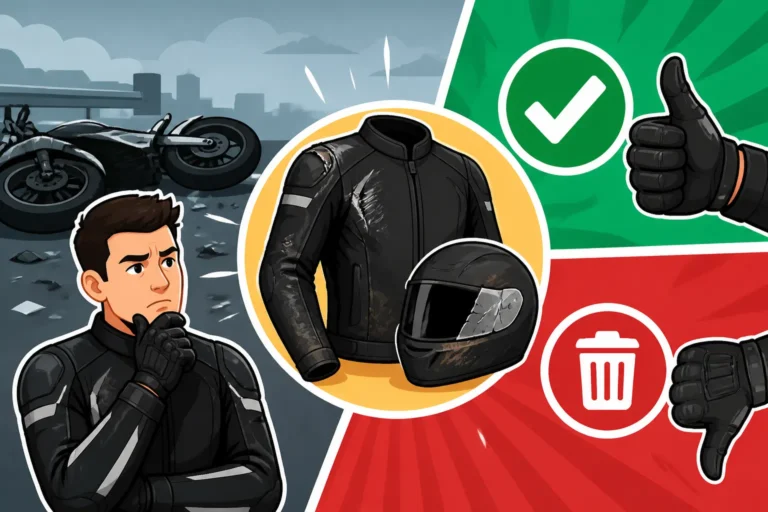
After the initial documentation, it's crucial to preserve your damaged helmet exactly as it is. Do not clean it, attempt to repair it, or discard it. This might seem counterintuitive, especially if you're eager to replace your gear, but the helmet in its damaged state is physical evidence. Cleaning it could remove forensic clues, and attempting repairs could alter the damage pattern, making it harder for experts to analyze.
Store the helmet in a safe, dry place where it won't be further damaged or tampered with. A cardboard box in a closet or garage is often sufficient. The goal is to maintain its condition until legal professionals or accident reconstruction experts can examine it. Even if the damage seems minor, its preservation is paramount. An insurance adjuster or defense attorney might try to argue that your injuries weren't severe or weren't caused by the crash, and a visibly damaged helmet serves as undeniable proof of the impact. While you might be tempted to head to Cycle Gear for a new lid right away, hold onto the old one until your claim is settled or your attorney advises otherwise.
Expert Analysis of Helmet Damage
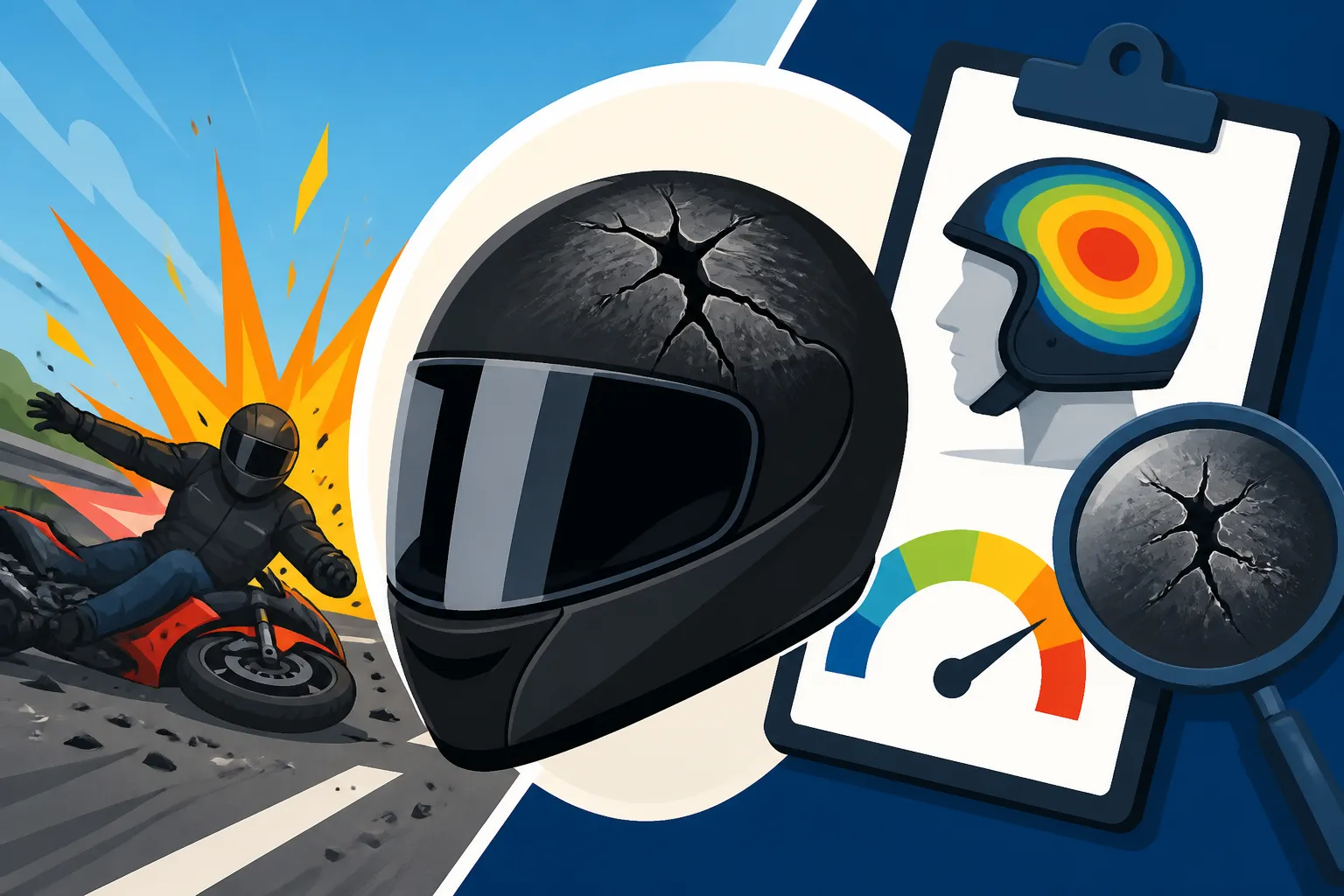
This is where the detailed story of your crash truly comes to life through your helmet. Accident reconstruction specialists and biomechanical engineers are trained to analyze helmet damage to determine the precise forces involved in a crash. They can look at the depth and pattern of abrasions, the location and type of cracks, and the compression of the EPS foam liner to deduce several critical factors:
- Impact Direction and Angle: The specific scuff marks and damage patterns can reveal the direction from which the impact occurred and the angle at which your head struck a surface. For example, a long, deep scrape along the side could indicate a prolonged slide, while a concentrated crush on the crown might point to a direct, vertical fall.
- Impact Velocity and Force: By analyzing the deformation of the helmet shell and the compression of the EPS liner, experts can estimate the energy absorbed during the impact. This allows them to quantify the forces your head experienced, providing objective data that supports the severity of the crash.
- Correlation with Vehicle Damage and Scene Evidence: Helmet damage can be correlated with the damage to your motorcycle, the other vehicle involved, and even marks on the road surface. This helps create a cohesive narrative of how the accident unfolded, providing a more complete picture of what happened. This expert analysis is a vital part of How Accident Reconstruction Determines Fault. The findings from such an analysis can be compelling evidence in court or during settlement negotiations, directly linking the physical impact to your injuries and helping counter arguments from the at-fault driver's insurance company.
Connecting Helmet Damage to Crash Force and Injuries
The evidence locked within your damaged helmet isn't just about physics; it's about connecting those physical forces directly to your bodily harm, particularly head injuries. This connection is paramount in establishing the validity and severity of your personal injury claim.
Correlating Damage Patterns to Impact Points
Imagine your helmet as a detailed map of the forces applied to your head during the accident. Each scuff, crack, and area of compression on the helmet corresponds to a specific impact event. If the crown of your helmet has a deep dent and compressed foam, it strongly suggests a direct vertical impact, such as falling directly onto your head or striking a low-hanging object. This type of impact can lead to compressive forces on the brain, potentially resulting in injuries like skull fractures or subdural hematomas.
Alternatively, if there are extensive abrasion marks and scrapes along the side of your helmet, it points to a sliding impact, often seen when a rider is thrown from the bike and slides across the asphalt. While the shell protects against the abrasion, the rotational forces involved in such a slide can still be incredibly dangerous, leading to diffuse axonal injury (DAI) or other forms of Motorcycle Accident Traumatic Brain Injuries. Furthermore, if the face shield or chin bar is severely damaged, it indicates a frontal impact, which can result in facial fractures, concussions, or even jaw injuries. By meticulously analyzing these damage patterns, accident reconstructionists and medical experts can build a compelling case that links the mechanical forces documented by your helmet to the specific injuries you sustained.
The "Helmet Defense" Counterpoint and Your Helmet as Proof
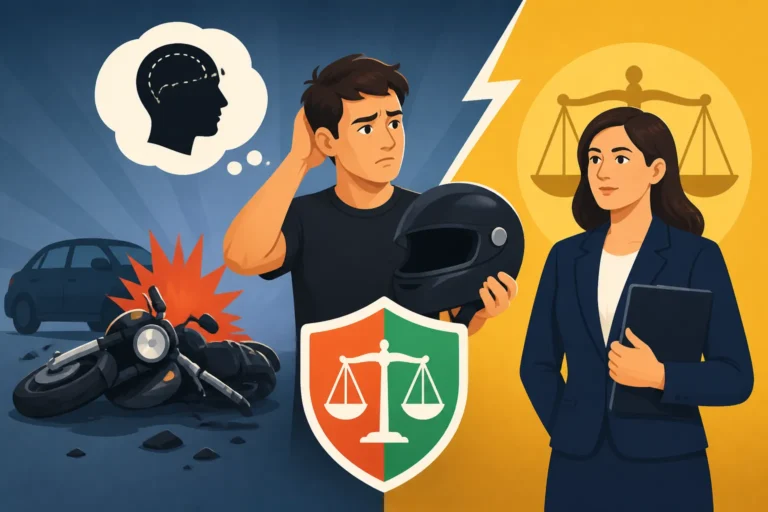
It's an unfortunate reality that motorcycle riders often face bias after an accident. Insurance companies and opposing counsel sometimes try to use a "helmet defense" to minimize their liability, arguing that either you weren't wearing a helmet, your helmet was improperly worn, or your helmet failed, implying you are partly to blame for your head injuries. This is where your damaged helmet becomes your most outspoken advocate.
If your helmet is clearly damaged from the crash, it serves as irrefutable proof that you were wearing it and that it did its job by absorbing the impact. The visible signs of impact attenuation directly refute the argument that you weren't protected. Furthermore, a helmet that shows signs of severe impact, even if you did sustain a head injury, demonstrates that the forces involved were so immense that even the best protective gear couldn't prevent all harm. This can be crucial in countering claims that your injuries were exaggerated or not directly caused by the incident. Understanding The Helmet Defense Explained can prepare you for these common tactics, and your damaged helmet is often the strongest rebuttal.
Supporting Injury Claims, Especially for Head Injuries
Perhaps the most critical role of a damaged helmet is its ability to corroborate and support claims for head injuries. When you visit a doctor after a crash, they diagnose injuries based on symptoms, medical imaging, and neurological tests. However, the helmet provides tangible, physical evidence of the mechanism of injury.
For instance, if you're diagnosed with a concussion or a traumatic brain injury, and your helmet shows significant impact damage precisely where such an injury would occur, it creates a powerful evidentiary link. This physical corroboration can be invaluable, especially when dealing with invisible injuries like concussions, which don't always show up on standard imaging immediately. The helmet demonstrates the force that was applied to your head, providing context for the medical diagnosis. This helps to How to Prove Your Injuries in a claim. It paints a picture for adjusters, juries, and judges that your head sustained a significant trauma, reinforcing the legitimacy and severity of your condition, and demonstrating that your Motorcycle Safety Gear and Legal Protection was indeed in place.
Here’s a look at how different types of helmet damage can tell the story of a crash:
| Type of Damage | Indication of Crash Force / Impact | Potential Injuries Suggested |
|---|---|---|
| Deep Scratches/Gouges | Sliding impact across pavement or abrasive surface. | Road rash on head/face (if not full-face), rotational brain injury, bruising. |
| Cracked Outer Shell | Direct, high-energy impact from a blunt object or fall. | Skull fracture, concussion, contusion, internal bleeding. |
| Compressed EPS Liner | Significant absorption of kinetic energy from impact (internal). | Concussion, traumatic brain injury (TBI), cerebral contusion. |
| Impact Dent (localized) | Direct, concentrated force at a specific point. | Focal brain injuries, skull deformation. |
| Chin Bar/Face Shield Damage | Frontal impact, often with another vehicle or object. | Jaw fracture, dental injuries, facial lacerations, neck strain. |
| Strap/Retention System Failure | Extreme tensile forces or improper fit during impact. | Helmet displacement during crash, leading to direct head impact. |
This table illustrates why preserving and analyzing your helmet is not just a technicality but a fundamental step in building a strong motorcycle accident claim. It transforms a damaged piece of gear into a crucial witness, providing objective evidence of the forces you endured. For more information on how helmet use affects outcomes, you may want to read about How Helmet Laws Affect Your Accident Claim. It's also worth considering How Insurance Companies Assign Blame to Riders and how your documented helmet use can challenge those narratives.
Disclaimer
Please remember that this article provides general information and is not legal advice. Every motorcycle accident case is unique, and the specifics of your situation will determine the best course of action. If you've been in a motorcycle accident, it's highly recommended to consult with a qualified legal professional to discuss your rights and options.