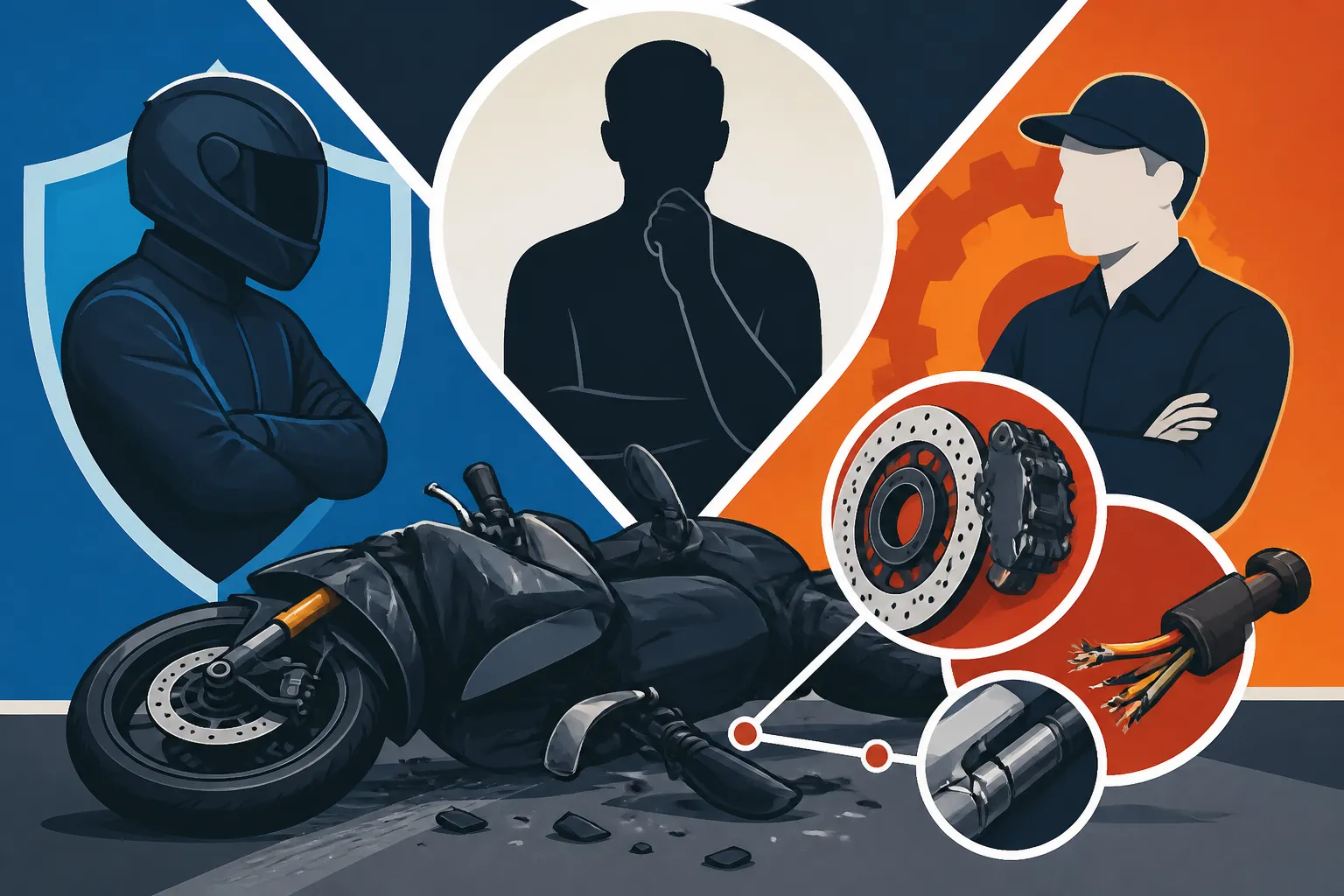
Who Is at Fault in a Defective Motorcycle Parts Motorcycle Accident
It's a terrifying thought: you're out on the open road, enjoying the freedom of your motorcycle, and suddenly, something fundamental gives way. The brakes seize, the steering locks up, or a critical component simply snaps. When a motorcycle accident isn't caused by another driver's negligence or a tricky road hazard, but by a failure of the bike itself due to a defective part, it leaves riders not only injured and traumatized but utterly bewildered about who is truly responsible. This guide aims to shed light on the complex world of defective motorcycle parts accidents, helping you understand how fault is determined and who you can hold accountable when your trust in your machine is betrayed.
What Exactly Qualifies as a Defective Motorcycle Part?
When we talk about a "defective part" causing a motorcycle accident, it's not always as simple as a visible crack or a loose bolt. The legal definition of a defect is much broader, encompassing issues that arise at various stages, from the initial drawing board to the final product leaving the factory or even after it's been serviced. Understanding these distinctions is crucial because it helps pinpoint where the failure originated and, consequently, who might be held responsible. It's a stark reminder that while we often focus on Common Causes of Motorcycle Accidents like distracted drivers, sometimes the danger lurks within the machine itself.
Manufacturing Defects: Flaws from the Assembly Line
These are the defects that occur during the actual production or assembly of the motorcycle or its components. Imagine a scenario where a batch of brake lines was made with a substandard material, or a crucial engine bolt was improperly tempered, making it brittle. The design itself might have been perfect, but the execution fell short.
For example, a specific model of motorcycle might have its suspension linkage manufactured with an incorrect alloy, making it prone to snapping under normal riding conditions. If your bike was part of that batch and the linkage failed, leading to a loss of control, that would likely be considered a manufacturing defect. These flaws often affect a limited number of products within a larger, otherwise safe, production run. The key here is that the item deviated from its intended design or specifications during its creation.
Design Defects: Inherently Dangerous from the Drawing Board
Unlike manufacturing defects, a design defect means the product was manufactured exactly as intended, but the design itself was inherently dangerous or unsafe. There's no flaw in the production; the problem lies in the blueprint. This is a much harder claim to prove because it essentially argues that even a perfectly built product, based on its design, poses an unreasonable risk.
Consider a hypothetical motorcycle model designed with a fuel tank positioned too close to the engine, causing it to overheat and potentially rupture in even minor impacts. Or perhaps the frame geometry, while appearing sleek, creates an unstable ride at highway speeds, leading to uncontrollable wobbles. In these cases, every single motorcycle produced with that design carries the same risk. To prove a design defect, you often need to show that there was a safer, economically feasible alternative design available at the time of manufacture. These are the kinds of issues that truly make you question Motorcycle Accident Liability: A Complete Guide, as the fault extends far beyond a simple mistake.
Marketing Defects: Inadequate Warnings or Instructions
Sometimes, the product itself is perfectly safe in its design and manufacturing, but the defect lies in how it was presented to the consumer. This usually involves a failure to warn about potential hazards or provide adequate instructions for safe use. This type of defect is often overlooked but can be just as deadly.
Think about a powerful sport bike that comes with specific instructions about tire pressure for high-speed riding, but these warnings are buried deep in a confusing manual or omitted entirely. If a rider, unaware of the critical pressure requirements, experiences a tire blowout and crashes, the manufacturer could be held liable for a marketing defect. Similarly, if a part requires specific, complex installation instructions to be safe, and those instructions are unclear or missing, leading to improper installation and failure, it could be a marketing defect. The expectation is that consumers are given all necessary information to safely operate or install a product, and the absence of such information can be a significant liability.
Unmasking the Responsible Parties in a Product Liability Case
Determining Who Is at Fault in a Motorcycle Accident stemming from a defective part is rarely straightforward. Unlike a typical traffic collision where you might identify a negligent driver, product liability cases involve a chain of entities involved in bringing the product to market. This "chain of distribution" can include everyone from the company that designed the component to the mechanic who installed it. Understanding each link in this chain is key to identifying who bears the legal responsibility for your injuries.
The Manufacturer: Often the Primary Target
In most defective product cases, the manufacturer of the motorcycle or the specific defective component is the primary party you'd target. This is especially true for manufacturing and design defects. The manufacturer has a legal obligation to ensure their products are safe for their intended use and that they don't pose an unreasonable risk to consumers.
For instance, if your motorcycle's braking system, made by Brembo or Hayes Performance Systems, failed due to an internal manufacturing flaw, Brembo or Hayes, as the component manufacturer, would likely be held responsible. If the entire motorcycle's frame design (produced by Honda, Harley-Davidson, or Yamaha) led to structural instability, then the motorcycle manufacturer would be the focus. Their deep pockets and control over design and production make them a frequent defendant. Proving Manufacturer Liability for Defective Parts requires a thorough investigation into their processes and product specifications.
Distributors and Retailers: Their Link in the Chain
While they don't design or manufacture the product, distributors and retailers can sometimes be held liable for defective parts under product liability laws. This is often based on the principle of "strict liability," meaning they can be held responsible even if they weren't negligent in handling the product. Their role is simply to provide a safe product to the consumer.
Imagine you bought a brand-new tire from a local dealership like Cycle Gear or a dealership for a specific brand, such as Harley-Davidson of Glendale. If that tire had a manufacturing defect that led to a blowout, the dealership, as the retailer, could be held responsible alongside the tire manufacturer (e.g., Michelin or Dunlop). Their liability often stems from simply being part of the distribution chain that put the defective product into your hands. While they might then seek compensation from the manufacturer, they can initially be named as a defendant in your claim.
Mechanics and Service Centers: When Installation or Maintenance Goes Wrong
Sometimes, the part itself isn't inherently defective, but its failure stems from improper installation or maintenance. In such cases, the fault shifts to the mechanic, service center, or even the individual who performed the work. This moves the claim from strict product liability to a negligence claim against the service provider.
For example, if you took your Harley-Davidson to an independent shop like MotoRepublic for a brake fluid flush, and they accidentally used the wrong fluid or failed to bleed the lines properly, leading to brake failure, that shop would be liable for their negligence. Or perhaps they installed an aftermarket part incorrectly, causing it to detach during a ride. Even if the part itself was perfectly fine, the faulty installation created the dangerous condition. This is why getting your bike serviced by reputable professionals is so important. When fault is disputed in a motorcycle crash, it's essential to trace back every step that could have contributed to the failure.
Proving Your Case: How to Establish a Defective Part Caused Your Crash
You've been in a horrific accident, and your gut tells you it wasn't your fault or another driver's; it was the bike. But simply feeling that a part was defective isn't enough to secure compensation. In the world of product liability, you need concrete evidence and expert opinions to establish fault. This is where the process becomes highly technical and demanding, requiring meticulous attention to detail and swift action.
Immediate Actions to Preserve Crucial Evidence
After a motorcycle accident, your immediate safety and medical needs are paramount. However, if you suspect a defective part was involved, preserving the scene and the motorcycle itself becomes critically important for your future claim. Unlike typical car accidents where the vehicles might just be towed, a defective parts case demands that the motorcycle, especially the suspected faulty component, be kept untouched.
Do not allow the motorcycle to be repaired, scrapped, or even moved more than absolutely necessary. If possible, take detailed photographs and videos of the motorcycle, focusing on the area where you believe the defect occurred. Get wide shots of the entire scene, and then close-ups of the specific part and any damage it sustained. The police report, while focused on the collision itself, might also contain observations about the motorcycle's condition that could prove useful. This initial documentation is vital for Motorcycle Accident Evidence for Proving Fault and can make or break your claim. Remember, once the evidence is gone, it's nearly impossible to reconstruct the truth.
The Indispensable Role of Expert Analysis
Once the immediate aftermath is handled and the evidence is preserved, the next crucial step is getting the defective part, and often the entire motorcycle, inspected by qualified experts. These aren't just mechanics; they are forensic engineers specializing in accident reconstruction and product failure analysis.
These experts will meticulously examine the component, often using specialized tools and tests, to determine if a defect truly exists. They can identify if the metal fatigued, if a weld was improper, or if the design itself was inherently flawed. For instance, an expert might use a scanning electron microscope to analyze a fractured component, revealing the exact point of failure and whether it was due to a manufacturing flaw or external impact. They can then draft detailed reports and provide expert testimony, explaining in clear terms how the defect led to the accident. This objective, scientific analysis is the cornerstone of proving fault in these complex cases. Knowing When to Hire an Accident Reconstruction Expert is often immediately after you suspect a product defect.
Connecting the Defect Directly to Your Injuries
Even if you can prove a part was defective, you must also demonstrate a direct causal link between that defect and your injuries. This is known as "causation." The insurance company or opposing legal team will undoubtedly argue that your injuries were caused by something else – perhaps your own riding error, road conditions, or another vehicle – and not the faulty component.
Your medical records, accident reconstruction reports, and expert testimony will all work together to establish this link. For example, if a brake failure caused your front wheel to lock up, throwing you over the handlebars, the expert would explain how the brake failure led to the loss of control, and your medical records would detail the resulting injuries (e.g., traumatic brain injury, broken bones). It's not enough to show a defect existed; you must show that the defect was the proximate cause of your accident and the resulting damages. Without a clear chain of events connecting the defect to your harm, your claim for Types of Damages in a Motorcycle Accident Claim can be significantly weakened.
Navigating Your Claim After a Defective Part Accident
If you've been injured in an accident caused by a defective motorcycle part, you're looking at a different legal landscape than a standard traffic collision. These cases fall under the umbrella of "product liability," which has its own set of rules, challenges, and potential defenses. It's a complex area of law that often requires specialized knowledge and experience.
Understanding Product Liability vs. Standard Negligence Claims
In a typical motorcycle accident where another driver is at fault, your claim would likely be based on negligence. You'd need to prove that the other driver owed you a duty of care, breached that duty, and that their breach caused your injuries. With product liability, the legal framework is often based on "strict liability." This means you generally don't have to prove the manufacturer was negligent or careless in designing or making the product. Instead, you just have to prove:
- The product was defective (design, manufacturing, or marketing).
- The defect existed when the product left the manufacturer's control.
- The defect caused your accident.
- You suffered injuries and damages as a result.
This is a significant difference because it removes the burden of proving how the manufacturer was careless. For example, if your tire exploded due to a manufacturing defect, you don't need to show that the tire company had poor quality control; you just need to show the tire was defective when you bought it and that defect led to your crash. This approach is intended to protect consumers and hold companies accountable for the safety of their products. This nuanced difference is why understanding How Fault Is Determined in Motorcycle Accidents in these specific scenarios is so vital.
Potential Defenses You Might Face
Even with strong evidence, manufacturers and their insurance companies won't simply roll over. They have deep pockets and aggressive legal teams dedicated to minimizing payouts. You can expect them to raise several defenses.
One common defense is to claim user error or modification. They might argue that you improperly maintained the motorcycle, installed aftermarket parts incorrectly, or used the bike in an unintended way. For instance, if you installed a custom part from a third-party vendor that wasn't approved by the original manufacturer, they might try to shift blame to that modification. Another defense is to allege that the defect wasn't the cause of the accident, but rather another factor, such as your own speeding or a road hazard. They might also argue that the defect was "open and obvious," meaning you should have seen and avoided the danger. They might even try to apply comparative negligence, suggesting that even if a defect existed, your actions contributed to the severity of the accident. Each of these defenses requires a carefully constructed counter-argument, often built on expert testimony and strong factual evidence.
Here's a quick summary of potential liable parties and their primary responsibilities:
| Liable Party | Primary Responsibility / Type of Defect Usually Addressed | Key Challenge in Proving Fault |
|---|---|---|
| Manufacturer | Design defects, manufacturing defects, warning defects | Often claims user error, improper maintenance, or modification |
| Distributor/Retailer | Providing a safe product to the consumer (strict liability) | May argue they were simply a conduit, no direct fault |
| Mechanic/Service Shop | Proper installation, maintenance, repair | Claims defect was pre-existing or caused by user |
Why Legal Counsel is Crucial in These Complex Cases
Given the technical nature, the substantial financial resources of manufacturers, and the complex legal arguments involved, trying to handle a defective motorcycle parts claim on your own is an uphill battle you're likely to lose. This isn't just about calling an insurance adjuster; it's about navigating product liability law, engineering forensics, and aggressive corporate defense.
An experienced motorcycle accident lawyer who understands product liability will be invaluable. They can help you investigate the accident, identify the potentially liable parties, secure and preserve crucial evidence, and connect you with the right forensic experts. They'll know how to negotiate with powerful corporate legal teams and understand the intricacies of strict liability versus negligence. Furthermore, they can help you understand the Average Motorcycle Accident Settlement Amounts for injuries like yours and fight to ensure you receive fair compensation for medical bills, lost wages, pain and suffering, and other damages. Don't go it alone; these cases demand professional legal guidance to secure justice.
Disclaimer
Please remember that this article provides general information and insights into defective motorcycle parts accidents and liability. It is not a substitute for professional legal advice. Every accident is unique, and the laws governing personal injury and product liability vary significantly by state. If you or a loved one has been involved in an accident potentially caused by a defective motorcycle part, it is crucial to consult with a qualified attorney as soon as possible to discuss your specific situation and legal options.